

Pool heater repair in Gates Mills — including the thing that catches salt-pool owners out: your cell and your heater are not two separate problems. $150 service call.
The exchanger is where pool water meets metal that is being actively heated. In any pool that makes it the component with the hardest job. In a salted pool it is harder again, and for a reason that does not go away: the salt stays in the water permanently.
Chloride is aggressive toward metals — it breaks down the protective oxide films that metals form on their own surfaces, so corrosion continues instead of stalling. Add heat, which accelerates every chemical process, and the exchanger is doing its work in the least forgiving conditions on the pad.
None of which is an argument against salt systems. It is an argument for knowing what the trade is, because a salt pool that is well looked after is entirely unremarkable and one that is not gets expensive in a specific place.
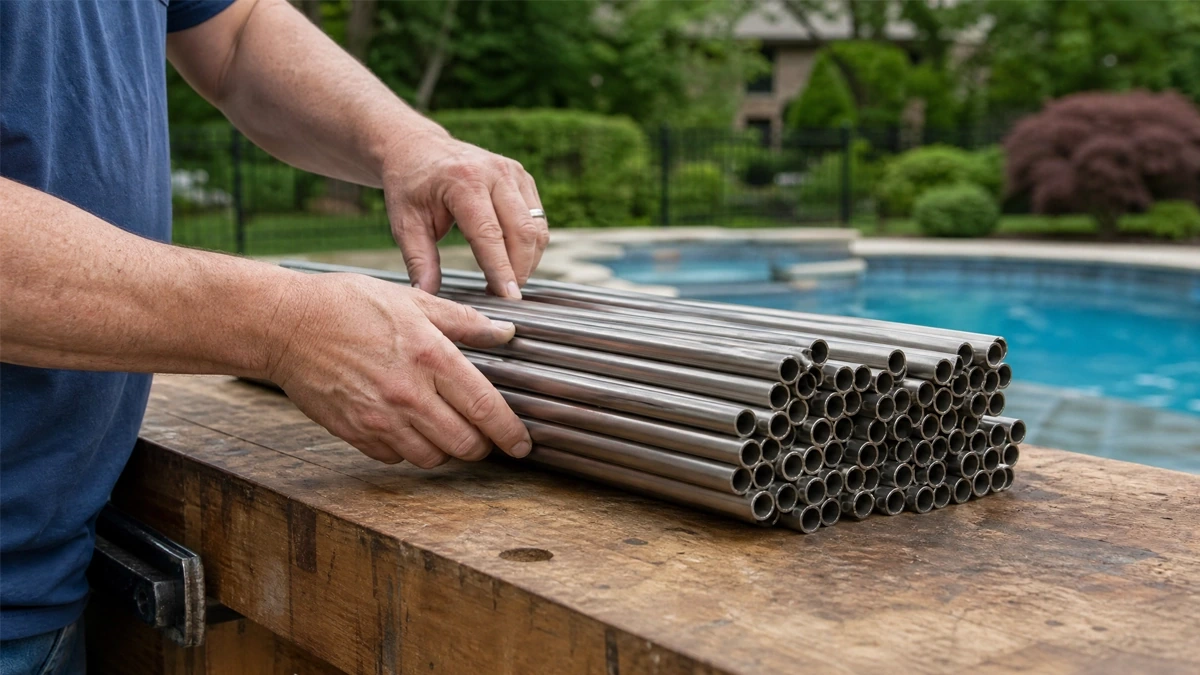
A cupronickel heat-exchanger tube
Two honest caveats, because this is where pages start overselling:
And the material commonly specified for salt-pool duty is cupronickel — a copper-nickel alloy that holds up better against chloride than plain copper does.
It buys you margin against chloride; it does not license loose water chemistry.
And we are not going to tell you what your manufacturer fits or approves. Specifications differ by unit and they change, and installing a heater outside its own manufacturer's guidance is how a warranty conversation goes wrong. What we will do is check what you have and what the maker says about it. See pool heater replacement if the question is what to fit next.
This is the one worth reading twice, because it connects two things most owners treat as unrelated.
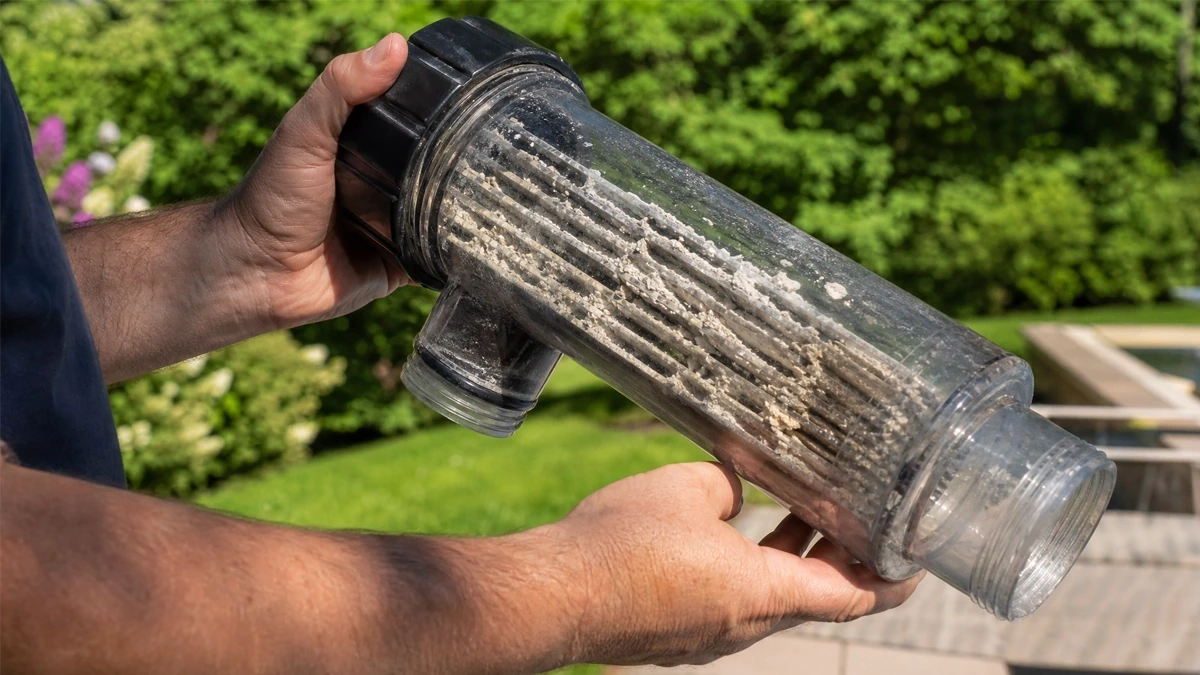
A salt cell produces chlorine by electrolysis — and that process drives pH upward as a by-product. So a salt pool has a persistent tendency for pH to climb, all season, without anyone adding anything.
High pH is what pushes calcium out of solution. And calcium comes out on the hottest surface in the system, which is the inside of your heat exchanger.
So the chain runs: cell operates → pH drifts up → calcium precipitates → scale forms on the exchanger tubes. Scale insulates, so the heater burns the same gas to move less heat into the water, and the metal behind the deposit runs hotter than it was designed to.
Which means "my heater is getting tired" on a salt pool is very often "nobody has been holding pH down". It is also why the cell itself scales up and loses output — the same precipitation happening on the cell plates. One cause, two symptoms, on two pieces of equipment that get serviced by different conversations.
The fix is unglamorous and it works
Hold pH where it should sit, all season, rather than correcting it when something misbehaves. See salt chlorine generators for the cell side.
And they are different findings with different answers. Where a unit is sound we can de-lime the water side; where the tubes have been running hot behind deposit for years, that is a replacement.
Not just today's reading. A single test tells you where the water is; a record tells you where it has been, and exchangers are damaged cumulatively.
Because a pool running saltier than it should be is asking more of every metal component than it needs to.
Since salted water and incomplete bonding together produce corrosion that looks inexplicable.
For the wider chemistry story in a conventional pool — scale, acidic water and what each does — see chemistry and exchangers in Pepper Pike. For the order we diagnose in, flow first, see heater diagnostics in Twinsburg.
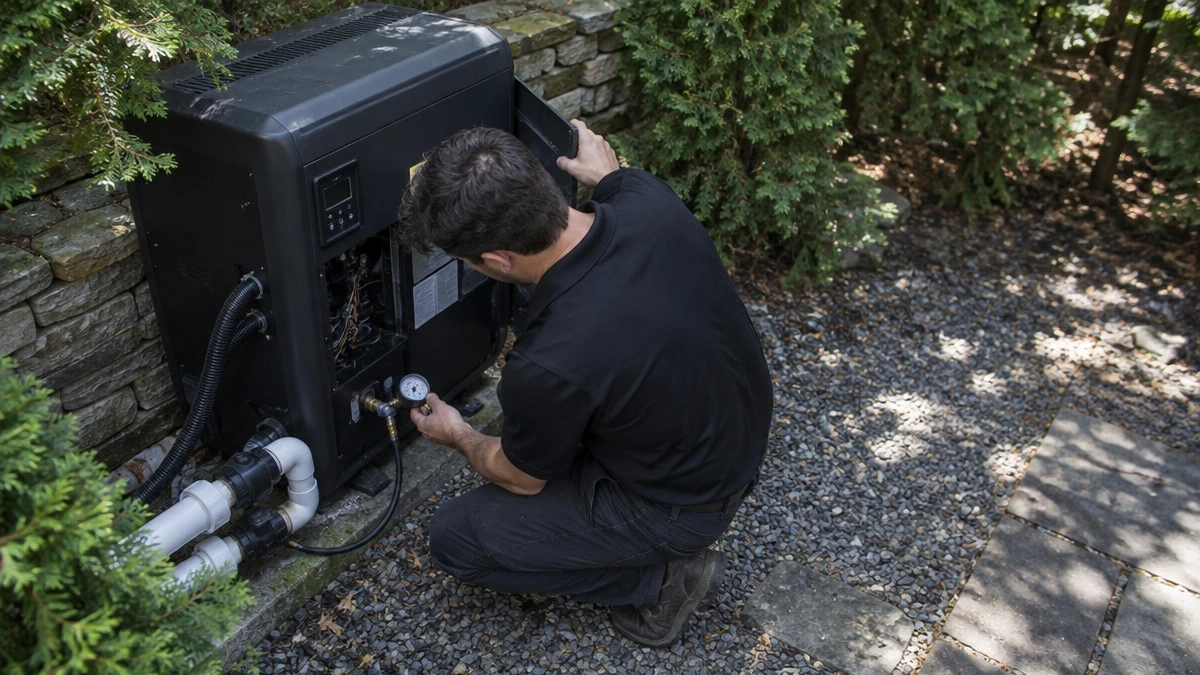
The decision — repair the exchanger or replace the heater — is set out on our repair or replace in Hudson page, and the framework there applies here without change: which part failed, whether the cause is still present, whether the rest of the unit is sound.
On a salt pool the middle question carries more weight than usual. A new exchanger going into water whose pH has been drifting up all season for years is a new exchanger on the old timetable.
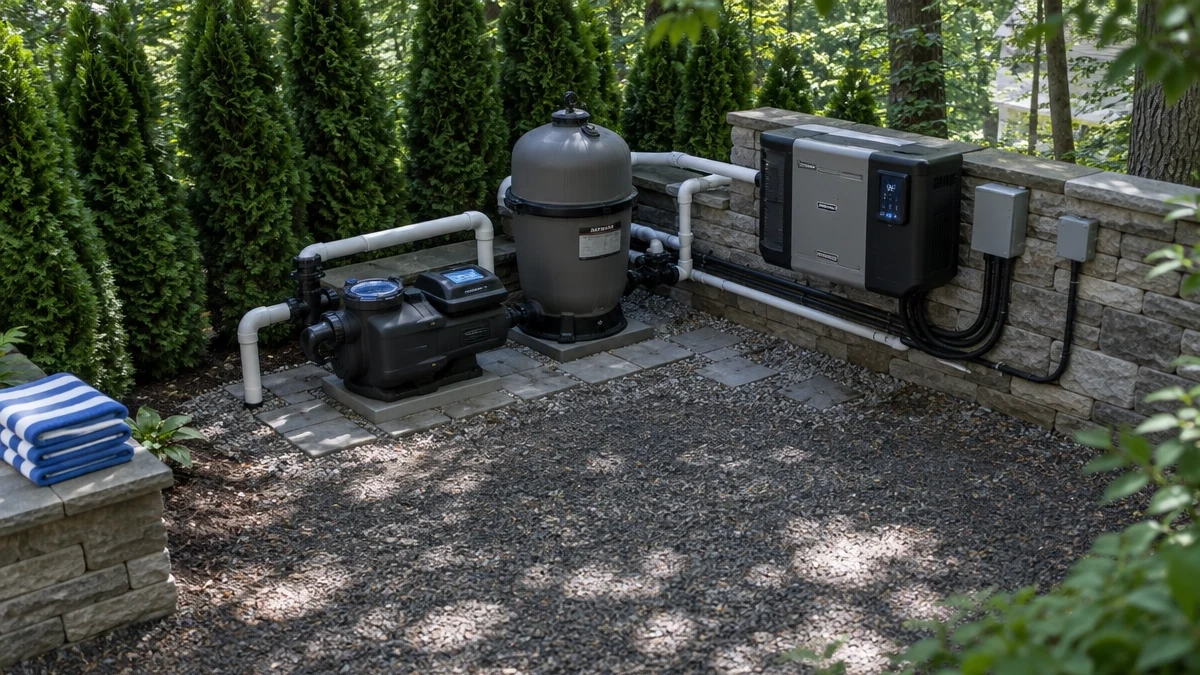
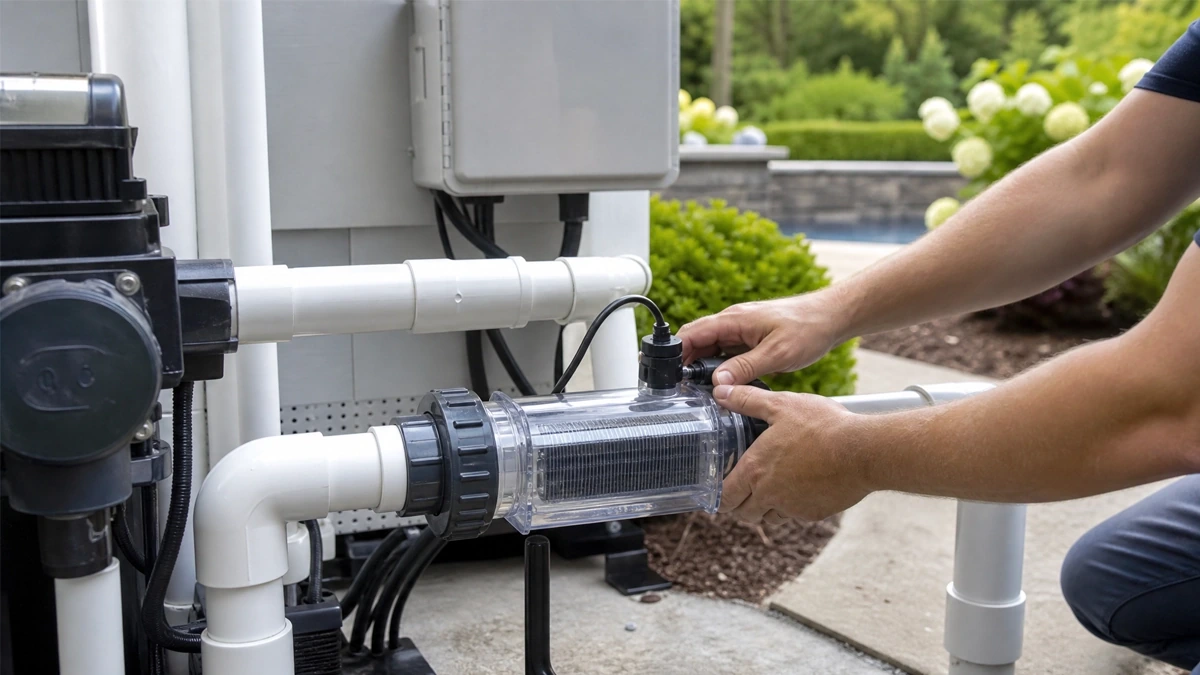
A pool equipment pad in Gates Mills
“Matt and his team are fantastic to work with. Easy to schedule, quality work is done right the first time. Highly recommend.”
Tell us what your pH has been doing — on a salt pool that is half the diagnosis.
A chemical and equipment check — from $72 per visit plus chemicals, weekly or biweekly, with a written sheet every visit.
On a salt pool the sheet earns its keep more than usual, because the failure mode here is a slow drift rather than an event. pH climbing week after week is invisible in any single reading and obvious in a column of them.
We test by titration rather than reading a strip, which on a pool where the whole risk is a gradual drift is the difference between a number and an impression.
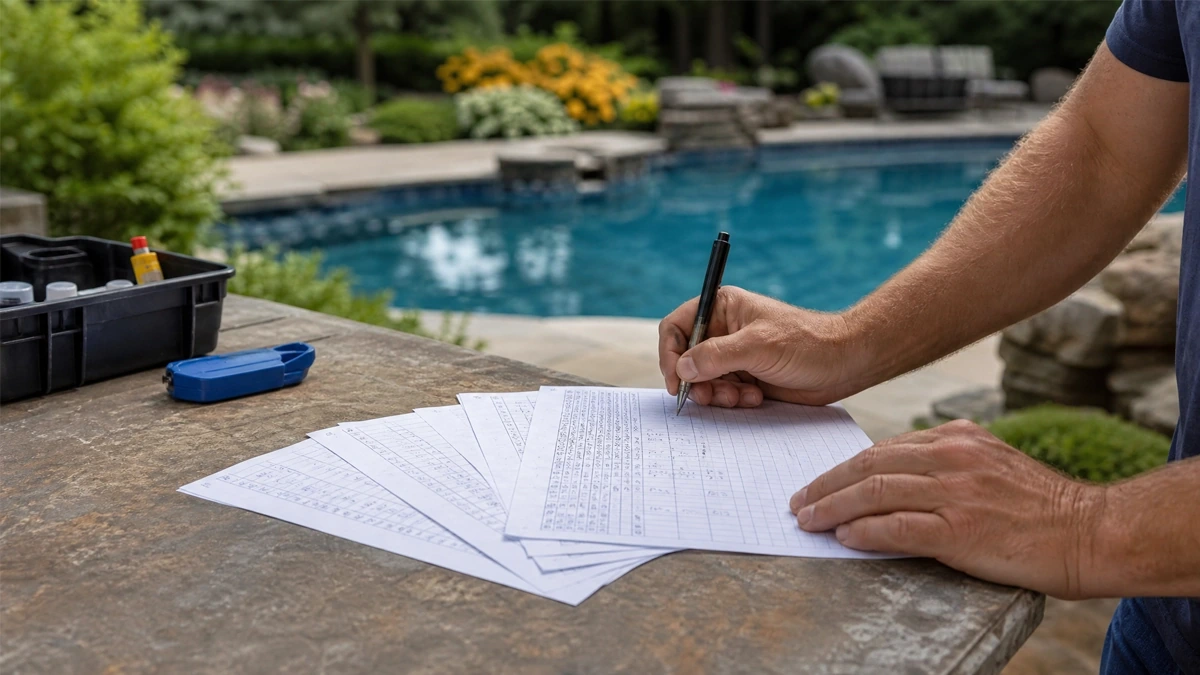
A log of pH drift over a season
Gates Mills is in Cuyahoga County, about 14 miles from our base — the furthest of our tier-1 towns — and about 6 miles from Lake Erie, the closest of that set to the water. A near-lake position means a later autumn, so the heater sees more of the shoulder season here than it would inland.
For the rest of what we do here see Gates Mills pool service. The list of towns is on service areas.
A $150 service call covers up to the first hour on site. Parts and further labour are quoted before we do them.
Products we install carry the full manufacturer's warranty — generally one to three years, on that manufacturer's terms. We do not offer a separate workmanship guarantee, and coverage does not extend to freeze damage or to damage from water chemistry maintained by others.
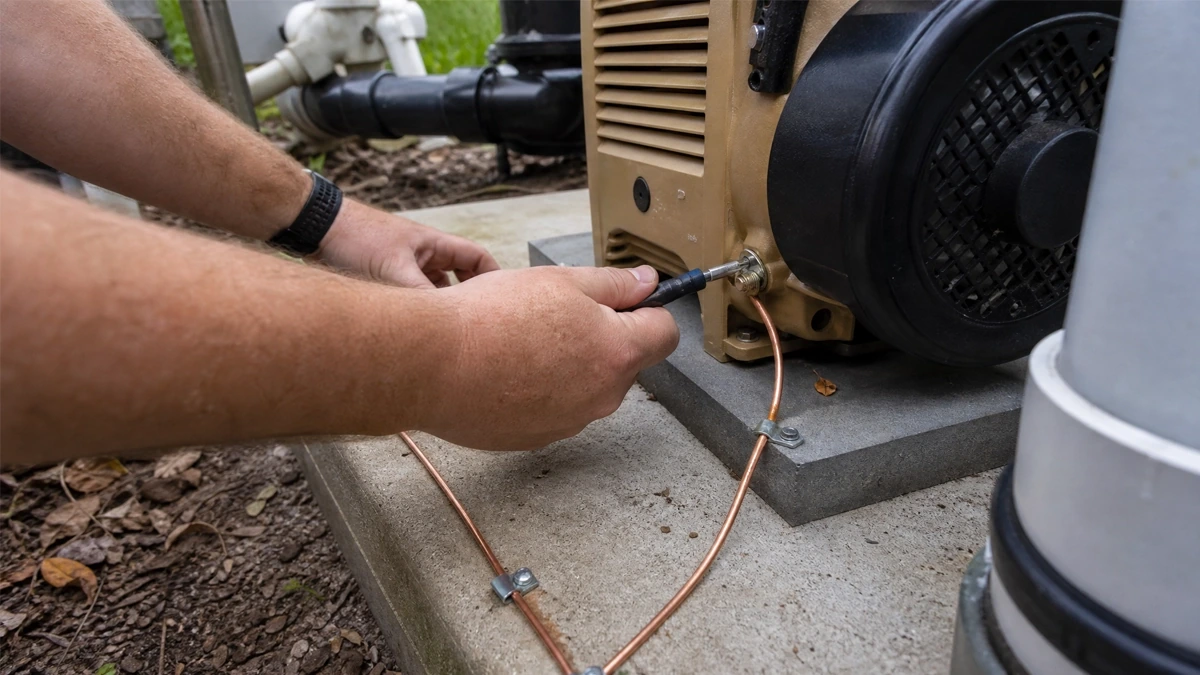
Bonding detail at the equipment pad
We do not run or alter gas lines, and we do not do the electrical supply work — including bonding, which is a licensed electrician's job. We do not build pools, we do not service above-ground pools, hot tubs or spas, and we do not offer leak detection.
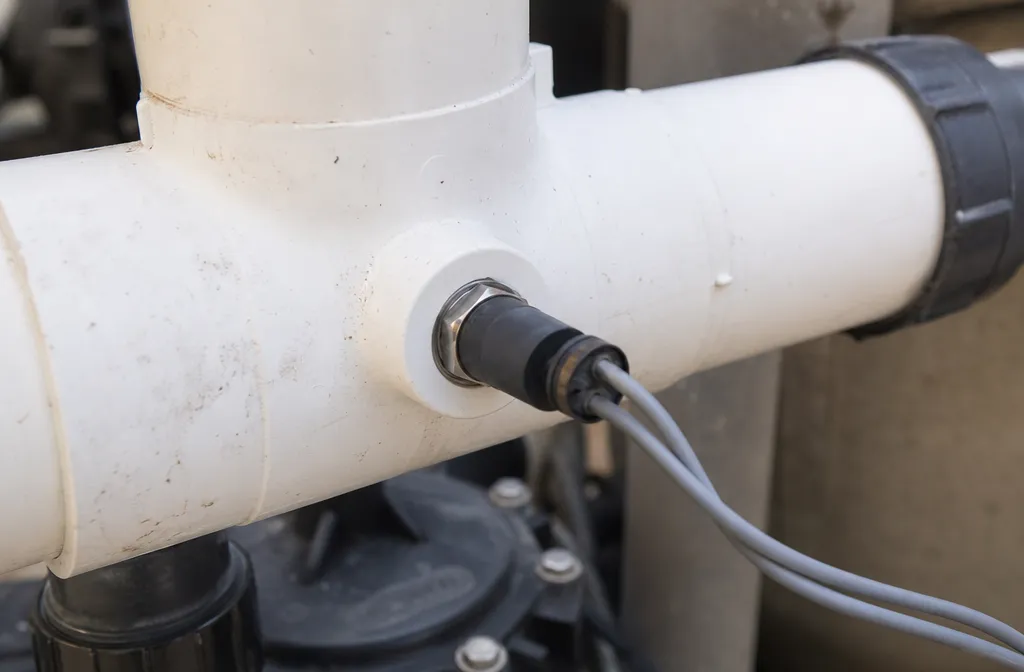
A pool heater flow switch
It asks more of the heat exchanger, because the salt is in the water permanently and chloride breaks down the protective films metals form on themselves — so corrosion continues rather than stalling. Add heat, which speeds every chemical process up, and the exchanger is working in the least forgiving conditions on the pad. A well-looked-after salt pool is unremarkable; a neglected one gets expensive in that one place.
A copper-nickel alloy commonly specified for salt-pool heat exchangers because it holds up better against chloride than plain copper. Two caveats: it is more resistant rather than immune, so it does not license loose chemistry — and we will not tell you what your manufacturer fits or approves, because specifications differ by unit and change. We check what you have and what the maker says about it.
Because making chlorine by electrolysis drives pH upward as a by-product, so a salt pool has a persistent tendency for pH to climb all season. High pH pushes calcium out of solution, and calcium comes out on the hottest surface in the system — the inside of your heat exchanger. The same precipitation scales the cell plates. One cause, two symptoms, on two pieces of equipment.
Indirectly, most likely. It sounds like scale on the exchanger tubes, and on a salt pool the usual route to scale is pH drifting up unchecked. Scale insulates, so the heater burns the same gas to move less heat into the water — and it makes the metal behind the deposit run hotter than intended, which is what shortens its life.
Where the unit is otherwise sound, yes — we de-lime the water side. What matters is whether there is sound metal under the deposit. Scale and metal loss are different findings with different answers, and telling them apart is part of the diagnostic rather than a guess from the symptom.
Hold pH where it should sit, all season, rather than correcting it when something misbehaves. It is unglamorous and it is the whole game — the failure mode on a salt pool is a slow drift rather than an event, which is why a written record of readings is worth more here than anywhere else.

