
Straps, springs, anchors, seams and grommets — repaired rather than replaced where the material is still sound. Including covers we did not install. $150 service call across Twinsburg, Solon, Hudson and the Route 91 corridor.
Worth saying first, because it is the question most people ringing about a cover repair actually have.
We repair safety covers regardless of who fitted them or who made them. A cover installed by a company that has since gone, moved on, or simply is not answering the phone is still a cover, and most of what goes wrong with one is a repair rather than a write-off.
A $150 service call covers up to the first hour of diagnosis or repair.
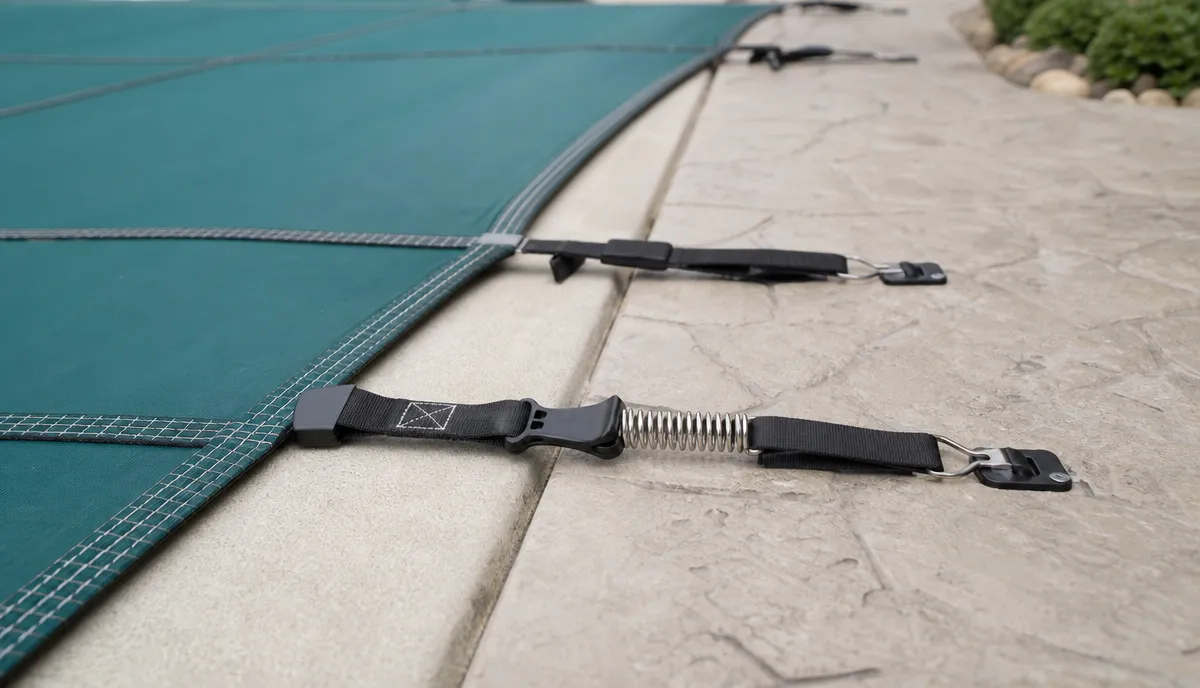
The panel material is rarely the first thing to go. The fixings are.
Stretched or torn straps. The webbing that connects the cover to the deck carries all the load, and straps stretch over years of tension. A stretched strap means the cover sits looser, which means it holds load worse, which stretches the rest faster. Straps are individually replaceable.
Weak or broken springs. Each strap is spring-loaded so the cover can flex under snow and ice without tearing at its fixing points. A tired spring stops absorbing that movement and starts transferring it into the fabric. Cheap to replace, and worth doing before the fabric pays for it.
Torn grommets and D-rings. Where the strap meets the cover. A grommet pulling out leaves a hole at the highest-stress point on the whole cover, and it spreads if it is left.
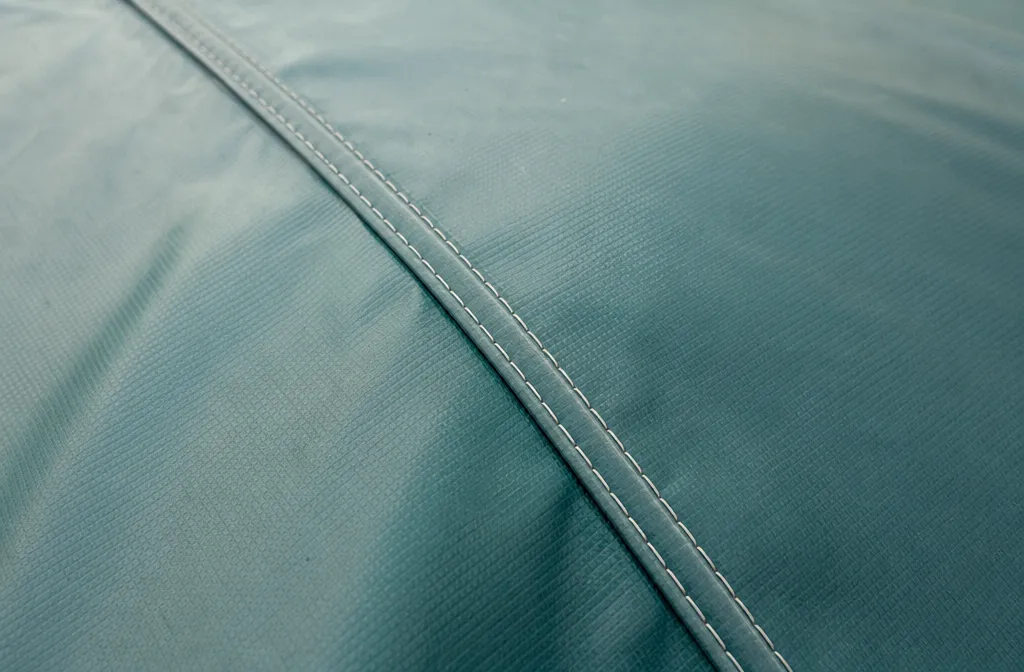
Open seams. A cover is welded from panels, and a seam that has begun to separate is a repair provided the material either side is sound.
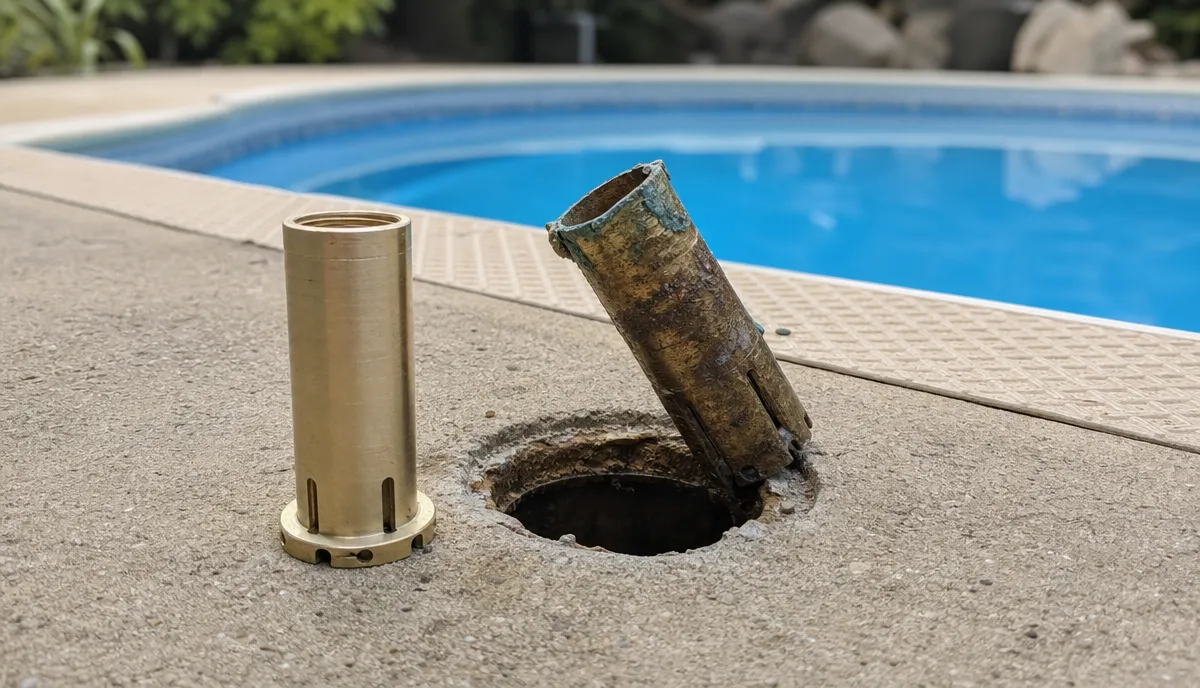
Loose or damaged anchors. The brass anchors set into your deck can work loose, seize with corrosion, or lose their caps. An anchor that has pulled out needs the hole made good and a new anchor drilled and tamped — a small job that people often assume means a new cover.
Perimeter gaps. A cover that has developed a gap at a step or a curve has usually lost tension somewhere, or a strap has stretched. That gap matters more than it looks: closing the gap between cover and pool edge is a core part of what makes a safety cover a barrier.
The material decides it, not the fixings.
Repair when the panel material is still sound — flexible, not brittle, no widespread thinning — and the problem is at the fixings, a seam or an anchor. That covers most of what we see, and it is a fraction of a replacement.
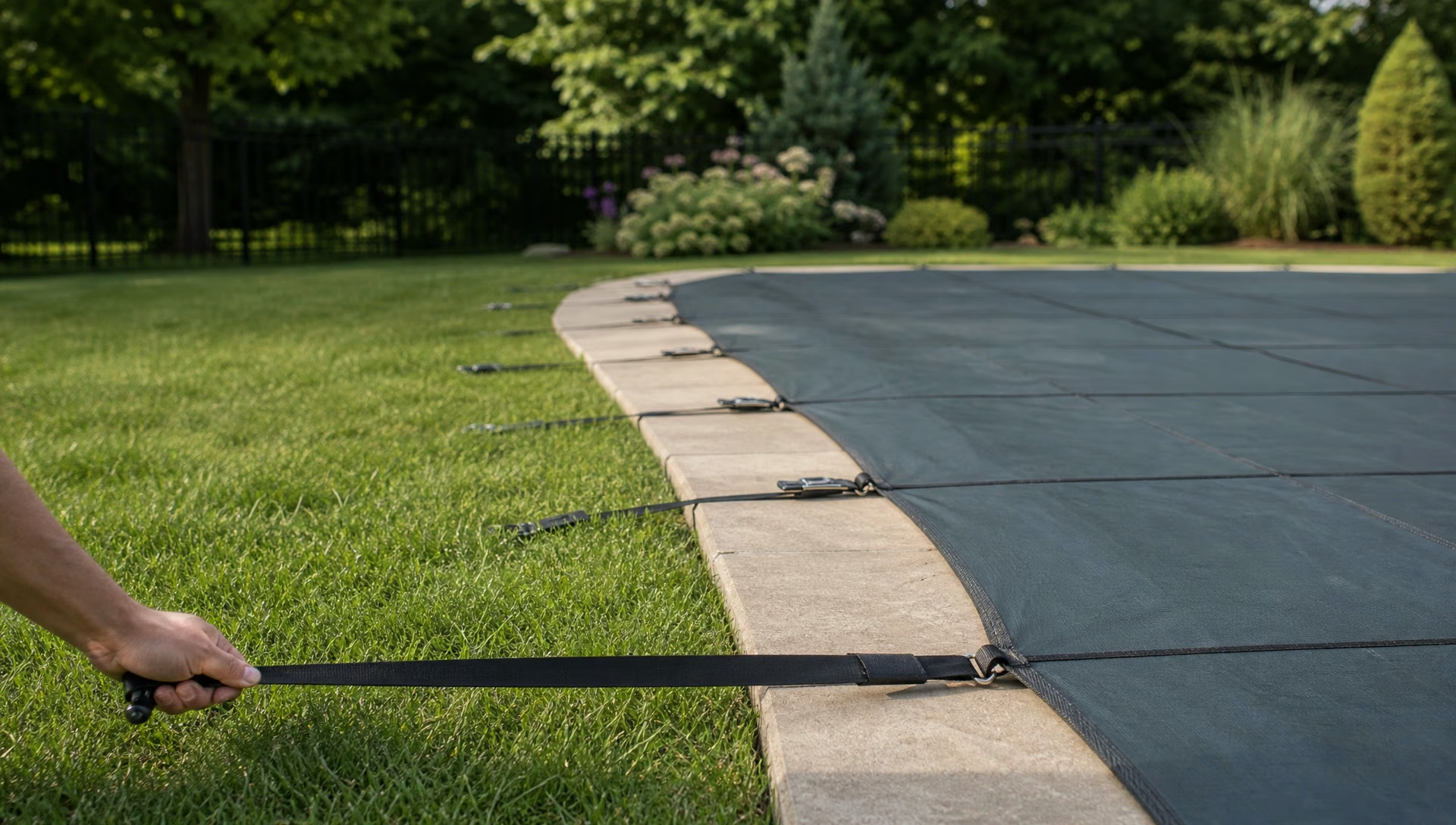
Replace when the material itself has gone. The signs: fabric that has become stiff and brittle rather than pliable; mesh whose weave has opened up or gone fuzzy across large areas; solid material that is delaminating or cracking when flexed; or fabric tearing away from the bindings in more than one place, which tells you the material is failing rather than that the cover has been unlucky.
The honest test we apply: if the repair will outlast the cover, we repair it. If the cover has a season left and the repair costs a meaningful share of a new one, we say so.
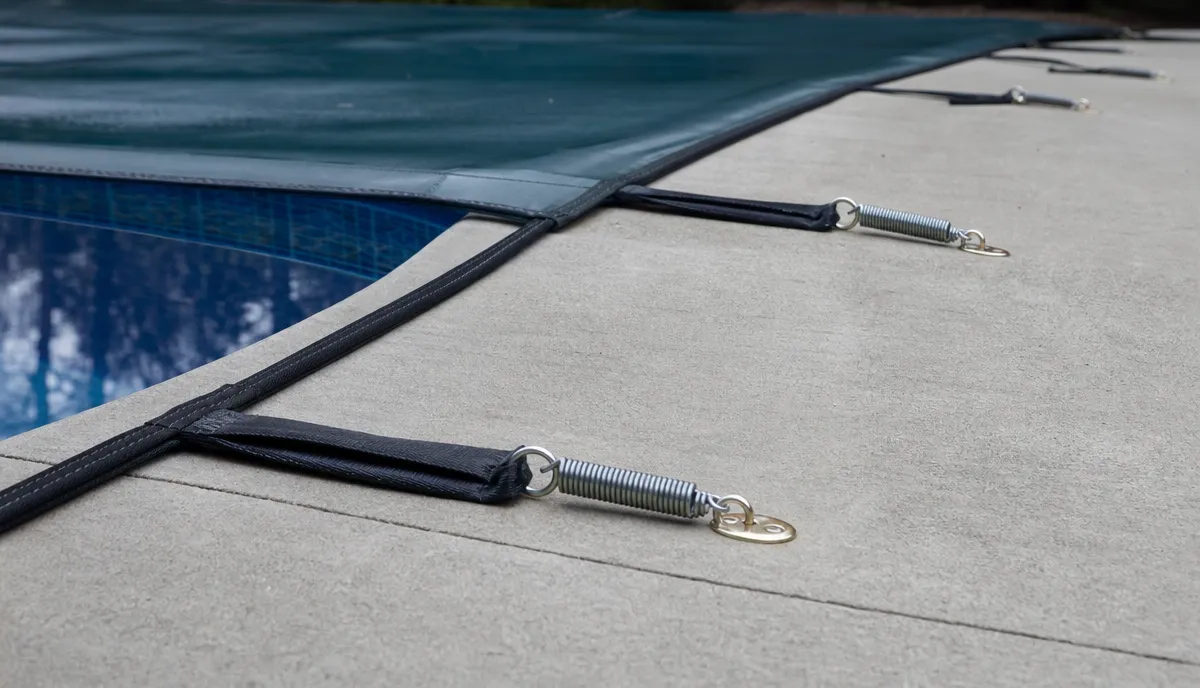
Spring-tensioned straps running from a cover to its anchors
A replacement is a new custom cover, which means the same process as a first install: we measure the pool and its surround on site, with a template for freeform shapes, and Merlin or GLI fabricate to those measurements.
One thing that often makes it cheaper than people expect: if your existing anchors are sound and correctly positioned, they stay. A replacement cover can use the deck anchors already there, so there may be no drilling at all. Whether that works depends on whether the original anchor layout matches what the new cover needs — we check it at the measure.
We install custom covers only, from Merlin and GLI. No stock or standard-size covers. See safety cover installation for how a fit works.
Two patterns worth understanding, because both are avoidable and both get blamed on the cover.
Ice movement in the thaw. A cover carrying snow that then partly melts and refreezes takes real load, and it moves. Northeast Ohio crosses freezing repeatedly through the winter rather than freezing once, so the cover works against its fixings through every cycle. This is why springs and straps wear here faster than in a milder climate, and why the tension is worth checking every autumn.
A water level left too low. This is the big one. A cover is designed with water beneath it supporting the load — snow pushes the cover down and the water takes the weight. Drop the level too far at closing and there is nothing under the cover to push against, so the fabric and the straps carry everything. Closing at the correct level — which we do as part of a pool closing, where the lines are also drained, plugged and treated with antifreeze so nothing can freeze-crack — protects the cover as well as the plumbing.
A solid cover also needs its pump monitored, because a cover carrying a pond of standing water is carrying weight it was not meant to hold.
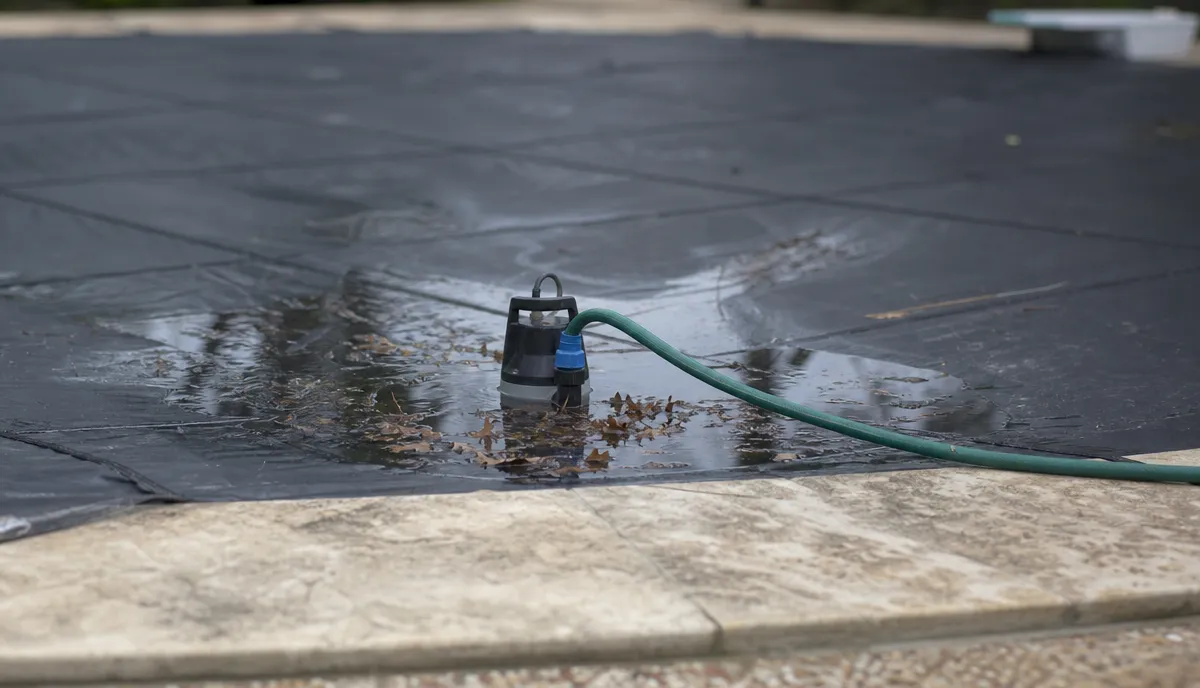
A cover pump sitting in standing water on a solid cover
“Matt and his team are fantastic to work with. Easy to schedule, quality work is done right the first time. Highly recommend.”
Most of what fails on a cover is a repair, not a replacement.
Five minutes before the cover goes on, and it saves most of the calls we get in January.
Any that look stretched, frayed or have a tired spring — deal with them now rather than in February.
And its cap seats. A seized anchor is easier to free in October than under snow.
At the highest-stress corners.
Once the cover is on and tensioned.
Correct for winterizing, not lower — see above.
Customers whose pool we close get this as part of the visit.
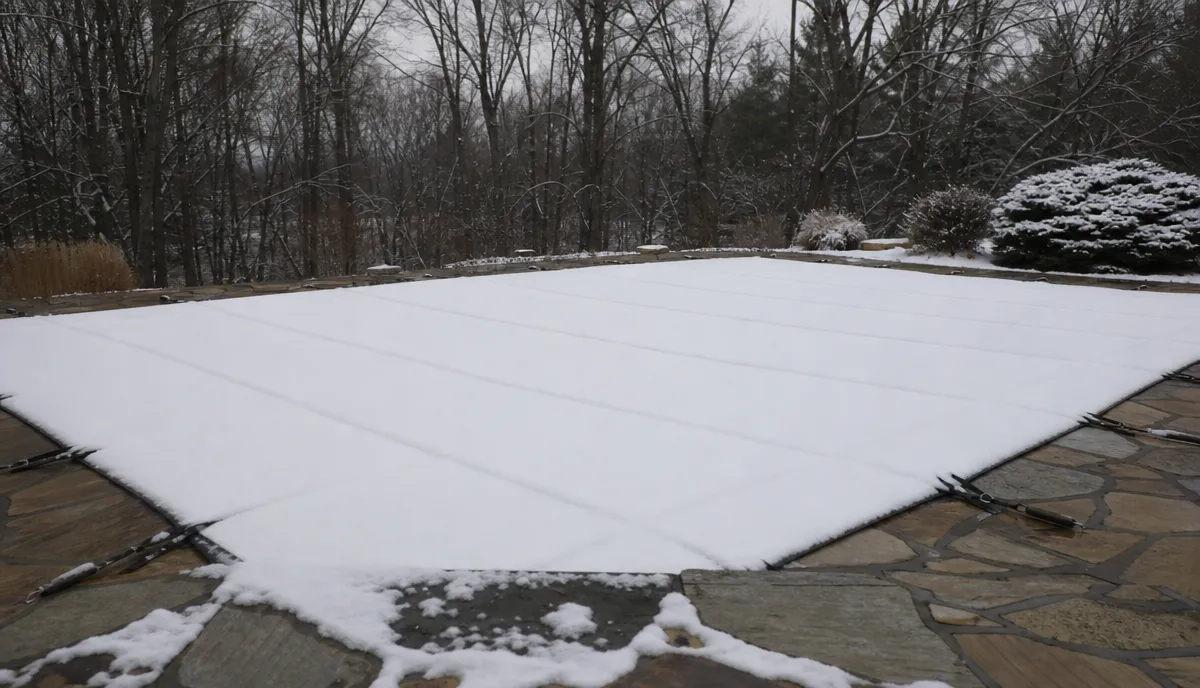
Snow lying on a fitted pool safety cover
A cover coming off or going on is one of the few times the water line and the shallow shelf are fully visible and dry-ish. If the liner has taken damage at the water line over winter — which is where Northeast Ohio liners fail first — that is when it is easiest to see. See pool liner repair.
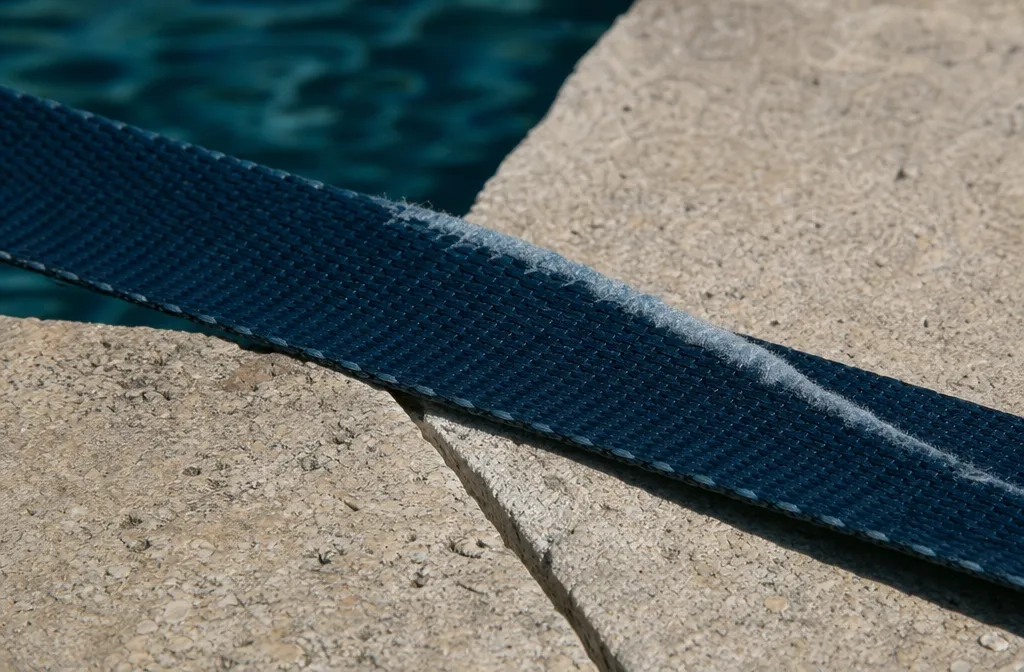
Wear on a pool cover strap where it crosses the coping
M & G Pools services in-ground pools exclusively. We do not service, repair or supply equipment for above-ground pools, and we do not service hot tubs or spas.
Yes, and that is most of this work — regardless of who fitted it or who made it. A cover installed by a company that is no longer around is still a cover, and most of what goes wrong with one is a repair rather than a write-off. A $150 service call covers up to the first hour.
The fixings rather than the fabric. Straps stretch under years of tension, springs weaken and stop absorbing snow and ice movement, grommets tear out at the highest-stress points, seams open, and deck anchors work loose or seize. All of those are individually repairable.
No. The hole is made good and a new anchor is drilled and tamped flush. It is a small job, and it is one people most often assume means a new cover.
Often, yes — and it can make a replacement noticeably cheaper than expected. If your anchors are sound and positioned to suit what the new cover needs, they stay and there may be no drilling at all. We check the layout when we measure.
Snow and ice load, and movement. Northeast Ohio crosses freezing repeatedly through the winter rather than freezing once, so the cover flexes against its fixings through every thaw cycle. A water level left too low makes it much worse — a cover is designed with water beneath it taking the weight, so if the level is dropped too far the straps and fabric carry everything.