
Pool liner repairs from $195, patched underwater where possible — your pool stays full and stays in use. Serving Twinsburg, Solon, Hudson, Chagrin Falls and the Route 91 corridor.
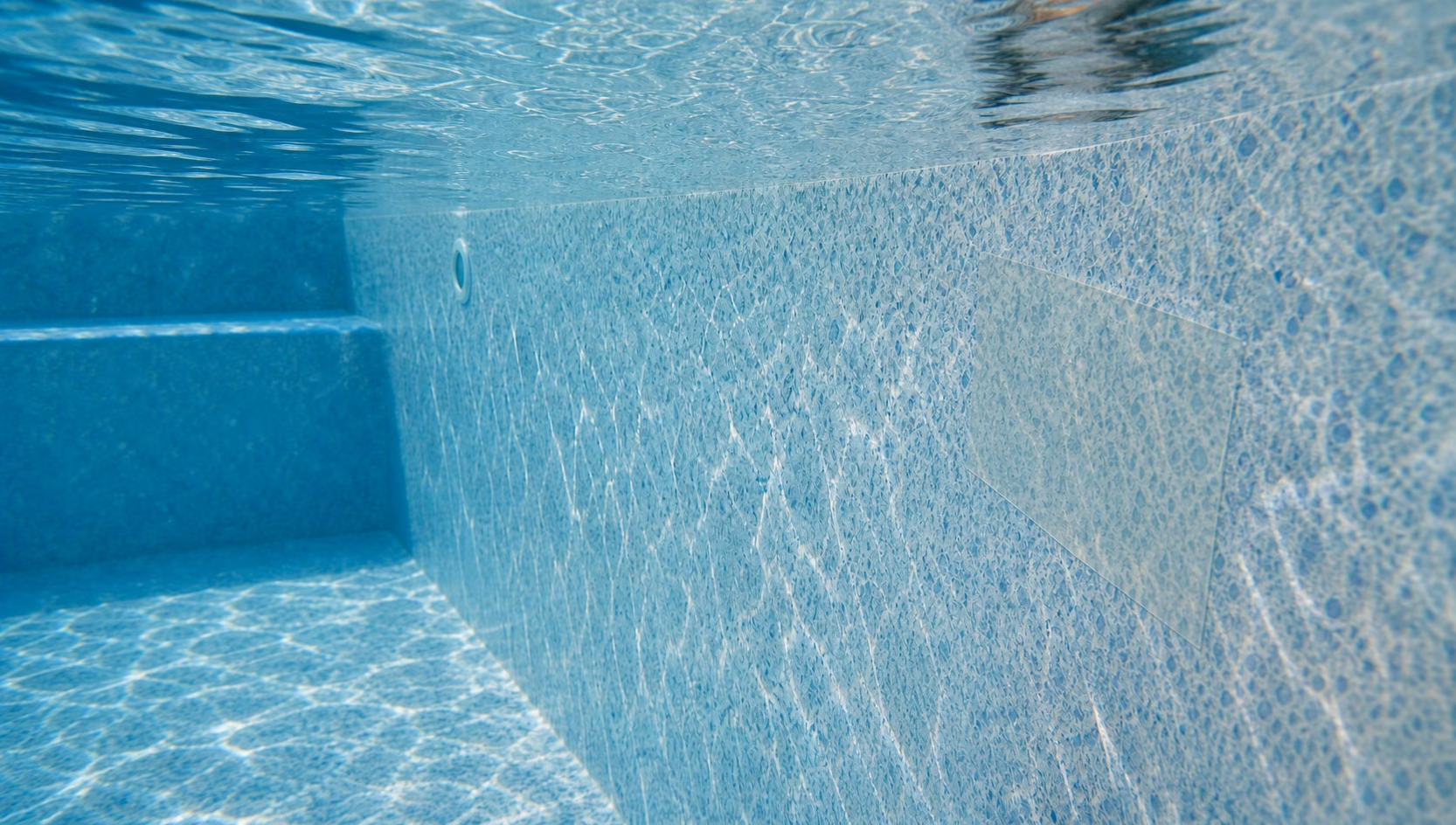
Most pool liner repairs do not need the pool drained. We patch underwater, and that is the default rather than a special case.
The patch uses an adhesive formulated to cure in water and a patch material matched to the liner. The technician works submerged, cleans the area, and applies the patch so it bonds to the vinyl and seals from the water side — water pressure then holds it against the liner instead of working to peel it off. Done properly this is a permanent repair, not a stopgap.
What that means for you: no draining, no refill, no waiting, and none of the risk that comes with emptying a vinyl pool.
Pool liner repairs start at $195.
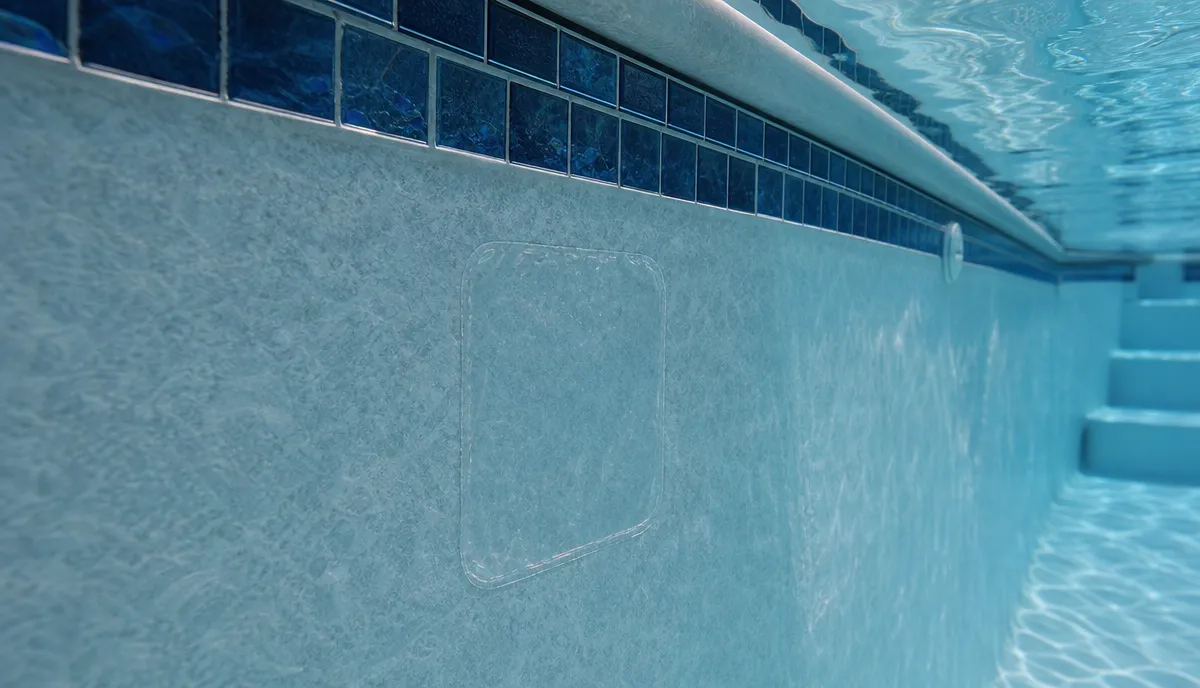
Because emptying a vinyl pool carries real risk, and the risk is out of proportion to the size of most repairs.
The liner is held in place by the water. Remove it and the liner is unloaded — it shrinks slightly, shifts, and can pull out of its track or fail to reseat the way it was. Wrinkles that were not there before turn up after a drain-and-refill, and they do not come out.
Nothing balances the ground pressure. A full pool pushes outward against soil pushing inward. Empty it and only the shell resists. Where the water table is high — common here after a wet spring, and on the clay soil a lot of Summit and Cuyahoga County lots sit on — that is how a floated liner happens.
An older liner may not survive the process. Vinyl that has been in service for years has lost flexibility. Draining, drying and refilling can finish a liner that had seasons left.
So a repair done with the water in is simply a better repair. Draining is for a replacement, or for damage that genuinely cannot be reached any other way — and we will tell you honestly which yours is rather than reaching for the drain because it is easier for us.
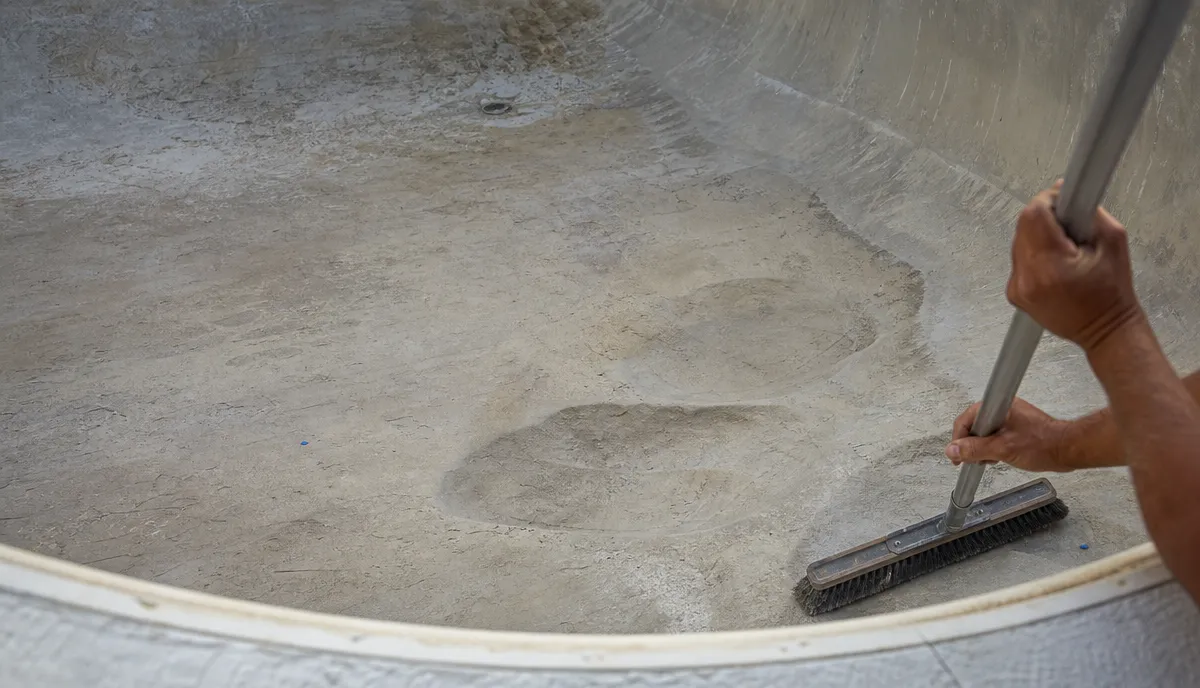
The floor of an empty pool with the liner out
Worth establishing before anyone quotes you a liner, because a good share of "my liner is leaking" calls turn out not to be the liner.
Evaporation looks exactly like a slow leak. An uncovered heated pool loses a surprising amount of water to evaporation, and more on hot, dry, windy days. If your loss is gradual and roughly constant, and the pool is uncovered and heated, evaporation is a serious candidate. A cover changes the number dramatically — which is one of the quieter arguments for a safety cover.
A plumbing leak looks the same from the surface. Water going out through an underground return or suction line drops the level exactly like a hole in the liner does. The distinction matters enormously, because one is a patch and the other is excavation.
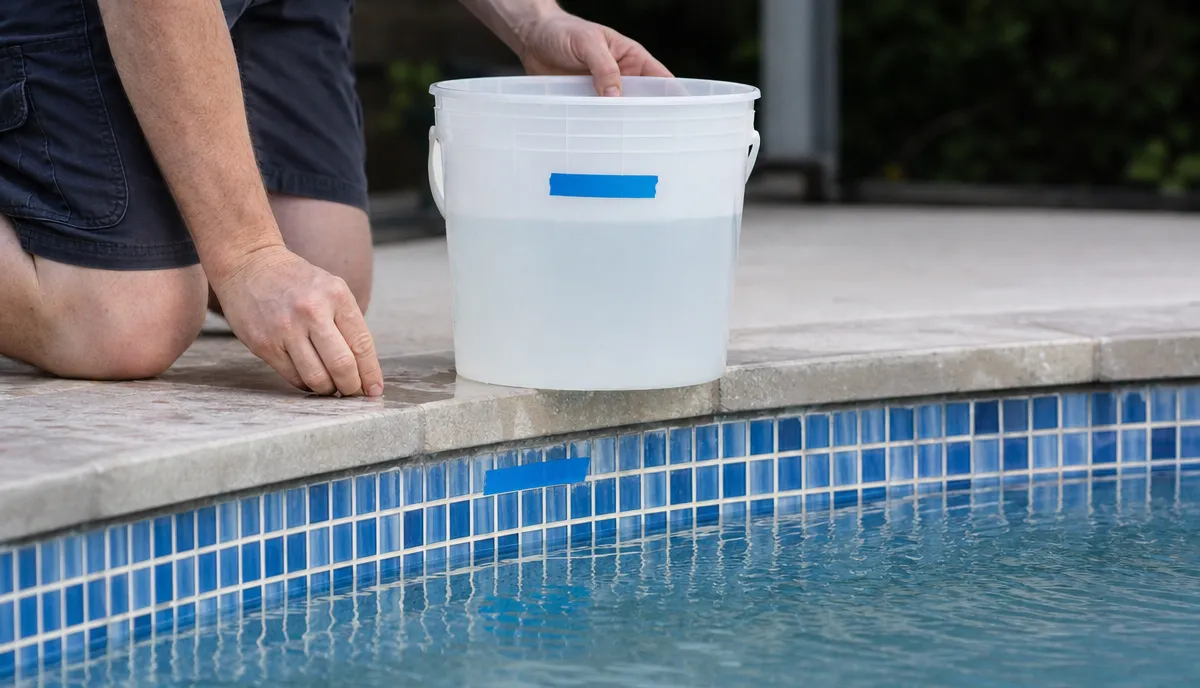
The bucket test tells you which. Set a bucket of pool water on a step so the inside and outside levels match, and leave it a day or two with the pool's usual routine. Both drop equally → evaporation. The pool drops faster → you are losing water somewhere.
And the level where it stops is a clue. If the water falls to a particular depth and then holds, the leak is at that level — commonly a skimmer throat or a return fitting. If it keeps going below every fitting, look at the main drain or the liner floor.
A $150 service call covers up to the first hour of diagnosis, which is normally enough to settle liner against plumbing against nothing at all.
The deciding factor is the condition of the vinyl, not the size of the damage.
Patch when the liner is still flexible, seated properly in its track, holding its colour reasonably, and the damage is localised. A sound liner with a puncture is a patch, and that is the majority of what we see.
Replace when the vinyl has gone brittle. A liner near the end of its life cracks when flexed rather than bending — and a patch on brittle vinyl fails at the edge of the patch, because the repair is sound and the material around it is not. Also replace when the liner has pulled out of its track along a long run, or when splits start appearing in several unrelated places, which tells you the material is failing rather than that the pool has been unlucky.
The honest test: if we can patch it and expect the patch to outlast the liner, we patch it. If the liner is going to need replacing next season anyway, we say that instead of taking $195 twice. See pool liner replacement.
In the floor and walls, underwater where reachable
Skimmer throats, return eyeballs, main drains and light niches. These are where the liner is cut and clamped, and where most liner leaks actually are
Which present exactly like a torn liner from the water side and are a far smaller job
Where two panels of liner were joined in manufacture — a seam that has begun to open is a repair, not a replacement, provided the vinyl either side is sound
Where movement and ice abrade the vinyl and concentrate wear
In a localised run, where it can be reseated
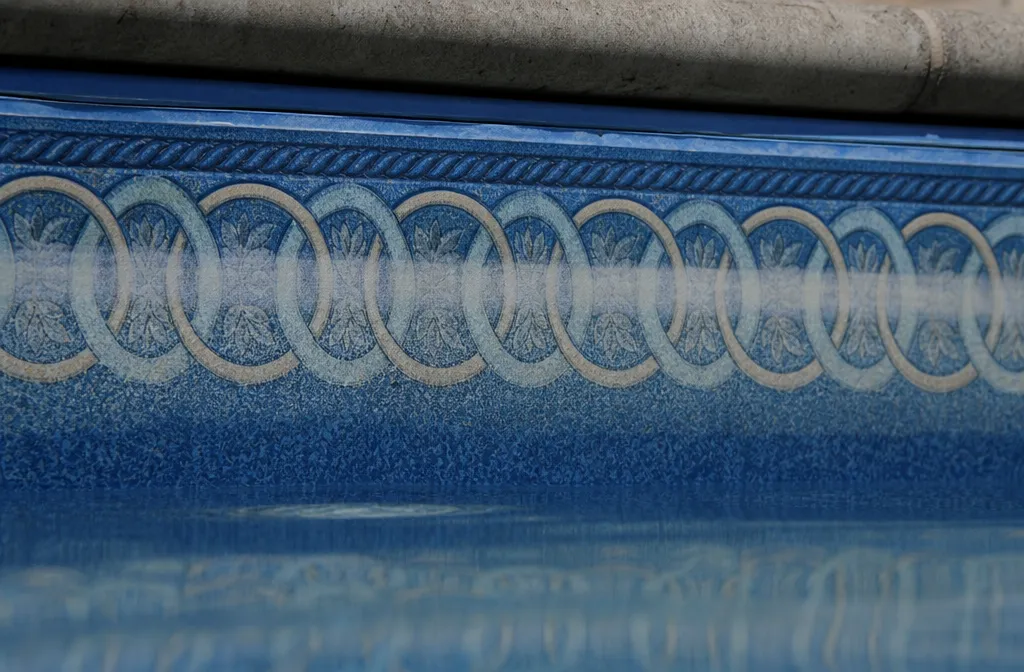
Wear along the waterline of a vinyl liner
“M&G has serviced our in ground pool for the past 10+ years. Seasonal opening & closing, replacing heaters, pumps and a number of aggravating repairs that Matt & his crew have handled correctly at a fair price. Recommend highly.”
A diagnostic settles liner, plumbing or evaporation before anything gets quoted.
Vinyl in Northeast Ohio ages differently from vinyl in a warm state.
Cold vinyl is stiff vinyl, and stiff vinyl tears. A liner flexible at swimming temperature has much less give at winter temperature, so anything that moves it while cold works against a material that cannot absorb it.
Freeze-thaw concentrates at the water line. This region crosses freezing repeatedly through the winter rather than freezing once, so ice at the water line forms, expands, thaws and reforms. That band takes more punishment than the rest of the liner, and it is where splits show up first.
Winter chemistry matters more than summer chemistry. A pool closed with unbalanced water spends five months with that water against the vinyl. Low pH over a whole winter is hard on a liner, and metals in solution stain it permanently unless they are held with a sequesterant — which is why well water needs handling and why a proper close balances the water rather than simply covering it.
Tannins stain through mesh. Leaf tannins passing through a mesh cover mark vinyl and the marks do not come out. Under heavy leaf fall that is a real argument for a solid cover.
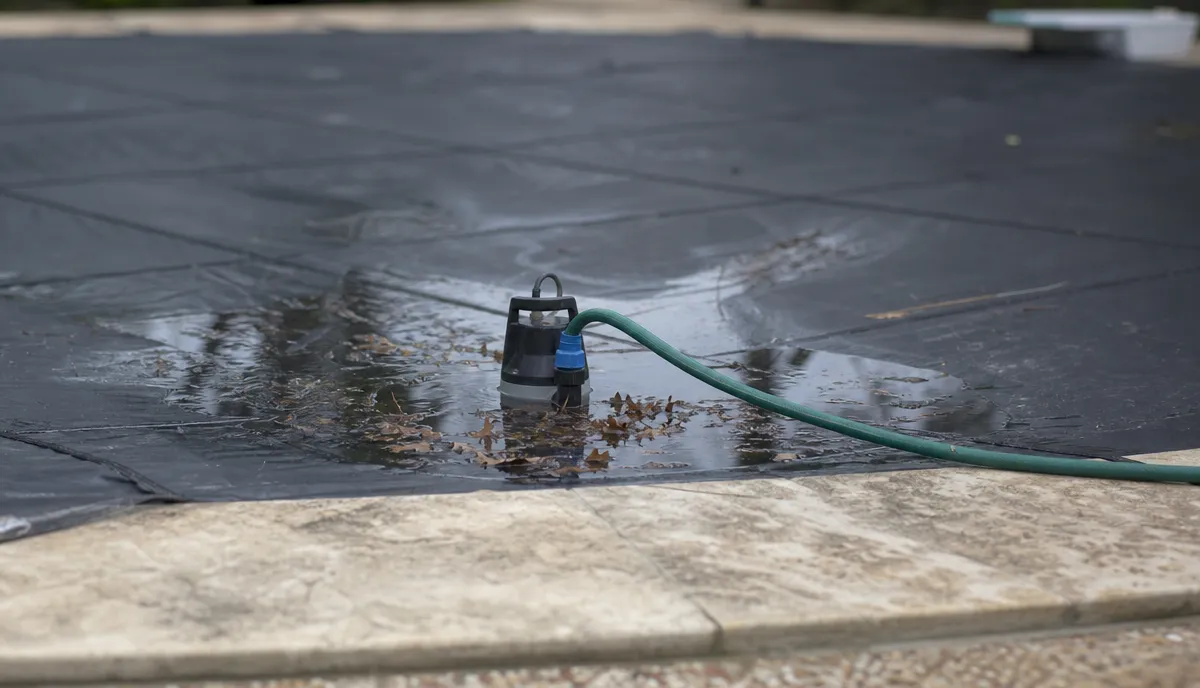
A cover pump sitting in standing water on a solid cover
The two things that most extend a vinyl liner are unglamorous: balanced water and a correct close.
Customers on a regular chemical and equipment check get the first by default and it is documented — so if a liner ever does fail early there is a written record of how the water was maintained, which matters if a manufacturer asks.
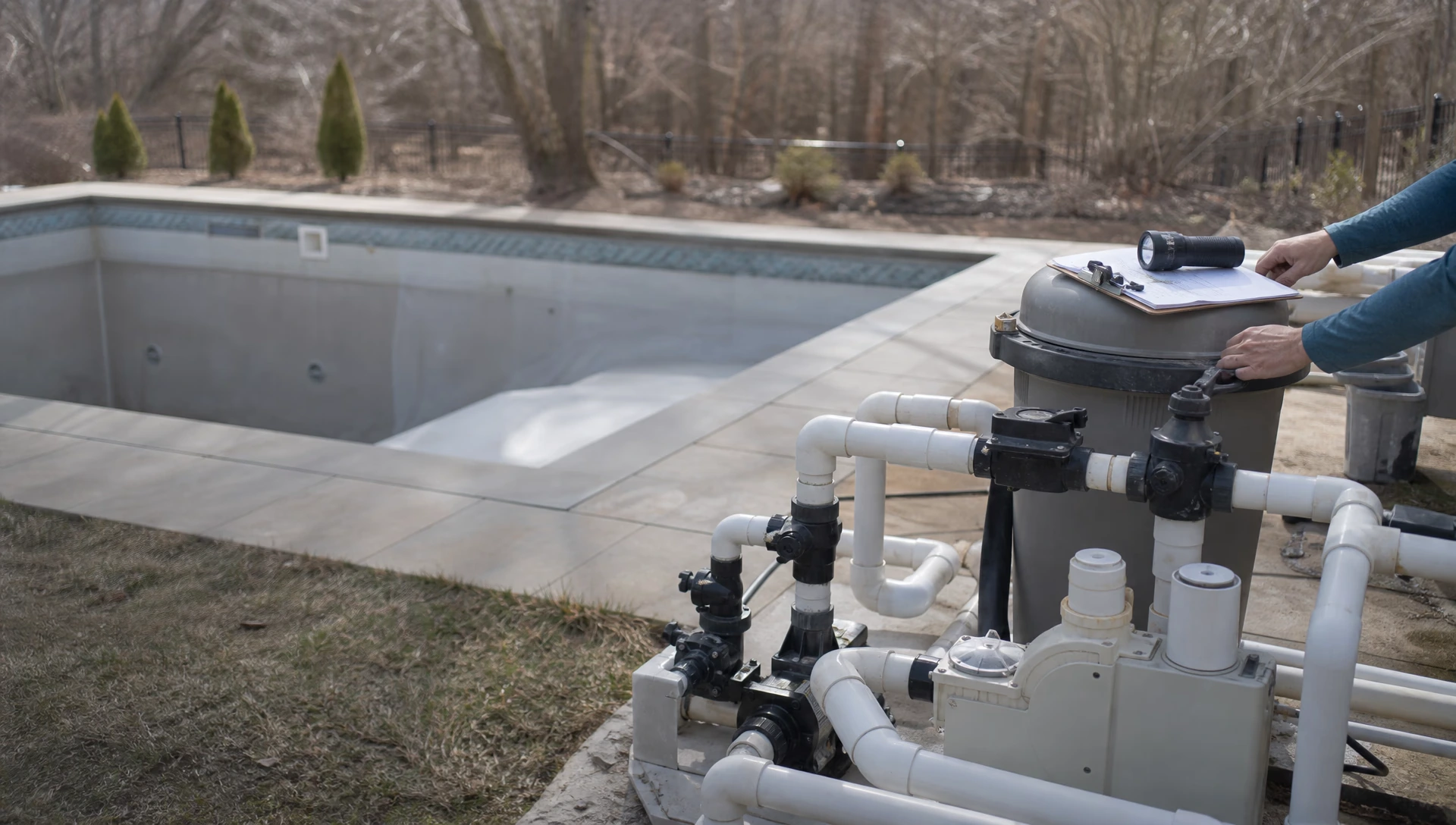
A dry pool equipment pad in early spring with a torch and clipboard resting on the filter, the pool empty of water behind
M & G Pools services in-ground pools exclusively. We do not service, repair or supply equipment for above-ground pools, and we do not service hot tubs or spas.
Yes — underwater patching is our default. The adhesive cures in water and the patch bonds to the vinyl and seals from the water side, so pressure holds it in place rather than peeling it off. It is a permanent repair, your pool stays full, and you avoid the risk that comes with emptying a vinyl pool. Pool liner repairs start at $195.
From $195 for patching. A $150 service call covers up to the first hour where the problem needs diagnosing first — for example when it is not yet clear whether you are losing water through the liner, through the plumbing, or to evaporation.
Try the bucket test: stand a bucket of pool water on a step so the levels match inside and out, then leave it a day or two with your normal routine. If both drop by the same amount it is evaporation. If the pool drops faster, you are losing water. Also note the level where the loss stops — that usually tells you which fitting is involved.
It depends on the vinyl, not the hole. A liner that is still flexible and seated properly is a patch. A liner that has gone brittle needs replacing, because a patch on brittle vinyl fails at the edge of the patch — the repair holds and the material around it does not. If your liner will need replacing next season anyway, we will tell you rather than charge for patching twice.
Because that band takes the most punishment. Northeast Ohio crosses freezing repeatedly through the winter rather than freezing once, so ice at the water line forms, expands and reforms — and cold vinyl is stiff, so it tears rather than flexing. Closing at the correct water level puts that band where the liner is best supported.