
Liner patching from $195 — including patches we can do underwater, without draining your pool — plus full liner replacement. Serving Twinsburg, Solon, Hudson, Chagrin Falls and the Route 91 corridor.
Most liner repairs do not require draining the pool. We patch underwater, and it matters more than it sounds.
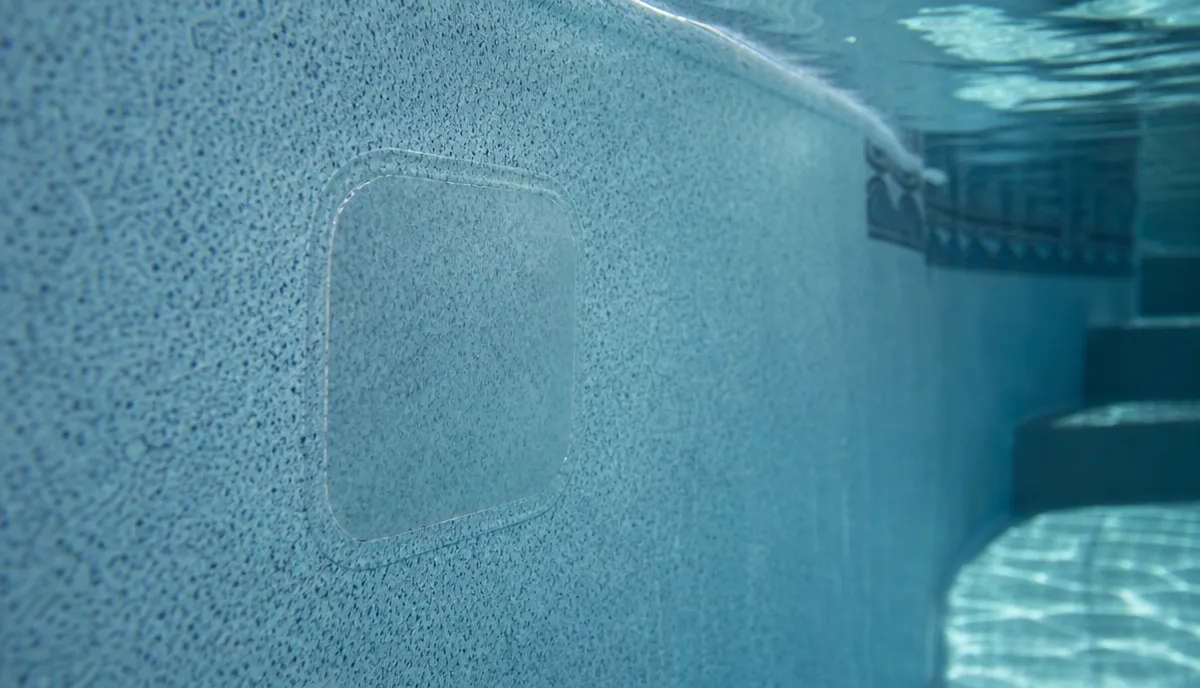
A patch applied underwater uses an adhesive that cures in water and a patch material matched to the liner. It bonds to the vinyl and seals from the water side, so pressure pushes it against the liner rather than peeling it away. Done properly it is not a temporary measure — it is a permanent repair, and it holds. The pool stays full, stays in use, and there is no downtime waiting for a refill.
Liner patching starts at $195.
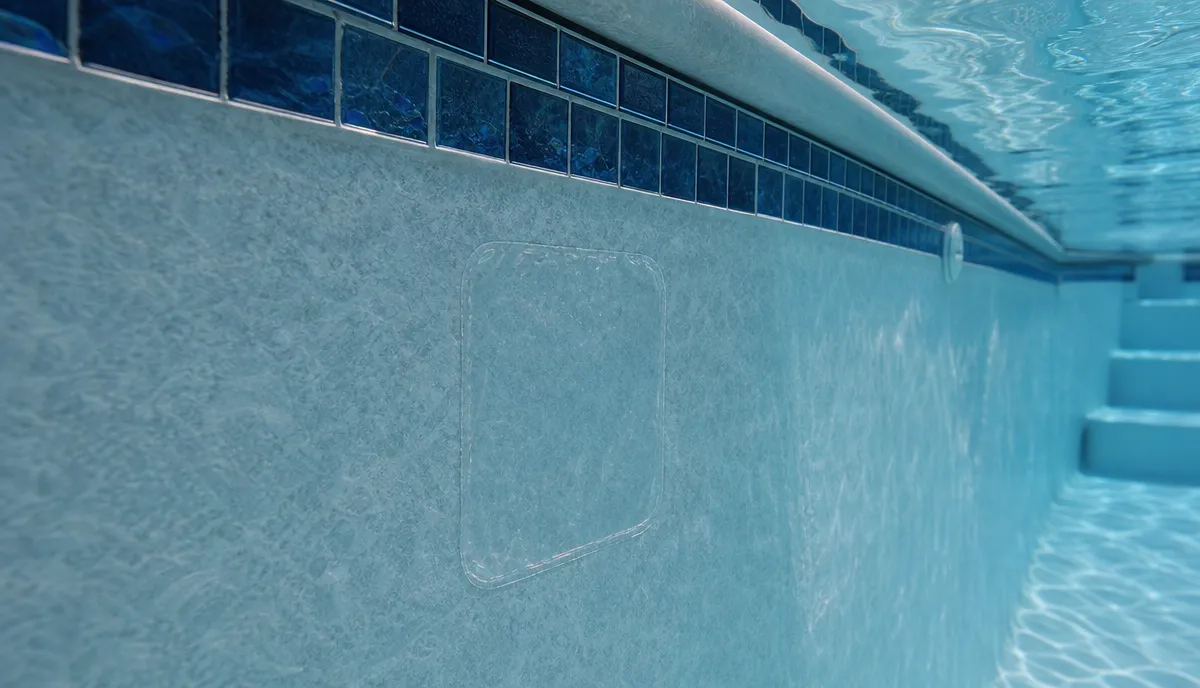
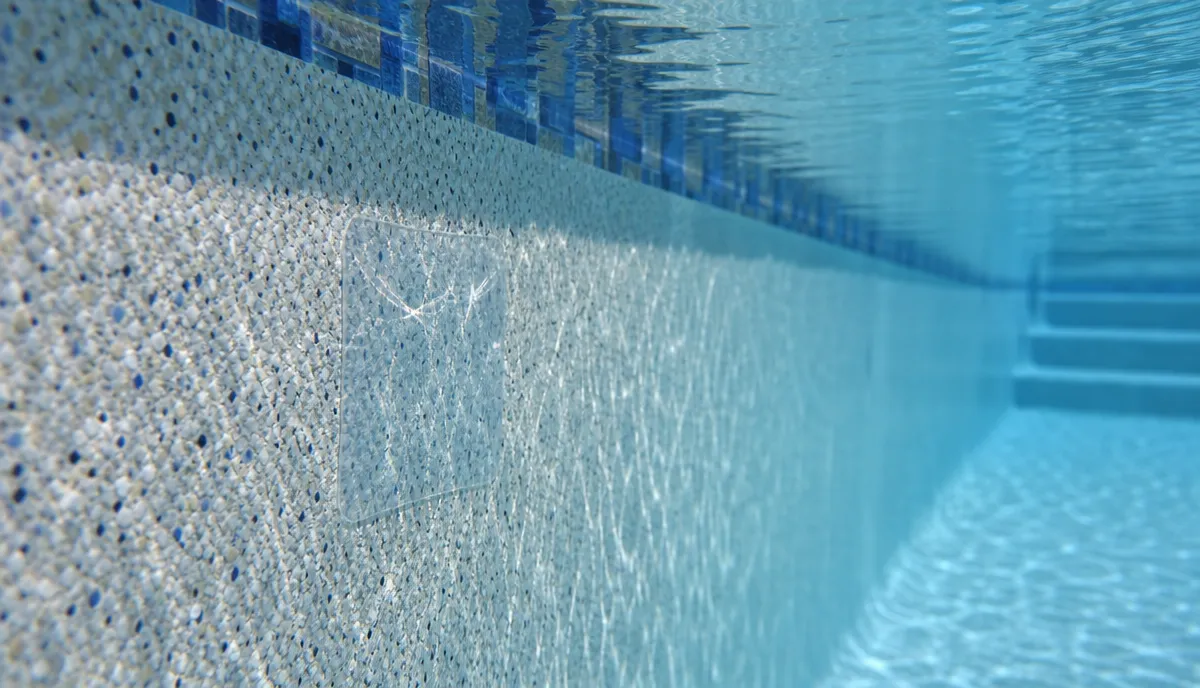
A vinyl liner patch being applied underwater
This is the part that makes underwater repair valuable rather than merely convenient, and it is the reason we do not reach for the drain.
A vinyl liner is held in place by the weight of the water. Take the water out and the liner is no longer under load — it shrinks slightly, moves, and can pull out of its track or fail to seat back the way it was. A liner that has been drained and refilled frequently never sits quite the same again, and wrinkles that were not there before appear.
Then there is what is behind and beneath it. An empty pool has nothing pushing outward against the ground pushing inward. Where the water table is high — and after a wet Northeast Ohio spring, or on a lot with clay soil that holds water, it often is — hydrostatic pressure acts on an empty shell with no water to balance it. That is how a floated liner or worse happens.
And an older liner may not survive the process. Vinyl that has been in service for years has lost flexibility. Draining, letting it dry, and refilling can turn a liner with several seasons left into one that needs replacing now.
So: if a repair can be done with the water in, that is the better repair. Draining is for a replacement, or for a repair that genuinely cannot be reached any other way — and we will tell you honestly which yours is.
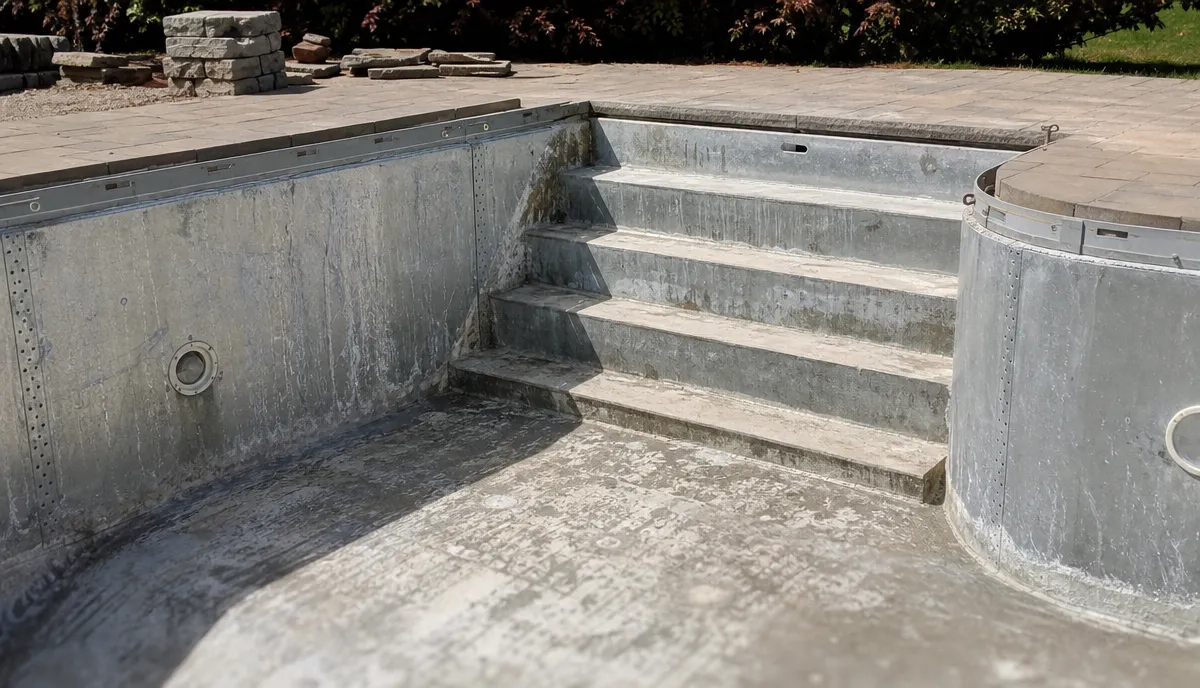
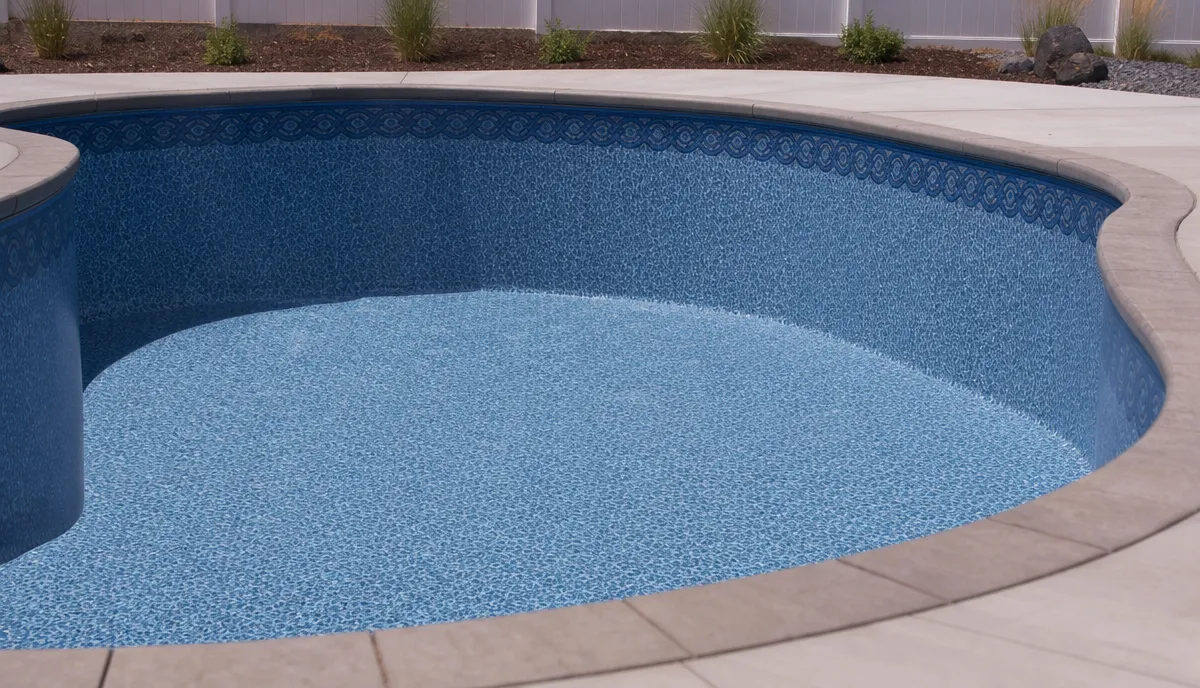
An empty in-ground pool shell with the old liner removed
Patch repairs, from $195. Punctures, tears and small splits, underwater where possible. Patches at fittings, steps and corners where movement concentrates.
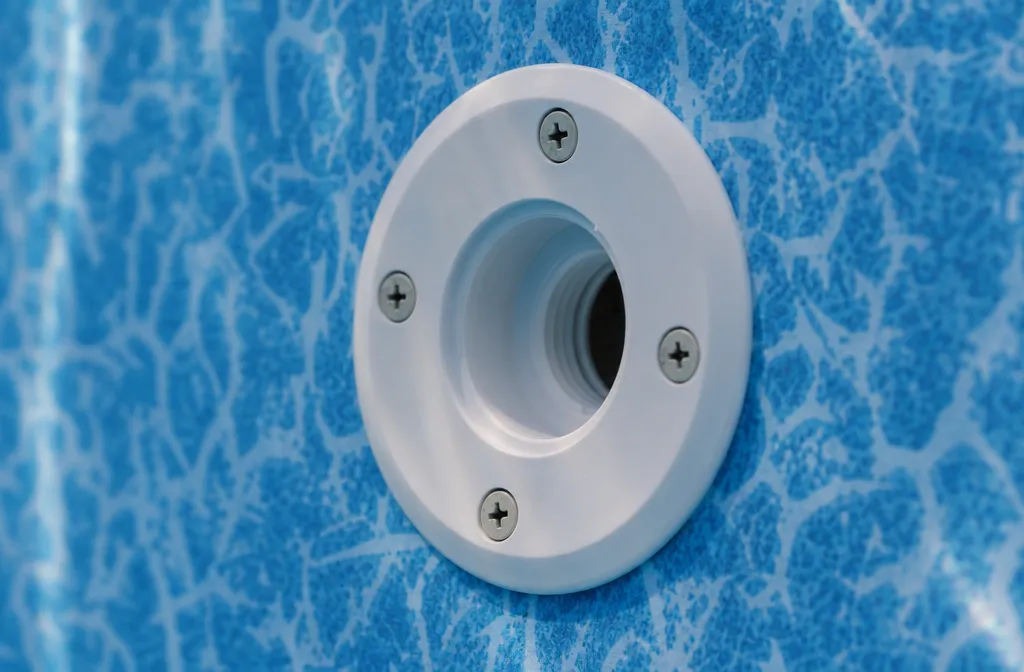
Leak repairs at fittings. Skimmer throats, return eyeballs, main drains and light niches — the places a liner is cut and clamped, and therefore where most liner leaks actually are. A gasket that has lost its seal at a faceplate looks exactly like a torn liner from the waterside and is a far smaller job.
Full liner replacement. Quoted, because it depends on the pool's shape, size, depth profile, the condition of what is behind the liner, and the pattern selected. When a liner comes out we can see the floor and walls beneath it, which is the only time anyone can — and if there is work needed back there, that is the moment to do it.
Diagnosis. A $150 service call covers up to the first hour, which is usually enough to establish whether you have a liner leak, a plumbing leak, or no leak at all.
The deciding factor is the condition of the vinyl, not the size of the hole.
Patch when the liner is still flexible, holding its colour reasonably, seated properly in its track, and the damage is localised. A sound liner with a puncture is a patch, full stop.
Replace when the vinyl has gone brittle — a liner near the end of its life will crack when flexed rather than bending, and a patch on brittle vinyl fails at the edge of the patch. Also when the liner has pulled out of its track over a long run, when there are multiple splits appearing in different places (which tells you the material is failing rather than that the pool has been unlucky), or when it has faded and thinned to the point where the next puncture is inevitable.
Symptoms worth a call:
Water loss you cannot explain, particularly if it slows or stops at a particular level — that level is telling you where the leak is
Wrinkles that appeared and did not exist before
The liner feeling loose or moving under your foot on the floor
Staining or discolouration spreading from behind the liner
The liner pulling away from a step, corner or fitting
Vinyl that feels stiff and papery rather than supple
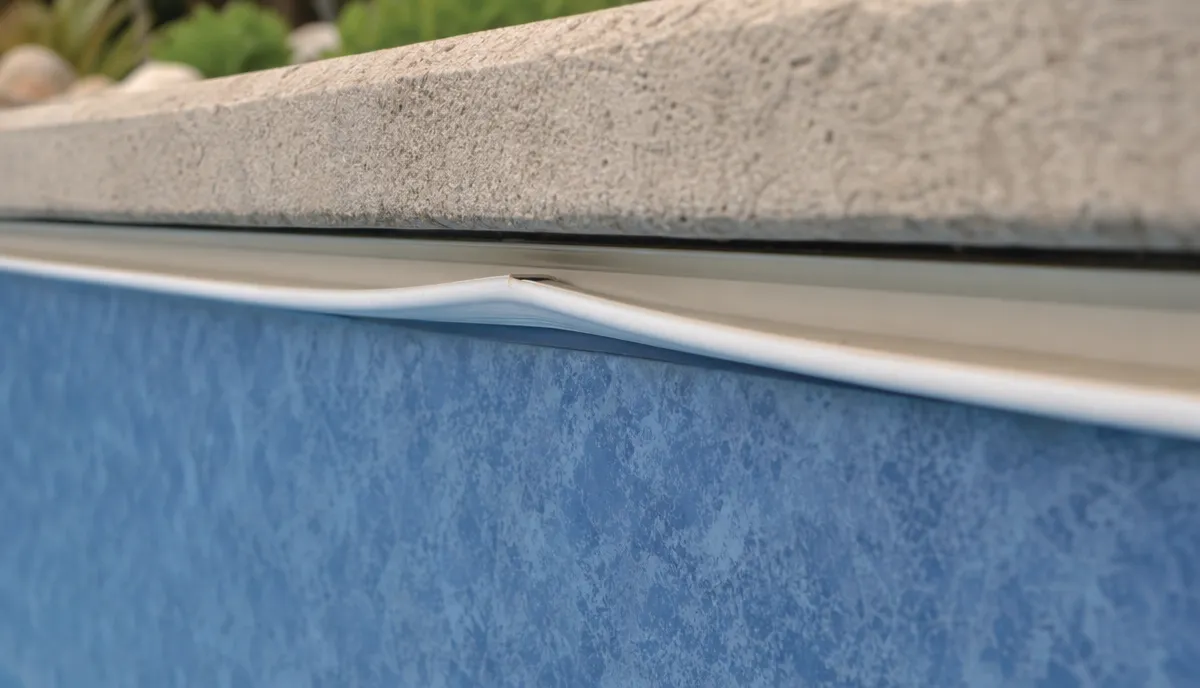
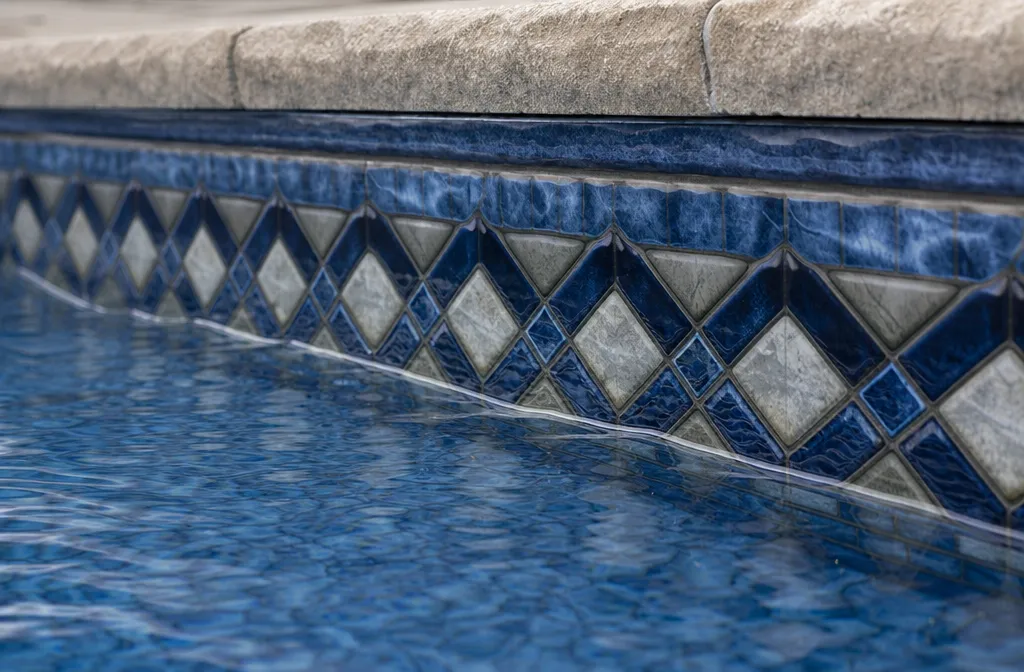
Vinyl liner bead seated in its track
One important caution
Not all unexplained water loss is the liner. Evaporation from an uncovered heated pool is substantial and looks exactly like a slow leak, and a plumbing leak underground looks the same from the surface. That is what the diagnostic establishes before anyone quotes a liner.
We fit vinyl liners for in-ground pools, and work with the pattern and gauge you choose. Thicker vinyl resists puncture better and costs more; the pattern is a preference and does not affect durability.
We are a service company — we service, repair and replace. We do not build pools, so we are not steering you toward a rebuild.
Products we install carry the full manufacturer's warranty, which varies by manufacturer and generally runs between one and three years. We do not offer a separate workmanship guarantee, and nothing on this page should be read as one.
Vinyl in this climate ages differently from vinyl in a warm state, and it is worth knowing what is actually wearing it out.
Cold makes vinyl stiff, and stiff vinyl tears. A liner is flexible at swimming temperature and much less so at winter temperature. Anything that flexes it while cold — ice movement, a cover strap dragging, someone walking on a covered pool — is working on a material that has lost its give.
Freeze-thaw at the water line. Northeast Ohio crosses freezing repeatedly rather than freezing once, so ice at the water line forms, expands, thaws and reforms through the winter. That band takes more punishment than the rest of the liner, which is why splits appear there first.
The water level matters. A close that lowers the water to the correct winterizing level puts the vulnerable band where the liner is best supported — and because the lines have been blow out and the equipment purged, dropping the level costs the liner nothing. Too high and expanding ice works directly on the liner at the shallow shelf.
Chemistry left wrong in autumn. A pool closed with unbalanced water spends five months with that water against the vinyl. Low pH is hard on a liner over a whole winter, and metals in solution stain it permanently — which is why a sequesterant matters on well water, and why a proper close balances the water rather than just covering it.
A solid cover protects the liner from tannins. Leaf tannins passing through a mesh cover stain vinyl, and those stains do not come out. On a pool under heavy leaf fall that is a real argument for a solid safety cover.
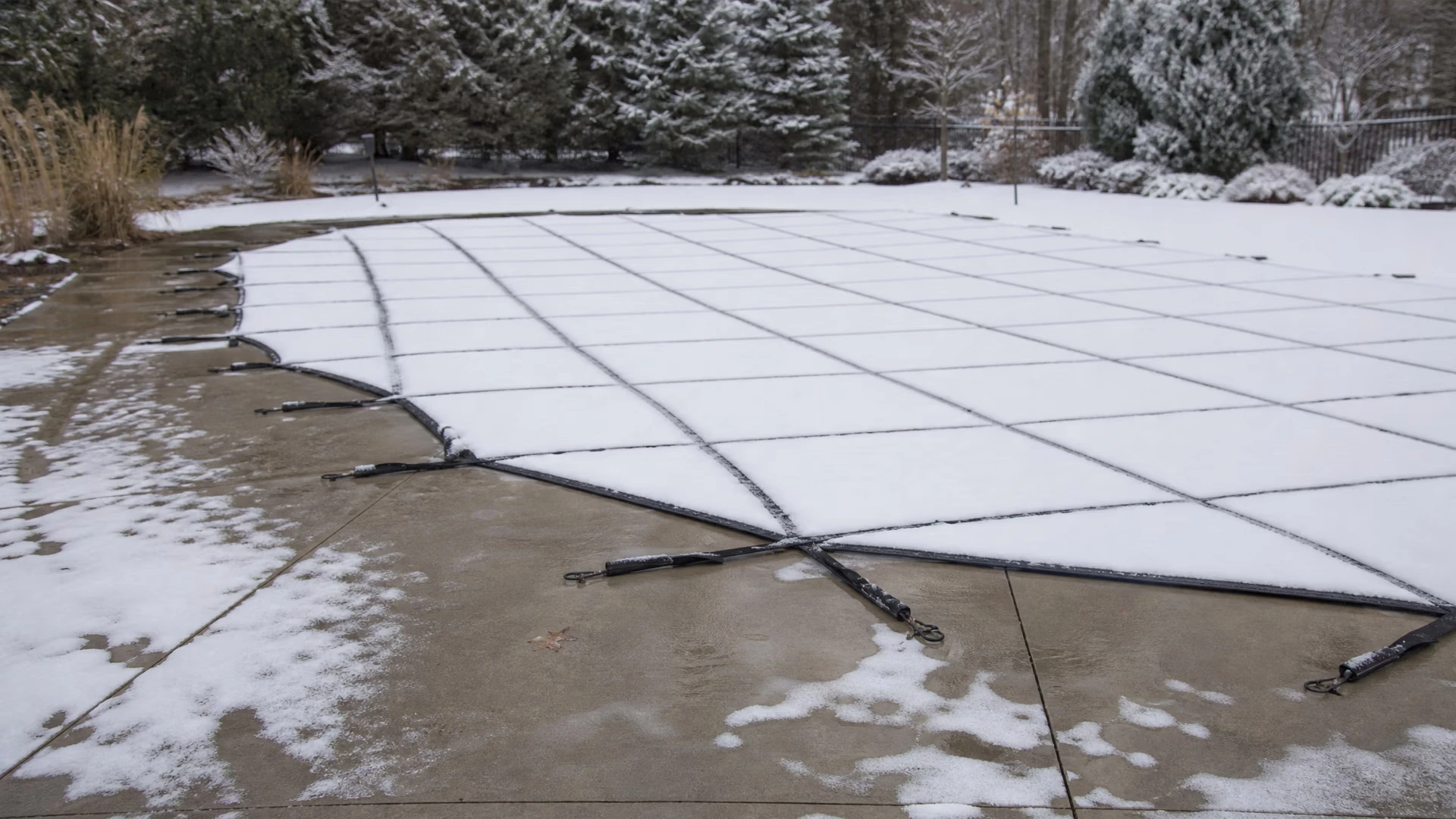
An in-ground pool under a safety cover in mid-winter with settled snow on it and the strap lines showing through, nobody in frame
“After having different companies open and close our pools, and then having M & G Pools, I would never have anyone else! They are extremely professional, kind, efficient, and knowledgeable. They definitely go out of their way to help their customers.”
An underwater patch on a liner still worth keeping, or a full replacement. Each has its own page.
A diagnostic tells you whether it is the liner, the plumbing, or neither.
The two things that most extend a vinyl liner's life are unglamorous: balanced water and a correct close.
Customers on a regular chemical and equipment check get the first one by default, and it is documented, so if a liner ever does fail early there is a record of how the water was maintained.
M & G Pools services in-ground pools exclusively. We do not service, repair or supply equipment for above-ground pools, and we do not service hot tubs or spas.
Cover work travels further than routine service, especially off-season. If your town is not on that list, ask — see service areas for the full picture.
Yes — we patch underwater, and that is how most liner repairs are done. The adhesive cures in water and the patch is permanent rather than a stopgap. Your pool stays full and stays in use. Patching starts at $195.
A vinyl liner is held in place by the weight of the water. Empty the pool and the liner is unloaded, shrinks slightly and can pull out of its track or fail to reseat properly. There is also nothing balancing ground pressure against an empty shell, which matters where the water table is high — common here after a wet spring or on clay soil. And an older liner that has lost flexibility may not survive being drained, dried and refilled.
Patching starts at $195. Replacement is quoted, because it depends on the pool's shape, size, depth profile, the condition of what is behind the liner, and the pattern you choose.
It depends on the condition of the vinyl rather than the size of the damage. A liner that is still flexible, seated properly and holding its colour is a patch. A liner that has gone brittle, is pulling out of its track over a long run, or is developing splits in several different places needs replacing — a patch on brittle vinyl fails at the edge of the patch.
Not necessarily, and this is worth checking before anyone quotes a liner. Evaporation from an uncovered heated pool is substantial and looks exactly like a slow leak, and an underground plumbing leak looks the same from the surface. A $150 service call establishes which it is. One clue: if the water loss slows or stops at a particular level, that level is telling you where the leak is.
Because that band takes the most punishment. Northeast Ohio crosses freezing repeatedly through the winter rather than freezing once, so ice at the water line forms, expands, thaws and reforms — and cold vinyl is stiff, so it tears rather than flexes. Closing at the correct water level puts that band where the liner is best supported.
Balanced water and a correct close, in that order. Low pH over a whole winter is hard on vinyl, and metals in solution stain it permanently — which is why a sequestrant matters on well water. Leaf tannins through a mesh cover also stain, so a solid safety cover is worth considering under heavy leaf fall.