
Weekly or biweekly chemistry and equipment service, from $72 per visit plus chemicals — and an honest answer about which one your pool needs. Serving Twinsburg, Solon, Hudson and the Route 91 corridor.
Because "weekly pool service" means different things to different companies, and it is better you know now.
This is a chemistry and equipment service. We look after the water and the machinery — testing, doseing and balancing, baskets, filter, and an equipment operation check. We do not vacuum, brush or skim pools.
Most of our service customers have a robotic cleaner handling the surfaces, and we handle everything the robot cannot. If you want a company that arrives weekly and leaves the pool swept as well as balanced, that is a different service and we are not it — see pool maintenance for why the scope is drawn there.
The itemised list of what a visit covers is on chemical and equipment checks. From $72 per visit plus chemicals.
Most companies answer this with a package table. Here is the reasoning instead, so you can decide rather than pick a tier.
People are the largest single variable. Every swimmer adds organic load and consumes sanitiser, so a pool used daily by a family of five is a completely different demand from one used at weekends by two adults.
Sunlight destroys free chlorine, and the hotter the water the faster everything happens — chemical demand, and anything growing in it.
Organic debris consumes sanitiser as it breaks down, and a pool under trees carries a continuous load even between visits.
Warmer water means faster chemistry and faster biology.
A cover cuts debris, evaporation and sunlight exposure at once, which reduces demand meaningfully — see safety covers.
A pool topped from a well with iron or hardness needs different attention from one on municipal supply, and metals need holding with a sequesterant or chelateing agent.
What actually drives how often a pool needs attention:
Weekly makes sense when the pool is heated, used often, sits under trees, or is left uncovered — and always on a commercial or shared pool, where the obligations are different: see commercial pool maintenance.
Biweekly is genuinely enough when the pool is covered when not in use, used lightly, in an open position away from heavy tree cover, and has a stable chemistry history. Plenty of pools in this area run perfectly well on a fortnightly visit, and we will say so rather than sell you a weekly slot you do not need.
The honest hybrid: several of our customers run weekly through the peak of the season and biweekly at either end, because the demand genuinely is not constant. We are happy to do that.
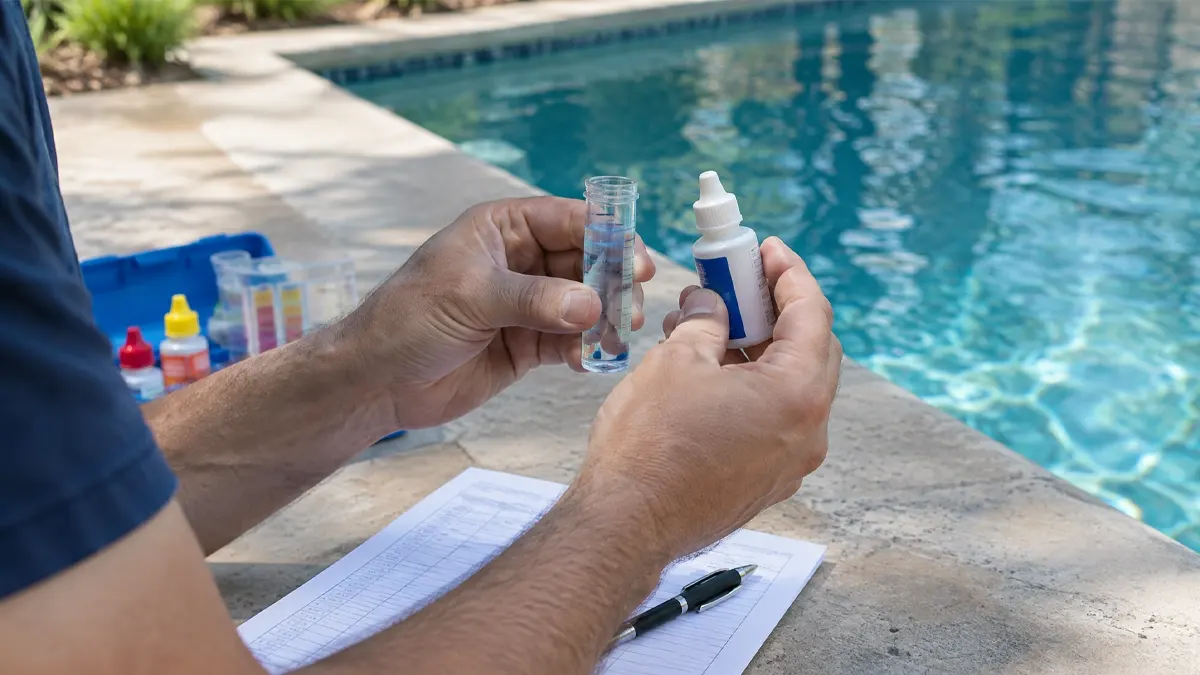
Pool water being tested at the poolside
Northeast Ohio has a short, sharply peaked season, and the demand curve is not flat.
April to May. The pool has just been opened. Chemistry is settling from a standing start, water is cold, and sanitiser demand is low but establishing. This is also when equipment problems from the winter surface — see pool openings and closings.
June to August. Peak everything. Heat, use, sun and biology all at maximum, and this is when a weekly visit earns its place on almost any pool.
September to October. Use drops off but leaf fall starts, and organic load can be higher than in August even with nobody swimming. This is the stretch people most often cut back too early and then pay for at closing.
Which is why we would rather set the cadence with you and adjust it than sell a twelve-month package that is wrong for four of them.
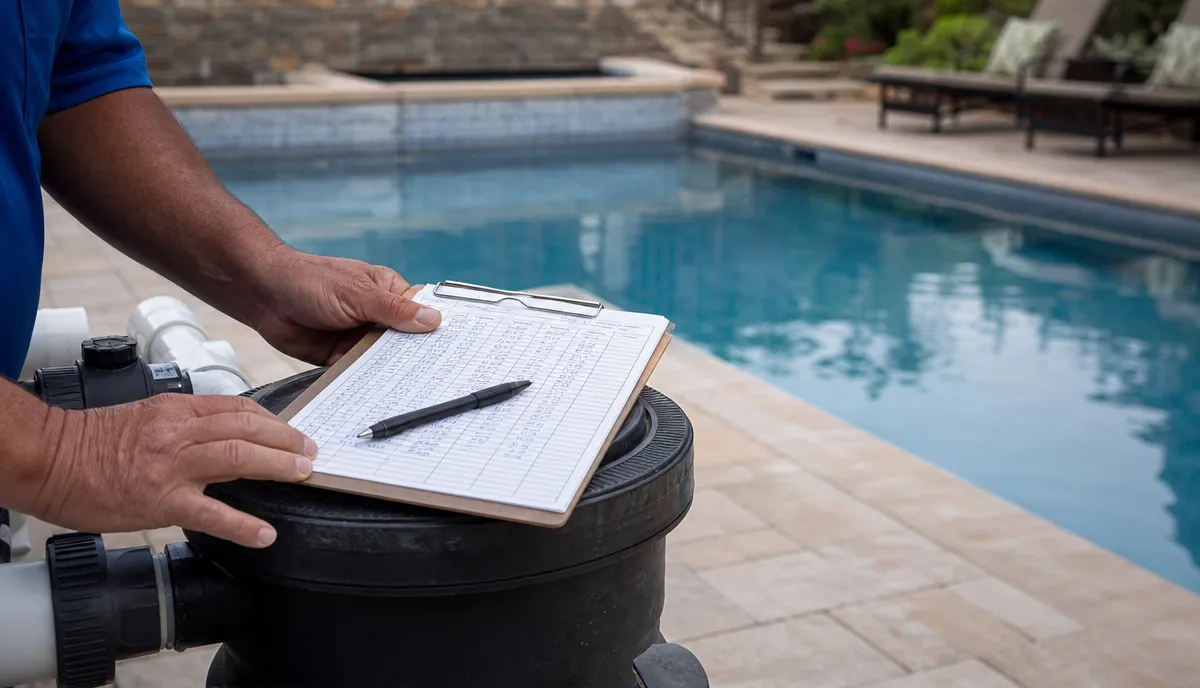
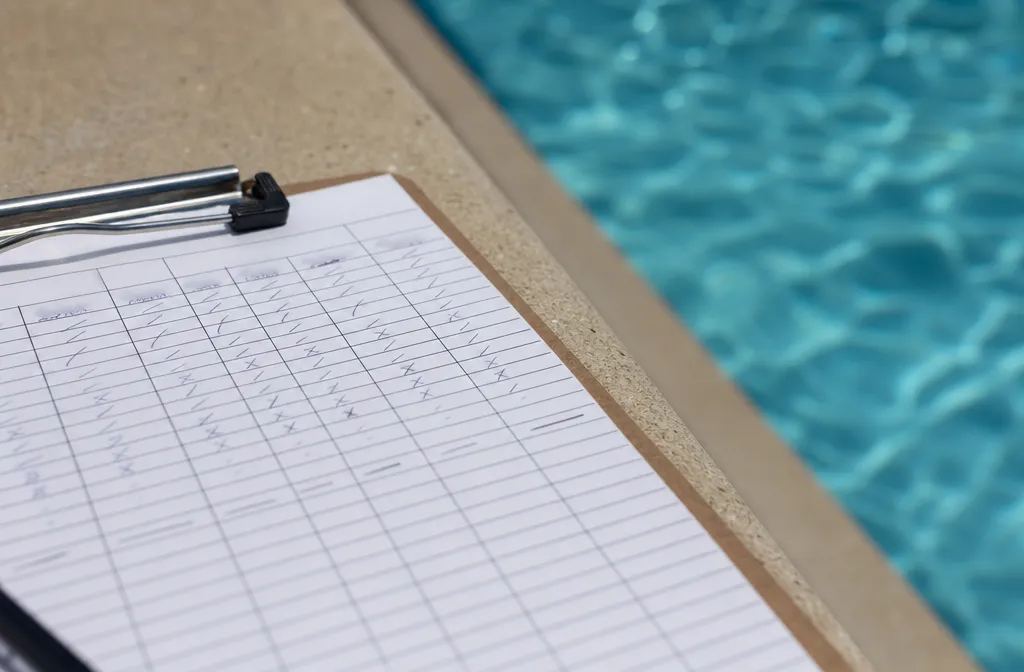
Whether weekly or biweekly, every visit produces a written sheet recording what was tested, what was done, and anything we noticed.
That matters more on a biweekly schedule, not less. A fortnight is long enough for something to develop, so the record of where the chemistry sat last visit is what tells us whether it is drifting. Two readings in sequence say something one reading cannot.
On testing: we titrate rather than read a test-strip, because at the margin where a decision gets made a strip's colour band is too wide to act on — and we test what your pool actually needs rather than running an identical panel everywhere. A pool that brominates is managed differently from a chlorine pool, and a salt system has its own variables.
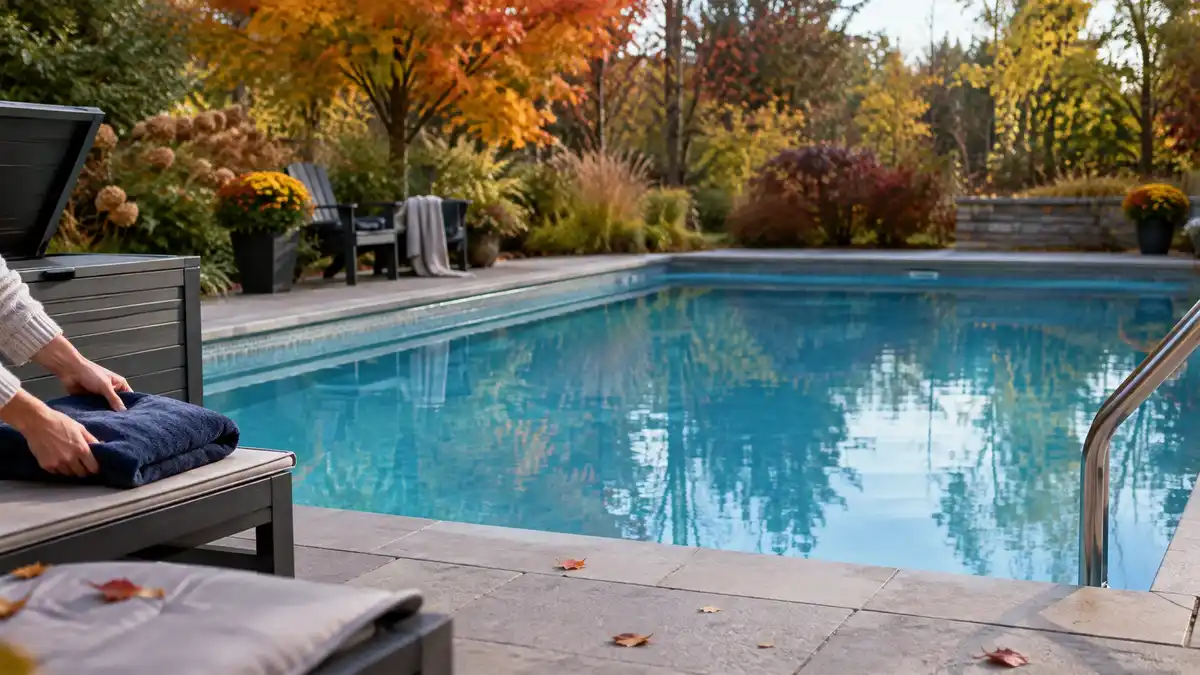
An in-ground pool at the turn of the season
Most of our service customers are not there when we visit, and that is entirely normal.
We need access to the pool and the equipment pad — a gate code, a key, an unlatched side gate, whatever suits — and the sheet tells you what happened while you were at work. It is the main reason the written record matters: a service you never see has to leave something behind.
“We have used M&G for many years, they are always knowledgeable and accommodating. The professionalism is not something you find in the pool industry. Highly recommend for any pool needs.”
Tell us about the pool — use, trees, heating, cover — and we will tell you honestly.
A regular visit is a diagnostic that happens every week or fortnight, and that is the quiet value in it.
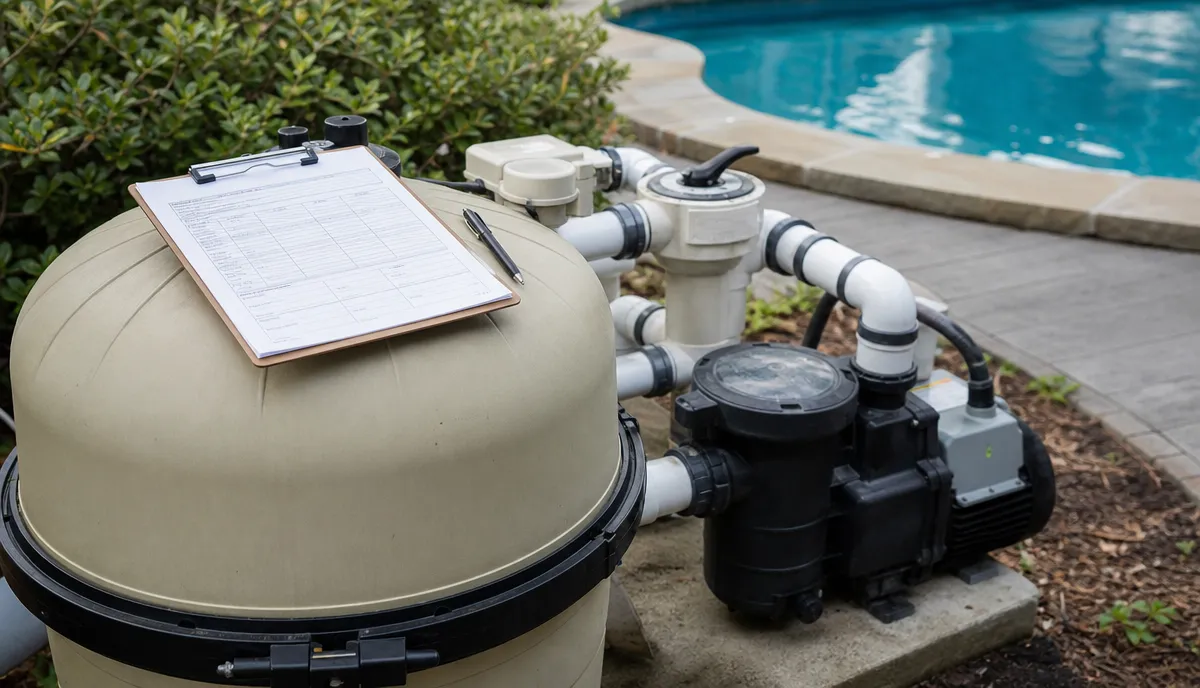
Equipment drifts before it fails. Filter pressure creeps up, a seal starts to weep, a pump takes longer to prime, a heater cycles more than it used to. Somebody standing at the pad regularly notices the drift and writes it down; somebody called out after a failure sees only the failure.
That difference is a planned repair in May rather than a breakdown on a holiday weekend — a $150 service call and an hour, instead of a peak-season parts wait. See pool equipment repair and pool filter repair.
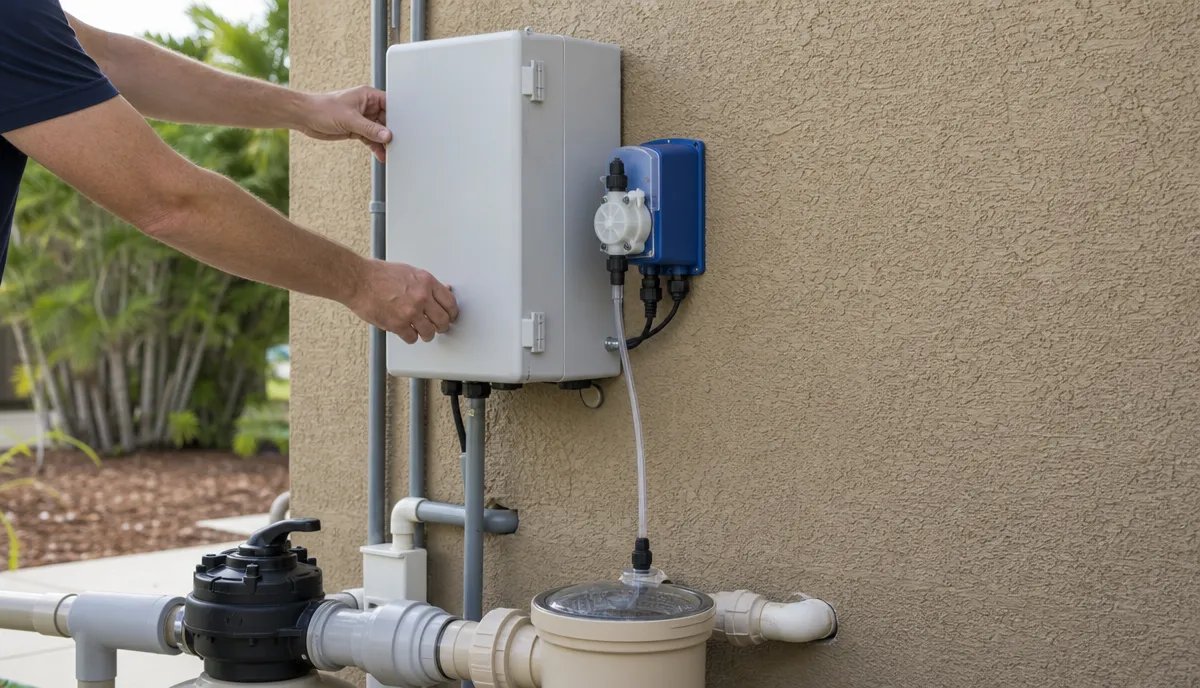
A controller and chemical feeder on a pool equipment wall
M & G Pools services in-ground pools exclusively. We do not service, repair or supply equipment for above-ground pools, and we do not service hot tubs or spas.
It depends on bather load, sun and heat, tree cover, whether the pool is heated, and whether it is covered when not in use. Weekly makes sense for a heated pool used often or sitting under trees. Biweekly is genuinely enough for a covered pool used lightly in an open position with a stable chemistry history — and we will say so rather than sell you a weekly slot you do not need.
Not ours. This is a chemistry and equipment service — testing and balancing, baskets, filter, and an equipment operation check. We do not vacuum, brush or skim pools; most of our service customers have a robotic cleaner handling the surfaces. Netting and vacuuming to waste are included inside an opening or closing package.
From $72 per visit plus chemicals, weekly or biweekly. Chemicals are billed for what the pool actually takes, because demand is not predictable — a hot week with heavy use consumes sanitiser fast while a cool covered week barely touches it.
Yes, and several of our customers do — weekly through the peak and biweekly at either end, because the demand genuinely is not constant. Note that September and October catch people out: use drops off but leaf fall starts, so organic load can be higher than in August with nobody swimming.
No, and most customers are not. We need access to the pool and equipment pad — a gate code, a key or an unlatched gate — and the written sheet records what was tested, what was done and anything we noticed while you were out.