
Noise, leaks, loss of prime, tripping breakers and dead motors — diagnosed properly before anything gets quoted. $150 service call across Twinsburg, Solon, Hudson, Chagrin Falls and the Route 91 corridor.
A pool pump tells you what is wrong with it before it stops, and the sound is usually enough to narrow it to one or two things. Here is the mapping we work from.
A high-pitched whine or squeal, constant while running. Bearings. A motor bearing that has started to fail gets louder over weeks, not hours, and the noise rises with the motor rather than the water. Left alone the bearing will eventually seize, and a seized bearing usually takes the motor with it. This is the one worth calling about early, because a bearing is a far smaller job than a motor.
A rattling, gravelly sound like stones in the housing. The pump is trying to move air as well as water — it has begun to cavitate. Vapour bubbles form on the suction side and collapse against the impeller. Almost always this is a restriction, not a pump fault: a low water level, a blocked skimmer or pump basket, a clogged line, or a partly closed valve. Fix the restriction and the pump is fine. Ignore it and cavitation erodes the impeller.
A loud hum with no water movement. The motor is energised and not turning. Capacitor, or a seized shaft. A capacitor is inexpensive; a seized shaft is a motor.
A grinding or metallic scrape. Debris in the wet end, or an impeller contacting the housing. Stop the pump.
Silence, and the breaker has tripped. A tripping breaker is a symptom, not a nuisance — it is the breaker doing its job. Common causes are a failing motor drawing too much current, water in the motor or wiring, or a degraded bond or ground connection. Do not keep resetting it.
Water pooling under the pump. Usually the shaft seal. That seal is a wearing part and it is the single most common pump repair there is. What matters is time: water escaping past the seal gets into the motor, and a seal replaced promptly is a cheap repair while a seal left leaking becomes a motor replacement.
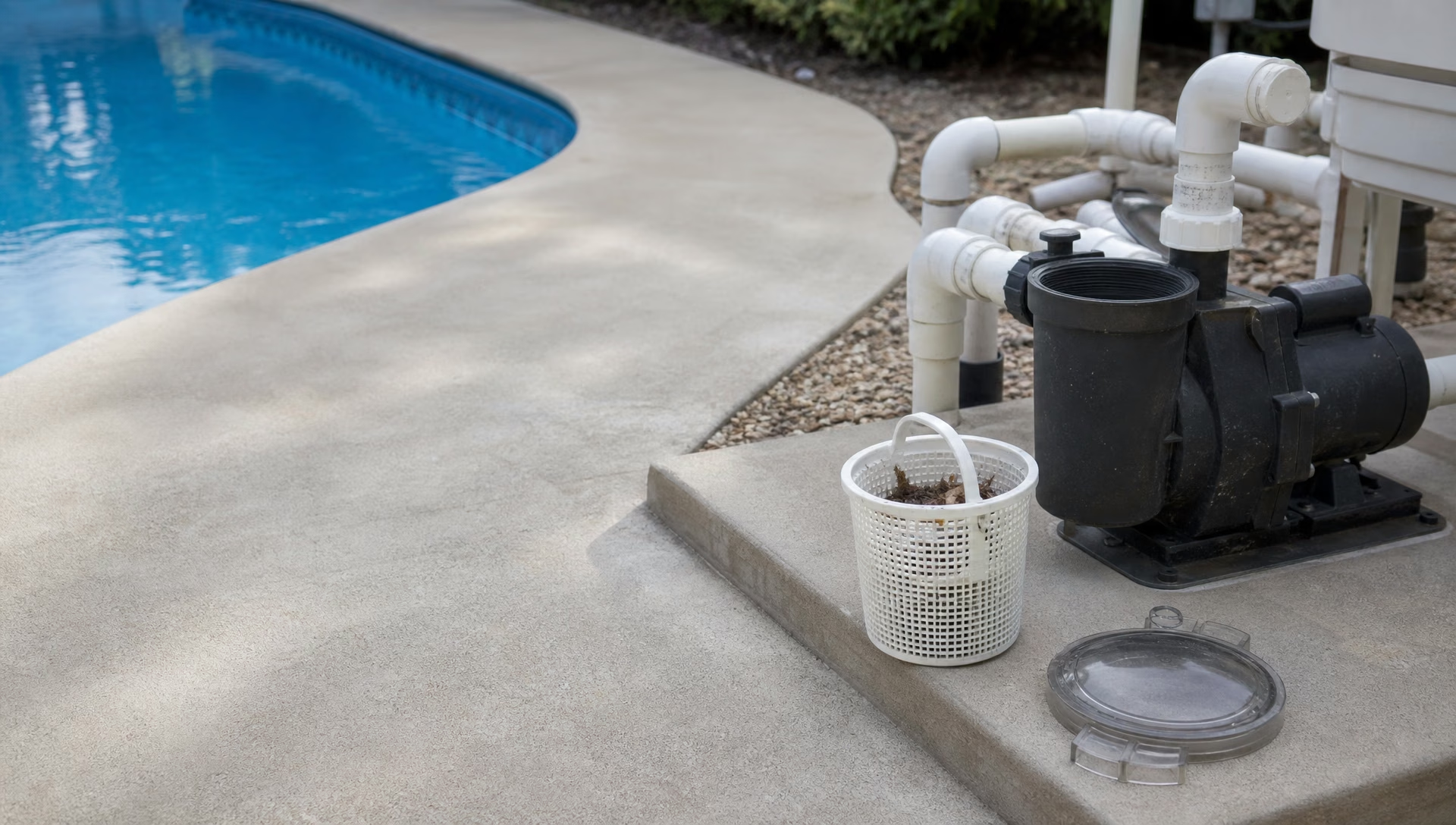
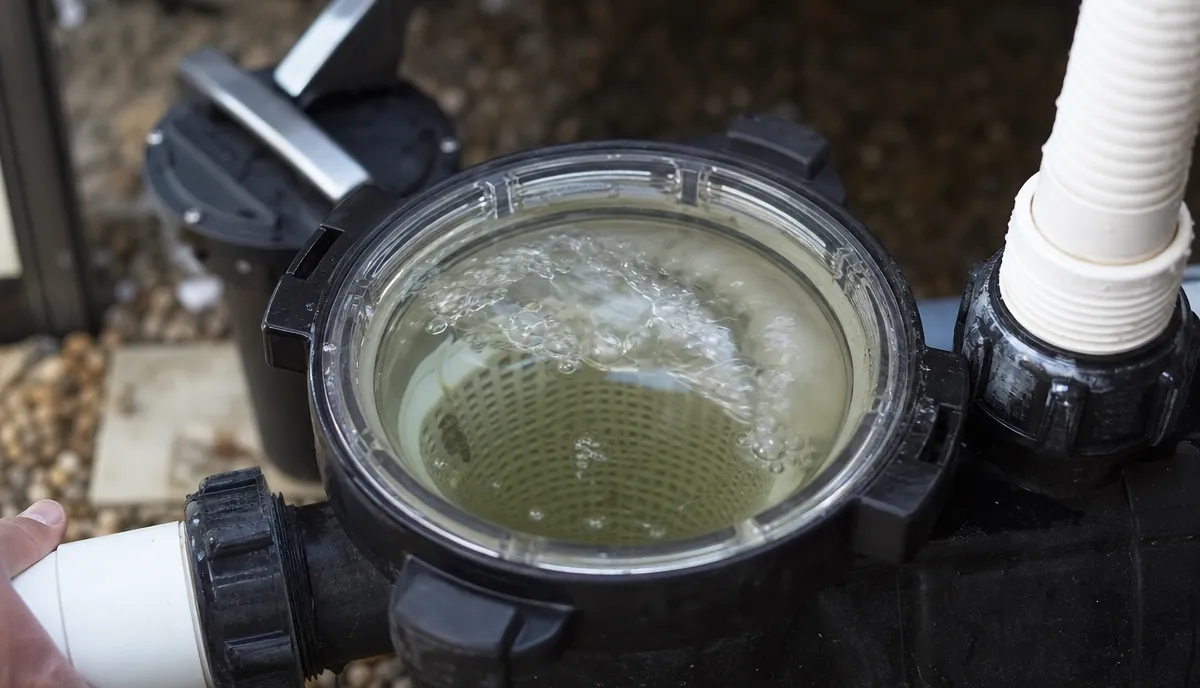
Loss of prime — the pump runs but the basket will not fill. An air leak on the suction side. Lid o-ring, a drain plug, a union, or the level in the pool being too low for the skimmer. The pump cannot prime against an air leak no matter how long it runs.
We do not use an age rule. A $150 service call covers up to the first hour of diagnosis or repair, and the decision comes out of what the diagnostic finds.
Repair when the failed part is a wearing part and the rest is sound — a shaft seal, an impeller, a capacitor, a lid o-ring, a basket or housing, unions, or the wiring. These are the majority of pump calls and most of them are an hour's work.
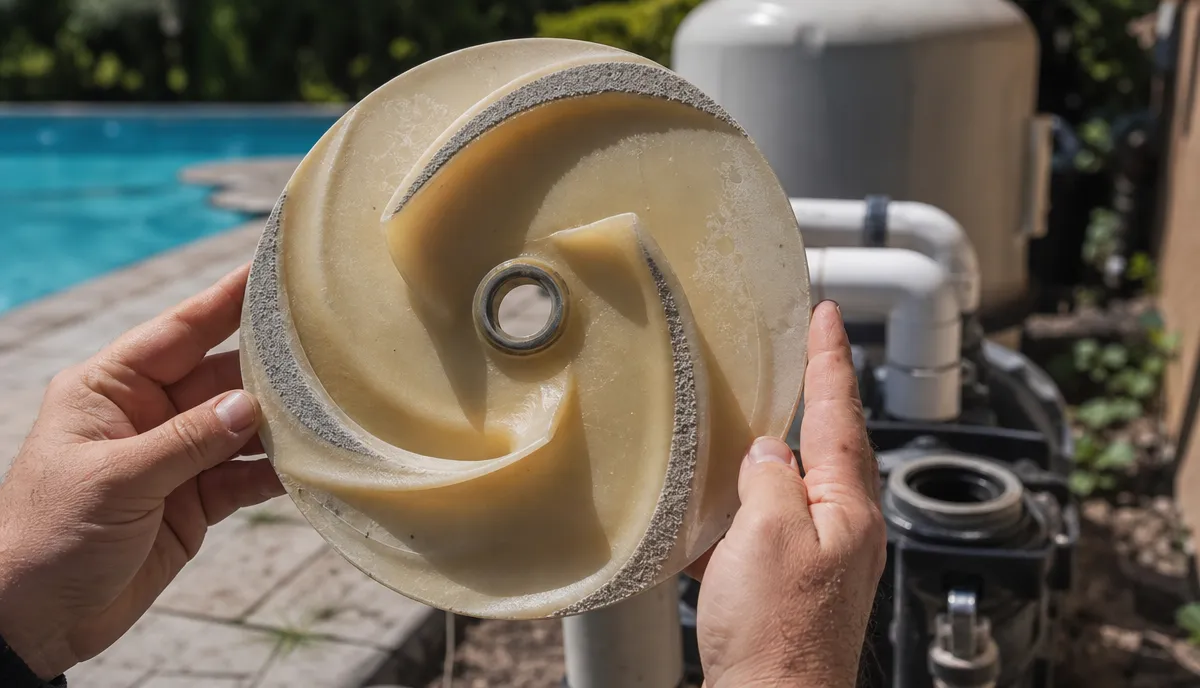
Replace when the motor windings have failed, the shaft has seized, or the wet end is cracked. Also when a pump has been running de-rated for a long time — a motor that has been overheating, running on a marginal supply voltage, or fighting a restriction has had its life shortened, and repairing one fault on a tired motor often just moves the failure along.
Then there is the one thing that changes the whole calculation, and it is not about your pump's condition at all. See the next section.
On lifespan: a well-maintained pump on balanced water lasts many seasons, and a variable speed pump typically outlives a single-speed one because it spends most of its life turning slowly. We are not going to give you a number in years, because the range is wide and the thing that actually determines it is water chemistry and whether the pump was ever run dry.
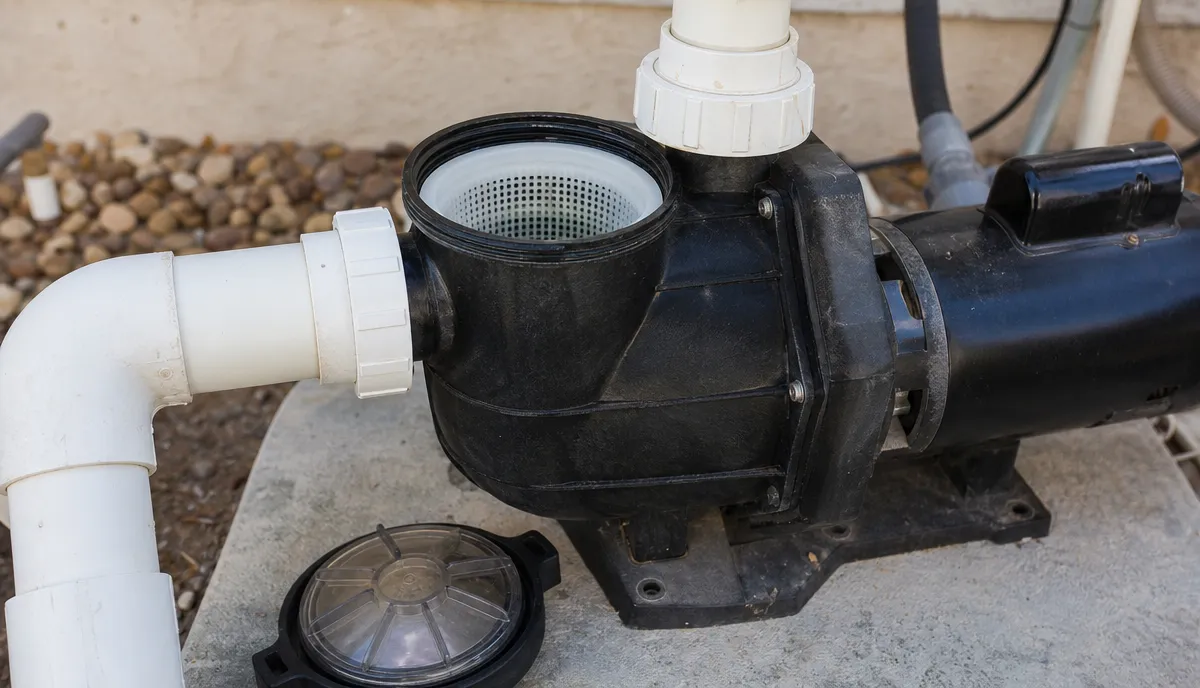
The wet end of a pool pump with the strainer pot lid removed
This surprises almost everyone, and it is the most useful thing on this page.
Than the pump you are replacing did.
Pump power falls very steeply as speed drops — far faster than the flow does — so a pump that filters at low speed for longer uses a fraction of the energy of one that runs flat out for a shorter period. This is the largest running-cost saving available anywhere on the equipment pad.
A variable speed pump running slowly may not produce enough flow for a heater's flow-switch to accept, or for a salt cell to register. That is a settings problem, not a fault, and it is the commonest complaint after a variable speed installation done by someone who did not commission it properly.
Federal efficiency rules mean single-speed pumps can no longer be sold new for most in-ground pool applications. So if your single-speed pump has died, the replacement is a variable speed pump. It is not a like-for-like swap and it is not us upselling you — the like-for-like option no longer exists on the shelf.
What that means in practice:
The practical consequence, and it is worth acting on: if your single-speed pump is still repairable, repairing it is often still the right call — but the replacement decision is coming, and it is much better made in April as a planned purchase than in July with a green pool.
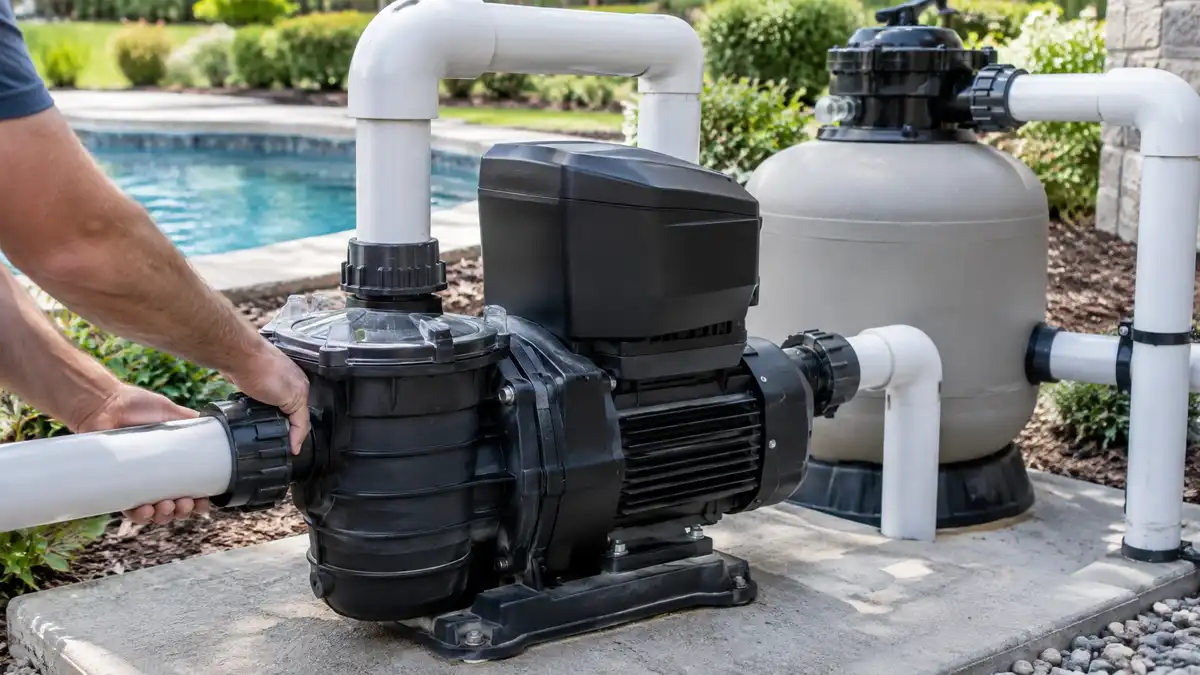
A variable-speed pool pump installed on an equipment pad
A $150 service call covers up to the first hour of diagnosis or repair. On a large share of pump calls that hour is the entire job — a lid o-ring, a basket, a capacitor, clearing a restriction.
Beyond that we quote, and we quote after diagnosing rather than before. We are not going to publish a price band on this page, and it is worth saying why: the same symptom spans an o-ring and a motor, so a band wide enough to be honest would be too wide to be useful, and a band narrow enough to be useful would be wrong for most callers.
What actually moves the number:
Which part failed. A capacitor and a motor are different orders of magnitude.
Part against labour. Most pump repairs are more labour than part. Most pump replacements are the reverse.
Whether it is a repair or a replacement — and if it is a replacement, whether the DOE rule above applies.
What else the diagnostic finds. A pump that failed because of a restriction has two problems, and fixing one leaves the other.
We tell you what we found and what it will cost before we do it.
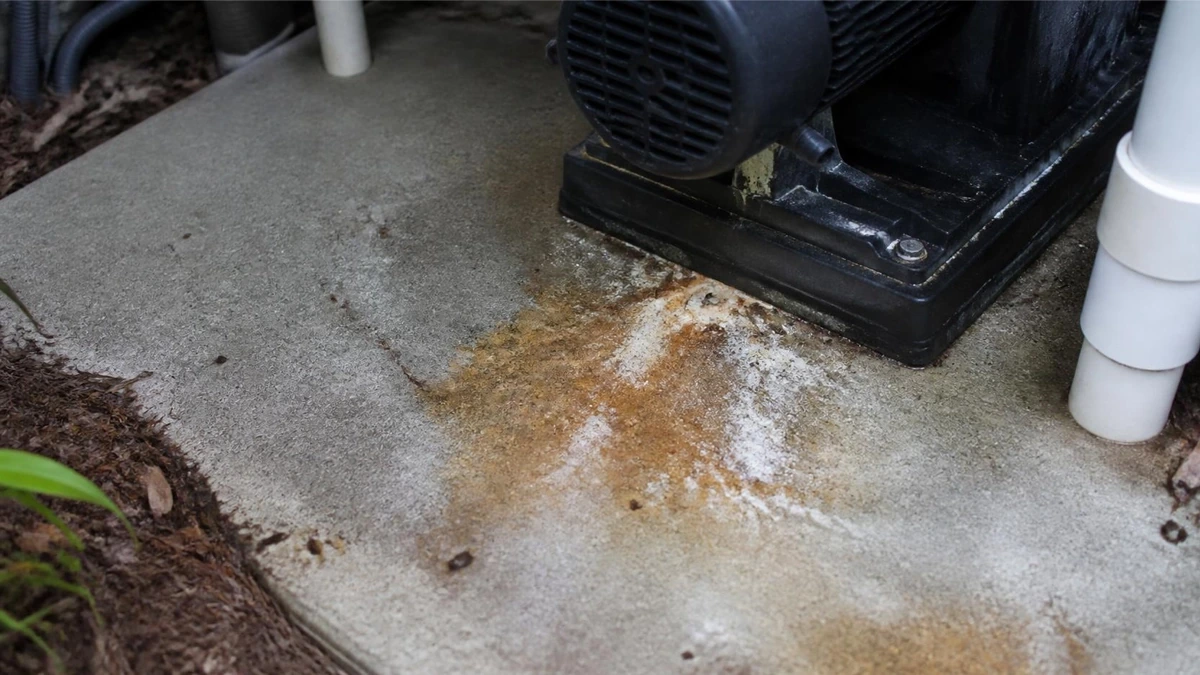
National pump advice is written for pumps that run twelve months a year. Yours does not, and that changes what kills it.
Freeze damage is the catastrophic one. A pump housing full of water that gets cold enough splits, and a split housing is not a repair. This is why a close has to winterize properly — blow out the lines, drain and purge the pump volute rather than assuming it self-drains. It also is not a warranty matter, because it is a consequence of how the pool was closed rather than a fault in the pump.
Freeze-thaw cycling is the cumulative one. This region crosses freezing repeatedly through the winter rather than freezing once and staying there. Each cycle works on the shaft seal, the lid o-ring and any water that did not fully clear. The damage accumulates quietly and shows up as a leak in May.
The five-month idle period is the underrated one. A pump sitting still from October to April is a pump whose seal faces are drying out and taking a set, and whose bearings sit unloaded in exactly one position. Rubber stiffens. That is why so many pumps fail on the first start rather than during the season — the pump was working when it was shut down and the winter is what changed it.
And the season compresses the wear. A pump here does a full season's filtration in about half a year, which means it runs harder while it runs. Short-season equipment is not lightly used equipment.
“M&G has serviced our in ground pool for the past 10+ years. Seasonal opening & closing, replacing heaters, pumps and a number of aggravating repairs that Matt & his crew have handled correctly at a fair price. Recommend highly.”
Tell us what it sounds like — that usually narrows it before we arrive.
Following directly from the above: the single biggest spike in pump service calls is at opening, not mid-season.
A pump that will not prime on the first start of the year, or that runs but leaks, or that hums and does not turn, is usually a pump that was fine in October. The seal dried, the capacitor gave up sitting idle, or water was left somewhere it should not have been.
This is a good argument for having someone competent do the opening — someone who is watching the pump start rather than just switching it on. See pool openings and closings.
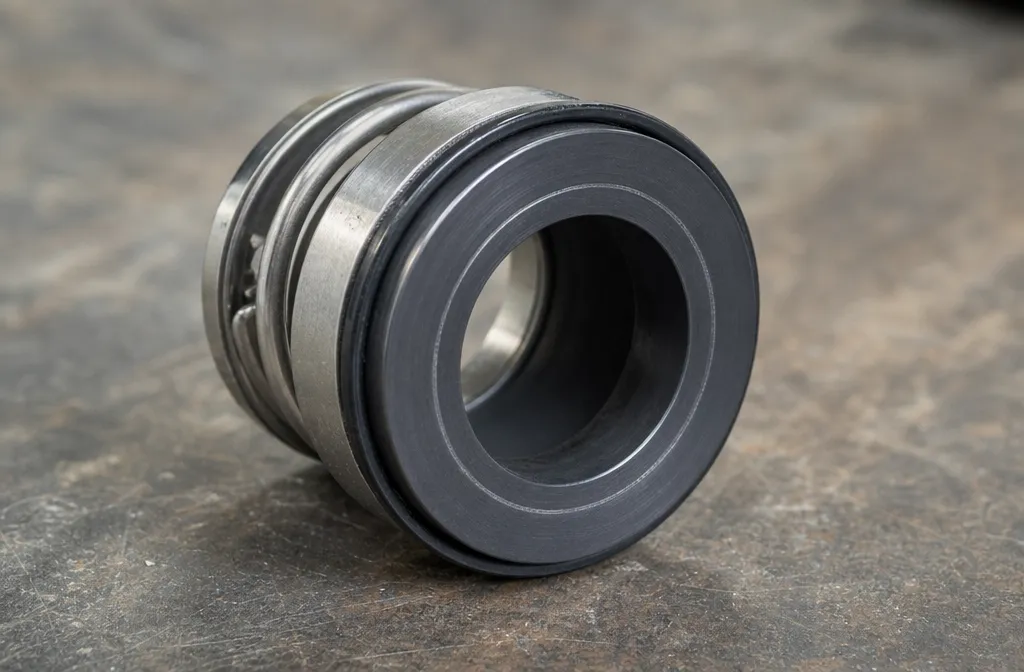
A pool pump shaft seal removed from the pump
We service, repair and replace pumps from Pentair, Hayward, Jandy, Sta-Rite, Fluidra and Zodiac, including variable speed lines such as IntelliFlo, Super Pump and FloPro, and the single-speed pumps they replaced.
Brand-specific pages: Pentair pool pump repair and Hayward pool pump repair. The full list is on brands we service.
Products we install carry the full manufacturer's warranty, which varies by manufacturer and generally runs between one and three years. We do not offer a separate workmanship guarantee, and nothing on this page should be read as one.
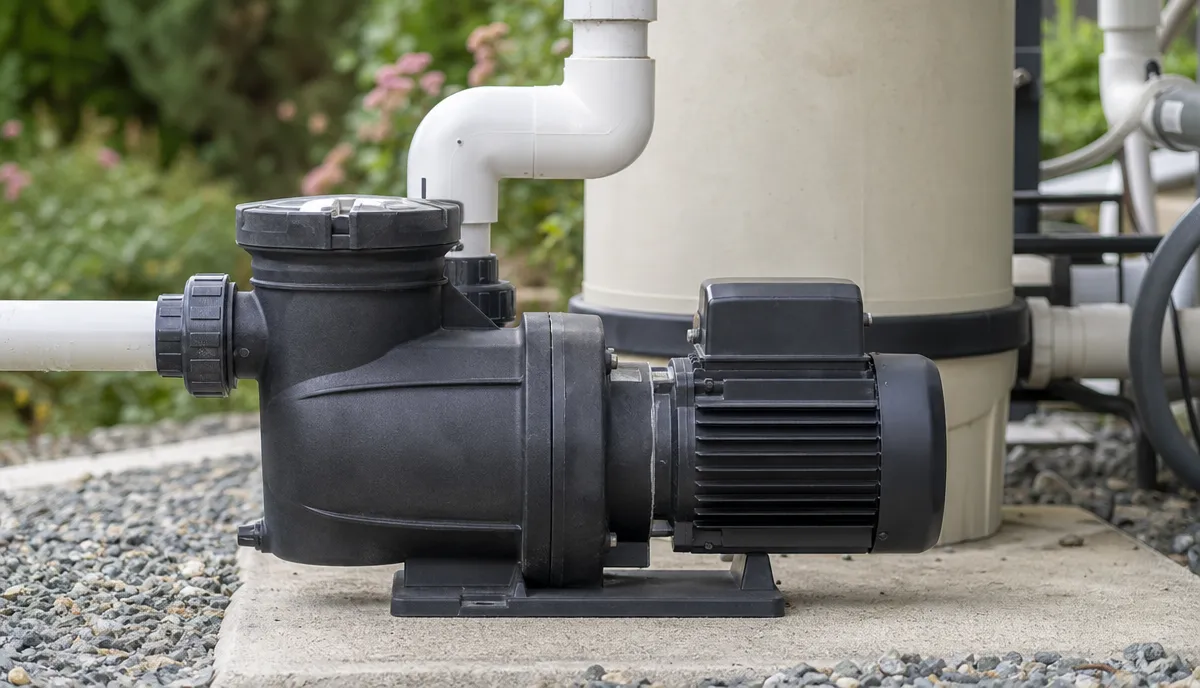
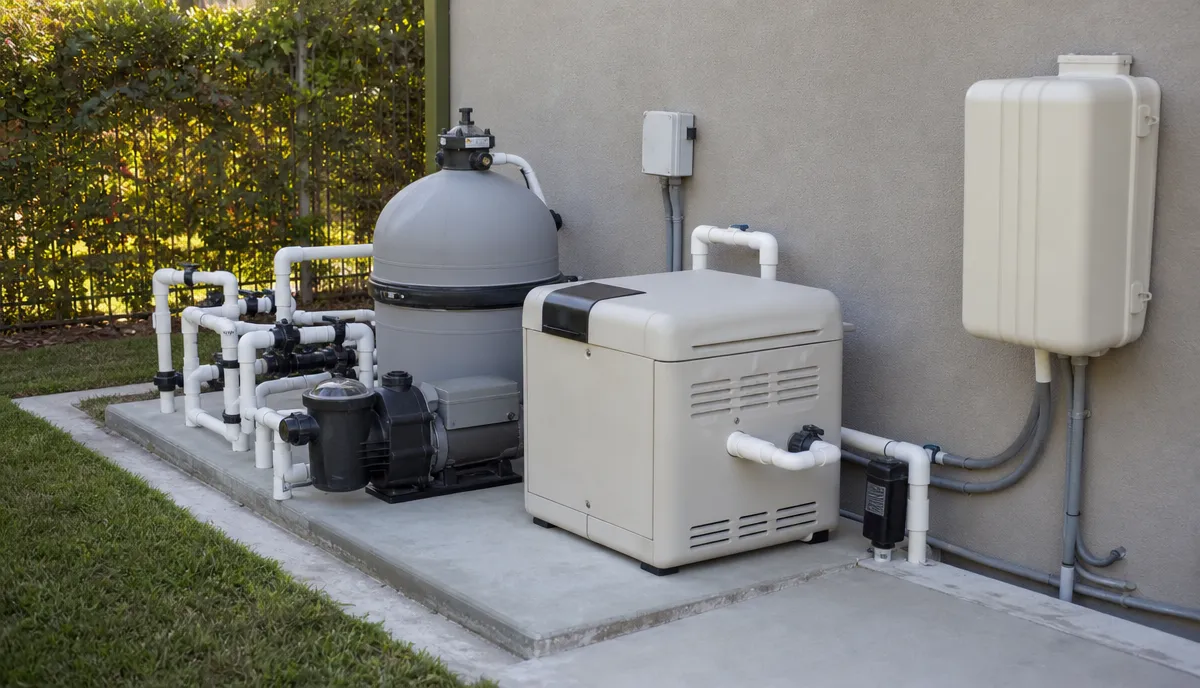
A pool pump of the type we service, on its pad
Pumps drift before they die. Pressure creeps, a seal starts to weep, priming takes longer than it did, the noise changes slightly.
Customers on a regular chemical and equipment check get that noticed and written down, because somebody stands at the pad every week or fortnight. A backwash happens before the filter chokes the pump; a weeping seal gets replaced before it reaches the motor. See also pool filter repair, because a filter problem and a pump problem present identically from the house.
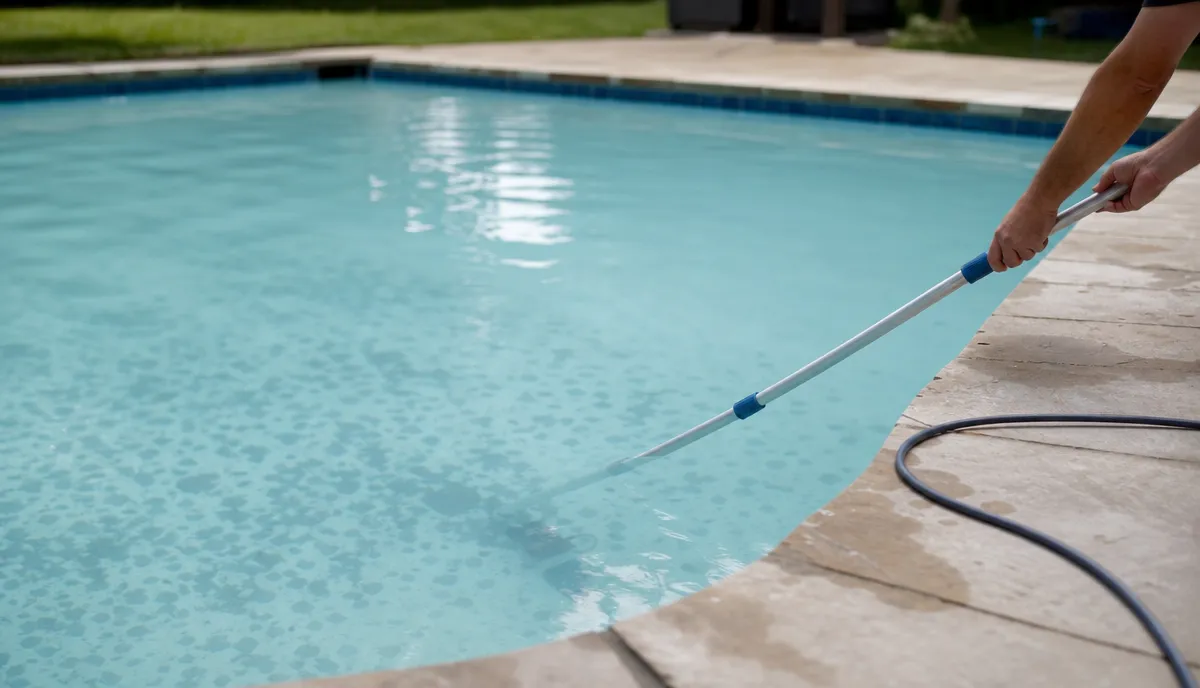
Pool water that has lost its clarity
M & G Pools services in-ground pools exclusively. We do not service, repair or supply equipment for above-ground pools, and we do not service hot tubs or spas.
It depends on the noise. A constant high-pitched whine that rises with the motor is usually a failing bearing — worth calling early, because a bearing is a much smaller job than the motor it will take with it. A gravelly rattle like stones in the housing is cavitation, and that is nearly always a restriction rather than a pump fault: low water, a blocked basket, or a partly closed valve. A loud hum with no water moving is a capacitor or a seized shaft.
A service call is $150 and covers up to the first hour of diagnosis or repair, which on many pump calls is the whole job. Past that we quote after diagnosing rather than before, because the same symptom can mean an o-ring or a motor and any price band wide enough to be honest would be too wide to be useful.
Usually the shaft seal, which is a wearing part and the most common pump repair there is. Timing matters: water getting past the seal works its way into the motor, so a seal replaced promptly is a cheap repair while one left leaking becomes a motor replacement.
Generally not. Federal efficiency rules mean single-speed pumps can no longer be sold new for most in-ground pool applications, so the replacement is a variable speed pump. It costs more upfront and dramatically less to run. If your single-speed is still repairable, repairing it is often still the right call — but it is better to plan the replacement in April than to face it in July.
Because the pump sat still for five months. Seal faces dry and take a set, bearings sit unloaded in one position, rubber stiffens, and capacitors give up sitting idle. Any freeze damage from the winter also shows up on the first start. The pump was usually fine when the pool was shut down — the winter is what changed it.