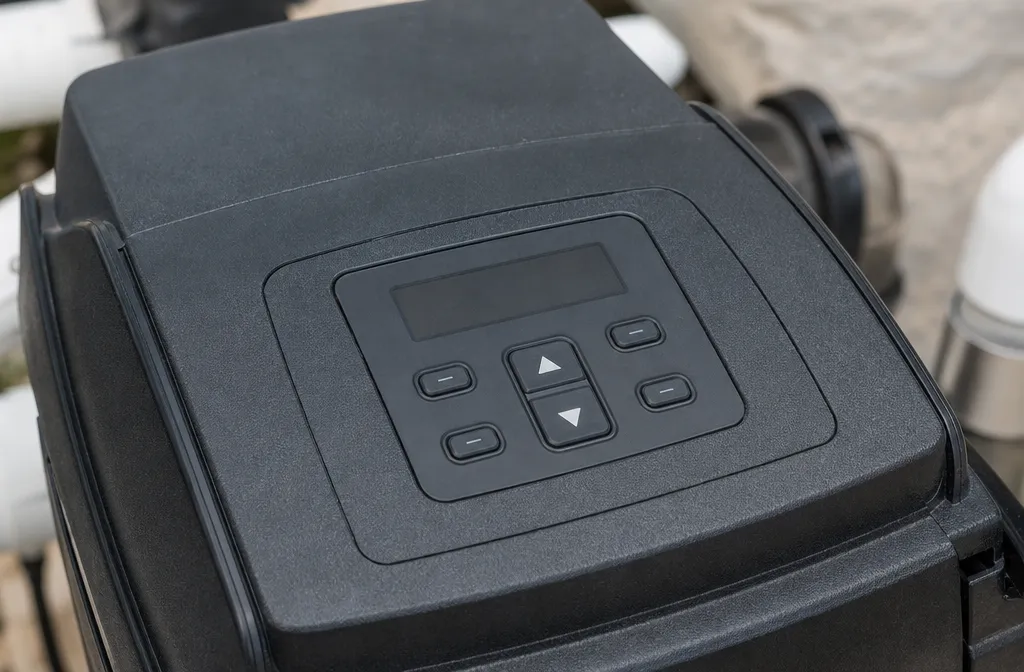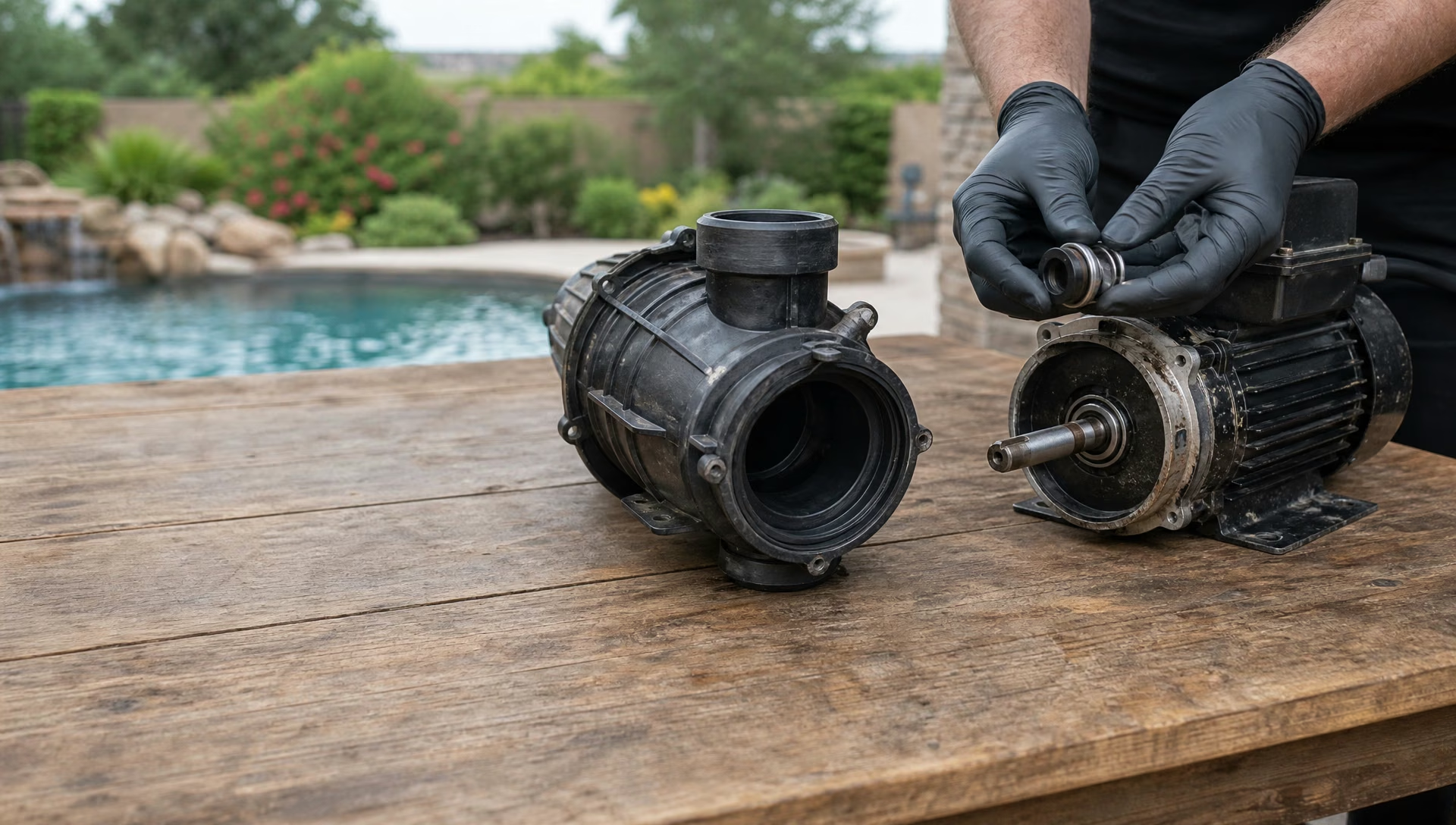

Wet ends, shaft seals and variable speed drives — plus the commissioning that decides whether the rest of your pad works with it. $150 service call across Twinsburg, Solon, Hudson and the Route 91 corridor.
Pentair pumps across the pad, including the IntelliFlo, SuperFlo and WhisperFlo families and the older Pentair pumps still running on plenty of pools around here.
A $150 service call covers up to the first hour of diagnosis or repair — and on a good share of pump calls that hour is the whole job.
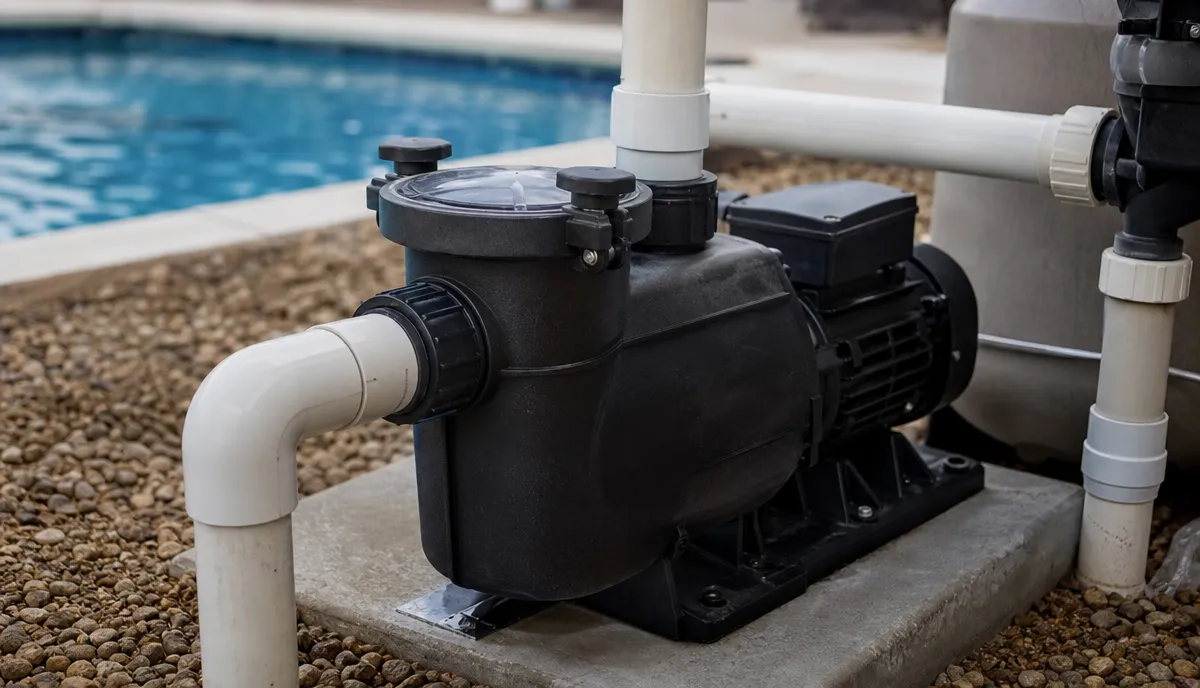
Half of what goes wrong with a Pentair pump has nothing to do with the badge, and the symptom-by-symptom index for any pump is on pool pump repair. In short:
Usually the shaft seal, a wearing part and the commonest pump repair there is. Timing matters: water past the seal works into the motor, so a seal replaced promptly is cheap while one left leaking becomes a motor.
The pump is starting to cavitate, drawing air as well as water. Almost always a restriction rather than a pump fault: low water, a blocked basket, a partly closed valve.
Bearings, and worth calling early because a bearing that seizes usually takes the motor with it.
An air leak on the suction side. Lid o-ring, a drain plug, a union, or a level too low for the skimmer.
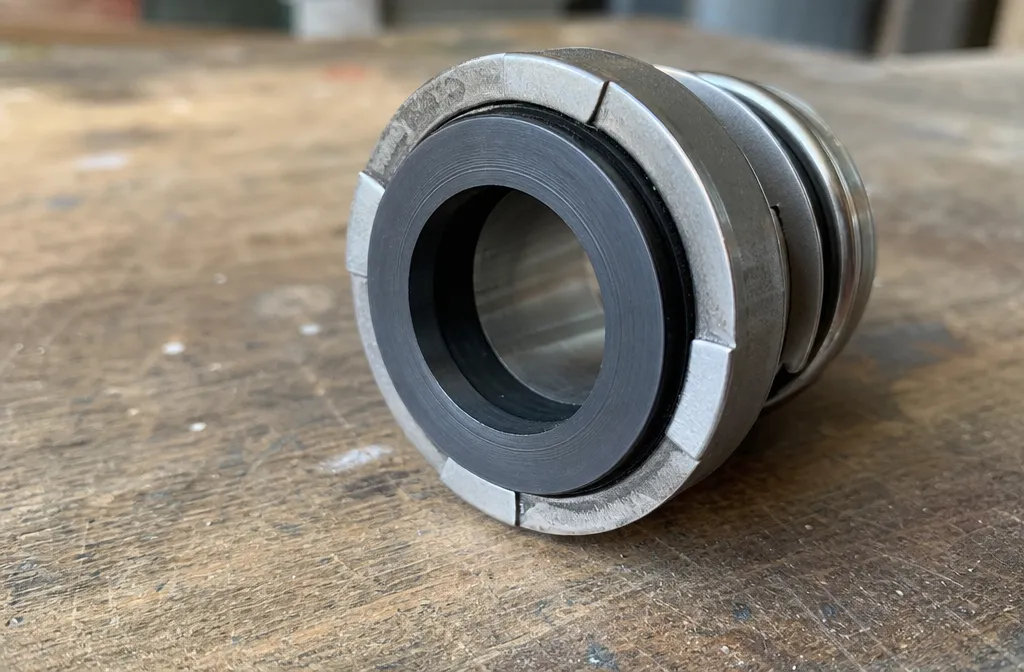
A pool pump shaft seal removed from the pump
This is where a variable speed Pentair differs from an old single-speed motor, and it is most of why people search the brand rather than the symptom.
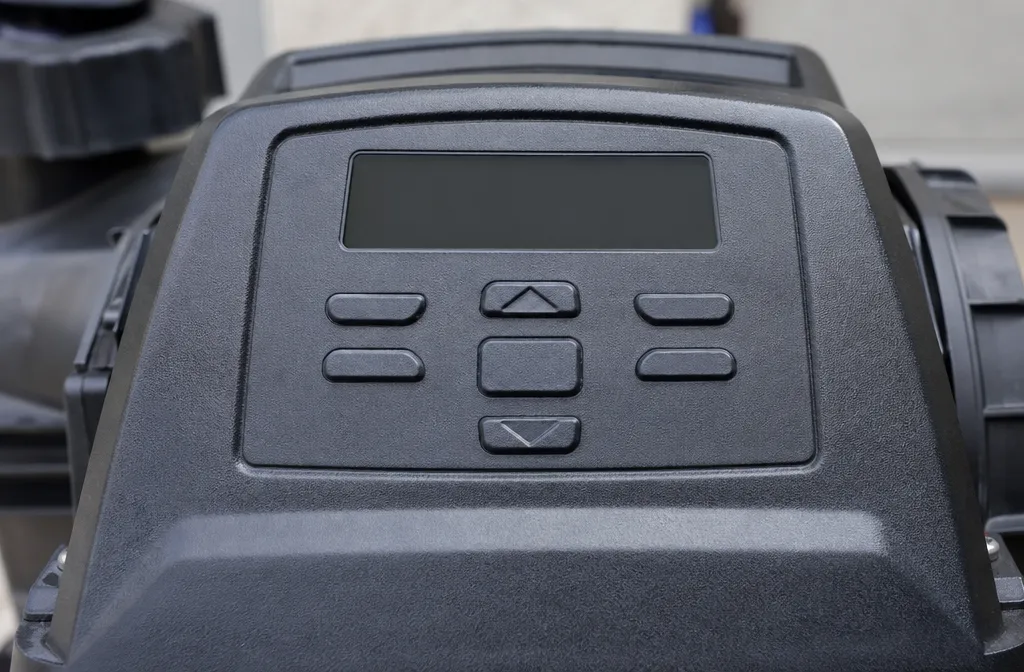
A variable speed pump has a motor drive with electronics on it. That brings failure modes a single-speed motor simply does not have:
Drive faults. Real, and not automatically a new pump. Some are the drive, some are the supply, some are the wiring or a degraded bond, and some are a communication problem between the pump and a controller. It needs diagnosing rather than assuming.
Water where electronics live. A drive is far less tolerant of a leaking seal beneath or beside it than an old motor was. A weeping shaft seal on a variable speed pump is urgent in a way it would not be on a single-speed — that is the single most useful thing on this page.
Communication faults with automation. A Pentair pump is frequently under a Pentair controller, and a pump that will not respond to a schedule may have a communication fault rather than a pump fault. See pool automation.
Supply voltage sensitivity. Drives care about the quality of what they are fed in a way induction motors do not, and a marginal supply shortens their life.

A variable-speed pool pump on a pad beside an older single-speed pump for comparison
Worth its own section, because it produces complaints that get blamed on the pump.
A variable speed pump has to be commissioned — a speed set for each task the pad performs. Get it wrong and you have an expensive pump that works worse than the one it replaced:
Heating cycle too slow → the heater's flow-switch refuses and the heater will not fire. Not a heater fault.
Sanitising cycle too slow → a salt cell reports no flow and stops producing, which surfaces a week later as a green pool.
Backwash at filtration speed → the backwash stirs the debris instead of carrying it out. See pool filter repair.
Prime speed too low → the pump will not prime, or cavitates trying.
Every one of those presents as a fault in a different component. It is the commonest thing we fix on a pool where somebody else fitted the pump. Full detail on variable speed pool pumps.
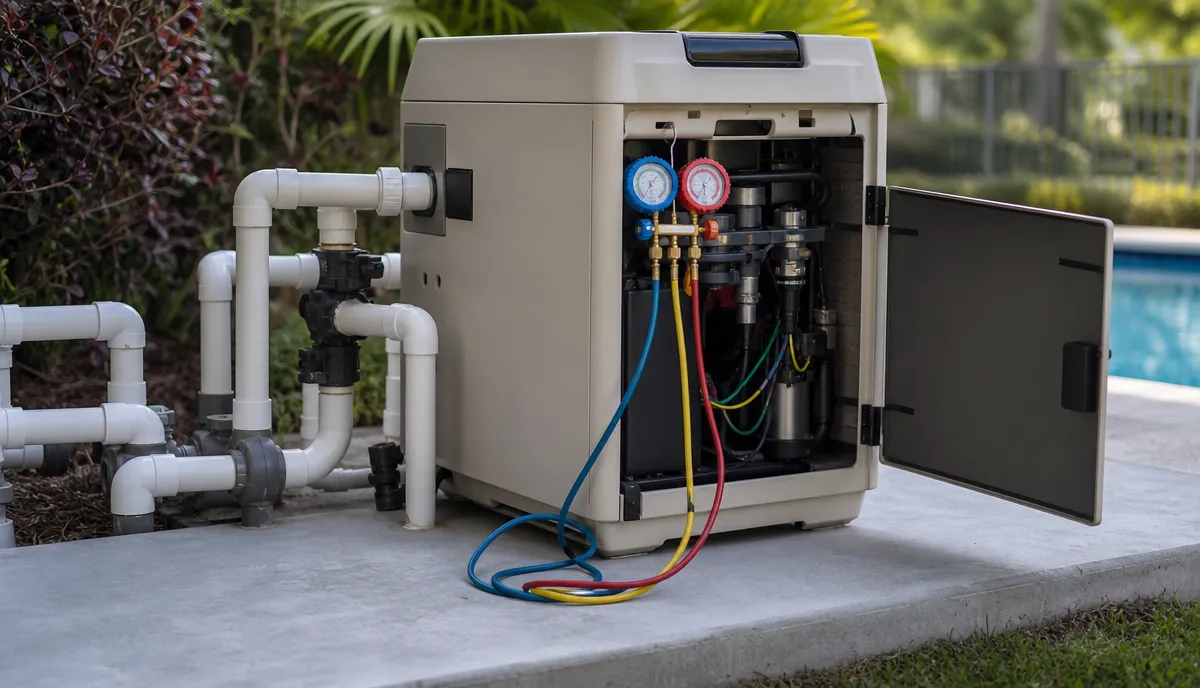
If your Pentair is a single-speed and it has died, the like-for-like replacement is not available — federal efficiency rules mean single-speed pumps can no longer be sold new for most in-ground applications.
That means the replacement is a variable speed pump: more upfront, dramatically less to run, and a different commissioning job. If your single-speed is still repairable, repairing it is often the right call — but the decision is coming, and it is much better planned in April than faced in July with a green pool.
“Matt and his team are fantastic to work with. Easy to schedule, quality work is done right the first time. Highly recommend.”
A drive fault is not automatically a new pump.
Same rule as any pump plus one addition, and it matters more on a drive.
A pump volute full of water that gets cold enough splits, so a close has to winterize properly — blow out the lines, drain and purge the volute rather than assuming it self-drains. Freeze damage is a replacement, not a repair, and it is not a warranty matter because it follows from how the pool was closed.
The addition: a drive does not like standing water or condensation either. Closing down properly means the electronics as well as the wet end.
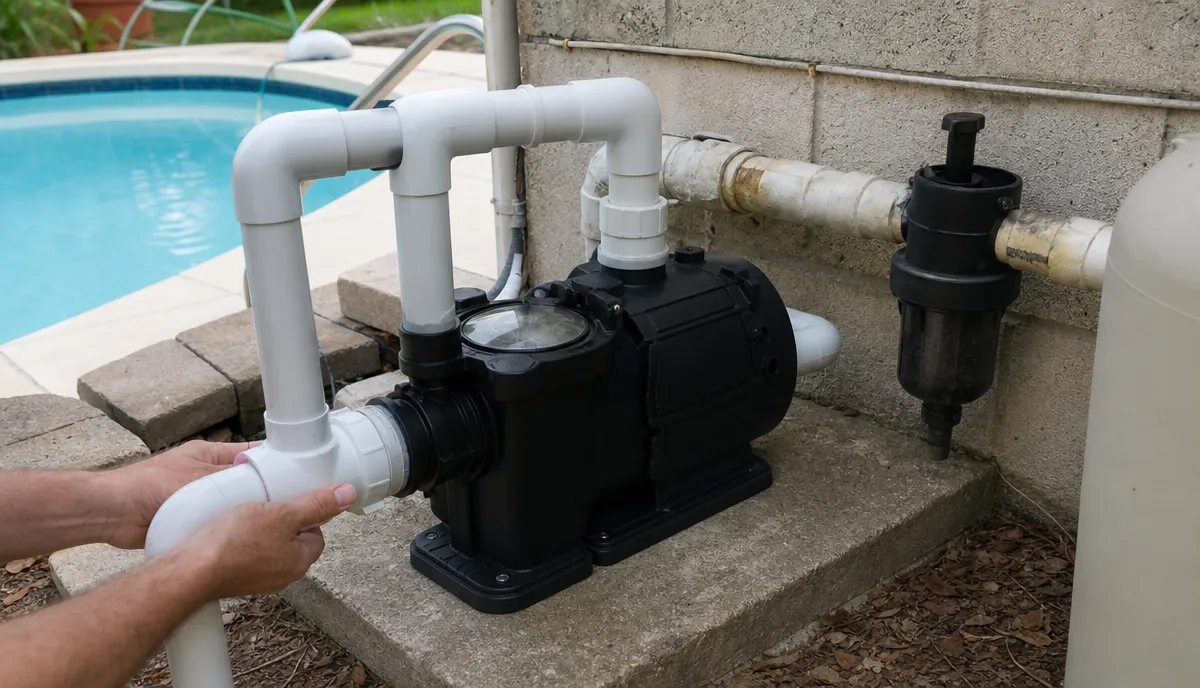
A variable-speed pump newly fitted where a single-speed pump had been
We service Pentair across the pad — see Pentair pool heater repair.
We also work on Hayward, Jandy, Sta-Rite, Fluidra and Zodiac pumps: Hayward pool pump repair, and everything else on pool equipment repair and brands we service.
Products we install carry the full manufacturer's warranty, which varies by manufacturer and generally runs between one and three years. We do not offer a separate workmanship guarantee, and nothing on this page should be read as one.
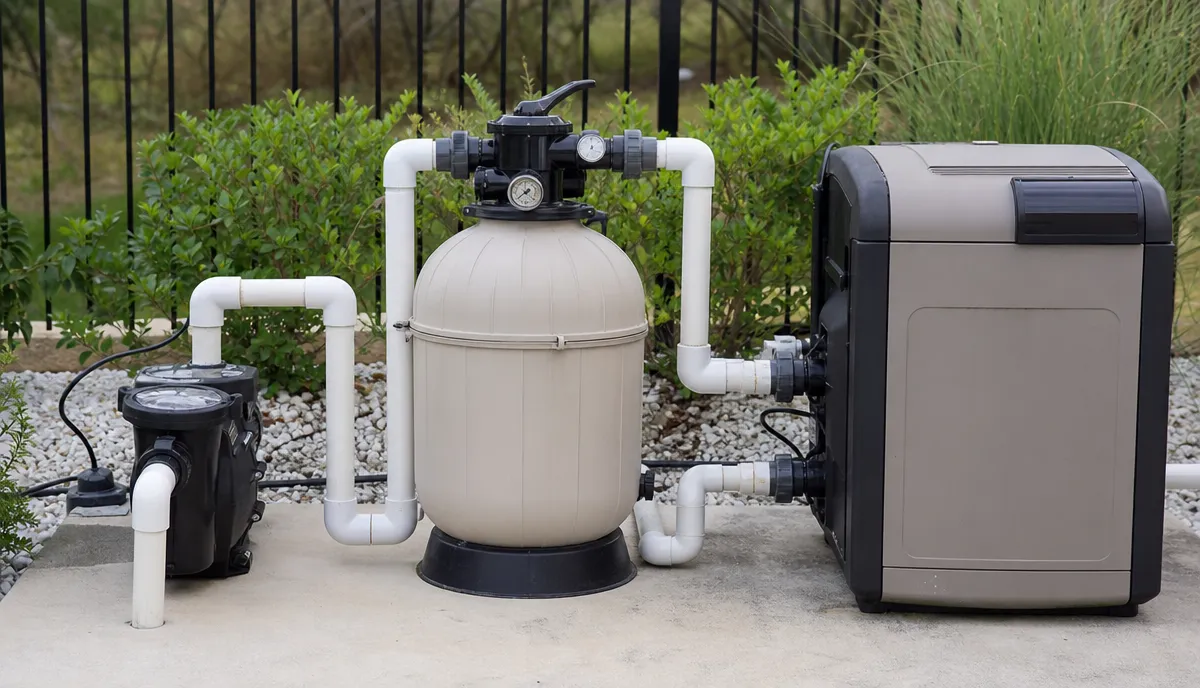
A pool equipment pad with pump, filter and heater
M & G Pools services in-ground pools exclusively. We do not service, repair or supply equipment for above-ground pools, and we do not service hot tubs or spas.
Not automatically. Some drive faults are the drive, some are the electrical supply or wiring, some are a degraded bond, and some are a communication problem between the pump and its controller. A $150 service call covers up to the first hour of diagnosis, which normally settles which of those it is.
Usually the shaft seal — a wearing part and the most common pump repair there is. On a variable speed pump it is more urgent than on an old single-speed, because the drive electronics are far less tolerant of water than an induction motor was. A seal replaced promptly is a cheap repair; left leaking it becomes a motor or a drive.
Almost certainly the heating cycle is running the pump below the flow its flow switch will accept, so the heater refuses to fire. It is a commissioning problem, not a fault, and the fix is normally a speed setting rather than a part. The same thing happens to salt cells, which stop producing when they cannot register flow.
Generally not for a new purchase — federal efficiency rules mean single-speed pumps can no longer be sold new for most in-ground applications, so the replacement is a variable speed pump. If your existing single-speed is still repairable, repairing it is often the right call, but it is better to plan the replacement in April than face it in July.
That sound — like gravel in the housing — is cavitation: the pump is drawing air as well as water. It is almost always a restriction rather than a pump fault, so check the water level, the skimmer and pump baskets, and whether a valve is partly closed. Left running, cavitation erodes the impeller.