

In-ground pool openings and closings, equipment repair and custom safety covers for Bainbridge — including the water chemistry a well-fed pool actually needs. Family-owned since 2012.
Bainbridge is in Geauga County, which is the most rural of the five counties we work across — and out here a good many properties are on their own water rather than a municipal supply. If yours is, that changes how your pool needs looking after, and it is the thing most pool companies do not adjust for.
Well water frequently carries dissolved metals — iron and copper especially. In the ground they are invisible and harmless. In a pool they are a problem, because the moment you add sanitiser you oxidise them, and oxidised metal comes out of solution and stains.
What that looks like: rust-brown or greenish staining on a liner or plaster surface, often appearing suddenly after a shock dose or a top-up. Once metal has stained a vinyl liner it is generally permanent — that is not a cleaning problem, it is a chemistry problem that has already happened.
How it is handled: metals are held in solution with a sequesterant or a chelateing agent so they leave with the backwash instead of depositing on the pool. That has to be maintained rather than done once, and it needs doing before a heavy sanitiser dose rather than after the stain appears.
Well water also tends to bring hardness and alkalinity of its own, which shifts the chemistry baseline your pool sits at. It is why we do not run an identical test panel on every pool — see chemical and equipment checks. A well-fed Bainbridge pool and a municipal-supply pool in Beachwood are genuinely different animals, and treating them the same is how one of them goes wrong.
One practical piece of advice: if you top a well-fed pool up substantially — after a backwash, a big splash-out week or a liner repair — that is the moment to have the chemistry looked at, not a month later.
Everything we offer, since this is our home ground.
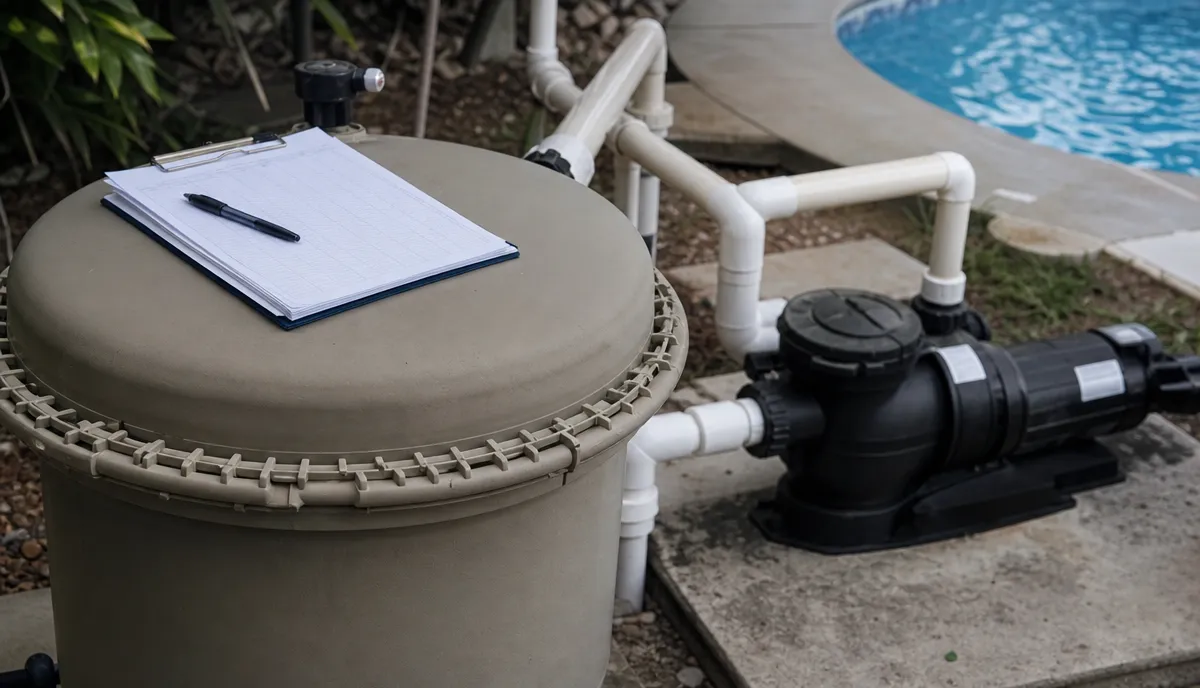
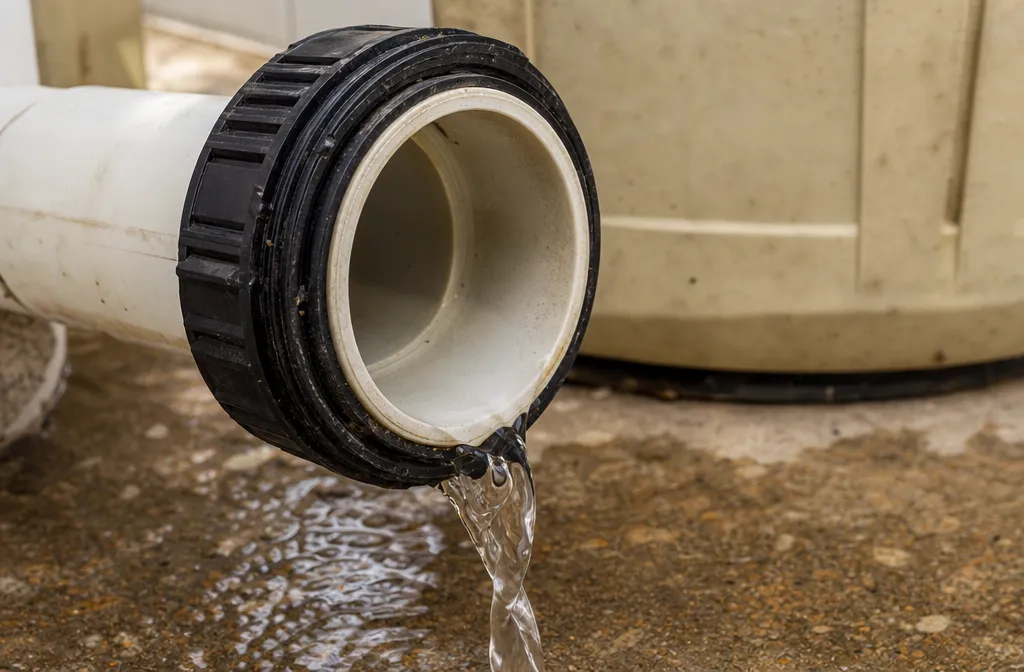
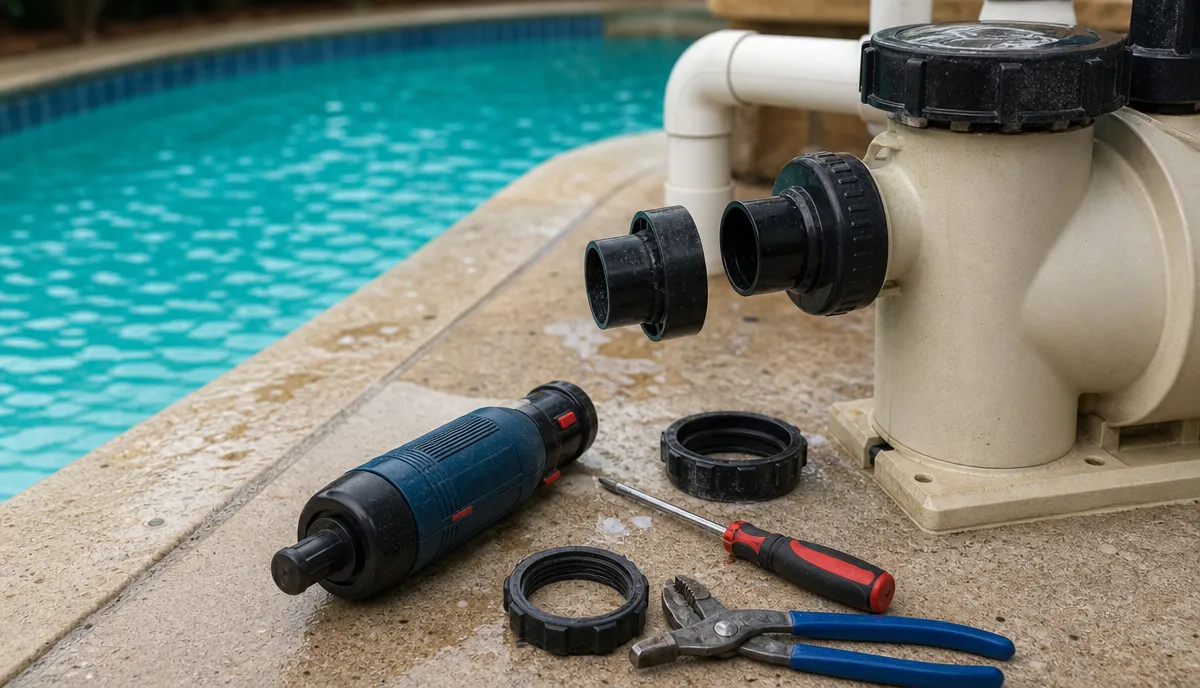
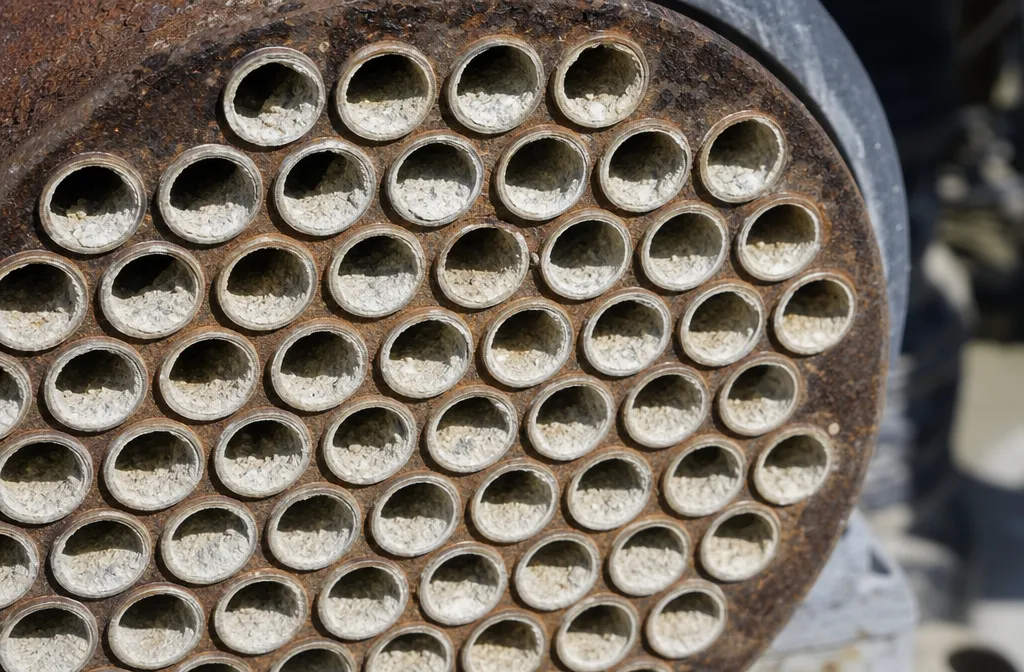
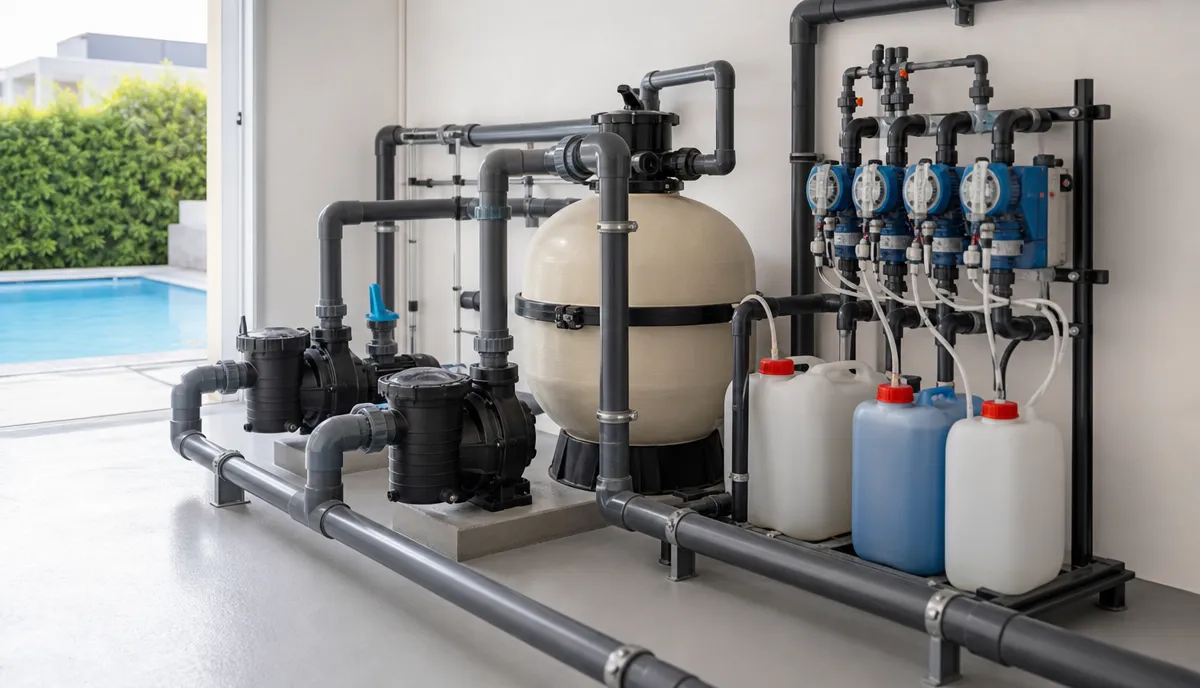
The staining is the visible cost. The quieter one is what mineral content does to your equipment.
Heat exchangers scale. Mineral deposit inside a heater's exchanger insulates it, so the burner fires into a deposit rather than into water and output drops with nothing else appearing to change. A de-lime often restores a heater somebody had written off — see pool heaters.
Salt cells scale faster. If you run a salt chlorine generator, hardness and high pH will scale the cell's plates, and a scaled cell stops producing. That is chemistry rather than a faulty cell.
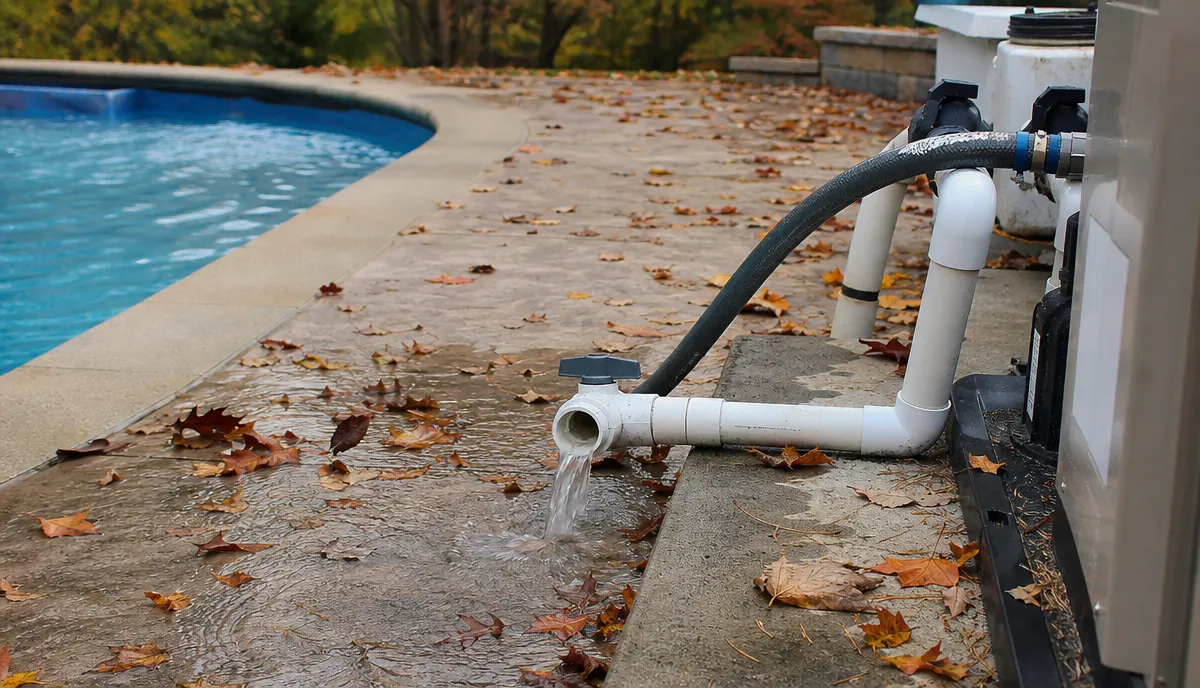
Which is the real argument for regular service on a well-fed pool. It is not about the water looking nice — it is that unmanaged mineral content quietly shortens the life of the most expensive things on your equipment pad.
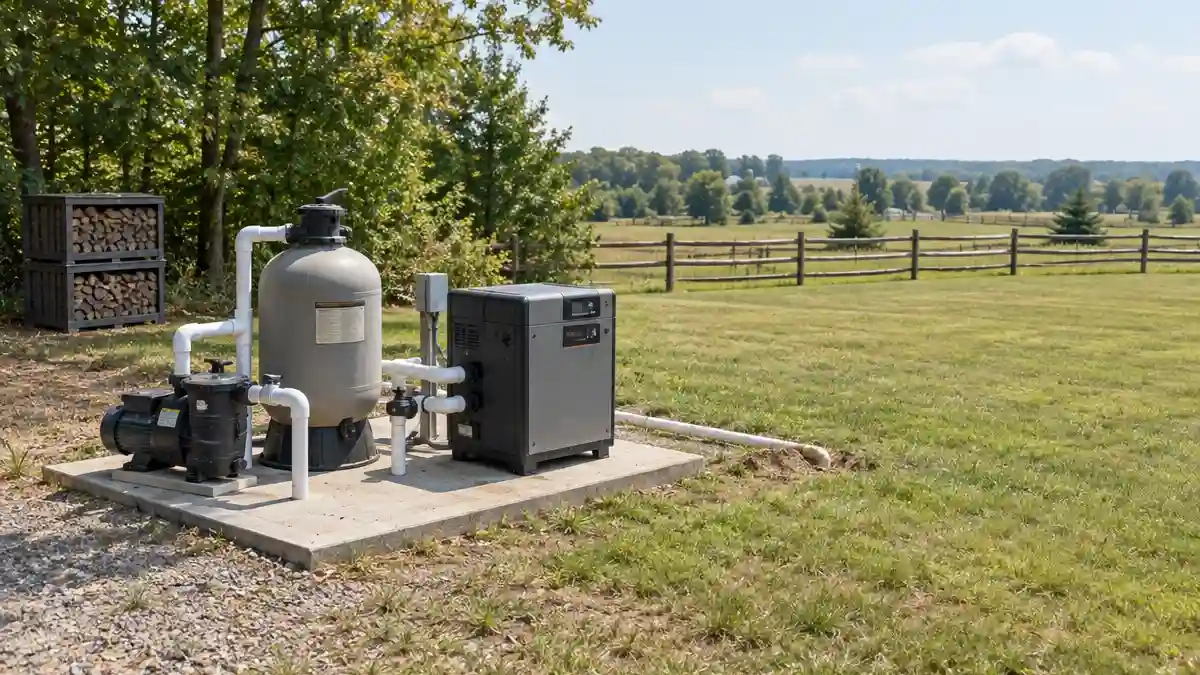
A pool equipment pad with pump, filter and heater
“The crew is super knowledgeable and courteous.”
Tell us what you are seeing.
About 7 miles from our base in Twinsburg, and next door to Chagrin Falls, which we also serve. That is comfortably within the area we cover routinely, including regular chemical service rather than only seasonal visits.
We do not publish a mile radius — reach varies by service type and season, and cover work travels further than routine service. The full list of towns is on service areas.
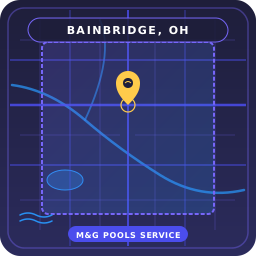
A map showing Bainbridge Township and its neighbouring towns — Bainbridge, Ohio
Bainbridge is in Geauga County, and it is the only city in our service area that is — so a commercial or semi-public pool here is licensed and inspected through the Geauga County health district rather than the Cuyahoga or Summit ones that cover most of our area.
If you manage properties across county lines, those routines are not identical. We work across all five. See commercial pool maintenance.
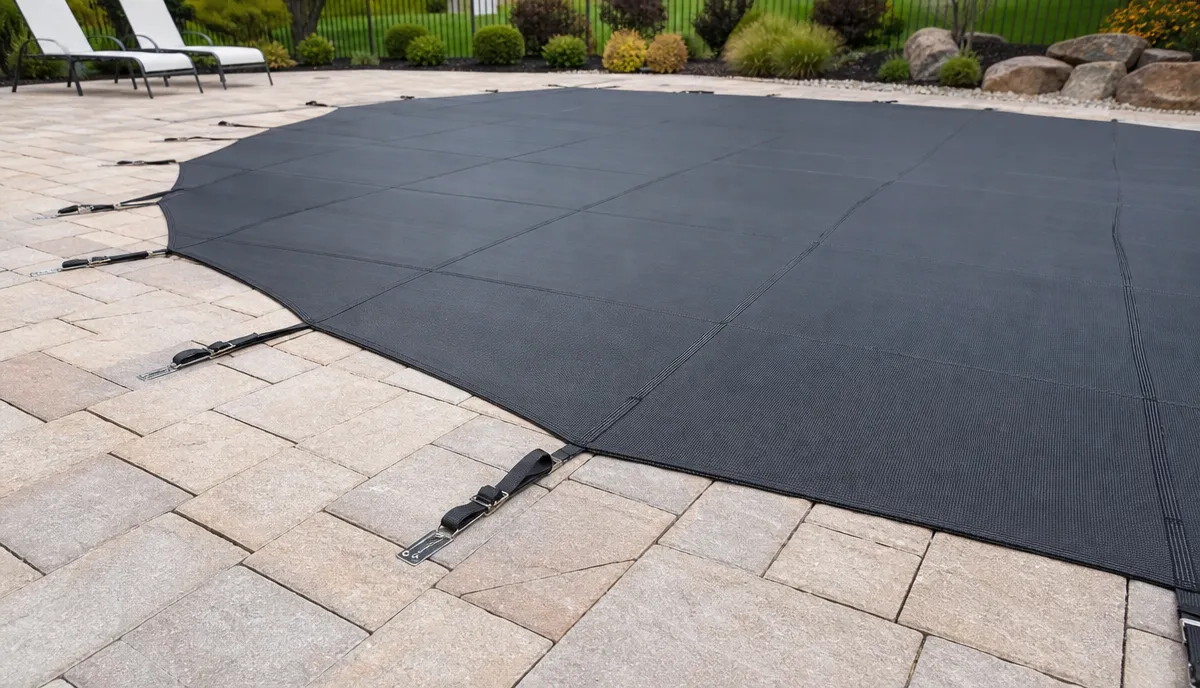
A custom safety cover fitted taut across an in-ground pool
We do not clean pools — no vacuuming, brushing or skimming as a weekly service. Our maintenance is chemistry and equipment, and most of our service customers have a robotic cleaner handling the surfaces.
No above-ground pools, no hot tubs, no spas.
No stock sizes.
Yes — the full range, including regular chemical service. Bainbridge is about 7 miles from our Twinsburg base, next door to Chagrin Falls, so it is well inside the area we cover routinely.
Yes, quite a lot. Well water often carries dissolved iron and copper, which are invisible in the ground and a problem in a pool — add sanitiser and you oxidise them, and oxidised metal comes out of solution and stains. It also tends to bring its own hardness and alkalinity, which shifts the baseline your chemistry sits at.
Almost always metals in the fill water coming out of solution, typically after a shock dose or a substantial top-up. Once metal has stained vinyl it is generally permanent, so the answer is prevention: metals held in solution with a sequestrant or chelating agent, maintained rather than done once, and applied before a heavy sanitiser dose rather than after the stain appears.
Straight away, if the top-up was substantial — after a backwash, a heavy splash-out week or a liner repair. That is the moment fresh metal and hardness enter the pool, and it is much easier to hold them in solution than to remove a stain later.
Yes, and this is the cost people notice later. Mineral deposit scales a heater's heat exchanger, so it fires into a deposit rather than into water and output drops with nothing else changing — a de-lime often restores it. It also scales the plates of a salt chlorine generator, which then stops producing. Both are chemistry rather than faulty equipment.
Bainbridge is in Geauga County — the only city in our service area that is — so a commercial or semi-public pool here is licensed and inspected through the Geauga County health district, rather than the Cuyahoga or Summit ones covering most of the towns we serve.


