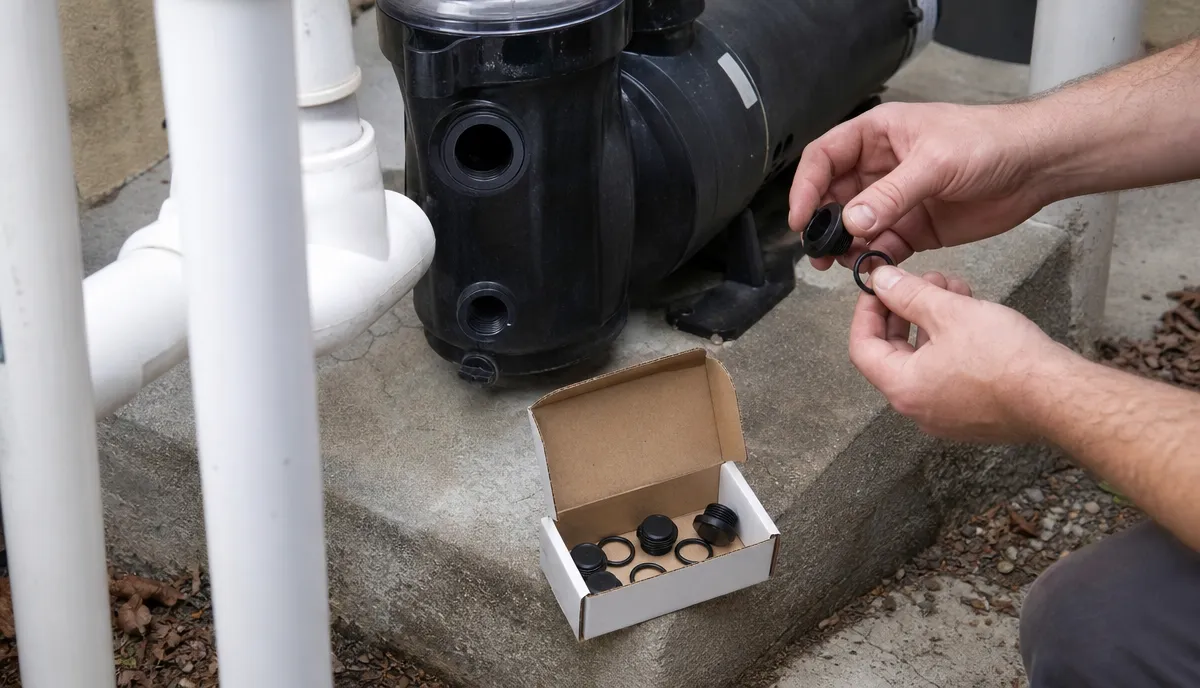

Not firing, cutting out after a few minutes, or quietly losing output — each of those means something different. $150 service call across Twinsburg, Solon, Hudson and the Route 91 corridor.
Symptom by symptom. This is the page to read before you call, because knowing which of these you have shortens the visit considerably.
Nothing happens when it should start.
Check first: is the set-point actually above the current water temperature, is the breaker on, and is the gas supply open — a closed valve or an empty propane tank accounts for more of these calls than anything else.
If all three are fine, it is the igniter, the gas valve, a safety interlock doing its job, or a control fault. A heater that refuses to ignite has usually made a decision rather than broken.
This is a flow problem far more often than a heater problem, and it is the single most misdiagnosed fault in pool service.
Every heater watches water flow through a flow-switch and shuts down below a minimum — by design, because firing a burner without adequate flow damages the exchanger. So the heater is reporting a problem elsewhere:
A filter that needs cleaning. Check the pressure against your clean baseline — see pool filter repair.
A variable speed pump running too slowly for the heating cycle. Very common where a variable speed pump was fitted without being properly commissioned. The fix is a speed setting, not a part — see variable speed pool pumps.
A pump losing prime, a blocked basket, or a low water level.
A flow switch that has genuinely failed, which does happen.
Why it matters: replacing a heater in this situation solves nothing and costs a great deal.
Three possibilities, and they are distinguishable.
It is undersized. A heater is BTU-rated for a volume of water and a temperature rise, and an undersized unit runs continuously without ever satisfying. If nothing has changed and it never did keep up, this is likely — see pool heater installation for how we size them.
It is losing heat faster than it adds it. Usually an uncovered pool. Most of a heated pool's heat loss is from the water surface, so an uncovered pool on a breezy night can shed heat as fast as a correctly sized heater supplies it.
It has lost output. See below.
Quiet output loss with nothing else changed is almost always scale.
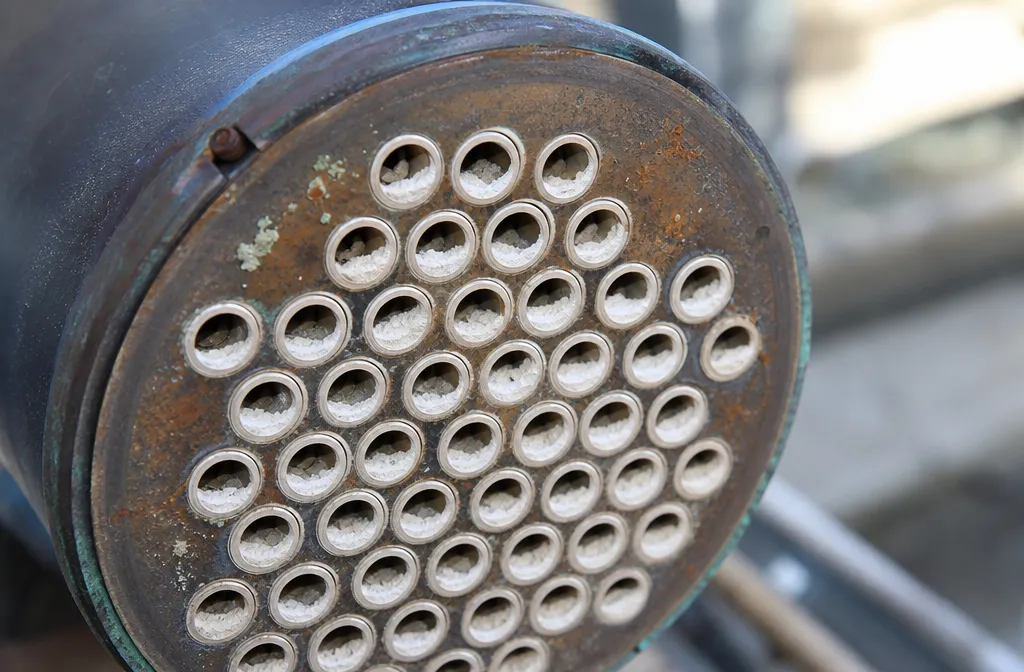
Mineral deposit inside the heat exchanger insulates it, so the burner is firing into a deposit rather than into water. A de-lime frequently restores a heater people had written off. Rising running cost with no other change is the same symptom seen from the bill.
Two very different causes, and telling them apart matters.
Condensate is normal on some units in some conditions. A leaking exchanger is not, and it is terminal.
There is also a third: a gas heater run at too low a return temperature will condense flue gas inside the cabinet and corrode it from the inside out. That shows as rust streaking below the burner tray, and it means the operation needs changing as well as the unit inspecting.
Stop using it and call. That is a venting or combustion concern, and it is the one symptom on this page where continuing to run the heater is a bad idea.
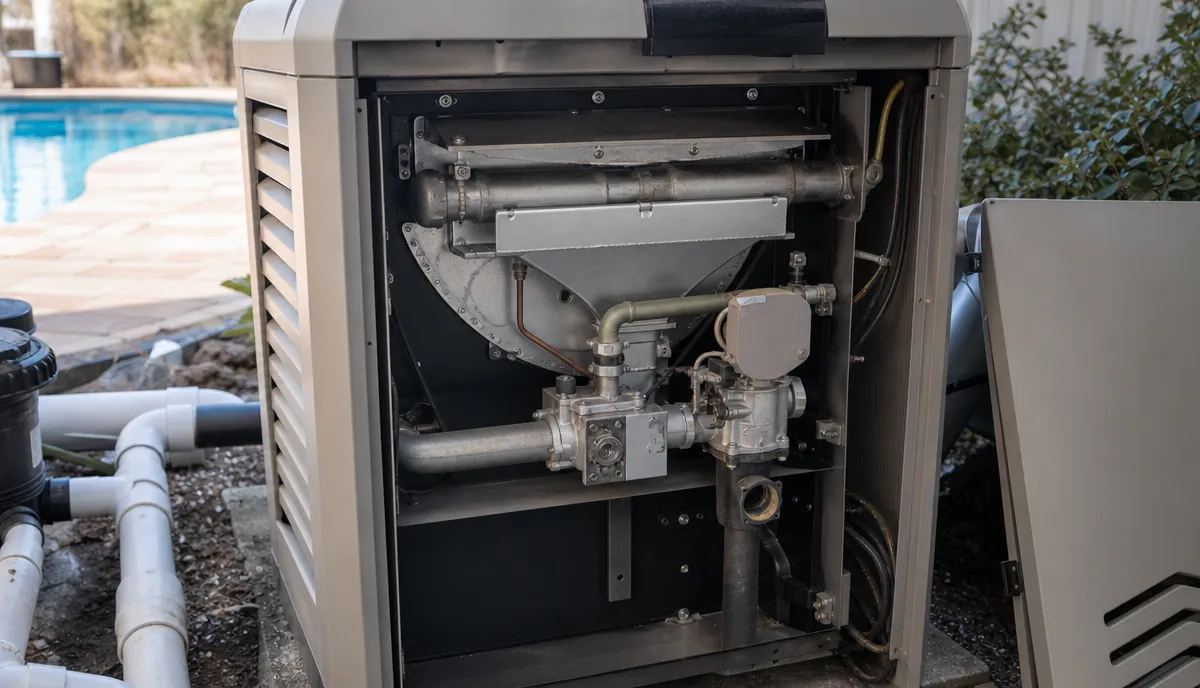
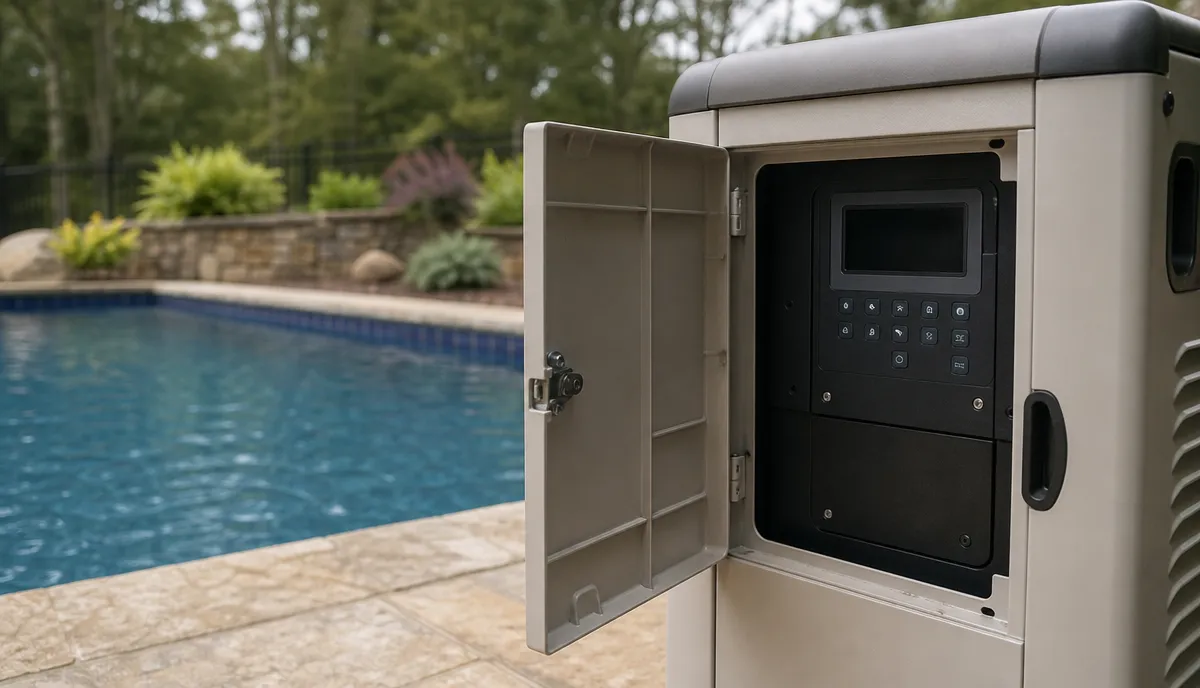
The gas valve train inside a pool heater
A $150 service call covers up to the first hour of diagnosis or repair — and on a good share of heater calls, that hour is the whole job.
We diagnose before quoting, because as the list above shows, the same symptom can mean a filter that needed cleaning or a heater that needs replacing. Quoting a symptom means quoting the wrong thing.
Where a repair will hold, we repair. Where it will not, we say so instead of selling you the same repair twice — see pool heater replacement.
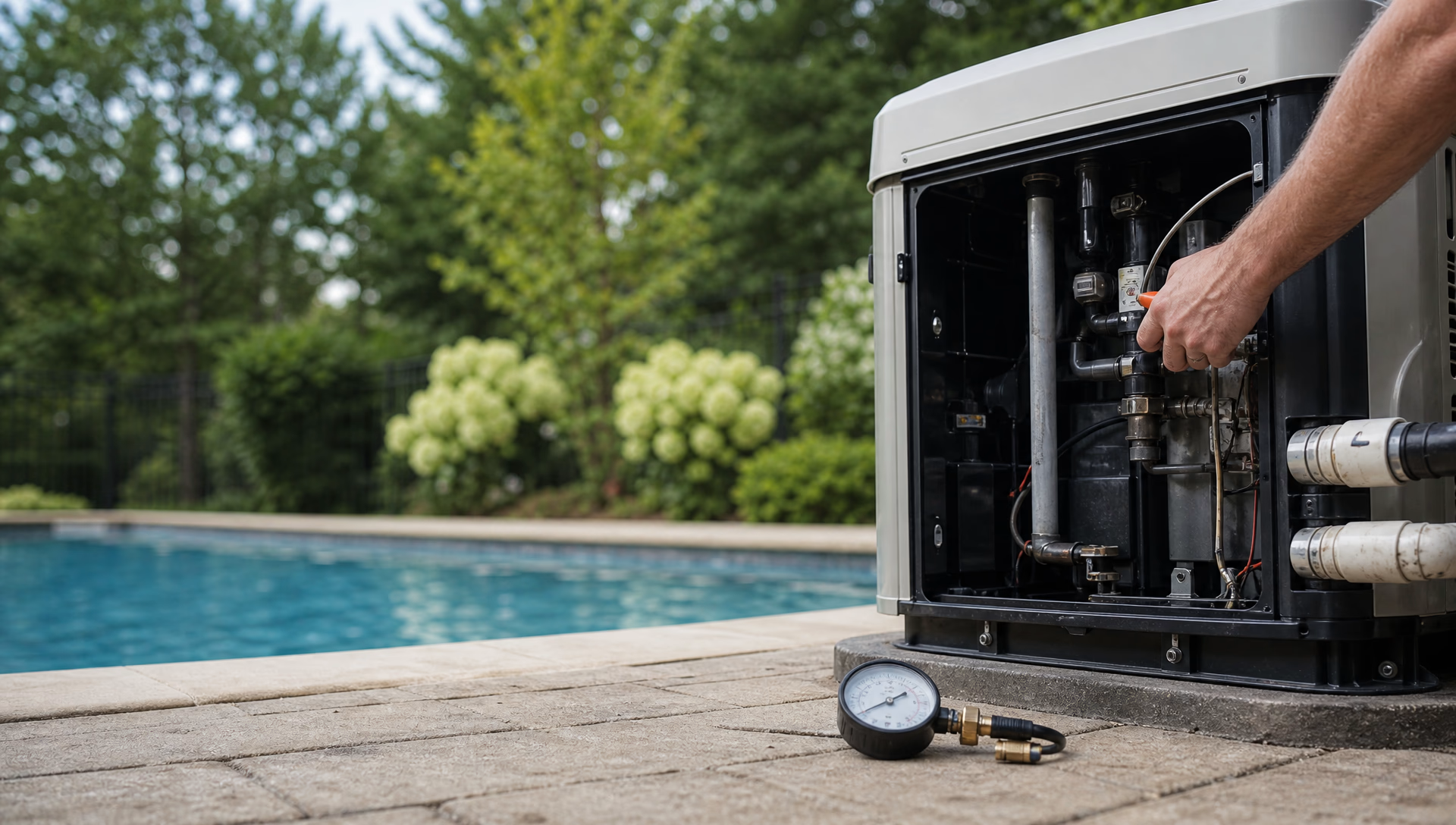
Because the heater sat idle for five months.
Seals dry and take a set, rubber components stiffen, and anything that was left holding water over a Northeast Ohio winter has had the chance to freeze. A heater with water left in the exchanger splits it — and a split exchanger is a replacement, not a repair, and not a warranty matter, because it follows from how the pool was closed rather than being a fault in the unit.
Which is why we would rather find heater problems at the opening, in April, when there is time. A parts wait in spring is an inconvenience; the same wait in July costs you the season.
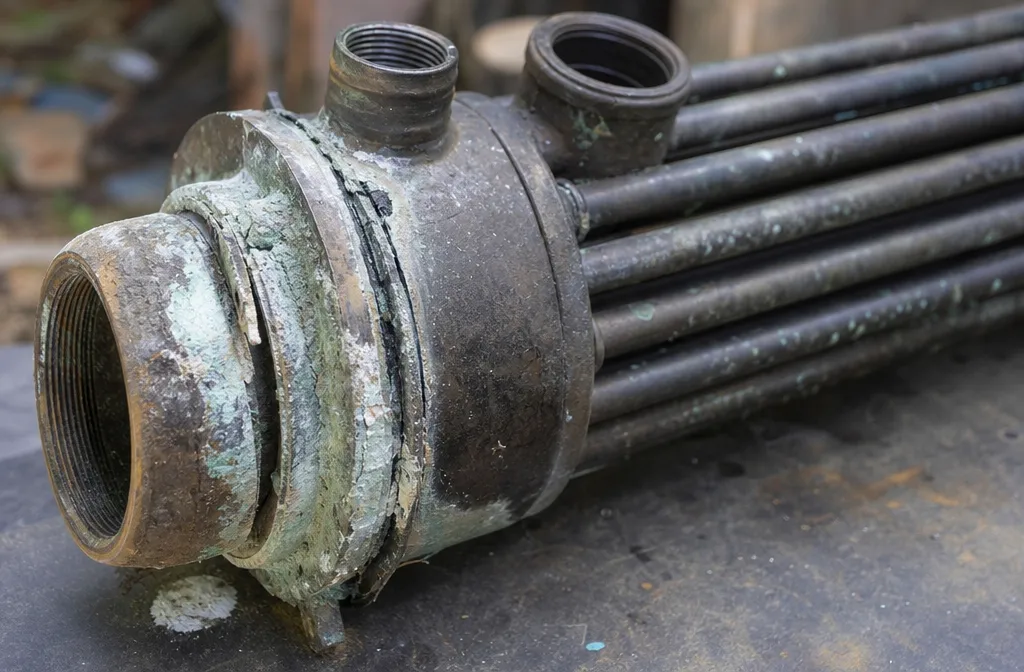
A failed heat exchanger removed from a pool heater
Some faults are best understood per manufacturer, particularly where the unit displays a code:
Hayward pool heater repair — includes what the common Hayward fault codes mean
We also service Jandy, Sta-Rite, Fluidra and Zodiac heaters.
For the wider picture — gas against heat pump, what a heater costs to run, and sizeing — see pool heaters.
Products we install carry the full manufacturer's warranty, which varies by manufacturer and generally runs between one and three years. We do not offer a separate workmanship guarantee, and nothing on this page should be read as one.
M & G Pools services in-ground pools exclusively. We do not service, repair or supply equipment for above-ground pools, and we do not service hot tubs or spas.
“M&G has serviced our in ground pool for the past 10+ years. Seasonal opening & closing, replacing heaters, pumps and a number of aggravating repairs that Matt & his crew have handled correctly at a fair price. Recommend highly.”
— firing and cutting out, or not firing at all. That difference alone usually narrows it before we arrive.
Usually flow rather than the heater. Every heater shuts down below a minimum water flow to protect its exchanger, so it is reporting a problem elsewhere — most often a filter that needs cleaning or a variable speed pump running too slowly for the heating cycle. Check your filter pressure first. Replacing the heater in this situation solves nothing.
Three things before you call: is the set-point above the current water temperature, is the breaker on, and is the gas supply open — a closed valve or an empty propane tank accounts for more of these calls than anything else. If all three are fine it needs diagnosing.
Either it is undersized for the pool, it is losing heat faster than it adds it, or it has lost output to scale. An uncovered pool on a breezy night can shed heat as fast as a correctly sized heater supplies it — and most of a heated pool's loss is from the water surface, so a cover is the largest single fix. If output has dropped with nothing else changing, that is usually scale and a de-lime often restores it.
A service call is $150 and covers up to the first hour of diagnosis or repair, which on many heater calls is the whole job. Beyond that we quote after diagnosing rather than before — the same symptom can mean a filter clean or a replacement, so quoting the symptom means quoting the wrong thing.
Because the unit sat idle for five months. Seals dry and take a set, rubber stiffens, and anything left holding water over the winter has had a chance to freeze. It is also why we would rather find heater faults at the April opening than in July — a parts wait in spring is an inconvenience, in peak season it costs the season.