
Supply, installation, commissioning and repair — set up so the rest of your equipment actually works with it. $150 service call across Twinsburg, Solon, Hudson and the Route 91 corridor.
If your single-speed pump has died and you were expecting to replace it with the same thing, this is the part nobody warned you about.
Federal efficiency rules mean single-speed pool pumps can no longer be sold new for most in-ground applications. The like-for-like replacement is not available. Your options are a variable speed pump, or repairing the single-speed you have while it is still repairable.
That is not a sales position, it is the shelf. We mention it here because the moment people usually discover it is when their pool is green and they need a pump today.
Upfront cost goes up. A variable speed pump costs more than the single-speed it replaces did. There is no getting around that.
Running cost goes down a long way. Here is why, without a percentage we cannot source: pump power does not fall in proportion to speed — it falls far more steeply than that. Halve the speed and the power draw drops by much more than half, while the flow drops by much less. So a pump that runs slowly for longer moves the same water for a fraction of the electricity of one that runs flat out for a shorter period.
That relationship is the whole reason variable speed is worth the money, and it is why the saving is largest on pools that filter for long hours.
We are deliberately not printing a dollar saving. It depends on your pool volume, your run hours, your electricity rate and what you were running before. Anyone quoting you a single annual figure without knowing those has guessed. Ask us and we will work through yours.
It runs quieter. Not the reason to buy one, but the thing owners notice first — a pump at low speed is much quieter than the same pump flat out.
A variable speed pump is not a drop-in swap, and this is where most complaints come from.
Low enough to save energy, high enough to turn the water over properly.
A heater has a minimum flow it will accept. Run the pump below that and the flow-switch refuses and the heater will not fire — the classic symptom of a variable speed pump installed by someone who did not commission it. See pool heaters.
Salt chlorine generators need flow to register and produce. Too slow and the cell reports no flow and stops sanitising, which shows up a week later as a green pool. See salt chlorine generators.
A pressure-side cleaner or a water feature needs its own speed.
A backwash needs full flow to lift and carry the debris out — at filtration speed it just stirs it. See pool filter repair.
The pump needs to prime at a speed high enough to actually pull water and clear air, then step down. Set the prime too low and it will not prime at all, or it will cavitate trying.
The pump has to be commissioned — the speeds set for each task your pad actually performs. Get that wrong and you have a more expensive pump that works worse than the one it replaced.
What has to be set, and what breaks if it is not:
Every one of those is a settings problem that presents as a fault in a different component. That is why we commission the pump against the whole pad rather than just bolting it on.

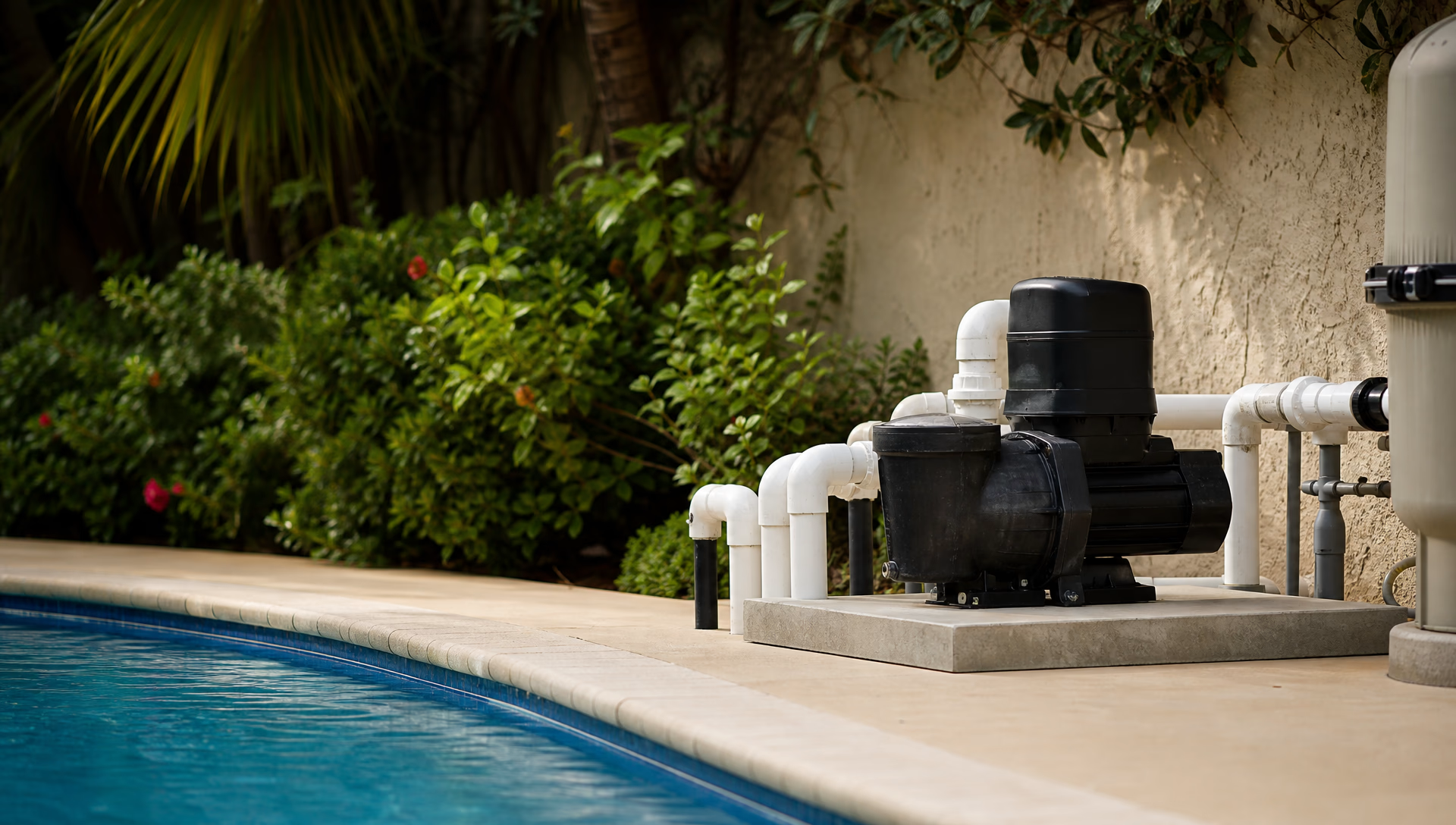
A variable-speed pool pump on a pad beside an older single-speed pump, the two side by side for comparison
A variable speed pump and a controller belong together. Without automation you are running fixed schedules and manually changing speeds when you want to heat or backwash — which is how most people end up leaving it on one speed and losing much of the benefit.
With pool automation, each task gets the right speed automatically, and the freeze-protection function has something worth driving. If you are putting in a variable speed pump and there is no controller, it is worth pricing them together.
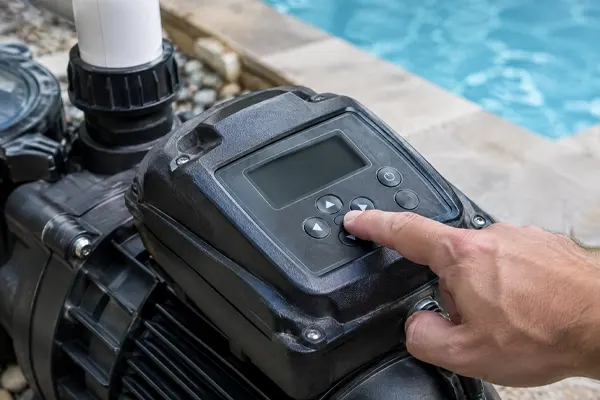
The drive panel of a variable-speed pool pump
They are still pumps, and the wet end fails in all the familiar ways — shaft seal, impeller, basket, unions. Those repairs are the same as on any pump.
What is different is the drive. A variable speed pump has a motor drive with electronics on it, and that brings failure modes a single-speed motor does not have: drive faults, communication faults where the pump talks to a controller, and sensitivity to supply voltage and to water getting where it should not.
Two practical notes:
A drive fault is not automatically a new pump. Some are the drive, some are the wiring or the bond, some are a settings or communication problem with the controller. It gets diagnosed.
Water and electronics. A drive is more vulnerable to a leaking seal above it than an old motor was. A weeping seal on a variable speed pump is worth dealing with promptly.
A $150 service call covers up to the first hour of diagnosis or repair. See pool pump repair for symptom-by-symptom detail.
“Matt and his team are fantastic to work with. Easy to schedule, quality work is done right the first time. Highly recommend.”
Better to plan the replacement in April than to face it in July with a green pool.
The same rule as any pump, with one addition.
A pump housing full of water that gets cold enough splits, so a close has to winterize properly — blow out the lines, drain and purge the volute rather than assuming it self-drains. Freeze damage is a replacement, not a repair, and it is not a warranty matter because it follows from how the pool was closed.
The addition: a variable speed pump has a drive that does not like standing water or condensation either. Closing it down properly means the drive as well as the wet end.

A variable-speed pool pump on a pad beside an older single-speed pump for comparison
We service, repair and replace pumps from Pentair, Hayward, Jandy, Sta-Rite, Fluidra and Zodiac, including their variable speed families — IntelliFlo, Super Pump and FloPro among them — and the single-speed pumps they replace.
The full list is on brands we service.
Products we install carry the full manufacturer's warranty, which varies by manufacturer and generally runs between one and three years. We do not offer a separate workmanship guarantee, and nothing on this page should be read as one.
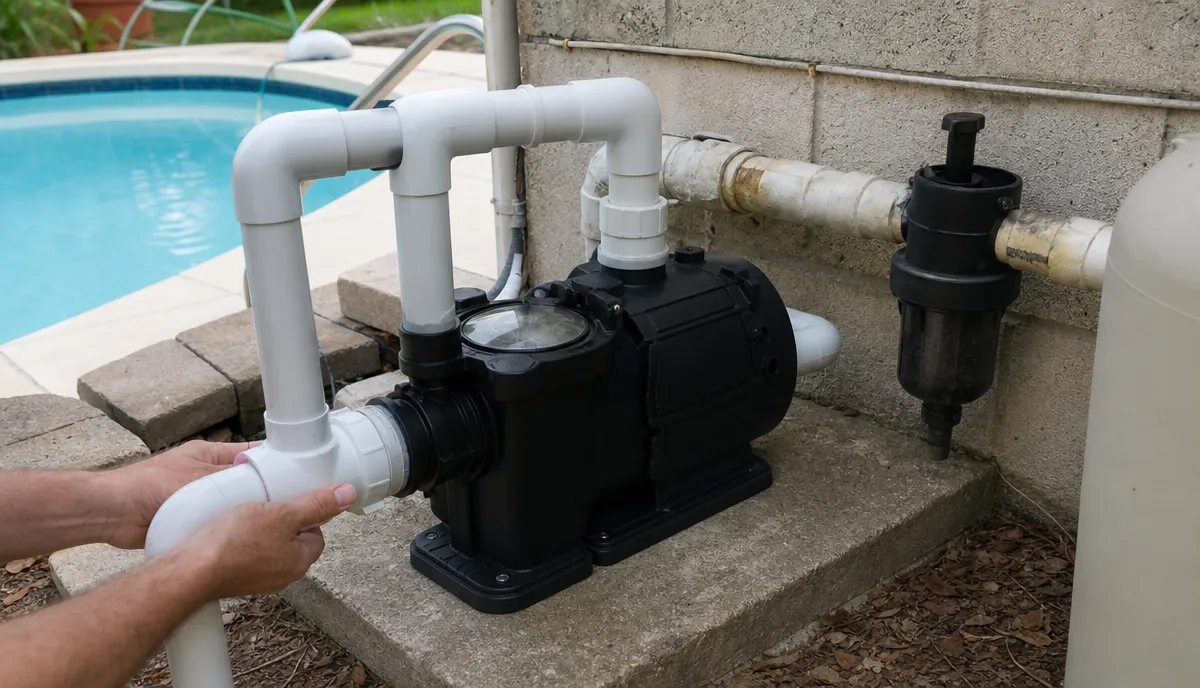
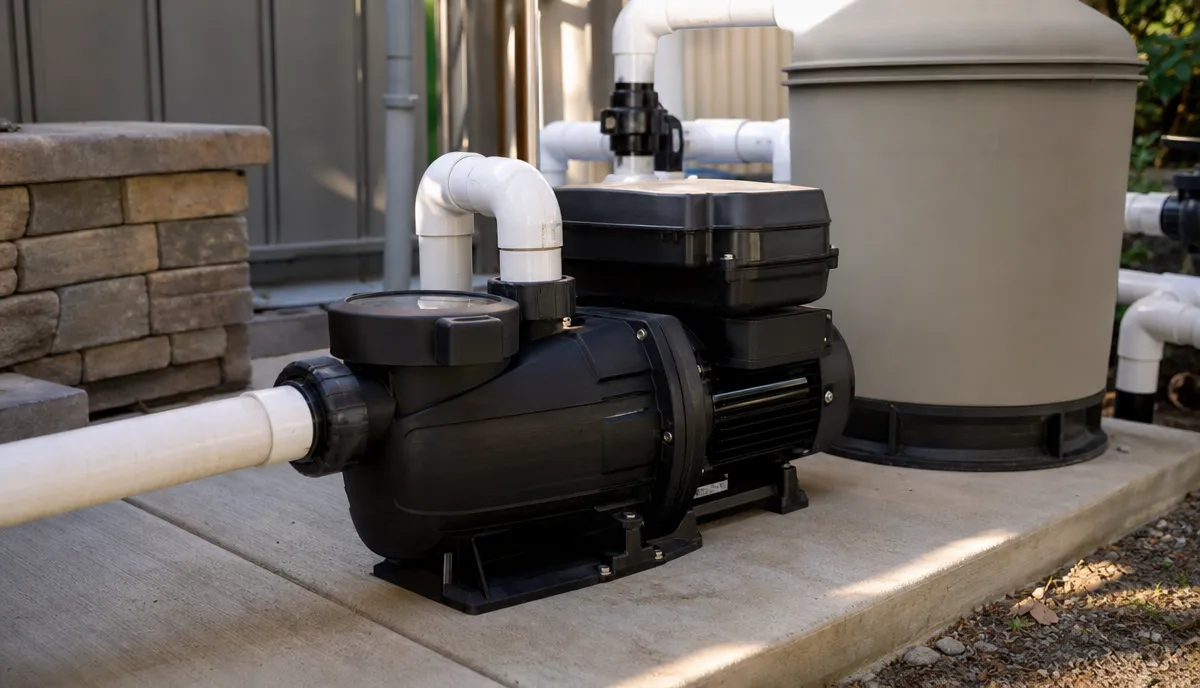
A variable-speed pump newly fitted where a single-speed pump had been
M & G Pools services in-ground pools exclusively. We do not service, repair or supply equipment for above-ground pools, and we do not service hot tubs or spas.
Generally not for a new installation. Federal efficiency rules mean single-speed pumps can no longer be sold new for most in-ground pool applications, so a replacement is a variable speed pump. If your existing single-speed is still repairable, repairing it is often the right call — but the replacement decision is coming, and it is much better planned in April than faced in July.
Yes, and the reason is physical rather than marketing: pump power falls far more steeply than speed does, while flow falls much less. So running slowly for longer moves the same water for a fraction of the electricity. We deliberately do not print an annual saving, because it depends on your pool volume, run hours, electricity rate and what you had before — anyone quoting one figure without knowing those has guessed.
Almost certainly flow. A heater has a minimum flow it will accept, and if the pump is running below it the flow switch refuses and the heater will not fire. It is a commissioning problem, not a fault, and the fix is normally a speed setting rather than a part. The same thing happens with salt cells, which stop producing when they cannot register flow.
The wet end is the same — seal, impeller, basket, unions all fail in the familiar ways. The difference is the drive electronics, which add failure modes a single-speed motor does not have and are less tolerant of a leaking seal above them. A drive fault is not automatically a new pump; some are wiring, bonding, or a communication problem with the controller.
Not strictly, but it is where most of the benefit is. Without a controller you are running fixed schedules and changing speeds by hand when you want to heat or backwash, and most people end up leaving it on one speed and losing much of the advantage. If you are fitting a variable speed pump and have no controller, price them together.