
Every line blown out, the equipment purged, and antifreeze where the plumbing needs it — from $495 plus chemicals. Serving Twinsburg, Solon, Hudson, Chagrin Falls and the Route 91 corridor.
From $495 plus chemicals. That is above what some outfits charge, so here is exactly what the visit covers.
Chemicals are billed separately, for what the pool actually takes. What moves the starting figure is pool size, what is on the equipment pad, how much debris is in the water when we arrive, and access.
Spot-vac or leaf net the pool to remove debris as needed.
Lower the water to the proper winterizing level.
Chemically treat the water with winterizing chemicals.
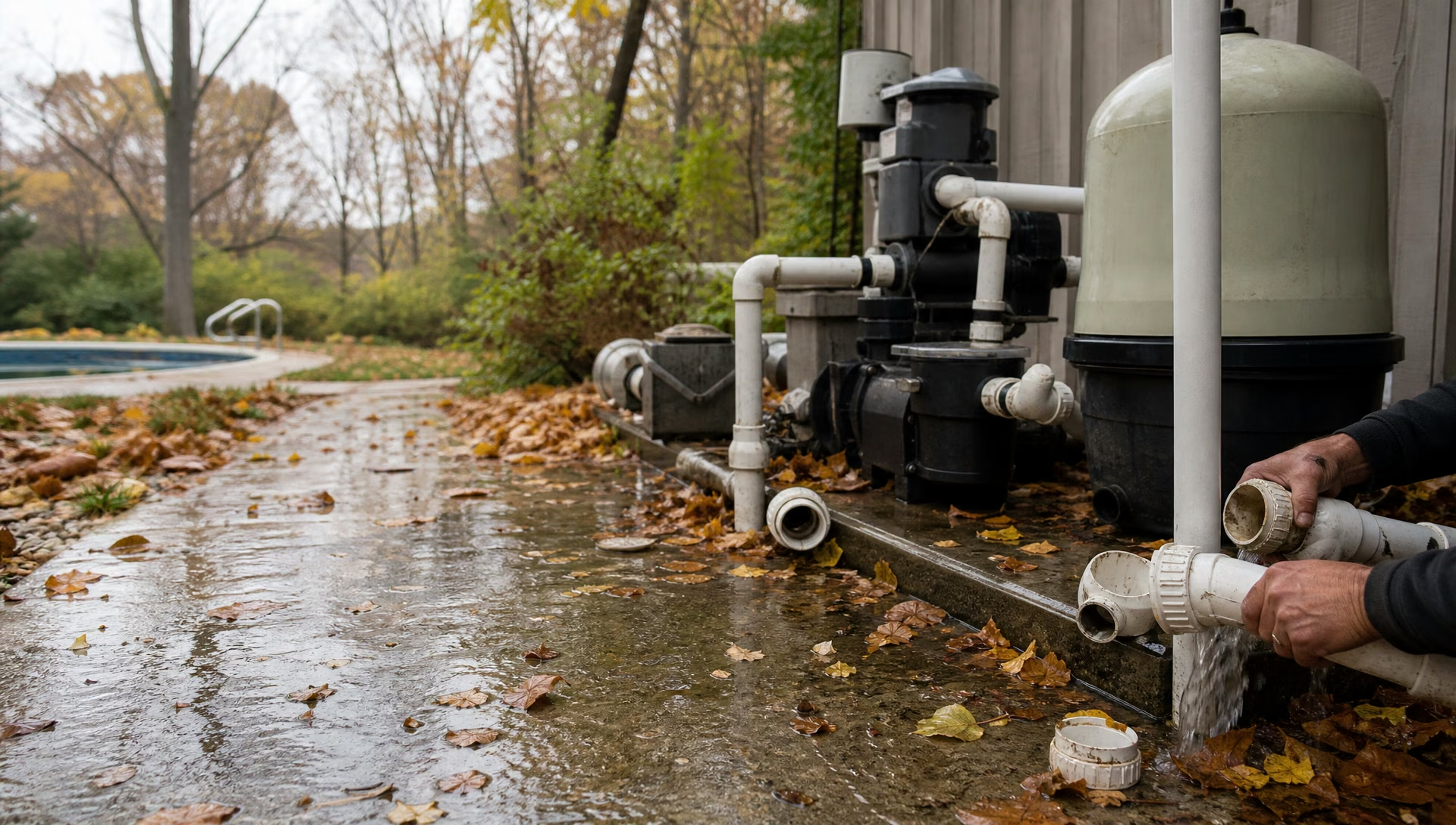
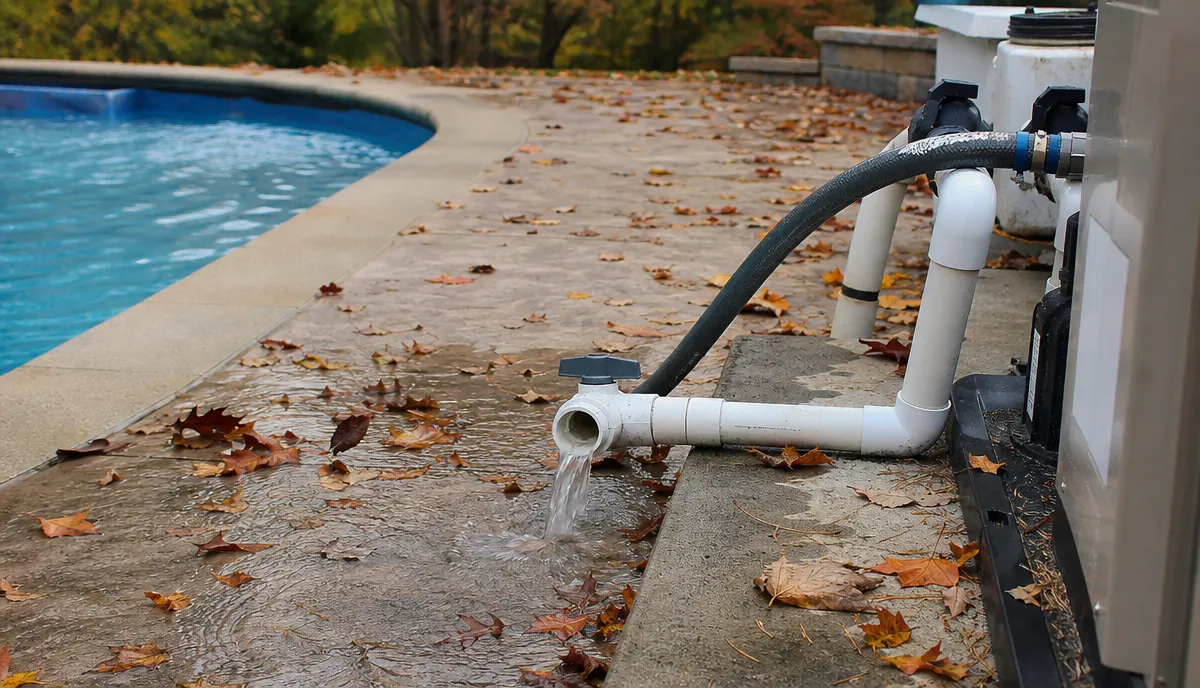
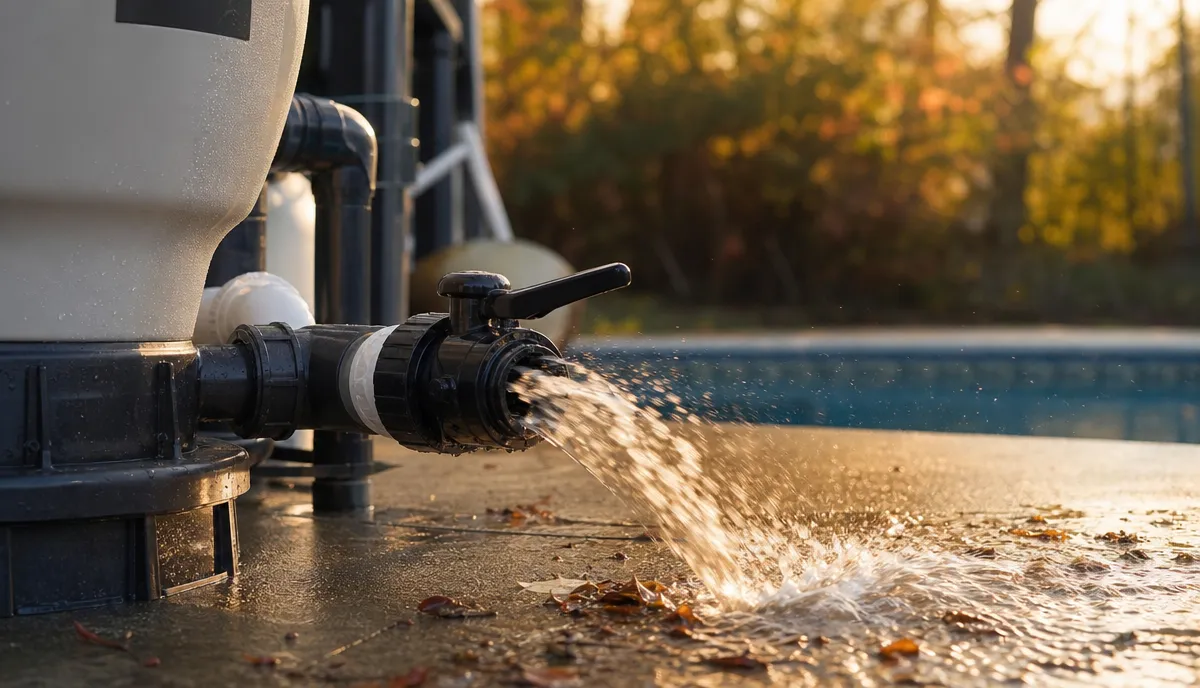
Winterize all plumbing lines and equipment — blow out every line with air, drain and purge the pump, filter and heater, plug the returns, and antifreeze the runs that need it.
Cover the pool.
This is the part that separates a close that works from one that looks like it worked, and it is worth understanding because "we winterize your pool" covers both approaches.
Blow-out only. Compressed air is pushed through each line until it clears, then the line is plugged. Done thoroughly this is effective, and it is how most of a good close is achieved.
Antifreeze as well. Pool-grade, non-toxic antifreeze — not the automotive kind — goes into the line after the air. It covers the water that air alone cannot always shift.
Why air alone is not always enough. Air follows the path of least resistance. Where a line runs level or dips, where a long run has a low spot, or where plumbing does not drain back toward the pool, air can push through the middle of the pipe and leave a slug of water sitting in the low point. It looks clear from the equipment pad. It is not.
So we do both. Every line gets blown out, and the runs where the geometry says air is not enough get antifreeze too. It is a small material cost measured against what freeze damage costs, and treating it as optional is where most of the failures we see in spring originate.
One more step people skip: the equipment itself. A pump volute, a filter tank and a heater exchanger all hold water independently of the plumbing, and each has to be drained and purged in its own right. A heater in particular does not reliably self-drain.
The reason to care about the above.
These run beneath a concrete deck. The repair is not plumbing, it is excavation — the deck comes up to reach the pipe, and then the deck has to be made good. The concrete is the expensive part, not the pipe.
Not repairable. The heater is replaced.
Both replacements.
Replacement, and it takes next season's opening with it.
Winterizing is not about the water in the pool — it is about the water in everything else. Water expands as it freezes, so anything rigid and full that gets cold enough will freeze-crack.
What that actually means:
Notice that almost nothing on that list is a repair. Freeze damage destroys components rather than injuring them.
And there is a second cost. Damage of this kind is a consequence of how the pool was closed, not a fault in the equipment — so it is not a warranty matter. A manufacturer's warranty on a heater does not cover an exchanger that split because water was left standing in it.
You find out in the thaw. Everything above stays invisible until spring, five months after the mistake, when the pool is being opened and the season is about to start.
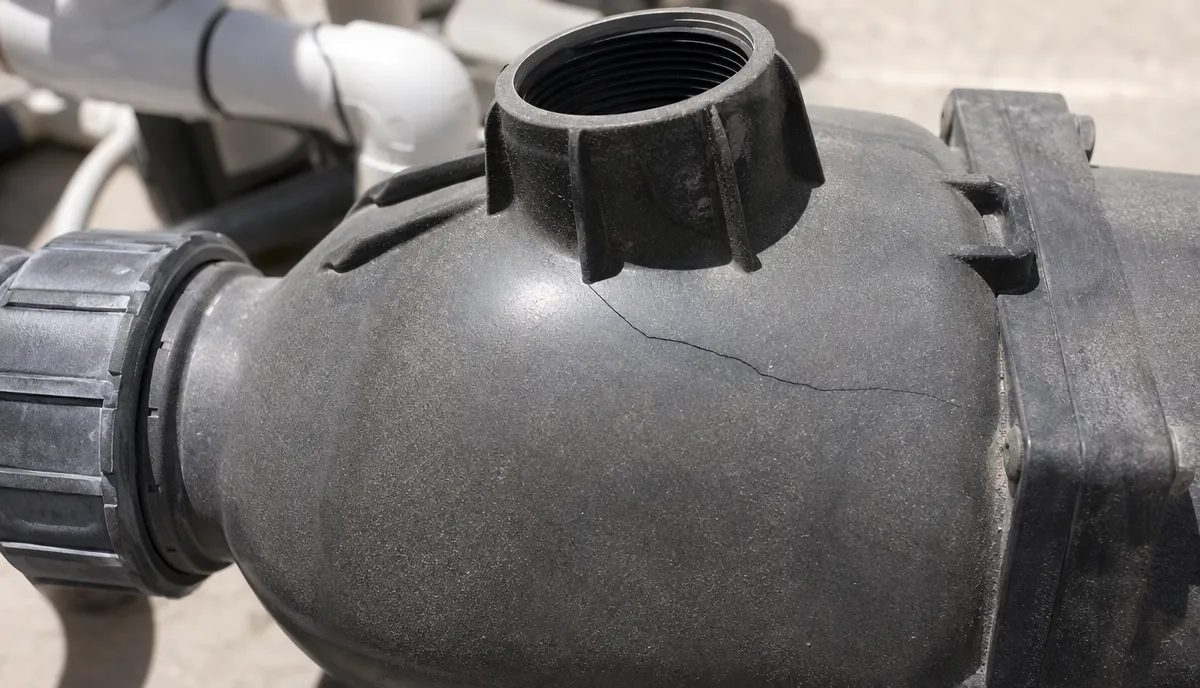
A hairline crack in a pool pump volute
After Labor Day at the earliest, and there is real latitude — some of our customers leave pools open into November.
There is no single right date because the trigger is water temperature, not the calendar. Below roughly 65°F the biological activity that drives algae growth slows sharply, which is what makes a pool safe to leave unattended for months. Close while the water is still warm and you are shutting down a pool that is still biologically active, which is how people find algae under the cover in April.
The other half of the decision is the freeze risk. Leave it too late and you are gambling on the first hard freeze arriving after your closing date rather than before it. A pool still open in a cold snap needs either a close booked or, if it has automation, freeze protection working — see pool automation.
Practically: mid-October is the comfortable window in this part of Ohio. If you want the shoulder season, a cover and a heater will buy you October safely, and then close.
Book earlier than you think. Autumn is one of the two heavy stretches of our year and the schedule fills in order.
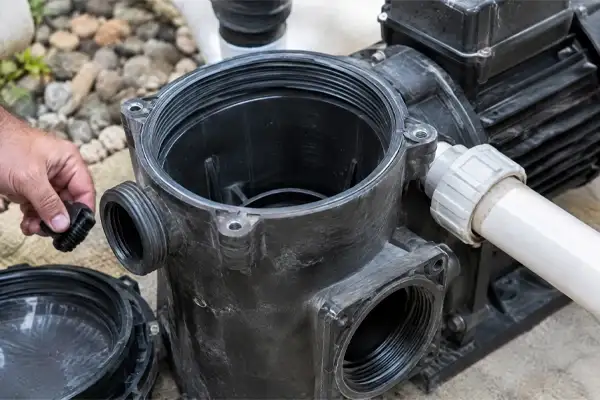
Pool equipment standing drained for the winter
The water at the appropriate level before we arrive. We lower it as part of the close, but we cannot work on a pool that is already well down — and a pump run dry is a pump destroyed.
Beyond that: clear access to the equipment pad and pool surround, and pets indoors while we work.
“After having different companies open and close our pools, and then having M & G Pools, I would never have anyone else! They are extremely professional, kind, efficient, and knowledgeable. They definitely go out of their way to help their customers.”
Autumn fills in order — earlier is better.
Because the amount is not knowable in advance. Winterizing chemical demand depends on where the water chemistry has got to by autumn, how much organic load is in the pool, and its volume. Building an average into the price would mean overcharging most customers to cover a few.
Customers on a regular chemical and equipment check tend to need less at closing, because the water is already where it should be.
Worth stating plainly, because it is a common and expensive misunderstanding.
Putting a cover on a pool keeps debris out and, if it is a safety cover, makes the pool a barrier. It does nothing to protect the plumbing or the equipment. A pool with a beautiful cover and water still standing in its lines is a pool that will freeze-crack.
The cover and the winterizing are two separate jobs that happen in the same visit. We do both. See safety covers — and if your cover needs measuring, the off-season is a better time than the week before you close.
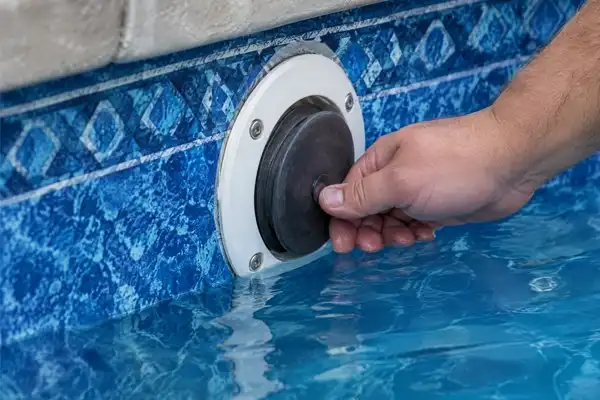
A winterising plug fitted in a pool return
A close is one of only two visits a year where everything gets handled, drained and looked at — which makes it the natural time to find things.
With the pump and filter open and drained we can see corrosion, scale and worn seals that are invisible when the system is running and full. Finding a weeping shaft seal in October means a planned repair over winter rather than a failure in June. See pool equipment repair.
A $150 service call covers up to the first hour of diagnosis or repair where something needs attention beyond the close.

An in-ground pool still open in late September with clear water, low warm light and the first fallen leaves on the deck
M & G Pools services in-ground pools exclusively. We do not service, repair or supply equipment for above-ground pools, and we do not service hot tubs or spas.
From $495 plus chemicals. The full step list is itemised above so you can see what that covers. What moves the figure is pool size, what is on the equipment pad, how much debris is in the water when we arrive, and access.
After Labor Day at the earliest, and mid-October is the comfortable window here — though some customers leave pools open into November. The real trigger is water temperature rather than the date: below roughly 65°F the activity driving algae growth slows sharply, which is what makes a pool safe to leave for months.
Both. Every line gets blown out with air, and we add pool-grade non-toxic antifreeze to the runs where the plumbing geometry means air alone may leave water behind — long runs, lines that do not drain back toward the pool, and plumbing with low spots. Air follows the path of least resistance and can push straight through the middle of a pipe, leaving a slug of water in a low point.
No, and it is an expensive misunderstanding. A cover keeps debris out and, if it is a safety cover, makes the pool a barrier — but it does nothing for the plumbing or the equipment. A pool with a perfect cover and water still in its lines will still freeze-crack. The cover and the winterizing are separate jobs done in the same visit.
Water left in the plumbing or equipment expands when it freezes and splits it. A cracked underground return line means lifting the deck to reach the pipe; a split heat exchanger, a cracked pump housing or a fractured filter tank are all replacements rather than repairs. It also is not covered by warranty, because it follows from how the pool was closed rather than being a fault in the equipment — and you find out in spring, months later.