

Pool heater repair in Pepper Pike — including the honest answer about heat exchangers, which is that they rarely fail for their own reasons. $150 service call.
A heat exchanger is the only place in the system where your water touches metal that is being actively heated. That combination is what makes it the component that keeps the record.
Everything else on the pad is either plastic, or metal at pool temperature. The exchanger is metal at flame temperature on one side and pool water on the other, and heat accelerates every chemical process that water is capable of.
So when an exchanger fails, "it was old" is almost never the whole answer. Something in the water was working on it, and it is usually one of three things.
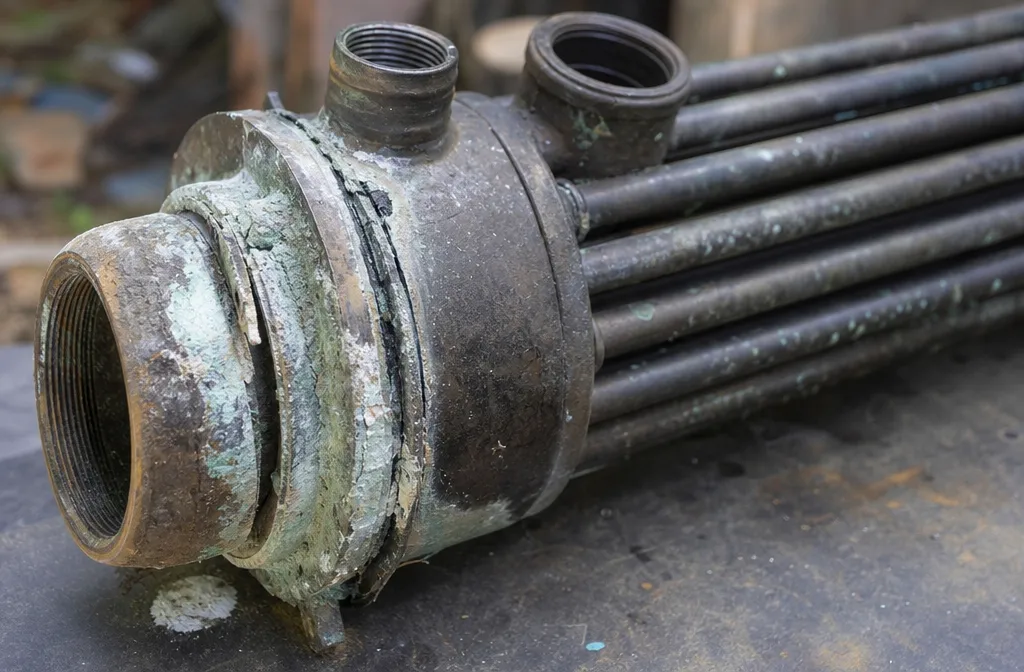
A failed heat exchanger removed from a pool heater
And that is the inside of the exchanger tubes. Once a layer forms, three things follow at once.
Because scale insulates. You notice it as a heater that takes longer to reach temperature than it used to, which people almost always attribute to the heater getting tired.
Because the heat is not being carried away properly. That is the part that shortens its life.
So it gets worse rather than stabilising.
Where a unit is otherwise sound we can de-lime the water side. A chemical clean of the tubes rather than a replacement. That works while there is sound metal under the deposit. Where the tubes have been running hot behind scale for years, there is not, and the exchanger is already spent.
This is the one that does the fast damage, and it is the least visible.
When pH and alkalinity are allowed to sit below where they should be, the water becomes aggressive — it starts dissolving what it is in contact with rather than sitting inertly against it. In the pool that shows up slowly, as etching on plaster or a dulled finish. In a heated exchanger it shows up as metal loss.
Two ways it happens without anyone deciding to let it:
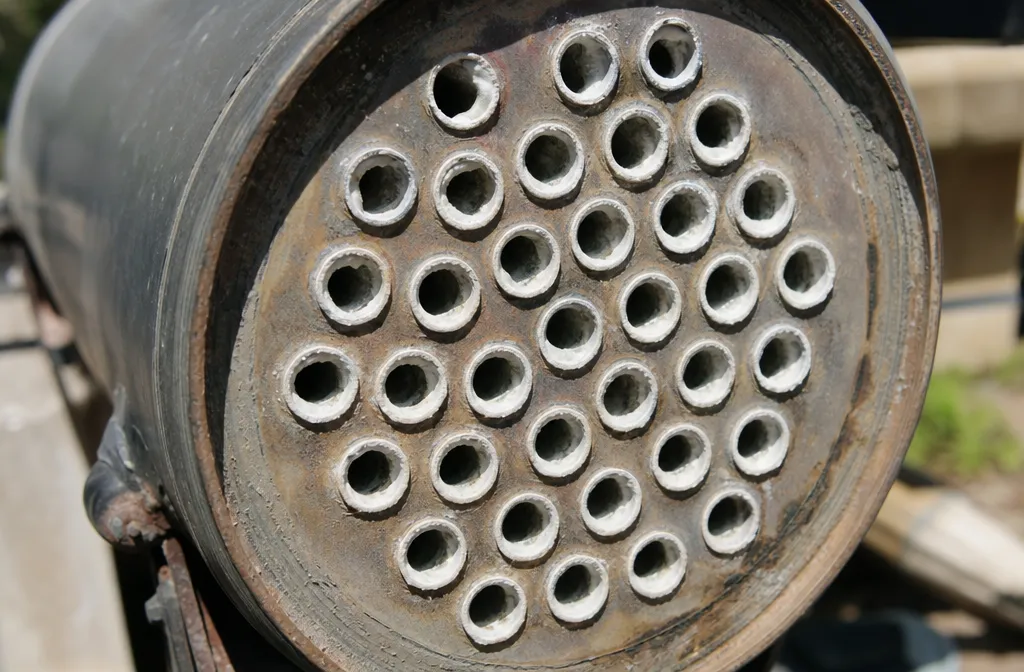
And this is why aggressive water is worse than scale
Uncomfortable as that is to say: scale is a deposit that can sometimes be removed, and corrosion is metal that has gone.
And the salt stays in the water permanently. Chloride is hard on metals, and it is harder still where the water is not well balanced.
The interaction between salted water and exchangers is covered on our Gates Mills heater page, which is where that facet lives.

Running the pool too cool for too long. A gas heater's combustion products carry water vapour, and if the water passing through the exchanger is cold enough, that vapour condenses on the tubes. The condensate is acidic. That mechanism is on our heater diagnostics in Twinsburg page.
And freeze damage, which is not a defect and not a warranty matter — it follows from how the pool was closed.
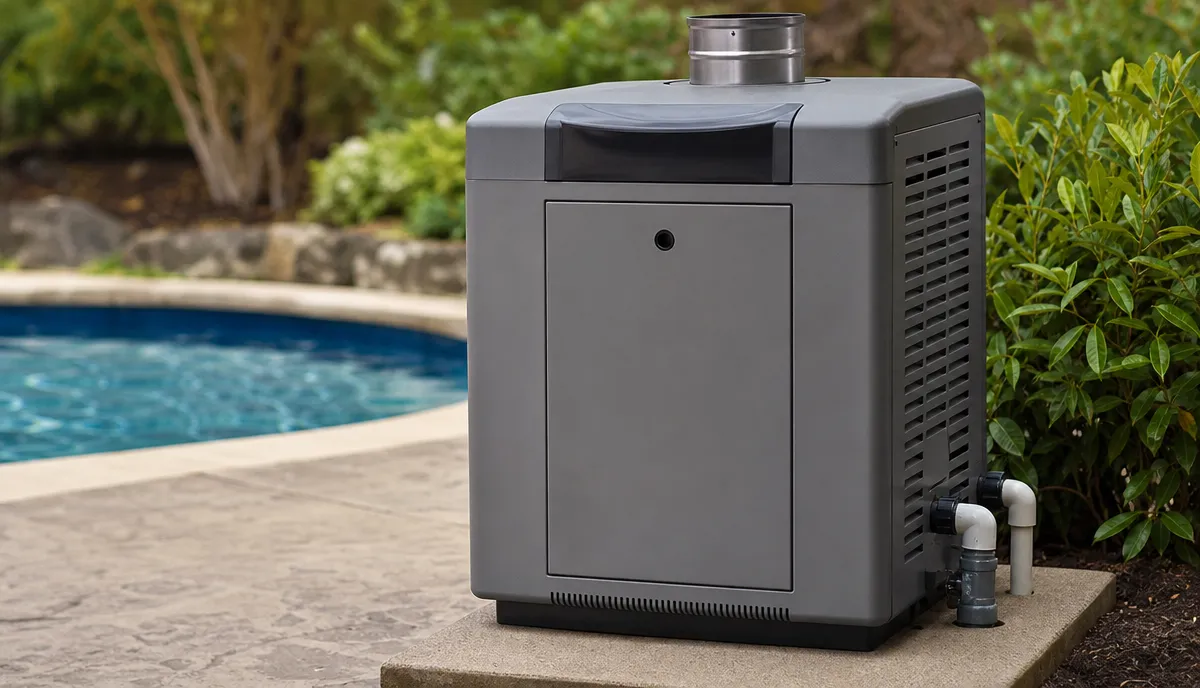
A gas-fired pool heater with its cabinet closed
“Matt and his team are fantastic to work with. Easy to schedule, quality work is done right the first time. Highly recommend.”
That is worth looking at before it becomes an exchanger.
The important question is not what to fit — it is whether the cause is still in place. A new exchanger installed into the same water is on the same timetable as the old one.
So we look at the chemistry history before quoting the part. What the water has been doing, who has been looking after it, whether the pool is covered, whether anything has changed.
The repair-or-replace decision itself — which part failed, whether the cause is fixable, whether the rest of the unit is sound — is set out on our repair or replace in Hudson page. See also pool heater replacement.
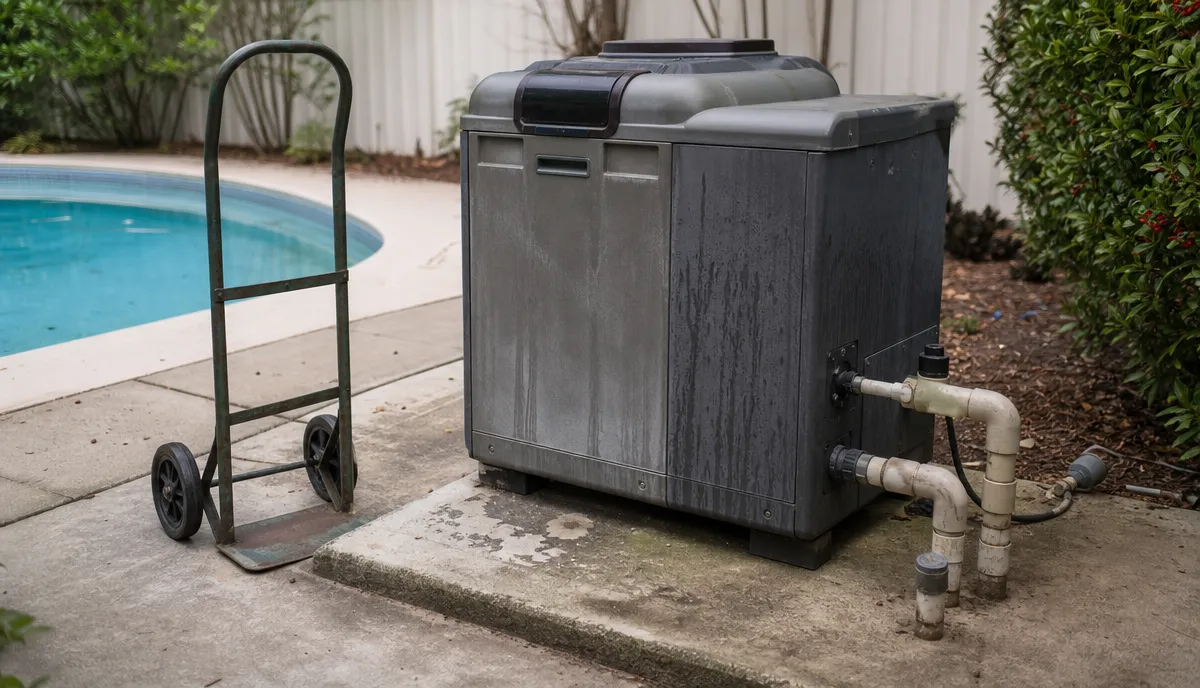
A disconnected pool heater ready to be lifted off the pad
Consistently balanced water is what protects an exchanger, and there is no product that substitutes for it.
Which is most of the argument for a regular check. A chemical and equipment check is from $72 per visit plus chemicals, weekly or biweekly, with a written sheet every visit — and the sheet is the point as much as the visit, because chemistry damage is cumulative and a record is the only way to see a drift before the metal does.
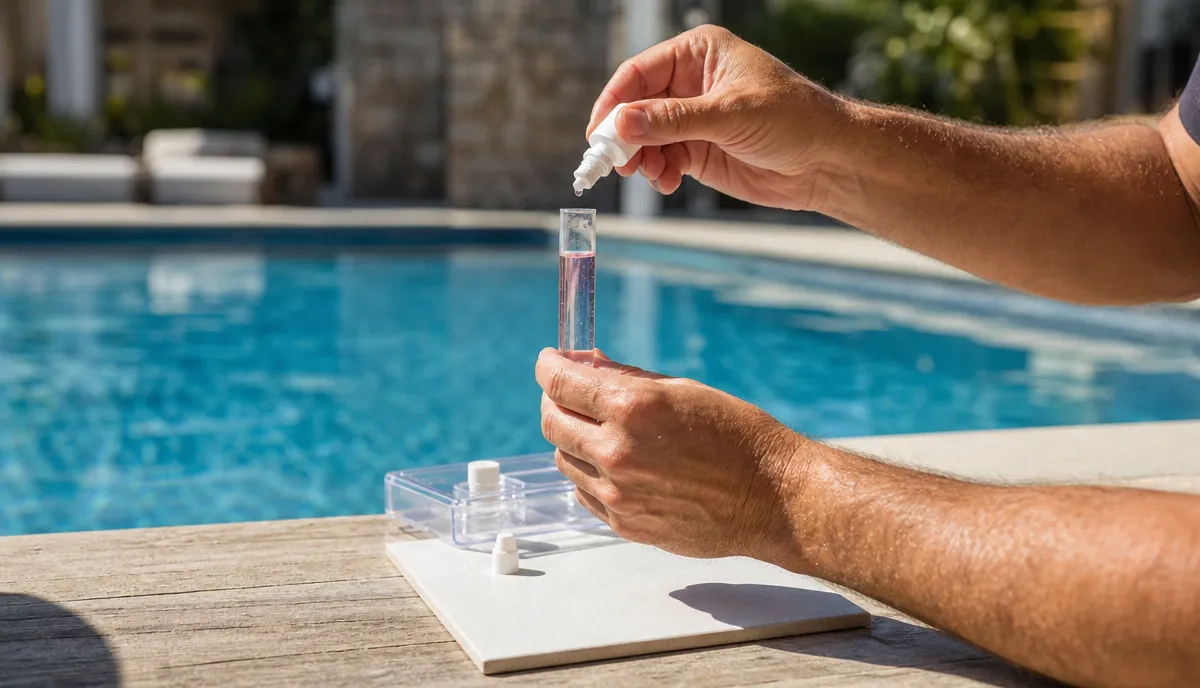
We test properly rather than reading a strip. A drop-based test resolves an actual number; a strip gives you a colour and a shrug. On a pool with a heater worth protecting, that difference is not academic.
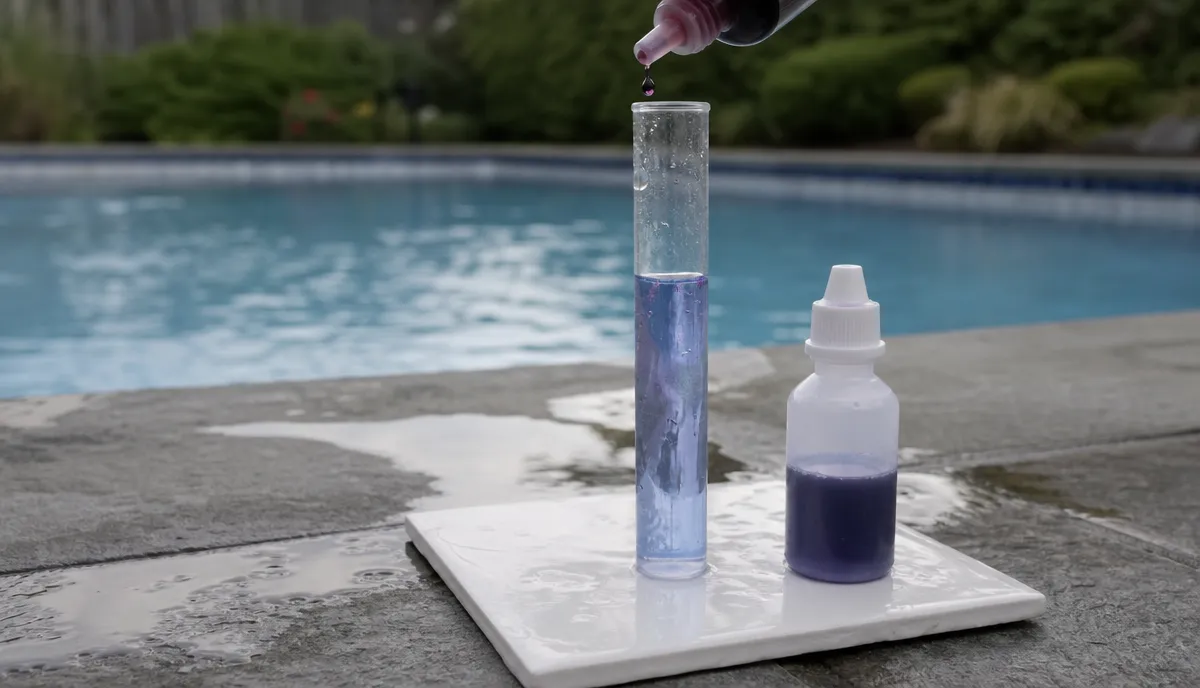
A drop-based titration test on a pool water sample
Pepper Pike is in Cuyahoga County, about 11 miles from our base and about 7 miles from Lake Erie — near-lake, so the season runs later here than inland and the heater sees more of the shoulder months.
And the town's pools tend to have history, which is the thread running through everything we write about Pepper Pike: an exchanger that has been in service for a long time has been recording the whole of it. See Pepper Pike pool service and pool heaters.
A $150 service call covers up to the first hour on site. Parts and further labour are quoted before we do them.
Products we install carry the full manufacturer's warranty — generally one to three years, on that manufacturer's terms. We do not offer a separate workmanship guarantee, and warranty coverage does not extend to freeze damage or to damage from water chemistry maintained by others.
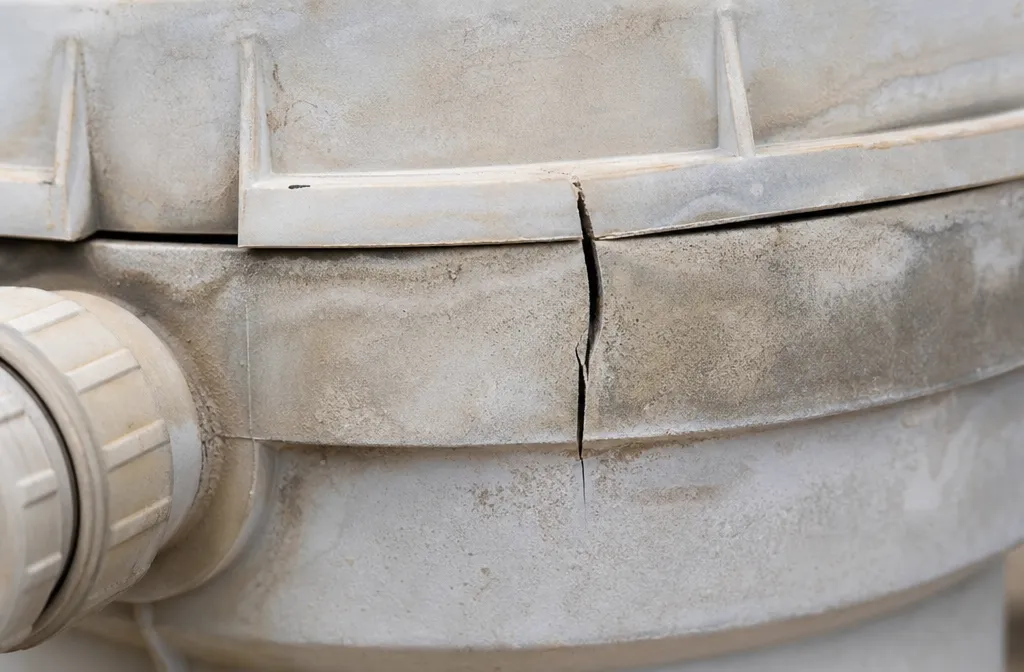
Freeze damage to a pool pump housing
We do not run or alter gas lines, and we do not do the electrical supply work. We do not build pools, we do not service above-ground pools, hot tubs or spas, and we do not offer leak detection. The list of towns is on service areas.
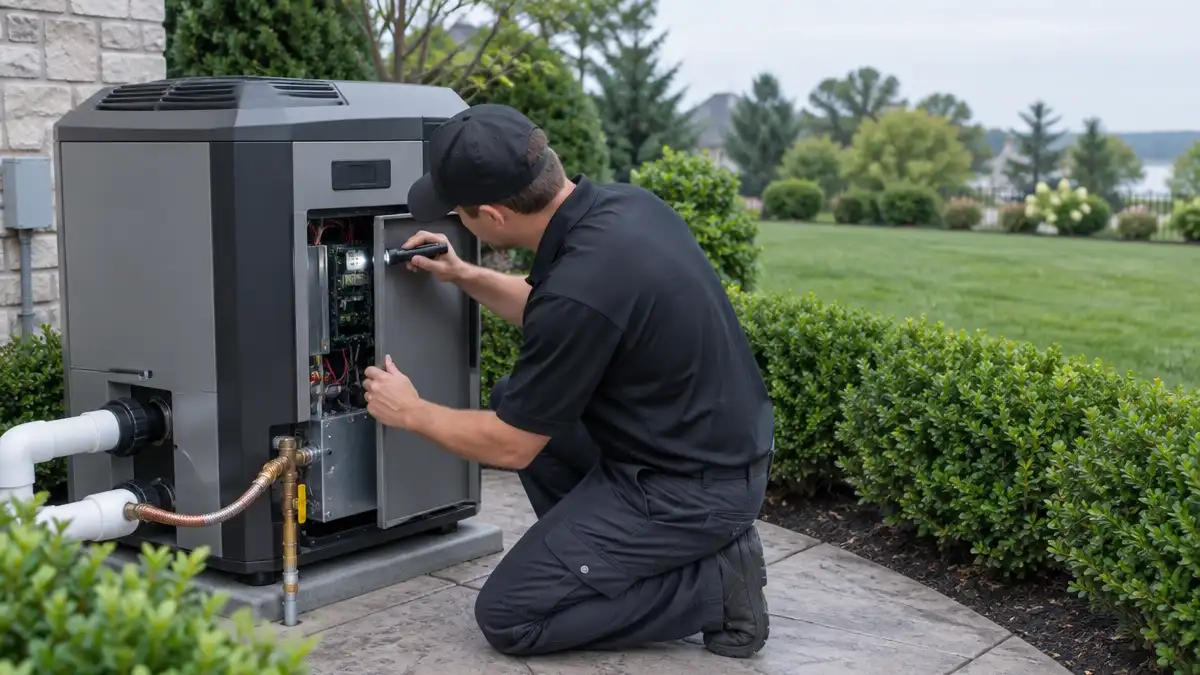
Diagnostic work at a pool heater
Because of what has been in the water, in almost every case. The exchanger is the only place in the system where pool water touches metal that is being actively heated, and heat accelerates every chemical process water is capable of. Scale, water that has been allowed to go acidic, and chloride in a salted pool are the three usual causes. "It was old" is rarely the whole answer.
More likely it is scaled. Calcium comes out of solution on the hottest surface in the system, which is the inside of the exchanger tubes, and scale insulates — so the heater burns the same gas to move less heat into the water. It also makes the metal behind the deposit run hotter than intended, which is what shortens its life.
Sometimes. Where the unit is otherwise sound, we de-lime the water side — a chemical clean of the tubes. That works while there is sound metal under the deposit. Where the tubes have been running hot behind scale for years, there is not, and the exchanger is already spent.
It makes the water aggressive, so instead of sitting inertly against metal it starts dissolving it. In the pool you see that slowly as etching or a dulled finish. In a heated exchanger you see it as metal loss — which is worse than scale, because scale is a deposit that can sometimes be removed and corrosion is metal that has gone.
Two common routes. Several ordinary pool chemicals push pH down, and used through a season with nothing correcting the drift the water ends up somewhere nobody intended. And rainfall is naturally acidic and dilutes alkalinity, so a wet summer on an uncovered pool with nobody testing will do it on its own.
That depends on something other than the part. A new exchanger in the same water is on the same timetable as the old one, so the useful question is whether anything has changed about how the chemistry is looked after. We would rather establish that before quoting the part than after fitting it.