

Pumps, filters, heaters, automation and salt systems — diagnosed first, then repaired or replaced on what the diagnostic actually says. $150 service call across Twinsburg, Solon, Hudson and the Route 91 corridor.
Everything here starts the same way, because a pool is a system and the part that has stopped working is frequently not the part that is broken.
Is usually flow — a filter needing a backwash, a pump that will not hold prime, a pump beginning to cavitate — not the heater. Quoting a heater here would be quoting the wrong thing.
May be a bearing, or it may be starved of water by a blocked line. One is a repair, one is a two-minute fix.
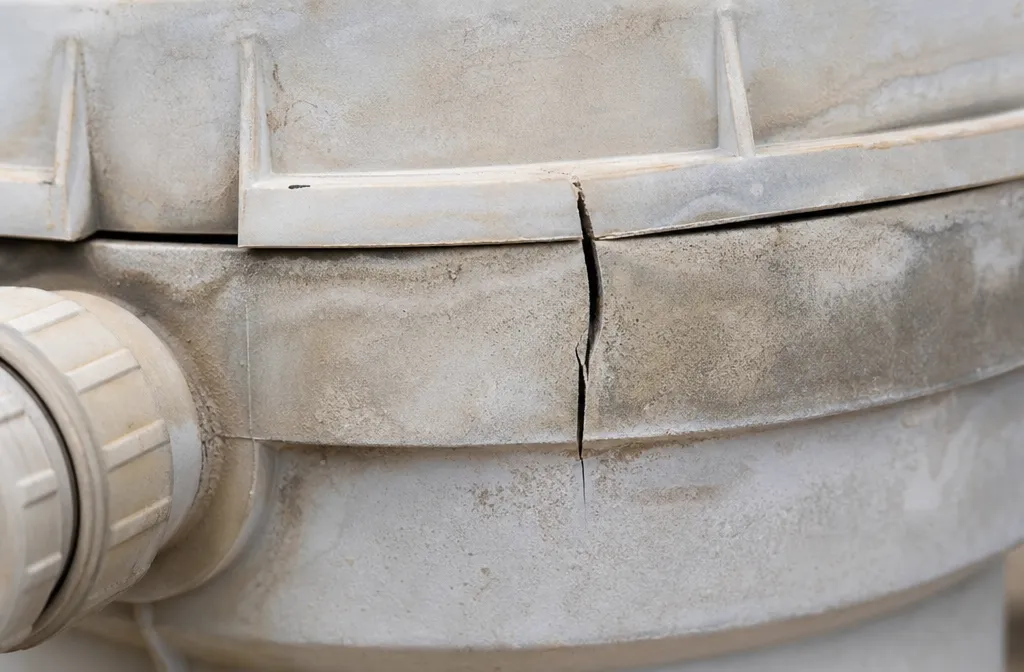
May be a seal, a lid gasket, or a cracked union.
Is very often a corroded bond lug rather than the controller everyone suspects.
A $150 service call covers up to the first hour of diagnosis or repair. Often that hour is the whole job.
The reason we lead with the diagnostic rather than a quote is that the same symptom has several causes with wildly different prices:
We work out which it is, tell you what we found, and then price the actual problem.
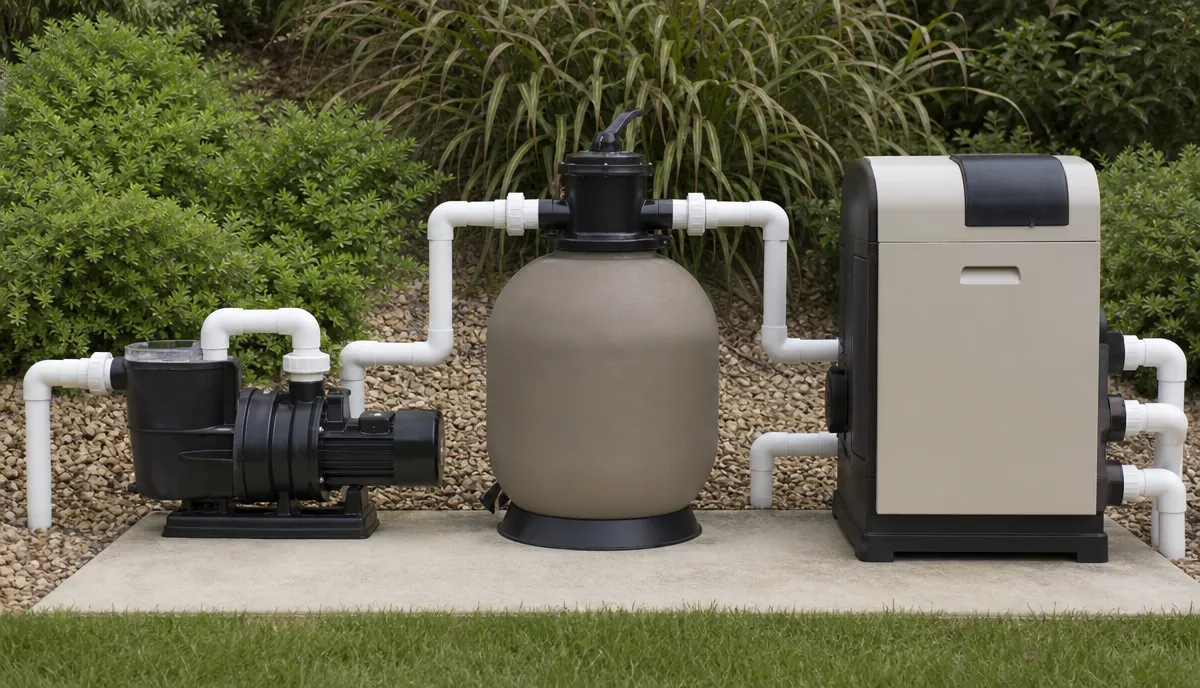
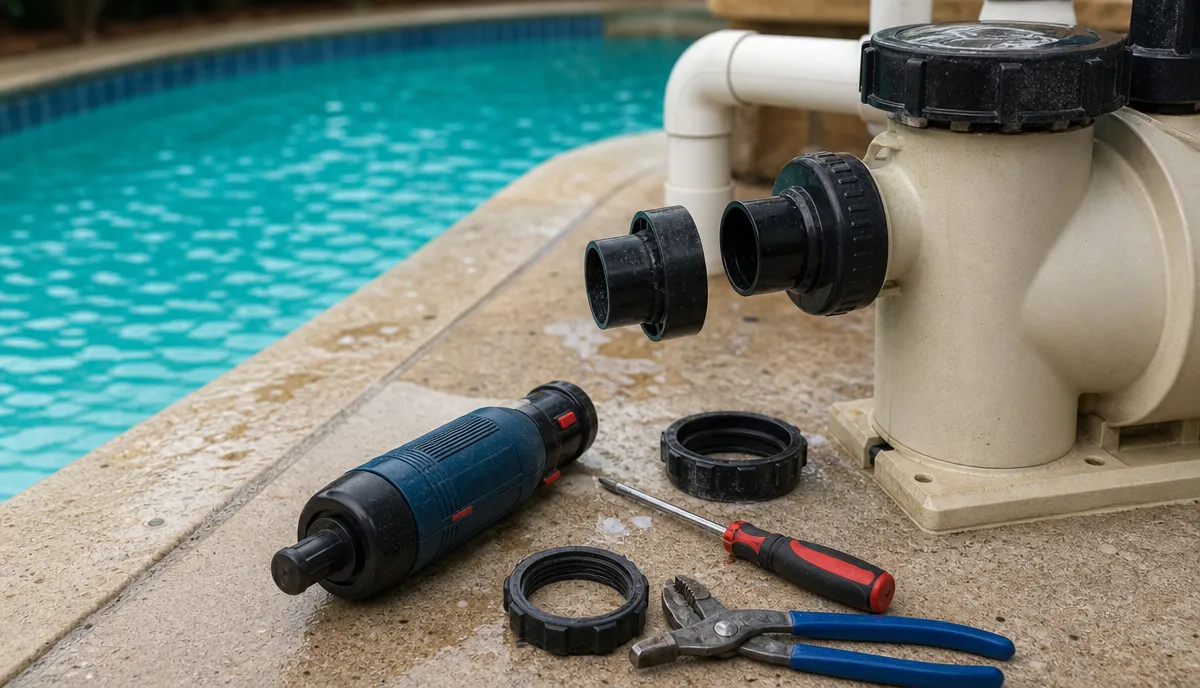
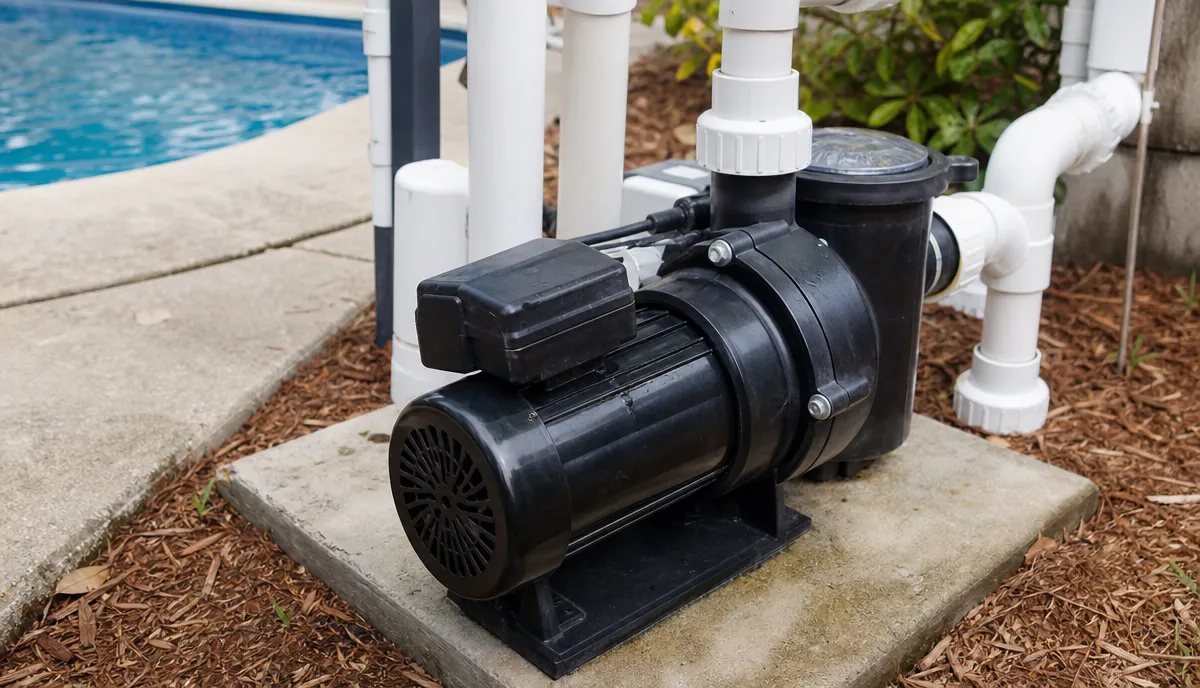
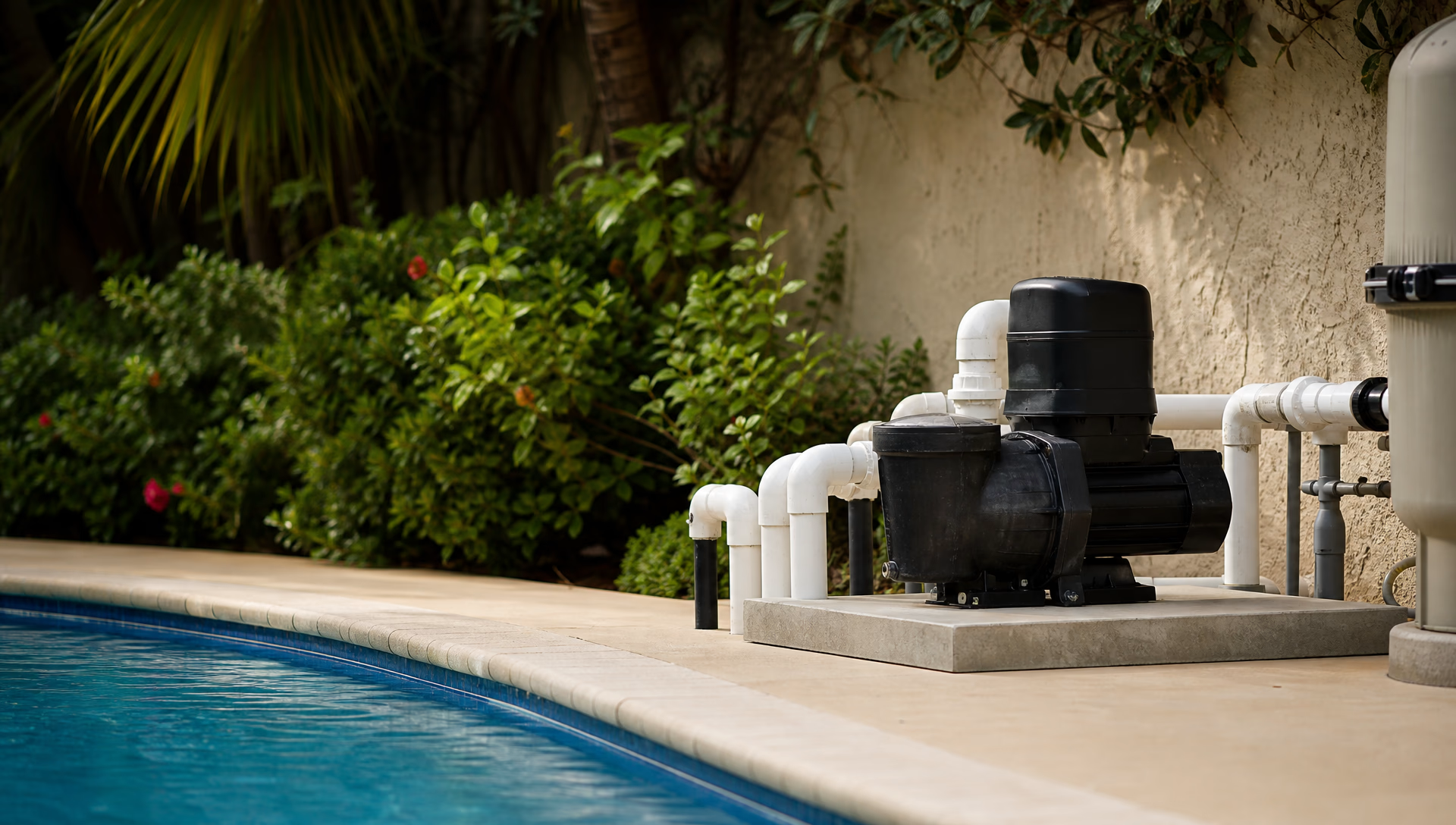
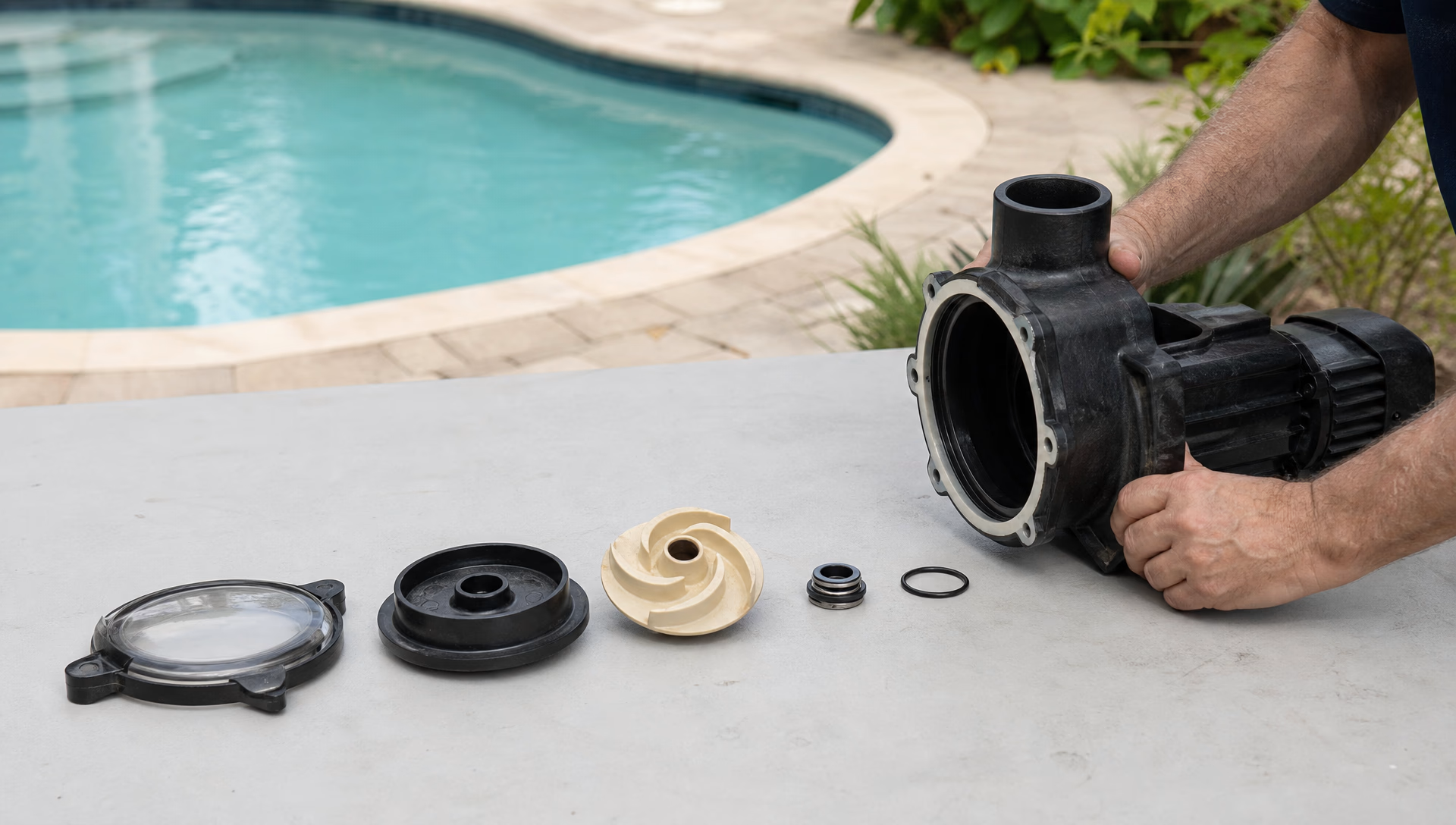
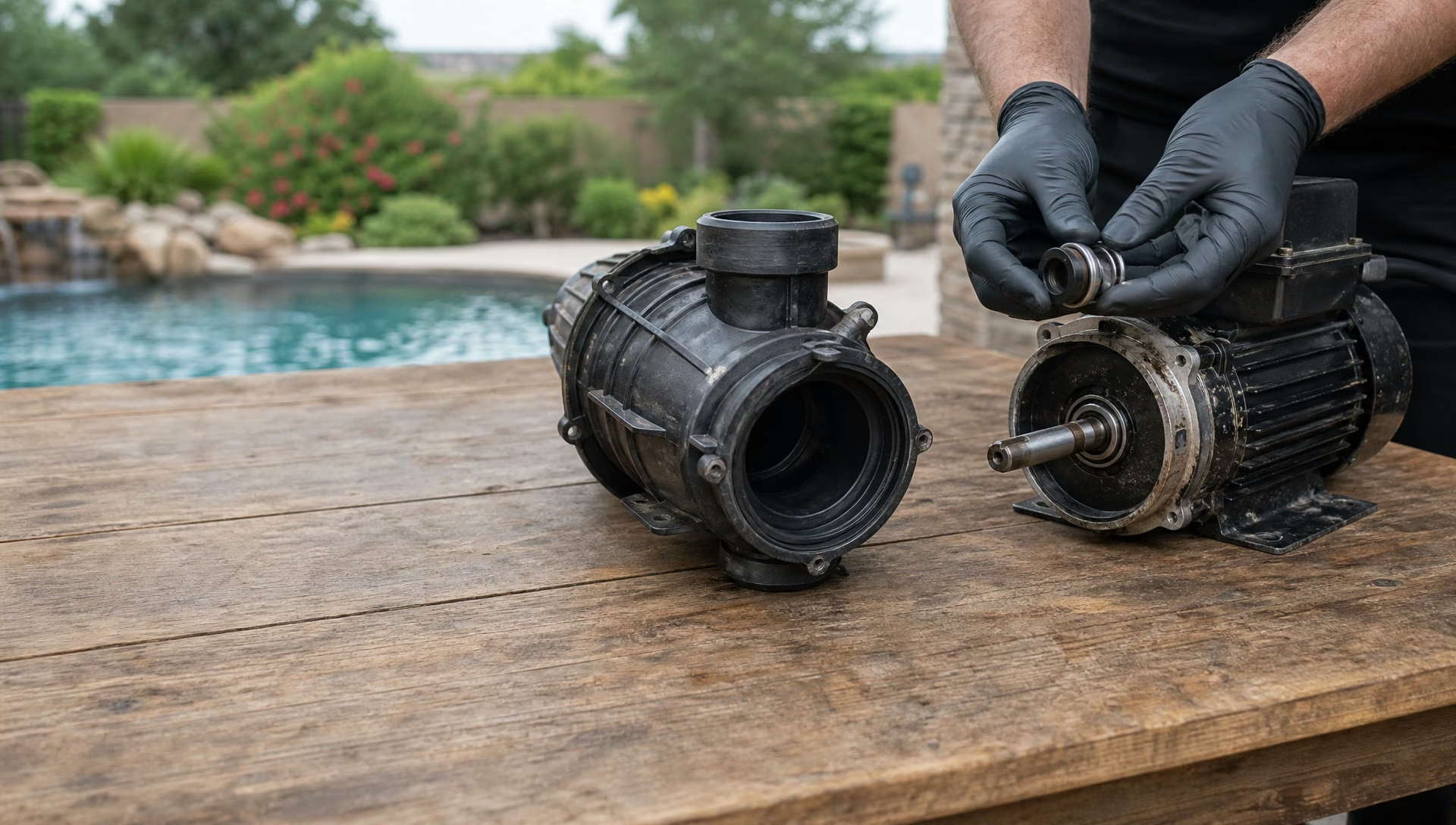
Pumps. Repair where the motor and wet end are sound — seals, impellers, unions, lids. Replacement where the motor is gone. See pool pump repair.
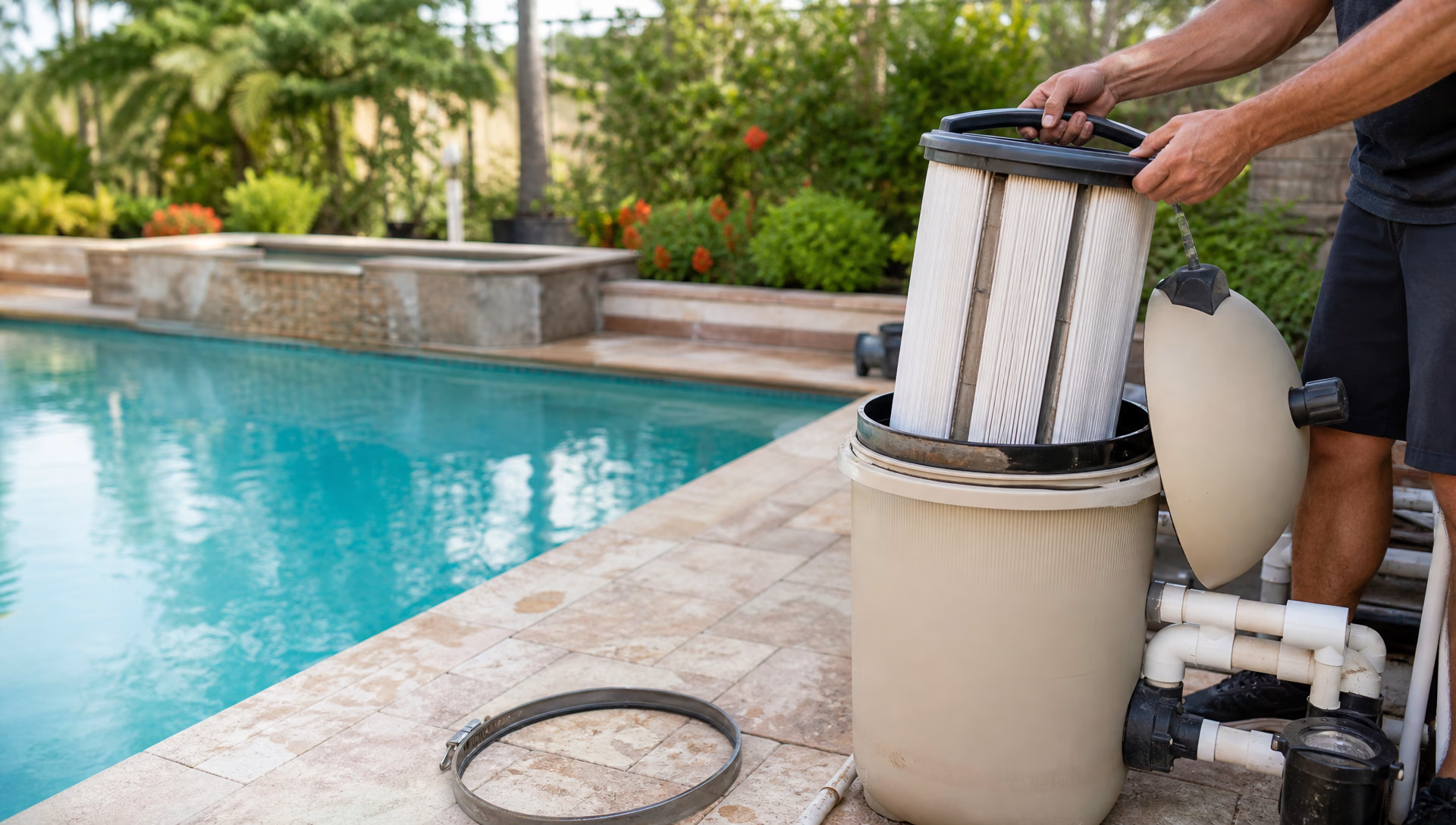
Filters. Sand, cartridge and DE. Multiport valves, laterals, cartridge elements, tank hardware. See pool filter repair.
Heaters. Gas and heat pump — diagnostics, sensors, igniters, exchangers where repairable, and full replacement where not. See pool heaters.
Automation. Controllers, actuators, valve automation, relays and sensors, plus retrofits onto existing plumbing. See pool automation.
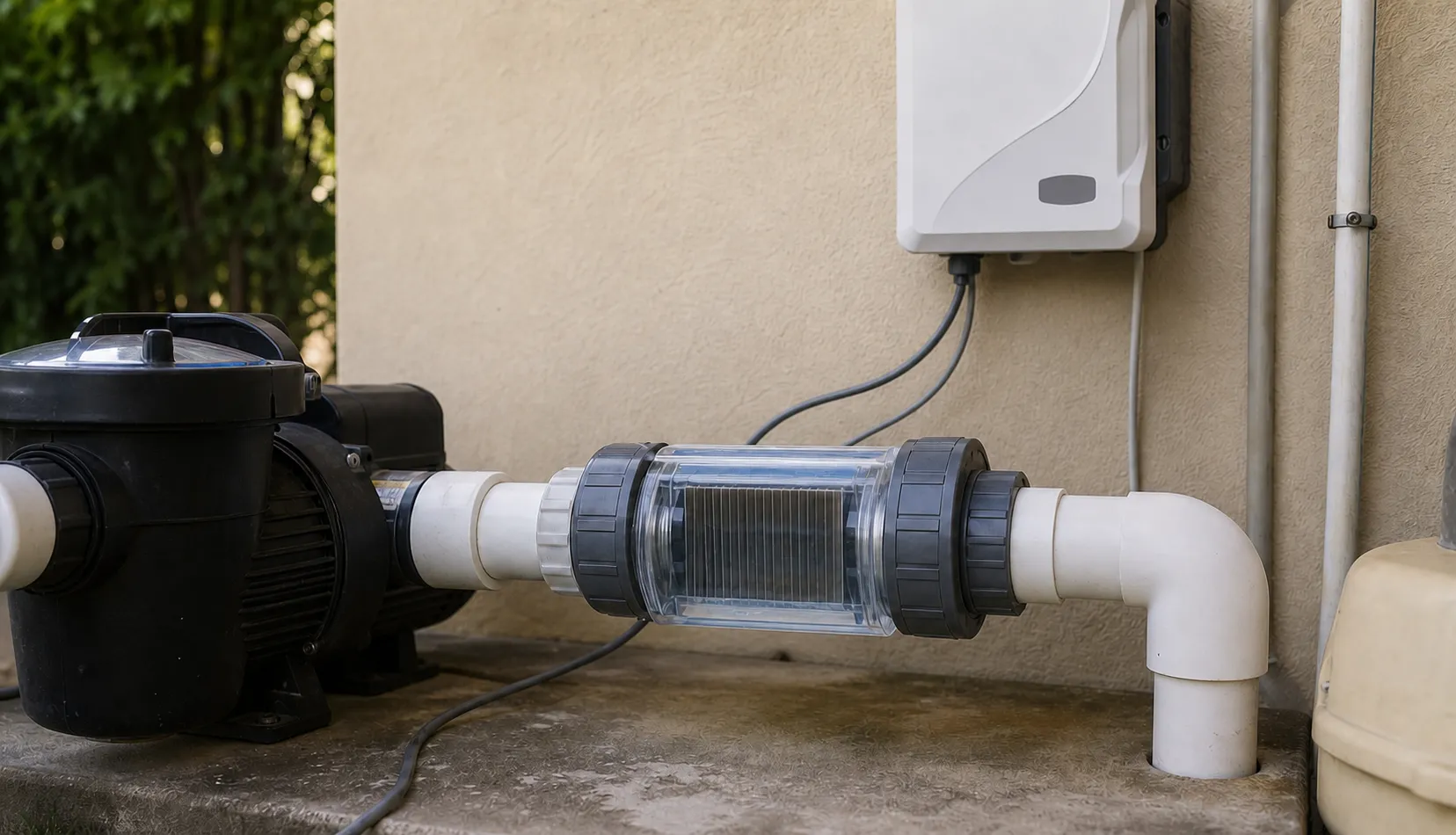
Salt chlorine generators. Cells, controllers and flow sensors. See salt chlorine generators.
Everything on the pad. Valves, unions, plumbing runs, timers, and the electrical bonding that ties it together.
We repair and we replace — and we say which we think it needs rather than defaulting to whichever is more profitable.
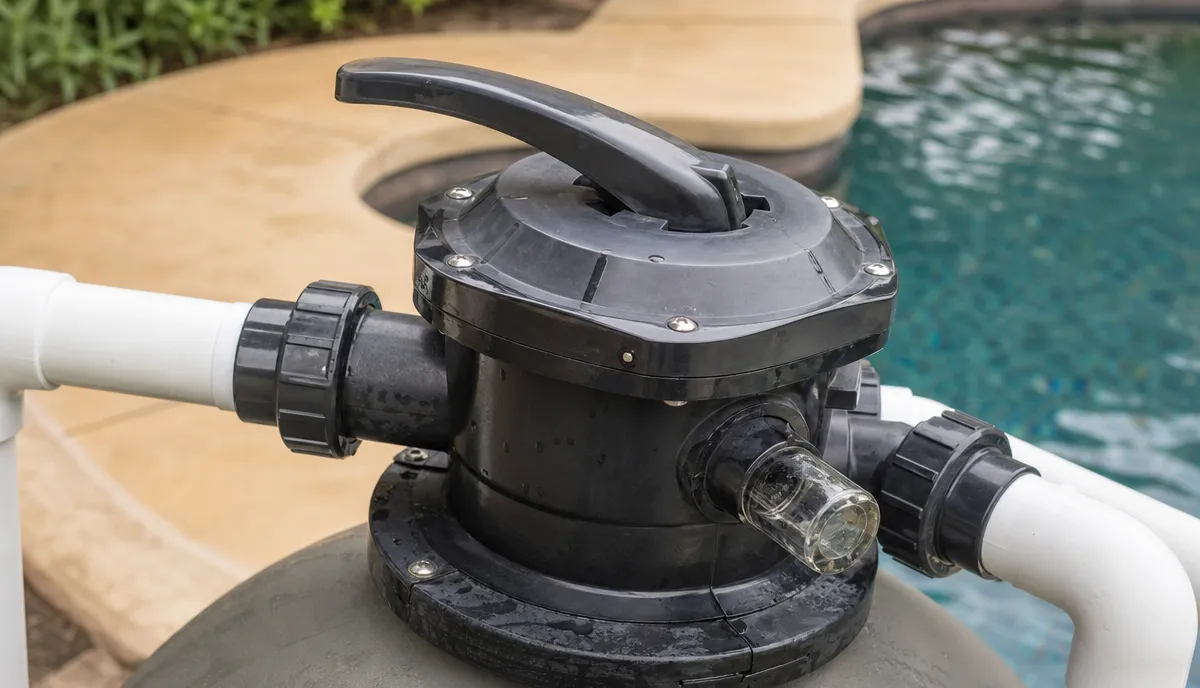
The multiport valve on a sand filter
Worth knowing before your pump fails rather than after.
Federal efficiency rules mean single-speed pumps can no longer be sold new for most in-ground pool applications. So when a single-speed pump reaches the end of its life, the replacement is a variable speed pump — it is not a like-for-like swap, and the decision is different from the one the owner is expecting.
That cuts both ways. The unit costs more upfront. It also runs at a fraction of the energy, because pump power falls very steeply as speed drops, and a variable speed pump spends most of its life turning slowly. On a pool that filters daily through a season, that is the largest running-cost saving available on the pad.
The practical consequence: if a single-speed pump is repairable, repairing it is often still the right call — but it is worth knowing the replacement decision is coming, so it is a planned purchase rather than an emergency one in July.

A variable-speed pool pump on a pad beside an older single-speed pump, the two side by side for comparison
Pool equipment here has a different failure profile from the same equipment in a warm state, and it is the single biggest thing a national page will not tell you.
Freeze damage. Anything rigid holding water that gets cold enough splits. That is why a close winterizes properly — blow out the lines, drain and purge the equipment. Freeze damage is almost never a repair: a split exchanger, a cracked pump housing or a fractured filter tank are replacements. And because it is a consequence of how the pool was closed rather than a fault in the unit, it is not a warranty matter.
Freeze-thaw cycling. Northeast Ohio does not simply freeze and stay frozen — it crosses freezing repeatedly through the winter. Each cycle works at seals, gasket seats and any water that did not fully clear, so the damage accumulates rather than arriving in one cold snap.
The five-month closed season. Equipment sits idle from roughly October to April. Seals dry and take a set, bearings sit unloaded in one position, and rubber components stiffen. That is why so many faults appear at opening rather than at closing — the equipment was fine when it was shut down and the winter is what changed it.
What follows from all that: the opening is the visit where equipment problems surface, and it is worth having someone there who is watching for them rather than just turning things on.
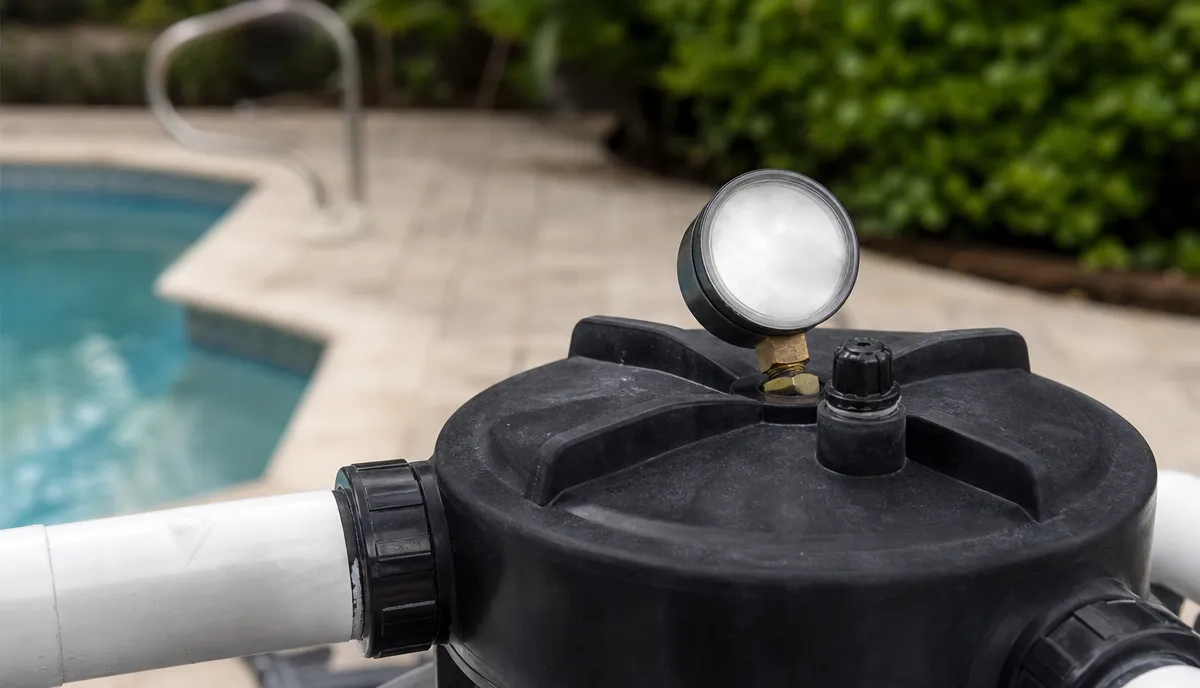
We service, repair and replace equipment from Hayward, Pentair, Raypak, Jandy, Sta-Rite, Fluidra and Zodiac.
On commercial systems we also work on BECS, Stenner, Blue-White and Chemtrol controllers and chemical feeders — brands most residential pool companies never touch, and about a quarter of our work is commercial.
The full list, with the brand-specific pages, is on brands we service.
Products we install carry the full manufacturer's warranty, which varies by manufacturer and generally runs between one and three years. We do not offer a separate workmanship guarantee, and nothing on this page should be read as one.
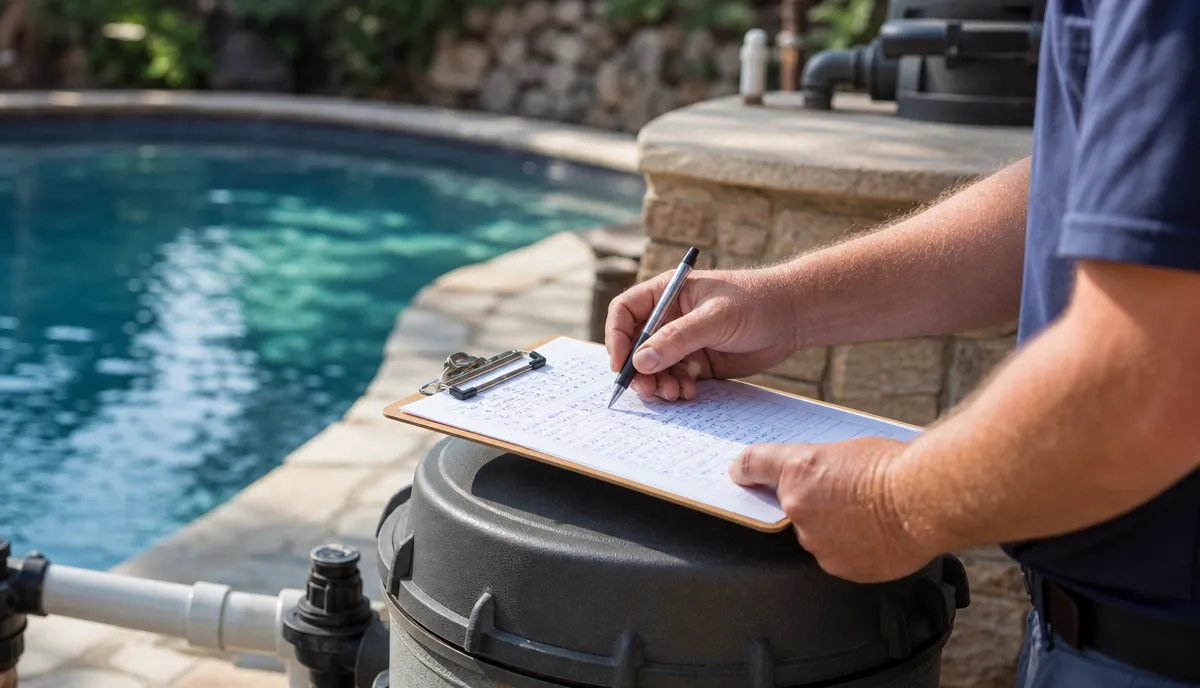
A completed pool service sheet on the equipment pad
Equipment rarely fails without warning — it drifts. Pressure creeps up, a pump takes longer to prime, a heater cycles more than it used to, a seal starts to weep.
Customers on a regular chemical and equipment check get that drift noticed, because someone is standing at the pad every week or fortnight and it goes on the sheet. That is the difference between a planned repair in May and a failure on the Fourth of July.
Service call, up to the first hour of diagnosis or repair

“M&G has serviced our in ground pool for the past 10+ years. Seasonal opening & closing, replacing heaters, pumps and a number of aggravating repairs that Matt & his crew have handled correctly at a fair price. Recommend highly.”
Pumps, filters, variable speed and salt systems each have their own page, with what we check and what it costs.
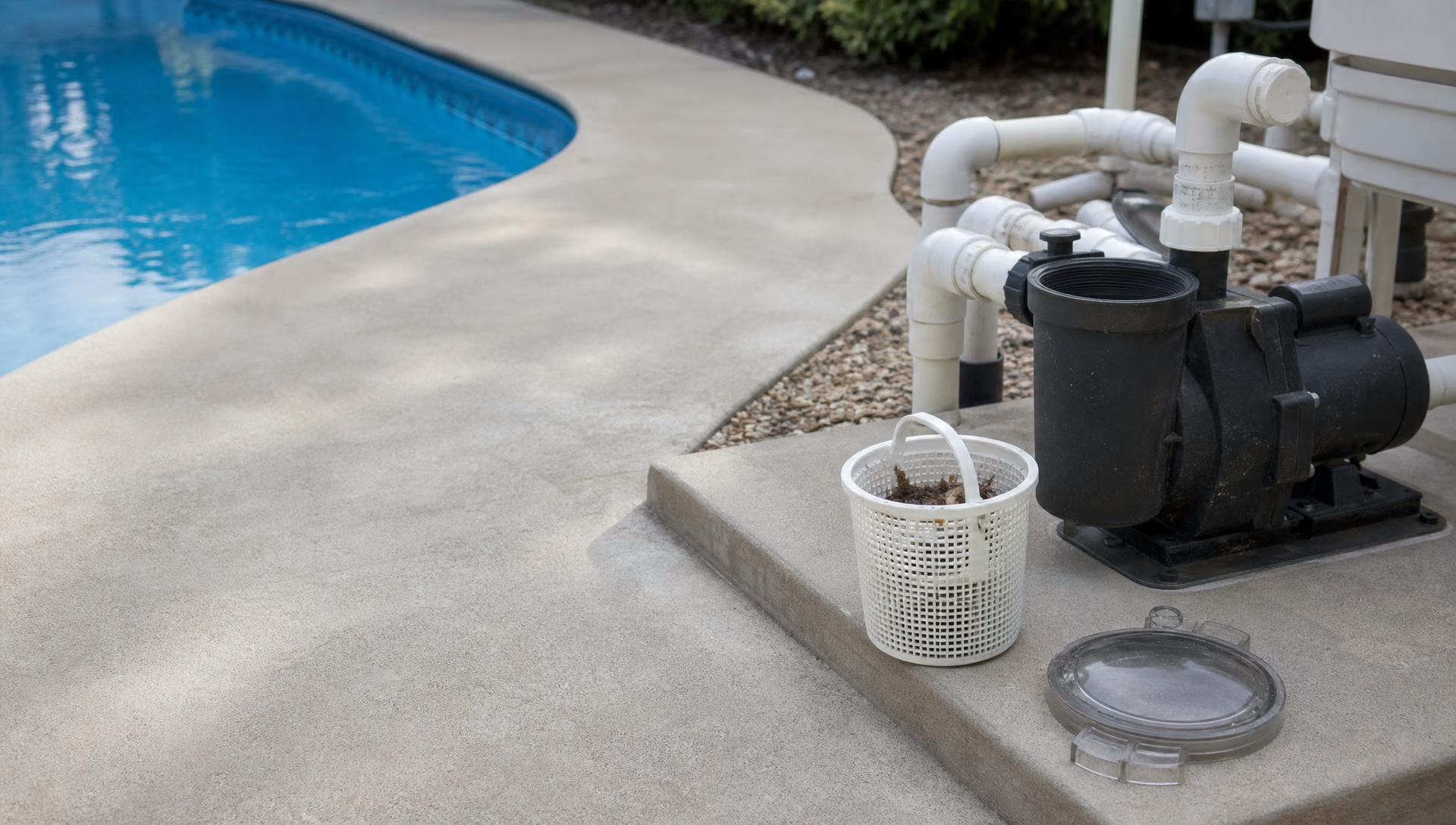
Tell us what it is doing and we will tell you what we think it is.
M & G Pools services in-ground pools exclusively. We do not service, repair or supply equipment for above-ground pools, and we do not service hot tubs or spas.
Cover work travels further than routine service, especially off-season. If your town is not on that list, ask — see service areas for the full picture.
A service call is $150 and covers up to the first hour of diagnosis or repair — often that is the whole job. Beyond that it depends entirely on what the diagnostic finds, so we tell you what we found and price the actual problem rather than quoting a symptom.
Because the part that stopped working is frequently not the part that is broken. A heater cutting out is usually flow — a dirty filter or a pump losing prime — not the heater. Quoting a heater in that situation means someone pays for a heater to solve a filter problem.
Maybe, and maybe not. A loud pump can be a failing bearing, or it can be a pump starved of water by a blocked line or a low water level — which sounds like gravel in the housing and is a very cheap fix. The two are easy to tell apart on site and expensive to guess at.
Generally no. Federal efficiency rules mean single-speed pumps can no longer be sold new for most in-ground applications, so a replacement is a variable speed pump. If your existing single-speed is repairable, repairing it is often still the right call — but it is worth knowing the replacement decision is coming so you can plan it.
Hayward, Pentair, Raypak, Jandy, Sta-Rite, Fluidra and Zodiac, plus BECS, Stenner, Blue-White and Chemtrol controllers and feeders on commercial systems. We service, repair and replace equipment from all of them.
Because the equipment sits idle for about five months. Seals dry and take a set, bearings sit unloaded in one position, and rubber stiffens — so a component that was working when the pool was shut down can fail on the first start. It is also when any freeze damage from the winter first becomes visible.
No. Freeze damage is a consequence of how the pool was closed rather than a fault in the equipment, so a manufacturer's warranty does not cover it. That is the whole argument for a properly executed close — blowing out the lines and purging the equipment rather than just putting a cover on.
