
Vinyl liner replacement for in-ground pools — measured, fitted, and quoted against your actual pool rather than a table. Serving Twinsburg, Solon, Hudson, Chagrin Falls and the Route 91 corridor.
Start here, because a replacement is a large job and a good share of the pools we are called out to look at do not need one.
A sound liner with a hole is a patch. If the vinyl is still flexible, seated properly in its track and holding its colour reasonably, the damage is localised and we can patch it — usually submerged, without draining the pool. That starts at $195 rather than a replacement quote. See pool liner repair.
We will tell you when that is the answer. There is no version of this business where selling a replacement to a pool that needed a patch works out — you find out within a season, and you tell people.
The honest exception: if your liner is going to need replacing next year anyway, patching it now is spending money twice. Where the diagnostic says that, we say so.
The deciding factor is the condition of the vinyl, not the age in years and not the size of the damage.
One split is bad luck. Three in different areas means the material is failing.
Rather than at one spot.
Particularly along the water line and on sun-facing walls, to the point where the vinyl has visibly lost substance.
Especially after the pool has been drained at some point in its past.
Rather than from the water.
Rather than supple when you press it.
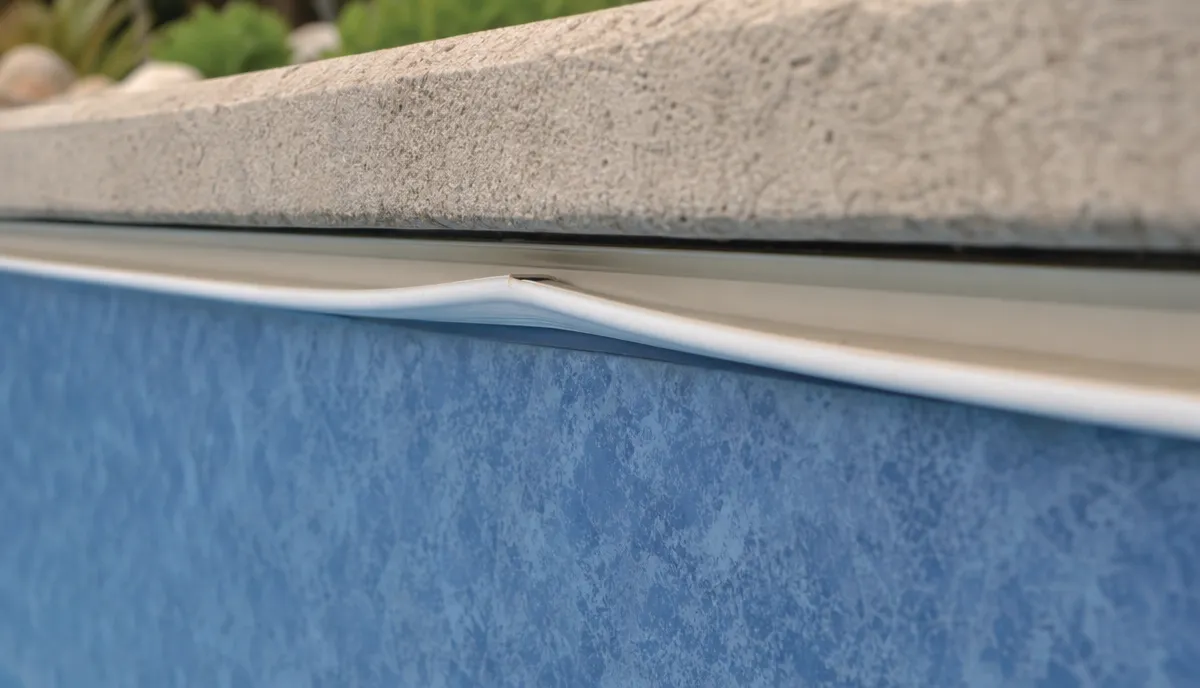
The clearest sign is brittleness. Vinyl near the end of its life cracks when flexed instead of bending. A patch on brittle vinyl fails at the edge of the patch — the repair holds and the material around it gives way. Once a liner is at that stage, every repair is temporary.
The other reliable signals:
On lifespan: liners in this climate face freeze-thaw at the water line, five months under a cover, and whatever the winter chemistry was — so the range is wide and driven by care rather than by a number of seasons. We are not going to quote you a lifespan figure, because the honest one would be too wide to plan around.
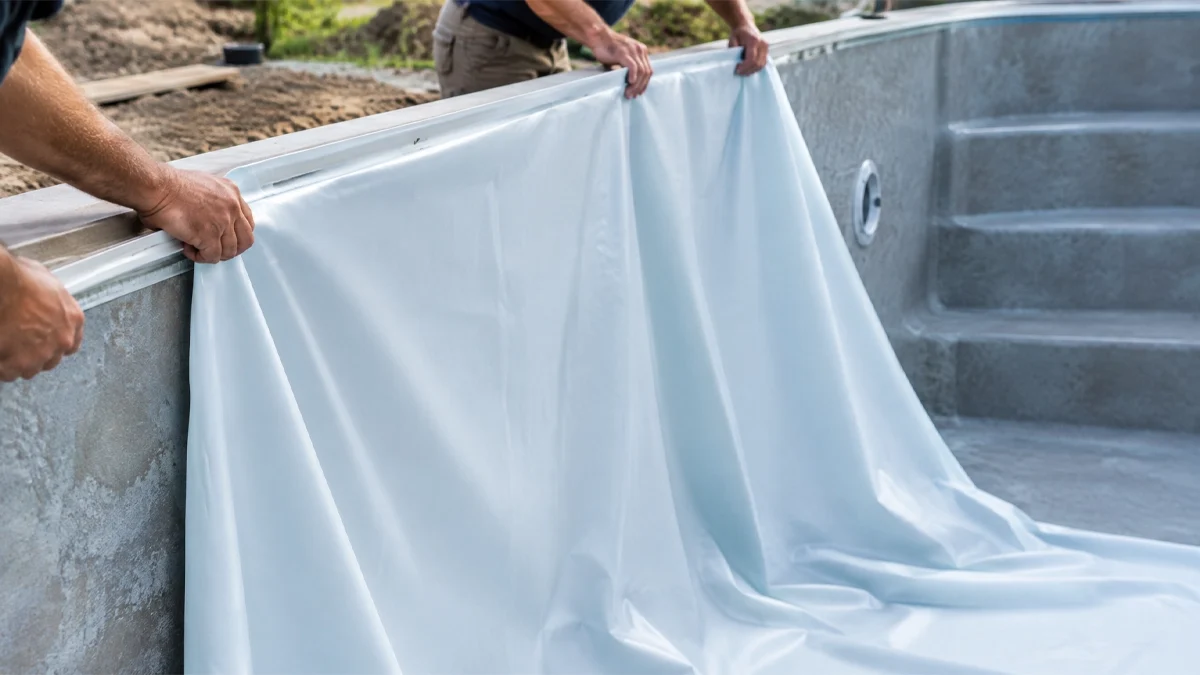
A new vinyl liner being fitted into an empty pool
Liner replacement is quoted rather than listed, and that is not evasion — it genuinely varies more than most pool work. What it is useful to know is what the quote is made of, so you can interrogate any quote you are given, including ours.
The line items in a liner replacement:
The liner itself. Driven by the pool's size and shape, the thickness you choose and the pattern.
Shape complexity. A rectangle is straightforward. Freeform curves, a raised wall, an attached step, a bench or a diving-end depth change all mean more measurement and more fabrication.
Draining and disposal. The water has to go somewhere legal and the old liner has to be removed.
Labour to fit. Pulling the old liner, preparing the surfaces, hanging the new liner, then vacuum-setting it — drawing the air out from behind so the vinyl pulls tight to the floor and walls and smooths out before any water goes in. Then cutting and setting the fittings. The vacuum-set is the step that decides whether a liner sits wrinkle-free for its whole life, and it is the step that gets rushed.
Refill water. The volume itself, and how you source it.
Startup chemistry. A freshly filled pool needs balanceing and chlorinateing from zero, and that is a real chemical cost.
Anything found behind the old liner. See below — this is the item nobody can quote in advance.
Which of those you can influence: thickness, pattern, and whether the work happens in the busy season. Which you cannot: the pool's shape and size.
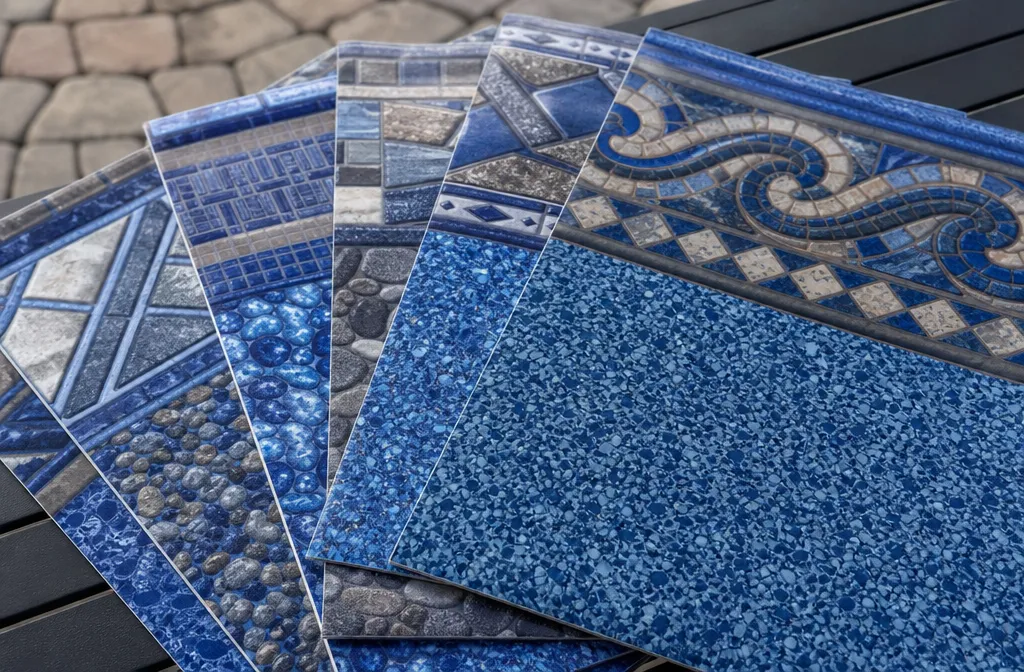
Vinyl liner pattern samples
Vinyl liners are specified in mil — thousandths of an inch. It is the one specification worth understanding before you choose.
Thicker vinyl resists puncture better. That is the whole trade. It costs more, and on a pool with children, pets, furniture near the edge or a lot of use, it is usually money well spent.
Thickness does not change the pattern. Patterns are available across thicknesses, so choosing a heavier liner does not restrict how it looks.
What thickness will not fix: it is not a substitute for balanced water. Chemistry is what determines whether a liner reaches the end of its natural life or fails early, and no gauge of vinyl survives a winter at low pH.
We will tell you what we would put in your pool. If you have small children and a dog, we will say so.
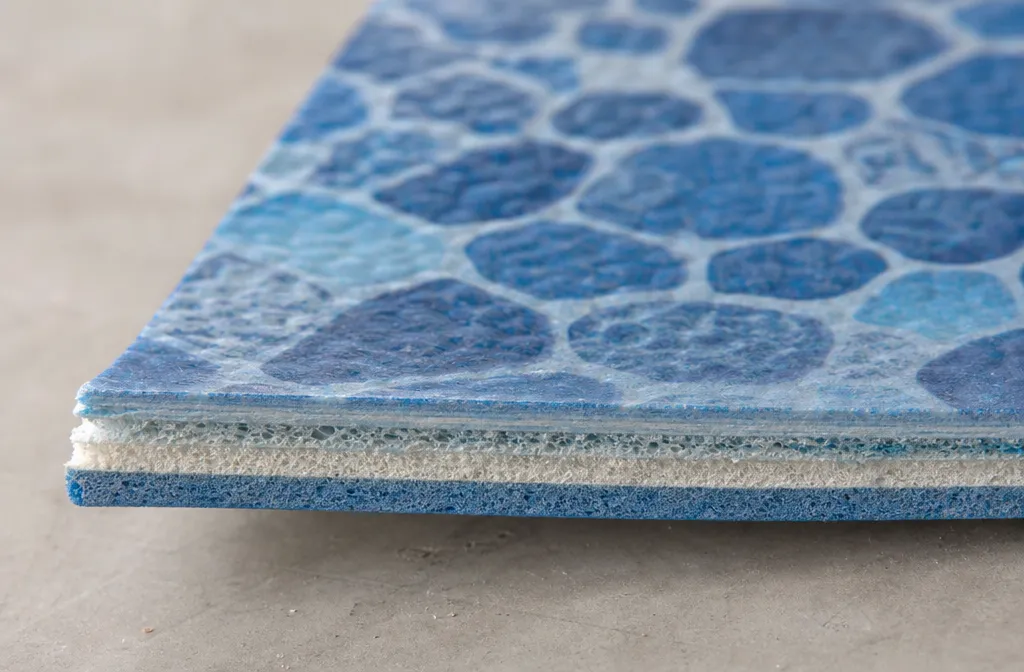
Beyond thickness, vinyl liners differ in how they are constructed and finished.
Print versus embossed surfaces. A printed pattern sits under a clear protective layer; an embossed or textured finish gives grip underfoot, which matters on steps and shallow benches.
Beaded, overlap and J-hook attachment. How the liner is held at the top of the wall, just under the coping. A bead-lock track takes a liner with a moulded bead that snaps into it; an overlap liner folds over the wall and is held by the coping itself; a J-hook hangs over the wall top. Your pool already has one of these, and that generally determines what can go back in — less a choice than a fact about your pool, and one of the first things we check when we measure.
Panel seams. A liner is welded from panels, and on a freeform or stepped pool the seam layout is part of the fabrication rather than an afterthought — which is why the pool is measured to a template rather than to nominal dimensions.
UV and chemical resistance grades. Liners are treated to resist ultraviolet and sanitiser exposure. Sun-facing walls and the water line take the most of both.
“We have used M&G for many years, they are always knowledgeable and accommodating. The professionalism is not something you find in the pool industry. Highly recommend for any pool needs.”
We will tell you which, and we would rather patch it if a patch will hold.
This is the genuinely useful part of a replacement, and the part most people do not think about.
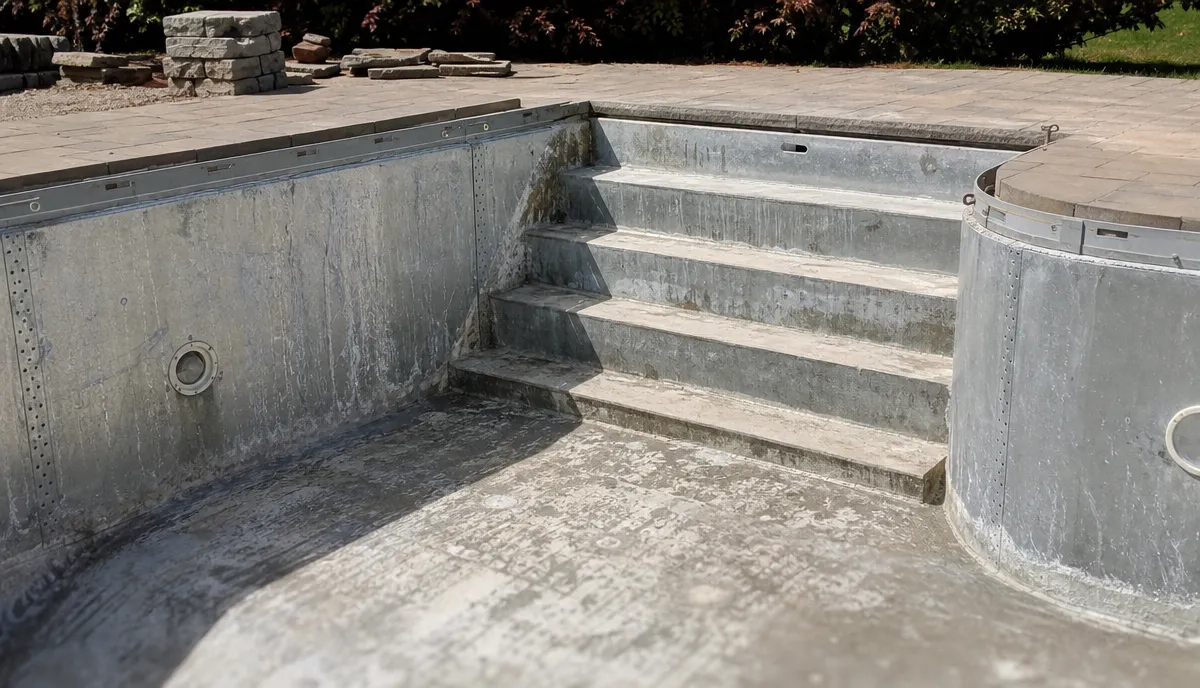
When the liner comes out, we can see the pool. The floor, the walls, the fittings and the base beneath. That is the only time anyone can see them, and it will be years before anyone sees them again.
What turns up:
Base erosion or washouts in the floor, often where a leak had been running
Wall corrosion or delamination, depending on what the walls are made of
Failed fittings at the skimmer, returns, main drain and light niche — cheap to deal with now, expensive later
The original cause of the leak the liner was replaced for, which is worth knowing
Why it matters commercially: anything found back there is far cheaper to fix now than at any point after the new liner goes in. Fixing a fitting while the pool is empty is a small job; reaching the same fitting through a new liner means cutting it.
So a replacement quote may reasonably carry a contingency, and we will walk you round the empty shell before the new liner goes in rather than telling you afterwards.
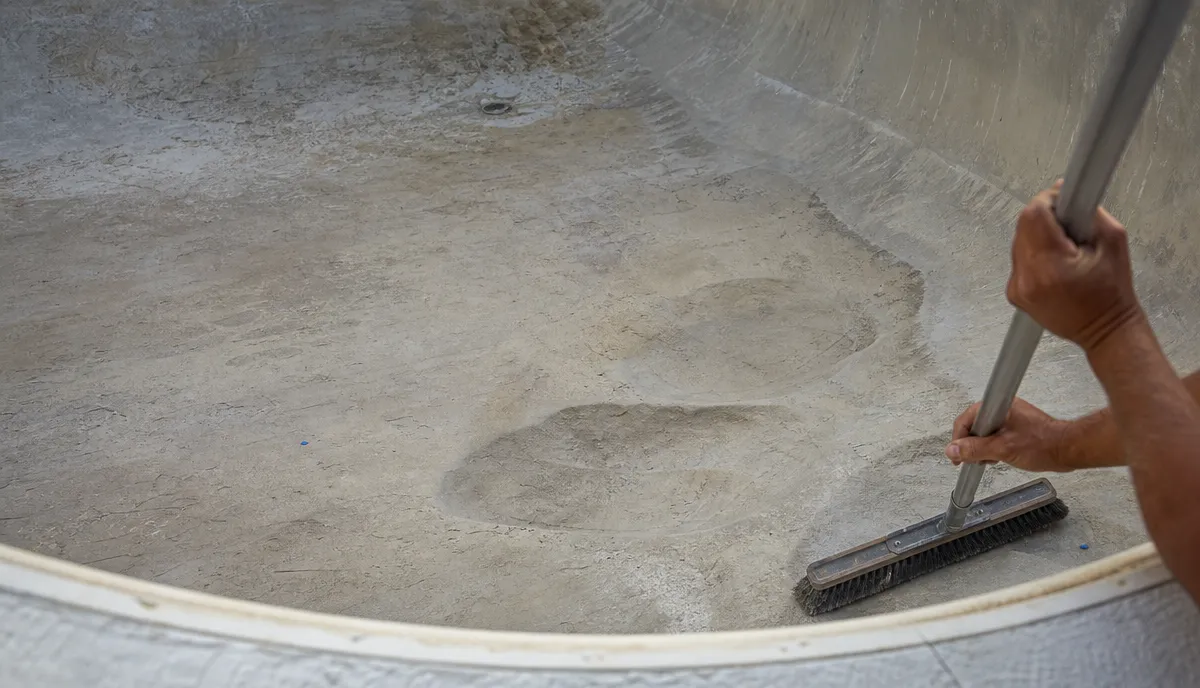
The floor of an empty pool with the liner out
The two things that most determine whether a new liner reaches its natural life are unglamorous, and neither is the liner.
Balanced water, consistently. Low pH is hard on vinyl, and metals in solution stain it permanently unless held with a sequesterant — which matters on well supply. A documented chemistry history is also worth having if a manufacturer ever asks. See chemical and equipment checks.
A correct close. Closing at the right water level puts the vulnerable water-line band where the liner is best supported, and a pool closed with balanced water spends its five covered months in water that is not attacking the vinyl. See pool openings and closings.
One more: under heavy leaf fall, a solid safety cover keeps the tannins off. Tannin staining through a mesh cover is permanent, and it is a genuinely common way a good liner is spoiled early.
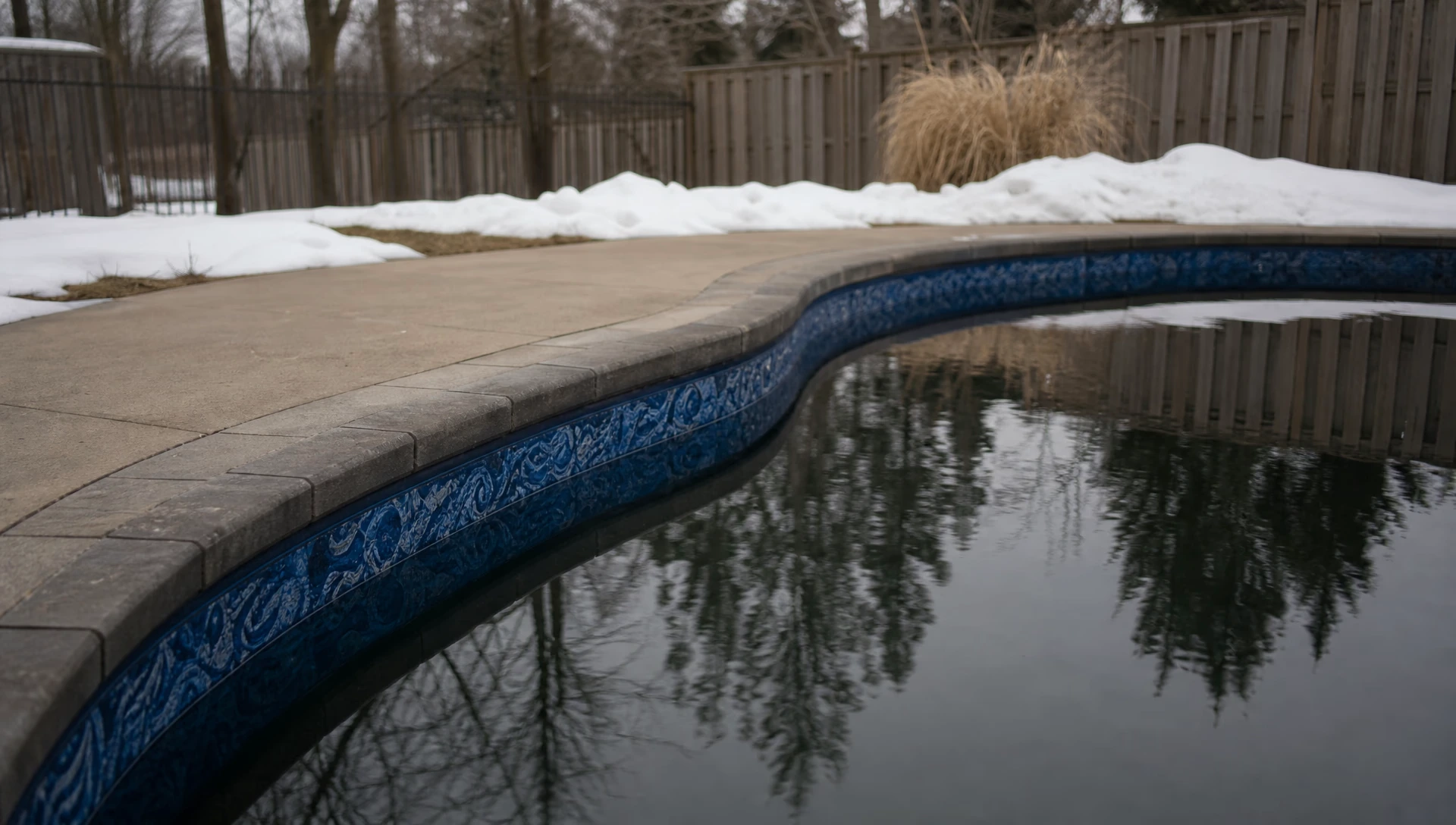
An in-ground vinyl pool in winter with the liner's waterline band visible above dark still water
Worth saying plainly on this page in particular. We are a service company — we replace liners in existing pools. We do not build pools, and a liner replacement is not a route to being sold a rebuild.
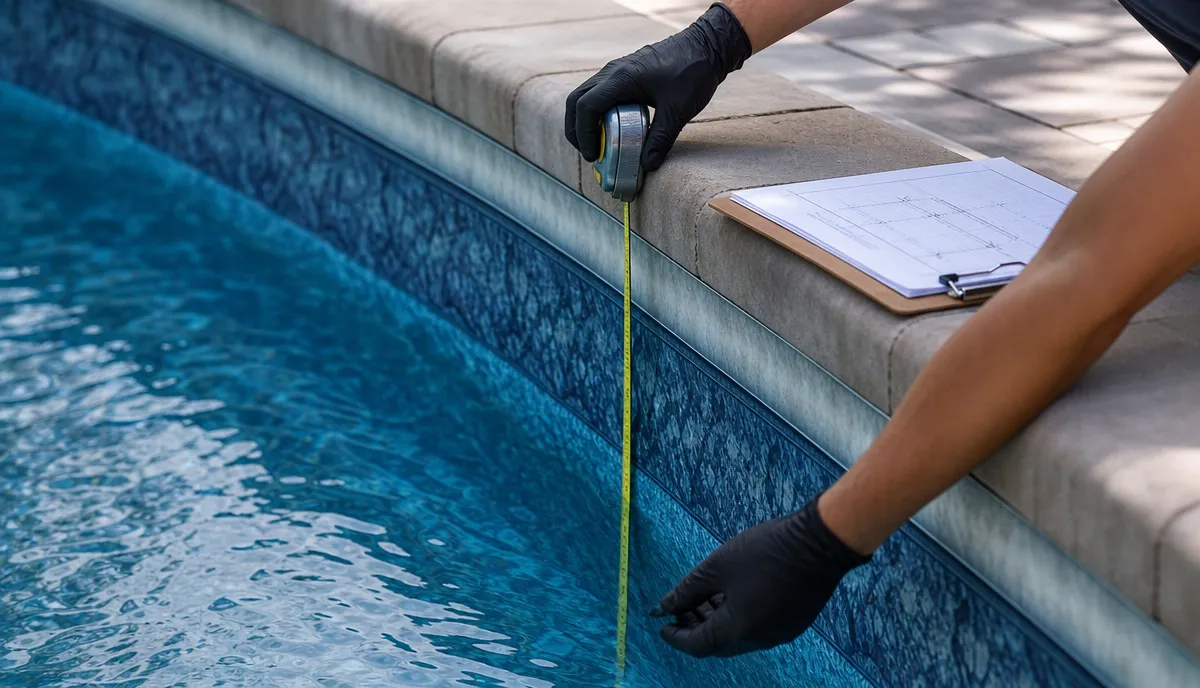
A vinyl pool being measured for a replacement liner
M & G Pools services in-ground pools exclusively. We do not service, repair or supply equipment for above-ground pools, and we do not service hot tubs or spas.
It is quoted rather than listed, because it varies more than most pool work — the liner itself, your pool's size and shape complexity, draining and disposal, labour, refill water, startup chemistry, and anything found behind the old liner. Knowing those line items lets you interrogate any quote you are given, including ours. What you can influence is thickness, pattern and timing.
The condition of the vinyl decides it, not the age or the size of the damage. A liner that is still flexible and properly seated is a patch — usually underwater, from $195. A liner that has gone brittle, is pulling out of its track over a long run, or is splitting in several unrelated places needs replacing, because a patch on brittle vinyl fails at the edge of the patch.
Liners are specified in mil — thousandths of an inch — and thicker vinyl resists puncture better. On a pool with children, pets or furniture near the edge it is usually worth the extra. What thickness will not do is compensate for unbalanced water: chemistry determines whether a liner reaches the end of its natural life, and no gauge survives a winter at low pH.
We can see the pool for the first time in years — the floor, walls, fittings and base. Base erosion, wall corrosion, failed fittings and often the original cause of the leak all become visible. Everything back there is far cheaper to deal with while the pool is empty than through a new liner, so a quote may carry a contingency and we will walk you round the empty shell before the new liner goes in.
No. We are a service company — we replace liners in existing in-ground pools, repair and replace equipment, fit custom safety covers and handle seasonal openings and closings. We do not do new pool construction.