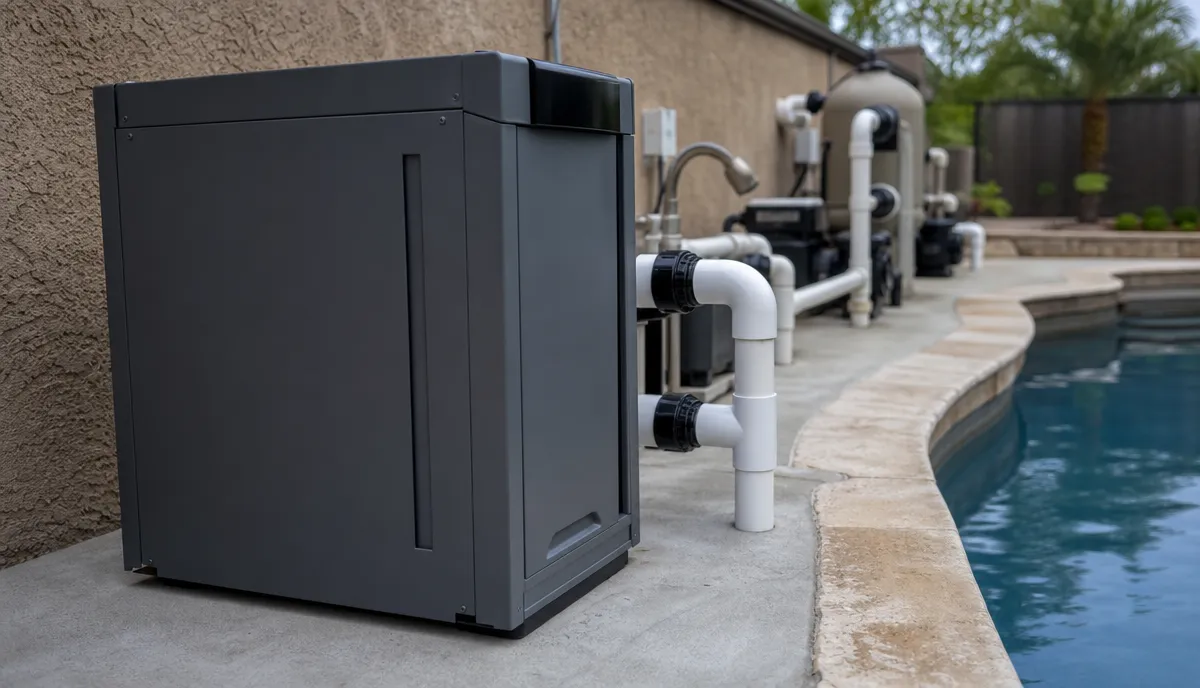

Pool heater repair in Hudson — and a straight answer on the question that follows the diagnosis: is this one worth fixing? $150 service call. Family-owned since 2012.
Start here, because it is true and because the opposite is what people expect a pool company to say.
These are parts, not projects, and on a unit that is otherwise sound they are straightforwardly worth doing:
And a large share of "my heater is broken" calls are not heater faults, which is the least expensive outcome of all — flow problems that make a healthy heater refuse to fire. That is set out on our heater diagnostics in Twinsburg page.
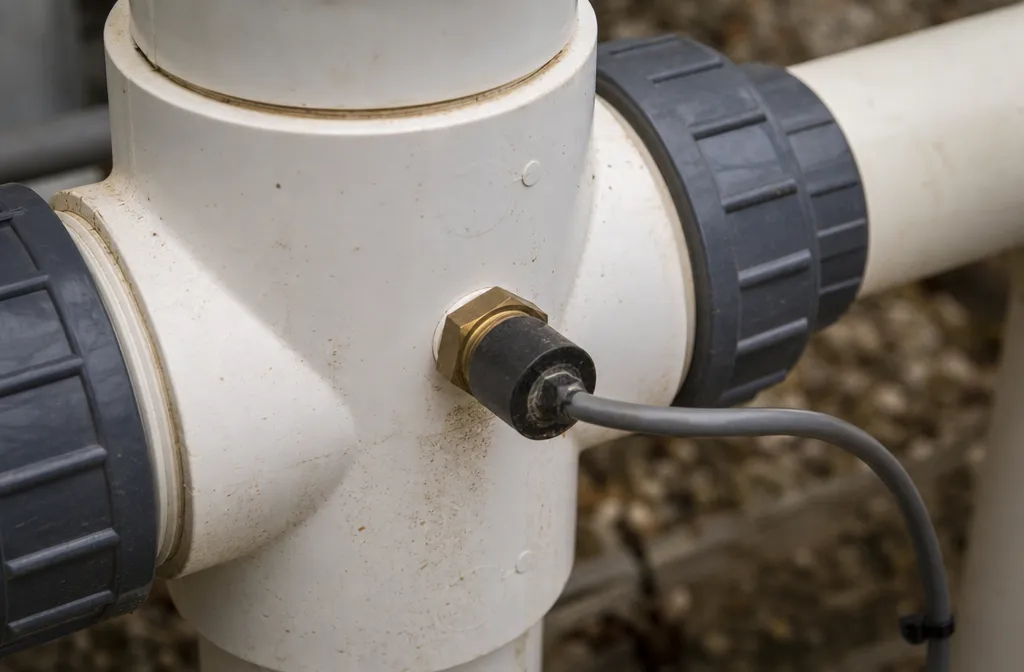
A pool heater flow switch
When a diagnosis lands on something significant, we work through these in order. They are more useful than any rule of thumb about age.
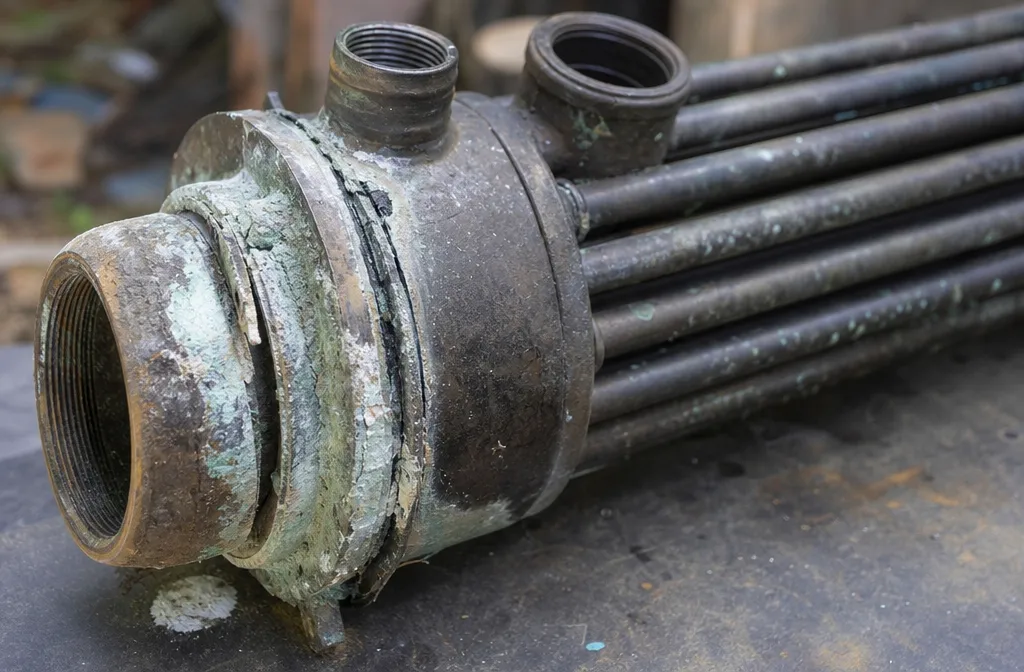
The heat exchanger is the part that changes the conversation. It is the expensive component, and on an older unit its cost can approach what a replacement heater costs — at which point you are putting a major new part into a machine whose burners, valve, board and cabinet are all the same age as the one that just failed.
A burner tray or a manifold sits between the two: significant, but rarely decisive on its own.
Everything in the list above is a repair. Age alone does not change that — a fifteen-year-old heater with a dirty sensor needs a clean, not a funeral.
This is the question that gets skipped, and it is the one that decides whether a repair holds.
A cracked exchanger has a reason. Scale from hard, unbalanced water insulating the tubes so the metal ran hotter than it was designed to. Corrosion from water chemistry left to drift. Condensation from a heater run too cool for too long. Or a freeze, if the pool was closed badly.
If the cause is still in place, a new exchanger is on the same timetable as the old one. So the honest answer to "should I replace the exchanger?" sometimes depends on a completely different question: has anything changed about how the water is looked after?
Freeze damage is the clearest case. A freeze-cracked exchanger is not a defect and it is not a warranty matter — it follows from how the pool was closed. Replacing it without changing the close buys you one season.
The cabinet and the base. Rust through the base of a heater is structural and it does not get better.
The burner tray, the gas valve, the wiring, the sensors.
Whether parts are still available. A discontinued unit is a repair you may not be able to make twice.
Whether the heater was ever the right size for the pool. Fixing an undersized heater gives you back an undersized heater. Sizing is a real question and it belongs to a replacement conversation — see pool heaters.
We look at the whole machine before quoting a big part. Because the exchanger is not the only thing that has been running for its whole life:
Repair, where the failed part is a component, the cause is either understood or fixable, and the rest of the unit is sound.
Replace, where the exchanger has gone on an older unit, or where the cause of the failure is baked into the installation, or where the cabinet is rusting out, or where you would be spending real money to restore performance the pool never actually had.
And we will tell you which
Including when that means we are quoting a smaller job than we could have. See pool heater replacement and pool heater installation for what a swap involves — including the awkward part, which is that going up in output can mean the existing gas supply is no longer adequate.
Hudson is in Summit County, about 23 miles from Lake Erie — one of the most inland towns we serve, with none of the lake-effect moderation that keeps shoreline autumns going. Your natural season is short, so a working heater is buying you more of the year here than it would nearer the water.
Which cuts both ways, and that is the point. The same reasoning that makes a heater genuinely worth having in Hudson makes a tired one worth replacing rather than nursing through another spring. A heater you cannot rely on in April is not doing the job you bought it for.
Applies to a diagnostic and repair visit and covers up to the first hour on site. Parts and further labour are quoted before we do them. Heater supply and installation are quote-required.
Generally one to three years, varying by manufacturer and administered on that manufacturer's terms. We do not offer a separate workmanship guarantee.
“Matt and his team are fantastic to work with. Easy to schedule, quality work is done right the first time. Highly recommend.”
Tell us the symptom and we will diagnose it before anyone talks about a new one.
We do not run or alter gas lines. If a replacement needs supply work, that is a licensed gas fitter's job and we will say so rather than improvise. We do not do the electrical supply work either.
We do not build pools, we do not service above-ground pools, hot tubs or spas, and we do not offer leak detection.
For the rest of what we do here see Hudson pool service and pool equipment repair. The list of towns is on service areas.
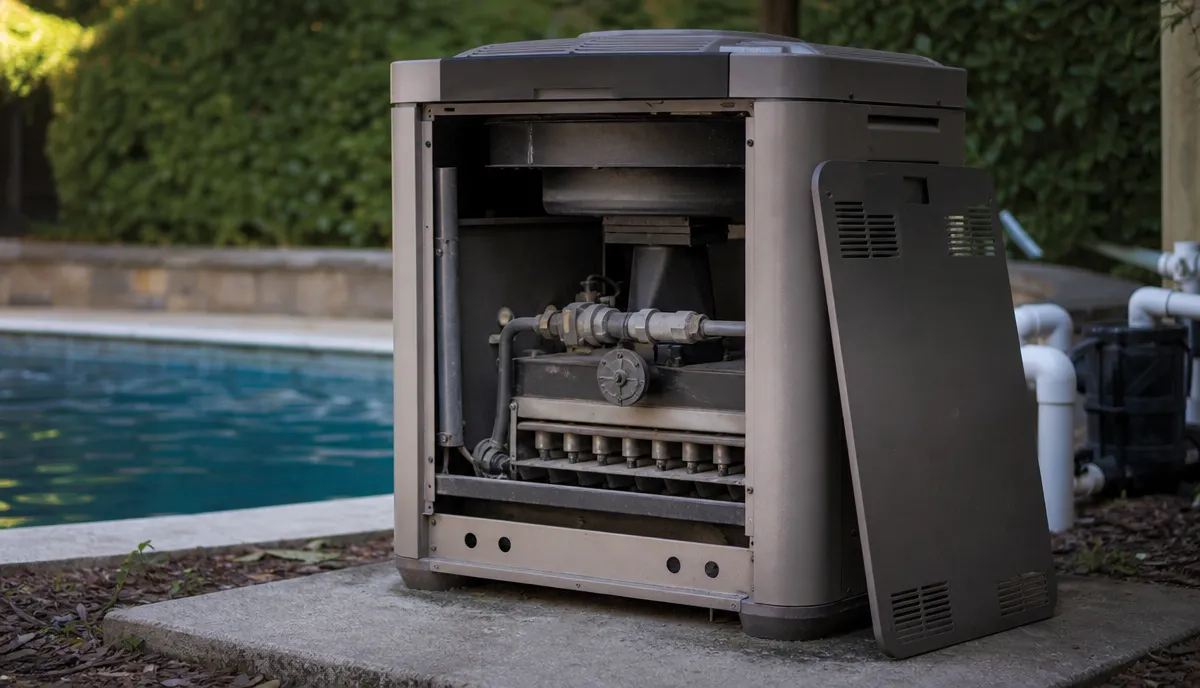
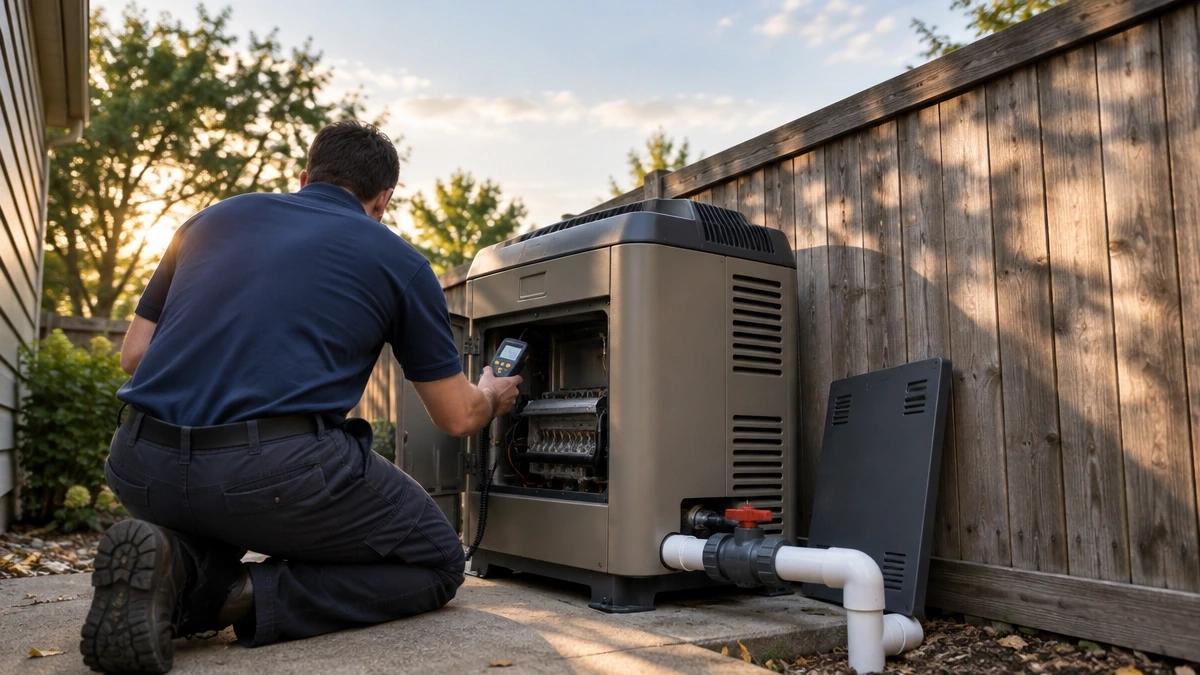
A gas pool heater with its access panel removed
Age on its own decides very little. A fifteen-year-old heater with a dirty flame sensor needs cleaning, not replacing. What matters is which part failed, whether the cause of the failure is still present, and whether the rest of the unit is sound — three questions, in that order.
That is the one failure where the answer genuinely tips. An exchanger is the expensive component, and on an older unit its cost can approach a replacement heater — at which point you are fitting a major new part into a machine whose burners, valve, board and cabinet are all as old as the part that just failed. We will price both honestly rather than assume.
Because a new part fitted into the same conditions fails the same way. Scale, drifting water chemistry, running the pool too cool and a bad close all destroy exchangers, and if the cause is still in place a replacement is on the same timetable as the original. Sometimes the useful repair is to the way the pool is run.
No. Water left in the exchanger over winter expands as it freezes and cracks it, and that follows from how the pool was closed rather than from a defect in the part. Products we install carry the full manufacturer's warranty, generally one to three years on that manufacturer's terms, and we do not offer a separate workmanship guarantee.
Rust through the base — that is structural. Parts no longer available, which makes it a repair you may not be able to make twice. And a heater that was undersized for the pool from the start, because repairing it hands you back a heater that never satisfied.
Not automatically, and this is the part people find out late. A larger heater can need more gas than the existing supply delivers, and altering that supply is a licensed gas fitter's job rather than ours. It is worth establishing before you choose a unit, not after.