Fuel type and local rates. Gas and electricity price differently and move independently. This is the part you do not control.


Gas heaters and heat pumps for in-ground pools — diagnosed before anything is quoted. Serving Twinsburg, Solon, Hudson, Chagrin Falls and the Route 91 corridor since 2012.
This is the question people actually ring about, and most pages answer it with an age rule — replace at eight years, replace at five, repair if it costs less than some percentage of a new one.
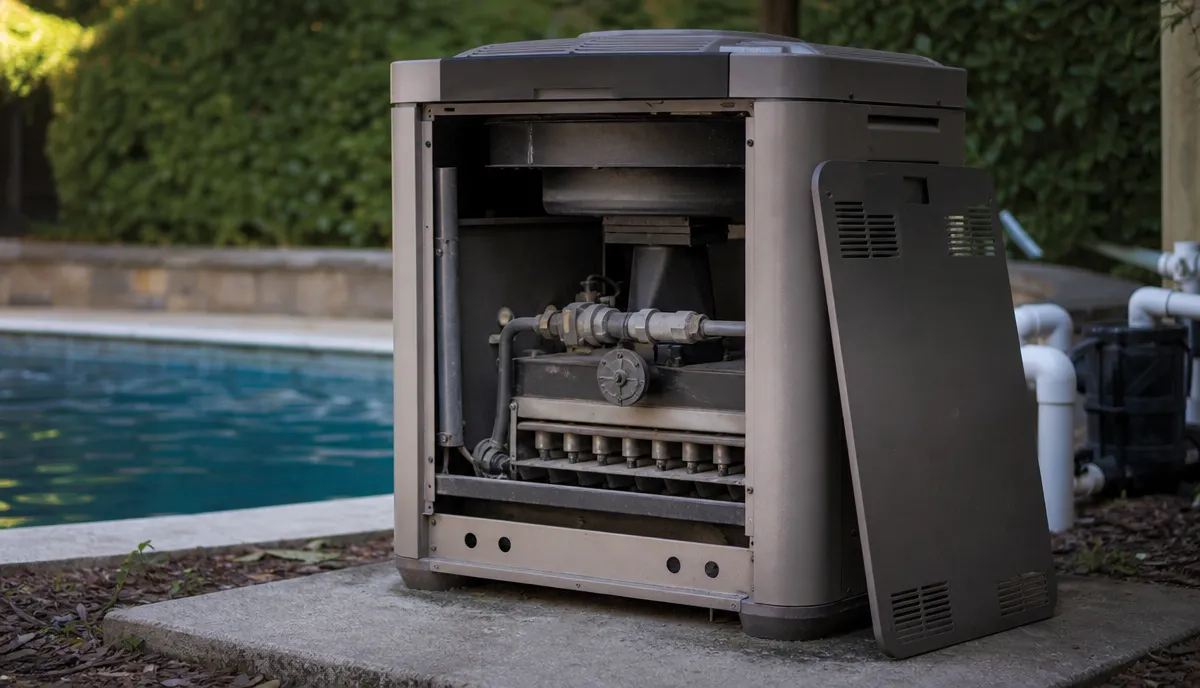
A heater that fires and then cuts out is very often not a heater fault at all — it is flow. A dirty filter that needs a backwash, a pump that has lost its seal or failed to prime properly, a pump starting to cavitate (drawing air rather than water, which sounds like gravel in the housing), or a flow-switch that has drifted out of spec will all shut a heater down to protect it, exactly as designed. Replacing the heater would not have fixed any of them, and someone would have paid for a heater to solve a filter problem.
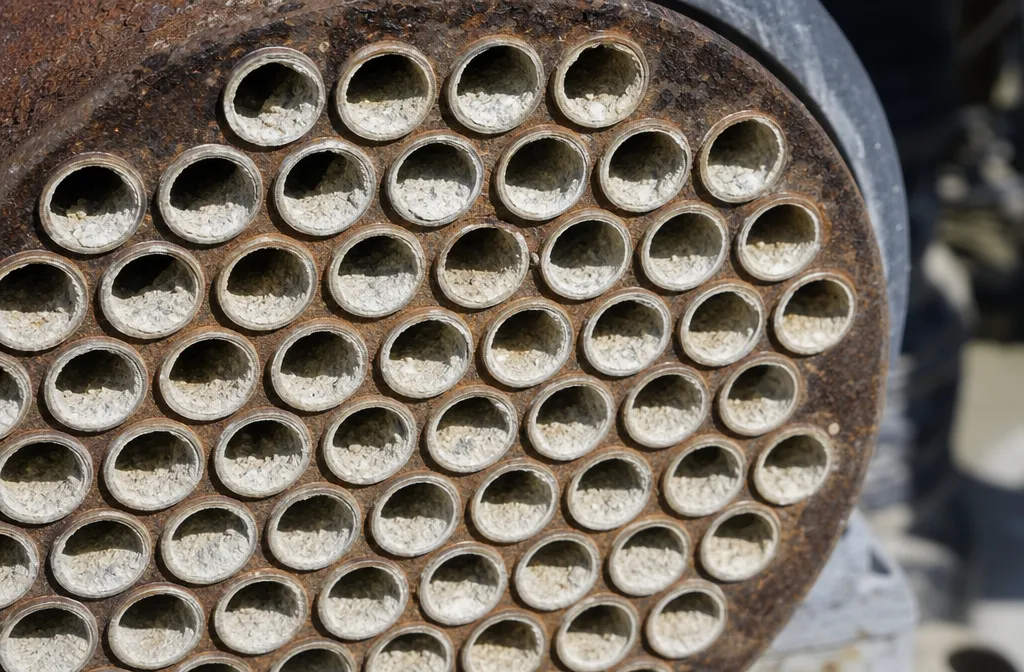
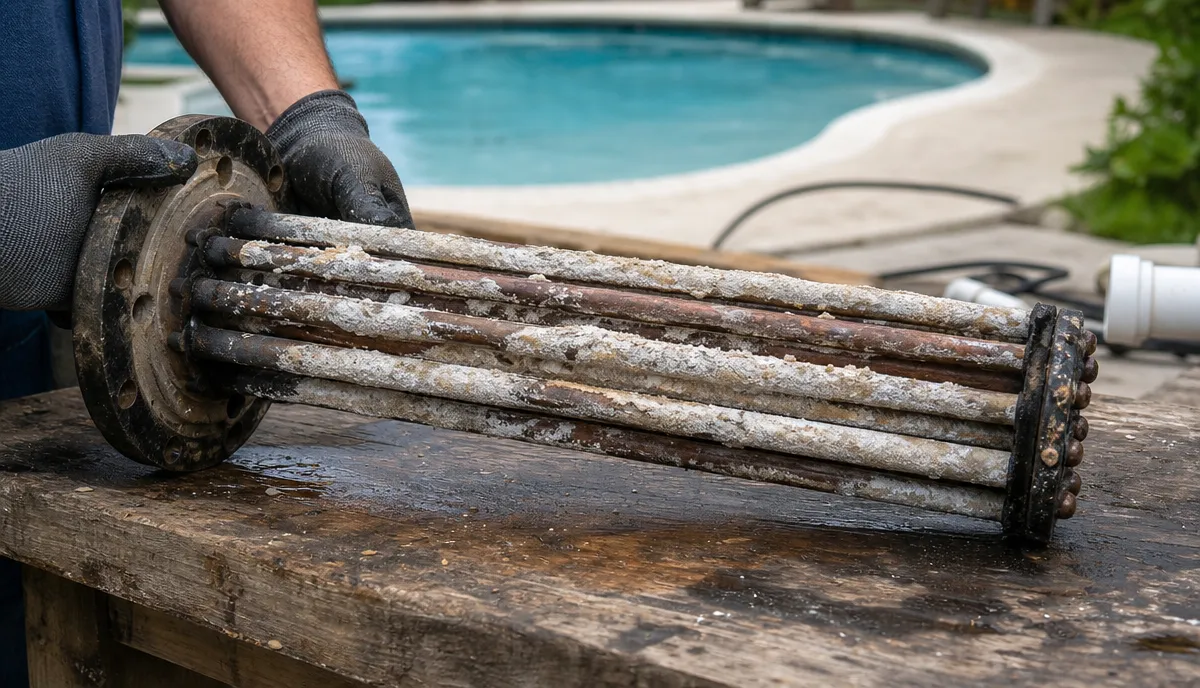
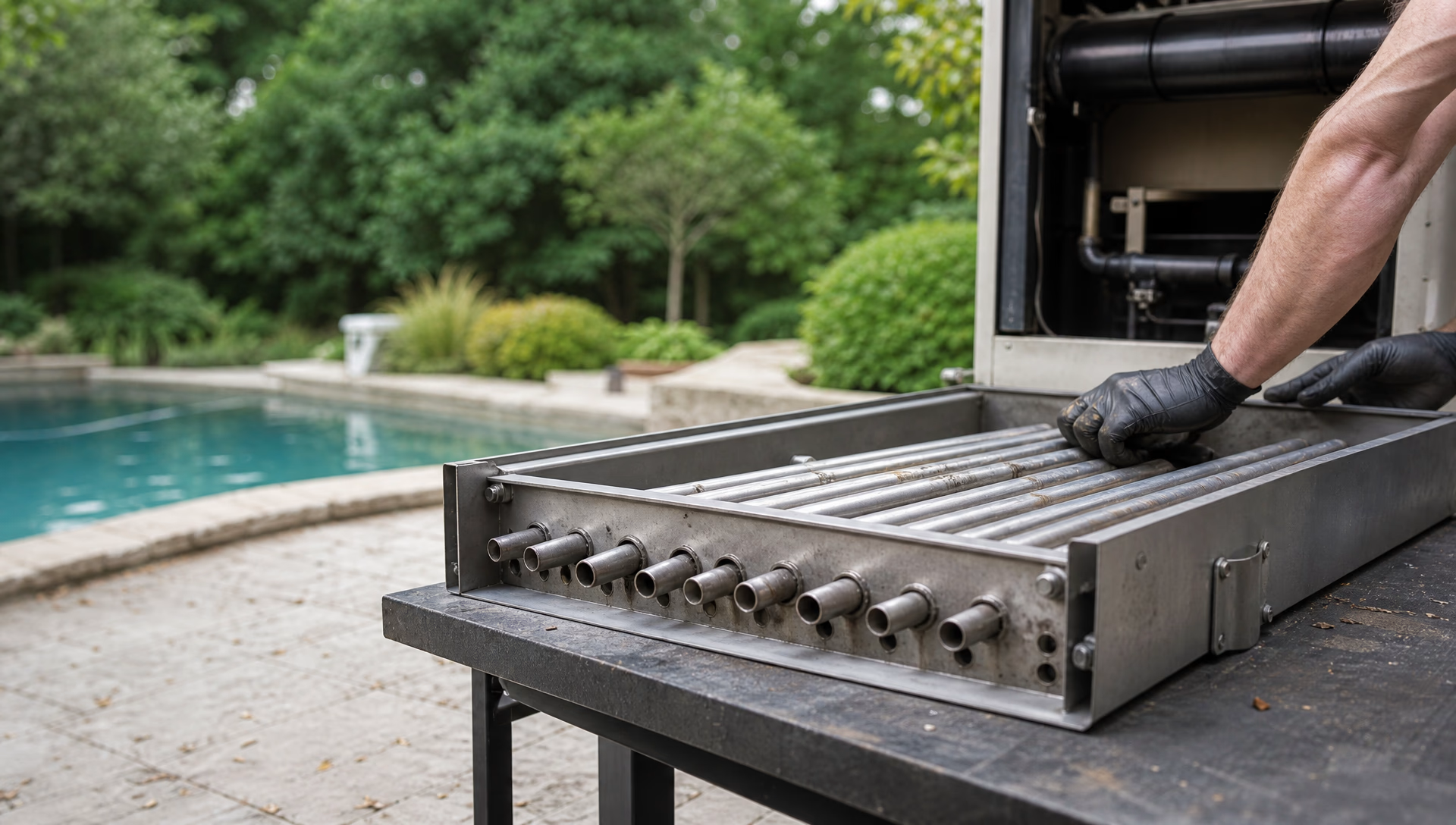
This is the part that decides repair against replace. Exchangers fail from scale build-up and from corrosion, both of which come from water chemistry rather than age. A ten-year-old heater on well-balanced water can be in better condition than a five-year-old one that ran at low pH.
A heater run at too low a return temperature can condense flue gas inside the cabinet, which corrodes it from the inside. That pattern is visible, and it tells you the install or the operation needs fixing as well as the unit.
A repairable heater with no available parts is not repairable.
We do not use a rule like that, because it answers the question without looking at the heater.
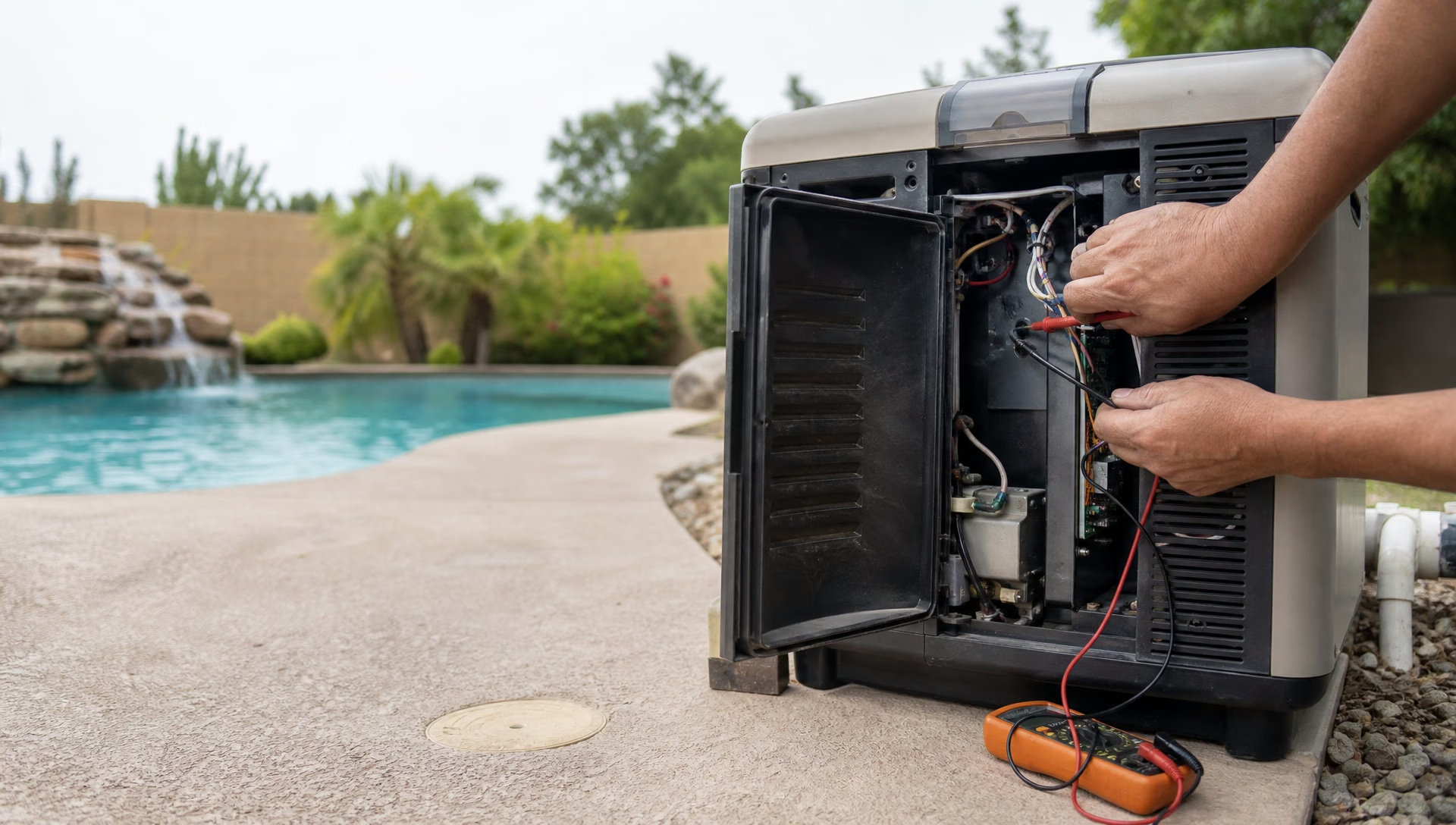
Depending on its age and condition, a heater may be worth repairing or may need replacing. The way to find out is to run a diagnostic on the unit and decide from what it tells us. A service call is $150 and covers up to the first hour of diagnosis or repair.
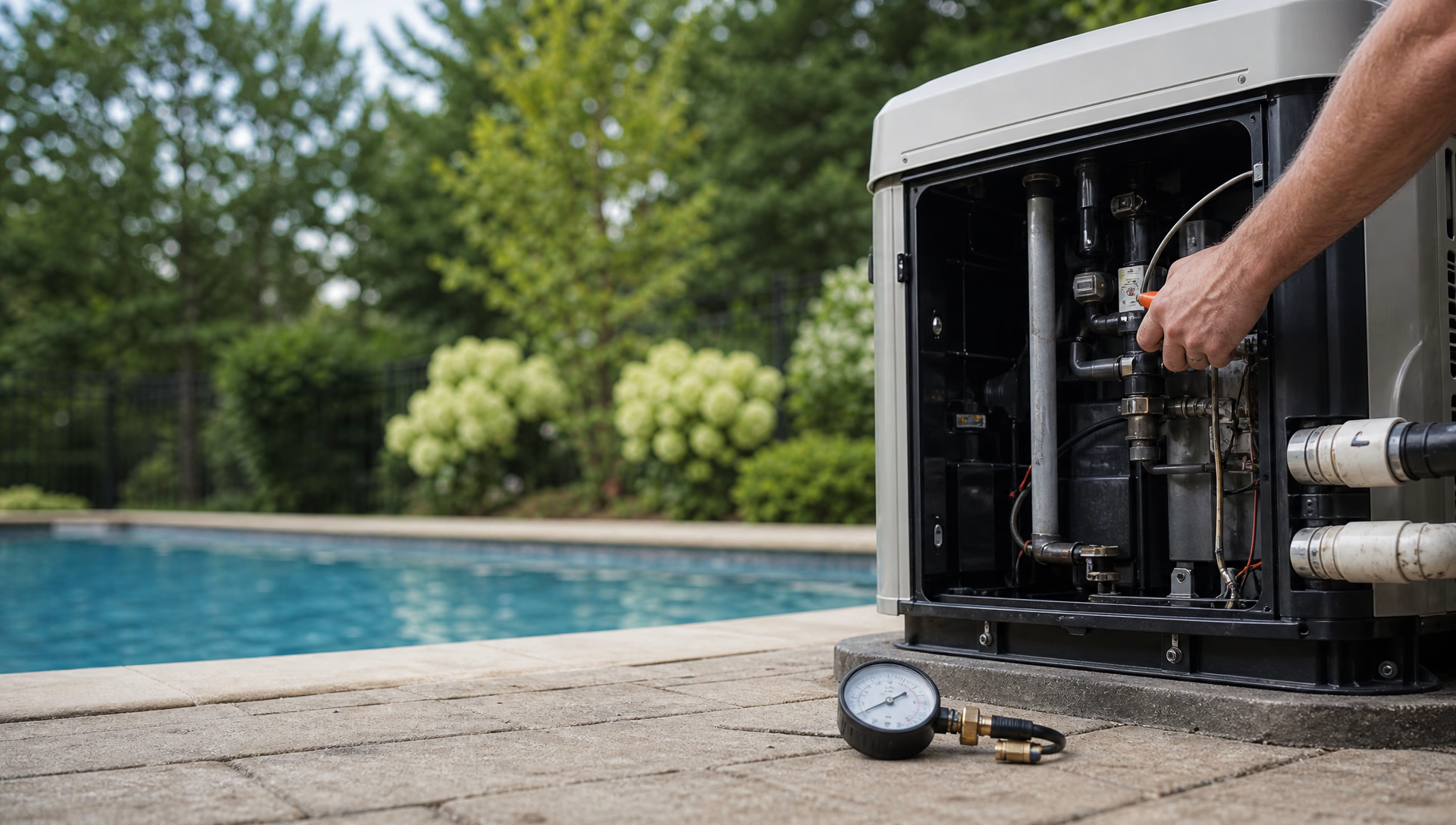
What the diagnostic is actually establishing:
Where a repair will hold, we repair — and where the diagnostic says the unit is finished, we say so instead of selling the same repair twice. Sometimes the honest answer is that a de-lime and a new sensor buys three more seasons for a fraction of a replacement. Sometimes the exchanger is gone and no repair is worth doing.
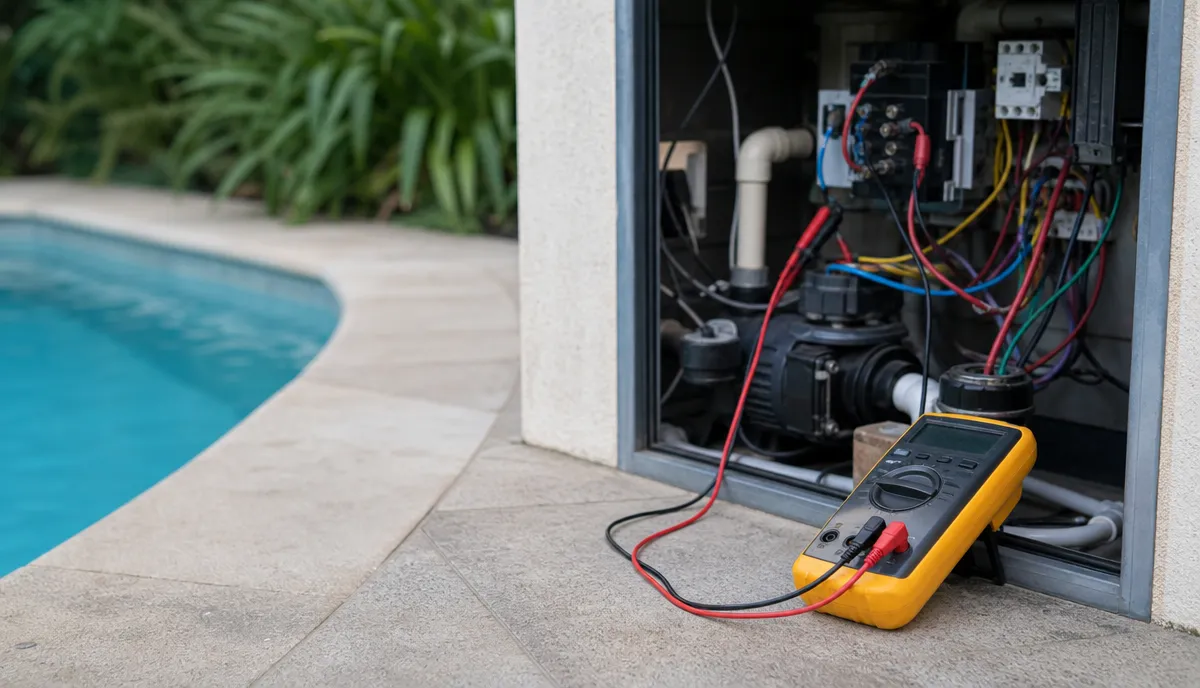
Almost every page ranking for pool heater repair is written from Florida or Texas. That matters, because the single most important thing about heat pumps is a thing those pages have no reason to mention.
A heat pump does not make heat. It moves heat out of the outside air and into your water. So its output depends entirely on how warm the outside air is — and as air temperature falls, output falls with it. Every heat pump has an effective ambient floor below which it produces very little useful heat, and below which many will not run at all.
In Tampa that floor is almost never reached. Here it is reached in April and again in October — the exact two months you bought a heater to use.
What that means in practice for a pool in Summit or Cuyahoga County:
A heat pump is efficient and cheap to run through June, July and August, when you least need heating.
It becomes progressively less effective through September and October, when you most want the season extended.
On a cold spring morning it may run for hours and move the water very little.
None of that makes a heat pump the wrong choice — it makes it a choice about which months you care about. If your aim is a warm pool in midsummer at low running cost, a heat pump does that well. If your aim is to swim in April and late October, gas does something a heat pump physically cannot.
This is the single most common expensive mistake we see: a heat pump bought on efficiency figures calculated for a climate that is not this one.
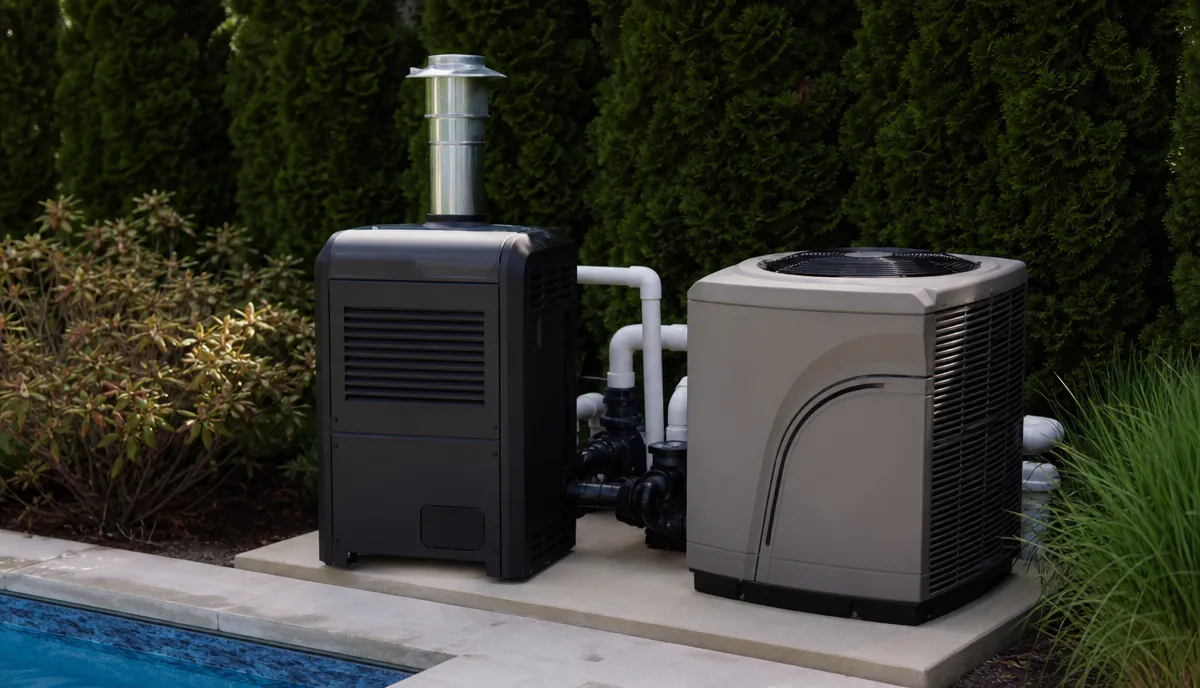
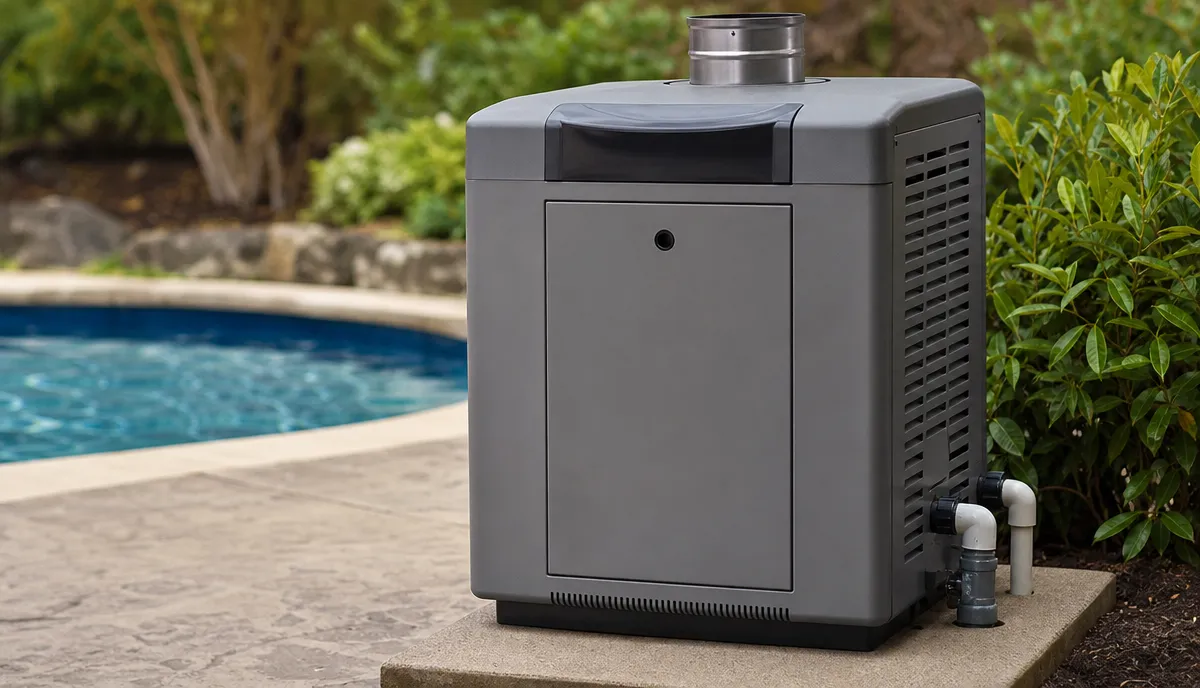
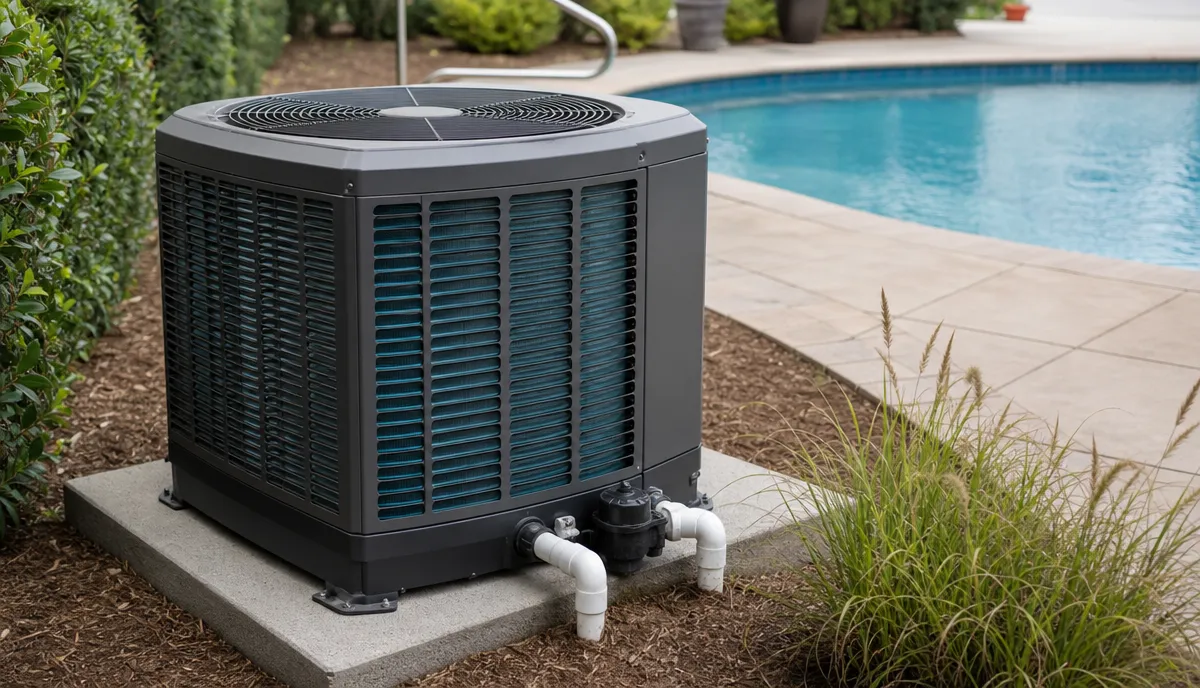
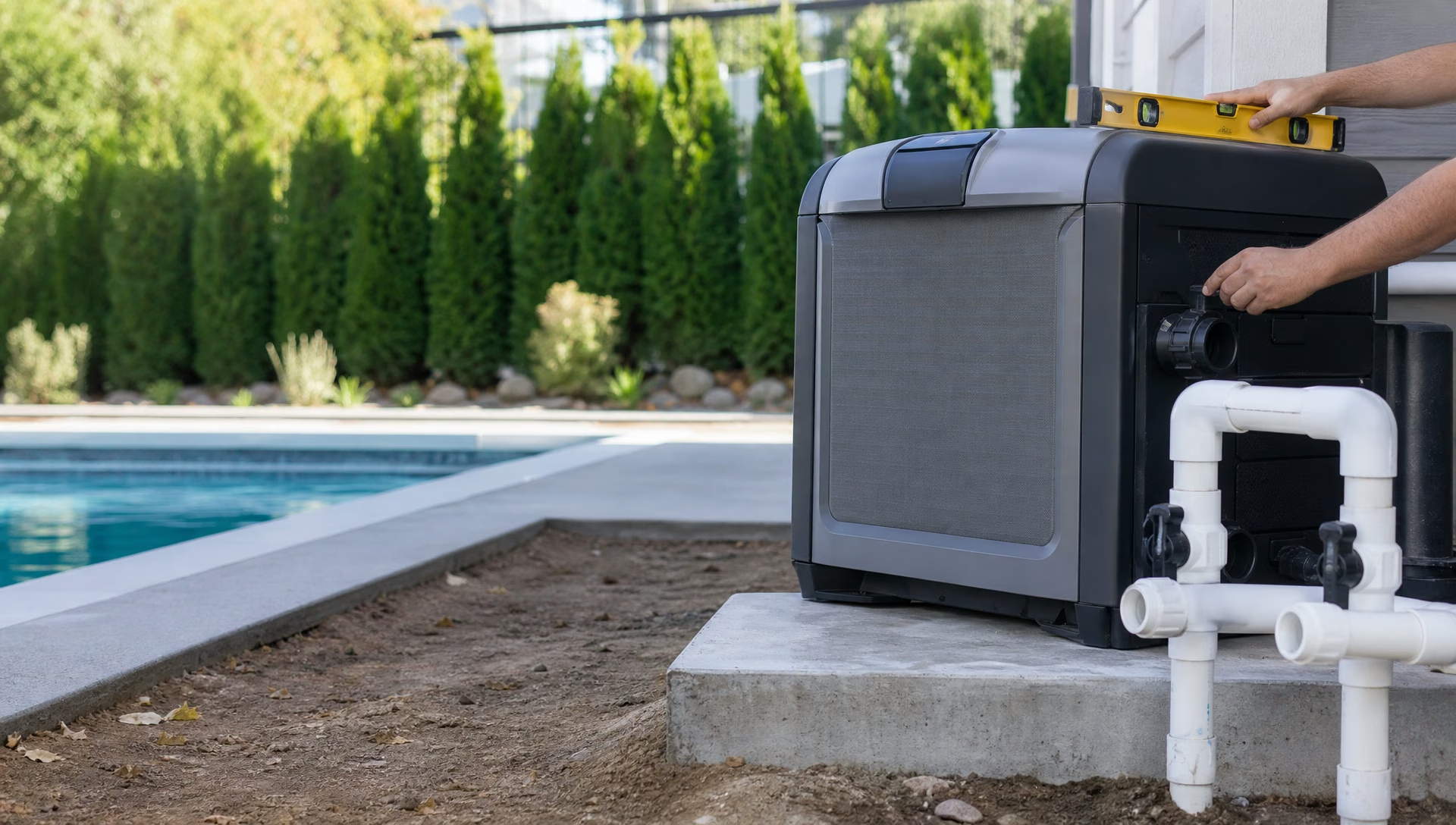
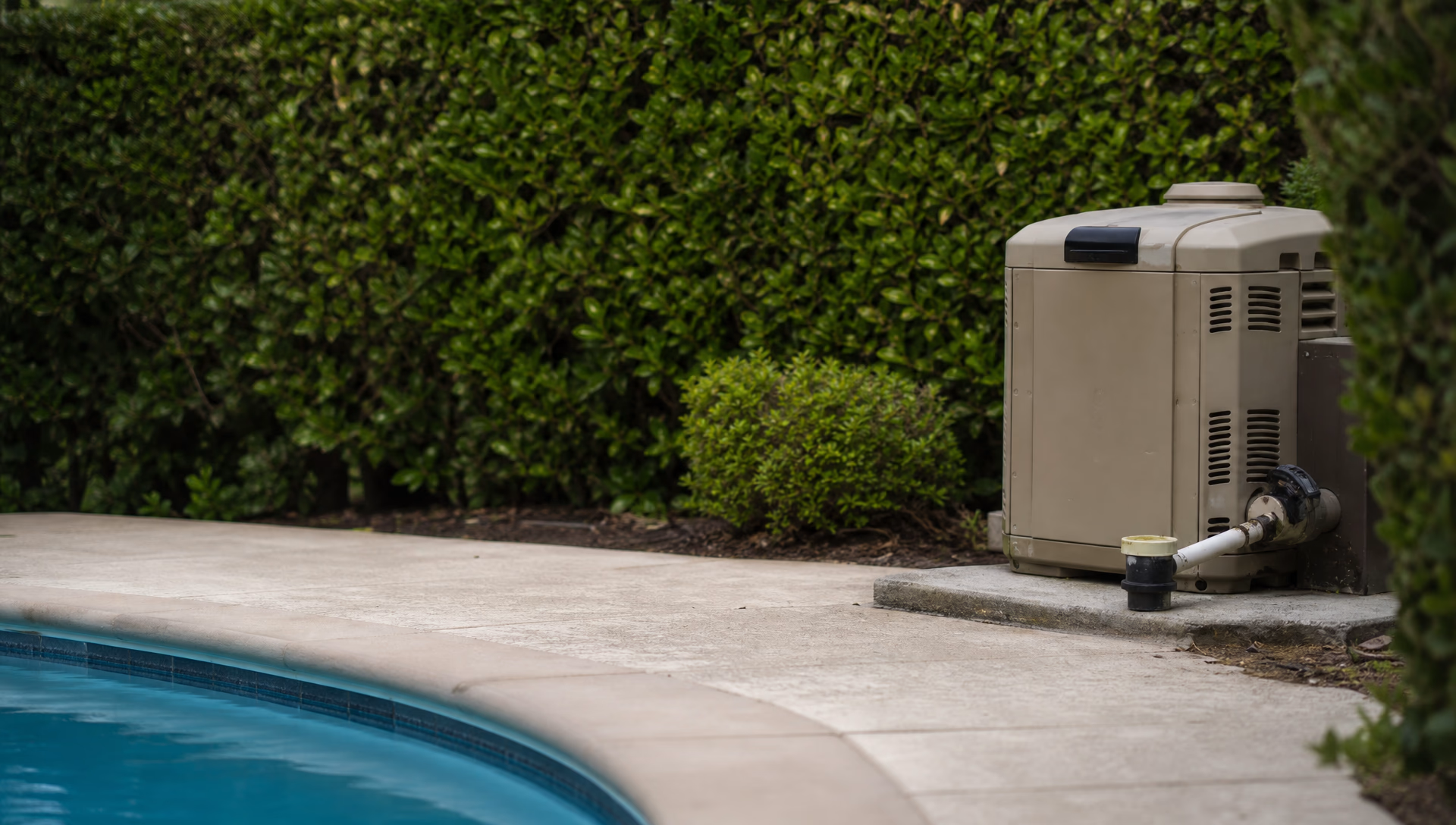
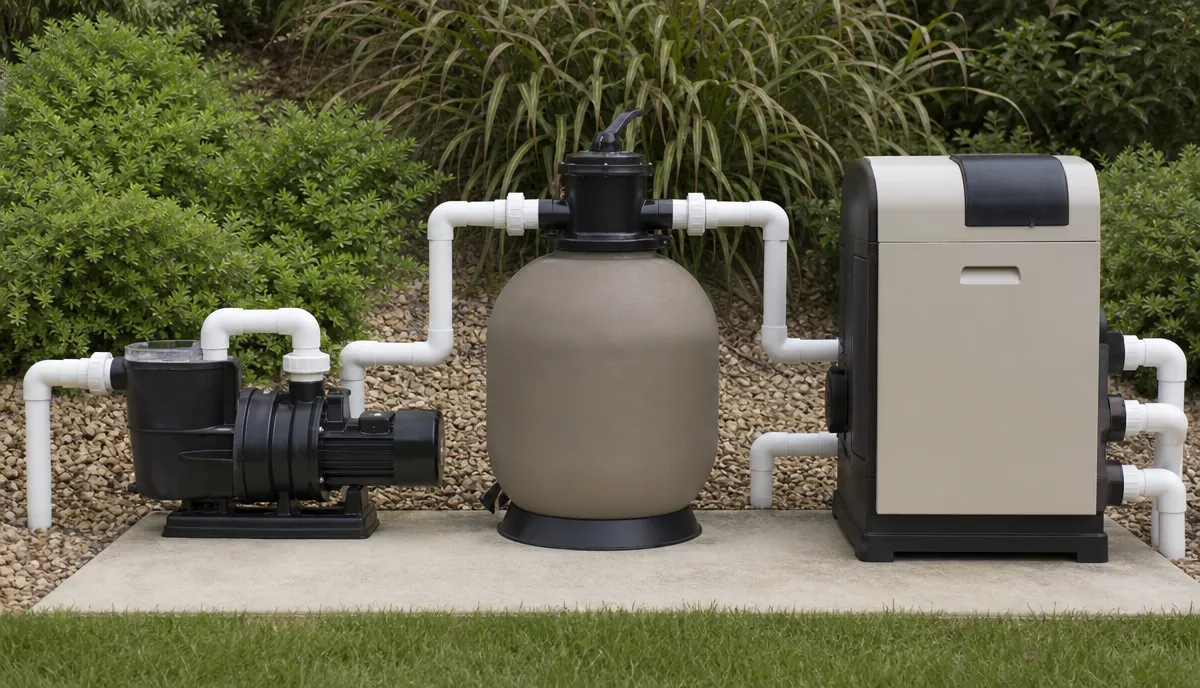
A gas heater and a heat pump side by side on one pad
| Gas heater | Heat pump | |
|---|---|---|
| How it works | Burns fuel to heat water directly | Moves heat from outside air into the water |
| Speed of heating | Fast — heats regardless of air temperature | Slow, and slows further as air cools |
| Cold-weather output | Unaffected | Falls with ambient temperature; effectively floors out |
| Running cost in midsummer | Higher | Lower |
| Best at | Season extension, on-demand heating, fast recovery after a cold night | Holding temperature through warm months |
| Suits | April and October swimming, occasional fast heat-ups | A pool used steadily June–August |
| Fuel | Natural gas or propane | Electric, needs adequate service |
The honest comparison, given the above.
The pattern that works for most pools here: if you want the shoulder seasons, gas. If you want a warm pool in the months it is already warm outside, and low bills doing it, a heat pump. Some pools run both, with the heat pump holding temperature and the gas heater doing fast recovery.
Getting the size right matters as much as the type. A heater is BTU-rated for a volume of water and a temperature rise, and an undersized unit will run continuously and never reach setpoint while an oversized one short-cycles. Surface area, wind exposure and whether the pool is covered all change the answer, which is why we size it against your actual pool rather than a table.
We are not going to print a monthly figure, because any figure we printed would be wrong for most readers. What we can do is tell you what actually drives the number, so you can see which parts you control.
Fuel type and local rates. Gas and electricity price differently and move independently. This is the part you do not control.
The temperature you hold. Every degree of setpoint costs money continuously, not once. Dropping the setpoint two degrees is the single largest saving available, and it costs nothing to do.
Ambient air and wind. A heater fights the air temperature and the wind across the surface. An exposed pool costs more to heat than a sheltered one of the same size.
Season length. Running April to October is a materially different bill from June to September, and this is the choice most people are actually making when they ask about cost.
Whether the pool is covered. This is the big one, and it is the one nobody expects. The overwhelming majority of a heated pool's heat loss is from the water surface — evaporation especially. Covering the pool when it is not in use cuts that loss more than any other single measure. A cover is the most effective heating decision available, and the one most often skipped.
Heater condition. A scaled exchanger transfers heat poorly, so a heater that needs a de-lime is burning fuel to push heat through a deposit. Running cost rising with no other change is a symptom worth a look.
The things that set your running cost:
If you want a genuine estimate for your pool, we would rather work it out against your volume, setpoint, target season and cover situation than hand you a number from someone else's pool. Ask us and we will go through it.
For the equipment side of the same question, see the pool heater cost guide.
Almost nobody buys a heater to make midsummer warmer. Midsummer is already warm. People buy heaters to get more season.
That is worth stating because it changes the buying decision entirely. If the goal is the shoulder months, then the questions that matter are the ones this page has just answered: gas rather than heat pump, correctly sized, on a pool that holds its heat overnight. Judged on a July afternoon, almost any heater looks fine. Judged on the second week of October, the differences are stark.
A realistic setup for a Northeast Ohio pool that wants a long season is a properly sized gas heater and a cover that goes on overnight. That combination is what turns a June-to-August pool into an April-to-October one.
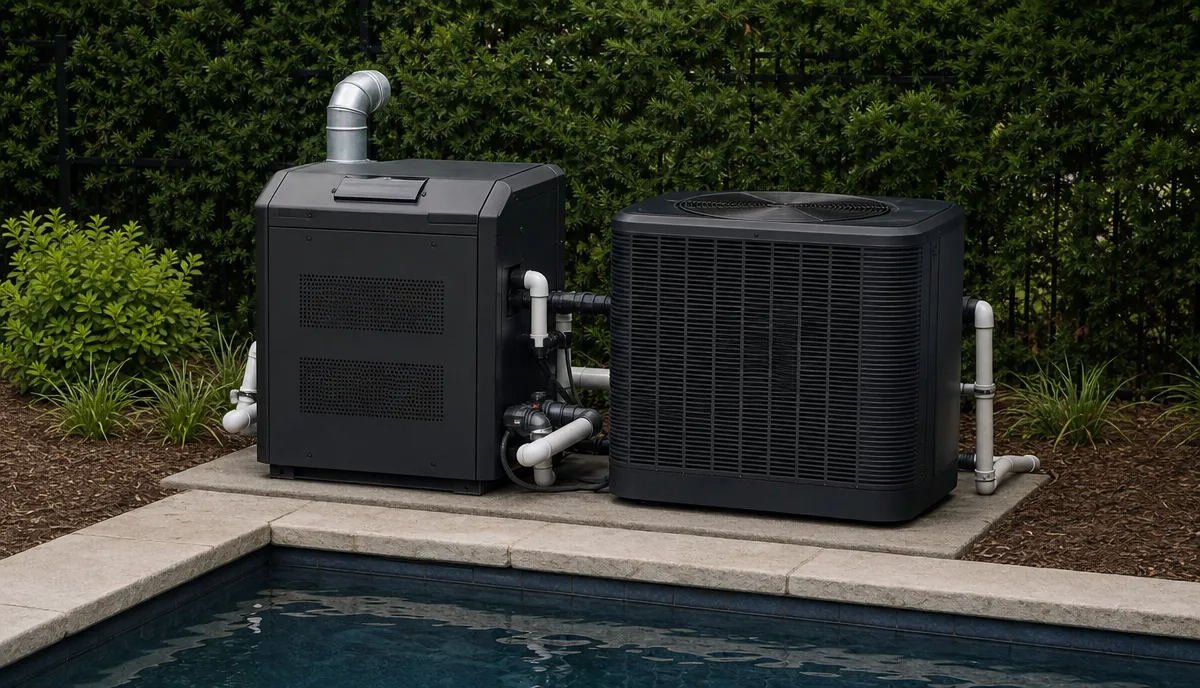
A gas heater and a heat pump sharing one pad, seen across the water
We service, repair and replace pool heaters from Hayward, Pentair, Raypak, Jandy, Sta-Rite, Fluidra and Zodiac. Raypak in particular is predominantly gas, which is the right technology for this climate.
Brand-specific pages: Hayward pool heater repair, Pentair pool heater repair, and Raypak pool heater repair. The full list is on brands we service.
Products we install carry the full manufacturer's warranty, which varies by manufacturer and generally runs between one and three years. We do not offer a separate workmanship guarantee, and nothing on this page should be read as one.
“M&G has serviced our in ground pool for the past 10+ years. Seasonal opening & closing, replacing heaters, pumps and a number of aggravating repairs that Matt & his crew have handled correctly at a fair price. Recommend highly.”
Repair, installation and replacement each have their own page, and so does each brand we are asked about most.
Tell us what it is doing and we will tell you what we think it is.
A heater is the most expensive thing on the pad to get wrong at closing, and it is the component people forget is at risk.
Putting a safety cover on a pool whose lines have not been blown out leaves the pool looking closed and the equipment still exposed. The cover and the winterizing are separate jobs that happen in the same visit.
Heaters and heat pumps sit in the pool's bonding grid, and a bond that has corroded at the lug is both a safety issue and a source of odd, intermittent faults that look like control problems. We check it as part of a diagnostic.
When we winterize a pool we blow out the plumbing with air and purge the heater itself, so no water is left standing inside the exchanger over winter. Water left in an exchanger through a Northeast Ohio February expands when it freezes and splits it — and a split exchanger is not a repair, it is a replacement. It is also not covered by anything, because it is a consequence of how the pool was closed rather than a fault in the unit.
Two related things worth knowing:
If a heater was not properly purged last autumn, the failure usually shows up at opening rather than at closing — which is why an opening is a sensible time to have it looked at.
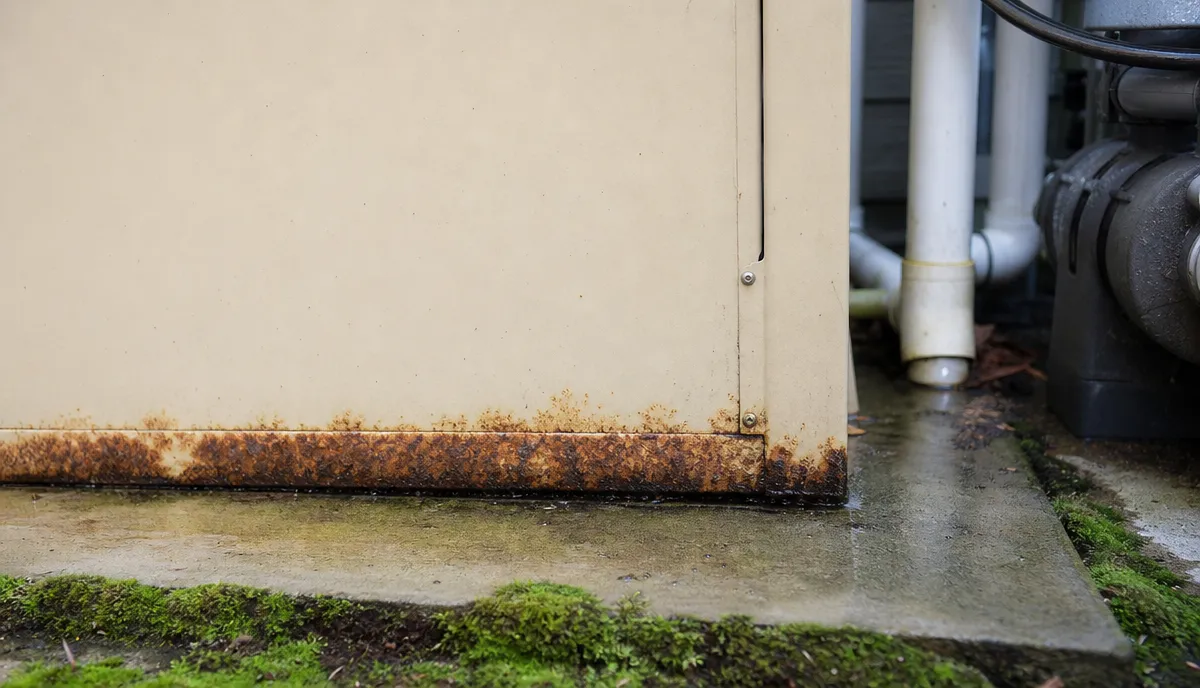
Not diagnoses — these are the patterns that tell you to make the call rather than wait.
Fires and then shuts down after a few minutes. Usually flow, not the heater. Check the filter first; if it is clean, call.
Will not ignite at all. Gas supply, igniter, or a safety interlock doing its job.
Runs constantly and never reaches setpoint. Undersized, scaled, or losing heat faster than it adds it — often a missing cover.
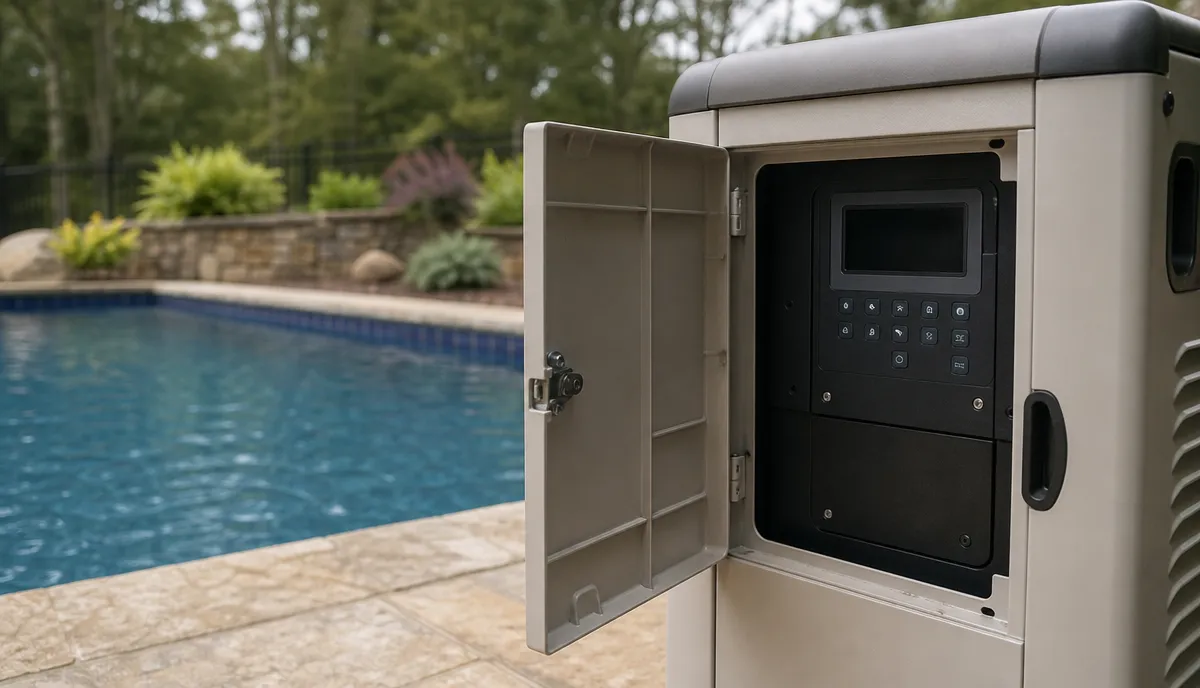
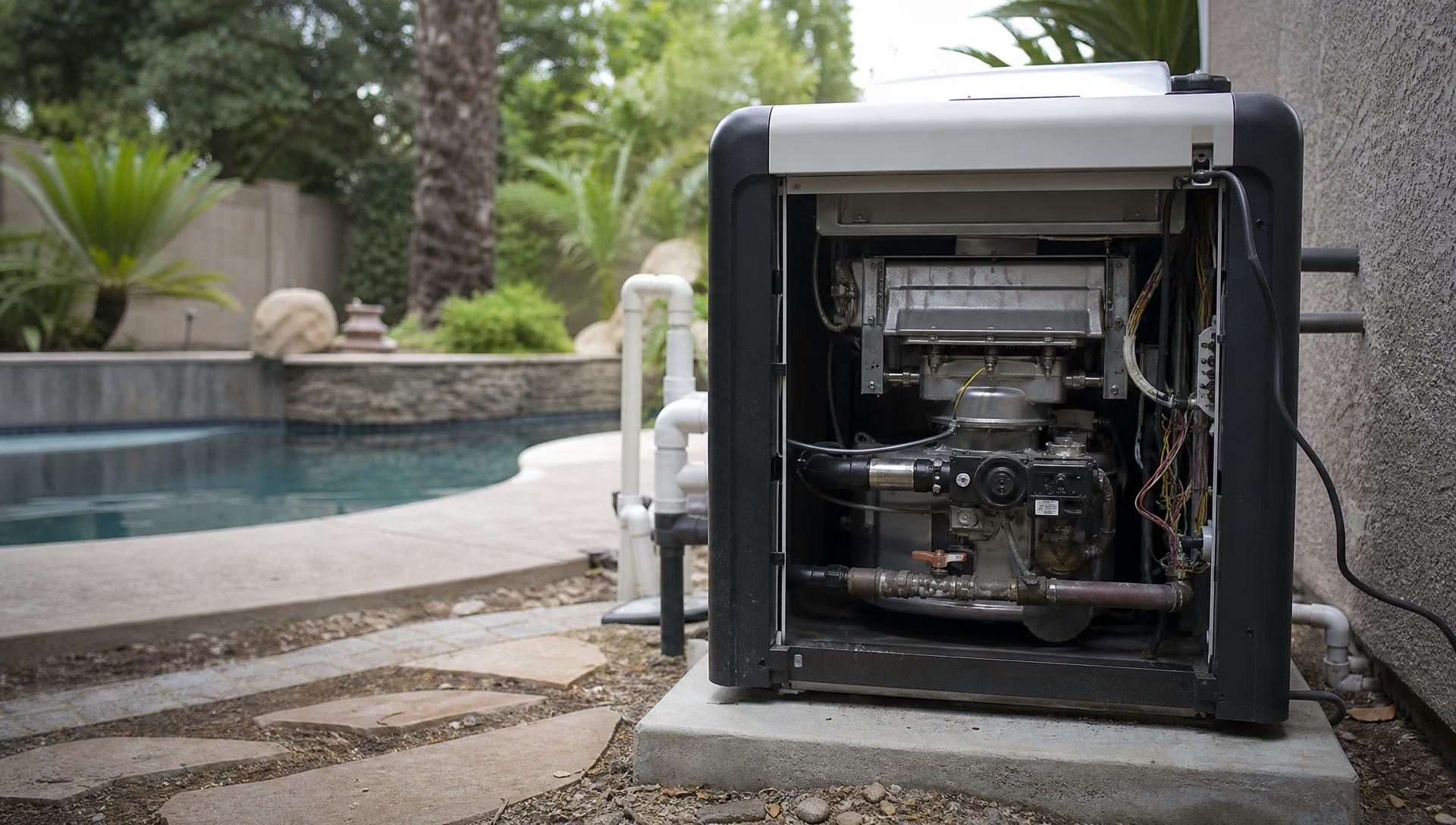
Rusty or sooty residue in or around the cabinet. Possible vent or combustion problem. Worth looking at sooner rather than later.
Water at the base of the unit. Could be condensate, could be the exchanger. These are not the same problem and the difference matters.
Running cost climbed with nothing else changing. Often scale.
M & G Pools services in-ground pools exclusively. We do not service, repair or supply equipment for above-ground pools, and we do not service hot tubs or spas.
We do not publish a mile radius — reach varies by service type and season.
Depending on its age and condition it may need replacing, but it is best to run a diagnostic on the unit first to determine which is right. The deciding factor is usually the condition of the heat exchanger, which is set by water chemistry rather than age — a ten-year-old heater on well-balanced water can be sounder than a five-year-old one that ran at low pH. A service call is $150 and covers up to the first hour of diagnosis or repair.
It depends which months you want. A heat pump moves heat out of the outside air, so its output falls as the air cools and effectively floors out in cold weather — which is April and October here, the exact months most people buy a heater for. For holding temperature through June to August at low running cost it works well. For extending the season, gas does something a heat pump physically cannot.
Most often that is flow rather than the heater. A dirty filter, a failing pump or a flow switch out of spec will shut a heater down to protect it, exactly as designed. Check the filter first. If it is clean, it needs diagnosing — and replacing the heater would not have fixed it.
That depends on your fuel type and local rates, the temperature you hold, how exposed the pool is, how long a season you want, and above all whether the pool is covered — most of a heated pool's heat loss is from the water surface. We would rather work through those for your specific pool than quote a figure from someone else's. Ask and we will go through it.
A heater is rated for a volume of water and a temperature rise, and surface area, wind exposure and cover use all change the answer. Undersized runs constantly and never reaches setpoint; oversized short-cycles. We size it against your actual pool rather than a table.
Hayward, Pentair, Raypak, Jandy, Sta-Rite, Fluidra and Zodiac. We service, repair and replace equipment from all of them.
Yes, and it is usually the largest single saving available. The bulk of a heated pool's heat loss is from the water surface, mostly evaporation, so covering the pool when it is not in use cuts more loss than any other measure. A properly sized gas heater plus a cover overnight is what turns a June-to-August pool into an April-to-October one.