M & G Pools M & G Pools
Merlin and GLI · Custom Only

Custom Pool Safety Covers in Twinsburg, OH and the East Suburbs

Measured on site, fabricated to your pool, and anchored to carry load properly. Merlin and GLI, mesh or solid, for in-ground pools across Twinsburg, Solon, Hudson, Chagrin Falls and the Route 91 corridor.

The Standard

What Makes a Cover a Safety Cover

A safety cover is not a heavy winter cover. It is a cover built and installed to hold weight without letting a child or a pet through, and there is a published standard that says whether a given cover does that: ASTM F1346.

That standard is the whole distinction, and almost nobody selling covers mentions it. A cover manufactured to ASTM F1346 has been tested to hold a static load and to close the gap between the cover and the pool edge so that a small body cannot slip underneath. A winter cover has not. Both keep leaves out. Only one is a barrier.

This matters more here than in a lot of the country. A Northeast Ohio pool spends roughly half the year covered, much of it under snow load, and the cover is unsupervised for most of that time.

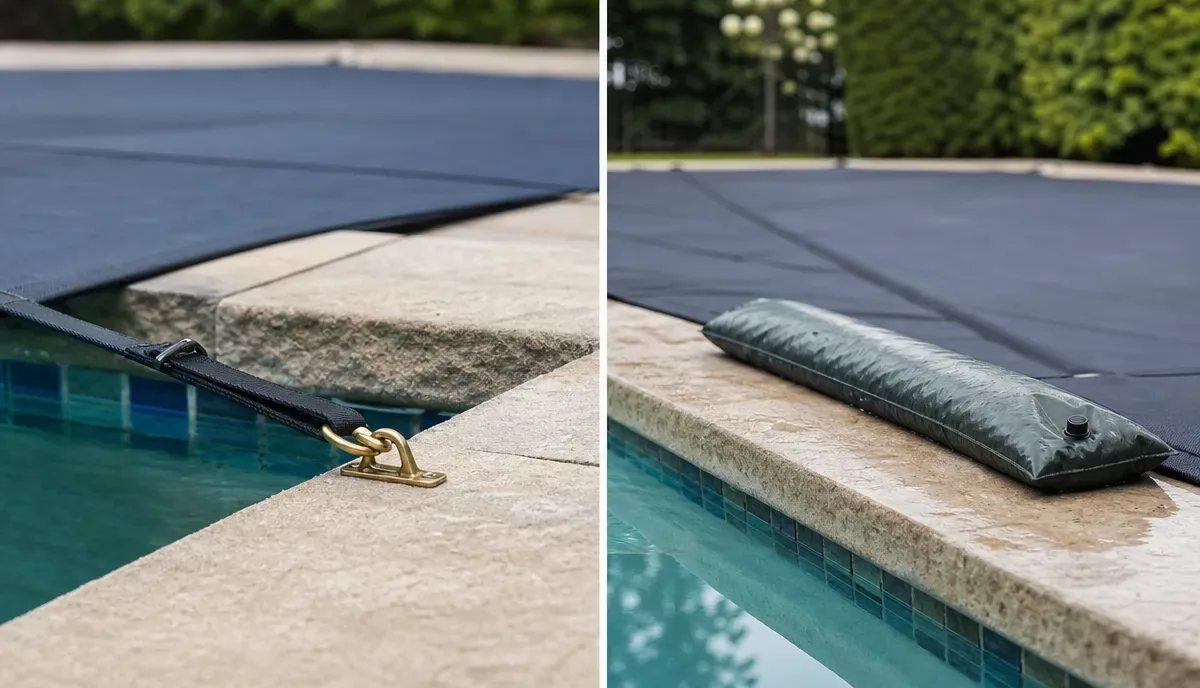
An anchored cover edge and a weighted cover edge compared

Anchored against laid-on. The anchored edge is the one that makes it a barrier.

How to Check

Covers built to the standard are labelled. Ask to see the label, or ask us and we will tell you what the cover we are quoting is built to. If a cover is being sold as a “safety cover” and nobody can point you at the standard, that is worth a second question.

Decided on Outcomes

Safety Cover or Winter Cover

Most comparisons of these two run through features. It is more useful to decide on outcomes — what each one actually costs you over a winter.

A Winter Cover

A tarp held down by water bags or a cable and winch. It floats on the water, collects rain and snowmelt in the middle, and needs pumping off. Debris that blows on stays on.

It is not a barrier: it will not hold a person, and something that gets on it goes in the water. It is cheaper, and it needs attention through the winter.

A Safety Cover

Anchored into the deck under tension, so it sits above the water rather than on it. Snow and rain drain through a mesh or run off a solid panel to be pumped. It holds load.

It does not need pumping off through the winter, and it comes off in spring reasonably clean.

The trade is upfront cost against winter labour and risk. If you have children, pets or grandchildren in the yard, the barrier is not really a trade — it is the reason to buy.

Both Are Safety Covers

Mesh or Solid

Both are safety covers when built to the standard. They behave differently, and the right answer depends on your yard rather than on which is “better”.

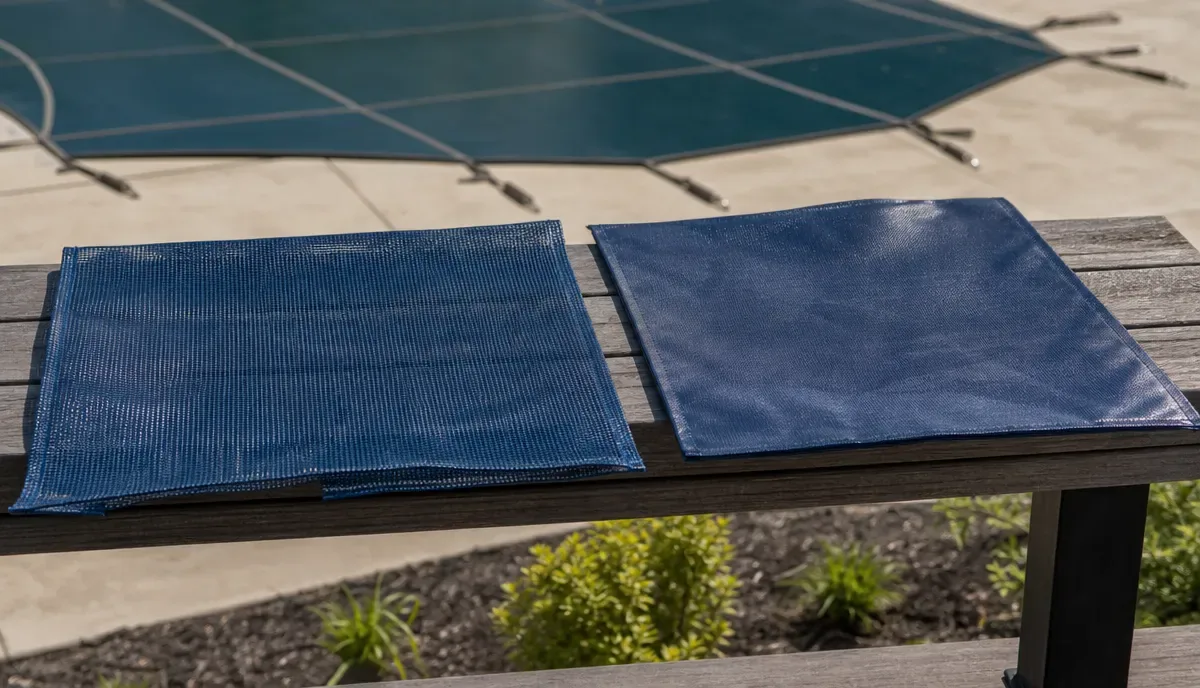
Mesh lets water through and holds debris on top. Meltwater drains straight into the pool, so there is nothing to pump off the cover. That also means some fine sediment and a little light get through, which means your water starts the season slightly dirtier and can grow algae if the chemistry was left wrong in autumn. Mesh is lighter to handle, which matters when two people are putting it on in October.


Solid blocks water and light entirely. Water starts the season noticeably cleaner and algae has nothing to work with. But the water that lands on it has nowhere to go, so a solid cover needs a cover pump running through the winter and someone to check it. A solid panel is heavier to handle.

A mesh safety cover and a solid safety cover side by side

Put simply: mesh trades a little spring cleanup for no winter maintenance. Solid trades winter attention for a cleaner opening.

The decision usually comes down to trees. A pool under heavy leaf fall does better with a solid cover, because mesh will pass the tannins that stain a liner. A pool in the open with good autumn chemistry does fine on mesh, and the owner never touches it until spring.

We fit both, from Merlin and GLI. We will tell you which we would put on your pool and why.

Side by Side

Cover Options, Lifespan and Warranty

Mesh and solid safety covers compared
 MeshSolid
Water through the coverDrains throughBlocked — needs a cover pump
Winter attention neededNone routinelyPump monitored through thaw cycles
Spring water conditionSlightly dirtierNoticeably cleaner
Light transmissionSomeNone
Weight to handleLighterHeavier
Best suited toOpen yards, sound autumn chemistryHeavy leaf fall, tannin risk
Manufacturers we fitMerlin, GLIMerlin, GLI
Manufacturer warrantyFull manufacturer's warrantyFull manufacturer's warranty

Products we install carry the full manufacturer’s warranty, which varies by manufacturer and generally runs between one and three years. We do not offer a separate workmanship guarantee, and nothing here should be read as one.

What Makes It Custom

How We Measure and Fit a Cover

This is the part that makes a cover custom, and it is why we do not sell stock sizes.

01

Measure on Site

We come out and measure the pool and its surround. Not the pool’s nominal size — the actual shape, including steps, a diving board, a raised wall, any attached water feature, benches, and how much deck there is on each side. Freeform pools are measured to a template so the curve is reproduced rather than approximated.

02

Fabricate to Those Measurements

The measurements go to the manufacturer, who fabricates the cover to them: panels seamed to shape, straps positioned for your anchor layout, and grommets and D-rings set where the load will actually be.

03

Anchor the Deck

We drill the anchors into the deck on the perimeter the measurements specified, and tamp them flush so they sit below the walking surface.

04

Tension and Check

We strap the cover to the anchors, spring-load each strap and tension it evenly so the load spreads across the whole cover rather than pulling at a handful of points. Then we walk it and adjust.

A stock cover skips steps one and two, which is why it either bridges a step or leaves a gap at a curve — and a gap is the thing a safety cover exists to eliminate.

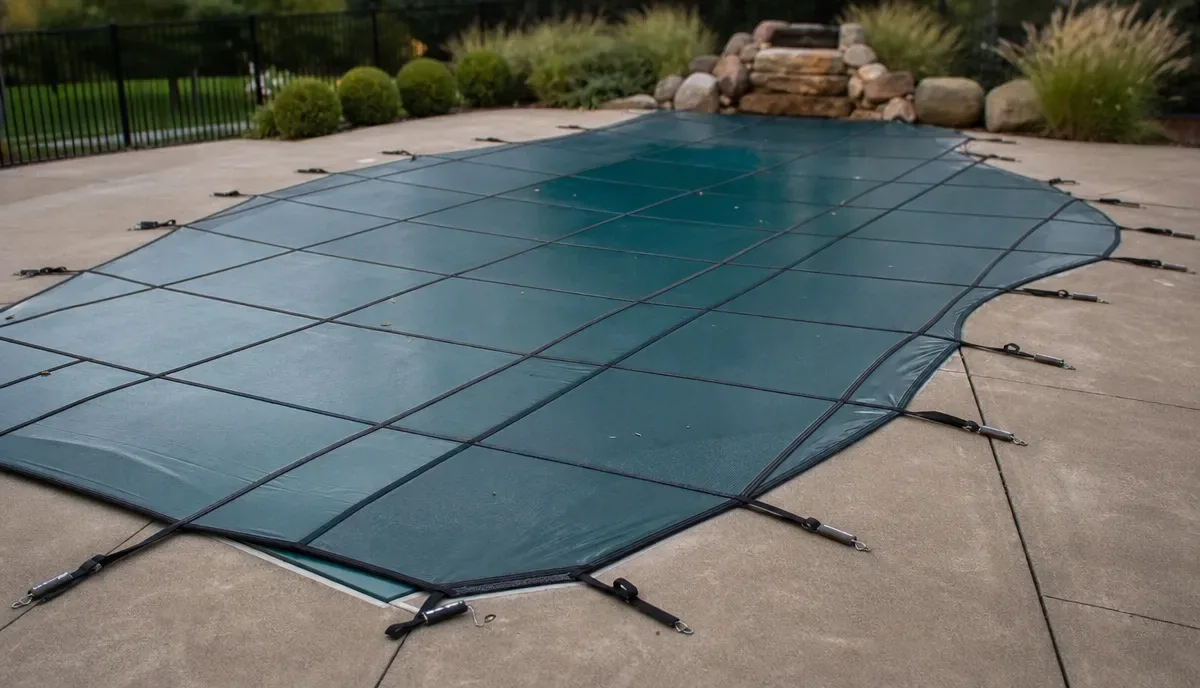
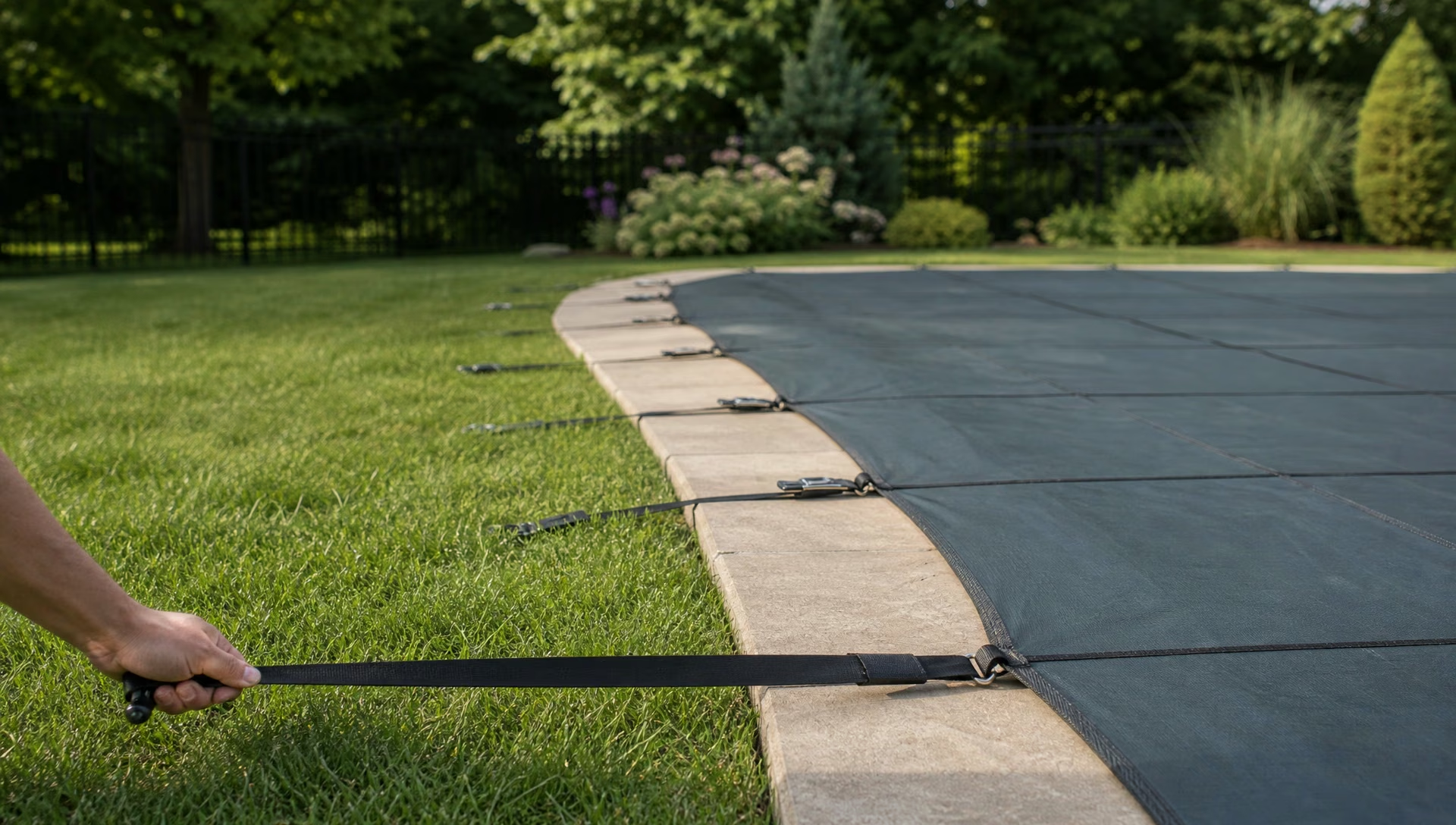
A mesh safety cover on an in-ground pool
Mesh. Rain and snowmelt drain straight through, so there is no water to pump off — at the cost of a dirtier spring.
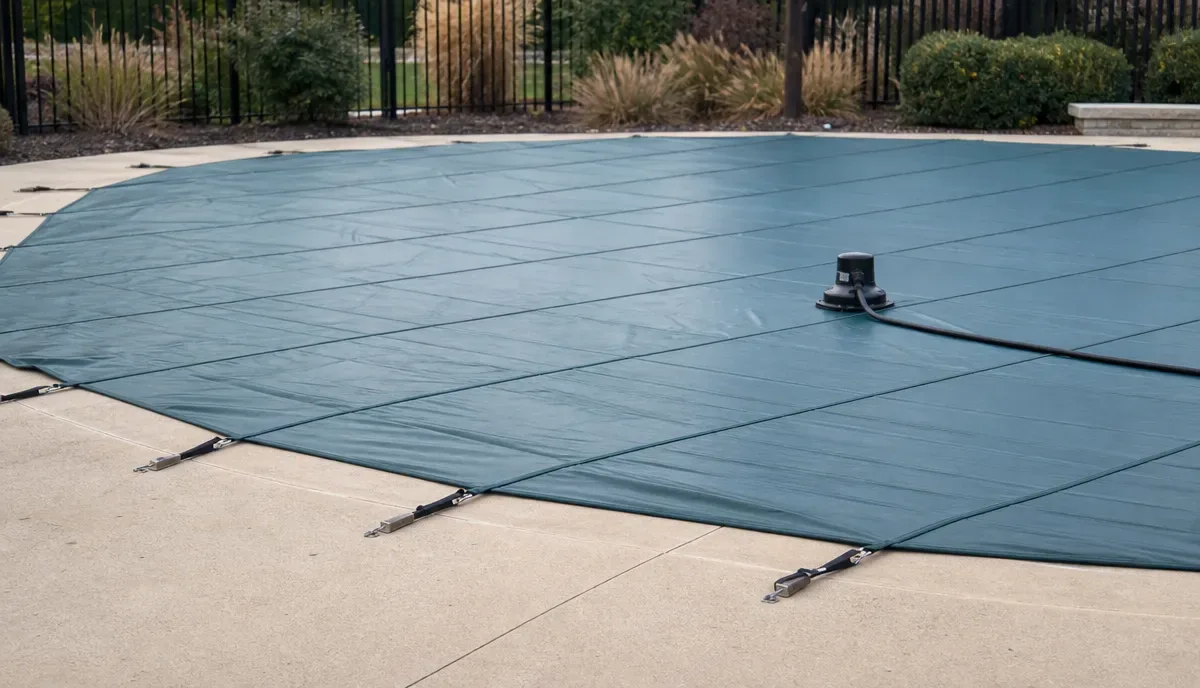
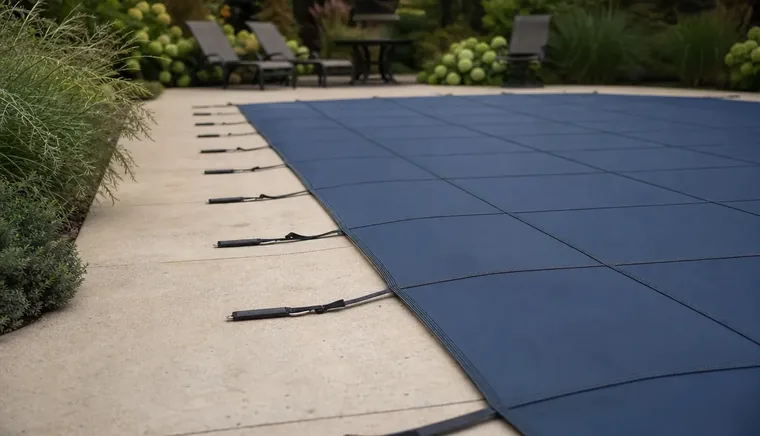
A solid safety cover on an in-ground pool
Solid. Nothing gets through, so the water stays cleaner — and you look after a cover pump all winter.
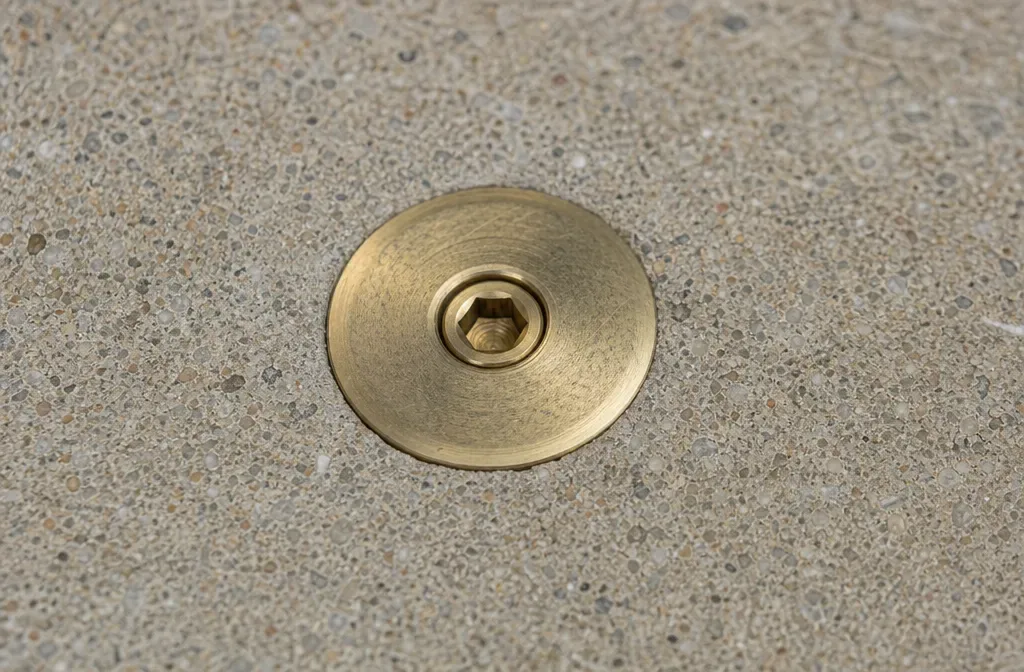
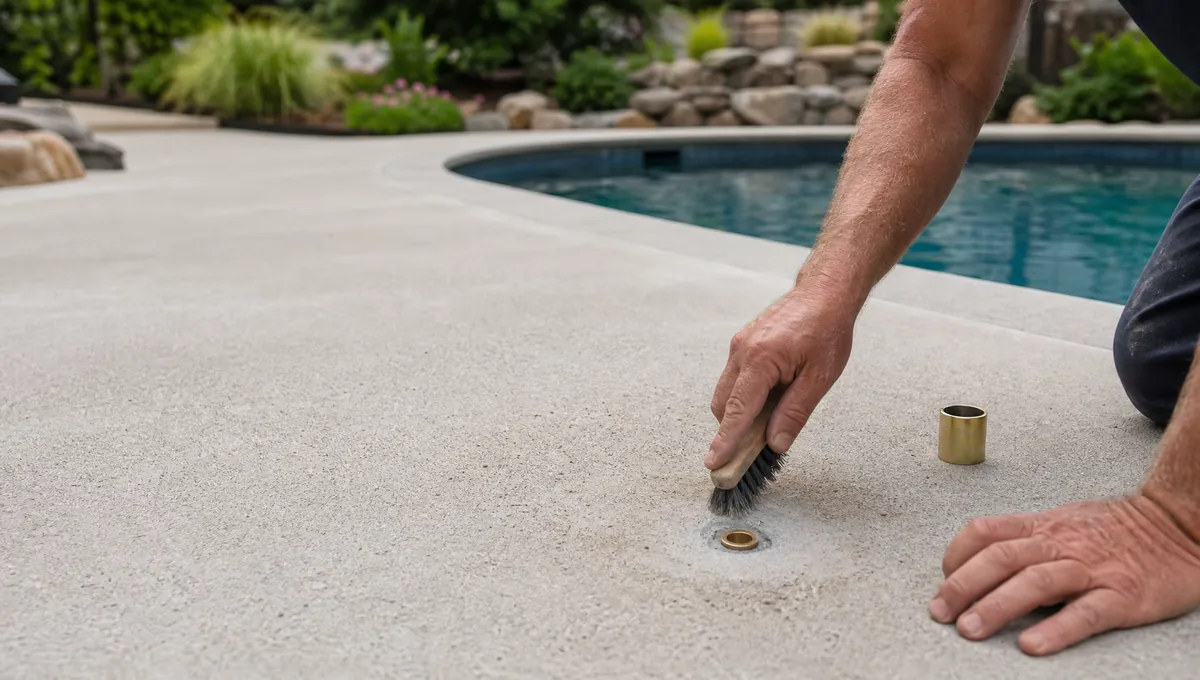
A brass deck anchor set flush in a pool deck
The anchor. Brass, set flush with the deck. Walkable barefoot once the cover is off.
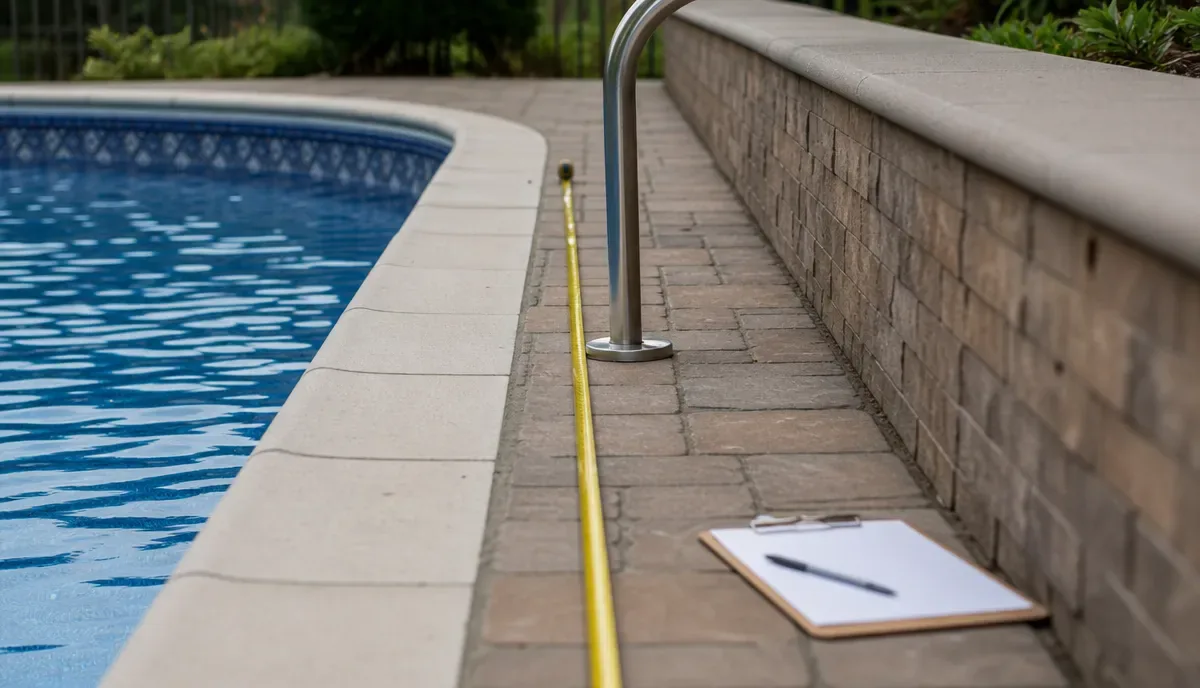
A cover measure being taken around a pool obstruction
The measure. Every step, rail and rock feature is measured in, which is why the fit takes two visits.
Deck Decides

Anchoring

The deck decides how the anchors go in, and it is worth knowing before you get a quote.

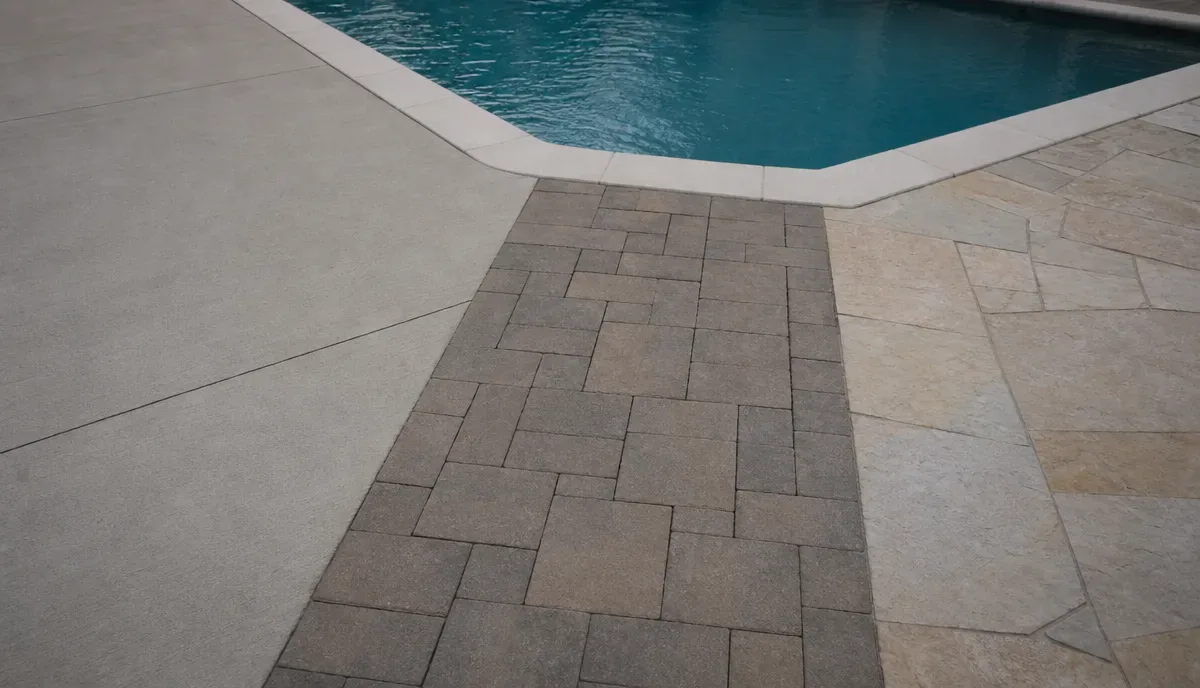
Concrete takes a standard brass anchor set flush into a drilled hole — the straightforward case. Pavers and flagstone need the anchor set into the base beneath rather than into a single unit, or the paver lifts under tension. Wood decking takes a different anchor entirely, fixed through to structure.

And where there is no deck on one or more sides — a pool bordered by lawn, a retaining wall, or a raised bond beam — that side needs either a stanchion anchor set in a concrete collar or a different anchor layout. All of these are normal, none is a problem, and which one you have affects the install rather than whether it can be done. We work it out at the measure.

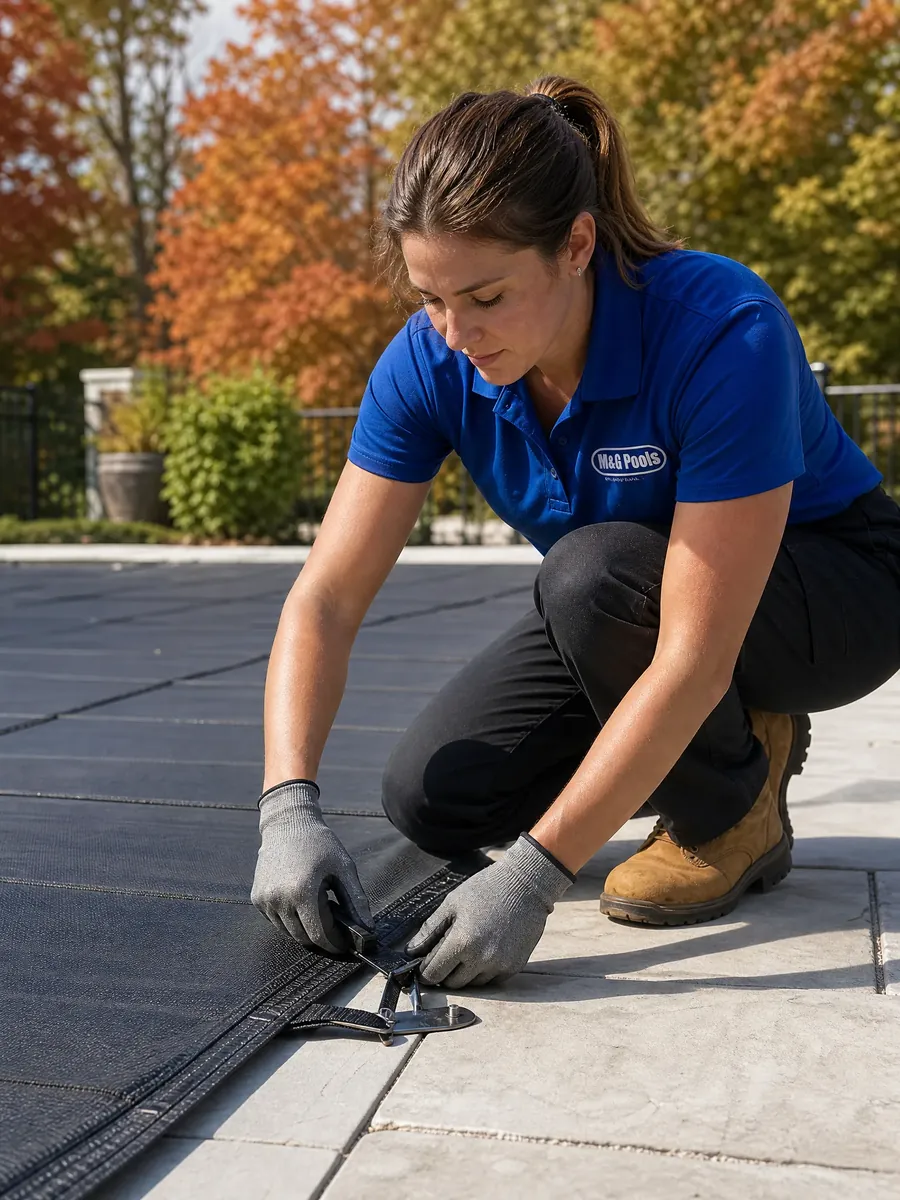
A safety cover strap being anchored into the pool deck
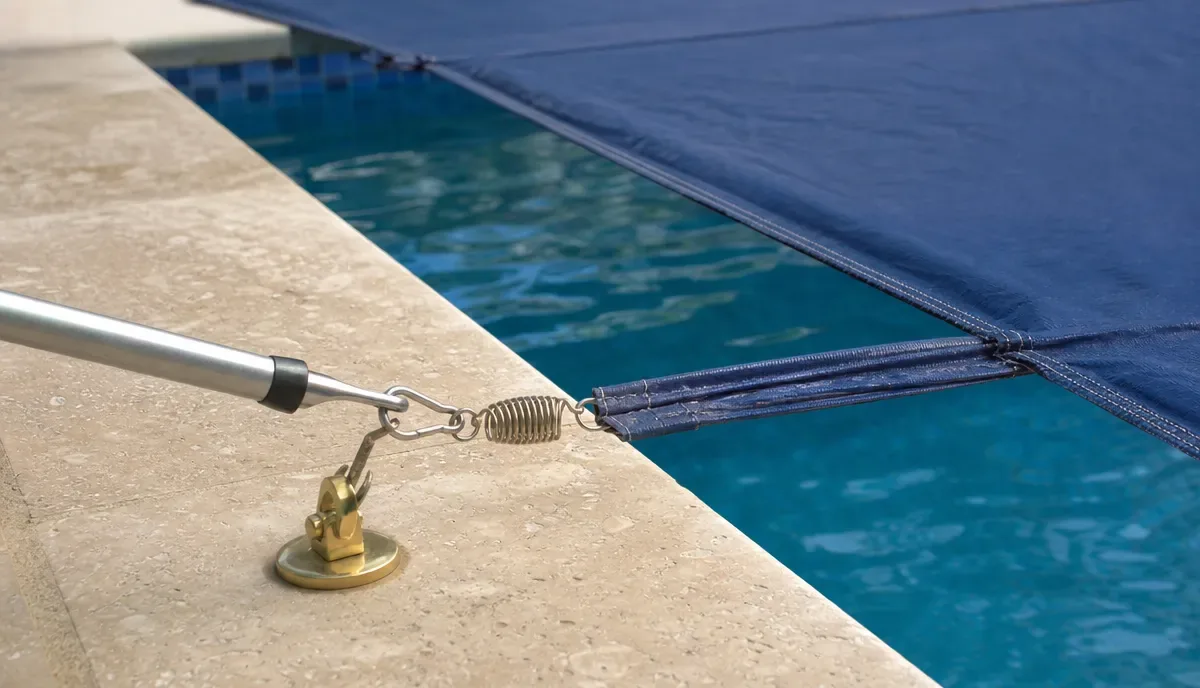
A cover spring hooked to a brass deck anchor at the edge of a pool
Since 2012 Family-ownedMerlin & GLI The only covers we fit

“After having different companies open and close our pools, and then having M & G Pools, I would never have anyone else! They are extremely professional, kind, efficient, and knowledgeable. They definitely go out of their way to help their customers.”

Valerie Huntington CliffordGoogle review
4.4Average across 107 Google reviewsRead them on Google
Two Pages Under This One

Covers, by What You Need Doing

A new cover measured and fitted, or a repair to the straps, springs, grommets and anchors on the one you have.

Measured on Site

Want a Cover Measured for Next Season?

Tell us about your pool and deck and we will come and measure it.

Out of Season

Off-Season Measuring and Installation

Cover work does not have to happen in autumn, and there is a good argument for it not to.

We measure and install safety covers outside the peak season, and safety cover work travels further for us than a weekly service call does — particularly out of season, when the schedule is not full of openings and closings. If you know you want a cover for next winter, a spring or summer measure means the cover is fabricated and sitting ready rather than being ordered in the last week of September along with everyone else’s.

A brass cover anchor being set into a concrete pool deck

Brass anchors, set flush, so the deck is walkable all summer.

Order Matters

When the Cover Goes On

The cover is the last step of a closing, not a separate job, and the order matters more than people expect.

Before it goes on we lower the water to the winterizing level, blow out the plumbing lines with air so no standing water is left in them, plug the returns, and treat the lines with antifreeze where the run needs it. Only then does the cover go on. Water left in a line through a Northeast Ohio winter is how a freeze-crack happens — a split pump housing or heat exchanger — and a cover does nothing to prevent that. The cover keeps the pool clean and safe; the winterize step is what protects the equipment.

A safety cover anchored and tensioned around a pool perimeter

The cover goes on last — after the water is down and the lines are blown out.

Which is worth saying plainly: a safety cover is not winterizing. If someone puts a cover on a pool whose lines have not been blown out, the pool looks closed and the equipment is still at risk. We do both together as part of a pool closing.

Not Worn Out Yet

Repairing an Existing Cover

A cover that is not worn out does not need replacing. Straps stretch, springs weaken, an anchor works loose, a seam opens, a grommet tears out. Most of those are repairs.

We repair and replace existing safety covers as well as fitting new ones — including covers we did not install. If the panel material is sound and the damage is at the fixings or a seam, repair is usually the right call. If the material has gone brittle or is tearing away from the bindings, it is done, and we will say so.

Repair or Replace

  • Service call — diagnosis or repair, first hour on site$150
  • New custom cover, measured and fittedQuoted
  • Strap, spring, anchor or grommet repairQuoted
Custom Only

One Thing We Do Not Do

We install custom covers only. We do not sell or fit stock, standard-size or off-the-shelf covers. If you are pricing a standard-size cover from a retailer, that is a different product at a different price, and we are not the right people for it.

Seventeen Towns

Where We Fit Covers

Cover work travels further than routine service, especially off-season. If your town is not on that list, ask — see service areas for the full picture.

Straight Answers

Frequently Asked Questions

What is the difference between a safety cover and a winter cover?

A safety cover is anchored into the deck under tension and built to hold a static load without letting a child or pet through — the standard for that is ASTM F1346, and compliant covers are labelled. A winter cover is a tarp held down by water bags or a cable; it keeps debris out but is not a barrier and will not hold weight.

Should I get mesh or solid?

Mesh drains meltwater through, so there is nothing to pump off during winter, but it passes some light and fine sediment and your water starts spring slightly dirtier. Solid blocks water and light for a cleaner opening but needs a cover pump monitored through the winter. Heavy leaf fall usually points to solid, because mesh passes the tannins that stain a liner.

Do you fit stock or standard-size covers?

No. We install custom covers only, measured to your pool and its surround. A stock cover is a different product, and the gaps it leaves at steps and curves are exactly what a safety cover exists to eliminate.

Which manufacturers do you install?

Merlin and GLI. We fit both mesh and solid covers from each, and we will tell you which we would put on your pool and why.

Can you repair my existing cover instead of replacing it?

Usually, yes — including covers we did not install. Stretched straps, weak springs, a loose anchor, an open seam or a torn grommet are all repairs. If the panel material has gone brittle or is tearing away from the bindings, it needs replacing and we will tell you that. A service call is $150 and covers up to the first hour.

Can a cover be fitted if my pool does not have a full deck around it?

Yes. A pool bordered by lawn, a retaining wall or a raised bond beam on one or more sides is a normal case — that side takes either a stanchion anchor set in a concrete collar or a different anchor layout. We work it out when we measure.

When should I order a cover?

Earlier than most people do. If you want a cover for next winter, a spring or summer measure means it is fabricated and ready rather than ordered in late September with everyone else’s. We measure and install outside the peak season, and cover work travels further for us out of season.

Twinsburg and the East Suburbs

Custom Safety Covers, Measured and Fitted Across Twinsburg and the East Suburbs.

Tell us about your pool and deck and we will come and measure it.

Request a Quote Call Us
M & G Pools
Services
Service Areas
Resources
AboutWhy Choose UsContact