
Sized against your actual pool, sited and vented properly, with the gas or electrical supply checked before anything is ordered. Serving Twinsburg, Solon, Hudson and the Route 91 corridor.
Start here, because it is the item that most often turns a straightforward heater purchase into a larger job — and it is almost never mentioned until someone is standing at the meter.
Given its size, its length and everything else already drawing on it.
Sometimes the fix is upstream of the house entirely, which involves the gas utility.
Distance and diameter both matter, and a long run to a far equipment pad needs more pipe than people expect.
A pool heater is a large gas appliance. Adding one to a house whose gas line was sized for a furnace, a water heater and a range can exceed what that line and meter can deliver. The heater will then either fail to fire reliably, or run starved — which is both inefficient and hard on the unit.
So the supply gets checked before anything is ordered. What we establish:
Propane changes the arithmetic. A propane install brings tank sizing and refill logistics into it — a heater can empty a small tank surprisingly fast in the shoulder seasons, which is exactly when you want it.
Why we lead with this: a heater quote that ignores the gas supply is not a quote, it is an estimate for part of the job. We would rather tell you at the survey than after the unit arrives.
Heat pumps have the same issue in electrical form — they need adequate service and a dedicated circuit, and an older panel may not have room. That gets checked the same way.
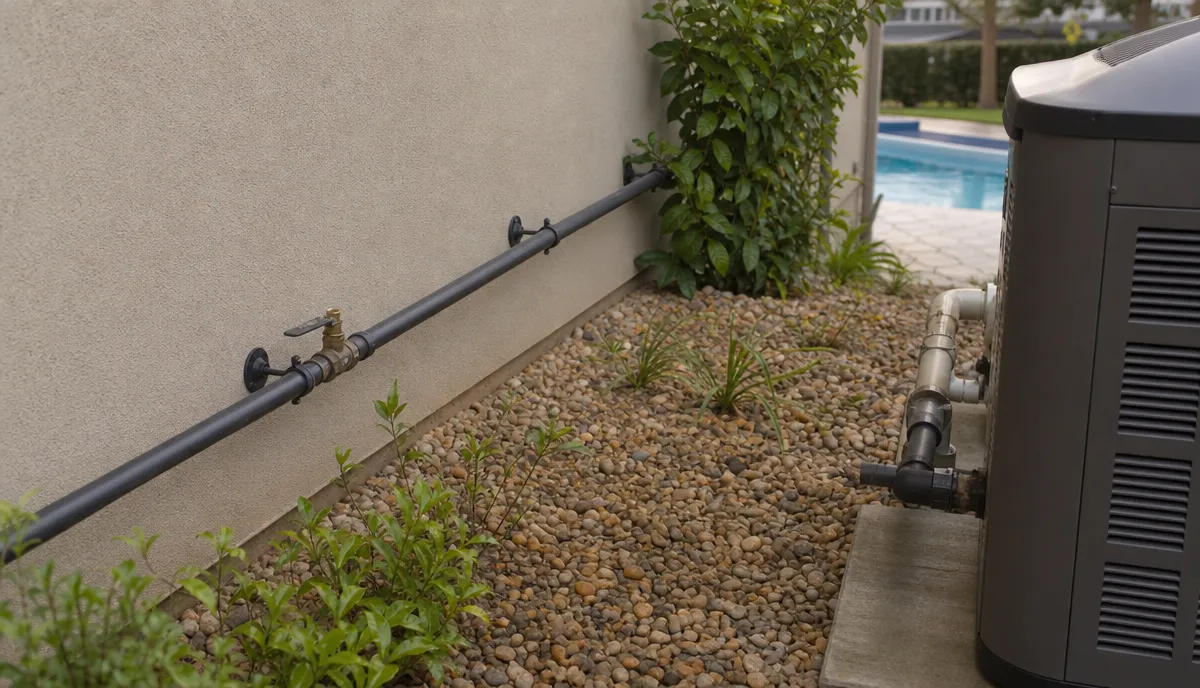
A gas supply line running to pool equipment
A heater is BTU-rated for a volume of water and a temperature rise. Get it wrong in either direction and the heater is a problem rather than a solution.
Undersized runs continuously and never quite satisfies. Oversized short-cycles, which is hard on the unit and wastes fuel.
What actually goes into the calculation:
Water volume — surface area and average depth.
Surface area specifically, because that is where the heat goes. A wide shallow pool loses far more than a narrow deep one of the same volume.
Wind exposure. An open, exposed yard needs materially more heater than a sheltered one.
Whether the pool is covered, and how consistently. This is the largest single variable, because most heat loss is from the water surface. A pool that gets covered overnight needs a smaller heater than the same pool left open — see safety covers.
How many degrees of rise you want, and how fast. Holding a temperature is a different requirement from heating up from cold in a day.
Which months you want. April and October are a different demand from July.
We are deliberately not publishing a sizing rule or a table, because a number written on a page gets applied to the wrong pool. We work it out against yours.

The full comparison is on the pool heaters hub, and it matters more here than in most of the country.
In brief: a heat pump moves heat out of the outside air, so its output falls as the air cools and effectively floors out in cold weather — which here is April and October, the exact months most people buy a heater for. Gas heats regardless of air temperature.
So: gas if you want the shoulder seasons. Heat pump if you want low running cost through the months that are already warm. Some pools run both.
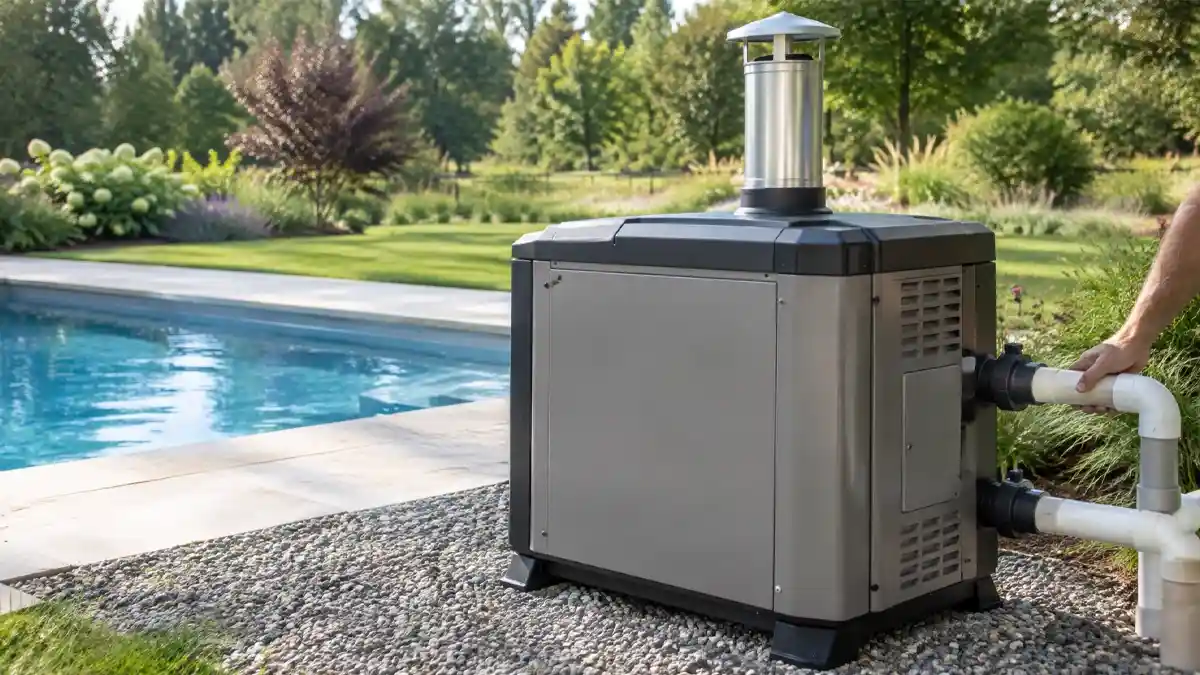
A pool heater sited with clearance around it
Where the unit goes is a decision, not an afterthought.
Clearances. A gas heater needs specified clearance from structures, walls, openings and combustible material, and adequate combustion air — a burner needs oxygen to ignite and burn cleanly. A heater tucked into a fenced corner for tidiness can end up unable to breathe, which shows up as ignition faults nobody connects to the fence.
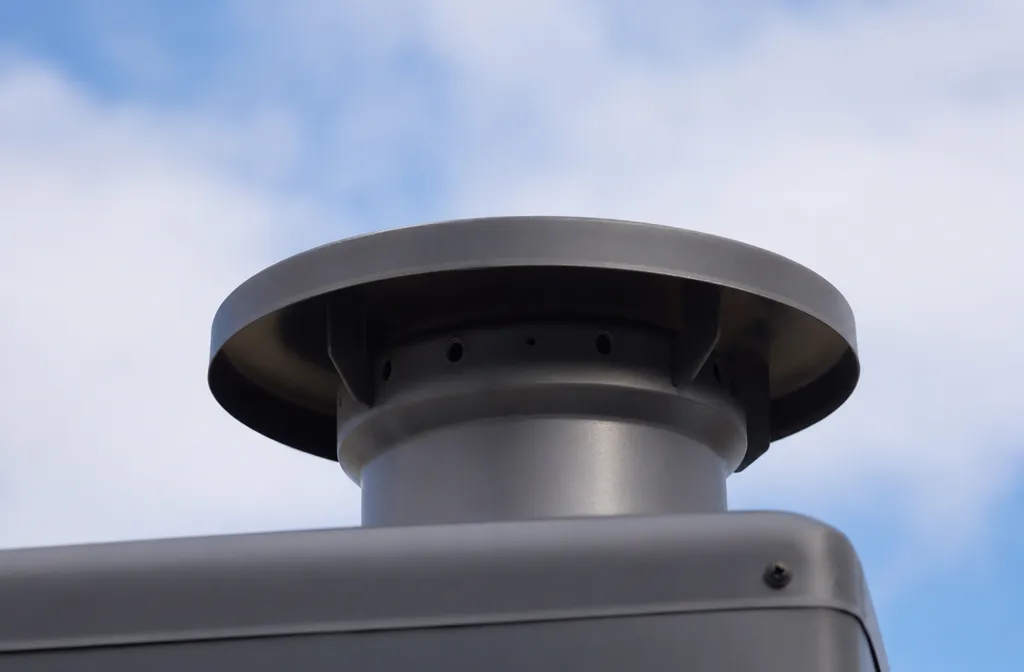
Venting. Exhaust has to go somewhere sensible and away from windows, doors and seating. A poorly sited flue produces the complaints people blame on the heater.
Return temperature and condensation. A gas heater run at too low a return temperature will condense flue gas inside its own cabinet and corrode from the inside. Plumbing order and operation both affect that, so it is designed in rather than discovered later.
Heat pumps need airflow, and a lot of it. One boxed in by fencing or shrubbery recirculates its own cold exhaust air and loses output — the commonest siting mistake we see on heat pumps.
Freeze considerations. A heater on the pad is going to be winterized every autumn, so it needs to be reachable and drainable. A unit installed where the drain is awkward gets skipped, and a skipped drain is a split exchanger.
The requirement is local, and this region is a patchwork — our service area spans five county health districts and seventeen municipalities, and what is required in one town is not automatically what is required in the next.
So rather than publish rules that would be wrong somewhere: we establish what your address requires as part of the survey, and gas and electrical work is carried out to code. If a permit is needed, that is part of the job rather than a surprise.
Commercial installations are a separate matter again, with the local health district involved — see commercial pool maintenance.
“M&G has serviced our in ground pool for the past 10+ years. Seasonal opening & closing, replacing heaters, pumps and a number of aggravating repairs that Matt & his crew have handled correctly at a fair price. Recommend highly.”
The survey establishes what your gas or electrical supply can actually carry — before anything is ordered.
A heater that is installed is not a heater that is working properly.
Flow has to be right. Every heater has a minimum flow its flow-switch will accept. If your pool has a variable speed pump, the speed assigned to the heating cycle has to clear that threshold — and this is the single most common post-installation complaint in pool service. See variable speed pool pumps.
Automation has to know about it. If there is a controller, the heater comes under it properly rather than being wired around it — schedules, set-point, and the sensor reading the water rather than its own location. See pool automation.
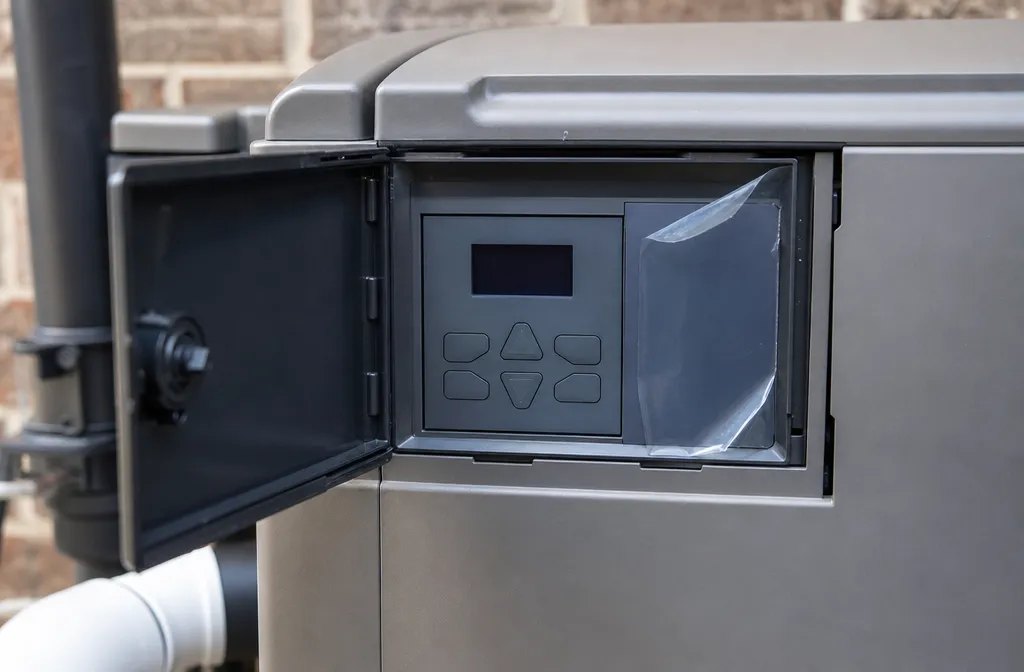
And it gets run. We fire it, watch it through a full cycle, check the vent, confirm it reaches set-point and shuts down cleanly, and show you how to operate it.
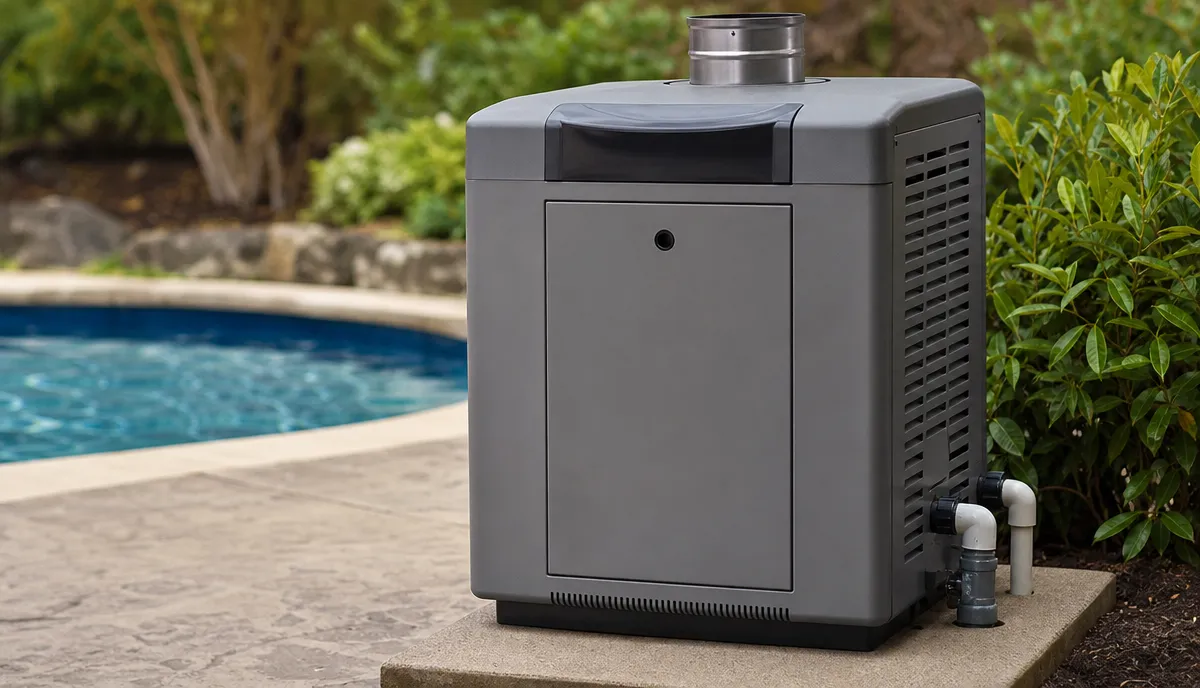
A gas-fired pool heater with its cabinet closed
Two things determine whether a new heater reaches its natural life, and neither is the heater.
Water chemistry. Scale and corrosion are what finish heat exchangers, and both come from chemistry rather than age. A heater on well-balanced water can outlive one twice as expensive on neglected water — which is what a regular chemical and equipment check is actually protecting.
A proper close. Water left in the exchanger over winter splits it, and that is a replacement rather than a repair — and not a warranty matter, because it follows from how the pool was closed. A heater that has quietly lost output usually needs a de-lime rather than a part.
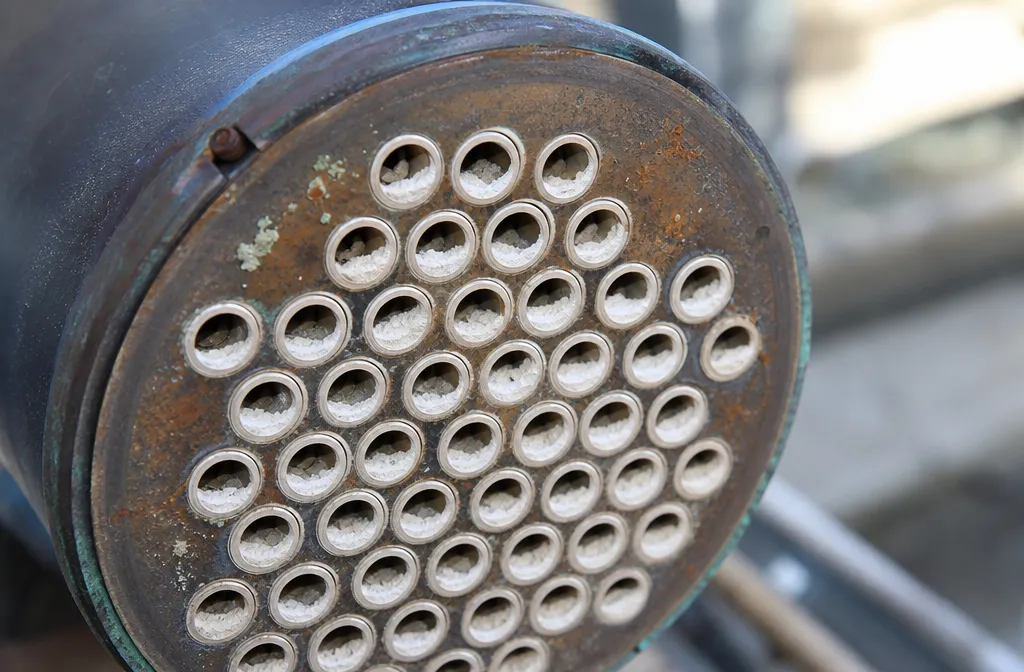
Scale narrowing the tubes of a heat exchanger
Hayward, Pentair, Raypak, Jandy, Sta-Rite, Fluidra and Zodiac, gas and heat pump. Raypak is predominantly gas, which is the right technology for this climate. The full list is on brands we service.
Products we install carry the full manufacturer's warranty, which varies by manufacturer and generally runs between one and three years. We do not offer a separate workmanship guarantee, and nothing on this page should be read as one.
Replacing an existing heater rather than adding a first one? See pool heater replacement. Something wrong with the one you have? See pool heater repair.
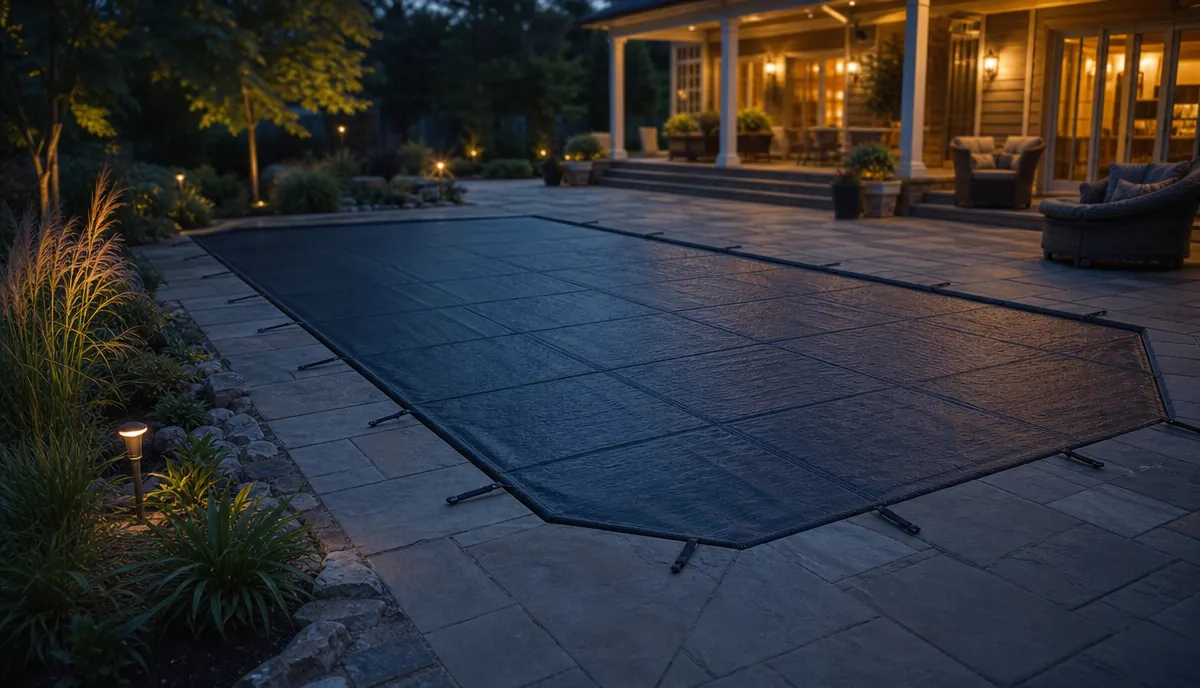
A covered pool holding its heat overnight
M & G Pools services in-ground pools exclusively. We do not service, repair or supply equipment for above-ground pools, and we do not service hot tubs or spas.
It depends on water volume, surface area, wind exposure, whether the pool is covered, how many degrees of rise you want and which months you want to swim. Surface area and cover use matter most, because that is where the heat goes. We will not publish a sizing rule here — a number on a page gets applied to the wrong pool — so we work it out against yours.
That is exactly what we check before anything is ordered, and it is the most common thing that turns a simple heater purchase into a bigger job. A pool heater is a large gas appliance, and a line sized for a furnace, water heater and range may not carry it — sometimes the limit is the meter rather than the pipe. Propane brings tank sizing into it too.
The requirement is local, and our service area covers five county health districts and seventeen municipalities, so what applies in one town is not automatically what applies next door. We establish what your address requires as part of the survey, and gas and electrical work is done to code — if a permit is needed it is part of the job rather than a surprise.
Somewhere with the required clearances from structures and openings, adequate combustion air, sensible venting away from windows and seating, and easy access for winterizing. A heater tucked into a fenced corner for tidiness can end up unable to breathe. Heat pumps especially need airflow — boxed in by fencing they recirculate their own cold exhaust and lose output.
Gas if you want the shoulder seasons. A heat pump moves heat out of the outside air, so its output falls as the air cools and effectively floors out in April and October — the months most people buy a heater for. A heat pump is efficient and cheap to run through June to August. Some pools run both.