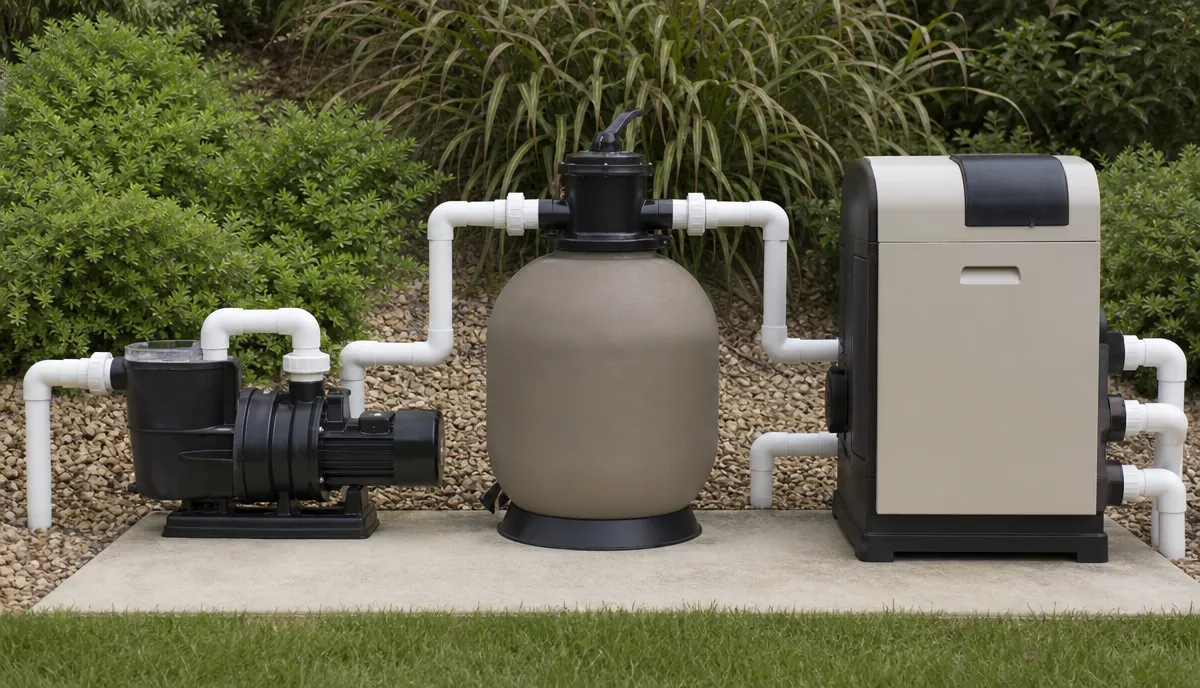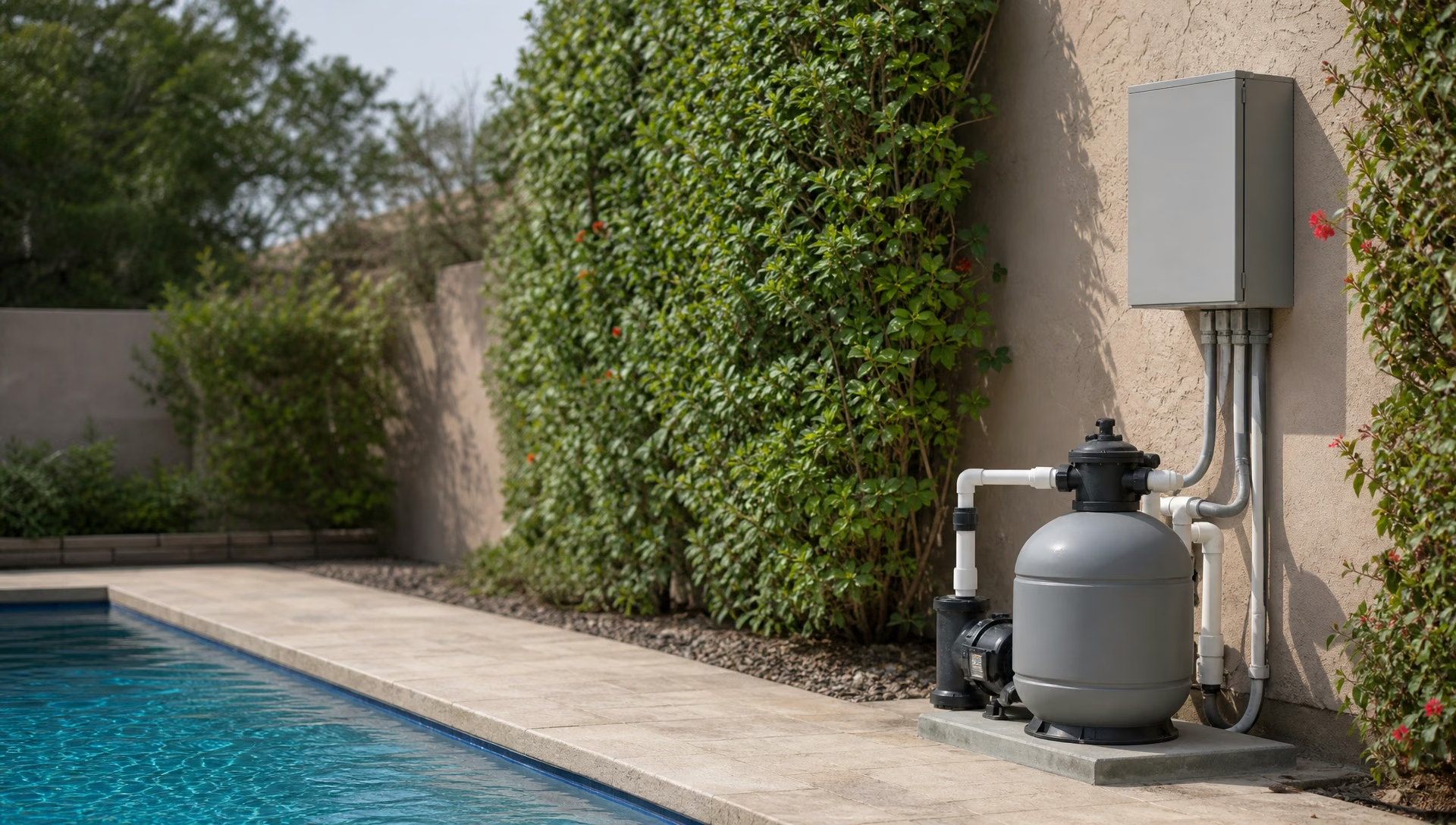

Automation added to pools built without it — actuators onto existing valves, one controller over the pump, heater and sanitiser. No replumbing. Serving Twinsburg, Solon, Hudson and the Route 91 corridor.
The question most people ask first, and the answer is usually no.
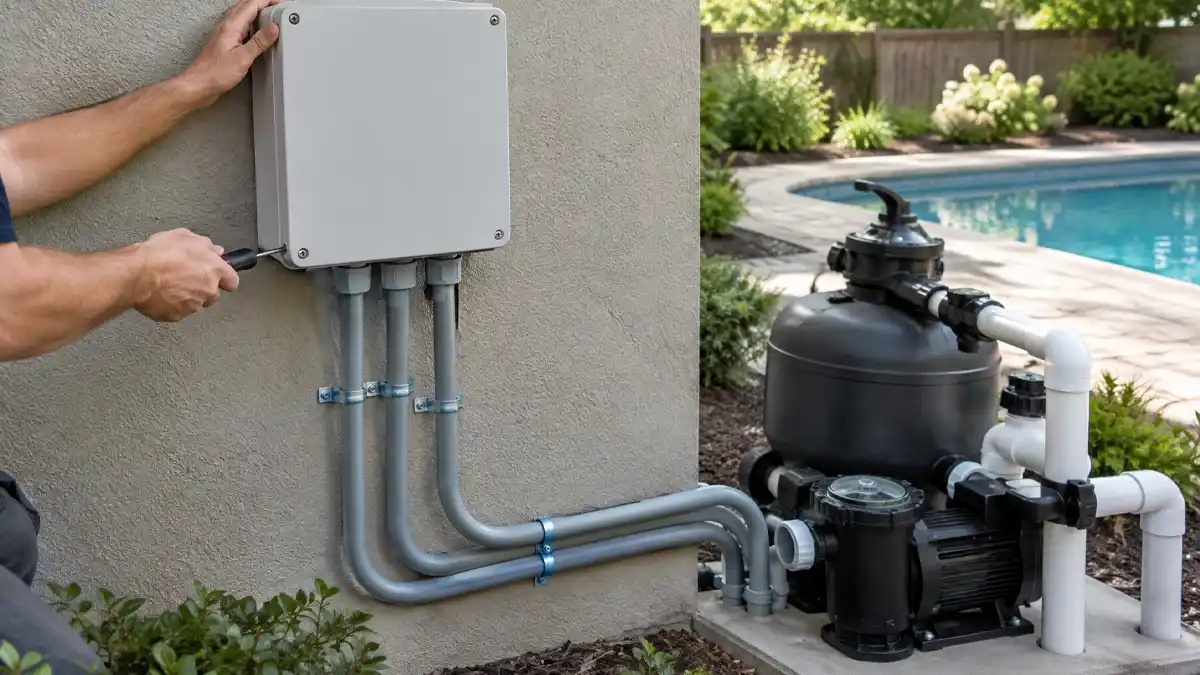
The valve bodies stay; a motorised actuator replaces the handle.
Usually in the same position on the wall or the pad.
Wired to the controller rather than each running independently.
Water temperature, air temperature for freeze protection, and flow where the system needs it.
Automation is added to plumbing that was built without it, and on most pads it is a straightforward retrofit:
What does sometimes need work: electrical supply. A controller and a variable speed pump need adequate service and appropriate circuits, and an older panel may not have room. That gets established before anything is ordered rather than discovered on the day.
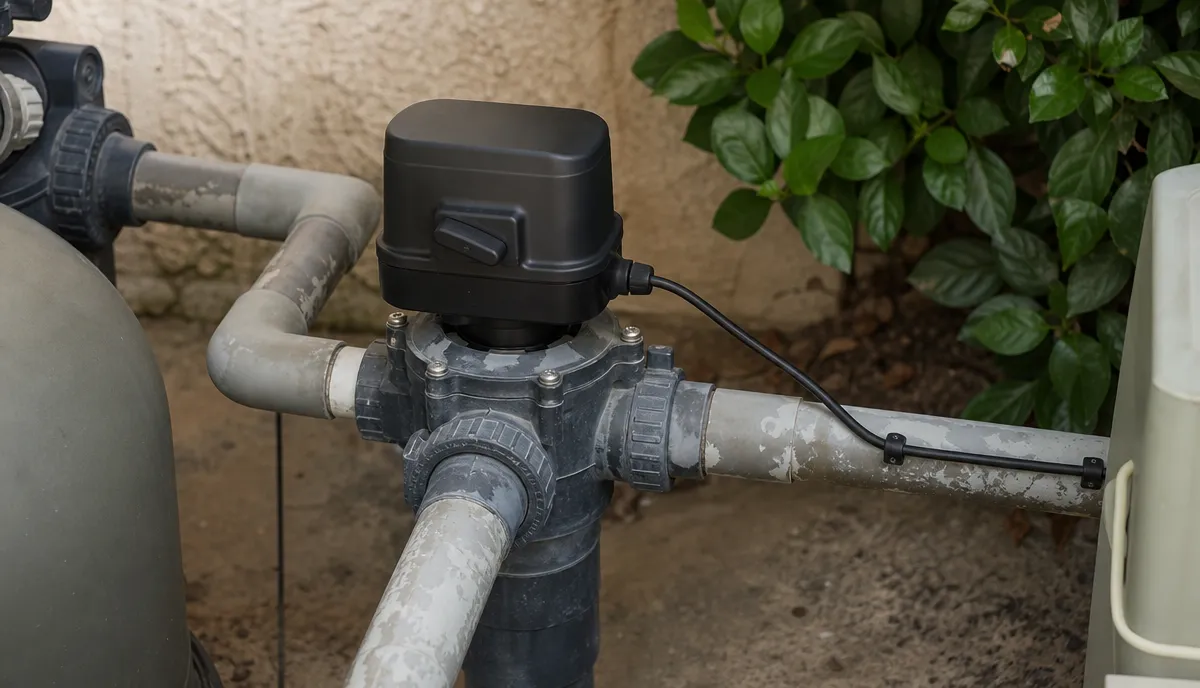
A valve actuator newly fitted to an existing pool valve
Three things, in the order they matter here.
Freeze protection. The one that matters most in Northeast Ohio, and the reason we would fit automation to a pool that stays open into the shoulder seasons even if the owner wanted nothing else. The controller starts circulation when air temperature falls below a set threshold, because moving water does not freeze the way standing water does — and the failure it prevents is a cracked underground line or a split exchanger. The full argument is on the pool automation hub.
Getting the benefit out of a variable speed pump. This is where the money is. A variable speed pump only saves what its speeds let it save, and without a controller you are running fixed schedules and changing speeds by hand — which is how most people end up leaving it on one speed and losing most of the advantage. See variable speed pool pumps.
Not walking out to the pad. Heater on before you leave work, lights on from the house, schedules that follow the season. Genuinely convenient, and the reason most people ask — but the two above are why it is worth the money.
We would rather say no than sell you a controller you do not need.
Worth it if you have a variable speed pump, a heater you turn on and off with the weather, a salt system, water features, or a pool that stays open into the shoulder seasons. The more devices there are to coordinate, the more there is for a controller to do.
Not obviously worth it if you have a single pump, no heater, and you close early. A good timer does most of that, and we will tell you so.
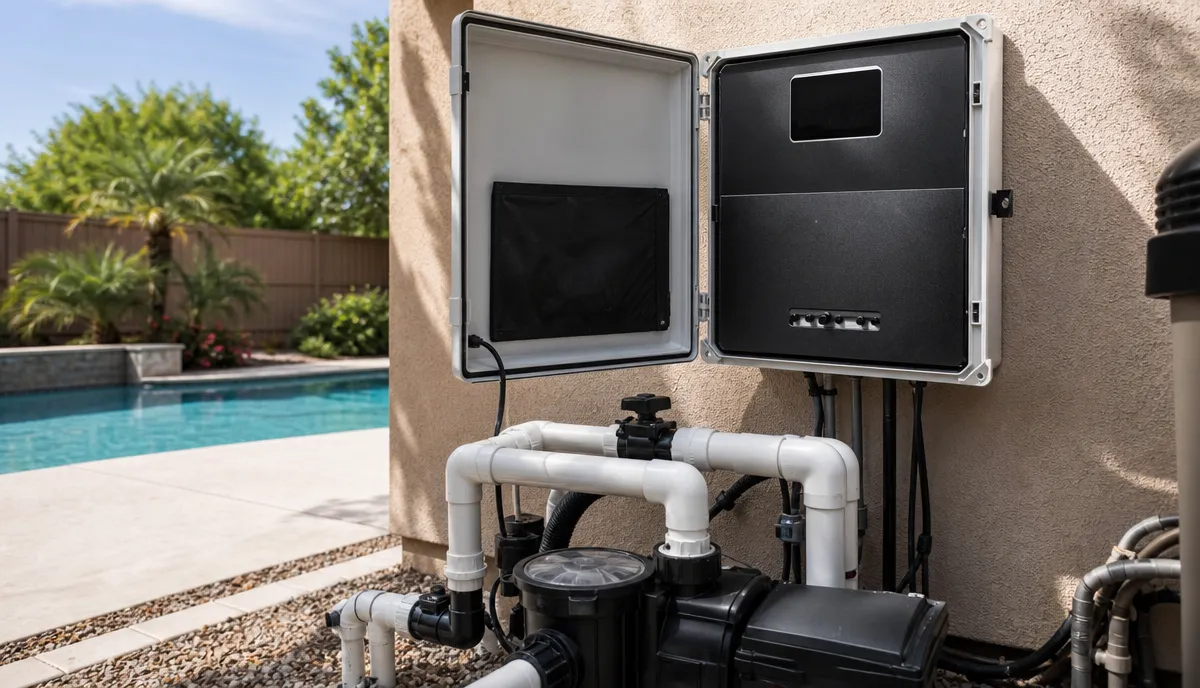
A newly installed pool automation panel
Fitting the hardware is the easy part. What decides whether you are happy is the setup.
Speeds per task. Filtration low enough to save energy and high enough to turn the water over; heating high enough that the heater's flow-switch is satisfied and it will fire; backwash at full flow so it actually lifts the debris out; prime high enough that the pump draws water rather than air.
Sanitiser flow. A salt cell needs flow to register and produce — set the sanitising cycle too slow and it reports no flow and stops, which shows up a week later as a green pool.
Sensor placement. A temperature sensor in afternoon sun or against a warm wall reads something that is not the pool, and the freeze protection you are relying on will not trip when it should.
Then we run it through each cycle, confirm every device responds, and show you how to use it.
Every one of those is a settings problem that would otherwise present as a fault in a different component — which is the single biggest source of automation complaints. See pool automation repair and upgrades.
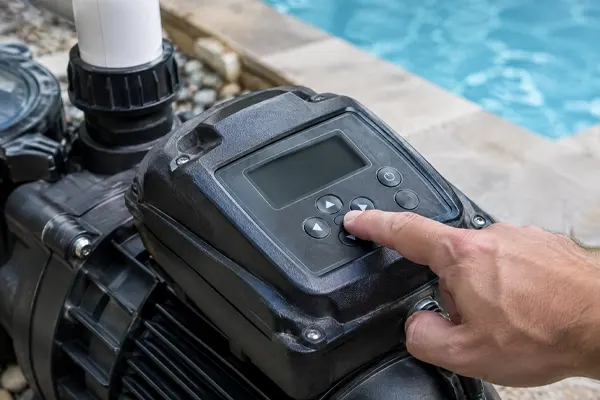
Pentair, Hayward and Jandy, including IntelliCenter, OmniLogic and iAquaLink systems. Commercial chemical control — BECS, Stenner, Blue-White, Chemtrol — is a separate discipline and we work on that too. Full list on brands we service.
Products we install carry the full manufacturer's warranty, which varies by manufacturer and generally runs between one and three years. We do not offer a separate workmanship guarantee, and nothing on this page should be read as one.
“The crew is super knowledgeable and courteous.”
Tell us what equipment you have and we will tell you straight — including if a timer would do.
M & G Pools services in-ground pools exclusively. We do not service, repair or supply equipment for above-ground pools, and we do not service hot tubs or spas.
Also useful: pool equipment repair for everything else on the pad, and pool openings and closings — because freeze protection covers the pool while it is open, and winterizing covers it once it is shut. You want both.
Yes, and that is most of what we do. Valve actuators go onto your existing valves, the controller replaces the old timer and relay setup, and the pump, heater and sanitiser come under one system. The plumbing does not normally need rebuilding — what sometimes needs work is the electrical supply, which we check before anything is ordered.
Often not. A single pump, no heater and an early close is a job a good timer does. Automation earns its cost when there are several devices to coordinate — a variable speed pump especially, since a controller is how you actually realise its savings — or when the pool stays open into the shoulder seasons and you want freeze protection.
Freeze protection. The controller starts circulation when air temperature falls below a set threshold, and moving water does not freeze the way standing water does — so it protects the plumbing on any night the pool is still open and the temperature drops unexpectedly. The failure it prevents is a cracked underground line or a split heat exchanger.
Because almost every automation complaint is a settings problem presenting as a fault somewhere else. A heating cycle at too low a pump speed stops the heater firing; a sanitising cycle too slow makes a salt cell report no flow; a backwash at filtration speed does not lift the debris. Getting the speeds right per task is the job.
It is quoted, because it depends entirely on what is already on your pad, how many valves need actuators, what electrical work is required and what you want the system to do. A $150 service call covers diagnosis where something existing needs looking at first.