

Measured on site, fabricated to your pool, and anchored into your deck so it carries load properly. Merlin and GLI, custom only. Serving Twinsburg, Solon, Hudson and the Route 91 corridor.
Four stages, and the first two happen weeks before anyone arrives with a cover.
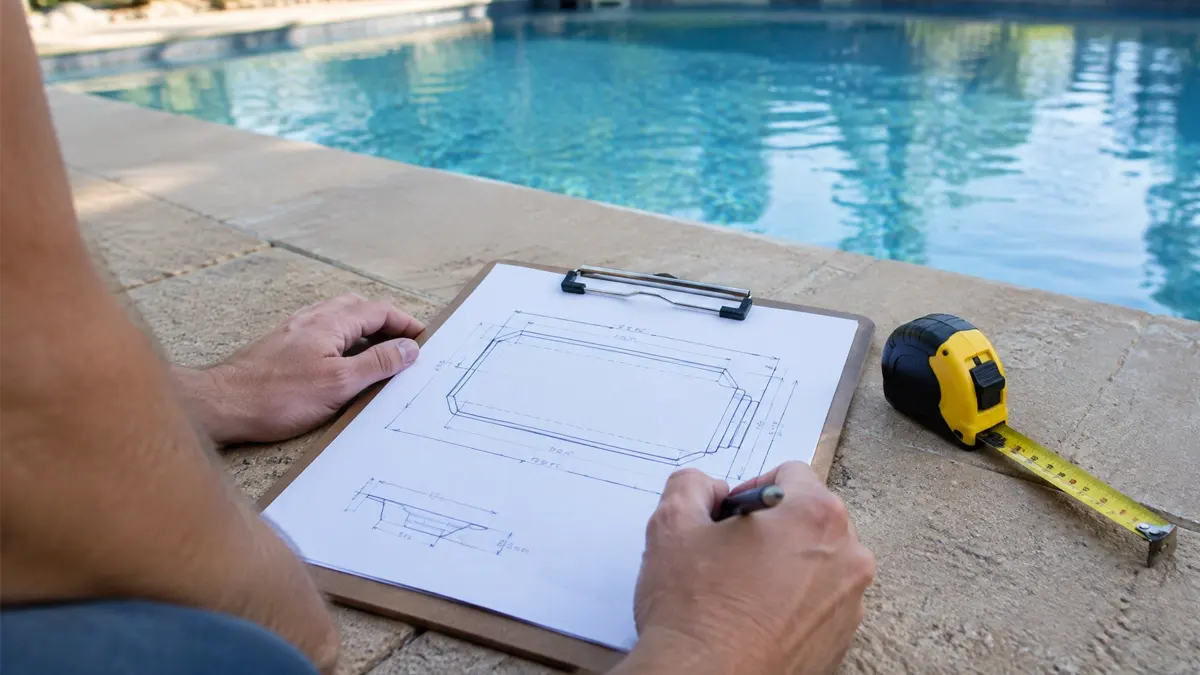
We come out and measure the pool and its surround — not the nominal size, the actual shape. Steps, a diving board, a raised wall, any attached water feature, benches, and how much deck sits on each side. A freeform pool is measured to a template so the curve is reproduced rather than approximated. This visit is short but it is the one everything else depends on.
The measurements go to Merlin or GLI, who fabricate the cover to them — panels seamed to your shape, strap positions set for your anchor layout, and grommets and D-rings placed where the load will actually sit. This takes time, which is why ordering early matters.
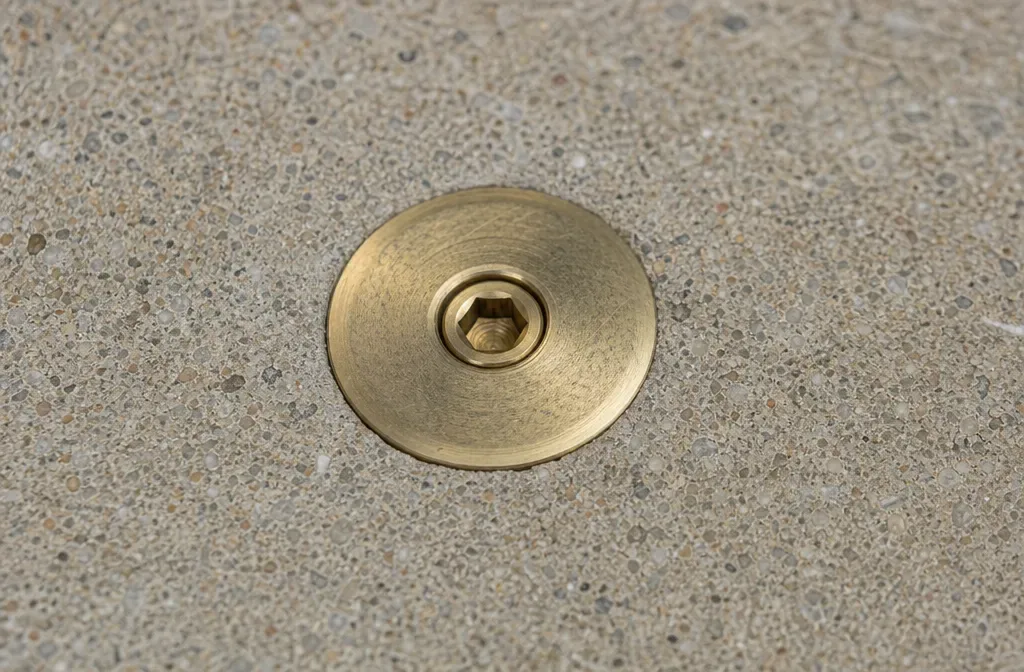
We drill the anchors into the deck on the perimeter the measurements specified, then tamp each one flush so it sits below the walking surface. You will not stub a toe on a properly set anchor, and the brass caps screw down level with the deck when the cover is off.
We strap the cover to the anchors, spring-load each strap, and tension them evenly so load spreads across the whole cover rather than pulling at a handful of points. Then we walk it, check the perimeter gap, and adjust.
How long the day takes depends on the pool’s size and shape and on the deck material. A rectangular pool on a straightforward concrete deck is quick; a freeform pool with a raised wall and pavers on two sides is not.
This is the part worth knowing before you get a quote, because it is the biggest variable in an install.
Takes a standard brass anchor set into a drilled hole and tamped flush. The straightforward case.
Need the anchor set into the base beneath rather than into a single unit — a paver on its own will lift under tension. This takes longer and it is not optional.
Takes a different anchor entirely, fixed through to structure rather than into surface boards.
A pool bordered by lawn, a retaining wall or a raised bond beam needs either a stanchion anchor set in a concrete collar, or a revised anchor layout that pulls to the sides that do have deck. This is a normal situation, not a problem, and plenty of pools around here have it.
We work all of this out at the measure, so the quote reflects your actual deck rather than an assumption. If someone quotes a cover install without having looked at your surround, they are guessing at this.
Concrete, pavers and stone each take a different anchor. Which one you have is settled at the measure.
Both are safety covers when built to the standard, and the choice is about your yard rather than about which is better.
In short: mesh drains meltwater through so nothing needs pumping over winter, but passes some light and fine sediment. Solid blocks both for a cleaner spring, but needs a cover pump monitored through the winter. Heavy leaf fall usually points to solid, because mesh passes the tannins that permanently stain a liner.
We fit both, from Merlin and GLI, and we will tell you which we would put on your pool.
We install custom covers exclusively. We do not sell or fit stock, standard-size or off-the-shelf covers. A stock cover bridges a step or leaves a gap at a curve, and a gap is precisely what a safety cover is there to eliminate. If you are pricing a standard-size cover from a retailer, that is a different product and we are not the right people for it.
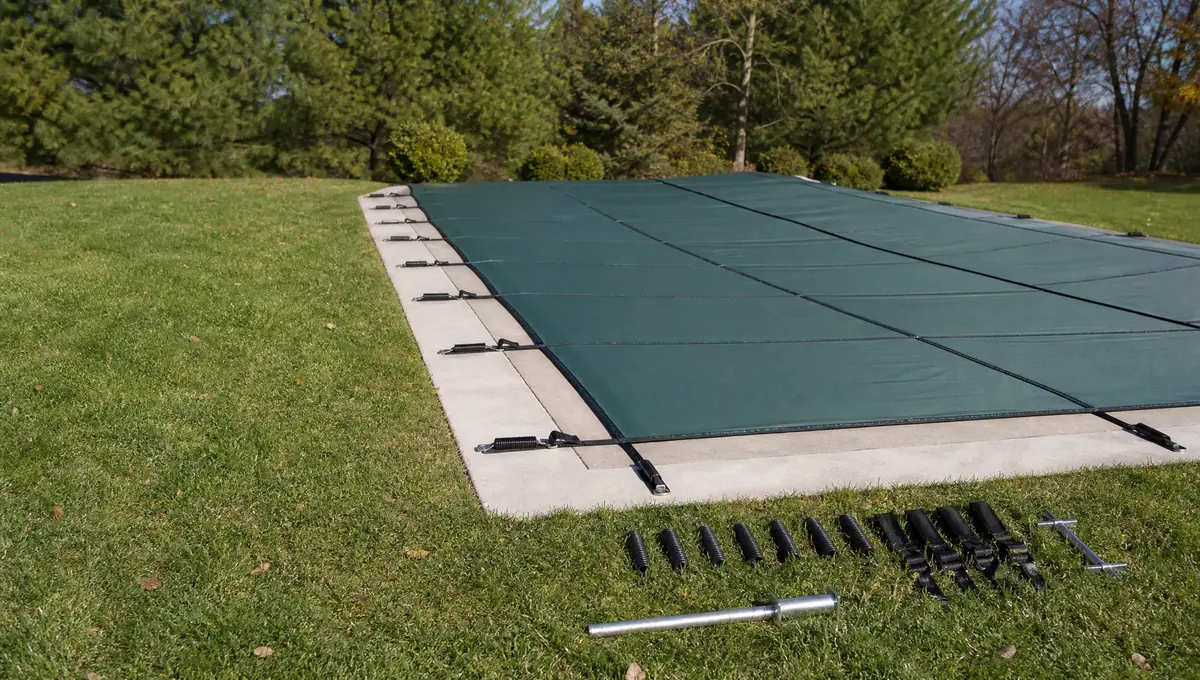
Every cover is cut for one pool. There is no stock size.
Earlier than most people do, and there is a real advantage to it.
Fabrication takes time. A cover measured in September is being fabricated alongside everyone else’s, in the same weeks we are closing pools. A cover measured in spring or summer is fabricated quietly and sits ready.
We measure and install outside the peak season, and cover work travels further for us out of season than routine service does. If you know you want a cover for next winter, the sensible time to deal with it is now rather than in the last week of September.
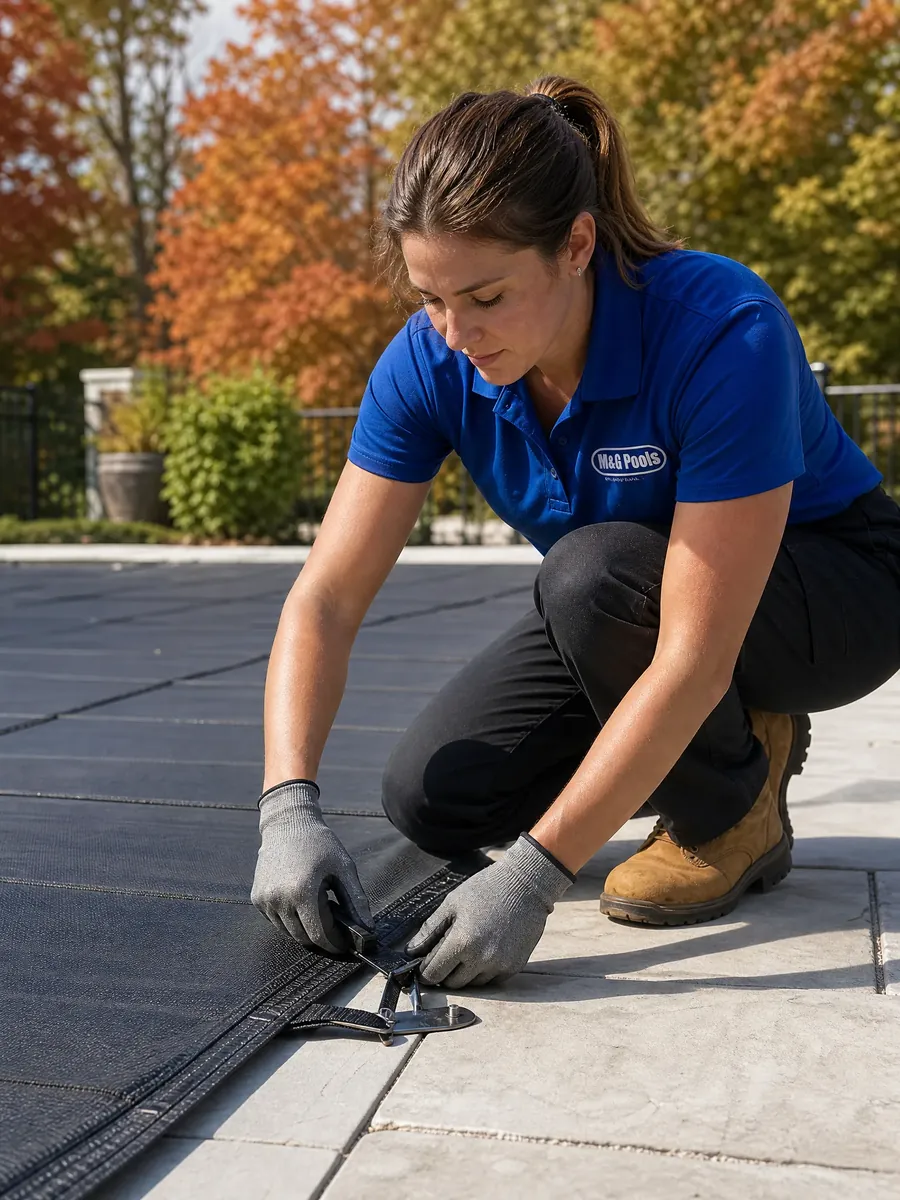
“The crew is super knowledgeable and courteous.”
Tell us about your pool and deck and we will come out and measure it.
Worth saying on an installation page, because it is a genuinely expensive misunderstanding.
Fitting a cover keeps debris out and makes the pool a barrier. It does nothing at all for the plumbing or the equipment. A pool with a new cover and water still standing in its lines will still split a pipe or an exchanger over winter.
The cover goes on as the last step of a proper close, after the water is lowered, the lines are blown out and the equipment is purged. We do both in the same visit — see pool closing service.
Closing chemistry is a separate visit from fitting the cover.
If yours is worn rather than finished, it may not need replacing. Stretched straps, weakened springs, a loose anchor, an open seam or a torn grommet are repairs — see safety cover repair and replacement, including covers we did not install.
Four stages. We measure your pool and its surround on site — actual shape, not nominal size, with a template for freeform pools. The measurements go to Merlin or GLI for fabrication. We then drill the anchors into your deck and tamp them flush, strap the cover on, spring-load and tension every strap evenly, and walk it to check the perimeter before adjusting.
They are set into it, and on concrete they sit flush below the walking surface with brass caps that screw down level when the cover is off. Pavers need the anchor set into the base beneath rather than a single unit, because a paver on its own lifts under tension. Wood takes a different anchor fixed through to structure. Which you have affects how the install is done, not whether it can be.
Yes — it is a common situation. A side bordered by lawn, a retaining wall or a raised bond beam takes either a stanchion anchor set in a concrete collar or a revised anchor layout. We establish that when we measure, so the quote reflects your actual surround.
No, custom only. A stock cover bridges steps and leaves gaps at curves, and a gap is exactly what a safety cover exists to eliminate. If you want a standard-size cover from a retailer, that is a different product and we are not the right people for it.
Earlier than most people do. Fabrication takes time, and a cover measured in September is being made alongside everyone else’s during our busiest weeks. Measured in spring or summer, it is fabricated quietly and sits ready — and cover work travels further for us out of season.
Tell us about your pool and deck and we will come out and measure it.
