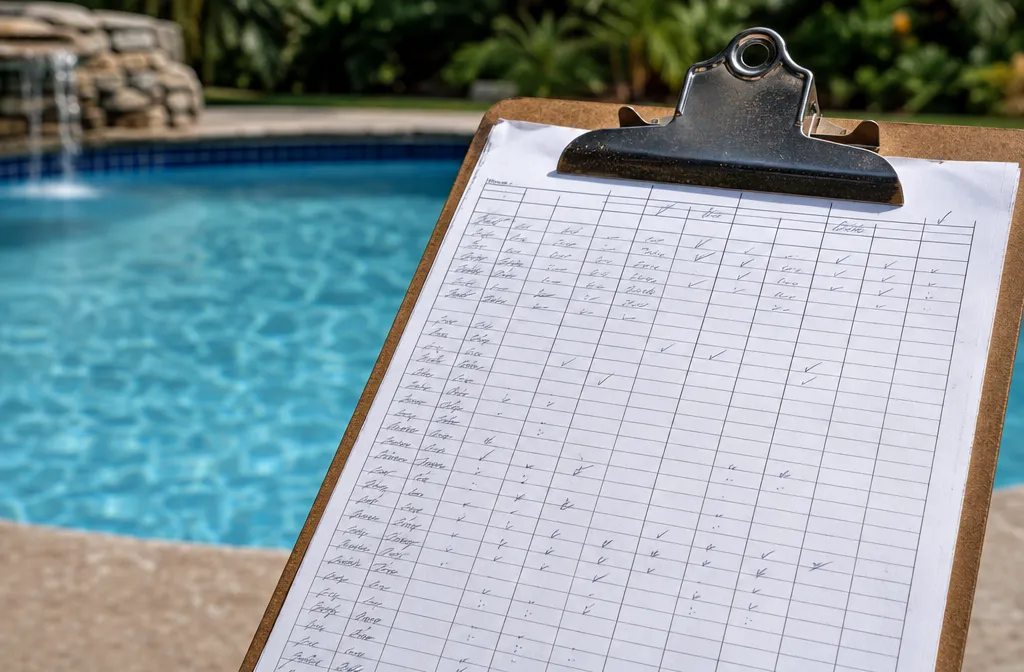
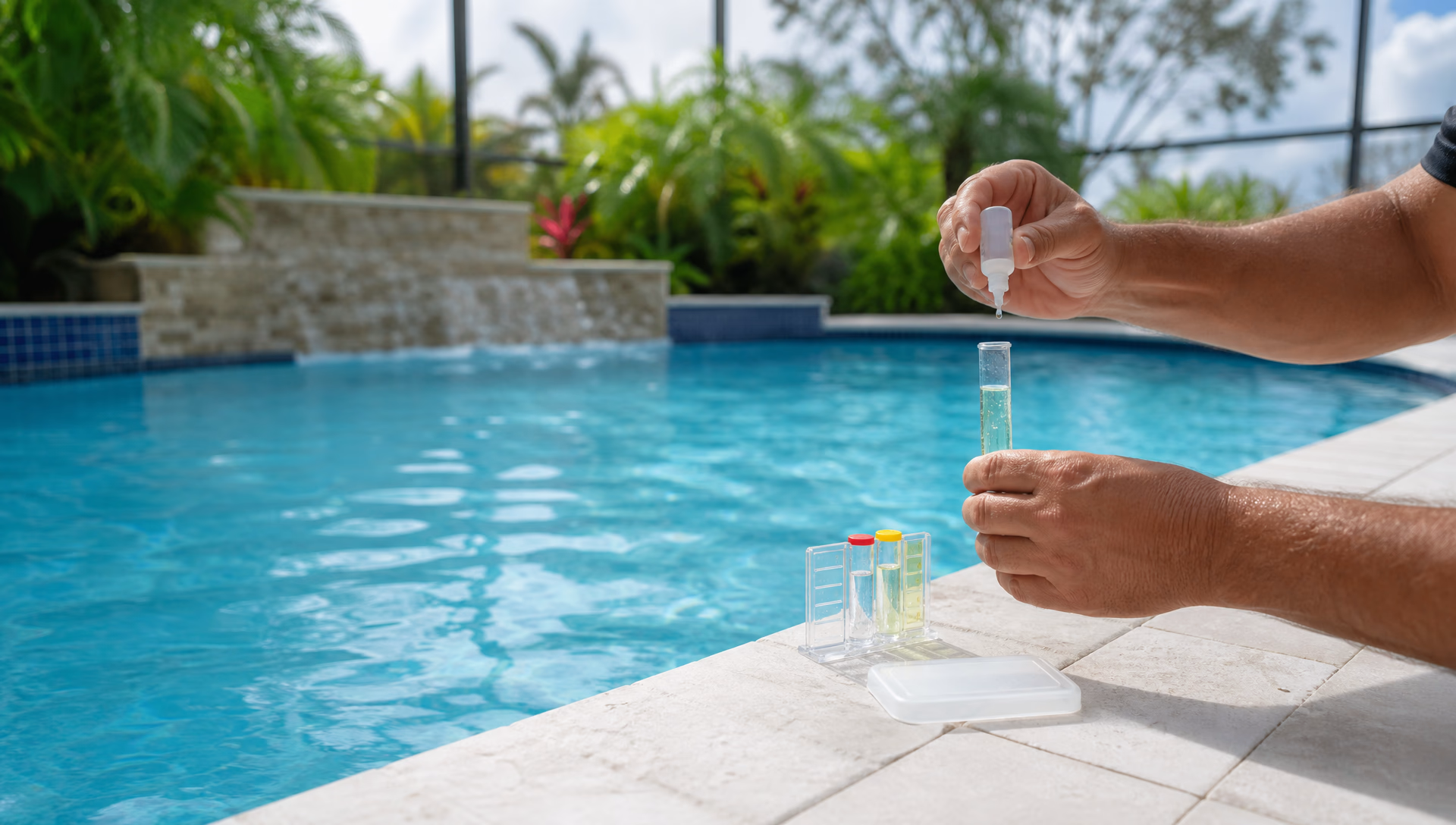
Check and balance the water chemistry. We test, then dose and balance to spec — chlorinate to the correct residual, or manage bromine levels on a pool that brominates.


Weekly and biweekly chemistry and equipment service for in-ground pools, from $72 per visit plus chemicals. Every visit documented. Serving Twinsburg, Solon, Hudson, Chagrin Falls and the Route 91 corridor.
Read this part first, because it will save you a call either way.
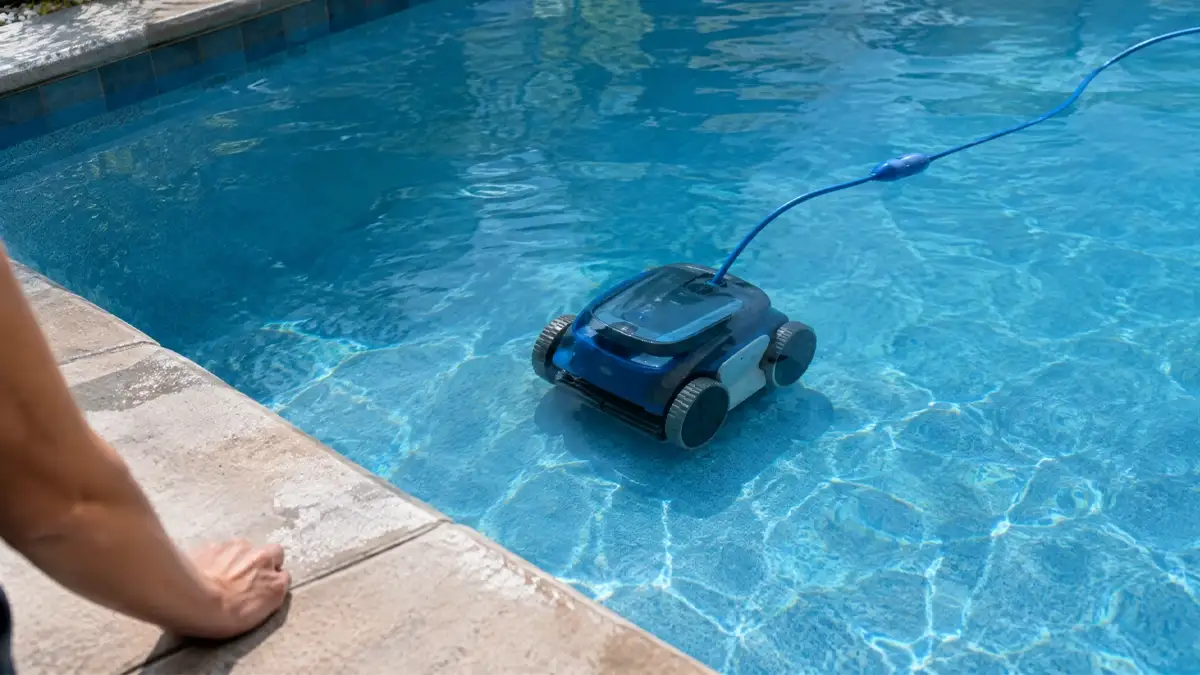
This is the common case, and it is the one the service is built around. The robot handles the floor and walls; we handle the chemistry, the equipment and the filtration. We empty and restart the cleaner while we are there.
Plenty of people are happy to run a brush round and empty a basket, and have no interest in learning to titrate water chemistry or diagnose a pump.
We work alongside that without friction.
This is a chemistry and equipment service. We look after the water and the machinery. We do not vacuum, brush or skim pools as a weekly service — that is a different job, and we do not do it.
Which means this service fits a specific kind of pool:
Who it does not fit: if you want one company to arrive weekly and leave the pool swept, netted and balanced, we are not that company, and we would rather tell you now than three visits in. Most pool companies offer that. We chose to be good at the other half.
The reason for the choice is simple enough. Chemistry and equipment are where the expensive failures come from, and they are the part that needs a technician rather than a routine. A robot vacuums a floor better and cheaper than a person on a schedule can.
Every visit, whether weekly or biweekly:
Check and balance the water chemistry. We test, then dose and balance to spec — chlorinate to the correct residual, or manage bromine levels on a pool that brominates.
Empty the baskets. As needed — skimmer and pump.
Empty and restart the robotic cleaner. As needed.
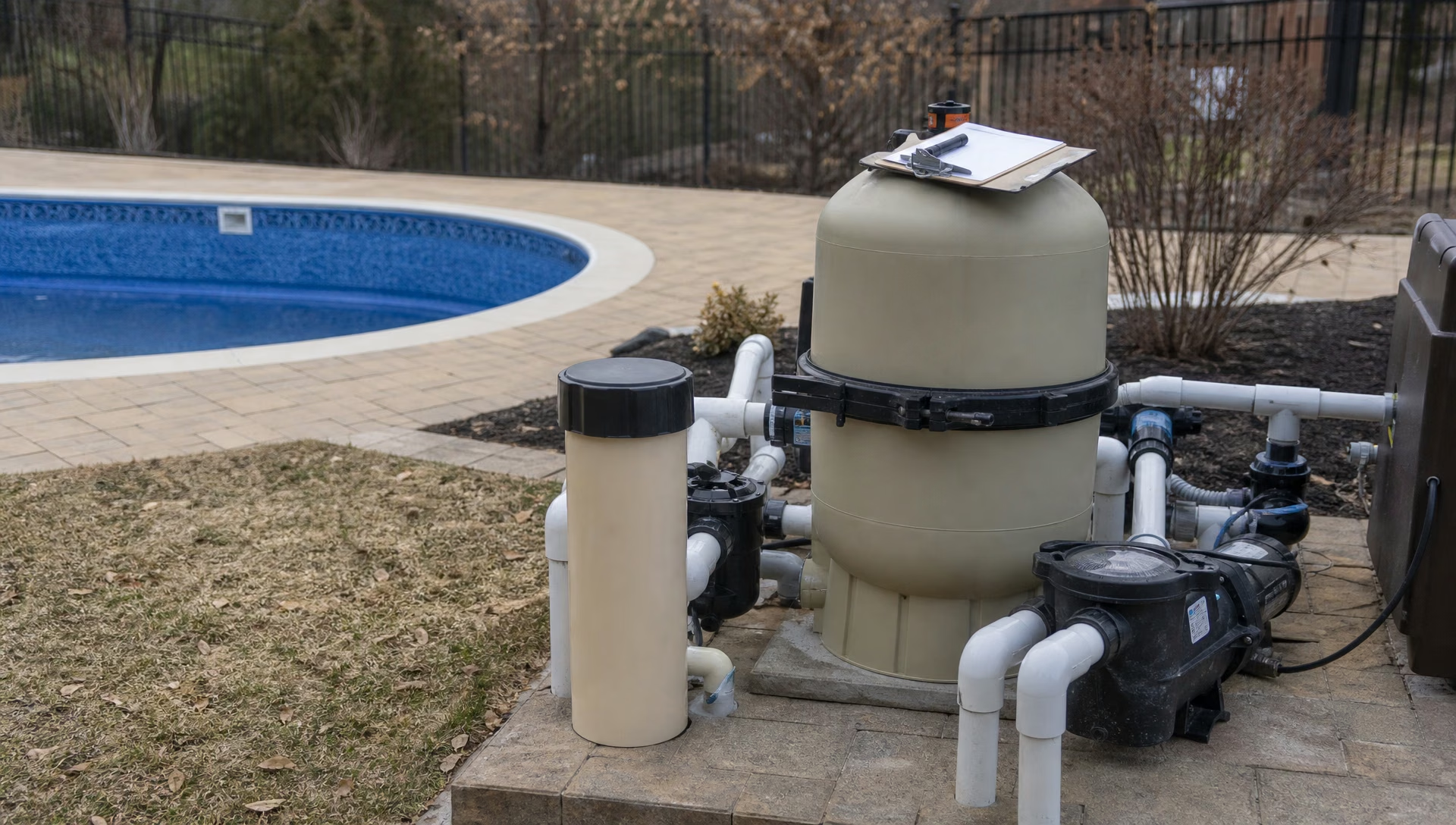
Backwash. The filter as needed — reversing the flow to flush trapped debris out of the medium.
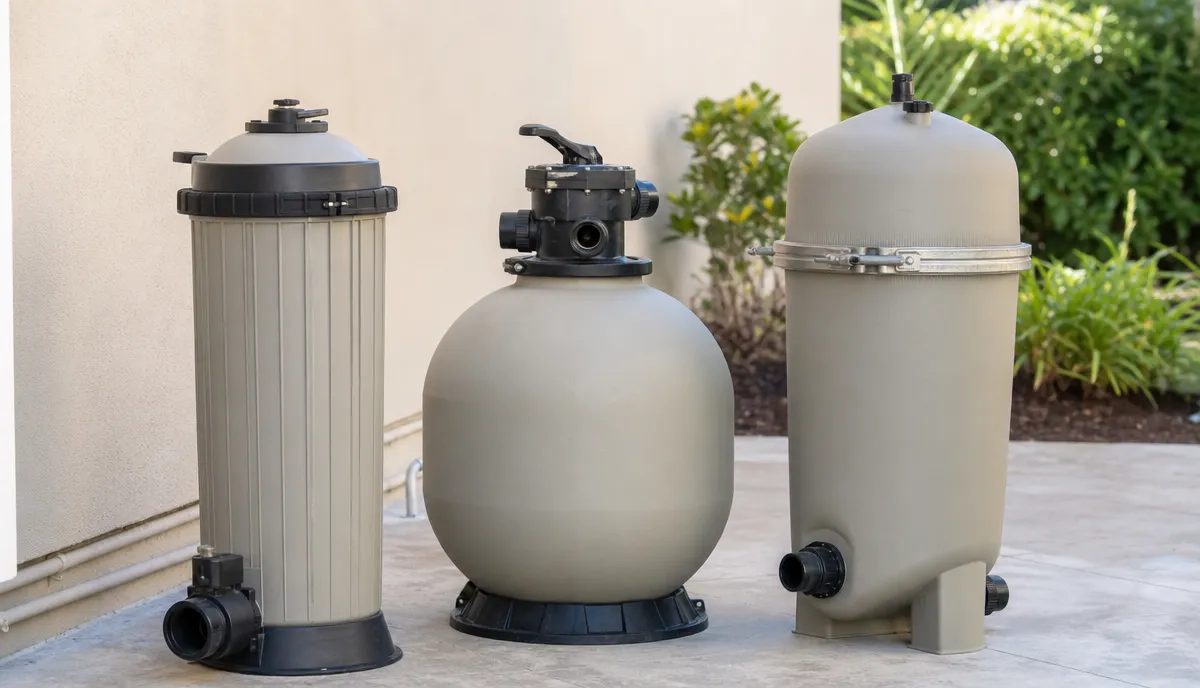
On-site filter rinsing or swapping. Up to once a month, on cartridge systems.
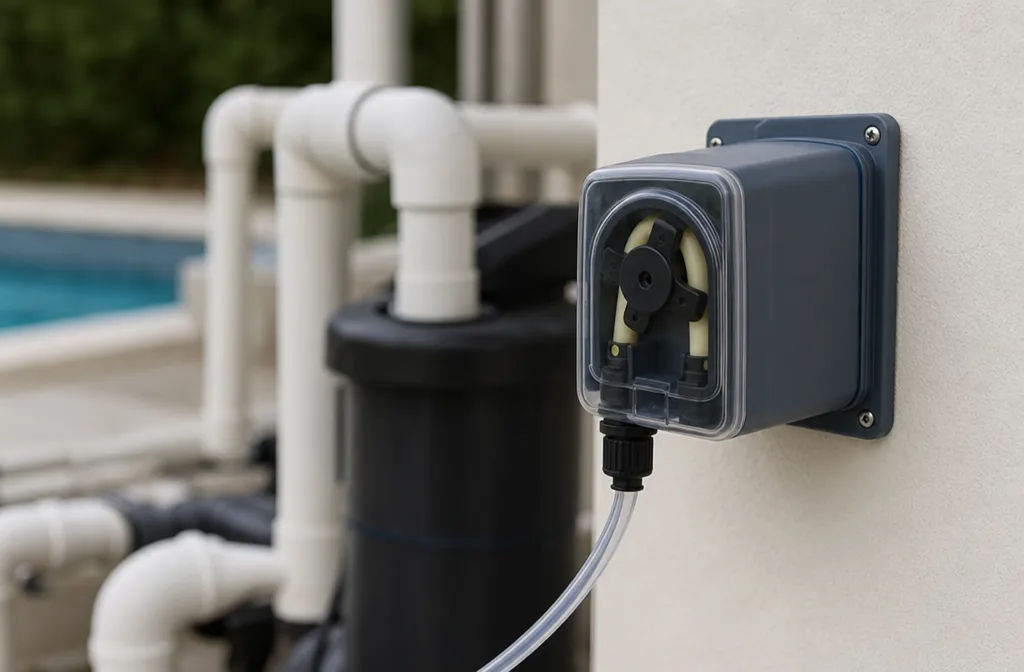
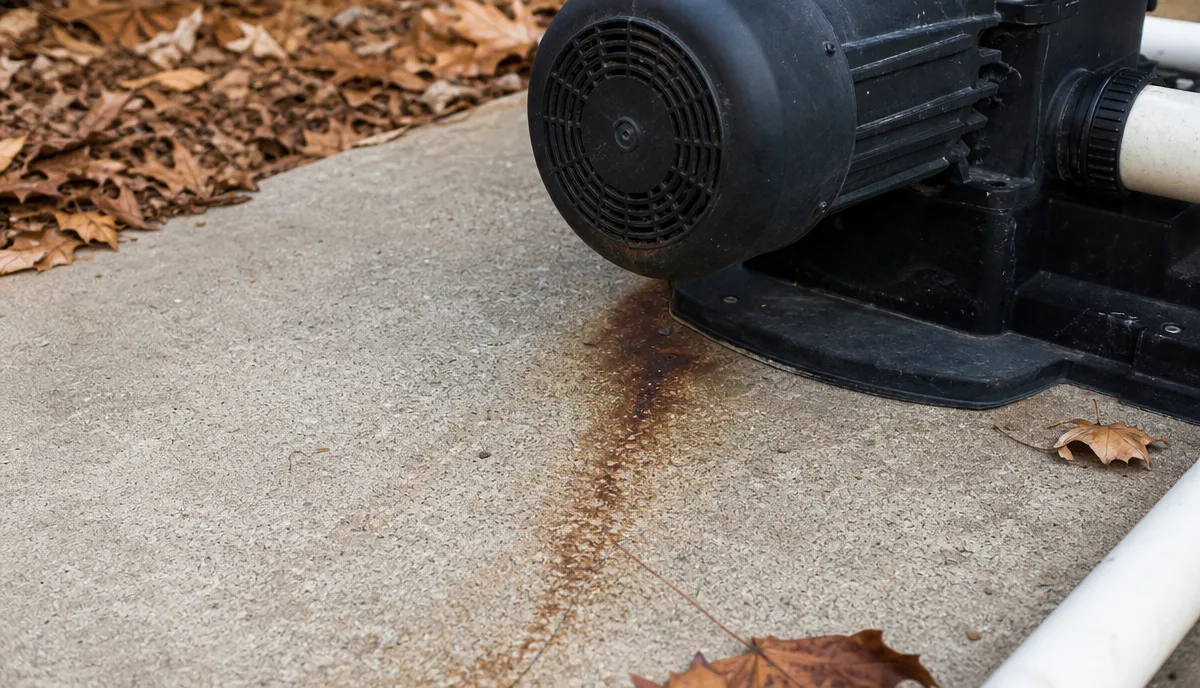
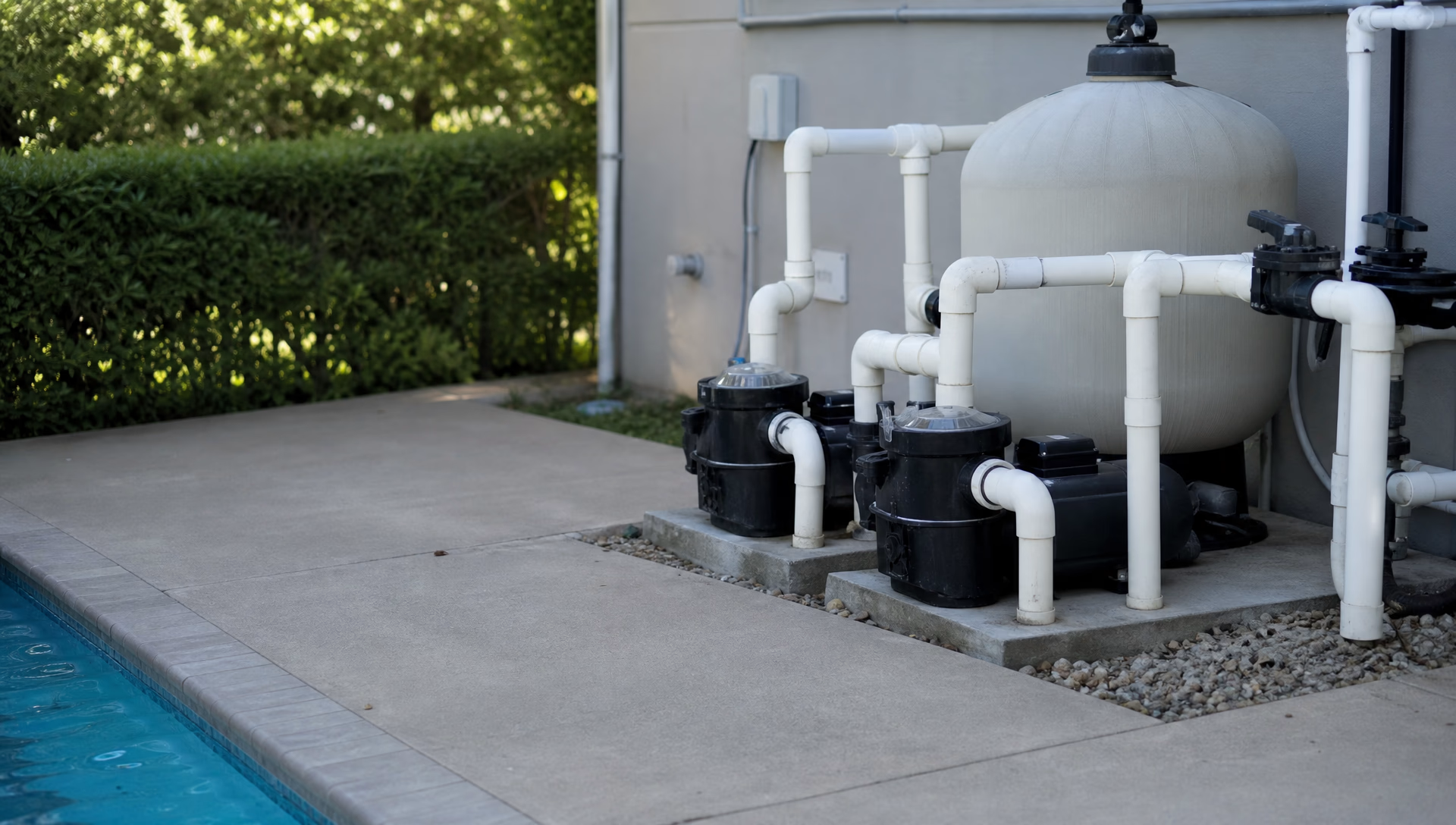
Check every piece of equipment for proper operation. Pump, filter, heater, automation, sanitiser, and the electrical bond at each lug, where corrosion causes intermittent faults that look like control problems.
Note anything we find. And put it in writing.
Frequency: weekly or biweekly. Which is right depends on bather load, tree cover, whether the pool is heated and whether it is covered when not in use. A heated, heavily used pool under trees needs weekly attention; a covered pool used at weekends often does not.
We do not run the same fixed panel on every pool every week, and we would be suspicious of anyone who says they do.
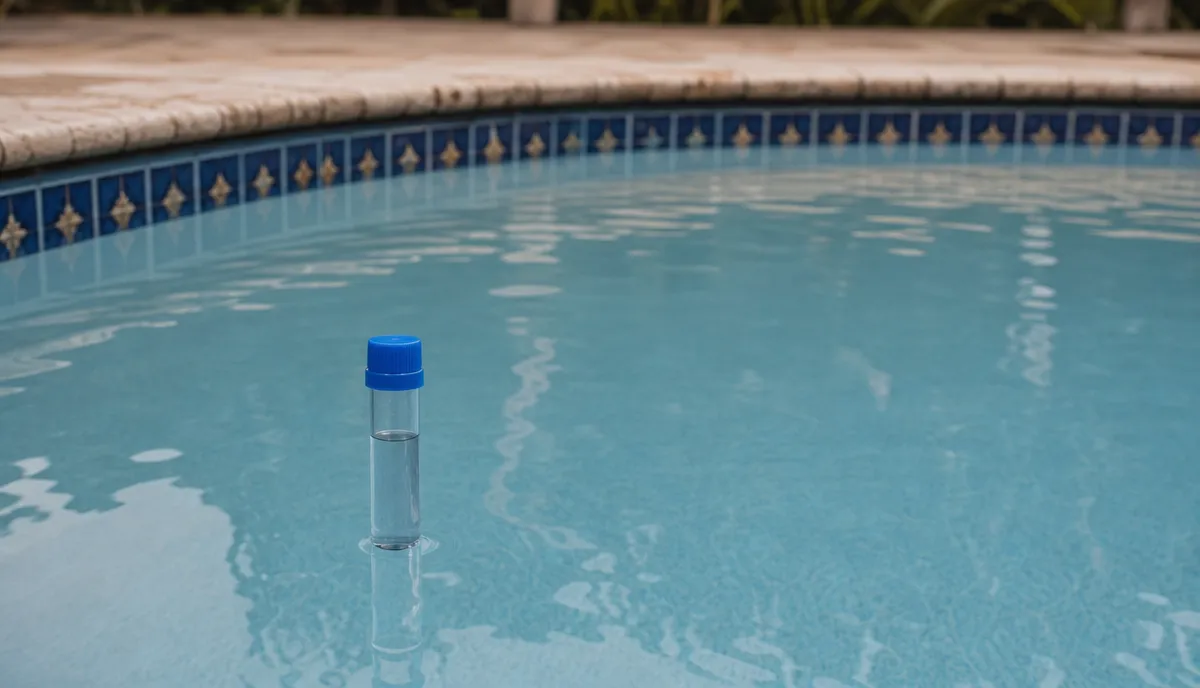
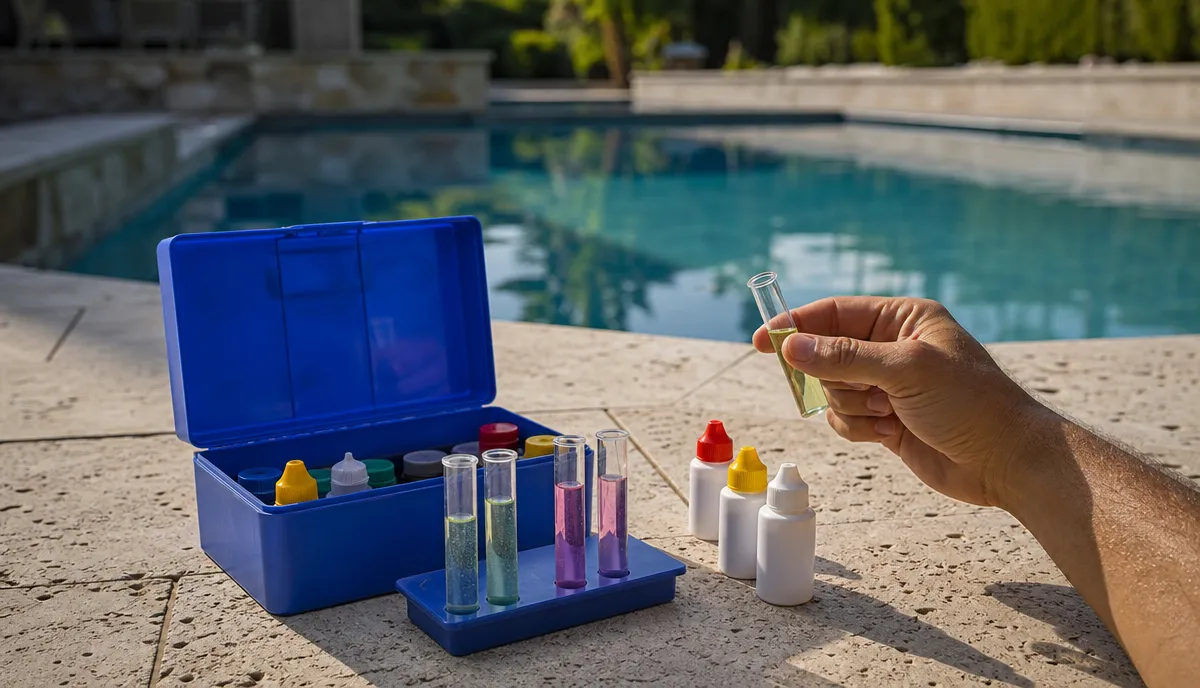
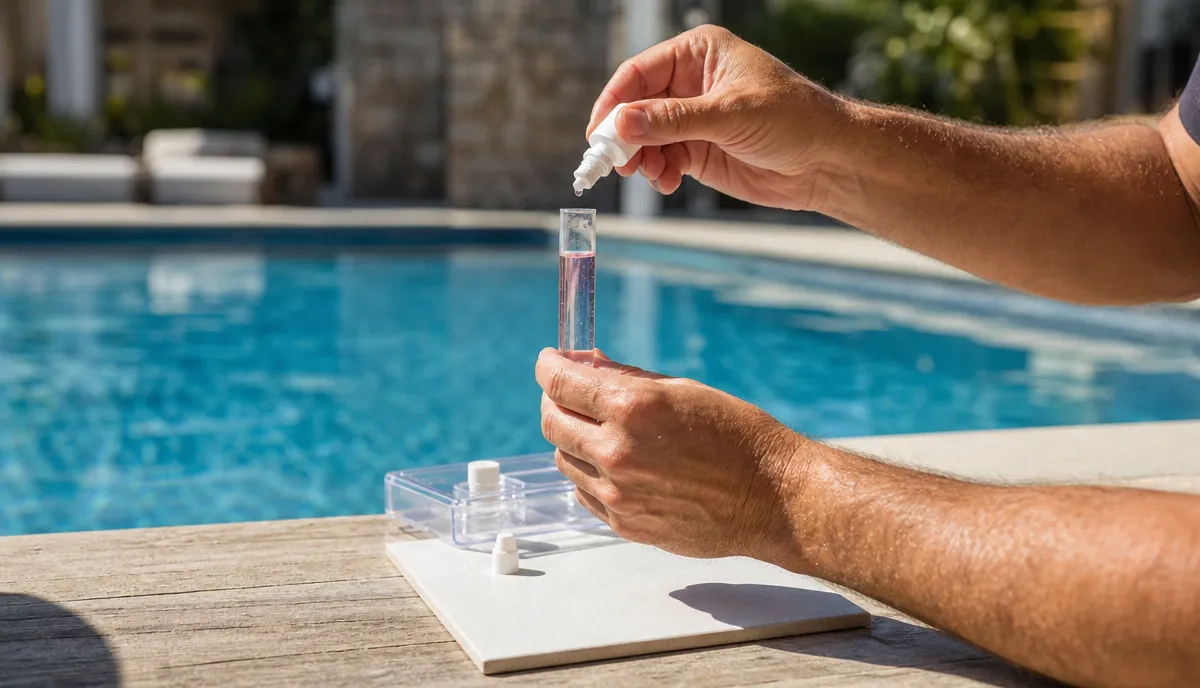
We titrate rather than guess. A drop-based titrate test resolves a real number. A test-strip gives you a colour band, and at the margins — which is exactly where a decision gets made — the band is too wide to act on. Strips are fine for a homeowner's spot check. They are not what a service call should be run from.
Where metals are present, we sequester them. Iron and copper in fill water — common on well supply — stain a liner and a plaster surface permanently once they drop out. A sequesterant or chelateing agent holds them in solution so they leave with the backwash instead of marking the pool.
Where the pool has drifted, we shock it. A pool that has lost its residual gets a shock dose to break the organic load down, not a top-up that gets consumed on arrival.
Different pools need different things. A pool on well water has metal and hardness concerns a pool on municipal supply does not. A brominated pool is managed differently from a chlorine pool. A pool with a salt chlorine generator has its own variables. Testing everything every time on every pool is theatre — it looks thorough and it charges for work that told nobody anything.
So we test what the pool needs, based on what it is, what it did last visit, and what we are looking at when we arrive. What that typically means:
Everything tested goes on the sheet, so you can see what was checked and what it read.
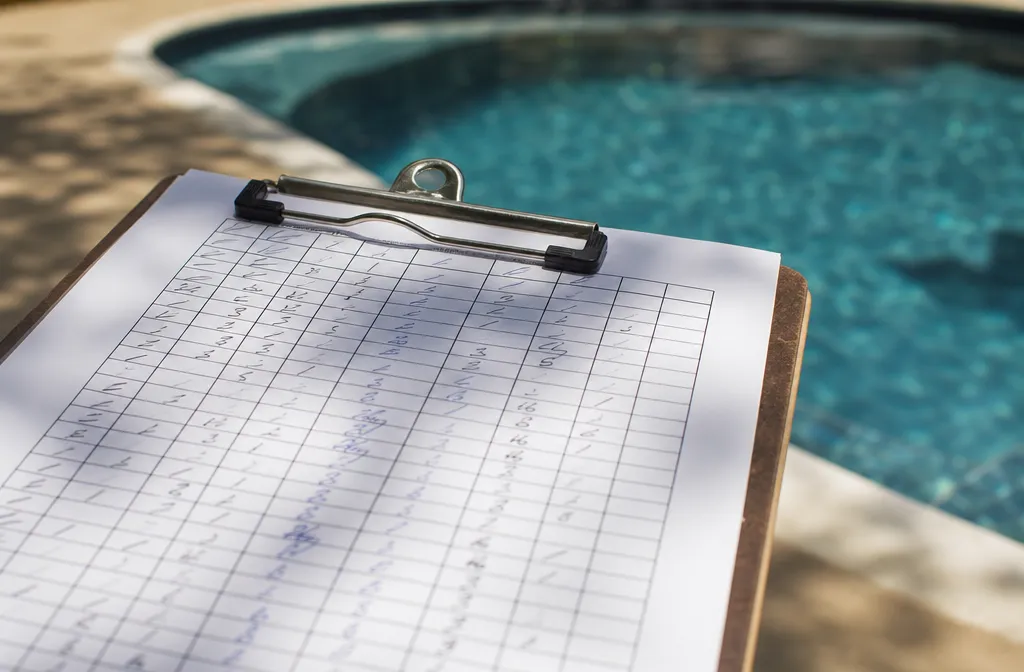
Every customer gets a written sheet after every visit, recording what was tested, what was done, and anything we noticed.
It is a record you can act on. A reading that moves in one direction over five visits is a developing problem. One reading is a snapshot; a sequence is a diagnosis.
It is evidence when equipment fails. Manufacturers ask about water chemistry when a heat exchanger or a seal fails, because bad chemistry is the leading cause and it is the one they can decline a claim over. A documented history of balanced water is worth having before you need it.
It tells you what we saw. If a technician noticed a pump beginning to cavitate or a filter losing pressure, it is written down rather than mentioned in passing to whoever happened to be home.
That sounds administrative. It is actually the most useful thing on this page, for three reasons:
Most of our service customers are not there when we visit, and that is entirely normal.
We need access to the pool and the equipment pad — a gate code, a key, a side gate left unlatched, whatever you prefer. Then the sheet tells you what happened while you were at work.
This is the main reason the written record matters. A service you never see needs to leave something behind.
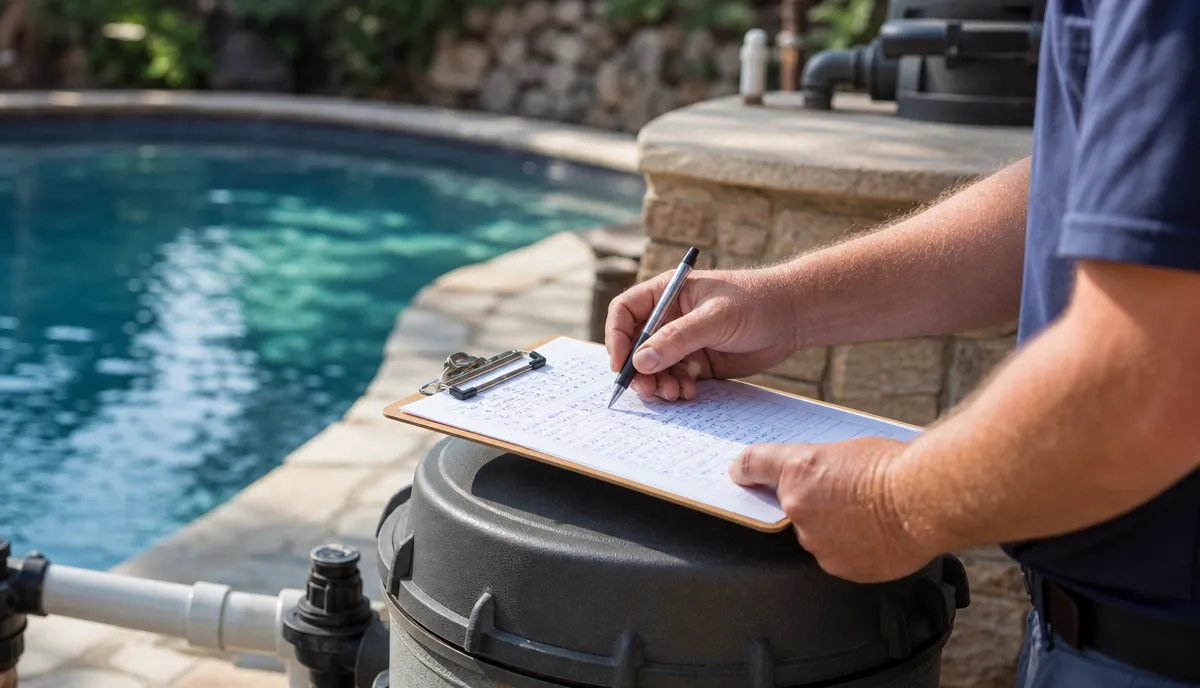
A completed pool service sheet on the equipment pad
Chemicals are billed separately, for what the pool actually takes.
Demand is not constant and it is not predictable. A hot week with heavy use consumes sanitiser fast; a cool covered week barely touches it. Rain shifts alkalinity. A pool that has just been opened needs more than the same pool in August. Averaging all of that into a flat rate means most customers subsidise the few with the highest demand.
So the visit is $72 and the chemicals are what they are. You pay for what goes in the pool.
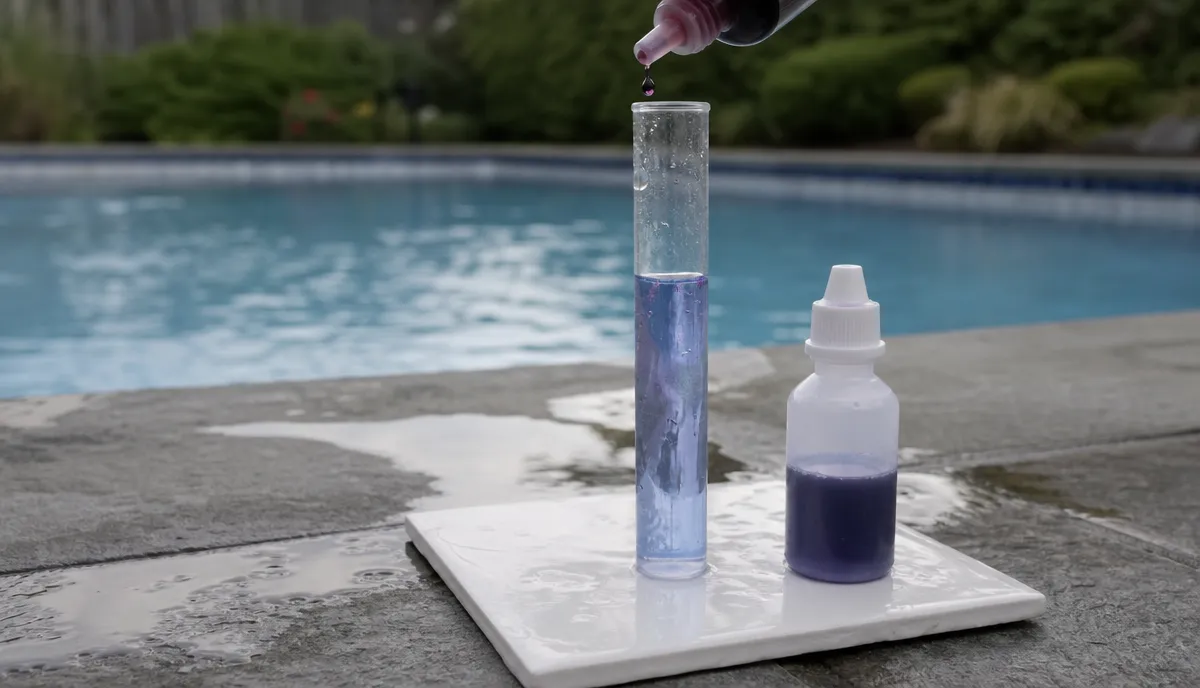
A drop-based titration test on a pool water sample
“We have used M&G for many years, they are always knowledgeable and accommodating. The professionalism is not something you find in the pool industry. Highly recommend for any pool needs.”
Weekly service, per-visit checks, commercial contracts and one-off inspections each have their own page.
That is exactly what this service is.
Filter work sits inside this service up to a point, and then it becomes its own job.
Included: backwashing as needed, and on-site rinsing or swapping of cartridge elements up to once a month.
Not included: a proper offsite clean. Cartridges that have been in service a while need soaking in cleaning solution and pressure washing to actually recover their flow — rinsing with a hose moves surface debris and leaves the oils and fine particulate that are causing the pressure rise. We take those away, clean them properly and bring them back, at $125.
If a filter is losing pressure and a clean does not fix it, see pool filter repair.
A service visit is a diagnostic that happens every week, which is the quiet advantage of having one.
Equipment rarely fails without warning. It drifts — pressure creeps up, a seal starts to weep, a pump takes longer to prime, a heater cycles more than it did. A technician standing at the pad every week sees the drift. A technician called out after a failure sees the failure.
Where we find something, we tell you what it is and what we think it needs. A service call for a repair is $150 and covers up to the first hour of diagnosis or repair — see pool equipment repair.
At the end of the season, the same visits feed straight into a properly executed close. When we winterize a pool we already serviced, we know its chemistry history and what its equipment has been doing all summer — so when we blow out the lines and purge the equipment, we already know which runs have given trouble before. The closing starts from a known position rather than a guess.
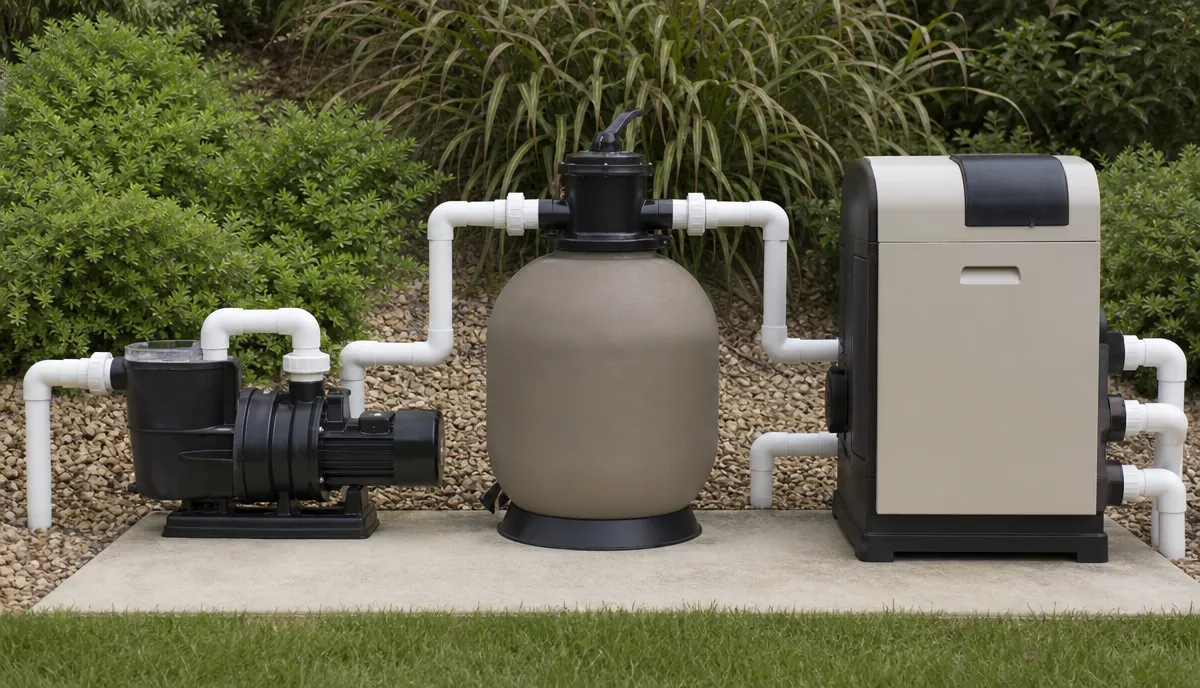
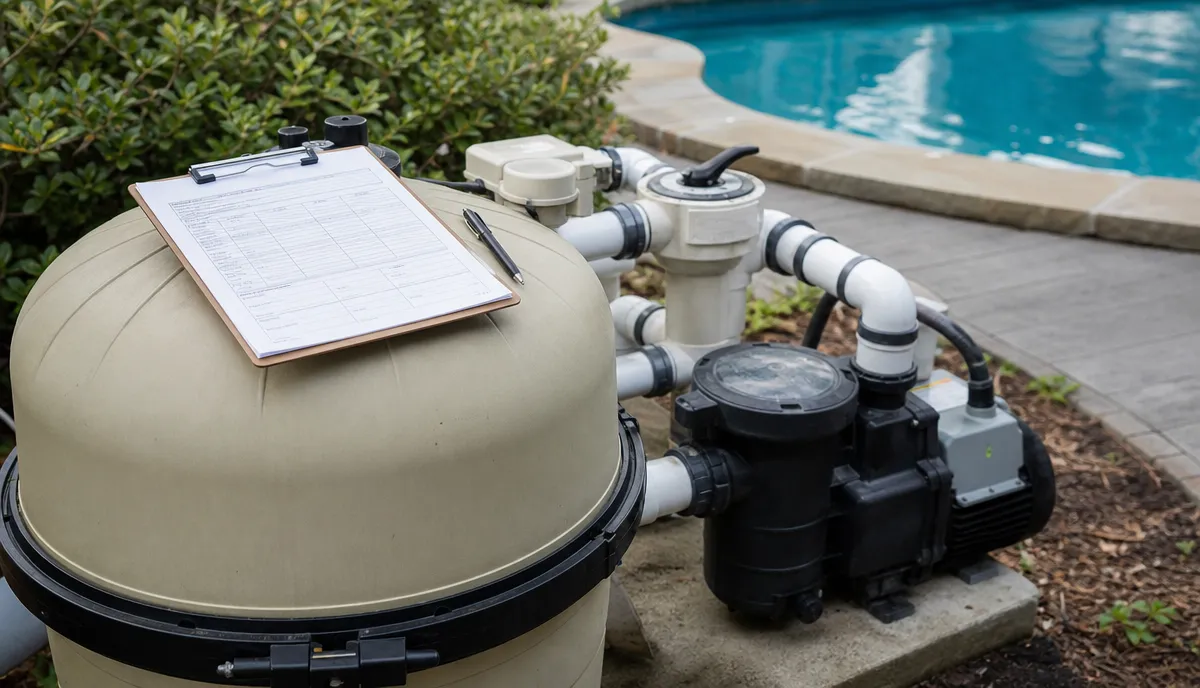
A pool equipment pad with pump, filter and heater
About a quarter of our work is commercial, and it is a different service with different obligations — public pool licensing and inspection in Ohio sits with the local health district, and the record-keeping expectations are not the same as a back garden.
M & G Pools services in-ground pools exclusively. We do not service, repair or supply equipment for above-ground pools, and we do not service hot tubs or spas.
Cover work travels further than routine service, especially off-season. If your town is not on that list, ask — see service areas for the full picture.
No. This is a chemistry and equipment service — water testing and balancing, basket emptying, filter backwashing, robotic cleaner restarts and an equipment operation check. We do not vacuum, brush or skim pools as a weekly service. Netting and vacuuming to waste are included inside an opening or closing package.
Pools where the cleaning is already handled — most often by a robotic cleaner, sometimes by the owner, sometimes by a separate arrangement. We look after the water and the machinery, which is where the expensive failures come from.
From $72 per visit plus chemicals. Weekly and biweekly schedules are available.
It varies by pool, deliberately. A well-water pool has metal and hardness concerns a municipal-supply pool does not; a bromine pool is managed differently from a chlorine one; a salt system has its own variables. We test what the pool needs based on what it is and what it read last visit — and we use drop-based titration rather than test strips, because at the margin where decisions get made a strip's colour band is too wide to act on. Everything tested goes on your sheet.
No, and most customers are not. We need access to the pool and the equipment pad — a gate code, a key or an unlatched side gate. The written sheet tells you what was tested, what was done and anything we noticed.
Because demand is not predictable. A hot week with heavy use consumes sanitiser fast; a cool covered week barely touches it, and rain shifts alkalinity. Averaging that into a flat rate would mean most customers subsidising the few with the highest demand. You pay for what goes in the pool.
On-site rinsing or swapping is included up to once a month. A proper offsite clean — soaking in cleaning solution and pressure washing, which is what actually recovers flow — is $125. Hosing a cartridge moves surface debris and leaves the oils and fine particulate causing the pressure rise.