
There is no honest number — two liners the same age can be in completely different condition. So here is what to look at instead, and what each sign actually means.
Somebody will, and it will be invented — or at least it will be an average that describes nobody's pool.
Four other things are, and they vary enormously between two pools built in the same year on the same street:
And the useful question is not "how old is it" but "what is it doing". That you can check yourself, this afternoon, and the rest of this page is how.
And particularly water that has been allowed to sit acidic. Aggressive water works on everything it touches.
Which takes the print off and stiffens the material. A pool in full sun ages its liner faster than one under a canopy.
Every year, for its whole life. A liner that has spent winters at the wrong level, or with ice working at the waterline band, has had a harder life than the calendar suggests.
A liner that floated once and re-settled is a different object afterwards.
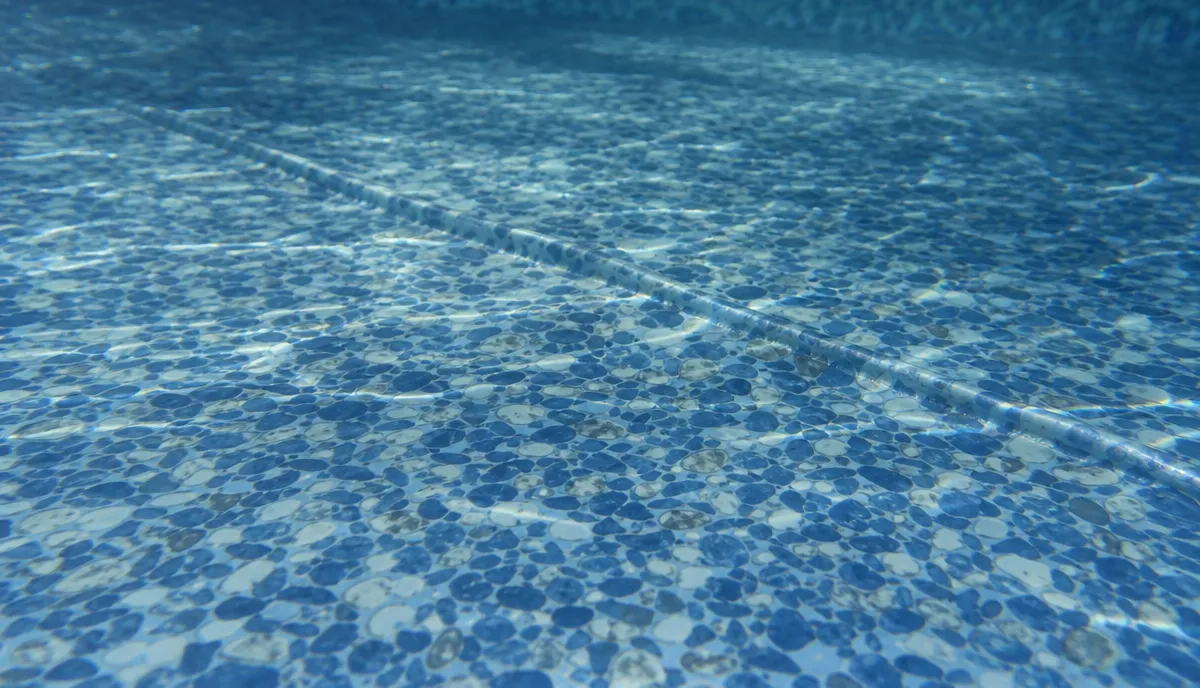
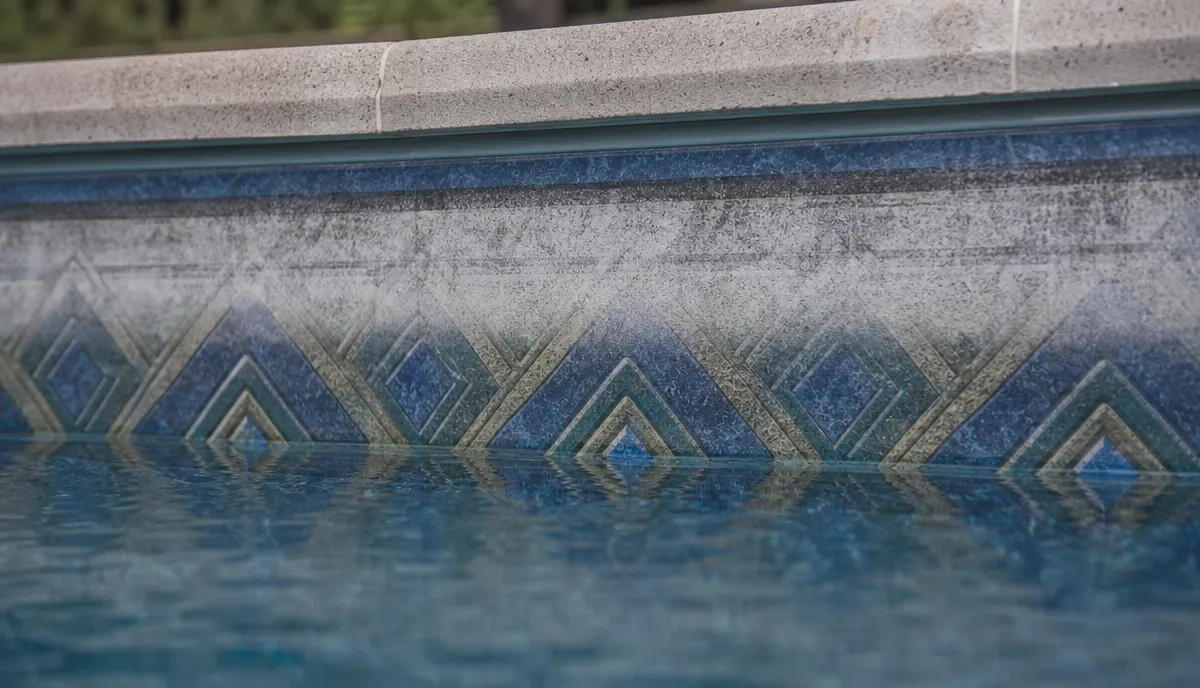
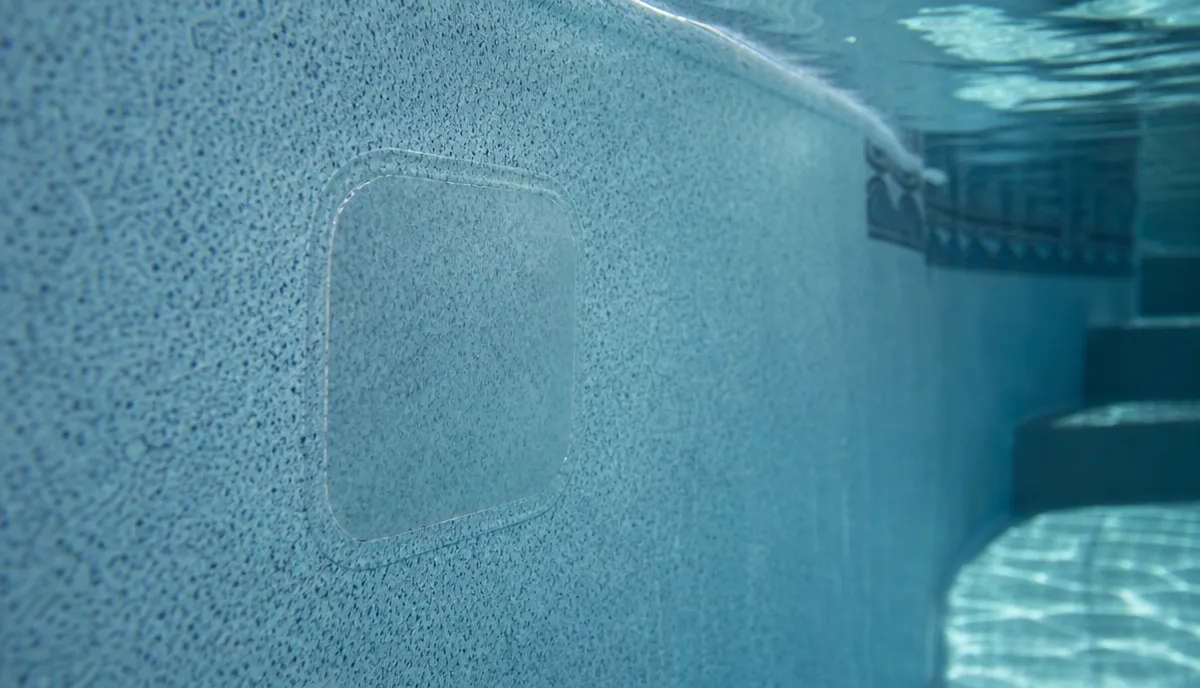
Six things, in the order they are easiest to see.
The condition of the vinyl decides it — not the age, and not the size of the damage.
When the vinyl is still flexible, seated properly in its track and holding its colour reasonably, and the damage is localised. Most of those we do underwater, so the pool stays full and stays in use. Liner patching starts at $195. See pool liner repair.
When the vinyl has gone brittle, when it is pulling out of its track over a long run, when it is splitting in several unrelated places, or when it has shrunk beyond adjustment. Liner replacement is quote-required — size, shape, the condition of what is behind the vinyl and the access to the garden move it too much for a published figure to mean anything. See pool liner replacement.
Rather than quote the bigger job by default. If we can patch it and expect the patch to outlast the liner, we patch it. If the liner is going to need replacing next season anyway, we say that instead of taking $195 twice.
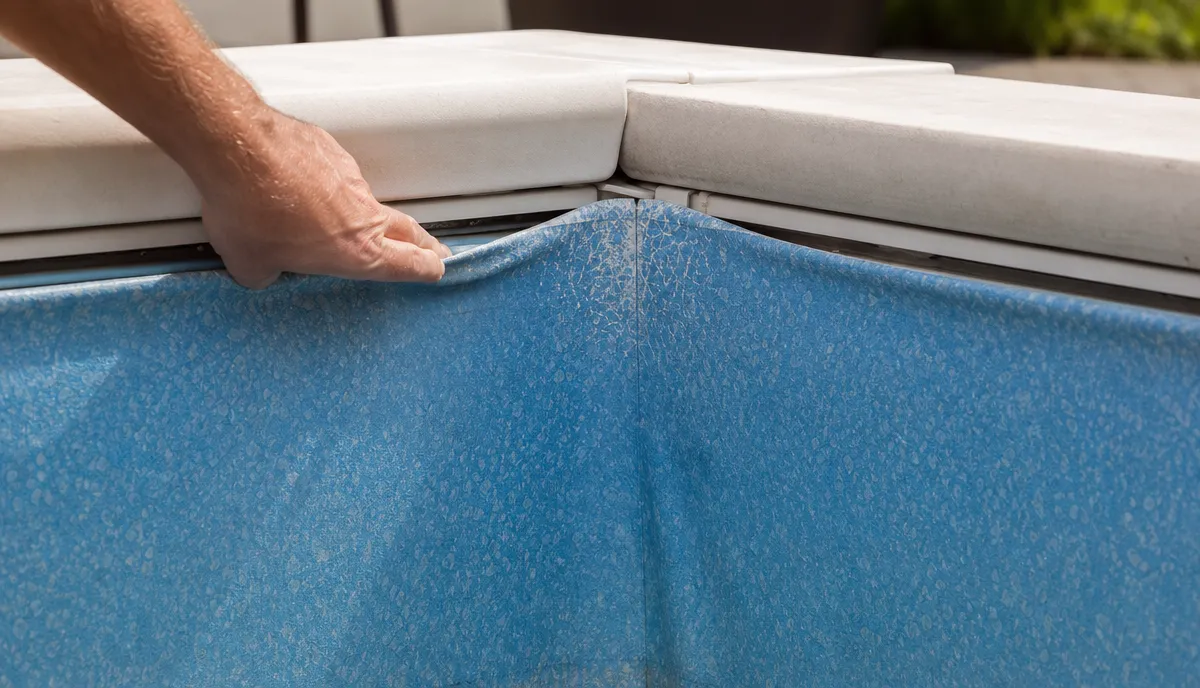
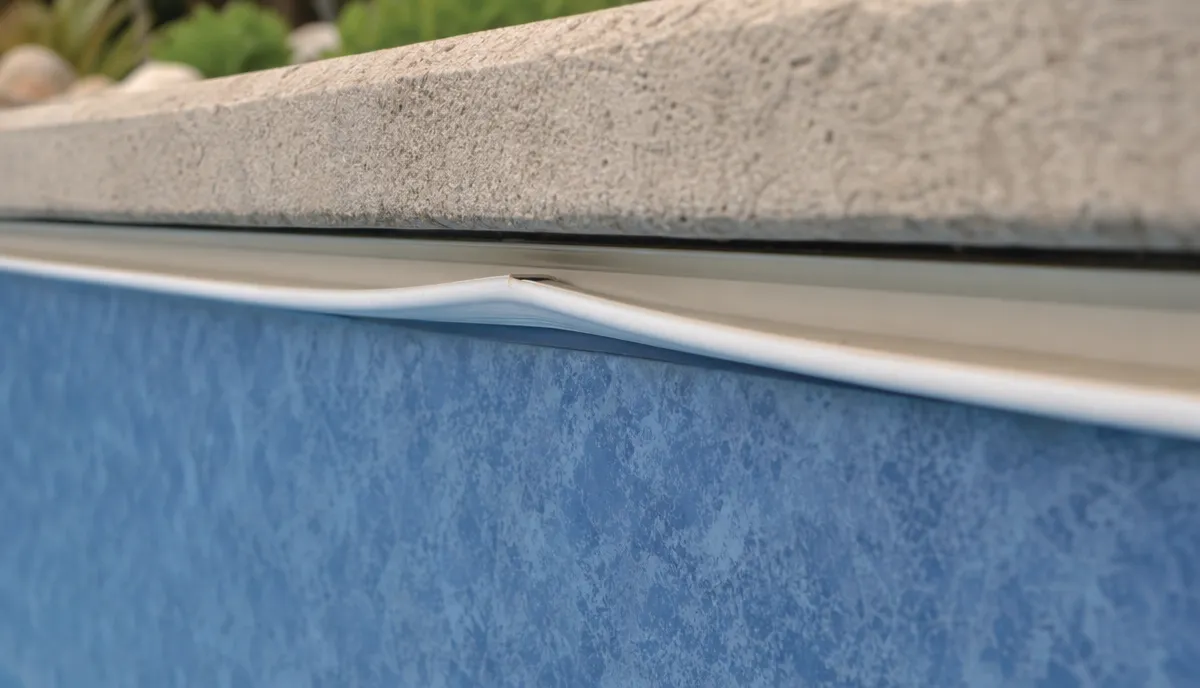
Brittle vinyl at the corner of a pool liner
“We have used M&G for many years, they are always knowledgeable and accommodating. The professionalism is not something you find in the pool industry. Highly recommend for any pool needs.”
Tell us what you are seeing and we will look at it.
Given that time is not the variable, these are:
Consistently balanced water. The single biggest one, and the least glamorous. Water allowed to sit acidic is aggressive toward everything it touches. A chemical and equipment check is from $72 per visit plus chemicals, and the written sheet is the point — chemistry damage is cumulative and a drift only shows across readings.
A close that puts the water at the right level. The waterline band is the most stressed part of a liner, and a winter spent with ice working at the wrong height is a winter the liner will remember. See pool closing service.
Keeping the pool covered when it is not in use, which cuts the sunlight reaching the vinyl as well as the debris.
And not letting a small tear stay a small tear. A patch is inexpensive; a tear that has been flexing at its edges for a season is not the same repair.
A liner is one of the few pool costs you can see coming, and it is worth knowing about before you own it rather than after. A pool inspection covers the liner along with the pump, the pad, the plumbing and the rest of the equipment.
Two things worth asking the seller: how old the liner is, and who has been looking after the water. The second answer tells you more than the first.
For the full liner service see pool liners, and the rest of the guides on resources.
There is no honest number, and we would rather say so than publish an average that describes nobody's pool. Time is not what consumes a liner — water chemistry, sunlight, how the pool has been closed each year and whether groundwater has ever got behind it are, and those vary enormously between two pools of the same age. What is useful is the condition, and you can check that yourself.
Six, roughly in order of visibility: new wrinkles, especially in the shallow end; fading or a chalky feel at the waterline; brittleness at the waterline and in the corners; beading that will not stay in its track; an uneven or gritty floor underfoot; and water loss that continues when the pump is off. Brittleness is the one that decides patch-or-replace.
Often, and when it can be we will say so. A patch is the honest answer when the vinyl is still flexible, properly seated and holding its colour, and the damage is localised — most of those we do underwater, so the pool stays full. Patching starts at $195. A tear in brittle, faded vinyl will hold for a while and then fail at the edge of the patch.
Start with when the water goes. A liner tear loses water whether the pump is running or not; a pressure-side plumbing failure usually loses more while it runs. A wet patch or settling ground near the pad or the returns points at a buried line instead — and we do not offer leak detection, so that case is not one for us.
Keep the water consistently balanced. It is the least interesting answer and the most effective one, because water allowed to sit acidic is aggressive toward everything it touches. After that: a close that leaves the water at the correct level, keeping the pool covered when it is not in use, and dealing with a small tear while it is still small.