
Controllers, actuators, relays and sensors — plus upgrades for a system that works but cannot do what you now want. $150 service call across Twinsburg, Solon, Hudson and the Route 91 corridor.
Worth understanding before you conclude your controller has failed, because it usually has not.
Automation is the layer everything else reports through. The controller drives the pump, the heater, the valves and the sanitiser — so when any of those has a problem, the symptom appears on the automation. The screen is where you see it, which makes the screen feel like the cause.
In practice, in rough order of how often we find each:
A pump speed that is wrong for the task. The single most common one. A heater will not fire because the pump is below the flow its flow-switch accepts; a salt cell reports no flow and stops producing; a backwash does not shift anything because it is running at filtration speed. Nothing is broken — the speeds assigned to each cycle are wrong. See variable speed pool pumps.
A corroded bond or ground connection. This produces intermittent faults that come and go with no pattern, and it looks exactly like a failing board. It is also the first thing we check, because it is cheap and it is frequently the answer.
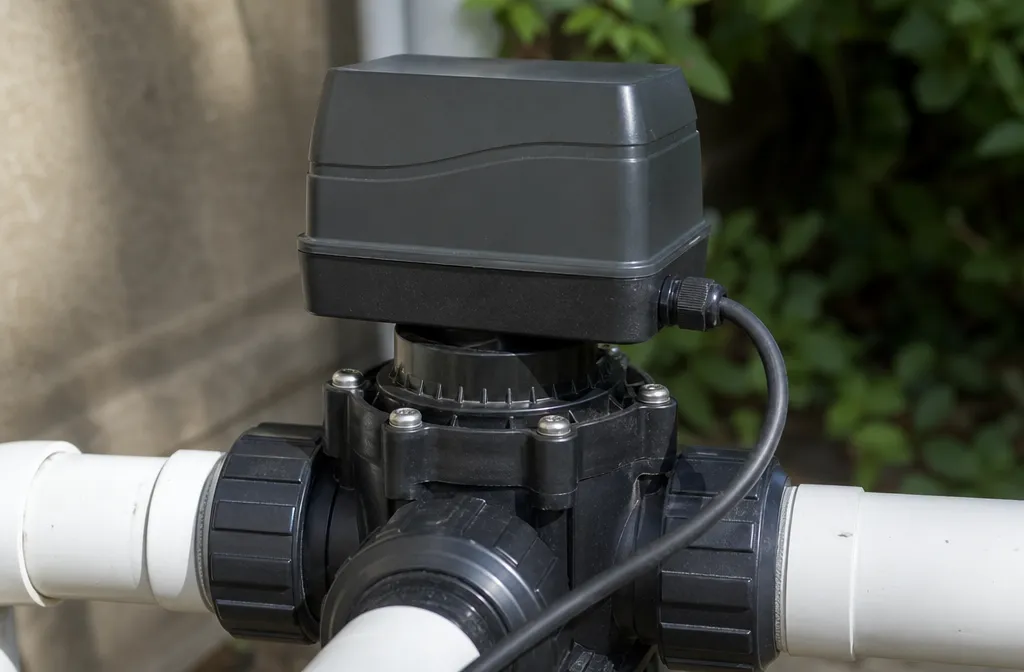
An actuator, not the controller. A valve that does not move, or moves to the wrong position, is nearly always the actuator or its cam setting. Actuators are a wearing part and they sit outdoors.
A sensor reading its location rather than the water. A temperature sensor in afternoon sun, or against a warm wall, reports something that is not the pool. The controller then acts correctly on wrong information.
A schedule conflict. Two cycles asking for incompatible things, which produces behaviour that looks random and is not.
The controller itself — real, and the least common item on this list.
A $150 service call covers up to the first hour of diagnosis or repair.
Boards, displays, power supplies, relays and communication faults between components
Including cam setting and end-stop calibration
And their placement
Driving pumps, heaters and lights
Corrosion at terminals is the commonest winter casualty here
The pump, heater and salt system not cooperating, which is settings rather than hardware more often than not
What we will not do on this page: publish menu paths or model-specific procedures. Controllers differ, the instructions matter, and a wrong one reaches somebody with a live panel open.
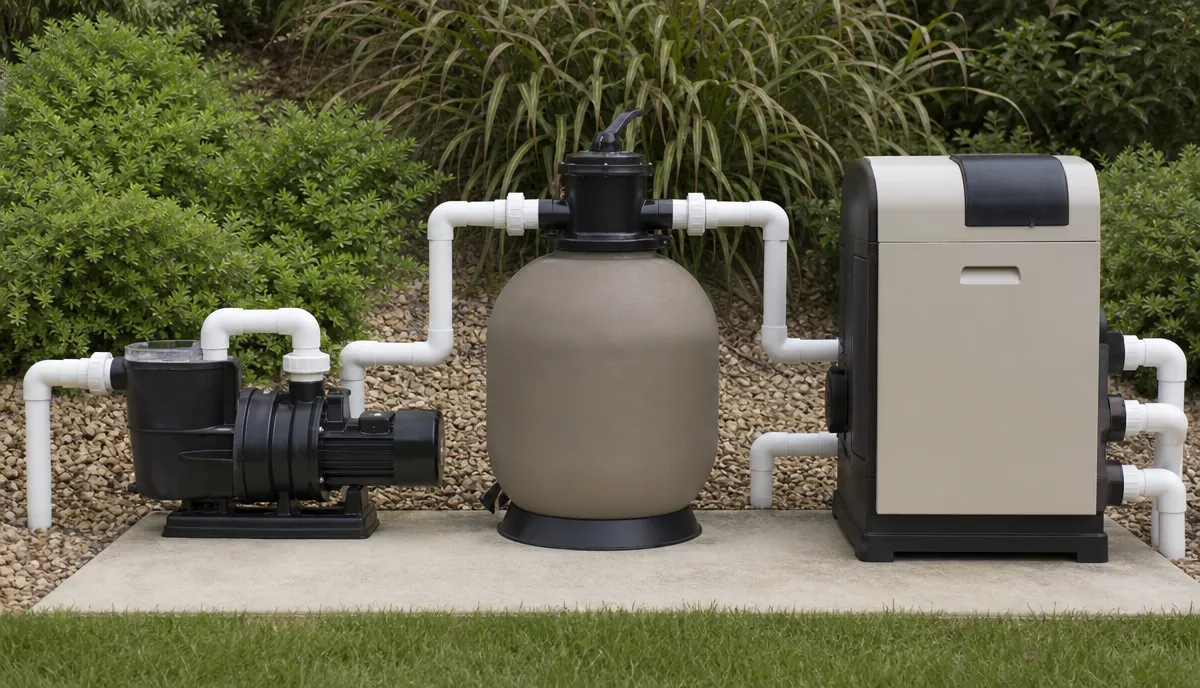
A pool equipment pad with pump, filter and heater
A controller that functions is not automatically a controller worth keeping.
Three upgrades that are usually worth it:
Phone and app control. Older controllers have no network capability at all. If you are still walking out to a panel to turn the heater on before you leave work, that is the upgrade — and it is normally the brain rather than the plumbing.
Proper variable speed pump control. An older controller may be able to switch a variable speed pump on and off without genuinely commanding its speeds — which means you own an efficient pump and get a fraction of the benefit. Bringing it under real control is often the single largest saving available on the pad.
Usable freeze logic. Older systems sometimes have no freeze protection, or one so crude it is unhelpful. In this climate that is the upgrade with the largest downside risk attached to skipping it — see the hub: pool automation.
One we will talk you out of: replacing a sound controller for extra features you will not use. If yours does what you need, keep it.
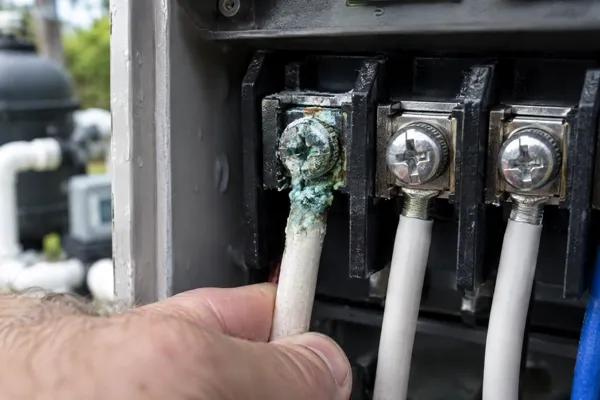
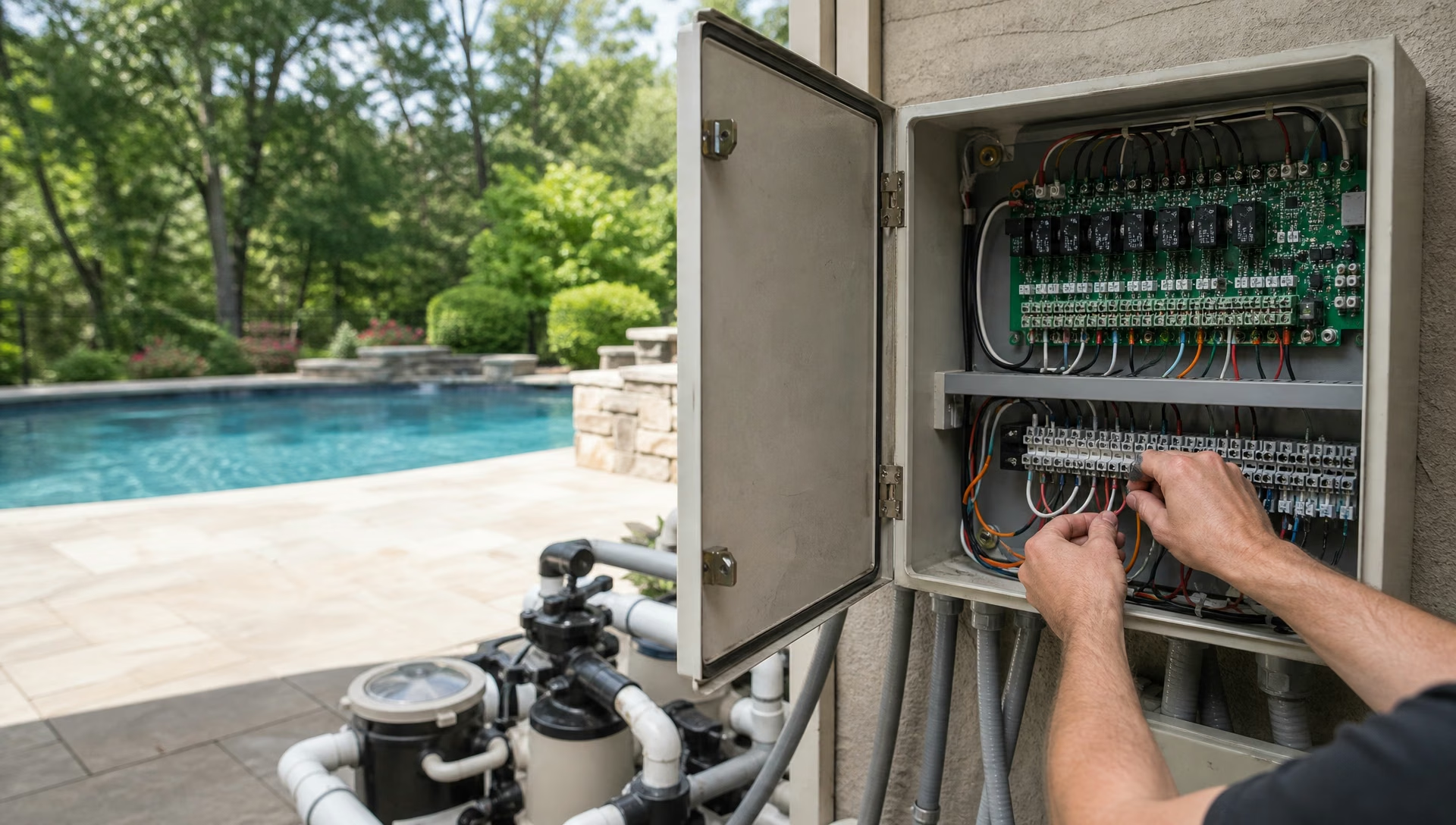
A corroded terminal inside a pool control enclosure
The hub covers this in full, and it is repeated here for one reason — the check belongs to a repair visit rather than to an installation.
Freeze protection starts circulation when air temperature drops below a set threshold, and moving water does not freeze the way standing water does. Three things we verify on every automation visit:
Is it actually enabled? It is frequently switched off by an owner who found the pump starting at odd hours and assumed a fault. It is not a fault.
Is the sensor somewhere sensible? One in sun or against a warm wall will not trip when it should.
Has the sensor failed open? A failed temperature sensor can disable freeze protection without any obvious signal — which is why we check at every opening rather than assuming last year's setup survived.
And it is not a substitute for a proper close: a winterized pool has had its lines blown out and its equipment drained and purged. See pool openings and closings.
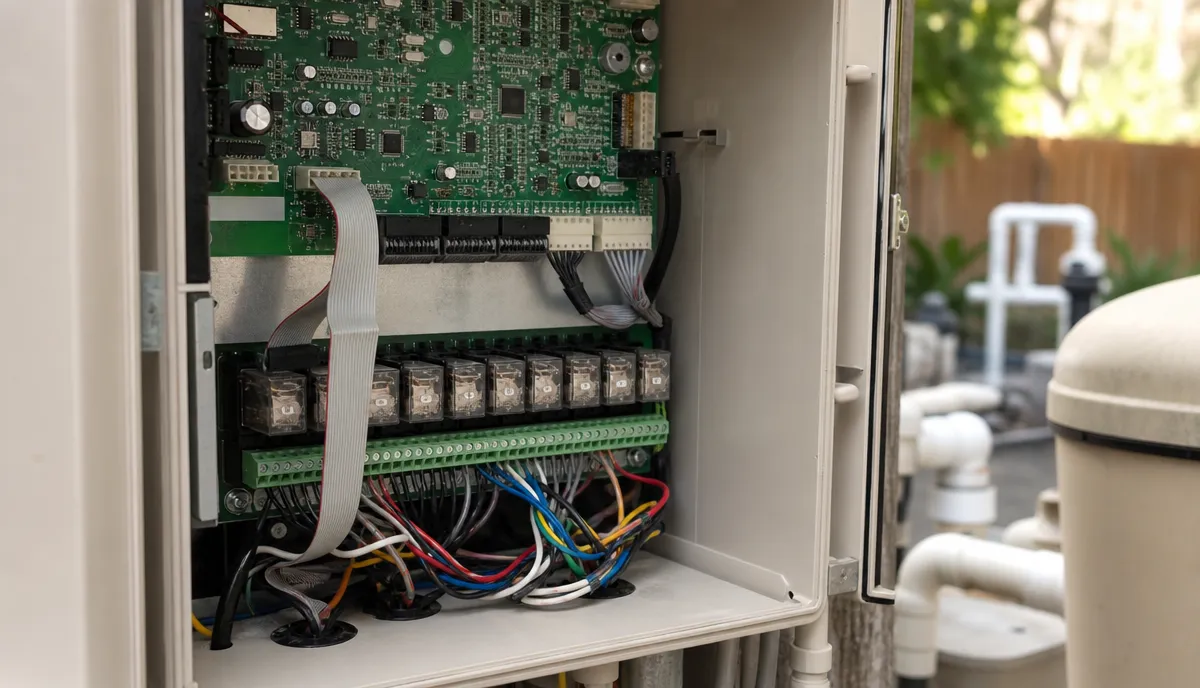
Controllers live outdoors in an enclosure through five months of a closed season, and the failure profile follows from it.
Moisture and freeze-thaw. This region crosses freezing repeatedly rather than freezing once, so condensation forms, freezes, thaws and forms again inside enclosures that have lost gasket seal or have unsealed conduit entries. Corrosion on terminals and relay contacts is the commonest casualty.
Actuators seizing. A valve actuator sitting in one position for months, particularly with water in the housing, may not move in April.
Sensors drifting or failing. Worth knowing because of the freeze-protection consequence above.
Which is why the opening is the right visit to have automation checked — everything is being started and watched anyway.
“Matt and his team are fantastic to work with. Easy to schedule, quality work is done right the first time. Highly recommend.”
It is more often a pump speed, a sensor or a bond lug than the controller itself.
Pentair, Hayward and Jandy, including IntelliCenter, OmniLogic and iAquaLink systems, plus older controllers from the same manufacturers.
On commercial systems we work on BECS, Stenner, Blue-White and Chemtrol controllers and chemical feeders, which is a different discipline from residential automation. The full list is on brands we service.
Adding automation to a pool that has none? See pool automation installation. Everything else on the pad: pool equipment repair.
Products we install carry the full manufacturer's warranty, which varies by manufacturer and generally runs between one and three years. We do not offer a separate workmanship guarantee, and nothing on this page should be read as one.
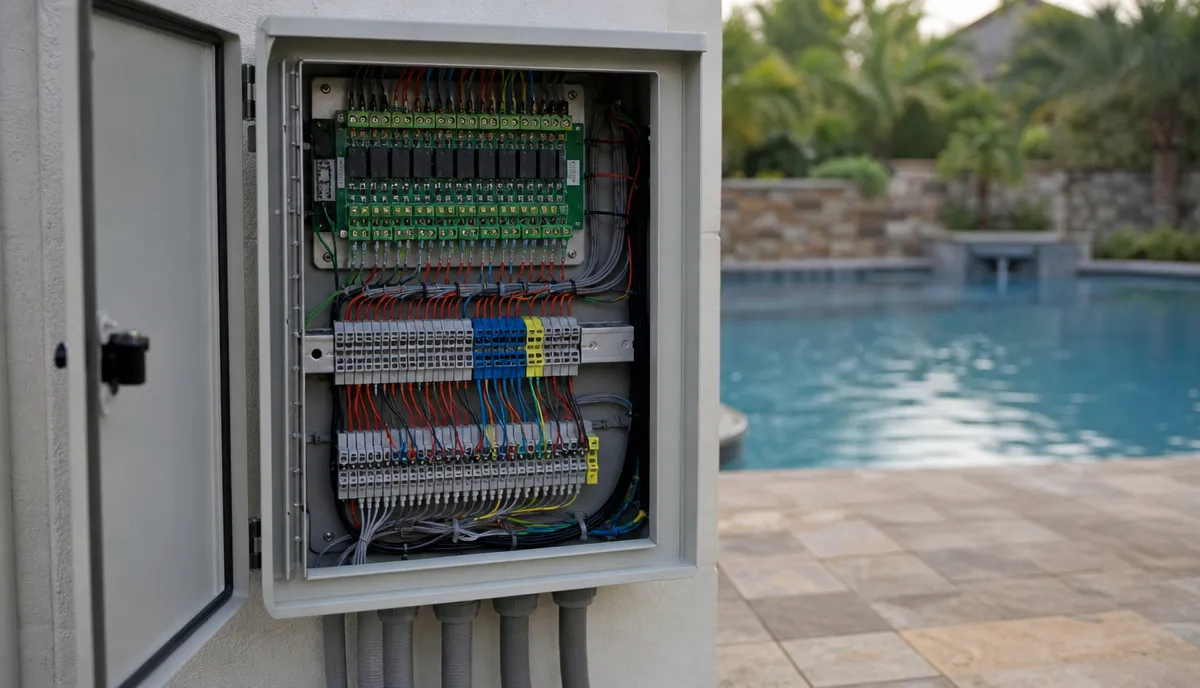
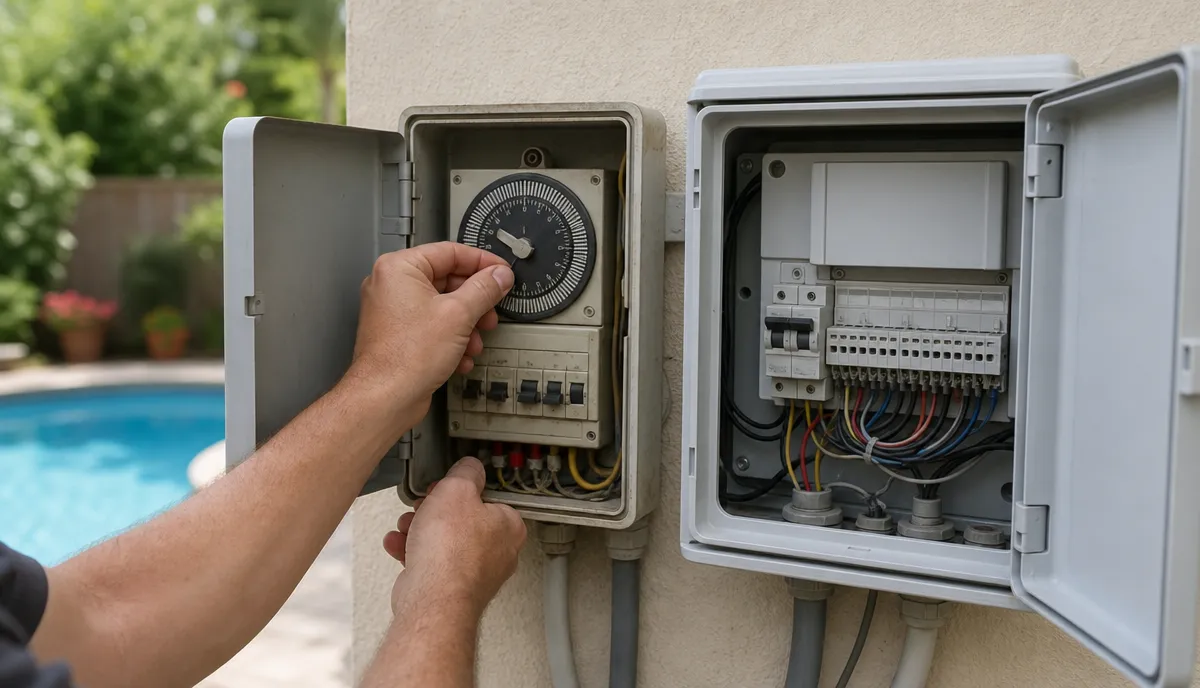
The inside of a pool automation panel
M & G Pools services in-ground pools exclusively. We do not service, repair or supply equipment for above-ground pools, and we do not service hot tubs or spas.
Usually not. Automation is the layer everything else reports through, so a pump speed, a corroded bond lug, a worn actuator or a badly placed sensor all present as a controller problem. In our experience the controller itself is the least common cause on that list — a $150 service call establishes which layer is actually at fault.
Almost never. A valve that does not move, or moves to the wrong position, is nearly always the actuator or its cam setting. Actuators are a wearing part sitting outdoors, and they seize after months in one position over winter.
Flow. The automation is running the pump at a speed the heater's flow switch will not accept, so the heater refuses to light. It is a settings fix rather than a part, and it is the most common integration fault we see after a variable speed pump goes in.
Usually yes — an upgrade is normally the brain rather than the plumbing. The three worth doing are phone and app control, genuine variable speed pump control (an older controller may switch the pump on and off without commanding its speeds, which loses most of the benefit), and usable freeze logic. If yours already does what you need, keep it.
That is usually freeze protection working — it starts circulation when air temperature drops below a set threshold, because moving water does not freeze the way standing water does. Confirm it before anyone switches it off, since switching it off is how a cold snap turns into a cracked line.