
Gas and heat pump pool heater repair in Twinsburg — diagnosed in a sensible order, starting with the thing that is usually wrong. $150 service call. Family-owned since 2012.
"It will not fire at all." Or: "it fires, runs for a few minutes, and shuts off."
Those two symptoms cover most of what we get called to, and they have a long list of possible causes between them. Which is why the useful thing is not a list of causes — it is the order you check them in, because checking in the wrong order is how people end up paying for a part that was never the problem.
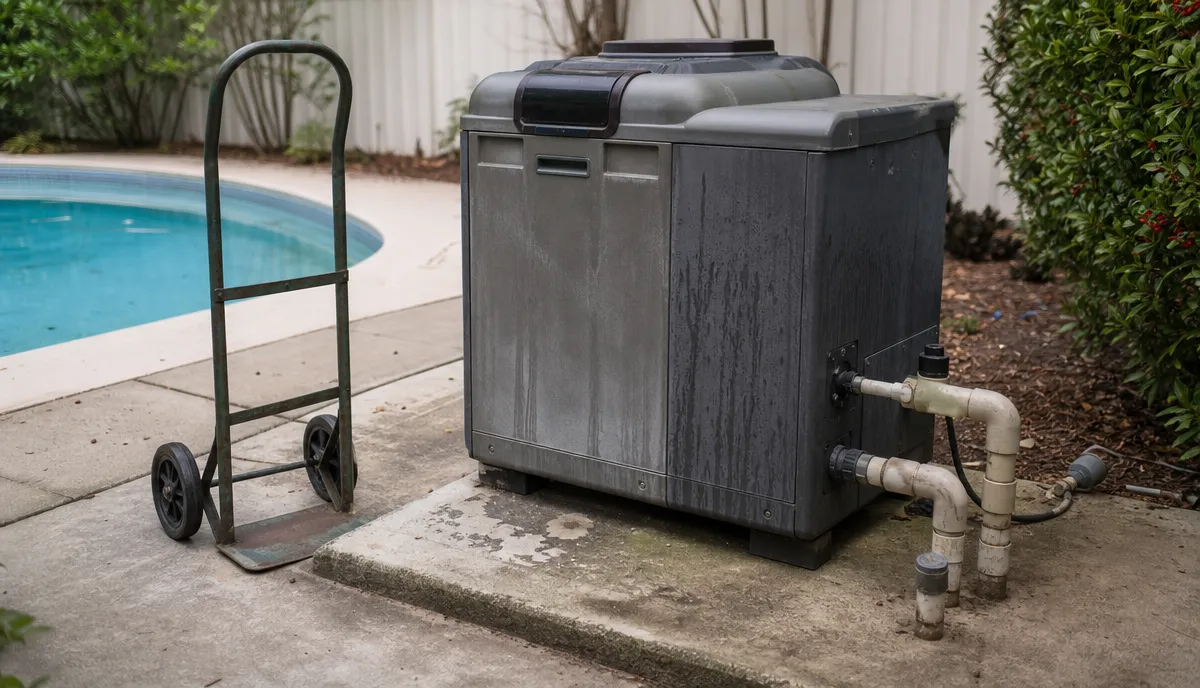
A disconnected pool heater ready to be lifted off the pad
A heater will not run without adequate water flow through it, and it is designed not to. There is a pressure switch — the flow-switch — that has to see flow before the heater will fire, and if it does not, the heater refuses. That refusal is the heater protecting itself, not the heater failing.
So the first questions are about water, not about the heater:
Is the filter loaded? A filter at high pressure is restricting flow — see pool filter repair.
Is a valve partly closed, or set wrong after a service?
Is the water level low enough that the skimmer is drawing air?
Is the pump actually moving water — is it primed, is the basket clear, is it drawing air past a worn lid seal? See pool pump repair.
On a variable-speed pump, is it running fast enough? A speed set for quiet filtration can be below what the heater's flow switch needs. This one is common and it looks exactly like a broken heater.
A good proportion of "broken heater" calls end here, and they end cheaply. That is the whole argument for checking flow first.
On a gas heater: is gas reaching the unit, and at the pressure it needs? A heater that lights and then drops out under load is a classic supply-pressure symptom rather than an ignition fault.
And is it able to vent? A gas heater has to get its combustion products out. A blocked or obstructed flue, or a stack that has been enclosed by something built since the heater went in, shows up as poor combustion and nuisance shutdowns rather than as an obvious venting fault.
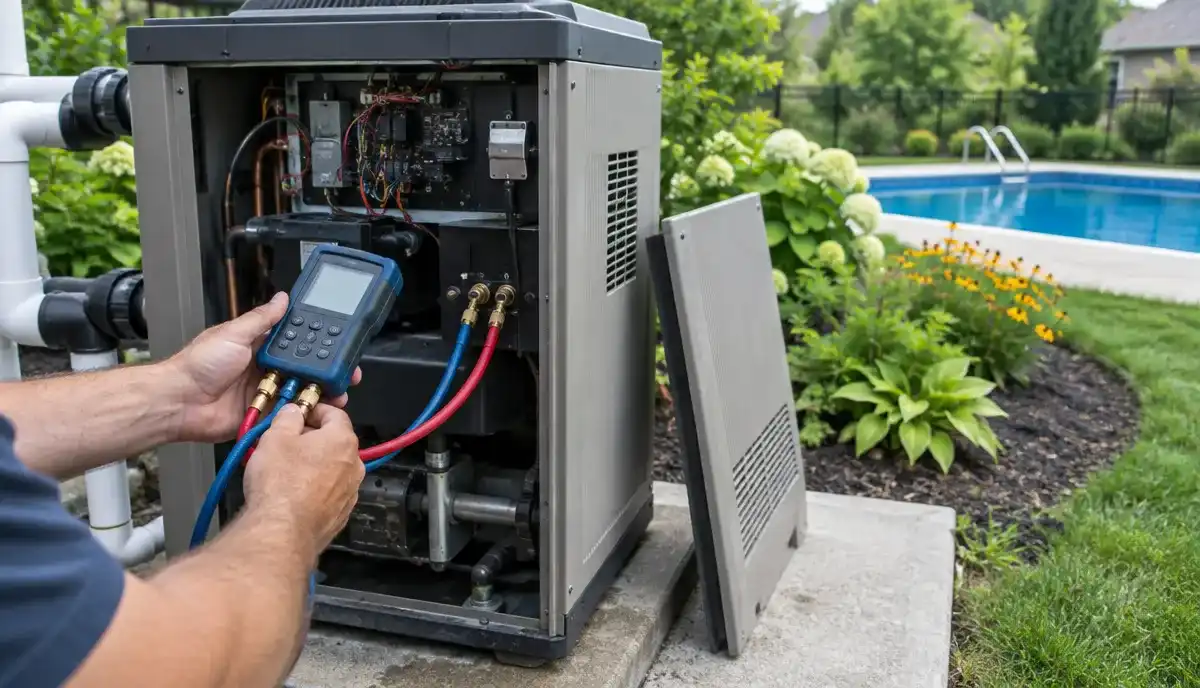
On a heat pump: is it getting power, and is the air side clear? A heat pump takes heat out of the outside air, so a blocked coil or a fan that is not turning starves it of the one thing it runs on.
Igniter, pilot assembly, flame sensor. A flame sensor that has gone dirty reports no flame when there is one, and the heater shuts down obediently. It is a cleaning job as often as a replacement.
Thermostat, high-limit switch, control board. A high-limit that has tripped is usually a symptom of step 1 — the heater got hot because water was not carrying the heat away. Replacing the switch without finding the flow problem buys you the same failure again.
Error codes belong here too. A code tells you what the board saw — no flame, no flow, high limit. It does not tell you why, and treating a code as a diagnosis is how the wrong part gets fitted.
Last, because it is the expensive answer and it is the one you want to be sure about. Scale on the water side, soot on the fire side, or corrosion through the tubes. A heater that is heating the equipment pad instead of the pool, or leaking water when it runs, has usually arrived here.
And this is where we will tell you to stop spending. An exchanger on an old unit can cost enough that replacement is the better decision, and we would rather say so than sell you a repair that puts a new part into a tired heater. See pool heater replacement.
Neither of these is a fault you get called about. Both are why an exchanger fails years earlier than it should.
Running the pool too cool. A gas heater's flue gases carry water vapour, and if the water going through the exchanger is cold enough, that vapour will condense on the tubes. The condensate is acidic, and acidic water sitting on metal does what you would expect. It is the reason a heater is happier holding a normal swimming temperature than being asked to nudge a cold pool up by a degree at a time, and the reason a heater run briefly on a cold spring pool is working against itself.
Hard water and scale. Calcium comes out of solution on the hottest surface in the system, which is the inside of the heat exchanger. Scale there insulates the tubes, so the heater burns the same gas to move less heat into the water — and the metal behind the scale runs hotter than it was designed to. Where a unit is worth it, we de-lime the water side rather than replace it; where the scale has been left long enough to have cooked the tubes, the exchanger is already spent.
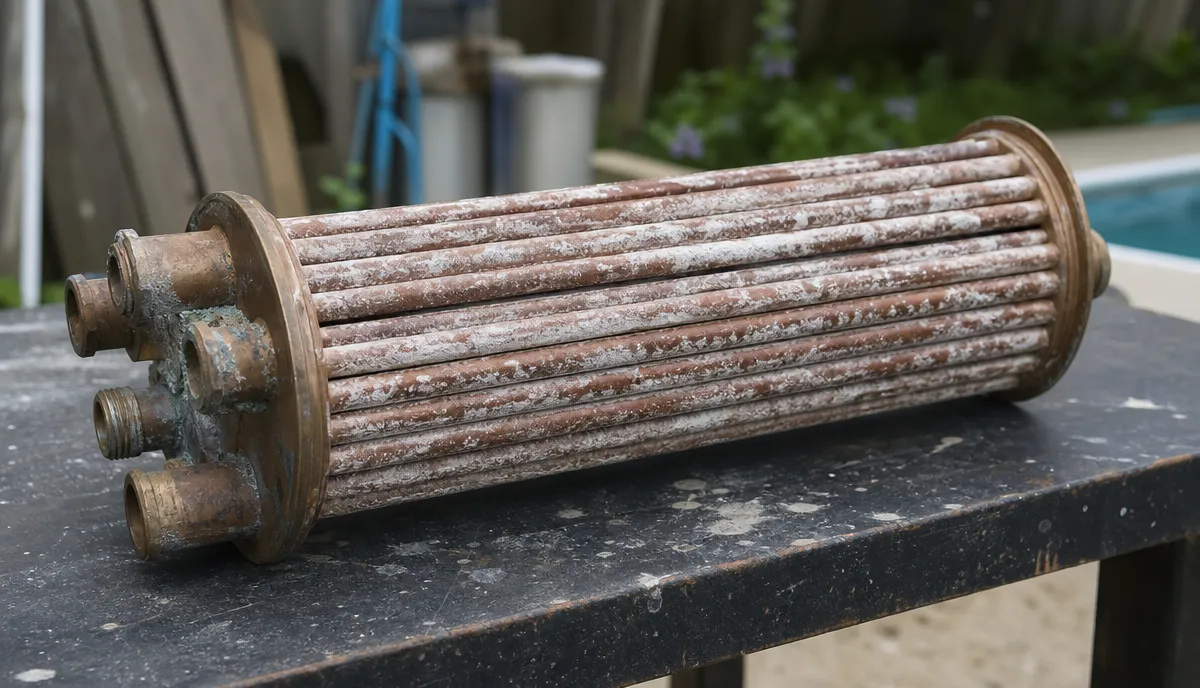
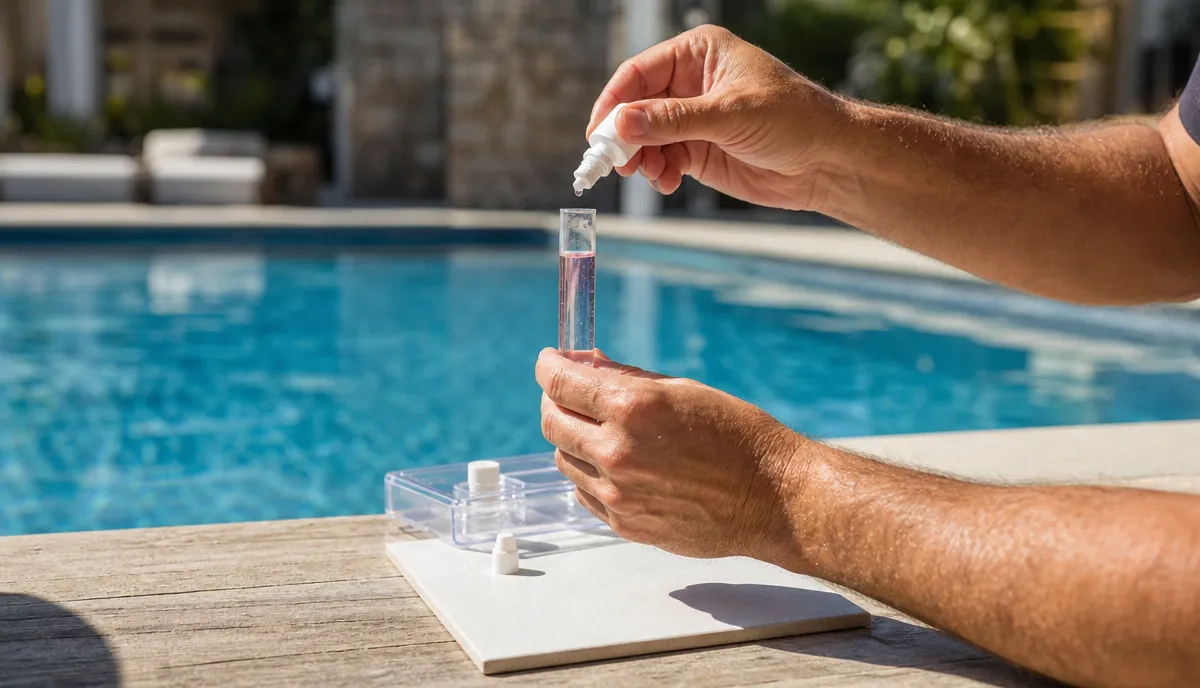
Which is an argument for water balance rather than for a product
Both failures come from how the pool is run, not from the heater being a bad heater.
Applies to a diagnostic and repair visit, and covers up to the first hour of work on site. Parts and any additional labour are on top, quoted before we do them.
We do not offer financing.
Products we install carry the full manufacturer's warranty — length and terms vary by manufacturer and are generally between one and three years, administered under that manufacturer's own terms.
We do not offer a separate workmanship guarantee, and nothing on this site should be read as one.
Freeze damage is not a warranty matter, and it is worth knowing why: water left in a heat exchanger over winter expands as it freezes and freeze-cracks it. That destroys the exchanger rather than injuring it, and it follows from how the pool was closed rather than from a defect in the part.
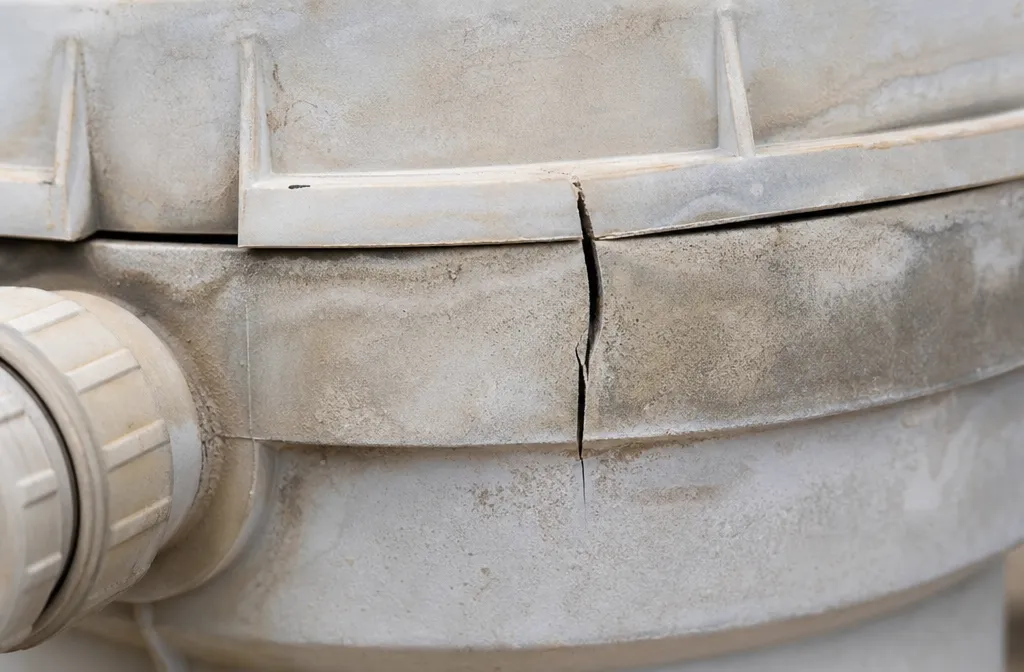
Freeze damage to a pool pump housing
“The crew is super knowledgeable and courteous.”
Tell us which one it is doing and we will start where the fault usually is.
Twinsburg is in Summit County, about 18 miles from Lake Erie. Inland, with no lake-effect moderation to stretch the autumn — so a heater here is doing more work for its owner than the same heater would nearer the water, and it is more likely to be run into October.
It is also the town we work out of, which matters for one practical reason: when a diagnostic finds something we stock, the part is not a trip.
For the rest of what we do here see Twinsburg pool service; for how gas and heat pump compare before you buy, see pool heaters; and for the wider pad, pool equipment repair. The list of towns we cover is on service areas.
We do not build pools, we do not service above-ground pools, hot tubs or spas, and we do not offer leak detection.
We do not run gas lines. Where a heater needs gas supply work beyond the unit itself, that is a licensed gas fitter's job and we will tell you so rather than improvise.
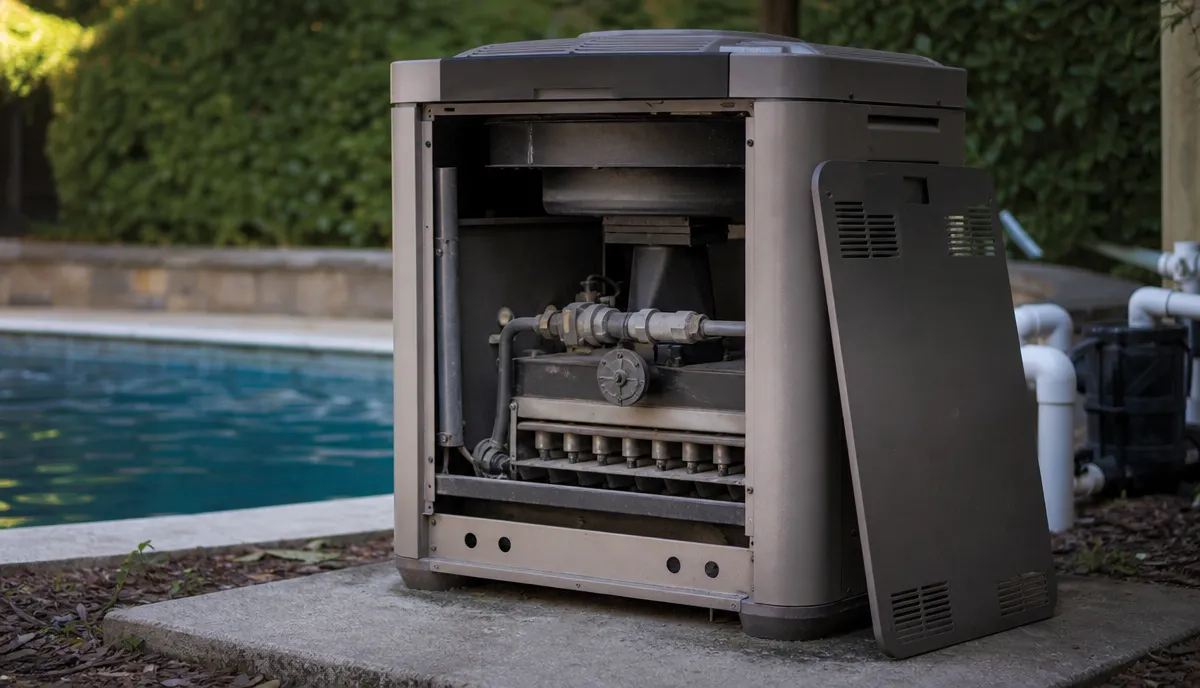
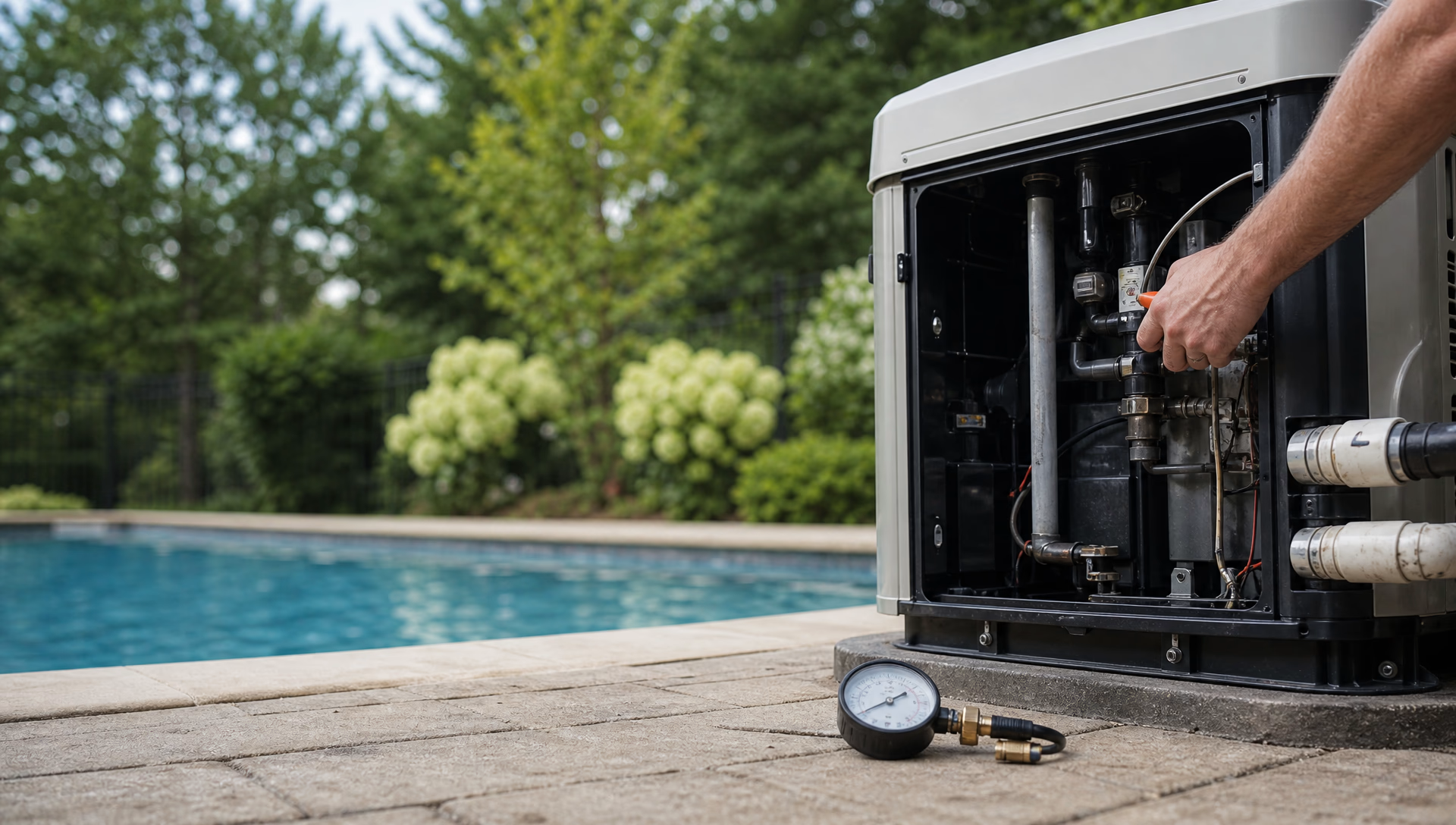
A gas pool heater with its access panel removed
Water flow, more often than anything else. A heater has a pressure switch that must see adequate flow before it will fire, and it refuses rather than risk itself — so a loaded filter, a part-closed valve, a low water level, an air-drawing pump or a variable-speed pump set too slow all present as a dead heater. That is why we check flow before we open the heater.
It points at a different part of the list, yes. On a gas heater, lighting and then dropping out under load often points at gas supply pressure rather than ignition. A high-limit switch tripping is usually a flow problem showing up as a heat problem — the heater got hot because the water was not carrying the heat away.
It tells us what the control board saw — no flame, no flow, high limit — which is the symptom, not the cause. A no-flow code does not say whether the filter is loaded, a valve is shut or the pump speed is too low. Treating a code as a diagnosis is the most reliable way to fit the wrong part.
Because a speed chosen for quiet, economical filtration can be below the flow the heater's switch needs to close. The pump is doing exactly what it was set to do and the heater is doing exactly what it should — but the heater will not fire. It usually needs the heater's own schedule to call for a higher speed.
Sometimes, and often not. An exchanger is the expensive part, so on an older unit its cost can approach what a replacement heater costs — at which point putting a new exchanger into a tired heater is not a good trade. We will tell you which situation you are in rather than default to the repair.
No. Water left in a heat exchanger over winter expands as it freezes and cracks it, and that follows from how the pool was closed rather than from a defect in the part. Products we install carry the full manufacturer's warranty — generally one to three years, on that manufacturer's terms — and we do not offer a separate workmanship guarantee.