

Pool pump repair in Chagrin Falls — where most pump trouble arrives from the suction side, wearing a coat of leaves. $150 service call. Family-owned since 2012.
Everything on the suction side of a pump is a chance for a leaf to stop the water. Under a mature canopy that is not an occasional event — it is the normal condition from September to the close, and it is where most pump trouble in a wooded valley actually starts.
Follow the water backwards from the pump and there are four places it gets blocked.
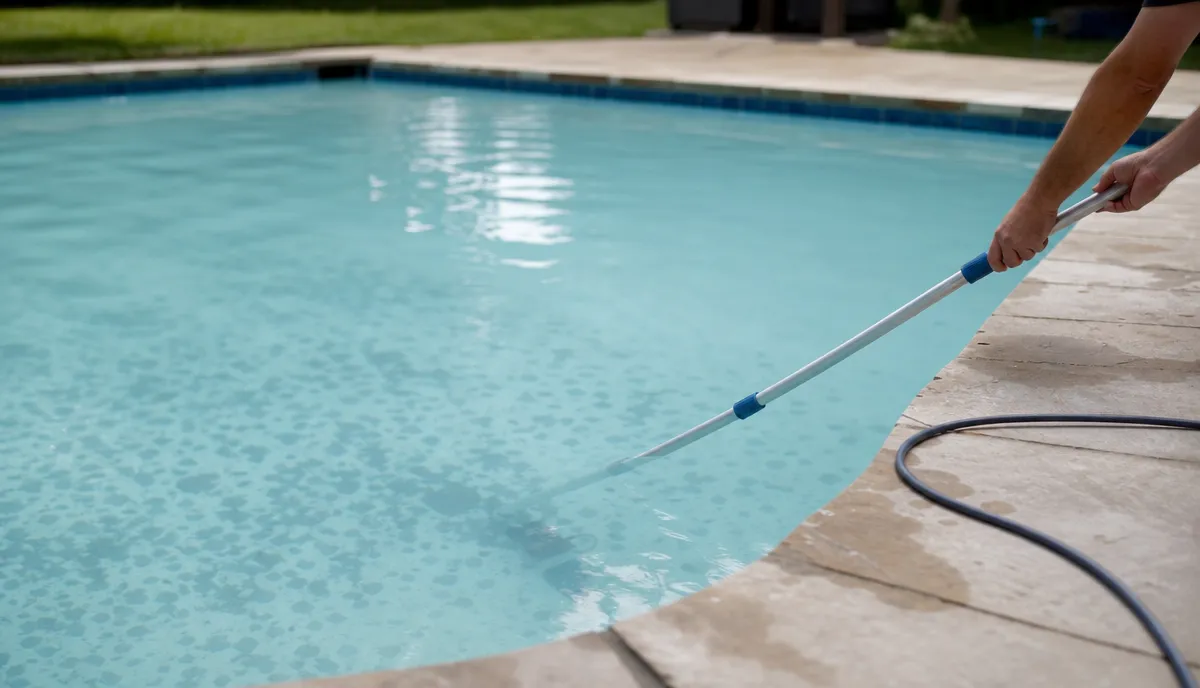
Pool water that has lost its clarity
Two failures, both common under trees:
Its job is to hold surface debris in the skimmer once the water has carried it there, so it cannot float back out when the pump stops.
Weirs are cheap and they are a two-minute item. They are also the part nobody looks at, because the basket is right underneath and takes all the attention.
This is the one that fills, and under a canopy it fills fast.
A packed skimmer basket does not stop the water — it strangles it. The pump can still draw through a wall of wet leaves, and that is exactly the problem: it draws harder, the flow falls, and the pump ends up starved while apparently running normally.
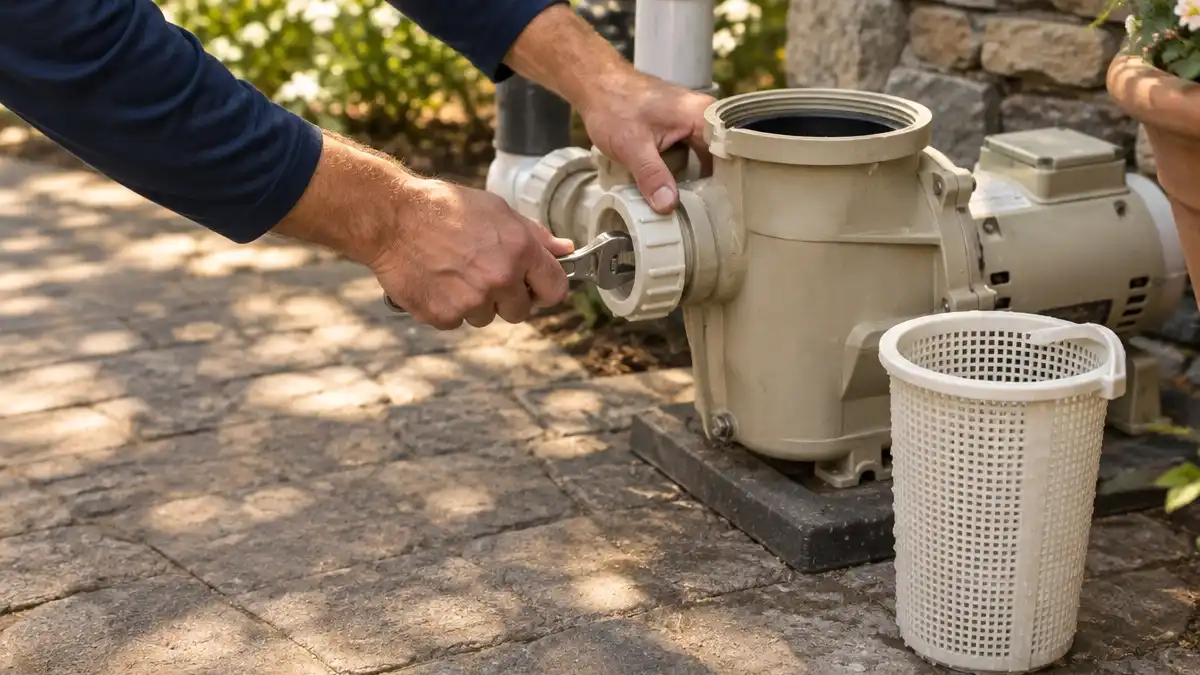
And when a basket is left long enough to become a compacted plug
The pump can lose prime altogether — which is where the real damage starts, because a pump that runs dry destroys its shaft seal. That chain is set out on our pump repair in Solon page.
Grit and leaf fragments on the seal let the pump draw air, and air is worse than debris.
A split basket passes everything straight through to the impeller, which is the failure that turns a two-minute job into a strip-down.
While it runs. That is air getting in, not water getting out.
The strainer pot in front of the pump is the last line, and it catches what the skimmer let through — smaller fragments, broken leaf matter, pine needles, seed pods.
What to look at, beyond whether it is full:
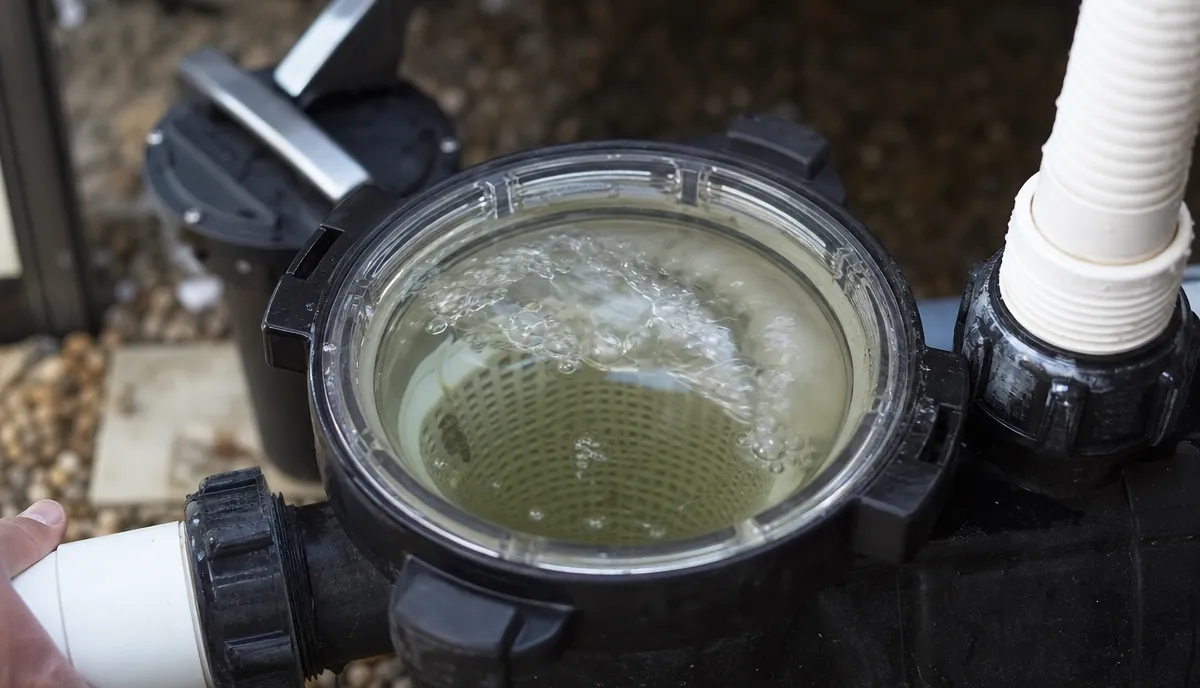
This is where the money is, and it is the one you cannot see.
The impeller is a wheel with narrow vanes, and its passages are much smaller than anything upstream. Hair, fine leaf matter and broken debris pack into those vanes and stay there.
The symptom is the confusing one: the pump sounds completely healthy and the returns are weak. No noise, no leak, nothing obviously wrong — it is simply moving a fraction of the water it should. People chase the filter, the valves and the heater for weeks before anyone opens the pump.
A starved impeller also cavitates, which is the gravel-in-the-housing rattle — and cavitation erodes the impeller while it happens. The noise diagnosis is on our pump diagnosis in Twinsburg page.
Clearing an impeller is a job, not a chore. The pump comes apart, which means the seal and o-rings are exposed and it is the sensible moment to look at them.
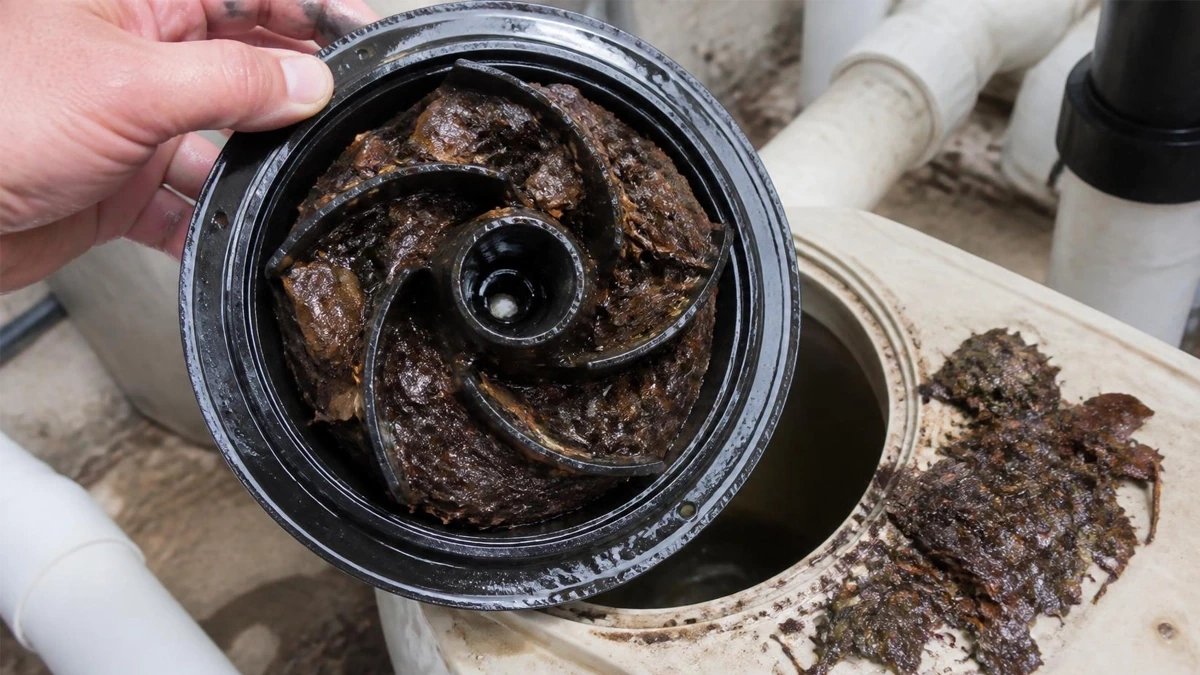
Leaf debris wedged between the vanes of a pool pump impeller

“The crew is super knowledgeable and courteous.”
Tell us what the baskets look like when you open them.
Shorter intervals between checks, not different equipment. From the first real leaf drop to the close, baskets want emptying more often than they do in July. That is the whole adjustment, and it is the difference between a two-minute item and an impeller strip-down.
A chemical and equipment check includes it — from $72 per visit plus chemicals — baskets emptied, the weir looked at, filter backwashed as needed, and a written sheet every visit. Weekly or biweekly.
And the boundary, because this page is about debris: we do not clean pools. No vacuuming, brushing or skimming as a weekly service.
The line we draw is between equipment and surfaces. Baskets, weirs, the strainer pot, the filter and the pump are equipment, and they are ours. The floor, the walls and the waterline are surfaces, and they are not — most of our service customers run a robotic cleaner for those, and we handle what it cannot reach.
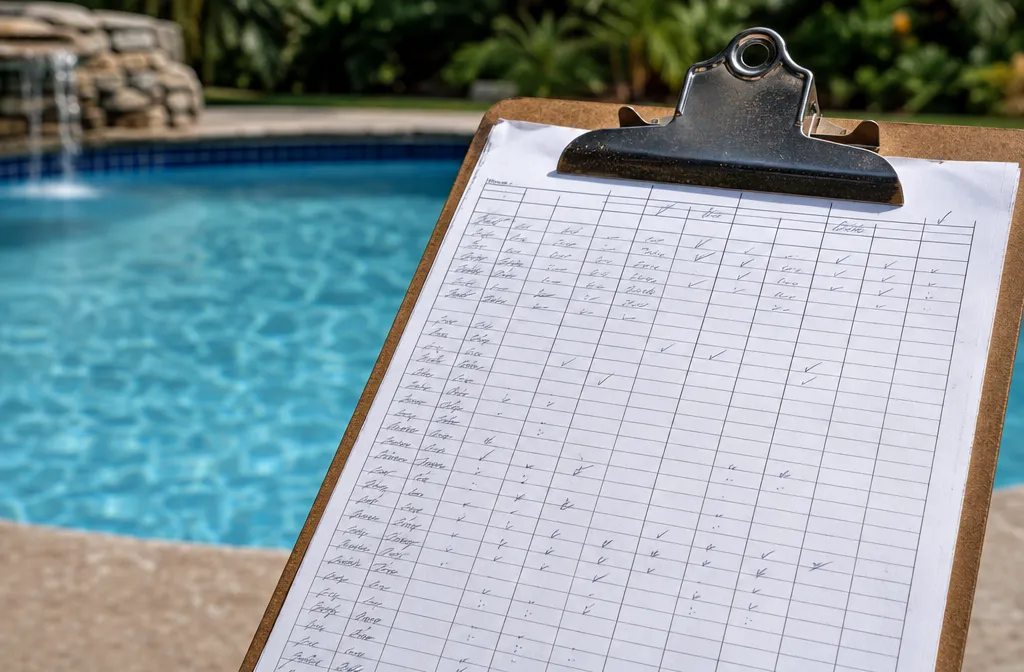
A pool service sheet filled in by hand
Everything above starves the pump. Once the water is past the pump, leaf load does something different — it loads the filter, the pressure rises, the flow falls, and the heater starts short-cycling. Same trees, different mechanism, different fix. See heater repair in Chagrin Falls and pool filter repair.

A pool pump with its strainer lid off and the basket lifted out
A variable-speed pump does not stop leaves getting in, and it is worth saying so rather than implying otherwise. What it does is run slower for longer to move the same water, which is quieter and gentler on everything.
One genuine advantage under trees: at a lower speed the suction is less aggressive, so a partly loaded basket is less likely to be pulled into a compacted plug. It is not a solution to the leaves — it is a bit more tolerance while you get to the basket. See variable-speed pool pumps.
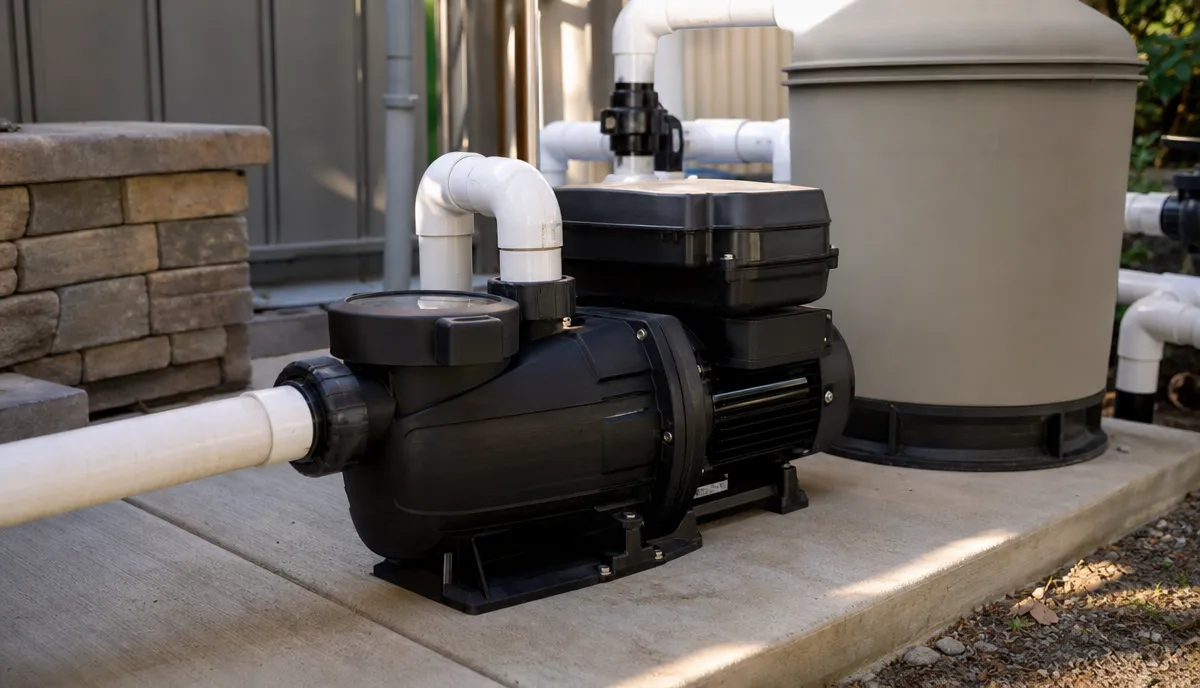
A variable-speed pool pump installed on an equipment pad
A $150 service call applies to a diagnostic and repair visit and covers up to the first hour on site — usually enough to clear an impeller and check the seal while it is open. Parts and further labour are quoted before we do them. Pump supply and replacement are quote-required.
Products we install carry the full manufacturer's warranty, generally one to three years on that manufacturer's terms. We do not offer a separate workmanship guarantee.
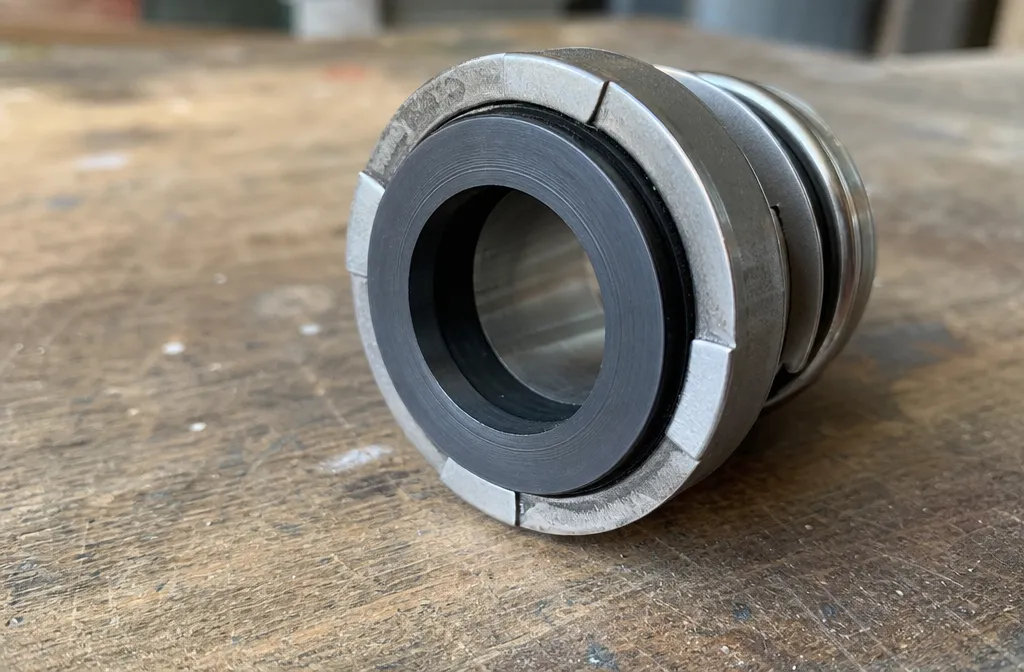
A pool pump shaft seal removed from the pump
Chagrin Falls is in Cuyahoga County, about 9 miles from our base. The pool stock here sits under a mature canopy in a river valley, which is the whole reason this page reads the way it does.
For the rest see Chagrin Falls pool service and pool equipment repair. The list of towns is on service areas.
We do not clean pools, as above. We do not do the electrical supply work — a new circuit is a licensed electrician's job. We do not build pools, we do not service above-ground pools, hot tubs or spas, and we do not offer leak detection.
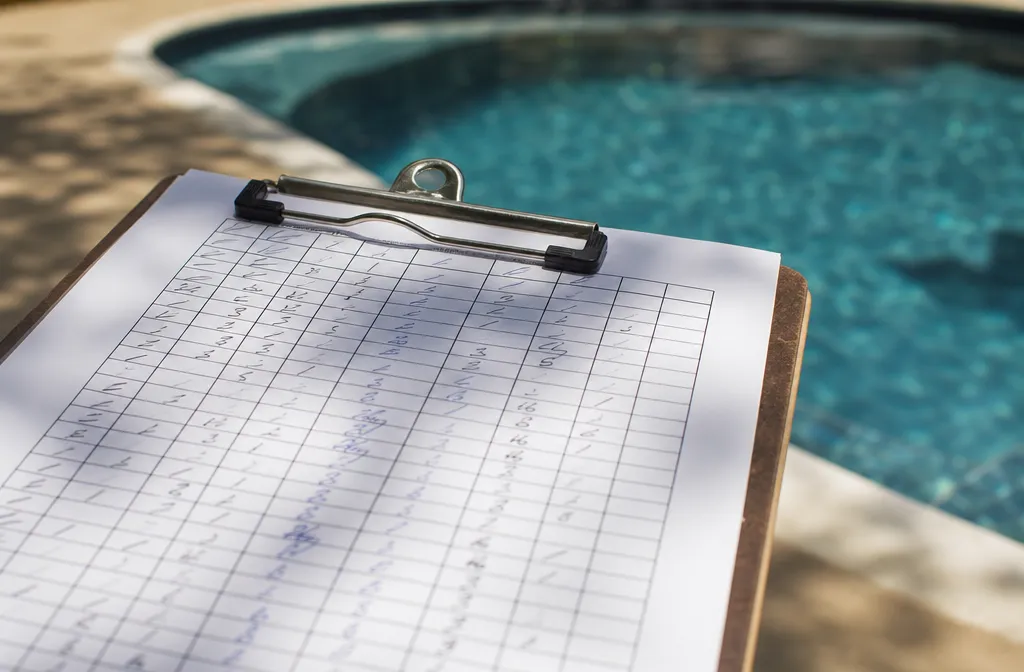
A handwritten visit record on a clipboard at the poolside
Most often a packed impeller. The impeller's vane passages are much narrower than anything upstream, so hair and fine leaf matter pack in and stay — and the pump keeps sounding perfectly healthy while moving a fraction of the water. It is the fault people chase around the filter and the valves for weeks before opening the pump.
More often between the first leaf drop and the close than you would in July — that is the only adjustment needed. A packed basket does not stop the water, it strangles it: the pump draws harder, the flow falls, and if it is left long enough to compact, the pump can lose prime and destroy its own seal.
That is the weir, and it holds surface debris inside the skimmer so it cannot float back out when the pump stops. Under trees it jams both ways — wedged open by a twig, so the skimmer stops trapping anything, or jammed shut, which restricts the flow and makes the pump pull against a closed door. It is a cheap part and a two-minute fix.
Not directly, and we would rather not pretend. It runs slower for longer to move the same water, which is quieter and easier on the equipment. The one real benefit under trees is that gentler suction is less likely to pull a partly loaded basket into a compacted plug — a bit more tolerance, not a solution.
No. We do not vacuum, brush or skim pools as a weekly service. The line we draw is between equipment and surfaces: baskets, weirs, the strainer pot, the filter and the pump are equipment and they are ours; the floor, walls and waterline are surfaces and they are not. Most of our service customers run a robotic cleaner for those.
Same trees, different mechanism. Everything on this page starves the pump from the suction side. Downstream, organic debris loads the filter, the pressure rises, the flow falls, and the heater short-cycles or trips its high limit — that is covered on our Chagrin Falls heater repair page.