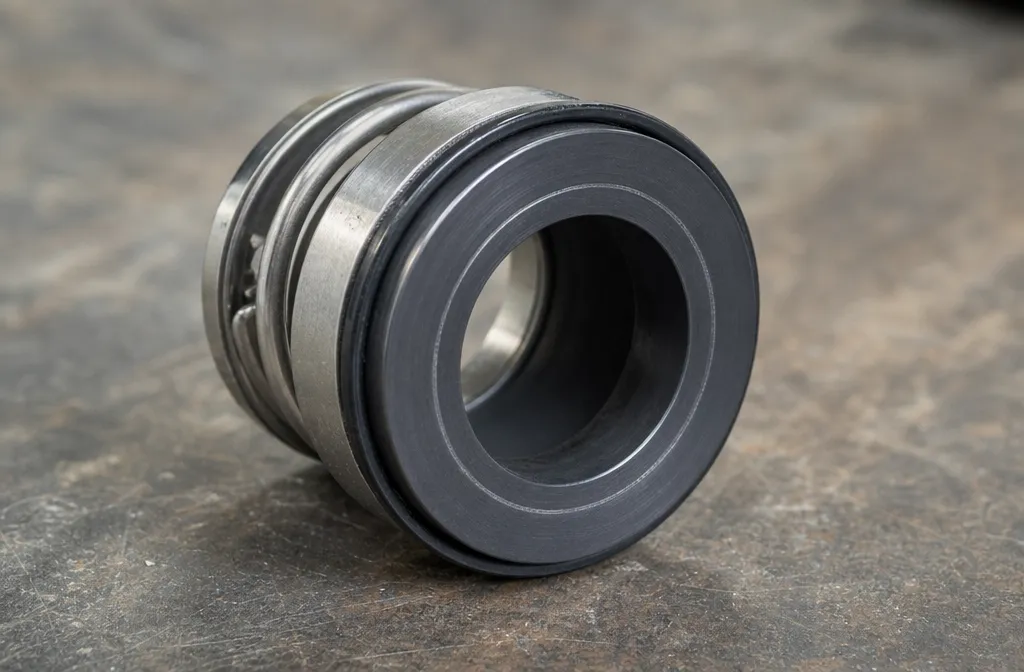

Pool pump repair in Solon — including the failure that starts as a drip and ends as a new motor. Caught early it is a parts job. $150 service call. Family-owned since 2012.
Most pump repairs are a part. This one is a chain, and the reason it deserves its own page is that every stage of it is cheaper than the next — and almost nobody catches it at stage one.

A pool pump with its strainer lid off and the basket lifted out
What makes a seal fail:
A wet end that moves water, and an electric motor that turns it. The shaft runs from one into the other, and the only thing keeping pool water out of the motor is the shaft seal around that shaft.
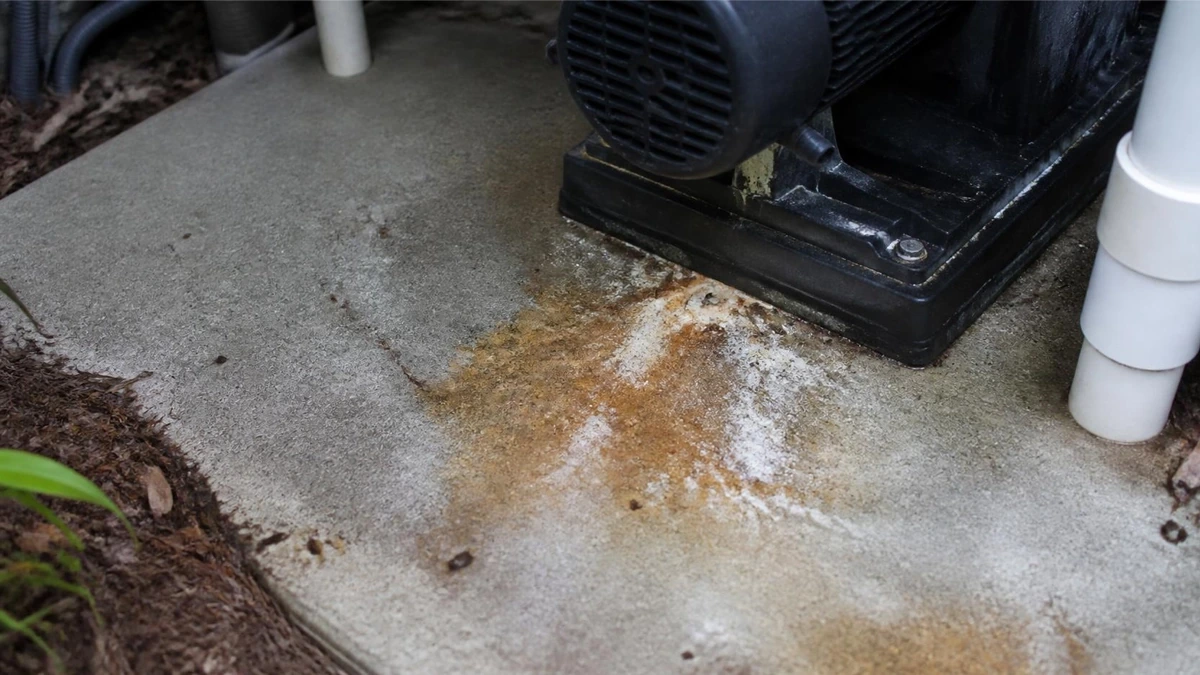
Not a leak — a damp patch under the pump, or a stain on the pad that is there in the morning. It does not affect performance at all, which is exactly why it gets ignored.
This is the stage that costs money, and it is invisible.
The water getting past the seal runs along the shaft and into the motor's front bearing. Pool water is chlorinated and it is not clean, and a bearing is a precision component packed with grease. Water displaces the grease and starts the metal corroding.
Nothing changes that you can hear yet
The pump runs normally. The drip is still just a drip. Meanwhile the bearing is being ruined.
Then a growl. Then a whine that rises and falls with the motor speed — which is the tell, because it tracks the shaft rather than the water.
The question at this point is no longer whether to replace the bearing, but whether the shaft has been damaged too.
A rattle like gravel in the housing is not this. That is cavitation, a suction problem with its own causes, and it is set out on our pump diagnosis in Twinsburg page.
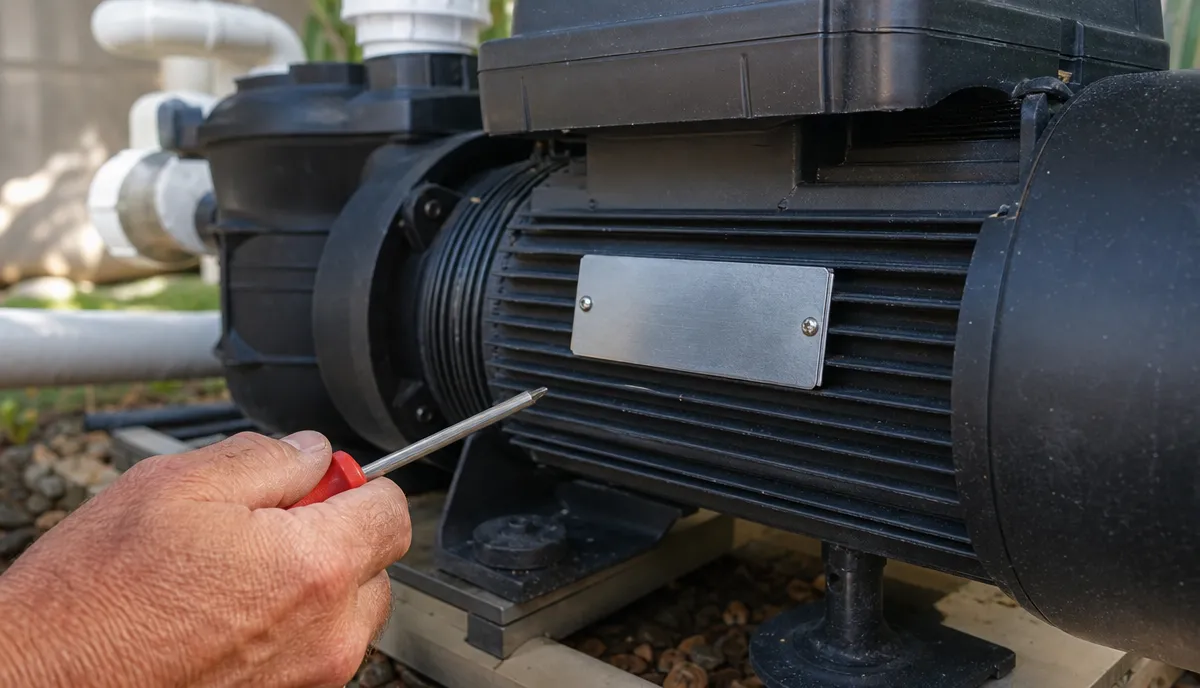
A seized bearing stops the shaft. The motor either trips the breaker trying to turn it or overheats attempting to. Either way you are now buying a motor, and often a motor and a wet end, because the shaft and the impeller do not survive that either.
So: a seal, or a motor. That is the entire argument of this page, and the gap between those two numbers is the reason we mention a drip on a service sheet rather than politely ignoring it.
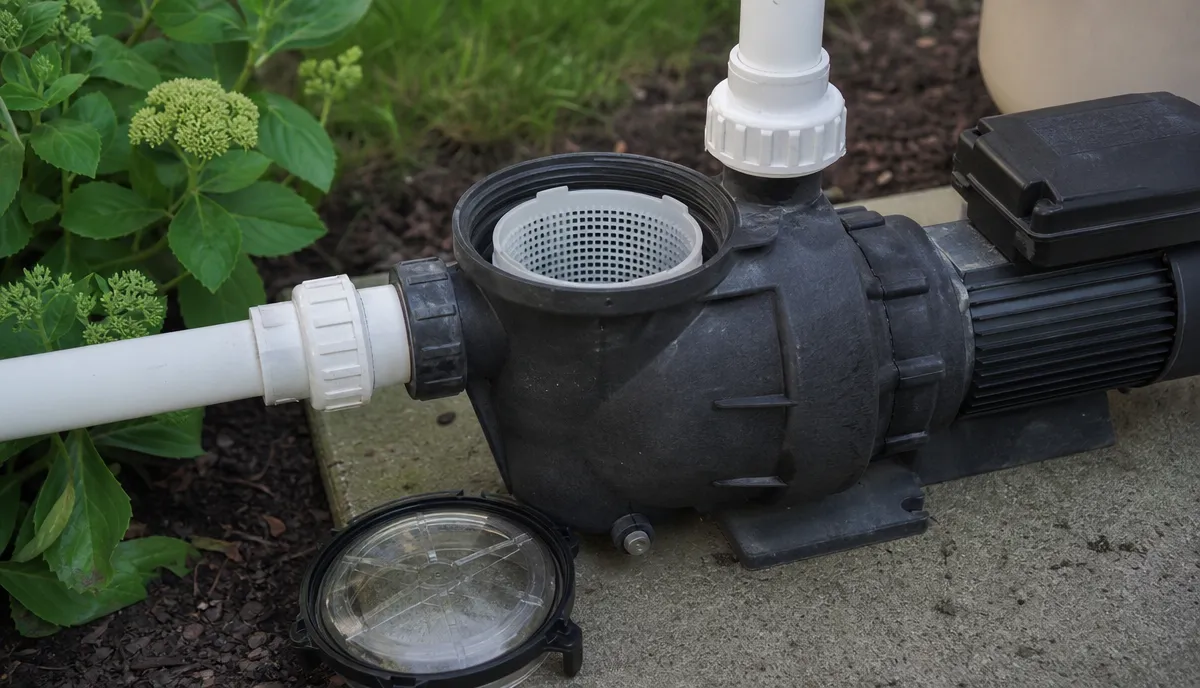
The wet end of a pool pump with the strainer pot lid removed

“The crew is super knowledgeable and courteous.”
Get it looked at while it is still a seal.
At stage one: the seal, plus the o-rings and gaskets that come off to reach it. It is a wet-end job, done on site, and the pump goes back together as it was.
At stage two or three: the seal, and then an honest conversation about the motor. A bearing can be replaced, and on a motor worth keeping that is the right call. On an older single-speed motor it often is not, because you are putting a new bearing into a unit whose other bearing is the same age.
At stage four: you are choosing a pump rather than repairing one. Which is at least the moment to choose a better one — a variable-speed pump runs slower for longer to move the same water, and it is markedly quieter doing it. See variable-speed pool pumps.
We will tell you which stage you are at, and we will not sell a bearing job on a motor that does not warrant one.

A variable-speed pool pump on a pad beside an older single-speed pump for comparison
Look under the pump. That is genuinely the whole method. A damp patch, a mineral stain or a drip on the pad, particularly first thing before the sun has dried it off.
It is on the checklist of every visit we make. A chemical and equipment check includes looking at the pad rather than only at the water, and a weeping seal noted in September is a different bill from a seized motor found in June. Checks start from $72 per visit plus chemicals.
And if you hear the noise change, do not wait for it to get worse to be sure. The noise only travels in one direction.
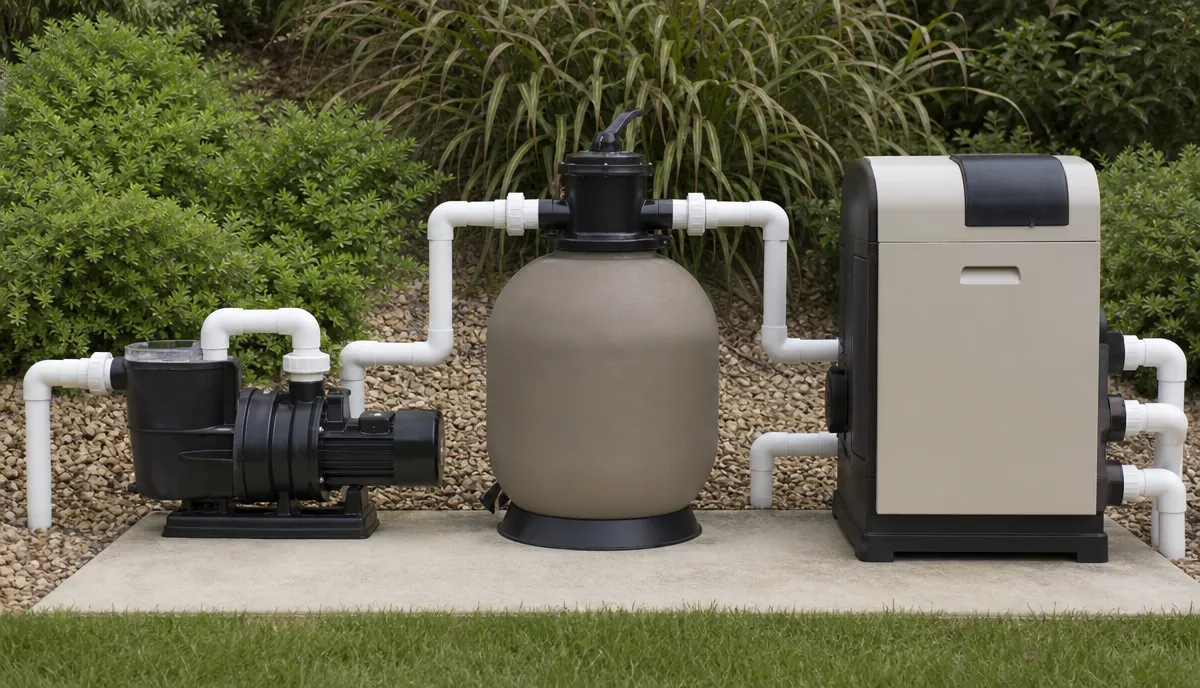
A pool equipment pad with pump, filter and heater
A $150 service call applies to a diagnostic and repair visit and covers up to the first hour on site. Parts and further labour are quoted first. Pump supply and replacement are quote-required — the right pump depends on the plumbing, not on the badge on the old one.
Products we install carry the full manufacturer's warranty, generally one to three years, on that manufacturer's terms. We do not offer a separate workmanship guarantee.
A pump found cracked in the spring is a separate matter — that is freeze damage, it follows from how the pool was closed, and it is not a warranty question. See pool openings and closings.
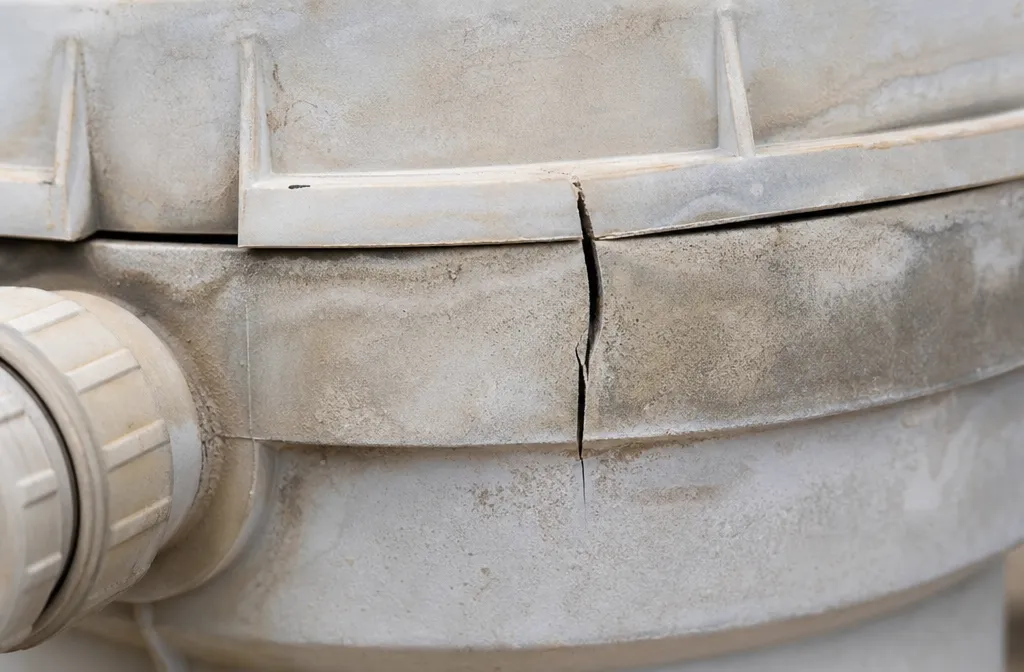
Freeze damage to a pool pump housing
Solon is in Cuyahoga County, about 5 miles from our base — one of the closest towns we serve. For this particular repair that matters more than usual: seals, o-rings and gaskets are exactly the parts we carry, so a stage-one job is often diagnosed and finished in the same visit.
For the rest of what we do here see Solon pool service and pool equipment repair. The list of towns is on service areas.
We do not do the electrical supply work — a new circuit is a licensed electrician's job. We do not build pools, we do not service above-ground pools, hot tubs or spas, and we do not offer leak detection.
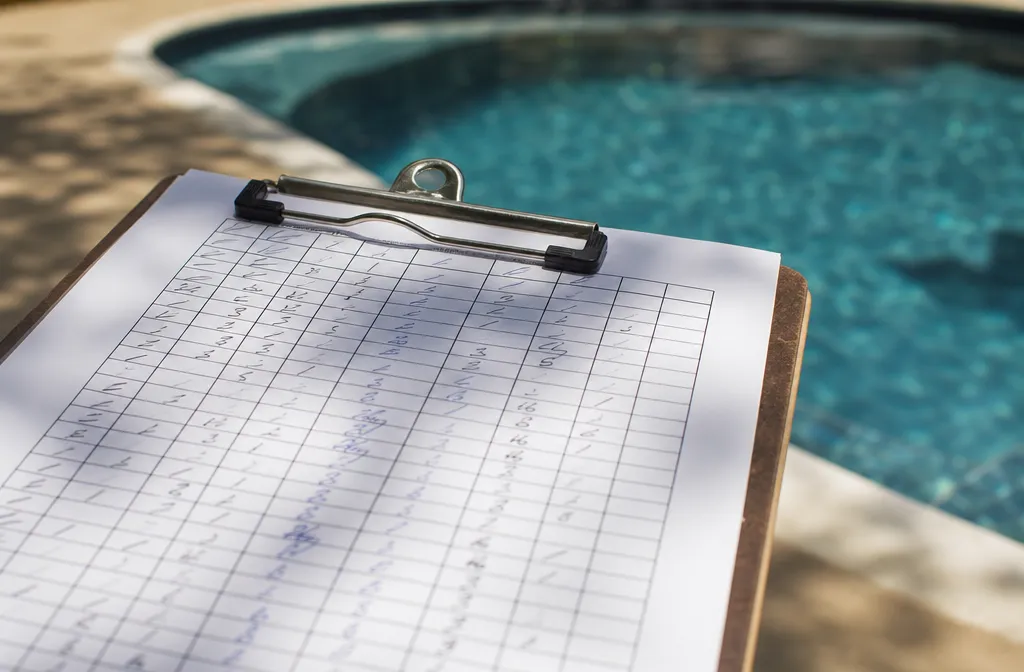
A pool service sheet filled in by hand
That is the one thing on a pool pad genuinely worth acting on early. The drip is the shaft seal, and the water it lets past runs along the shaft into the motor bearing, displaces the grease and starts the metal corroding — silently, while the pump still runs perfectly. A seal is a parts job; the motor it eventually takes out is not.
Not a question we can answer in weeks, and we would not invent a number. What we can say is the direction: the noise only ever gets worse, and by the time it is loud the bearing is already past saving. The useful decision point is when the sound changes, not when it becomes intolerable.
A hum that makes you think "that sounds different", then a growl, then a whine that rises and falls with the motor speed. The speed-tracking part is the tell — it follows the shaft rather than the water. A rattle like gravel is something else entirely: that is cavitation, a suction problem, and it is covered on our Twinsburg pump page.
Sometimes. On a motor worth keeping it is the right repair. On an older single-speed motor it often is not, because the other bearing is exactly as old as the one that failed — so you would be back. We will tell you which case yours is rather than default to the smaller invoice.
Running dry is the main one — the seal is water-lubricated, so a pump that lost prime and kept running has already scored it. Heat, which is what running dry produces. Age, since it is a wear part. And a pump left full over the winter, where freezing moves things that are not meant to move.
Look under the pump, ideally first thing before the sun dries the pad. A damp patch, a drip or a mineral stain is the whole signal. It is on the checklist of every service visit we make, which is one of the more useful things a regular check quietly does.