
Pool pump repair in Twinsburg — noisy, losing prime, leaking or moving less water than it used to. Diagnosed by symptom. $150 service call. Family-owned since 2012.
You do not call about a shaft seal. You call because the pump is making a noise it did not make before, or it will not hold prime, or the returns are weaker than they were, or there is water underneath it. So that is how this page is organised — by the symptom, because the symptom is genuinely diagnostic if you read it properly.
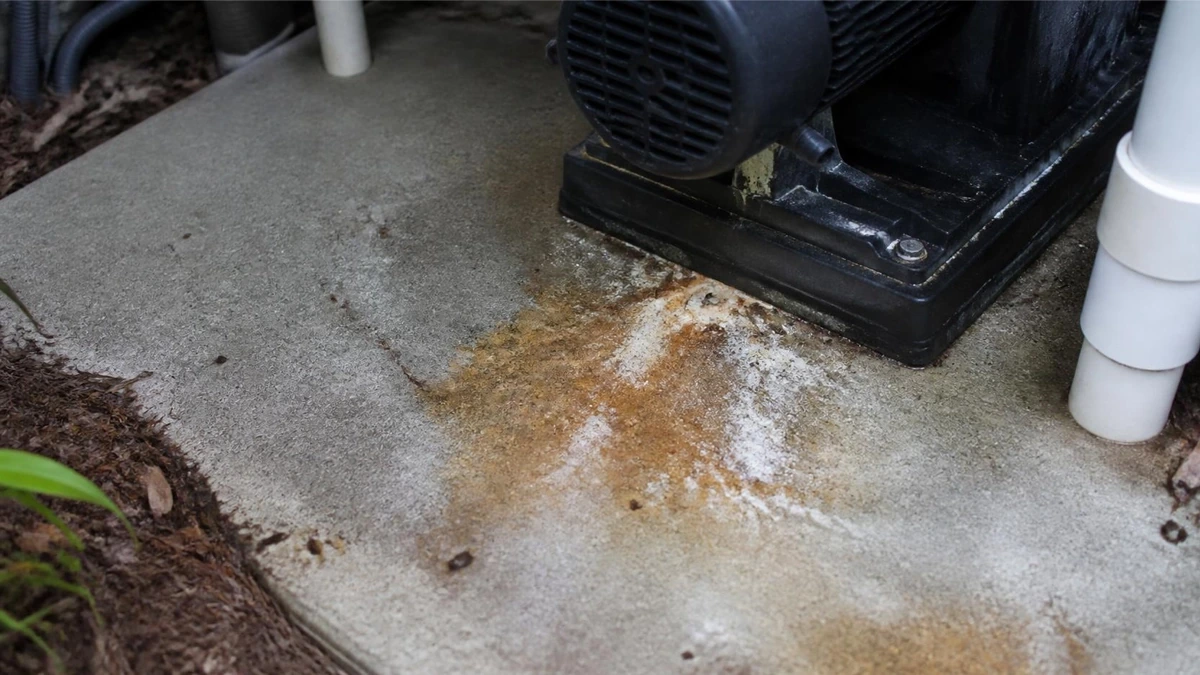
A rust stain on the pad beneath a pool pump motor, from a weeping shaft seal
And telling them apart matters because one of them is not the pump's fault at all.
Is usually bearings. Bearings do not recover; they get louder until they seize. This is a motor job — a rebuild or a replacement rather than an adjustment.
Is usually cavitation, and it is a suction problem masquerading as a pump problem. When the pump cannot get enough water, vapour bubbles form at the impeller and collapse violently, which is the noise you are hearing — and it erodes the impeller while it does it. The fix is upstream, not in the pump: a clogged basket, a part-closed valve, a low water level, a blocked skimmer or a suction line that is drawing air. A pump made to cavitate for a season is a pump that will need replacing for a reason that had nothing to do with it.
A hum, a buzz or a groan without the water moving. Points at the motor not starting properly — on a single-speed pump, often the run capacitor. A motor that hums and trips is not a motor to keep switching on hopefully.
A pump that will not prime is nearly always taking in air somewhere on the suction side, and the list is short and mostly checkable without tools:
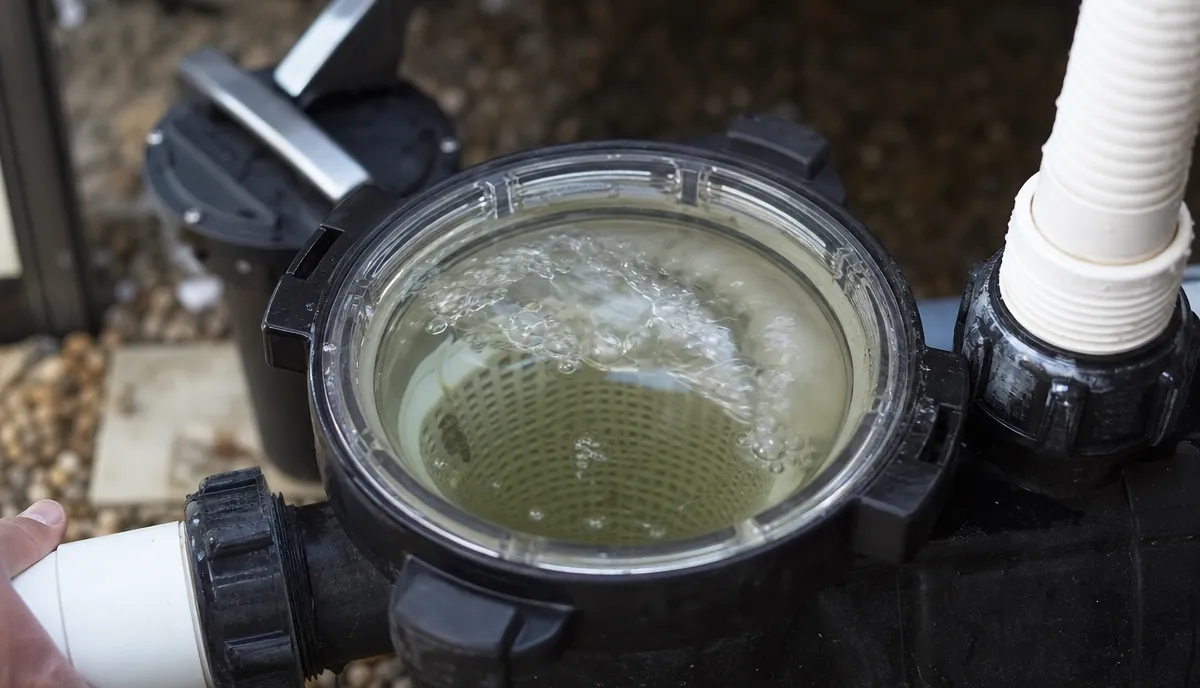
And when air is trapped rather than leaking in
The pump needs to purge it — filling the pot, closing it up and letting the system push the air out through the filter's air relief. A pump asked to lift water with a pot full of air will run dry, and running dry is what destroys the seal.
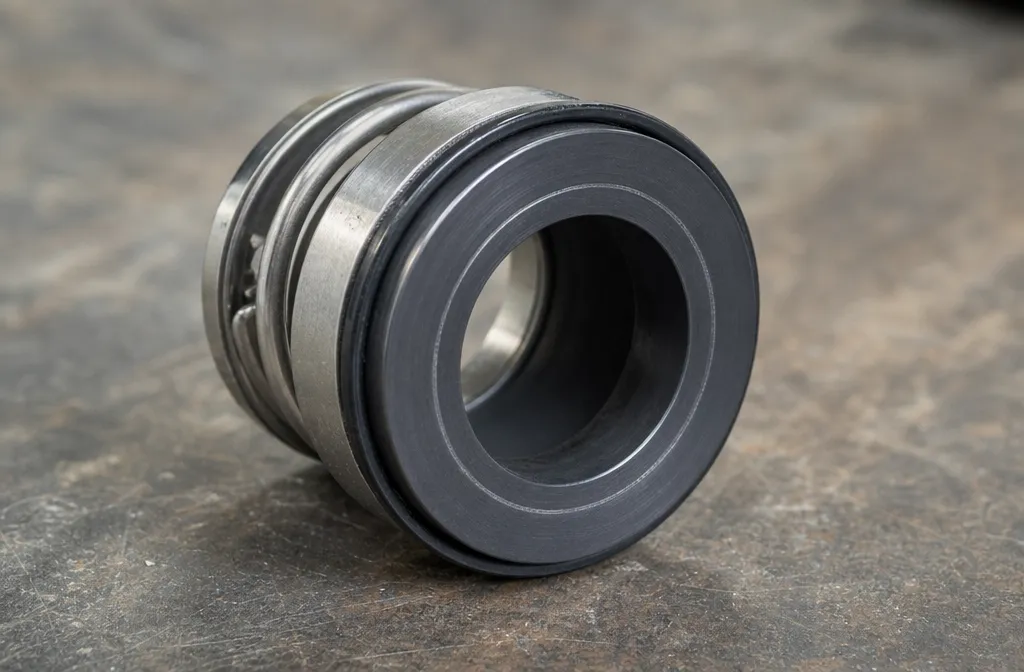
The seal keeps pool water on the wet-end side of the motor shaft. When it fails, water runs down the shaft and into the bearings, and a bearing full of chlorinated water is a bearing on a countdown.
A seal replaced when it starts weeping is a modest job. The same seal ignored takes the motor with it, and then you are buying both.
Work backwards along the water. Flow falls off for reasons that are mostly not the pump:

A pool pump wet end dismantled on a workbench with the impeller, seal and gaskets laid out in order
“Matt and his team are fantastic to work with. Easy to schedule, quality work is done right the first time. Highly recommend.”
Tell us what it is doing and we will start from the symptom.
Every pump motor on an in-ground pool should be bonded — connected into the pool's bonding grid, so all the metal around the water sits at the same electrical potential. It is not a performance feature and it will never show up as a symptom you notice.
We check it anyway, on every pump we work on. A bonding wire left off after a previous replacement is a common find, and it is not the kind of thing to leave for someone else.
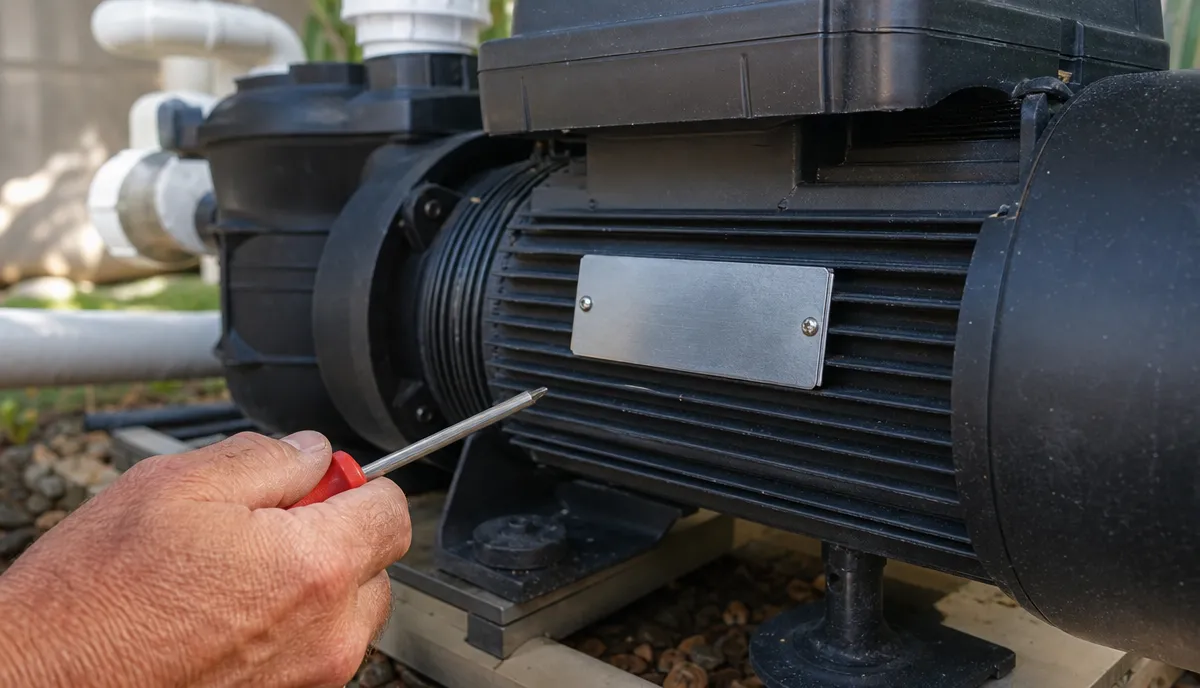
The data plate on a pool pump motor
Worth repairing, usually: a shaft seal caught early, an o-ring, a capacitor, a basket lid, a wear ring, a cleaned-out impeller. These are parts, not projects.
Worth thinking harder about: a motor and a wet end on an older single-speed pump. At that point you are rebuilding most of the pump, and the money is close to what a new one costs — with the difference that a new pump can be a variable-speed one, which runs slower for longer instead of flat out and is markedly quieter with it. See variable-speed pool pumps.
We will tell you which of those you are in. Selling a rebuild on a pump that is not worth rebuilding is easy and we would rather not.
One warning about comparing pumps by the number on the label. Pump motors are rated in more than one way, and the same nominal horsepower can describe two motors that do different amounts of work — an up-rated motor and a full-rated one are not interchangeable, and a de-rated figure is not the same claim as a total one. So the label is not a like-for-like comparison, and matching the number on your old pump is not the same as matching the pump. What the pool needs is a flow rate against the resistance of your plumbing, which is a measurement rather than a badge.
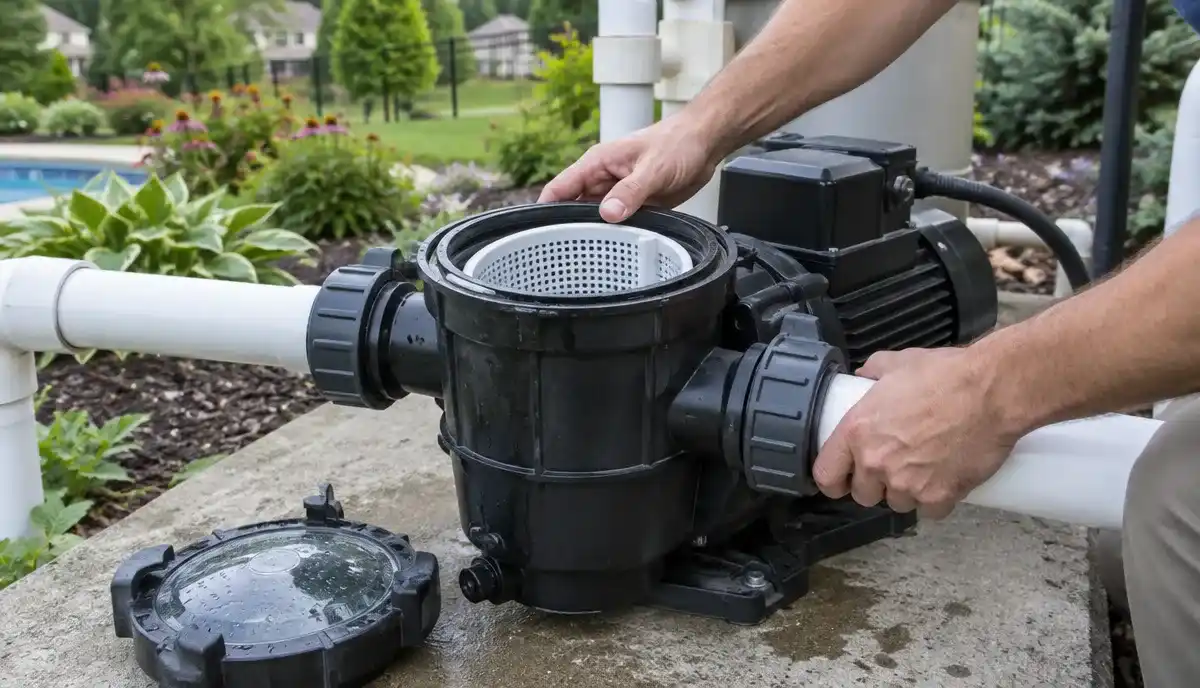
The wet end of a pool pump with the strainer pot lid removed — Twinsburg, Ohio
A pump found cracked in the spring was not a faulty pump. Water left in the volute expands as it freezes and freeze-cracks the housing — it destroys the part rather than injuring it, and it is not a warranty matter, because it follows from how the pool was closed. See pool openings and closings.
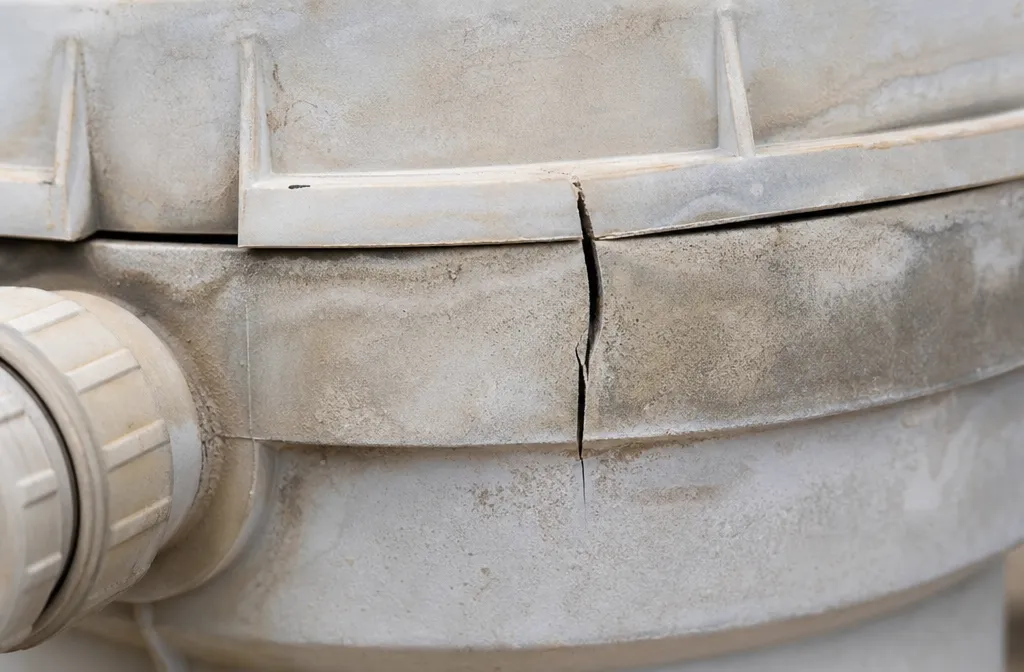
Freeze damage to a pool pump housing
Twinsburg is in Summit County, about 18 miles from Lake Erie, and it is the town we are based in. The practical consequence is stock: when a diagnostic finds a seal, an o-ring or a capacitor we carry, the part is not a return trip.
A $150 service call applies to a diagnostic and repair visit and covers up to the first hour on site. Parts and further labour are quoted before we do them. Pump supply and replacement are quote-required.
For everything else here, see Twinsburg pool service and pool equipment repair. The list of towns is on service areas.
We do not build pools, we do not service above-ground pools, hot tubs or spas, and we do not offer leak detection.
We do not do the electrical supply work. Where a pump needs new circuit work rather than a connection at the existing supply, that is a licensed electrician's job and we will say so.
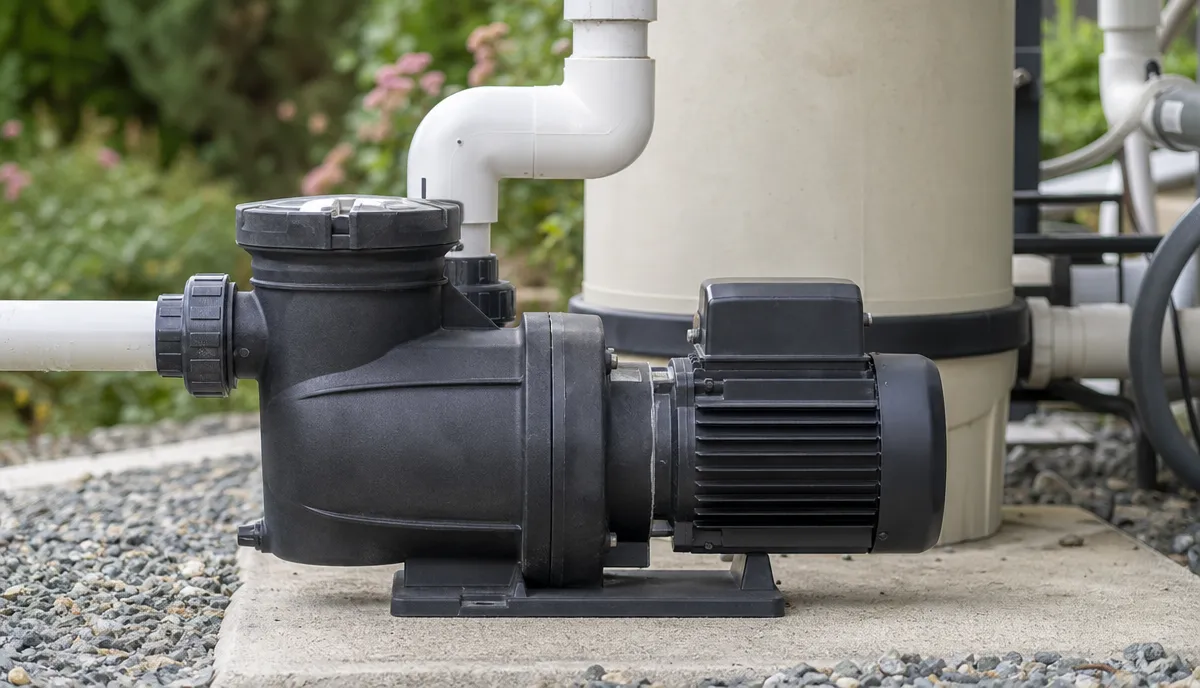
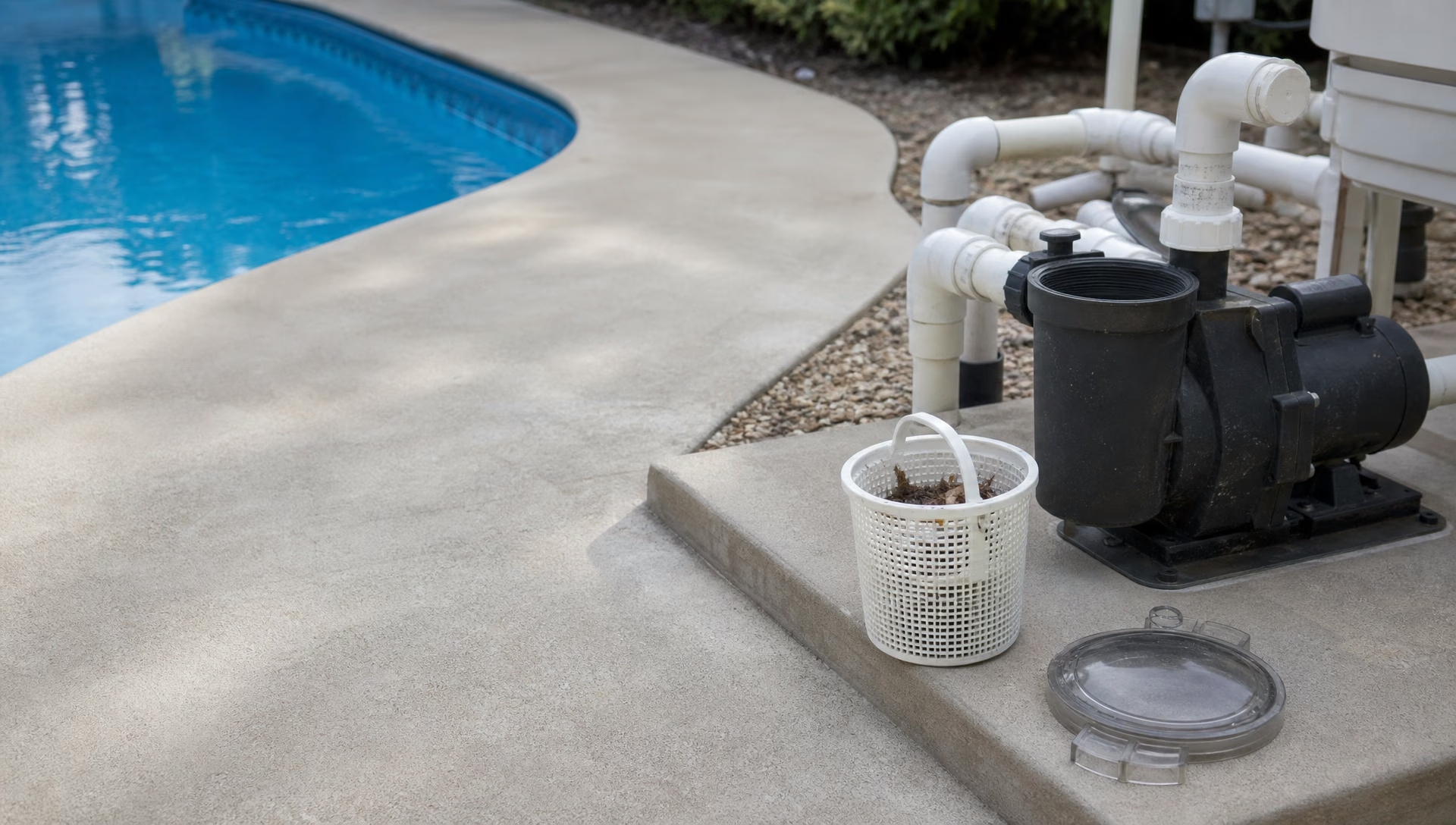
A pool pump of the type we service, on its pad
That noise is usually cavitation, and it is a suction problem rather than a pump fault — the pump cannot get enough water, so vapour bubbles form at the impeller and collapse. The cause is upstream: a clogged basket, a part-closed valve, a low water level or a suction line drawing air. Left running, it erodes the impeller, so it is worth chasing rather than tolerating.
The pump lid o-ring. It is the most common cause by a distance — dry, flattened or gritty, and the pump draws air past it, which you can often see as bubbles in the basket. After that: the water level, the basket lid seating properly, drain plugs or a union left loose after a service, and the valve positions.
Better not. That is the shaft seal, and the water it lets past runs down the shaft into the motor bearings. Replaced when it starts weeping, it is a modest job; ignored, it takes the motor with it and you buy both.
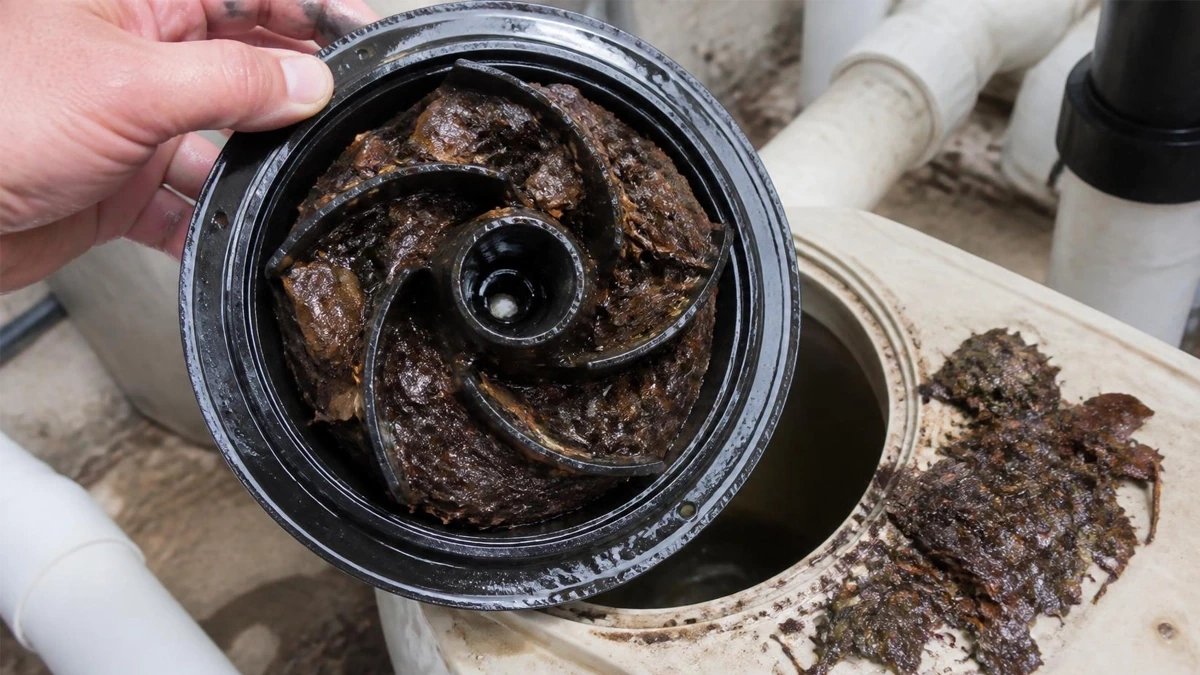
A packed impeller does exactly that — hair and fine debris fill the vanes, so the pump moves a fraction of the water while sounding perfectly healthy. A loaded filter, a full basket, a worn wear ring, or simply a variable-speed pump running at a lower speed than you think will all do it too.
A seal, an o-ring, a capacitor or a cleaned impeller is a repair worth making. A motor and a wet end together on an older single-speed pump is close to the cost of a new pump — and a new pump can be variable-speed, which runs slower for longer and is much quieter. We will tell you which situation yours is.
No. Water left in the volute expands as it freezes and cracks the housing, and that follows from how the pool was closed rather than from a defect. Products we install carry the full manufacturer's warranty, generally one to three years on that manufacturer's terms, and we do not offer a separate workmanship guarantee.