

Pool heater repair in Chagrin Falls — where the heater that starts misbehaving in September is usually telling you about your filter, not about itself. $150 service call.
There is a seasonal pattern to heater calls in a wooded valley, and it is worth naming.
The heater ran perfectly all summer. Then the nights cool, you start actually using it — and it begins running for a few minutes and shutting down, or cutting out and restarting, or refusing to hold temperature on a cold evening.
The heater has not changed. The water going through it has. September is when the trees start dropping, and organic debris is what loads a filter fastest.
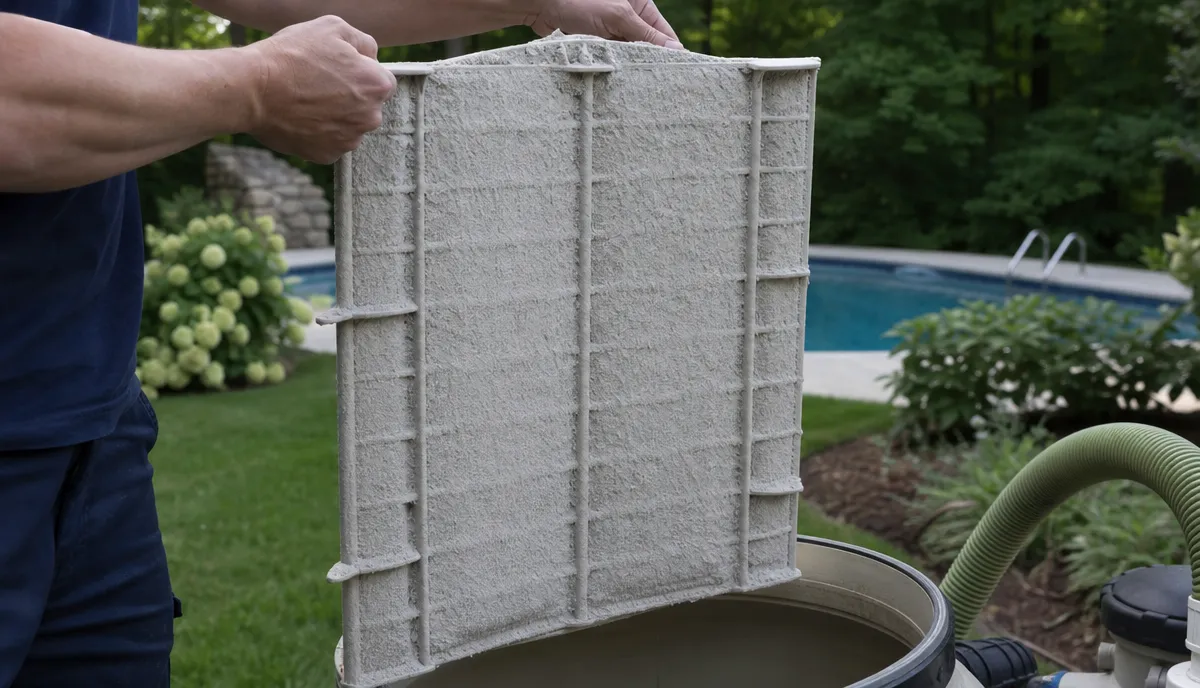
A filter element coated
So you get one of two symptoms, and both look like a heater fault:
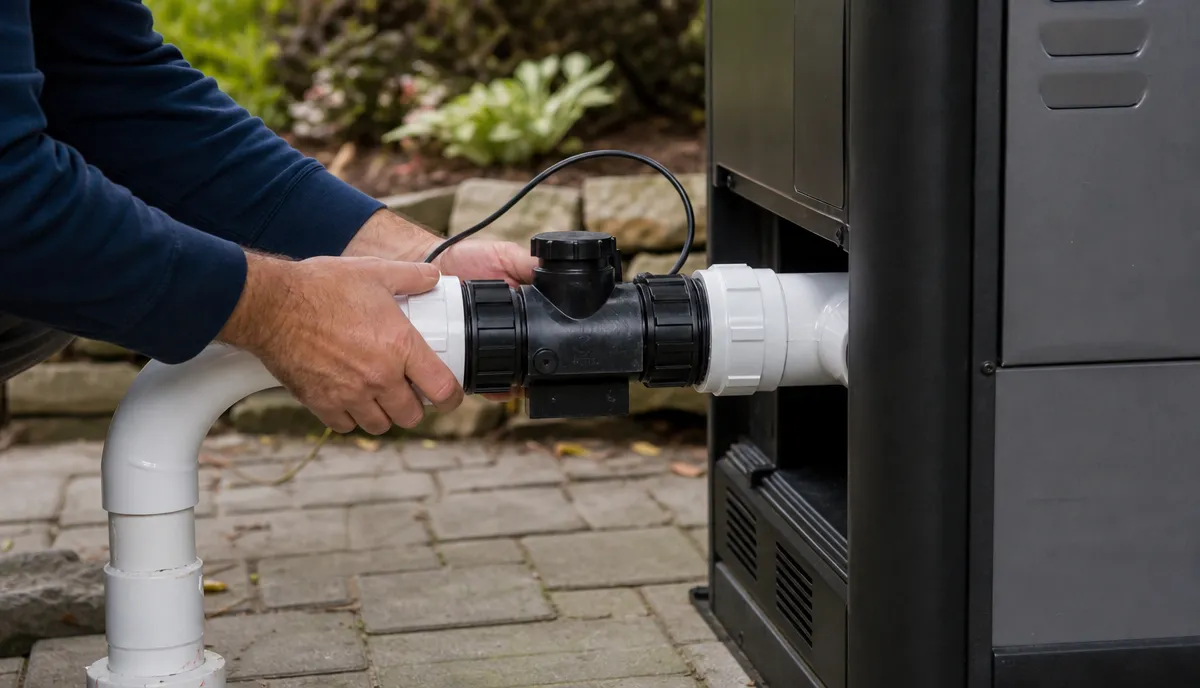
There is a switch that has to see flow before the burner will fire, and a high-limit that shuts things down if the heater gets hot without the water carrying the heat away.
As debris accumulates, the pressure across the filter rises and the flow through the whole system falls. Push that far enough and the flow reaching the heater drops below what the switch will accept.
Neither of those is a heater repair. They are a filter problem being reported by the only component on the pad with the sense to complain.
This is the part that surprises people, and it is why the autumn is worse than the pollen season.
Fine mineral dust and pollen load a filter gradually and fairly evenly.
Leaf matter and the organic material that comes off it do two things at once: the coarse fragments block the medium physically, and the dissolved organics coat it. A coated filter medium does not clean up with a backwash — the pressure comes down a little and then goes straight back up, because what is left behind is a film rather than a pile of debris.
Which is the diagnostic, and you can do it yourself. After a clean or a backwash, does the pressure return to the baseline it used to sit at? If it does, the filter is fine and it was just loaded. If it comes down briefly and climbs straight back, the medium needs a proper clean rather than a rinse.
Know your own baseline. There is no correct number to quote you — the right pressure for your pool is whatever it reads immediately after a genuine clean, and what matters is the rise from there. See pool filter repair.
A proper offsite clean is $125
Soaking in cleaning solution and pressure washing, which is what actually removes a film. That is a different job from the on-site rinsing included in a regular service visit.
Leaves cause a completely different set of problems — a packed skimmer basket, a full pump basket, an impeller stuffed with debris. Those starve the pump rather than restricting the filter, and they present differently. See pump repair in Chagrin Falls.
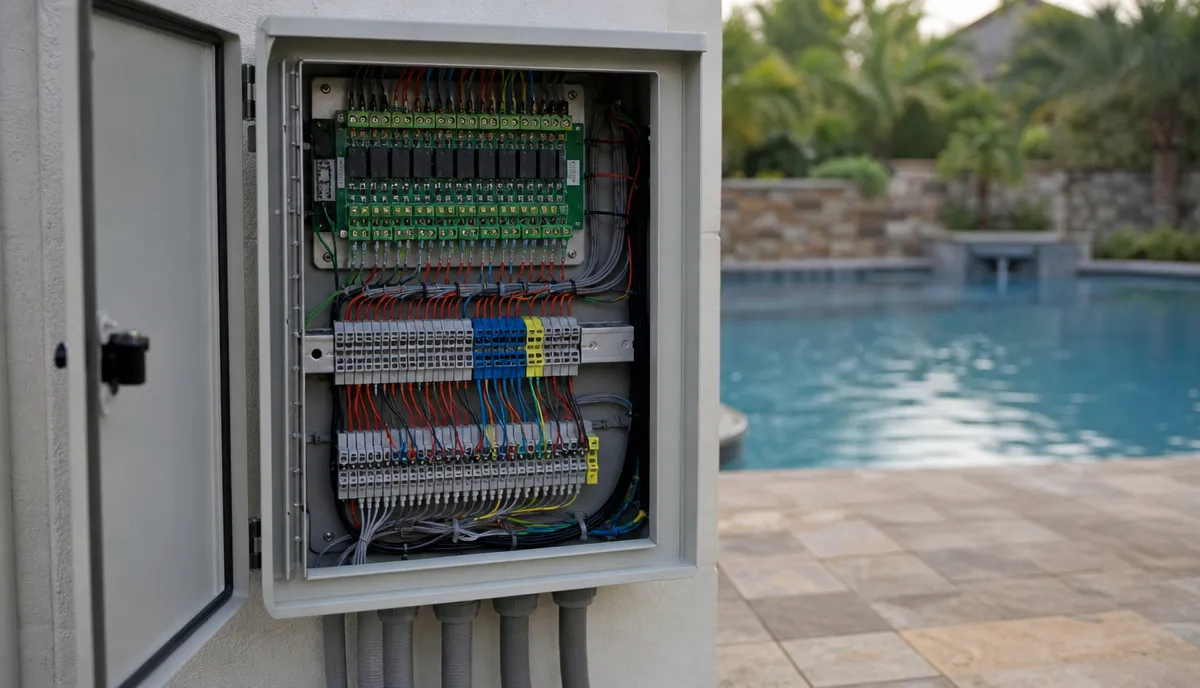
Flow, then gas or power, then ignition, then controls, then the exchanger — is set out on our heater diagnostics in Twinsburg page. We work through it in that order for exactly the reason this page describes.
Shorter intervals, not different equipment. Under a mature canopy the filter wants attention more often between September and the close than it does in July — that is the whole adjustment.
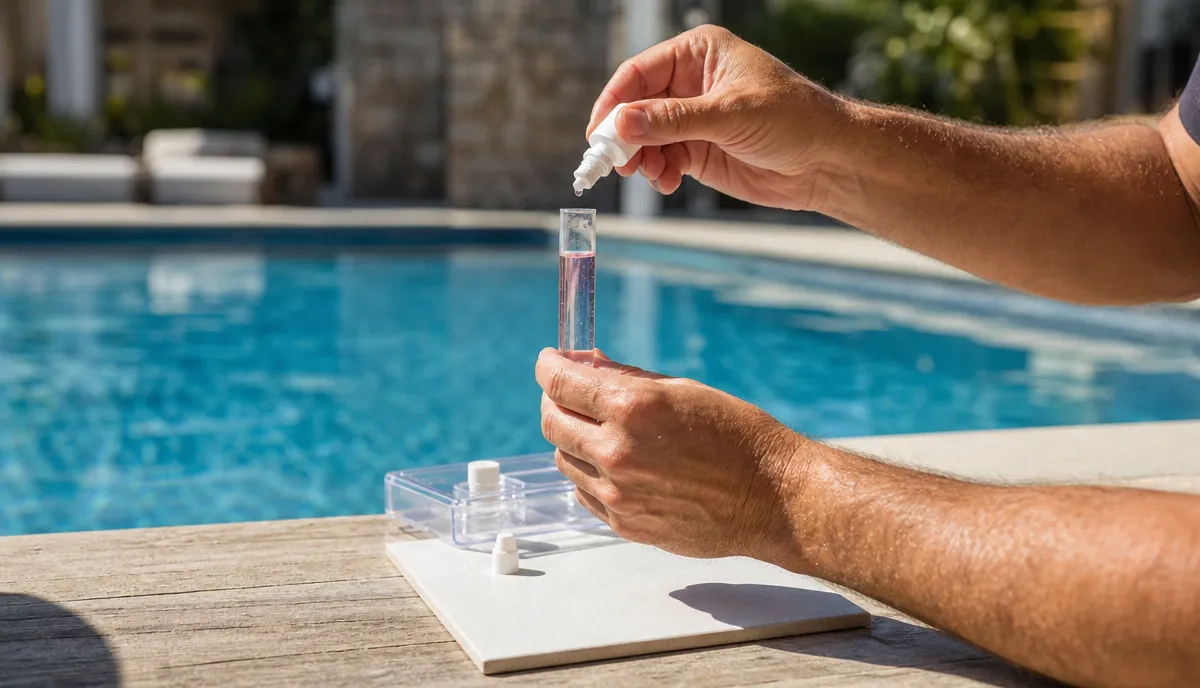
A chemical and equipment check covers it — from $72 per visit plus chemicals — including backwashing as needed, emptying baskets, and reading the filter pressure against your baseline rather than against a number off a chart. Weekly or biweekly, with a written sheet every visit.
And the boundary, stated plainly: we do not clean pools. No vacuuming, brushing or skimming as a weekly service. On a page about leaf debris that is worth being clear about — we look after the water chemistry, the baskets, the filter and the equipment. Most of our service customers have a robotic cleaner handling the surfaces, and we handle what it cannot.
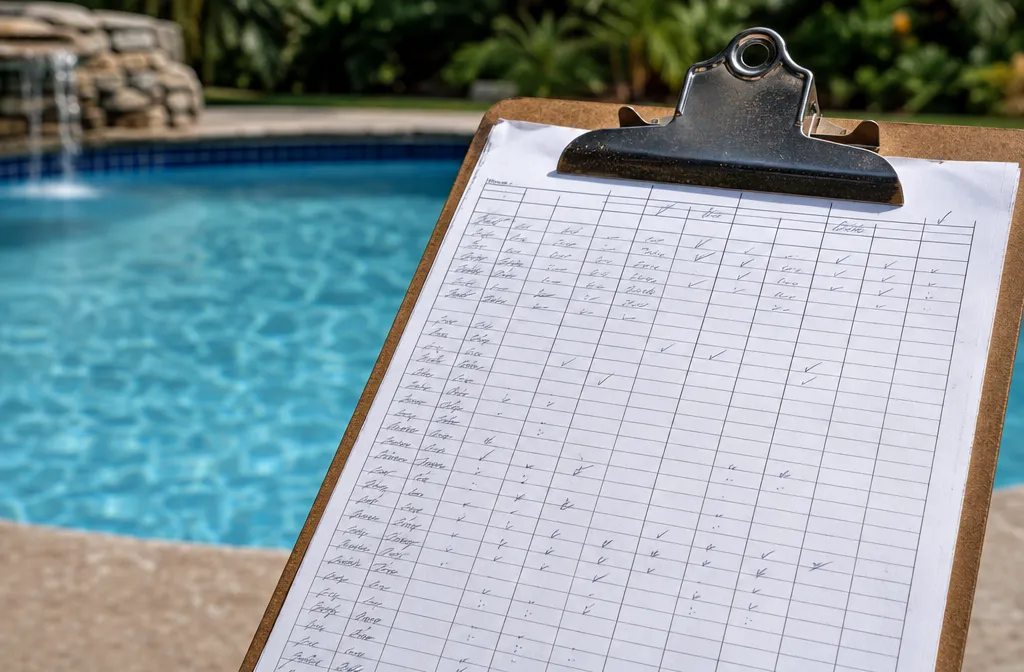
A pool service sheet filled in by hand
“Matt and his team are fantastic to work with. Easy to schedule, quality work is done right the first time. Highly recommend.”
Tell us what your filter pressure is doing — that one answer saves a visit's worth of guessing.
It happens, and the tell is that the flow story does not hold. A heater misbehaving on a freshly cleaned filter with clear baskets and a pump moving water properly is a heater to open up.
At that point the list is the usual one: the flow switch itself, ignition, controls, the exchanger. See pool heaters for how the types differ and pool equipment repair for the rest of the pad.
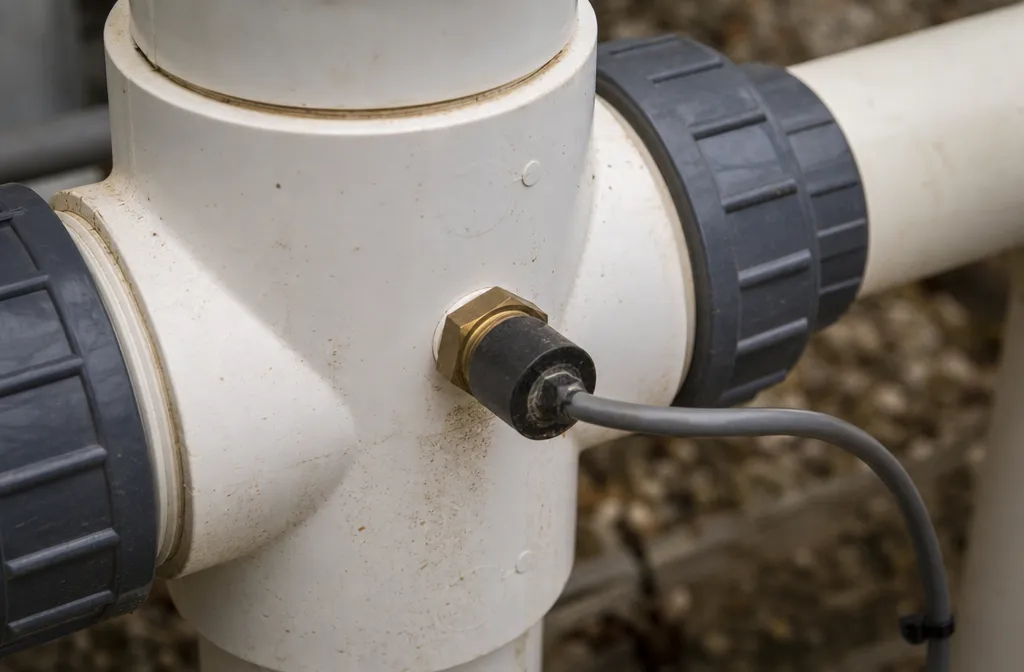
A pool heater flow switch
A $150 service call applies to a diagnostic and repair visit and covers up to the first hour on site. Parts and further labour are quoted before we do them.
Products we install carry the full manufacturer's warranty — generally one to three years, varying by manufacturer and on that manufacturer's terms. We do not offer a separate workmanship guarantee.
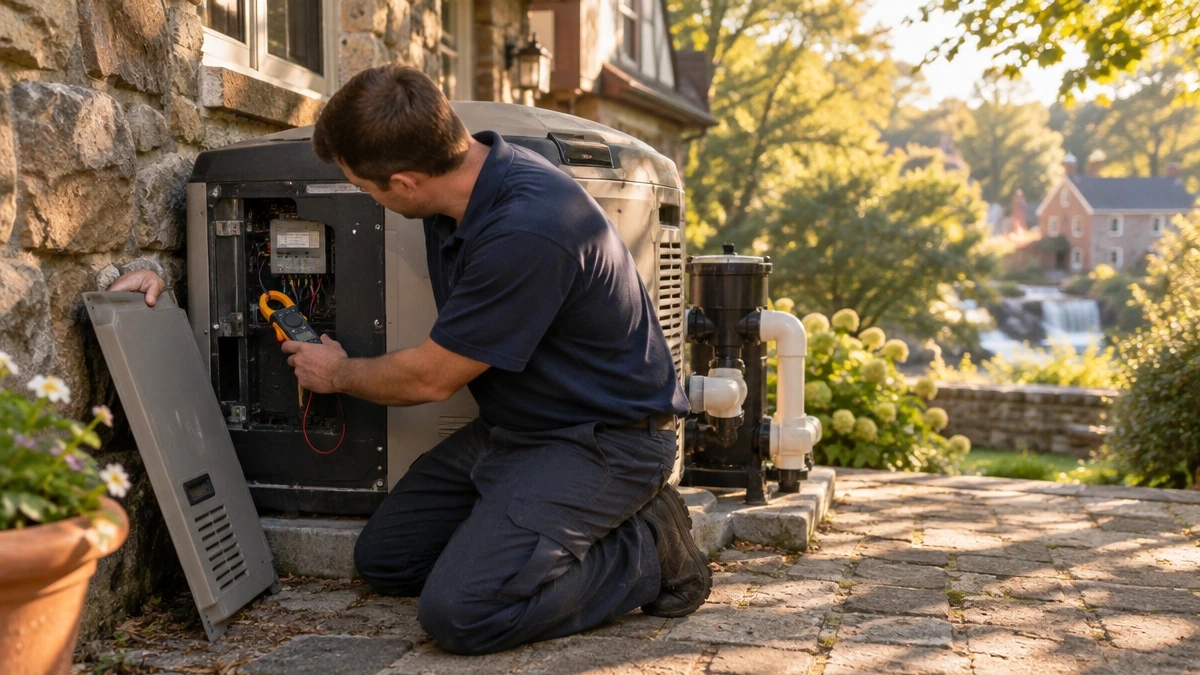
Diagnostic work at a pool heater
Chagrin Falls is in Cuyahoga County, about 9 miles from our base. At about 11 miles from Lake Erie it is mid-gradient, so the season runs a little later than inland — which unhelpfully overlaps the weeks when the trees are heaviest. That overlap is the reason this page exists.
For the rest of what we do here see Chagrin Falls pool service. The list of towns is on service areas.
We do not clean pools, as above. We do not run or alter gas lines and we do not do the electrical supply work. We do not build pools, we do not service above-ground pools, hot tubs or spas, and we do not offer leak detection.
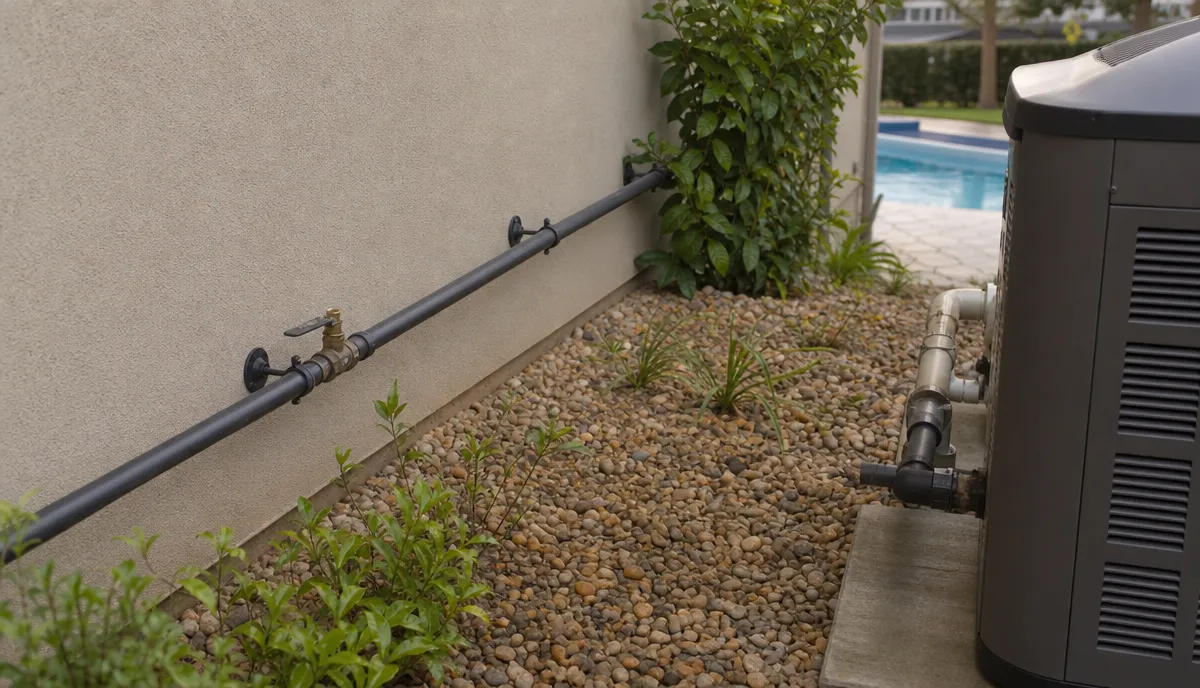
A gas supply line running to pool equipment
Almost certainly your filter rather than your heater. September is when the trees begin dropping, organic debris loads a filter faster than anything else, and a loaded filter restricts flow through the whole system. The heater needs a minimum flow before it will fire, so it shuts down — which looks exactly like a fault.
Both are flow symptoms with the same root. Firing and stopping is the flow switch opening once the system settles; tripping out is the high limit, because the burner is adding heat faster than the reduced flow can carry it away. In both cases the heater is protecting itself rather than failing.
Because leaf matter does two things: the coarse fragments block the medium and the dissolved organics coat it. A backwash shifts the debris but not the film, so the pressure drops briefly and climbs again. That is the signal for a proper clean rather than another rinse — an offsite clean is $125, soaking and pressure washing, which is what removes a coating.
There is no number worth quoting you, and anyone who gives you one is guessing about your pool. The right pressure is whatever it reads immediately after a genuine clean — that is your baseline — and what matters is how far it has risen from there.
No, and it is worth being clear on a page about debris. We do not clean pools — no vacuuming, brushing or skimming as a weekly service. What we look after is the water chemistry, the baskets, the filter and the equipment. Most of our service customers run a robotic cleaner for the surfaces.
When the flow story does not hold up. A freshly cleaned filter, clear baskets, a pump moving water properly — and the heater still misbehaving. Then it is a heater to open up, and the list is the flow switch itself, ignition, controls, or the exchanger.