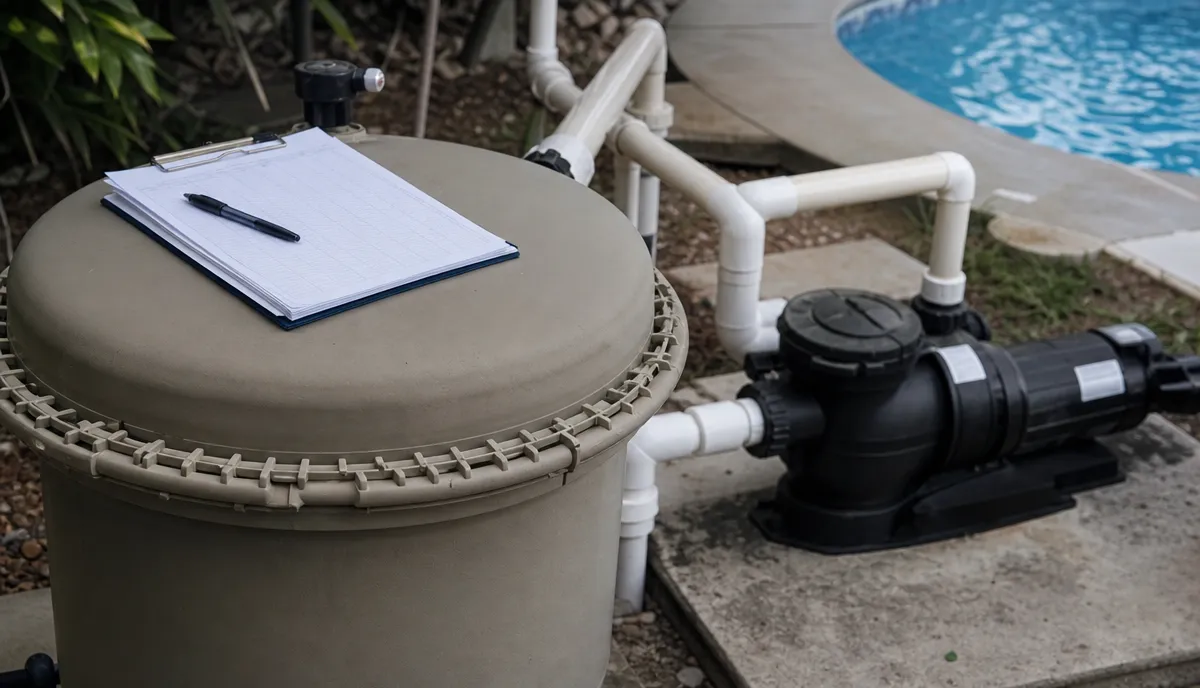

Start with the sentence that saves the most confusion: a salt water pool is chlorinated.
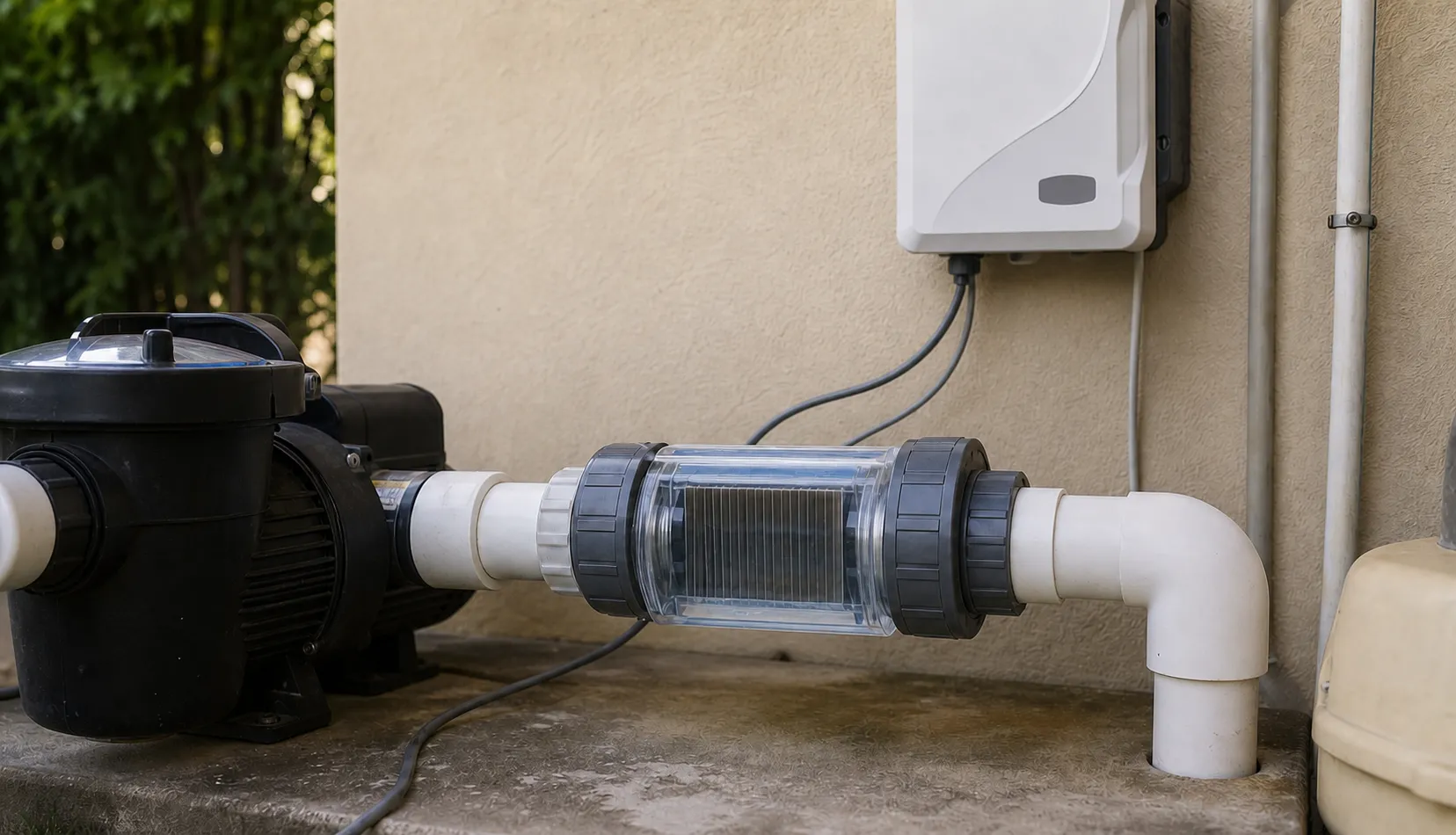
The salt is not the sanitiser. It is the raw material. Dissolved salt passes through a cell on the equipment pad, the cell passes a current through it, and that splits the salt into chlorine on the spot. The chlorine does exactly what chlorine from a bucket does, then reverts to salt and goes round again.
So the real comparison is not salt versus chlorine. It is making chlorine continuously versus adding it in doses — and that is a genuine choice with real trade-offs in both directions.
What Converting Actually Gives You
A steadier sanitiser level, and that is the whole benefit.
A dosed pool swings. Chlorine goes in high and drops until the next dose. A generator holds a narrower band, and steady is easier on swimmers' eyes and skin and easier on the water balance.
What people describe as a salt pool feeling "softer" is mostly that — plus the absence of the sharp smell, which actually comes from chloramines rather than from chlorine itself. Fewer swings, fewer chloramines.
And the water is not seawater. The salinity is a fraction of the ocean's — around the level where you might notice a faint taste and not much more.
What It Asks In Return
The cell is a consumable
This is the honest cost of the system. The plates inside scale up and lose output over time, and eventually the cell is replaced rather than repaired.
Anyone who tells you a salt system removes the chemical bill is comparing the wrong things. You are trading regular chlorine purchases for a periodic hardware purchase and more equipment to look after.
Salt is lost to water leaving, not to chlorination
Chlorinating does not use the salt up — it cycles. What removes salt is water going out: splash-out, backwashing the filter, draining or a partial refill.
So you are not dosing salt on a schedule. You are checking salinity and topping up when the reading has drifted — and evaporation makes it drift upward, because salt does not evaporate with the water.
And the one nobody mentions: your cell makes scale
Read this twice if you are considering a conversion, because it connects two things most owners treat as unrelated.
Making chlorine by electrolysis drives pH upward as a by-product. So a salt pool has a persistent tendency for pH to climb, all season, without anyone adding anything.
High pH is what pushes calcium out of solution — and calcium comes out on the hottest surface in the system, which is the inside of your heat exchanger. Scale there insulates, so the heater burns the same gas to move less heat into the water, and the metal behind the deposit runs hotter than it was designed to.
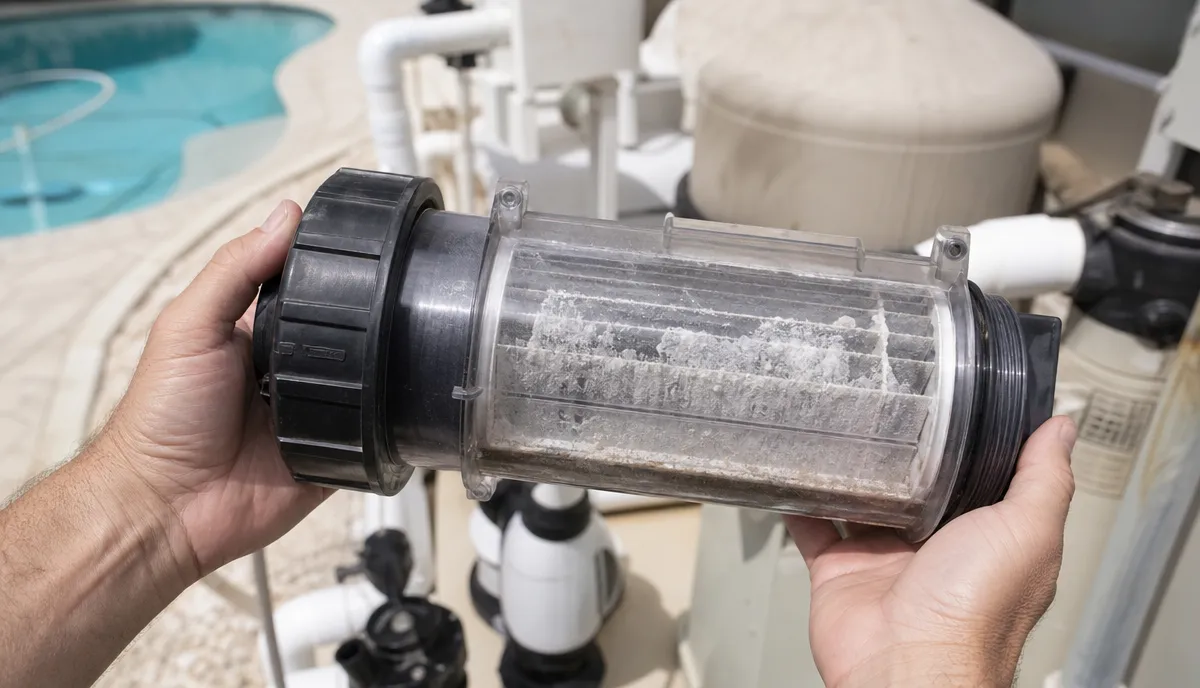
The same precipitation scales the cell plates, which is why output drops away.
One cause, two symptoms, on two pieces of equipment that usually get discussed separately. "My heater is getting tired" on a salt pool is very often "nobody has been holding pH down". See the cell and the exchanger.
Chloride is hard on metal
Not a reason to avoid salt — a reason to get the details right.
Natural stone coping and some pavers do not enjoy repeated salt splash-out drying on them. Rinsing the deck is a small habit that matters over years.
Metal near the water — handrail anchors, ladder sockets, light housings, and the anchors holding a safety cover — corrodes faster in salted water, and faster again where the pool's bonding is incomplete or corroded. See hardware corrosion.
Bonding is a safety system and it is a licensed electrician's job. We look at it as a matter of course on a salt pool and we report what we find; we do not do electrical or bonding work ourselves.
If You Are Converting This Spring, One Seasonal Trap
Cells produce much less chlorine in cold water, and most stop trying below a set temperature to protect themselves.
Which means a conversion done in March sanitises poorly until the water warms — not because anything is wrong, but because that is the physics of the cell. Through the shoulder weeks a salt pool often needs chlorine added the old way.
It catches people out every spring, and the version that catches them hardest is a brand-new system that appears not to work.
The Other Thing That Stops A Cell Working
No flow, no chlorine. A cell only makes chlorine while water is passing through it — so on a salt pool a marginal pump is a water-quality problem on a delay, and the first symptom is often algae rather than anything mechanical.
Cells have a flow sensor and refuse to energise without it, deliberately, because running a cell dry damages it. That refusal is the system protecting itself. It is a safety interlock and it is not something to work around.
The usual causes are upstream: a loaded filter, a packed basket, a partly blocked impeller, air drawn past a tired pump lid o-ring, or — the common modern one — a variable-speed pump set below the flow the cell needs. See no flow, no chlorine.
So Should You Convert?
A reasonable yes if: you want a steadier sanitiser level, you are willing to treat the cell as a consumable, and somebody is going to keep an eye on pH rather than only on chlorine.
A reasonable no if: nobody is going to look at the water between visits, or the pool has natural stone coping and nobody wants to think about rinsing a deck, or you were mainly hoping to stop buying chemicals — because that is not what the trade is.
Either way it is not a chemistry holiday. A salt system does not excuse loose water balance; it raises the price of it.
Conversions are quote-required — the cell, the controller, what is already on the pad and the electrical position all move it. A $150 service call covers up to the first hour where an existing system needs diagnosing, and on a salt pool that hour usually settles whether the problem is the cell or the flow reaching it.
And the routine that protects all of it is a chemical and equipment check from $72 per visit plus chemicals — with a written sheet, which on a salt pool earns its keep more than anywhere else, because the failure mode is a slow pH drift rather than an event.
See salt chlorine generators, pool equipment repair, and salt systems in Gates Mills for the full picture.