

Pool pump repair in Gates Mills — where a pump problem on a salt pool is not a filtration problem, it is a sanitiser problem. $150 service call. Family-owned since 2012.
Here is the difference, and it is the whole page.
On a conventionally chlorinated pool, a struggling pump is a filtration problem. The water is less well filtered and less well circulated — but the chlorine keeps arriving, because somebody is putting it in.
On a salt pool, nobody is putting it in. The cell makes chlorine only while water is passing through it. No flow, no chlorine. Not less chlorine — none, for as long as the water is not moving through the cell.
Which inverts the whole diagnosis. A marginal pump on a salt pool is a water-quality problem on a delay, and the first symptom the owner notices is very often not mechanical at all. It is the water going cloudy, or algae appearing on a wall, days before anyone thinks about the pad.
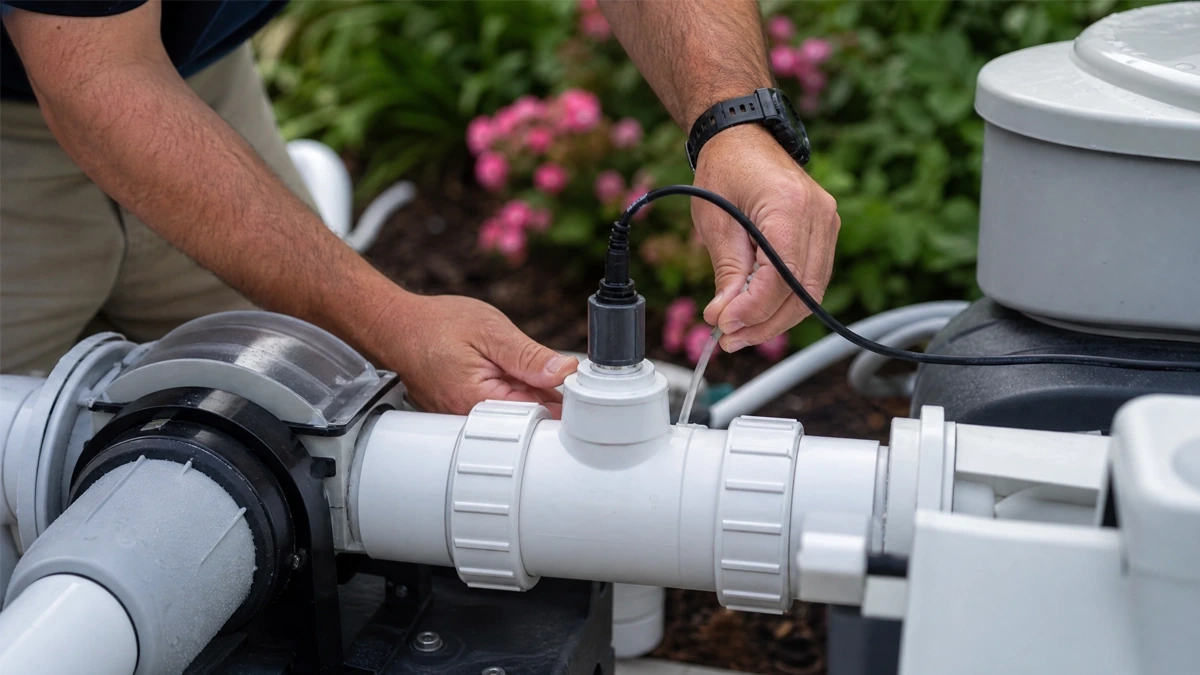
A cell flow sensor
These are the flow-side causes, and between them they account for a great deal of what gets diagnosed as a dead cell:
It is there to stop the cell being energised dry. It is not something to work around, and we will not do that either — we will find out why the flow is not there.
For diagnosing what the pump itself is doing. Noise, prime, weak returns, a drip — see pump diagnosis in Twinsburg, and for the seal-to-bearing failure specifically, seals and bearings in Solon.
This is worth setting out properly because it produces a pool that looks well cared for and is not.
A variable-speed pump is the right pump for a salt system — a cell benefits from long, gentle running rather than short bursts at full flow, and that is exactly what a variable-speed pump is good at.
But the schedule has to respect two different minimums at once: the flow the cell needs to energise, and the flow anything else on the pad needs — a heater's flow switch, an in-floor system, a solar loop.
Which means the correct setup is not "the lowest speed that filters". It is a schedule with a speed for each job, and enough hours at cell-satisfying flow to actually produce the chlorine the pool consumes.

That is a controller conversation as much as a pump one
See pool automation and variable-speed pool pumps.
Salted water at the pad corrodes fixings, unions and anything metal near a weep or a splash. A pump that has been sitting in salted drip for a season shows it.
Incomplete or corroded bonding plus salted water produces corrosion that looks inexplicable — and bonding is a licensed electrician's job, so we report it rather than touch it.
Harder than usual, because air through a cell is a sanitiser problem and not just a prime problem.
Since a pool running saltier than it should is asking more of every metal component on the pad.
For the cell itself — output, scaling and replacement — see salt chlorine generators.
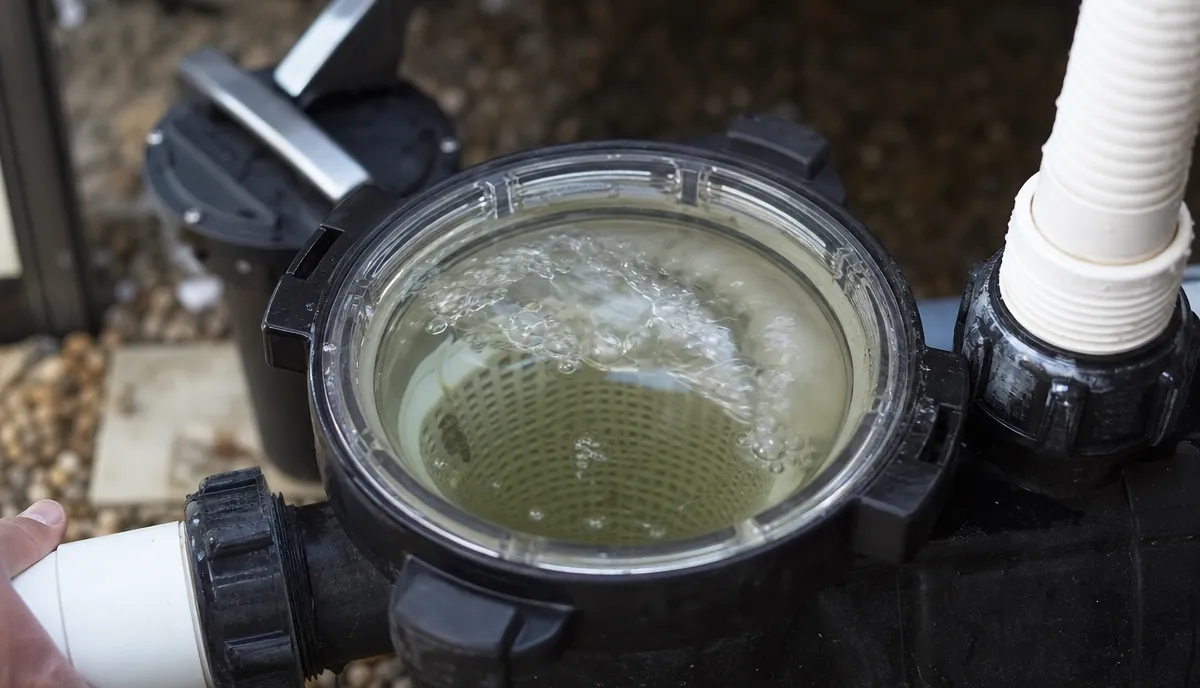
Because the consequences arrive out of order. On a chlorinated pool a failing pump gives you a mechanical warning first and a water problem later, if at all. On a salt pool the water problem can arrive first — and by the time it does you are not only repairing a pump, you are recovering a pool.
A chemical and equipment check catches both ends — from $72 per visit plus chemicals, weekly or biweekly, with a written sheet every visit. Baskets and filter pressure on the mechanical side, chlorine and salinity on the water side. On a salt pool those two columns explain each other.
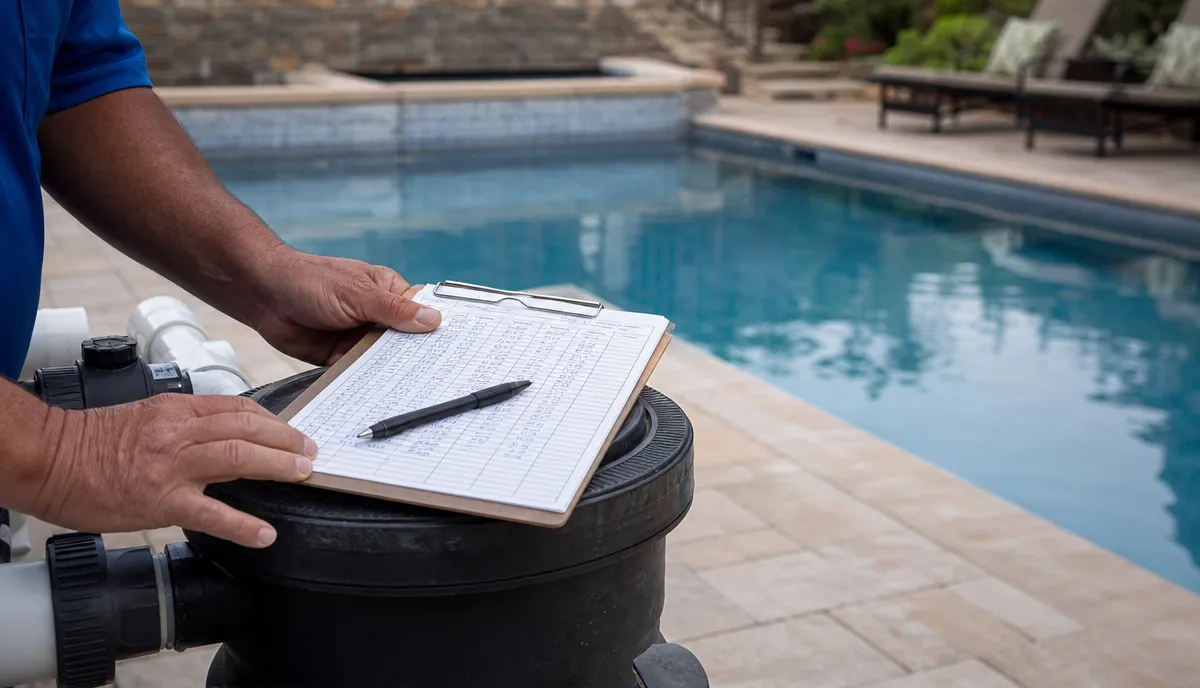
A completed pool service sheet on the equipment pad

“The crew is super knowledgeable and courteous.”
Tell us what the pump is doing — that is where this usually starts.
A $150 service call applies to a diagnostic and repair visit and covers up to the first hour on site — usually enough on a salt system to establish whether the problem is the cell or the flow reaching it. Parts and further labour are quoted before we do them. Pump supply and replacement are quote-required.
Products we install carry the full manufacturer's warranty, generally one to three years on that manufacturer's terms. We do not offer a separate workmanship guarantee.
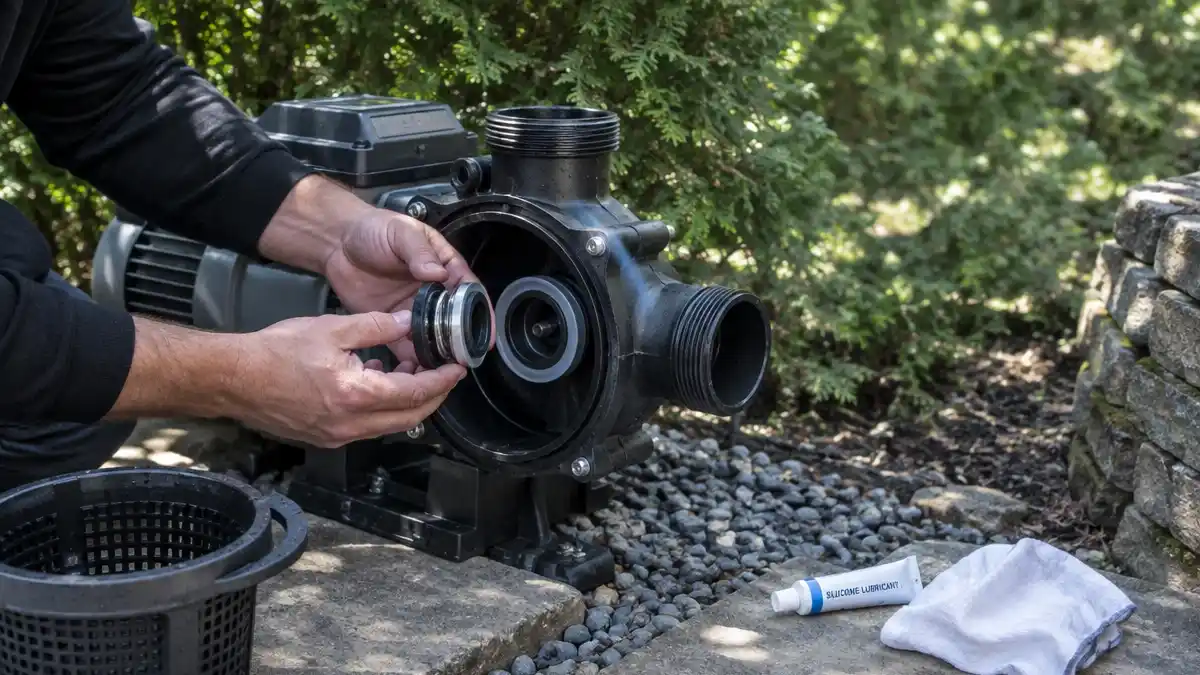
The wet end of a pool pump with the strainer pot lid removed
Gates Mills is in Cuyahoga County, about 14 miles from our base — the furthest of our tier-1 towns, and comfortably within range for diagnostic and repair work.
For the rest of what we do here see Gates Mills pool service, which is where the salt-system story starts. The list of towns is on service areas.
We do not do the electrical supply work, including bonding — that is a licensed electrician's job. We do not build pools, we do not service above-ground pools, hot tubs or spas, and we do not offer leak detection.
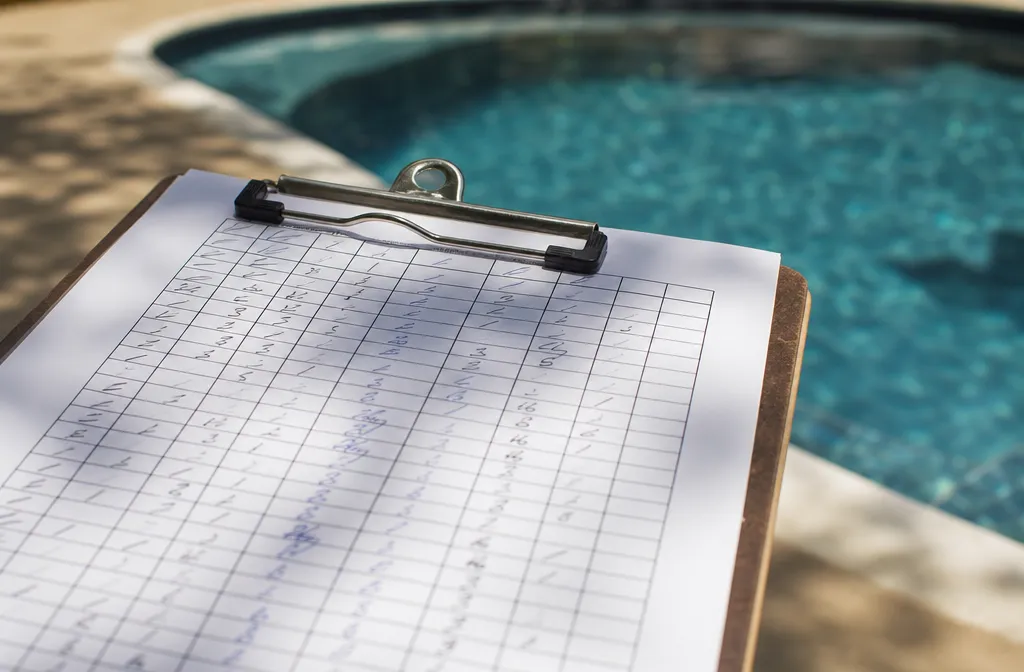
A pool service sheet filled in by hand
Because the cell only makes chlorine while water is passing through it. On a chlorinated pool a struggling pump means poorer filtration while the chlorine keeps arriving, because somebody adds it. On a salt pool nobody adds it — so no flow means no chlorine at all for as long as the water is not moving through the cell.
That message is the cell refusing to energise because its flow sensor is not satisfied, which it does deliberately to avoid running dry. The pump running is not the same as adequate flow reaching the cell — a loaded filter, a packed basket, a partly blocked impeller, air being drawn past a tired lid o-ring, or a variable-speed pump set too slow will all produce it.
No, and we would not do it. It is a safety interlock that exists to stop the cell being energised without water, which damages it. The useful work is finding out why the flow is not there.
That is the most common modern version of this. A speed chosen for quiet, economical filtration can sit below the flow the cell needs to energise — so the pool filters beautifully and sanitises not at all. It usually needs a schedule with a speed for each job rather than one low setting.
The opposite — a cell benefits from long, gentle running rather than short bursts at full flow, which is exactly what a variable-speed pump does well. It just has to be set up to respect two minimums at once: the flow the cell needs, and the flow anything else on the pad needs. That is a controller conversation as much as a pump one.
Not the wet end in normal service, but it is hard on the metal around the pad — fixings, unions and anything sitting in salted drip. It is also unforgiving where the pool's bonding is incomplete or corroded, which produces corrosion that looks inexplicable until someone checks. Bonding is a licensed electrician's job, so we report what we find rather than touch it.
