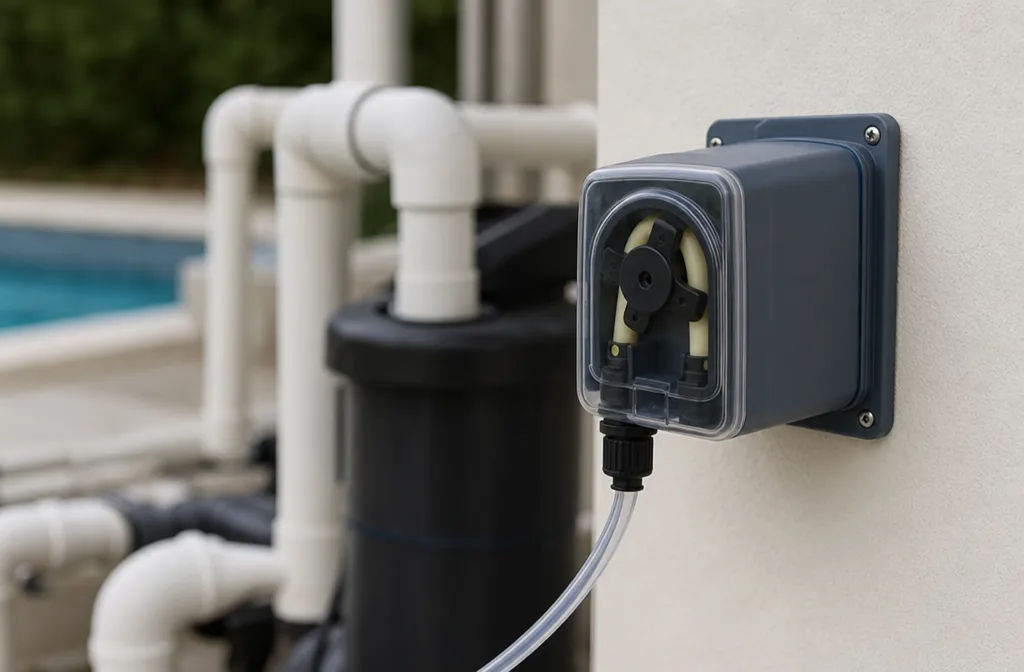

Pump faults sort into three cost tiers, and knowing which one you are in is more useful than a price list — because the same symptom can sit in any of them depending on how long it has been going on.
We are not going to publish part prices. Pump repair and replacement are quoted, because what a pump needs depends on the pool, the plumbing and the model. What we can do is tell you which tier each fault lands in, and the one thing that moves a fault from tier 1 to tier 3.
The Thing That Decides The Tier
Not the noise. Whether water has reached the motor bearing.
That is the counter-intuitive part. A pump making a horrible noise is often already expensive. A pump making no noise at all, leaving a damp patch on the pad, is cheap — for now.
The chain runs like this: the shaft seal starts to weep, the water it lets past runs along the shaft into the motor's front bearing, the grease is displaced, the metal corrodes, and eventually the bearing gets loud and then seizes. Every stage costs more than the one before, and the first stage is silent. See the seal-to-bearing chain.
Tier 1: A Part
These are parts rather than projects, and they are worth doing on a pump of any age.
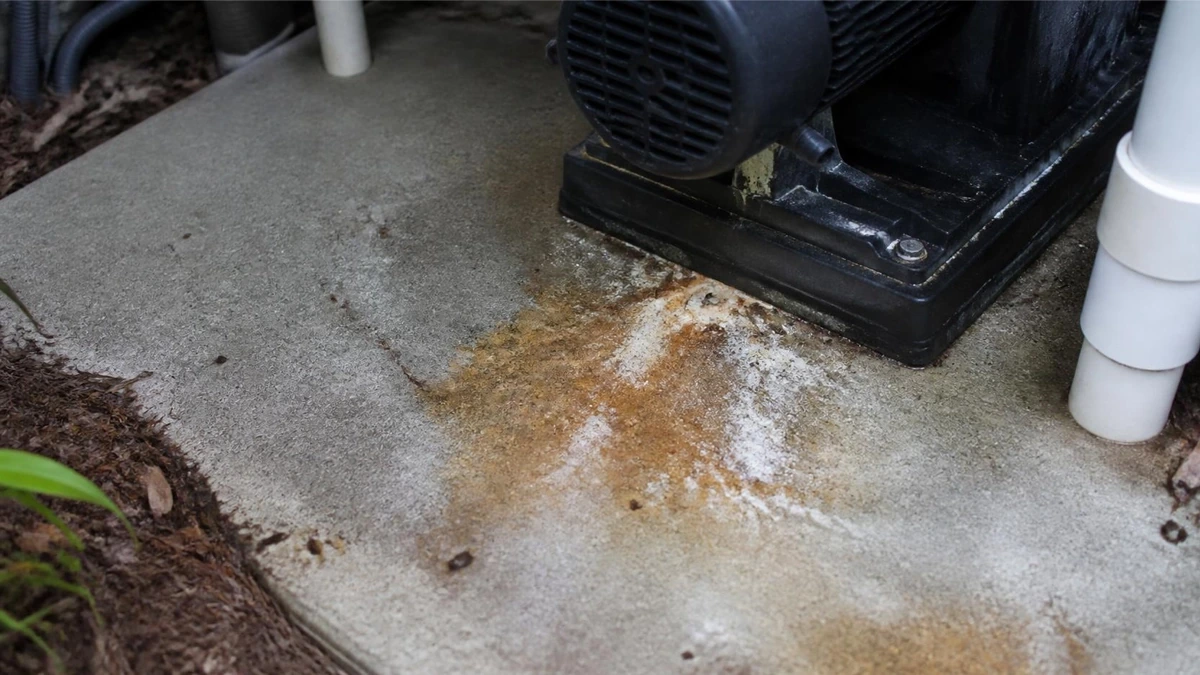
A shaft seal caught while it is only weeping. The most valuable repair on this page, because it is the one that stops the chain.
The pump lid o-ring. Dry, flattened or gritty, and the pump draws air past it — which is the single most common reason a pump will not hold prime. You can often see the bubbles in the basket.
A run capacitor, on a single-speed pump that hums, buzzes or will not start.
A cracked or over-full basket, and the basket lid.
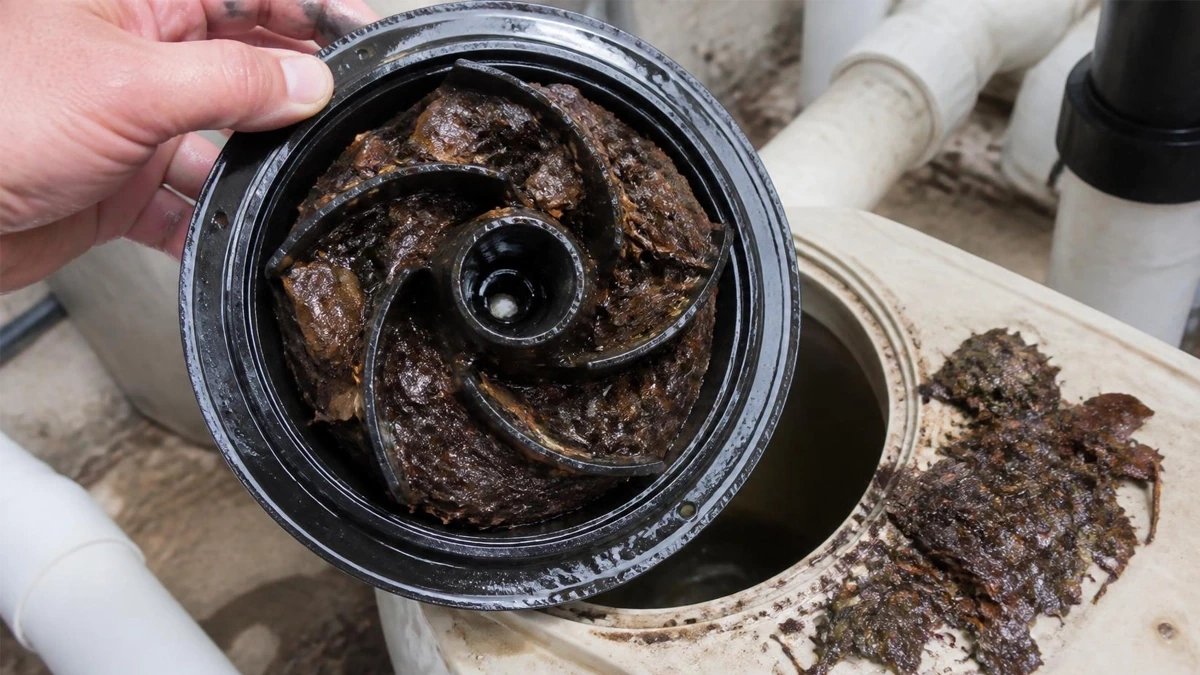
A packed impeller. Hair and fine debris fill the vane passages and the pump moves a fraction of the water while sounding completely healthy. Clearing it means opening the pump — which is also the sensible moment to look at the seal.
A wear ring or diffuser, where water is recirculating inside the pump instead of being pushed out.
A bonding wire left off after a previous replacement. Not a performance fault and it will never show as a symptom — but it is a safety item, we check it on every pump we work on, and any electrical or bonding work itself is a licensed electrician's job, not ours.
Tier 2: Most Of The Wet End, Or A Bearing
Here the arithmetic starts to matter.
A bearing replacement. Possible, and on a motor worth keeping it is the right repair. On an older single-speed motor it often is not — because the other bearing is exactly as old as the one that failed, so you are likely to be back.
A seal plus a scored shaft. Once the shaft has been damaged, a new seal on it does not last.
A cracked wet end from freeze damage. Not repairable in any way worth paying for: epoxy on a pressurised housing fails on the first warm afternoon, and a split volute has usually distorted around the crack. But the motor is often fine — the wet end and motor are separate assemblies, so this can be a wet-end replacement rather than a whole pump.
Tier 3: The Pump
A motor and a wet end together. At that point you are rebuilding most of the pump, and the money is close to what a new one costs.
A seized motor. The bearing stopped the shaft, the motor tripped the breaker or overheated trying to turn it, and the shaft and impeller rarely survive that either.
A discontinued model where the part you need is not available. A repair you cannot make twice changes whether making it once is sensible.
And this is the moment worth taking seriously rather than resenting, because if you are buying a pump anyway you get to choose a better one. A variable-speed pump runs slower for longer to move the same water — quieter, gentler on everything, and the power a pump draws falls away much faster than the flow does when you slow it down. See variable-speed pool pumps and, for the conditions that limit the benefit on an older pool, the variable-speed guide.
How To Tell Which Tier You Are In, Before Calling
Four observations, all free.
Look under the pump, first thing before the sun dries the pad. A damp patch, a drip or a mineral stain is tier 1 — and it is the whole reason to call early.
Listen for what the noise does with speed. A growl or whine that rises and falls with the motor is bearings. A rattle like gravel is cavitation, which is a suction problem rather than a pump fault. A hum with no water moving points at the motor not starting.
Check whether the returns are weak while the pump sounds fine. That is usually a packed impeller or a loaded filter.
And note whether it lost prime and kept running. If it did, assume the seal is scored, whatever else is going on.
The full symptom-by-symptom read is on diagnosis by symptom.
What A Visit Costs
A $150 service call applies to a diagnostic and repair visit and covers up to the first hour on site — which on a tier-1 fault is frequently enough to diagnose and finish the job. Parts and any further labour are quoted before we do them.
Pump supply and replacement are quote-required, because the right pump depends on the resistance of your plumbing rather than on the badge of the old one. The repair-versus-replace-versus-retrofit decision is set out on repair, replace or retrofit.
Products we install carry the full manufacturer's warranty — generally one to three years, on that manufacturer's terms. We do not offer a separate workmanship guarantee, and freeze damage is not a warranty matter, because it follows from how the pool was closed.
The Version Of This Page That Costs Least
Somebody looking under the pump every couple of weeks.
A chemical and equipment check is from $72 per visit plus chemicals, and looking at the pad rather than only at the water is part of it. A weeping seal noted in September is tier 1. The same seal found in June, after a winter and a spring of running, is tier 2 or 3.
See pool pump repair and pool equipment repair.