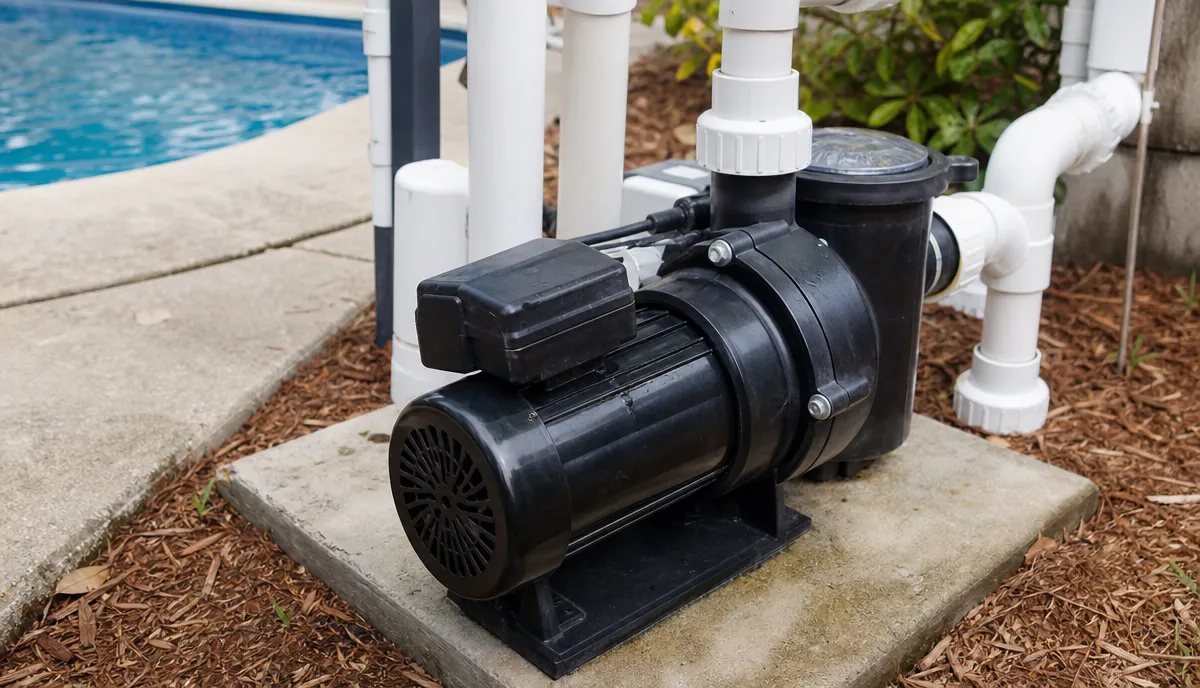

Pool pump repair in Pepper Pike — and the question an old single-speed pump actually raises, which is whether it is still the right machine for the pool. $150 service call.
When an old single-speed pump fails, there are three ways forward and most pages only tell you about two of them.
Repair it. A seal, a capacitor, an o-ring, a cleaned impeller, a wear ring. These are parts, they are worth doing, and age alone does not change that.
Replace it like for like. Another single-speed pump. Simple, cheap, and it puts you back exactly where you were.
Retrofit a variable-speed pump. Which is usually the right answer, and is not always possible on an old pool. That is the part worth reading.
For what is actually wrong with yours — noise, prime, weak returns, a drip — see pump diagnosis in Twinsburg, and for the seal-to-bearing failure specifically, seals and bearings in Solon.
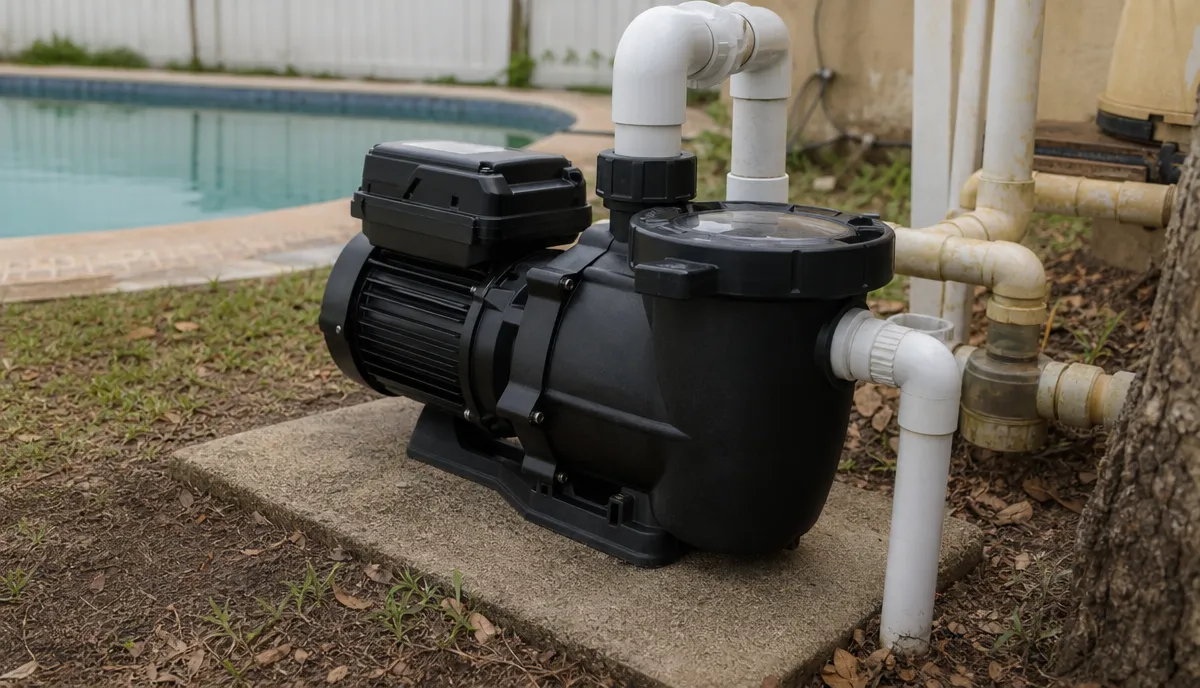
A variable-speed pump newly fitted where a single-speed pump had been
It moves water as fast as it can whenever it is on, whether the pool needs that or not — and filtration mostly does not.
That is the entire idea, and three things follow from it:
And it can run different speeds for different jobs. A low speed for filtration, a higher one when the heater or a cleaner needs flow. See variable-speed pool pumps.
This is the honest part. A retrofit is not automatically a drop-in.
1. The pipe
Older pools were often plumbed in smaller-diameter pipe than a modern installation would use. Narrow pipe means higher resistance, and higher resistance limits how slowly the pump can usefully run — which is exactly where the benefit lives. It does not rule a retrofit out. It does change how much you get from it.
2. What else expects a fixed flow
A gas heater has a minimum flow its flow-switch will accept. A salt cell needs flow to produce chlorine. An in-floor cleaning system needs pressure. A solar loop needs enough flow to lift water.
None of that stops a variable-speed pump — it means the schedule has to be built around those minimums rather than set to the lowest speed that filters. A retrofit done without that thinking produces a heater that will not fire and a pool that is not sanitising.
3. The controls
An old mechanical timeclock switches a circuit on and off. That is all it does. A variable-speed pump has its own schedule and its own control, and it may need the timeclock removed rather than kept.
Where there is other equipment to coordinate, this is where automation stops being a luxury — see pool automation.
4. The wiring
Some variable-speed pumps want a different supply from the one an old single-speed pump was given, and the pad wiring on a pool from another decade is worth looking at anyway.
And here is our boundary: we do not do the electrical supply work. A new circuit or a supply change is a licensed electrician's job. We will tell you what the pump needs and we will not improvise the rest.
5. Whether the pad has room
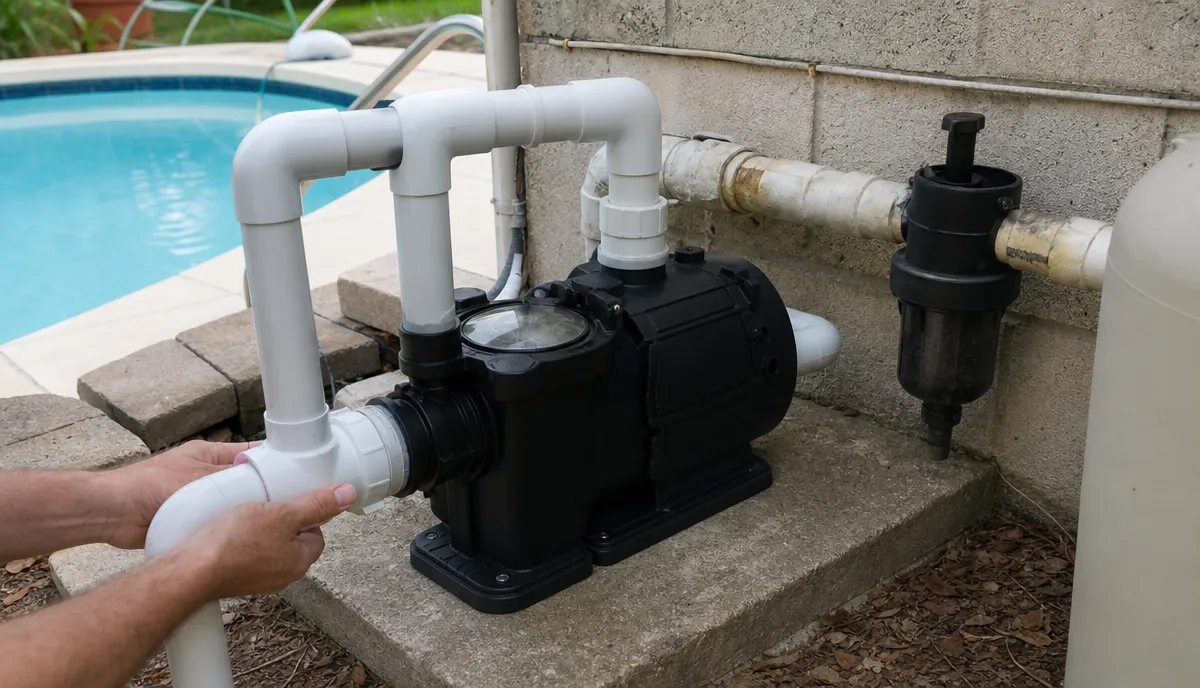
Variable-speed pumps are not usually smaller than what they replace
And an old pad laid out tightly around the equipment of its day sometimes needs re-plumbing to accept one. Not a problem, but not free either.
A seal caught early, a capacitor, an o-ring, a packed impeller — and the pump is otherwise sound. Those repairs are worth making on a pump of any age, and we are not going to talk you into a retrofit because you called about a drip.
A motor and a wet end together, which is most of the pump. Or a cracked housing. Or a discontinued model whose parts you may not be able to get twice.
Which is the conversation this page exists to prepare you for, so that a quote arrives with reasons attached.
Worth knowing before you own it rather than after. A pool inspection looks at the pump, the plumbing, the pad and the rest of the equipment, and an old single-speed pump with narrow plumbing is a cost that is easier to plan for than to discover.
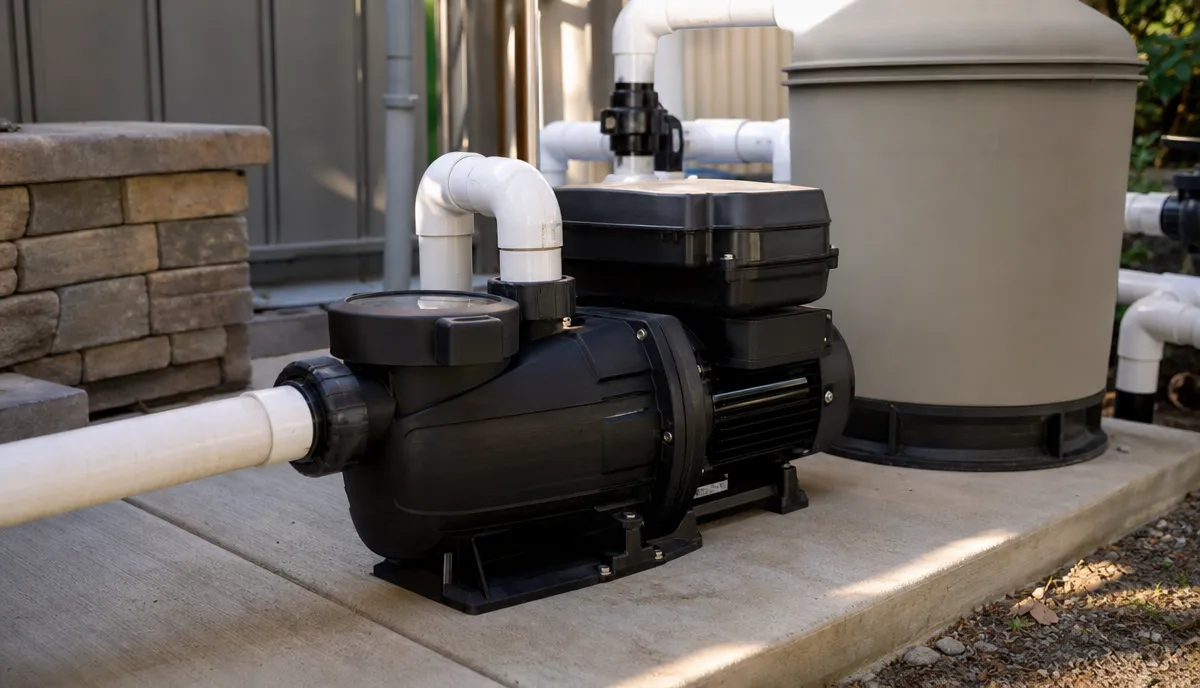
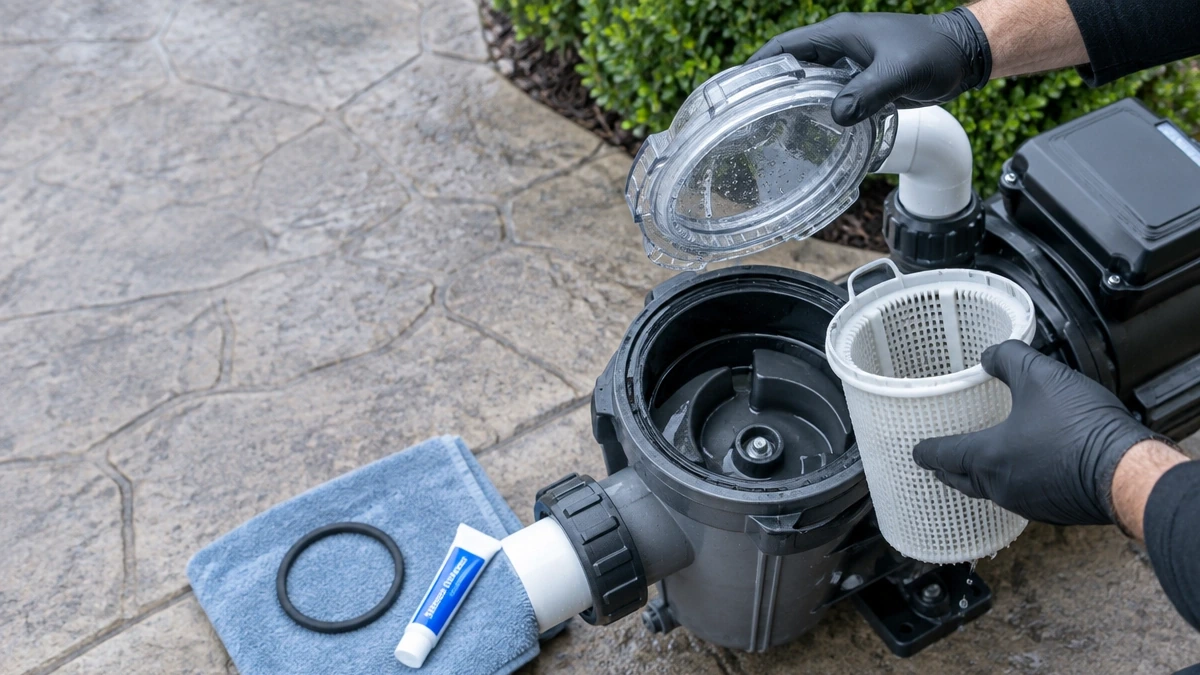
A variable-speed pool pump installed on an equipment pad

“The crew is super knowledgeable and courteous.”
Tell us what pool and what plumbing you have and we will tell you honestly which of the three options fits.
A $150 service call applies to a diagnostic and repair visit and covers up to the first hour on site. Parts and further labour are quoted before we do them. Pump supply and replacement are quote-required — the right pump depends on the plumbing rather than on the badge on the old one.
Products we install carry the full manufacturer's warranty, generally one to three years on that manufacturer's terms. We do not offer a separate workmanship guarantee.
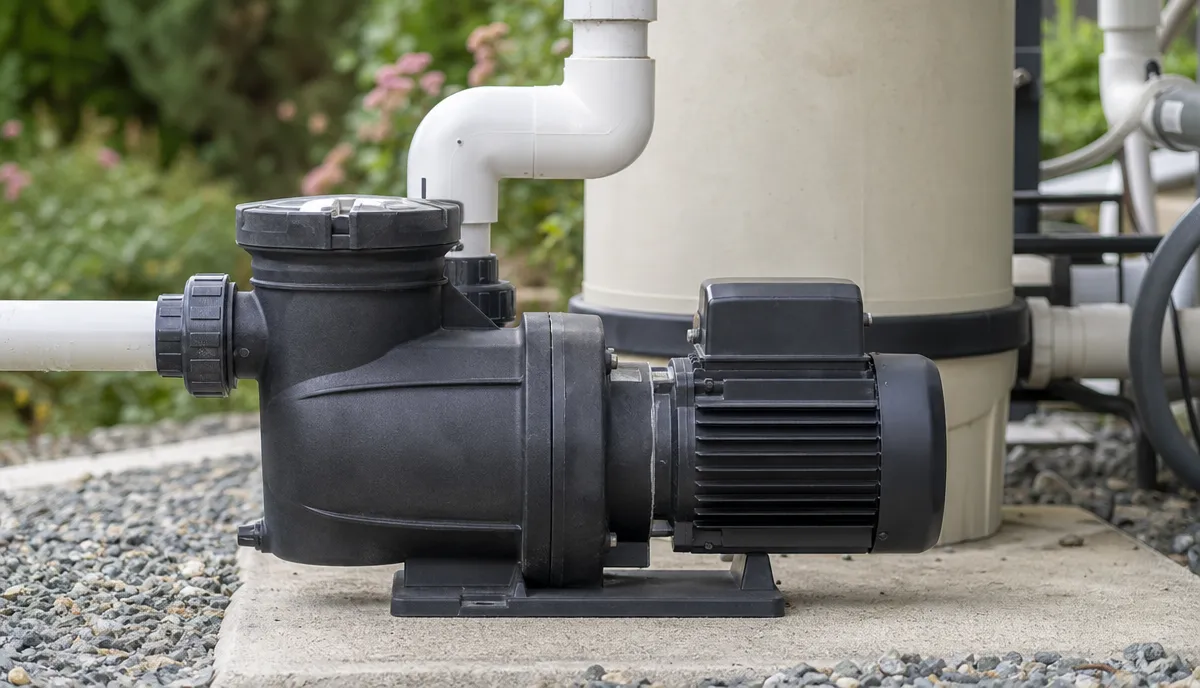
A pool pump of the type we service, on its pad
Pepper Pike is in Cuyahoga County, about 11 miles from our base. The thread across everything we write about this town is the same one: on a pool that has been in the ground for decades, what is already there decides more than what is available to buy.
For the rest see Pepper Pike pool service and pool equipment repair. The list of towns is on service areas.
We do not do the electrical supply work, as above. We do not build pools, we do not service above-ground pools, hot tubs or spas, and we do not offer leak detection.
A pool service sheet filled in by hand
It is the simplest option and it puts you back exactly where you were. A variable-speed pump is usually the better machine — it runs slower for longer to move the same water, which uses much less electricity and is far quieter. Whether it fits well depends on your plumbing, which is what the rest of this page is about.
Almost always, but how much benefit you get varies. Older pools were often plumbed in smaller-diameter pipe, and narrow pipe means higher resistance — which limits how slowly the pump can usefully run, and slow running is where the saving lives. It is a question of how much you gain rather than whether it works.
Not if the schedule is built properly. A heater has a minimum flow its switch will accept, and a salt cell needs flow to make chlorine — so the pump has to run above those minimums when those things are called for, rather than at the lowest speed that filters. A retrofit done without that thinking produces a heater that will not fire.
Usually not. A mechanical timeclock only switches a circuit on and off, and a variable-speed pump has its own schedule and control. Where there is other equipment to coordinate — heater, salt cell, cleaner — that is the point at which a controller earns its place rather than being a luxury.
No. We will tell you exactly what the pump needs, and a new circuit or a supply change is a licensed electrician's job. We would rather say that up front than improvise something on an old pad.
We will not put a number on it, because it depends on your plumbing, your electricity rate and how many hours you run. What we can tell you is the mechanism: the power a pump draws falls away much faster than the flow does when you slow it down, which is why running slower for longer costs less than running flat out for less time.