

Pool heater repair in Moreland Hills — including the intermittent lockout that has nothing to do with the heater and everything to do with how far it sits from the pool. $150 service call.
A heater at the end of a long plumbing run behaves differently from one on a pad beside the pool, and the difference is not performance. It is diagnosability.
On a short run, a flow fault is an event. The basket blocked, a valve got closed, the filter needs cleaning. It happens, you find it, you fix it, the heater works.
On a long run, the system can sit permanently close to the heater's minimum flow. Everything works — until anything at all takes a little off the top. Then the heater locks out. Clean the filter and it works again. Two weeks later it does not.
So the owner's experience is of an unreliable heater, not of a flow problem, and that is exactly why it goes undiagnosed for seasons. A technician who arrives, cleans a basket, watches the heater fire and leaves has confirmed nothing.
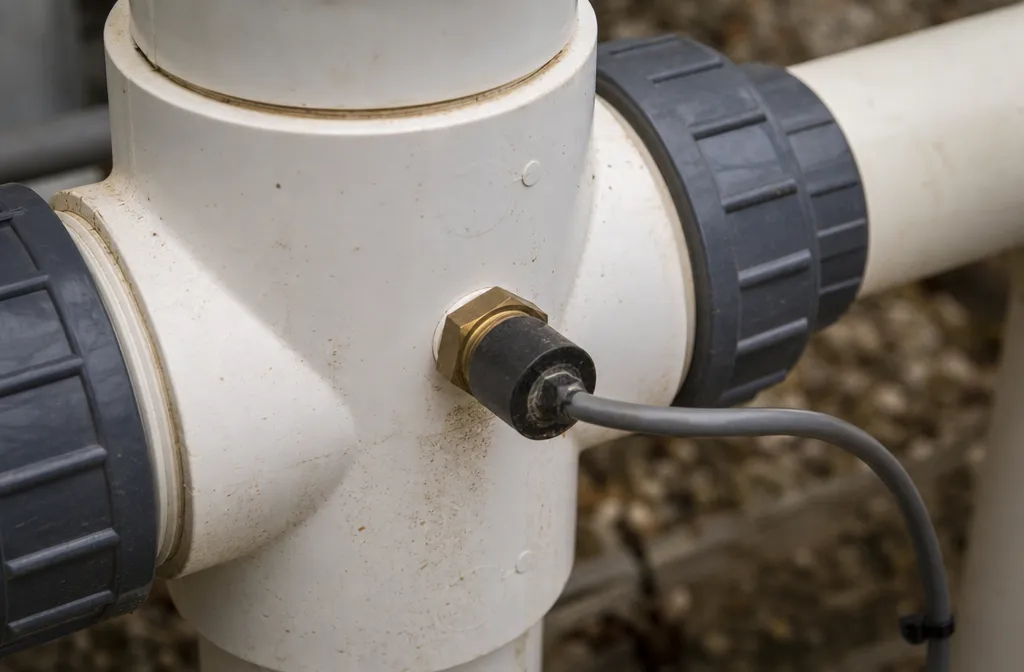
A pool heater flow switch
Three symptom shapes, all the same root:
There is a flow-switch that has to be satisfied before the burner lights, and a high-limit that shuts things down if the heater gets hot while the water is not carrying the heat away.
The order we work through. Flow, then gas or power, then ignition, then controls, then the exchanger — is on our heater diagnostics in Twinsburg page. This page is about why step one keeps being the answer here.
Briefly, because the hydraulics belong on the pump page. Every foot of pipe, every elbow and every valve adds resistance, and the pump works against the total of it. A pad well away from the pool means a long supply run, a long return run, and usually more fittings — so the same pump delivers less flow than it would on a short, simple system.
The full explanation, including what to size a pump against, is on pump repair in Moreland Hills.
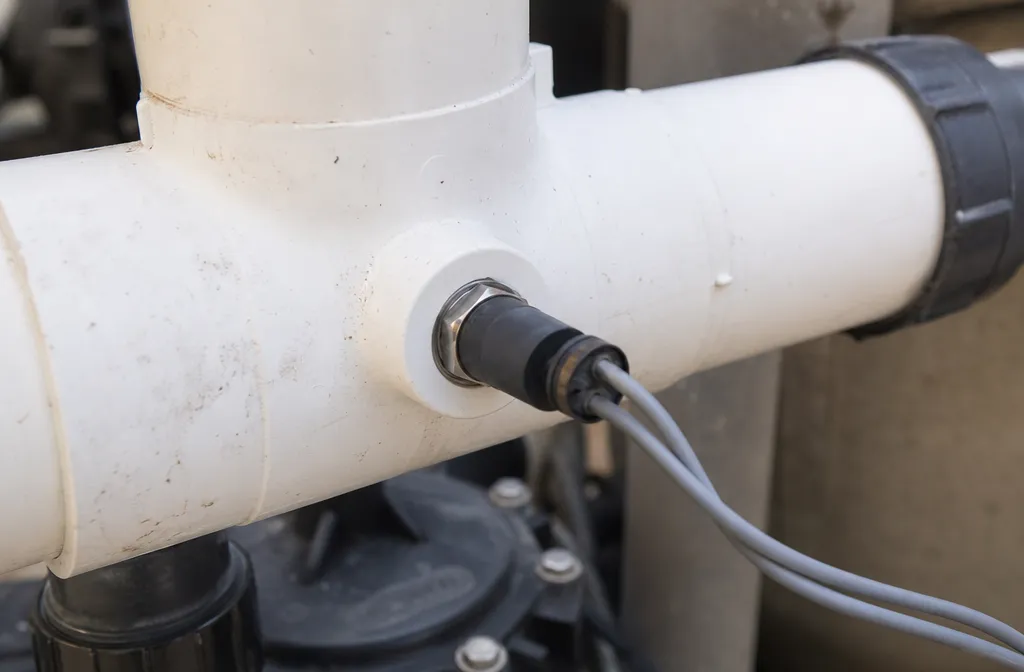
What matters here is the consequence
Less margin above the heater's minimum, so smaller things push it under.
Not even dirty — just not freshly cleaned.
This is the big one, and it is worth stating clearly: a speed chosen for quiet, cheap filtration can sit below the heater's minimum. The pump is doing what it was told; the heater is doing what it should; the pool does not get heated.
And never quite put back.
Before the pump has established flow and purged air. On a long run that takes longer than on a short one, and a schedule written for a short system asks the heater to fire too early.
Which on long runs takes more purging to clear.
On a system with margin, none of these matter. On one without, each is enough:
A basket with a normal amount in it.
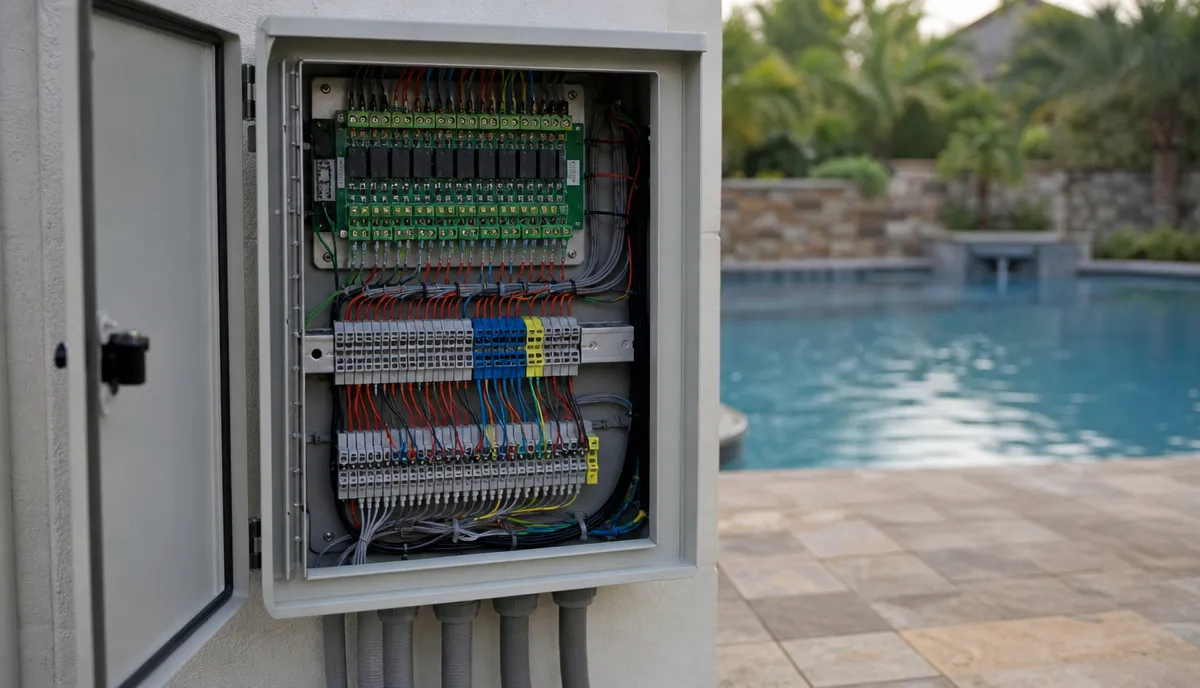
The fix on a long run is usually a schedule, not a part.
A controller can run the pump at a heater-satisfying speed whenever the heater is called for, and drop back to an economical speed the rest of the time — which is the arrangement a long run needs and the one a bare timeclock cannot produce.
And on a remote pad it does something else that matters more here than anywhere: it tells you what happened. A pad you never walk past is a pad where an intermittent lockout is invisible, and a controller turns "the heater is unreliable" into a record of when and under what conditions. See pool automation and pool automation installation.
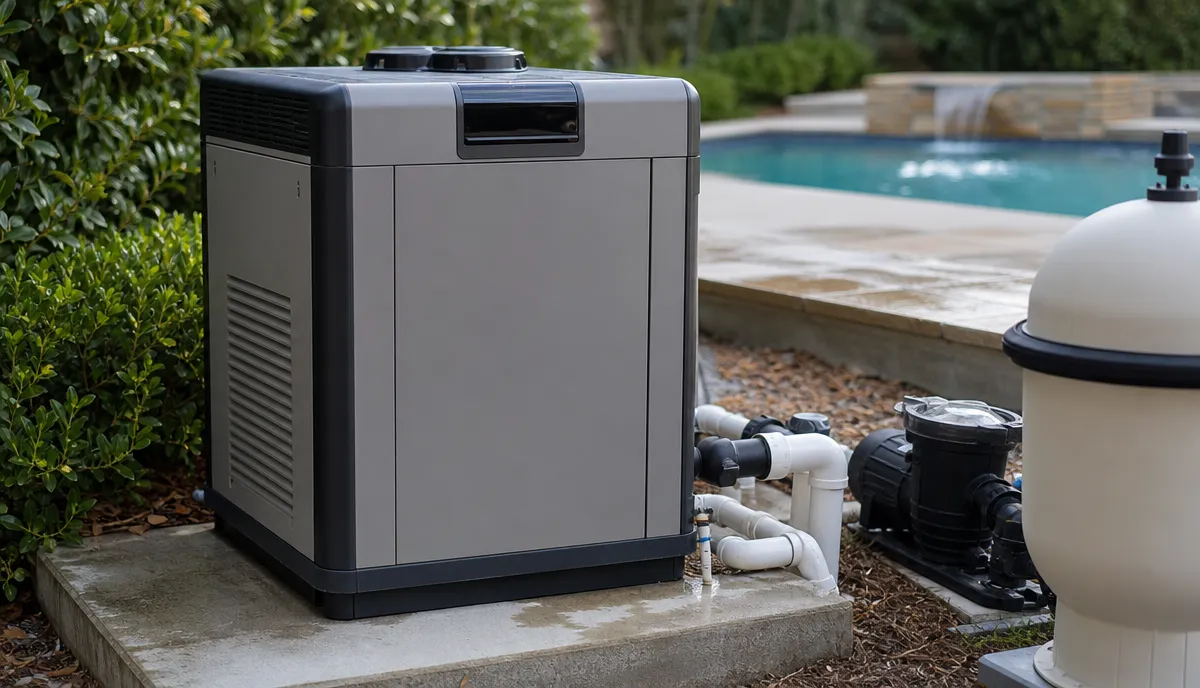
A gas pool heater installed on an equipment pad
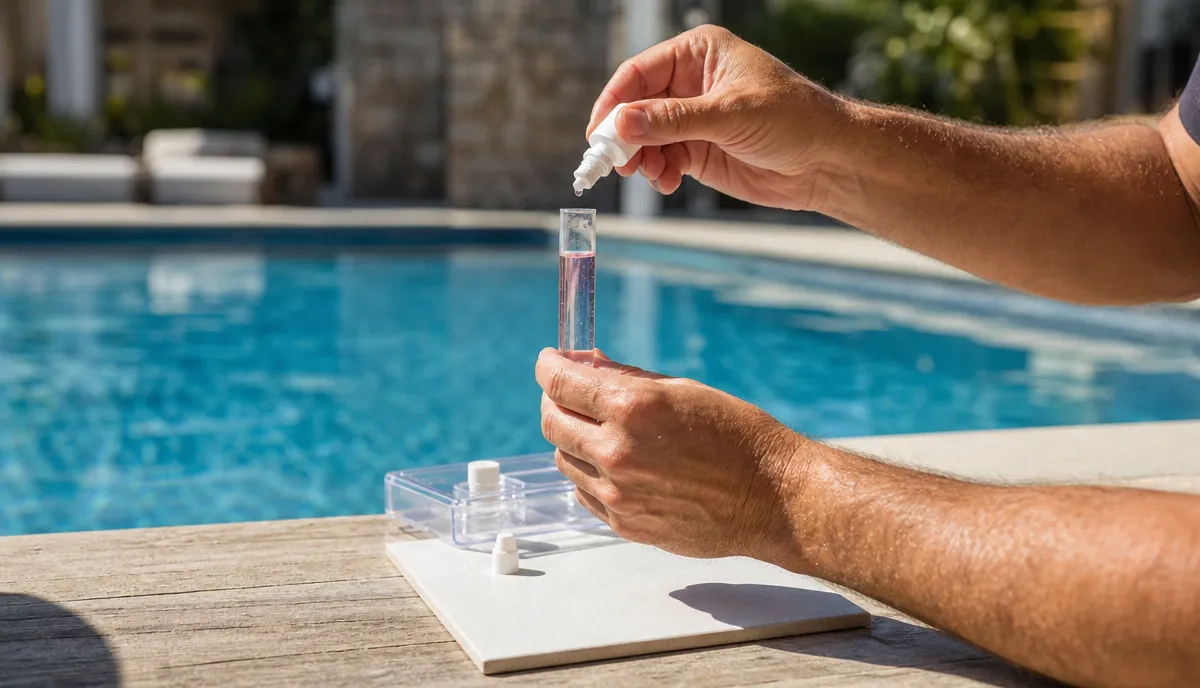
“The crew is super knowledgeable and courteous.”
That pattern is the diagnosis — tell us about it.
Not by watching it work. A heater that fires while we are standing there has told us nothing about the Tuesday it did not.
What we actually do: establish what flow the system delivers at each pump speed it runs at, compare that against what the heater needs, and look at the schedule that decides which speed is running when the heater is called. That is a survey rather than a part swap, and it is the only thing that resolves an intermittent fault honestly.
Then the answer is usually one of three: a schedule change, a flow restriction that can be removed, or a genuine heater-side fault — the flow-switch itself having drifted or failed, which does happen and is a real repair. See pool heaters and pool equipment repair.
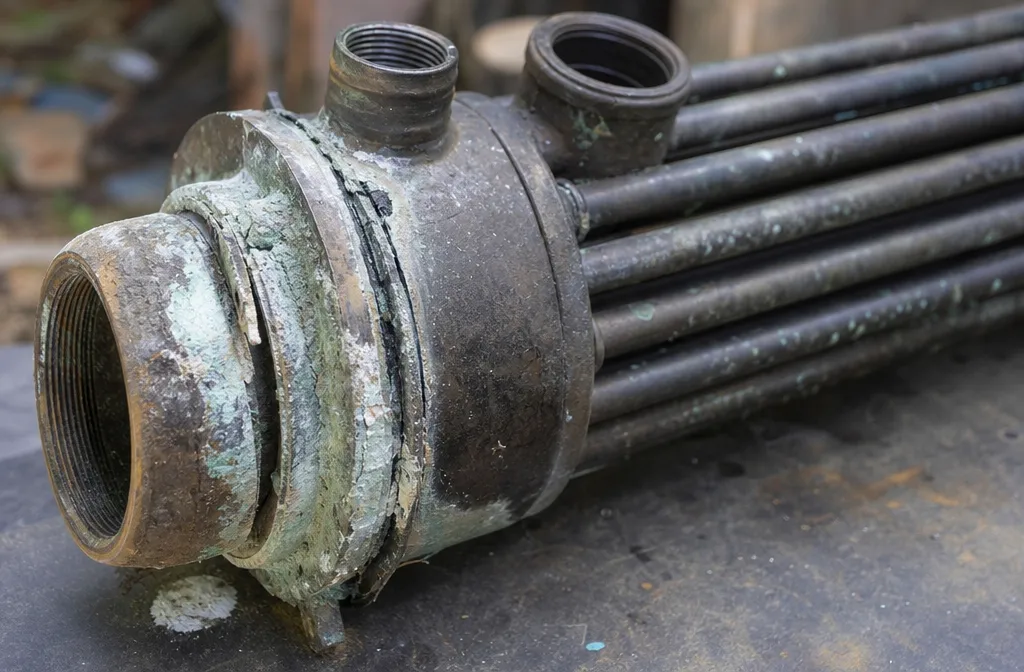
A failed heat exchanger removed from a pool heater
A $150 service call covers up to the first hour on site. Parts and further labour are quoted before we do them. Heater supply and installation are quote-required.
Products we install carry the full manufacturer's warranty — generally one to three years, on that manufacturer's terms. We do not offer a separate workmanship guarantee, and coverage does not extend to freeze damage.
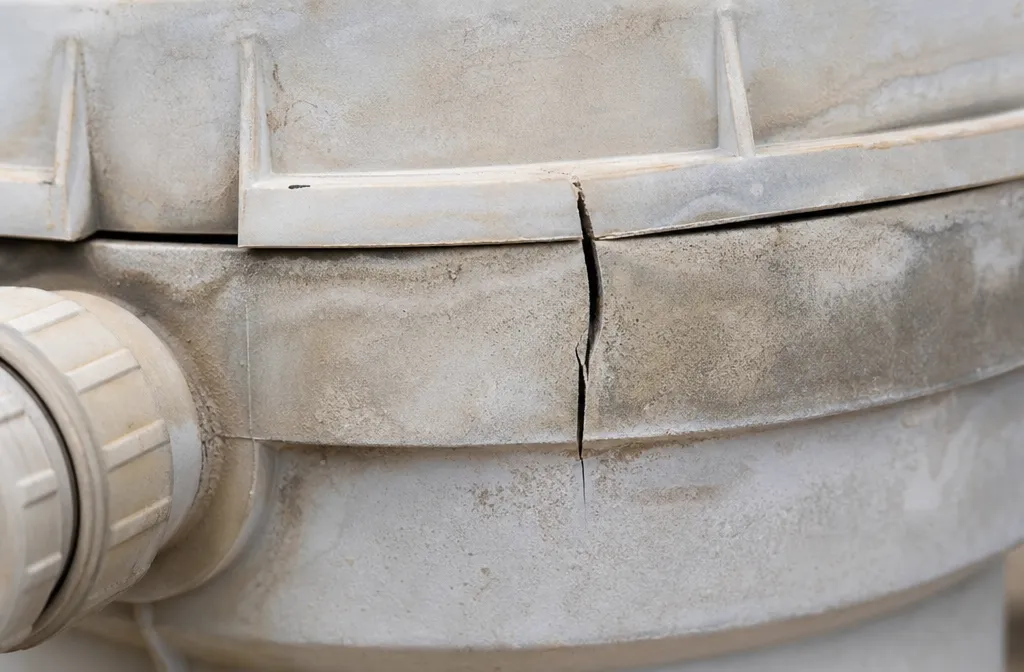
Freeze damage to a pool pump housing
Moreland Hills is in Cuyahoga County, about 9 miles from our base. The thread across everything we write about this town is the same: on a large parcel, the distances between the house, the pool and the pad decide more than the equipment does. See Moreland Hills pool service; the list of towns is on service areas.
We do not run or alter gas lines, and we do not do the electrical supply work — both licensed trades. We do not build pools, we do not service above-ground pools, hot tubs or spas, and we do not offer leak detection.
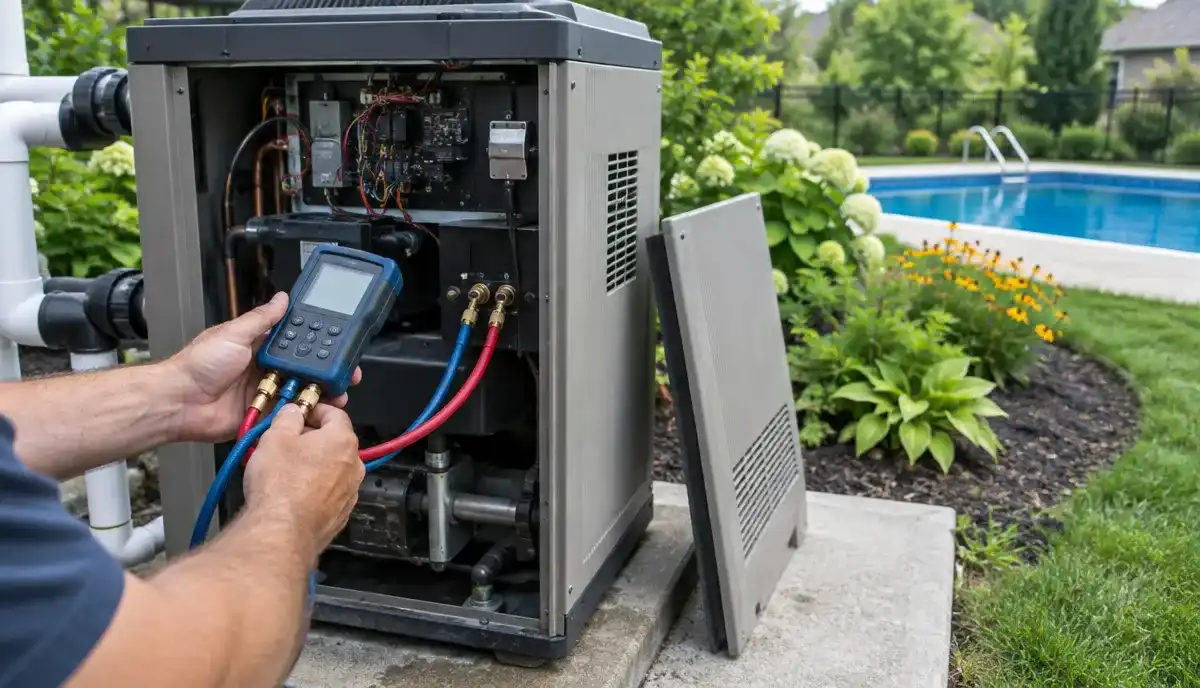
Diagnostic work at a pool heater
That pattern is itself the diagnosis, and on a long plumbing run it usually means the system is sitting permanently close to the heater's minimum flow. Everything works until anything at all takes a little off the top — a filter part-way through its cycle, a normal amount in the basket, a pump speed set for economy. Then the heater locks out, and later it does not.
Because every foot of pipe, every elbow and every valve adds resistance, and the pump works against the total. A pad well away from the pool means long supply and return runs and more fittings, so the same pump delivers less flow — which leaves less margin above the heater's minimum.
Not necessarily, and this is the trap. Watching a heater fire proves nothing about the day it did not. What resolves an intermittent fault is establishing the actual flow at each pump speed, comparing it against what the heater needs, and looking at the schedule that decides which speed runs when heat is called for.
Very often, yes. A speed chosen for quiet, economical filtration can sit below the heater's minimum. The pump is doing exactly what it was set to do and the heater is protecting itself correctly — but the pool does not get heated. The answer is a schedule with a heater-satisfying speed, not a slower heater.
On a long run it is more often a schedule than a part. A controller can run the pump faster whenever the heater is called and drop back the rest of the time, which a bare timeclock cannot do. Sometimes it is genuinely the heater's flow-switch, which drifts and fails like any component — but that is the answer after the flow has been measured, not before.
Because a pad set away from the house is a pad nobody walks past. An intermittent lockout on a remote pad is invisible — you notice the pool is not warm, not that the heater tried and stopped. That is the practical case for a controller that keeps a record.