

A stopped pump in July is two problems, and they run on different clocks.
The repair takes as long as it takes. Parts, diagnosis, whatever it turns out to be.
The water does not wait for any of that. In hot weather sanitiser is consumed quickly, nothing is circulating to distribute what is left, and nothing is filtering what is suspended. That clock starts the moment the pump stops.
So the first useful moves are about the water, not about the pump — and a couple of them are things to stop doing.
First: Rule Out The Two That Are Not The Pump
Both look exactly like a dead motor from the deck, and both are free.
A tripped breaker or GFCI. Check the breaker and, if the pump is on a GFCI, check that too. Resetting a household breaker is a normal thing for a homeowner to do. If it trips again straight away, stop — a breaker that will not hold is telling you something, and that is where our boundary sits: we do not do electrical supply work. Anything at the panel or on the supply wiring is a licensed electrician's job, and we will say plainly which side of that line your problem is on.
A thermal cut-out that has done its job. Motors have an internal overload that takes them offline when they get too hot, and in July they get hot: high ambient temperature, a motor in full sun, restricted flow from a loaded filter or full baskets. The motor stops, cools, and resets itself — sometimes quite quickly, sometimes not for a good while.
This one matters more than it sounds, because a pump that appears to recover on its own has not fixed anything. It will cut out again, probably in the hottest part of the next afternoon, and each cycle is hard on it. A pump that keeps stopping and starting itself is a pump with an underlying cause: usually flow, sometimes shade, occasionally the motor on its way out.
If either of those explains it, you may have no repair at all. Worth five minutes before anything else.
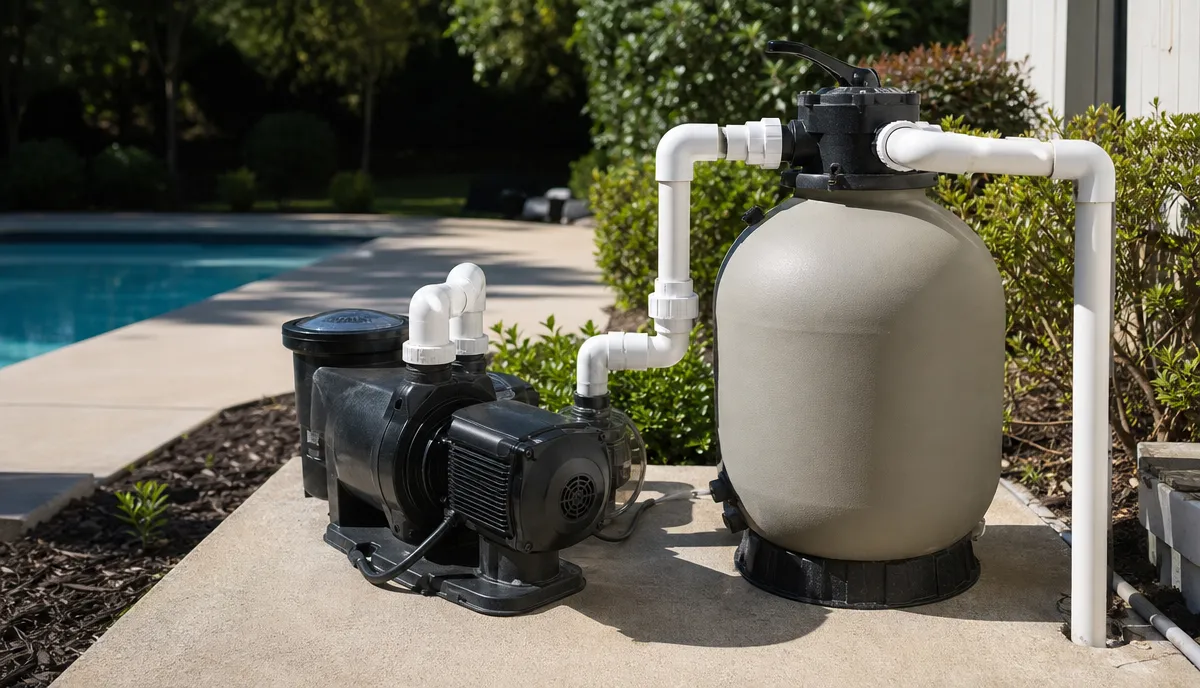
Then: The Water, For However Long This Takes
Four things, in order of how much they matter.
1. Get the load off the pool. Fewer swimmers, and ideally none for a day or two. Every bather adds demand at exactly the moment there is no filtration to handle it. This is unpopular advice in July and it is the single most effective thing available.
2. Cover it if you sensibly can, or at least keep debris out. Anything organic that lands in the water is a continuing demand on the sanitiser, and with no skimmer running it stays there. We do not vacuum, brush or skim pools — surfaces are the robot's job or yours — but a robot on a pool with no circulation is still doing useful work, and a leaf net over the surface is worth the effort.
3. Do not shock a pool that is not circulating. This is the mistake we meet most. Sanitiser dumped into still water sits in a plume where it went in, does not reach the rest of the pool, and on a vinyl-liner pool concentrated product sitting against the liner or the floor is its own problem. Circulation is what makes a dose work. Without it, more product is not more effect.
4. Do not run the pump to "keep things moving" once you know it is faulty. A pump that is cavitating, dry, or cutting out on thermal is damaging itself every minute it runs. If the water is not moving properly, switching it off costs you nothing you were getting anyway.
What The Days Without Filtration Actually Cost
Being honest about it, because the answer affects how urgently you chase parts.
A pool in good order before the failure holds up better than people expect for the first day or so. Balanced water with a reasonable sanitiser reserve and low bather load does not turn overnight.
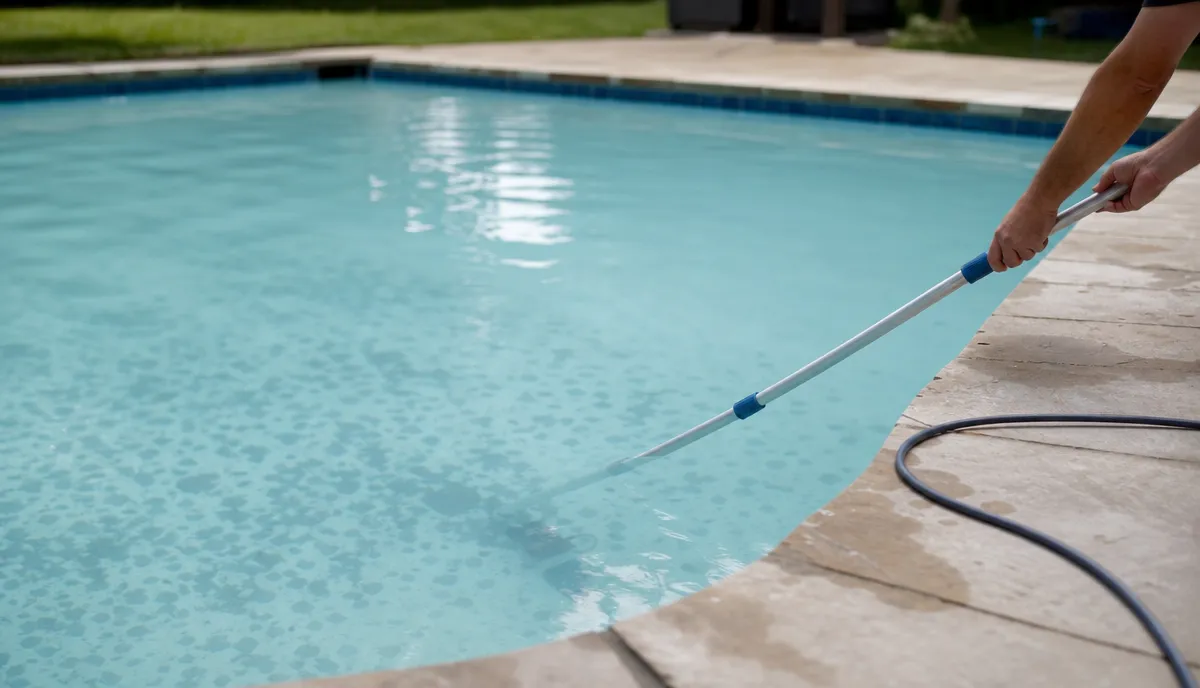
After that it goes in a predictable order. Sanitiser falls to nothing. The water loses its sharpness and goes slightly dull — that is suspended material that is no longer being filtered. Then it goes properly cloudy, and cloudy in hot weather with no sanitiser is where algae starts.
And recovery is not symmetrical with the failure. A pool that went cloudy takes longer to come back than it took to go, because the filter has to remove everything now in suspension and the sanitiser has to catch up on demand that has accumulated. That is the real cost of a week without a pump: not the week, the fortnight afterwards.
Which is why the water advice above is worth following even if the repair is quick. The pool you have on the day the pump is fixed is what decides how the rest of your July goes.
When You Call, What Helps
Not a promise about speed — we do not publish response times, and demand in July is genuinely the heaviest of the year. What we can say is that the more precise the description, the better the chance the right part is on the van.
Useful to have ready: what it was doing before it stopped, whether it made a new noise (and which — what a noise means is the map), whether the breaker or GFCI has tripped, whether it stops and starts by itself, the last filter pressure reading if you have one, and what is written on the motor plate.
Whether it is a variable-speed pump matters too, because the failure modes and the parts are different. See variable-speed pool pumps.
A $150 service call covers up to the first hour of diagnosis on site, with parts and any further labour quoted before we do them. See pool equipment repair and pool pump repair.
What each fault costs, once it has a name, is on what each fault costs.
And One Thing Not To Do
Do not buy a pump on the strength of a symptom.
Most stopped pumps are not dead pumps. A start capacitor, an impeller jammed by debris that got past a cracked basket, a seal, a lid o-ring letting air in — all parts, all cheaper than a unit, and all invisible from the deck.
The ones that genuinely are the motor usually announced themselves first, in September or in June, with a screech or a rust stain that got hoped away. Which is the argument for the boring version: a chemical and equipment check is from $72 per visit plus chemicals, and the equipment half is somebody's hand on the pump and the filter pressure written down every week — which is how a seal gets found before it takes a motor with it in July.
If the water has already gone, the clarity side is on heat-wave clarity.
