

Almost everything written about pools in Ohio in December is about protecting one that is closed. Freeze damage, cover care, blow-outs, antifreeze in the lines.
None of it applies to an indoor pool. There is no closing, no cover and no freeze risk. What there is instead is a set of problems the outdoor pools do not have at all — and they get worse in winter, because the building is shut.
The Winter Problem Is Air, Not Frost
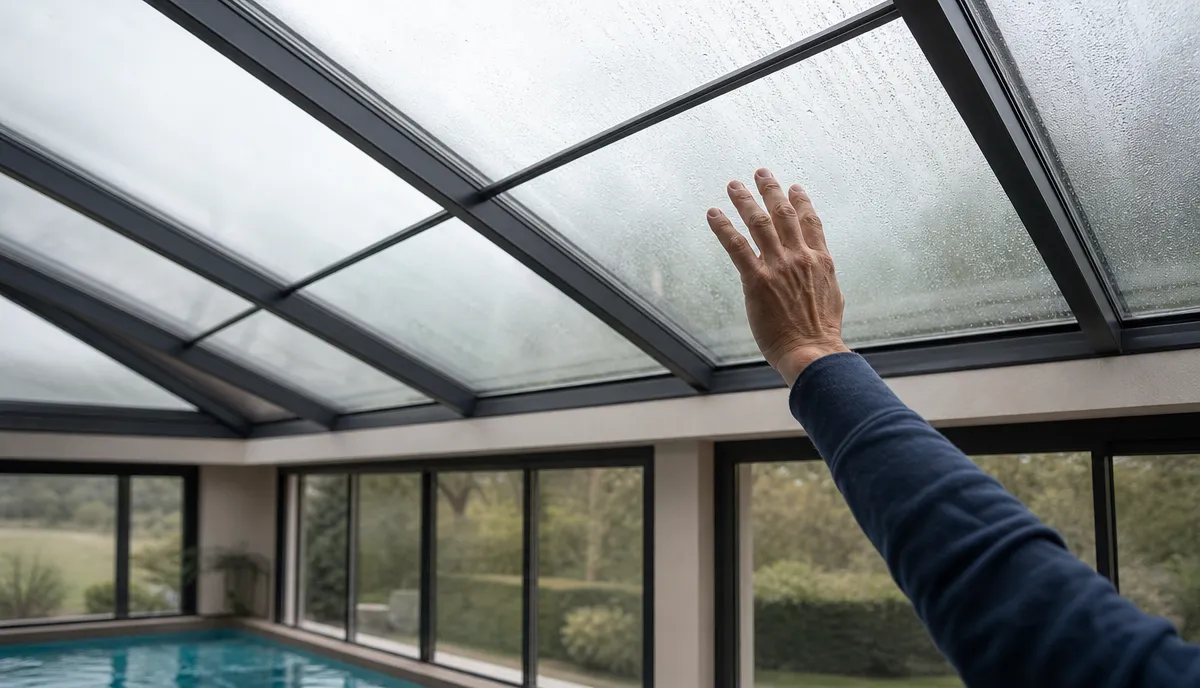
An indoor pool is a body of warm water inside a sealed room. Water evaporates off the surface continuously — that is where almost all of a heated pool's heat loss goes — and in an enclosed space that vapour has nowhere to go except into the air and onto the surfaces.
In summer, doors and vents are open and some of it leaves. In an Ohio January the building is closed, and whatever the ventilation system does not remove stays.
The Smell That Means the Opposite of What You Think
This is the single most useful thing to know about an indoor pool.
The sharp, eye-watering smell people call "too much chlorine" is not chlorine. It is chloramines — compounds formed when chlorine reacts with what swimmers bring in: sweat, oils, cosmetics, and worse.
So the smell means combined chlorine is accumulating, which means the free residual is doing less work than the reading suggests. The instinct is to conclude there is too much chlorine and add less. That is backwards, and it makes the problem worse.
Why it matters beyond comfort: chloramine-laden air is corrosive. In an enclosed space it works on fittings, fixings, ductwork, light housings and structure — and it irritates lungs. An indoor pool hall ages differently from an outdoor pad, and corrosion in places that would be unusual outdoors is normal indoors.
Where the Water Side Can Help, and Where It Cannot
Being clear about the boundary, because this is a post about air and we are a pool service company.
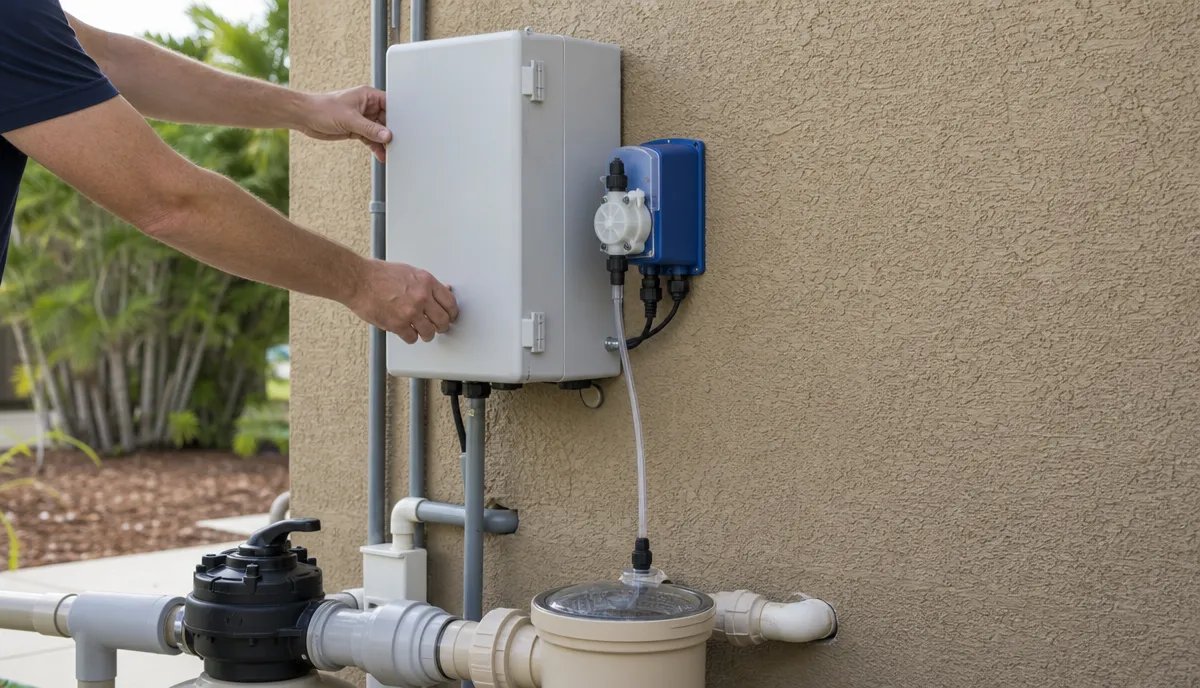
What the water side controls: how much chloramine there is to form in the first place. That is a function of bather load and of how consistently the sanitiser is doing its job — which on a busy indoor pool means automated chemical control rather than hand dosing, and a controller whose probes are actually calibrated.
A probe that has drifted reports a pool that is fine while the pool is not, and the controller then doses faithfully to the wrong number. Calibration is part of a service rather than an optional extra. That whole subject — controllers, feeders, calibration and the documented log — is on commercial operations.
What we do not do: ventilation or HVAC. Air handling in a pool hall is a specialist trade and it is not ours. We will tell you plainly when what you have is an air problem rather than a water one, and we would rather do that than take the visit.
The honest division: if the smell and the corrosion persist while the water chemistry is demonstrably right and documented, that is a ventilation conversation with someone else.
What Else Changes When a Pool Never Closes
The equipment is counting hours, not years
An outdoor pool's heater and pump get five months off. An indoor pool's do not — they run in February, and they run when nobody is swimming, because the water still has to be at temperature for whoever arrives early.
So the failure mode inverts. Seasonal equipment fails from freezing and idleness. Year-round equipment fails from use: igniters, gas valves, relays and contactors are counting operations rather than years, and the parts that go are the ones that move or switch. See year-round heater duty.
The chemistry never gets a break
On a seasonal pool the heat exchanger gets a winter off. On a year-round pool the water is in contact with hot metal continuously, so scale and corrosion progress without interruption. Same causes, faster clock.
There is no natural inspection window
A seasonal pool gets one every autumn, whether anyone plans it or not. A year-round pool has to have one arranged, and that is the practical argument for a service schedule rather than a call when something stops.
And circulation is not optional
On a public pool, circulation is the sanitation — it is how sanitiser reaches the water and how the filter removes what bathers put in. A stopped pump is not a slow decline. That, and why redundancy is a design question rather than a luxury, is on commercial pump duty.
Where the Scope Ends
We are your service contractor, not your compliance department. We file the paperwork required by the Ohio Department of Health for the work we do. Your own regulatory obligations stay yours — recordkeeping, any operator certification your facility requires, and whatever your county health authority sets. Those requirements come from them rather than from us.
We do not clean pools. On a commercial site that is normally site staff or a separate contract, and we work alongside it.
What a Winter Schedule Looks Like
Regular attendance rather than reactive calls, because on a pool that never closes there is no natural moment when everything gets looked at.
A chemical and equipment check is from $72 per visit plus chemicals for a domestic pool, with a written sheet every visit. Commercial contracts are quoted, because bather load, equipment and reporting requirements vary too much for a list price.
The sheet matters more on an indoor pool than anywhere else, because the failure mode is a slow drift rather than an event — and a drift is invisible in any single reading and obvious in a column of them.
See commercial pool maintenance, pool maintenance and pool equipment repair.
