

Pool pump repair in Beachwood — including the commercial case, where a stopped pump is not an inconvenience but an operational stop. $150 service call.
A domestic pool with a dead pump gets slowly worse. The water sits, the chemistry drifts, and in a week you have a problem. Nobody is in danger on day one.
A public pool with a dead pump is a different situation immediately, and the reason is that circulation is not a convenience — it is the mechanism by which sanitiser reaches the water and the filter removes what bathers put in.
Stop the circulation and both stop. The disinfectant in the water is no longer being replenished or distributed, and everything a swimmer brings in stays where it lands. On a pool with real bather load that is not a slow decline.
What follows from that is the operator's decision and their authority's, not ours — we are not going to tell you when to close or reopen a pool. What we can tell you is why the pump is load-bearing in a way it is not at a house, and what that means for how it should be looked after.
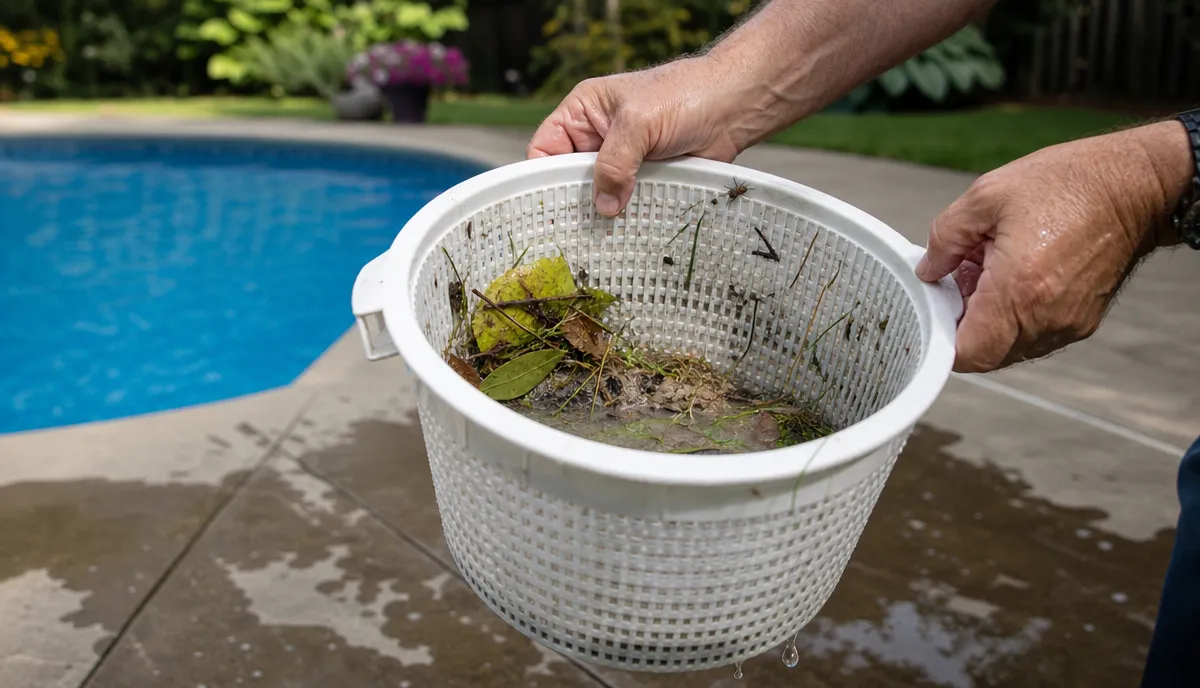
A strainer bather load
A domestic pump runs a schedule. A commercial pump runs.
And a pump running most of the day accumulates them several times faster than a pool pump on a domestic timer. The seal-to-bearing failure chain — a weeping seal letting water into a bearing, which then degrades and eventually takes the motor — is the same mechanism everywhere, but it arrives sooner here. It is set out on our seals and bearings in Solon page.
A pump cycling frequently is operating those every time.
Hair, fibres, sun cream and everything else in a busy pool arrives at the pump basket in quantities a garden pool never produces — so baskets on a commercial site are a daily item rather than a weekly one, and a packed basket starves the pump exactly as leaves do.
For what a struggling pump actually sounds and looks like. The symptom list is on pump diagnosis in Twinsburg and it does not change with the duty.
This is the one genuinely commercial answer, and it is worth putting plainly.
If a stopped pump stops the facility, then a single pump with no alternative is a single point of failure — and the way that gets solved is at the design and specification stage rather than during a repair.
What redundancy looks like in practice varies by installation: a second pump that can be valved in, a pad plumbed so a unit can be isolated and swapped without draining the system, or simply a spare of the right pump and motor held on site rather than ordered when needed.
None of that is exotic and all of it has to be decided in advance. A pad plumbed without isolation valves is a pad where a pump change means shutting the whole system down and working on it wet — which is slower, messier and entirely avoidable.
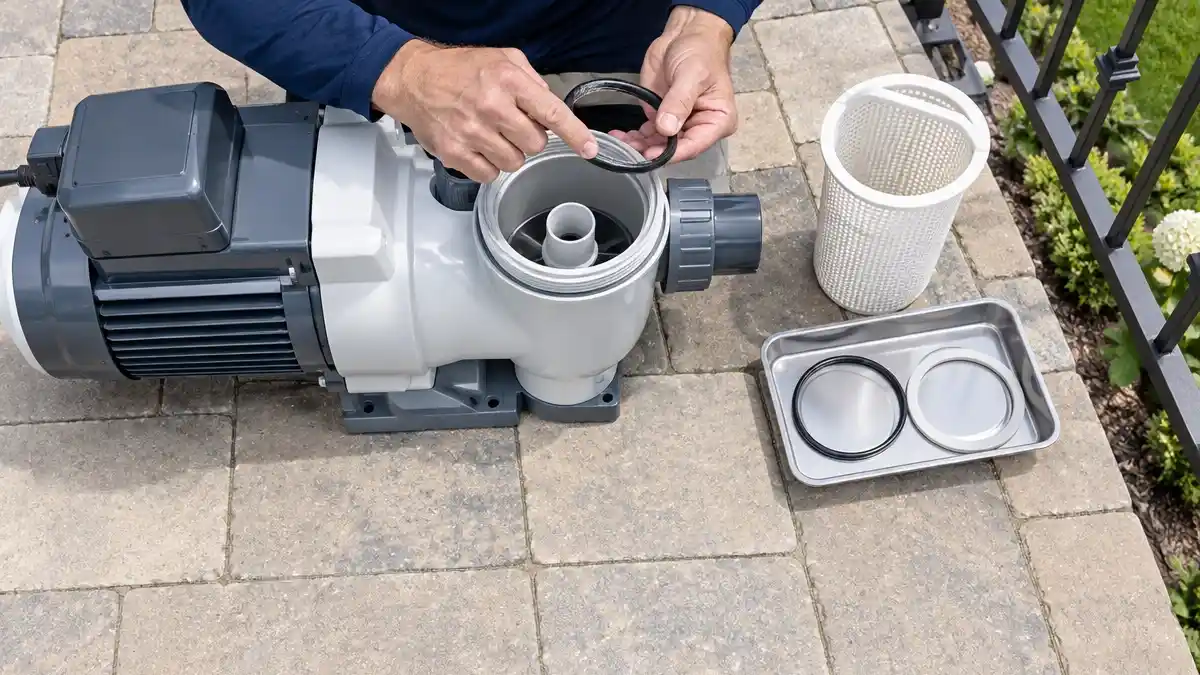
We will tell you what your pad allows
And what it would take to improve it. That is a survey rather than a repair, and it is a much better conversation to have while everything is working.
So the pump's condition is known rather than discovered. A weeping seal noted on a service sheet is a scheduled repair; the same seal ignored is a seized motor at a bad moment.
Which pump, which motor, which plumbing, where the isolation valves are, what the water history looks like. That is what regular attendance buys, and it is the thing that actually shortens a repair.
Where the facility warrants it.
Which on a commercial pool is part of the deliverable rather than a courtesy. See commercial pool maintenance.
Not a response time. We do not publish one, and a number on a website is worth very little to somebody with a pool full of guests.
What is worth something:
And a controller earns its place on a commercial pad — a system that records what the pump did and when turns "it keeps tripping" into something diagnosable. See pool automation.
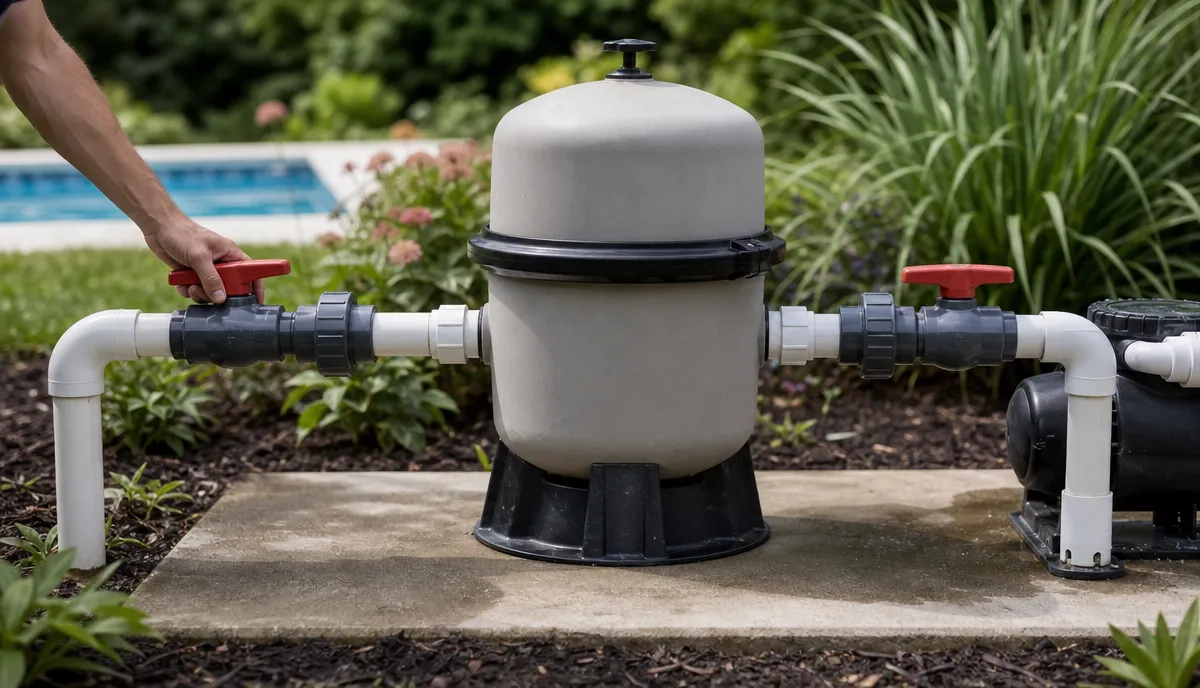
A commercial filter carries the bather load, and its pressure rising is what tells you so. As it loads, the flow through the whole system falls — and on a pool where circulation is the sanitation, falling flow is not only a filtration issue.
Which is why the pressure reading against a known clean baseline is worth more on a commercial pool than anywhere else. See pool filter repair.
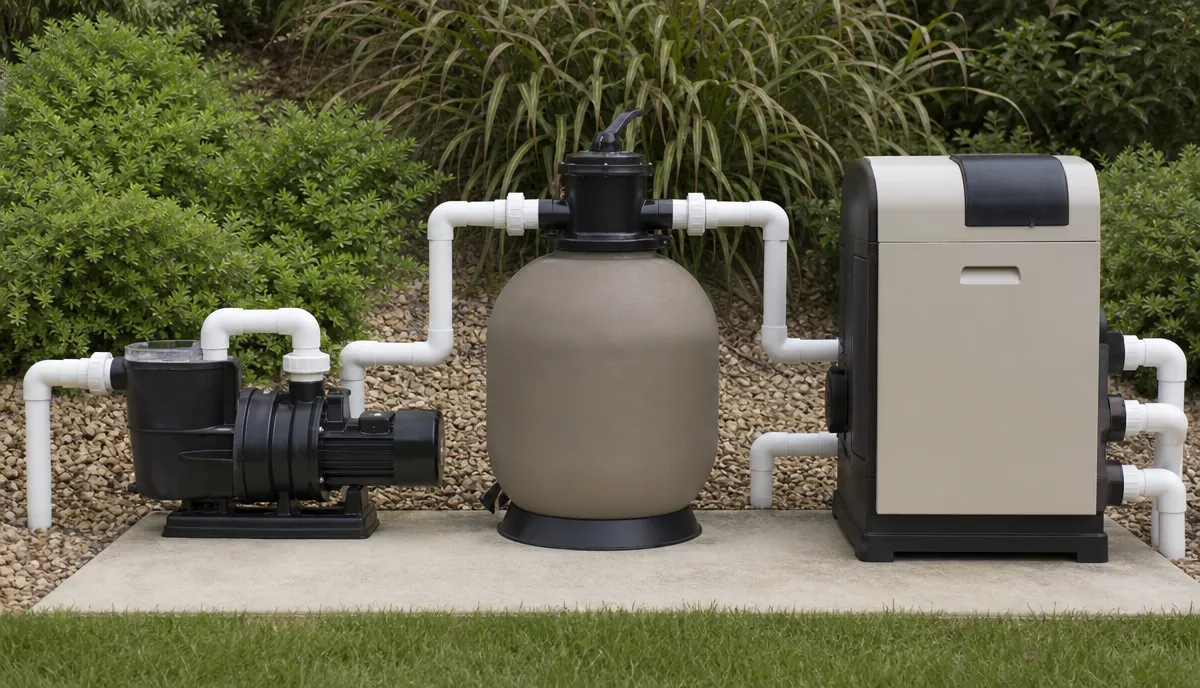
A pool equipment pad with pump, filter and heater

“The crew is super knowledgeable and courteous.”
Better to survey it now than to repair it at the wrong moment.
We are your service contractor, not your compliance department. We file the paperwork required by the Ohio Department of Health for the work we do; your own regulatory obligations stay yours, including your recordkeeping, any operator certification your facility requires, and any circulation or turnover requirement your authority sets. Those requirements come from them rather than from us.
We do not do the electrical supply work — a licensed electrician's job, and on a commercial pad more likely to be involved. We do not clean pools; on a commercial site that is site staff or a separate contract and we work alongside it.
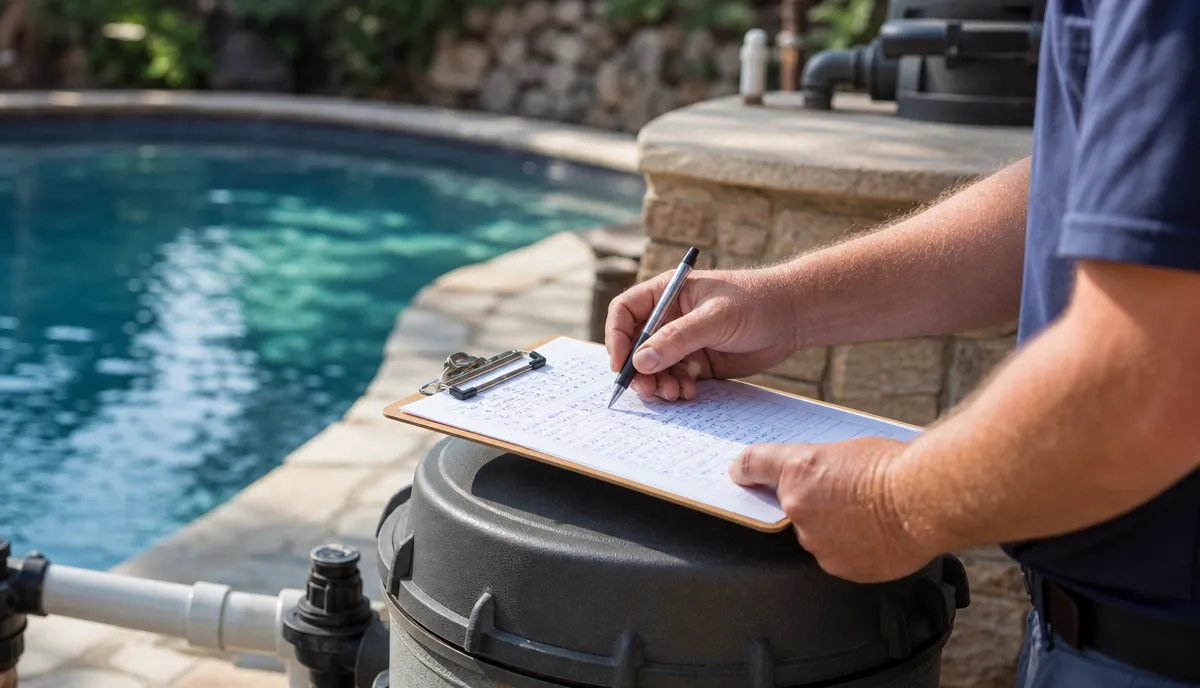
A completed pool service sheet on the equipment pad
A $150 service call applies to a diagnostic and repair visit and covers up to the first hour on site. Parts and further labour are quoted before we do them. Commercial contracts, pump supply and replacement are quote-required.
Products we install carry the full manufacturer's warranty, generally one to three years on that manufacturer's terms. We do not offer a separate workmanship guarantee.
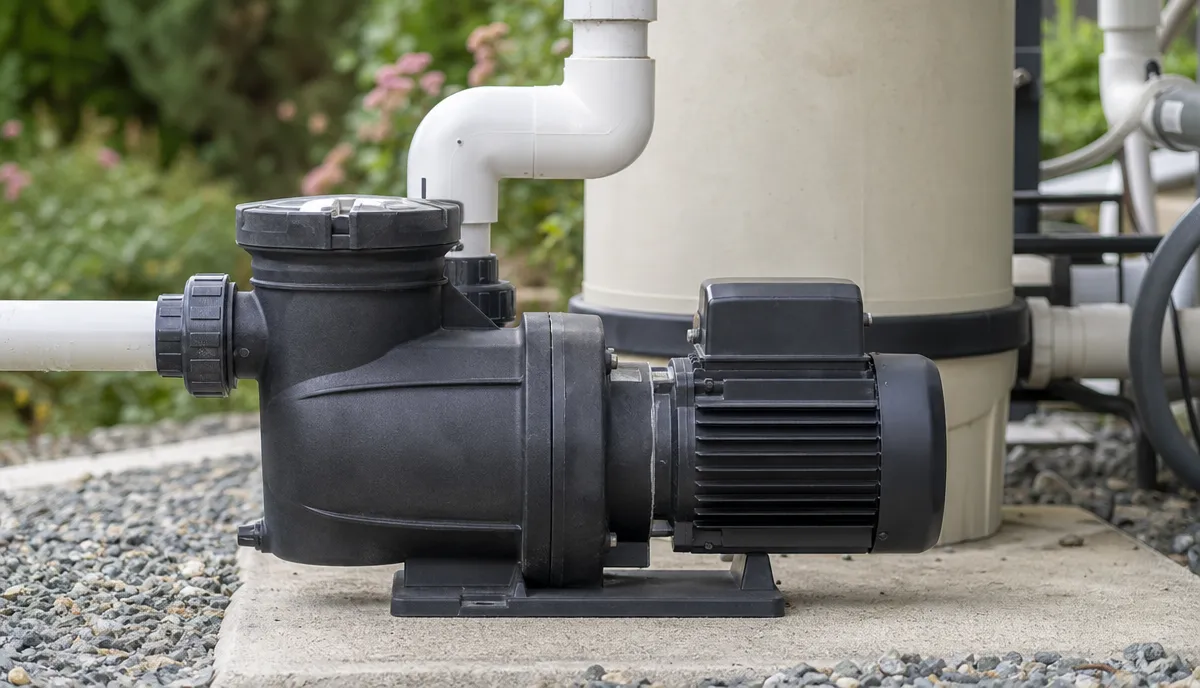
A pool pump of the type we service, on its pad
Beachwood is in Cuyahoga County, about 11 miles from our base, and it is as much a commercial district as a residential one — which is why the commercial duty case is written here.
For the operational side of a public pool — controllers, calibration, the log, what an inspection turns on — see Beachwood pool service, and for the rest of the pad pool equipment repair. The list of towns is on service areas.
Because circulation is how sanitiser reaches the water and how the filter removes what bathers bring in. Stop the circulation and both stop — so on a pool with real bather load it is not a slow decline the way it is at a house. What you do about it is your decision with your authority; what we can tell you is why the pump is load-bearing here in a way it is not domestically.
They accumulate wear faster, which amounts to the same thing. Bearings and seals are counting hours, and a pump running most of the day gets through them several times quicker than one on a domestic timer. Frequent starts also wear contactors and capacitors, and bather load fills the strainer basket in quantities a garden pool never produces.
It varies by installation: a second pump that can be valved in, plumbing that lets a unit be isolated and swapped without draining the system, or a spare pump and motor held on site rather than ordered when needed. None of it is exotic, and all of it has to be decided in advance — a pad plumbed without isolation valves makes a pump change a whole-system shutdown.
We do not publish one, and we would rather explain why than print a number. What genuinely shortens a repair is knowing your site — which pump, which motor, where the isolation valves are — and having found the fault before it stopped anything. That comes from planned attendance rather than from a promise.
More often than a domestic pool by a wide margin — on a busy commercial pool they are a daily item rather than a weekly one. Hair, fibres and sun cream arrive at the strainer in volumes a garden pool does not produce, and a packed basket starves the pump exactly the way leaves do.
Those come from your health authority, not from us, and we will not quote you a figure — it varies by jurisdiction and by facility. What we do is service the equipment that has to deliver whatever your authority requires, and file the paperwork required by the Ohio Department of Health for the work we do. Your own regulatory obligations stay yours.
