

Custom in-ground pool safety covers for Waite Hill — measured on site, and tensioned for a garden a mile and a half from Lake Erie. Family-owned since 2012.
Cover literature is all about snow. Snow pushes down, and the water underneath the cover pushes back — the load is shared, and that is the arrangement everything is designed around.
Wind does the opposite. It gets under an edge, or it pulls across the surface, and it lifts. Nothing pushes back on a lifting load. All of it goes into the straps and the anchors, and that is why wind is the more revealing of the two: snow finds out whether your cover is strong, and wind finds out whether it is properly fitted.
Waite Hill is about 1.6 miles from Lake Erie — the second-closest community we serve, after Bratenahl. A near-lake position means more air movement across an open garden, all winter, with no growing season to soften it.
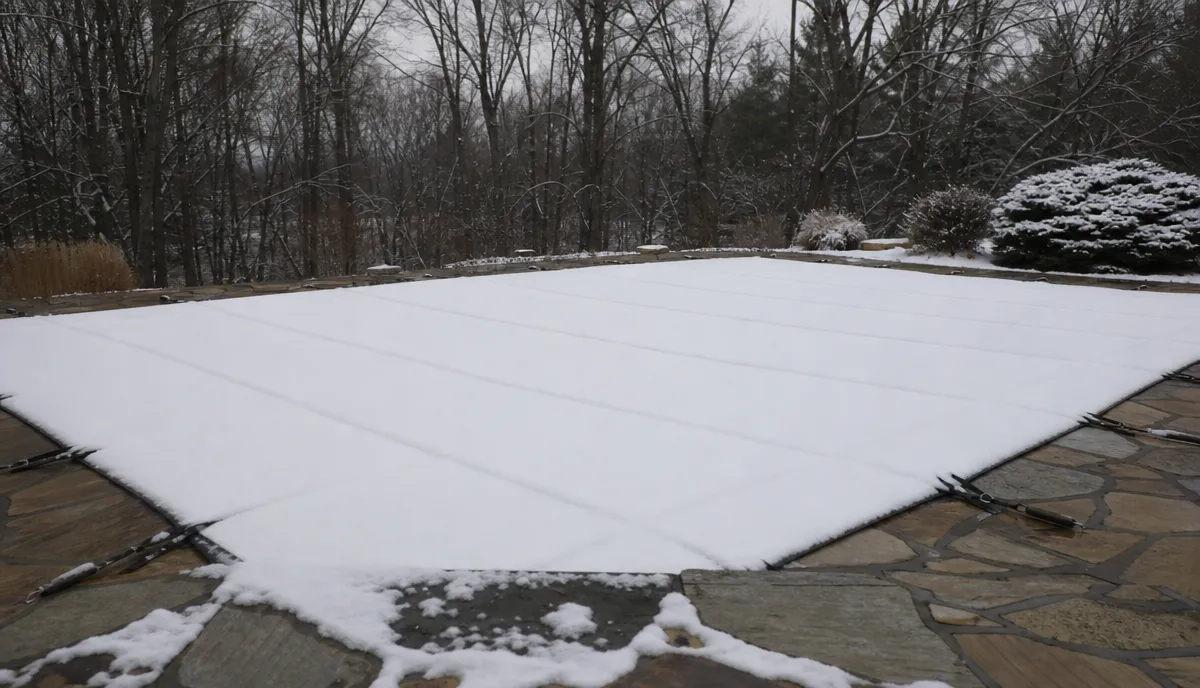
Snow lying on a fitted pool safety cover
The fabric sits close to the water, the edges are held down, and air passing over it has no lip to lift.
It bellies, it flaps, and each flap is a small snatch load on every strap and every anchor at once. That is fatigue rather than a single failure, and it is why wind damage shows up as several tired components rather than one broken one:
So the honest advice for a near-lake pool is not a heavier cover. It is a correctly tensioned one, checked. A cover fitted properly and re-checked after the first hard blow of the season is doing what it was designed to do. One left slack because it went on in a hurry is being slowly destroyed by weather it should have shrugged off.
Wind gets under an edge, so the perimeter matters more here than inland:
The anchor line and where the straps land. A cover with a well-resolved perimeter has fewer places to be lifted — which is a layout question, decided at the measure. See covers in Twinsburg for what a measure records.
Whether the anchors are sound. A lifting load pulls on anchors in a direction they see far less of than downward load. See safety cover installation.
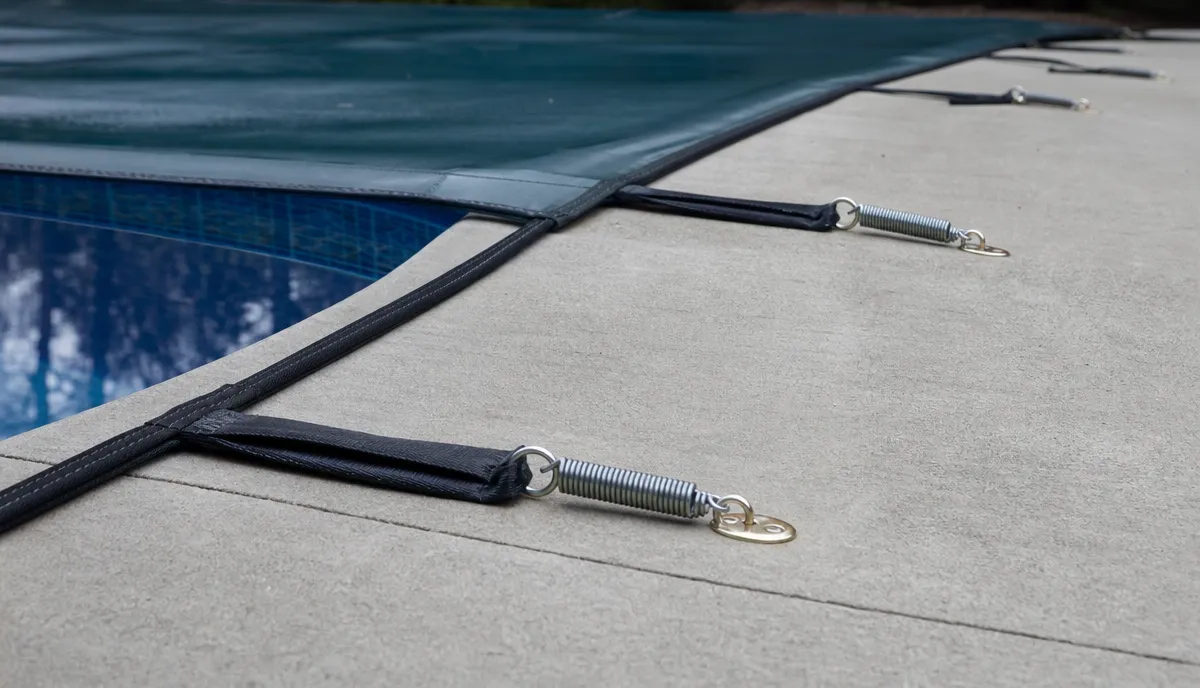
And exposure
An open garden with a clear run to the water is a different site from a sheltered one behind planting, and it is worth mentioning when we come to measure.
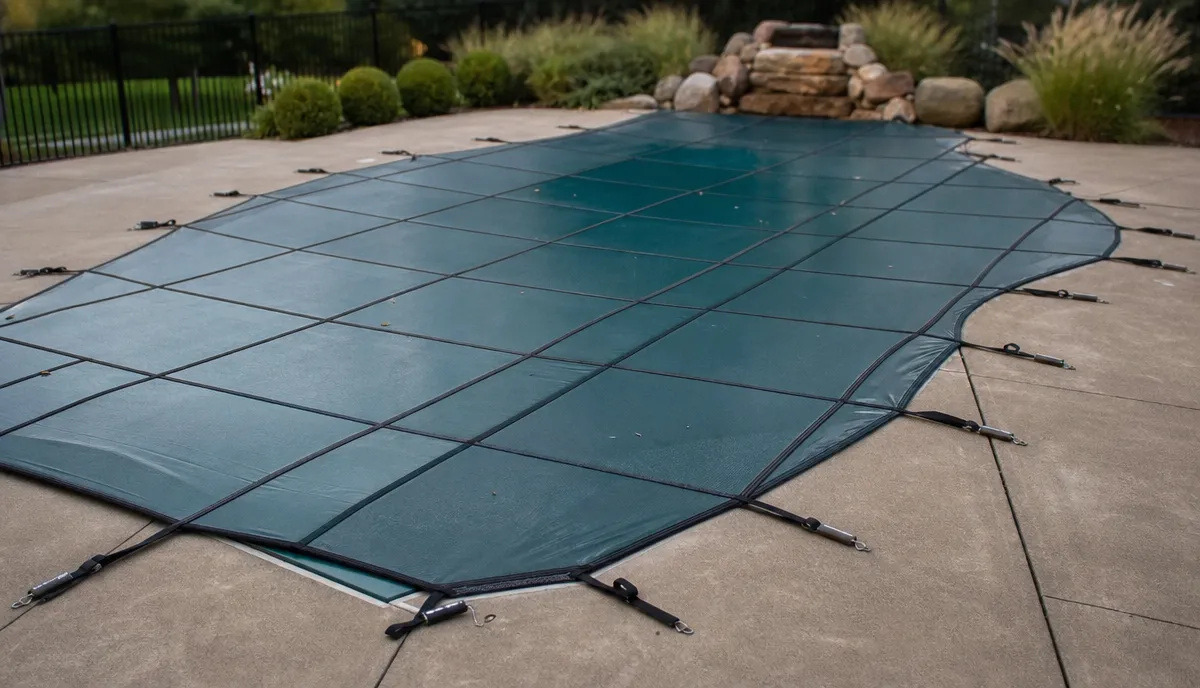
A solid cover presents a sealed surface for wind to press on and lift; a mesh one lets some of it through, which reduces the lifting force it experiences.
The mesh-or-solid decision also turns on debris, winter light and whether you want a cover pump to look after, and the full comparison is on the pool safety covers hub. But on an exposed near-lake site it belongs in the conversation.
Said plainly. If a cover has lifted, or a strap has come off, or something has landed on it, that is a call to us rather than a job to do in the weather. A safety cover is a barrier designed to stop a person going into the pool — it is not a floor, and a cover that is already misbehaving is the least predictable version of itself.
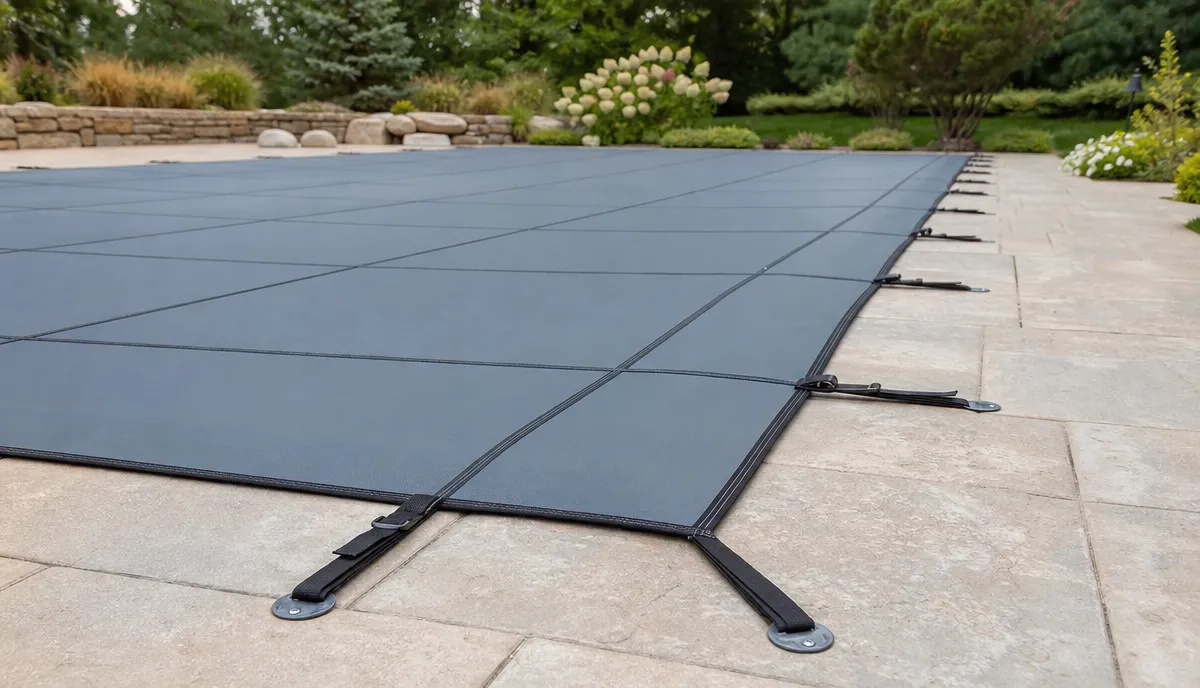
A safety cover anchored and tensioned around a pool perimeter
“After having different companies open and close our pools, and then having M & G Pools, I would never have anyone else! They are extremely professional, kind, efficient, and knowledgeable. They definitely go out of their way to help their customers.”
Tell us how exposed the garden is.
A safety cover installed to the manufacturer's instructions and fully fastened is a barrier. It is not a reason to stop watching. No cover replaces supervision of children and pets around water, and a cover that is only half on is a hazard rather than a barrier.
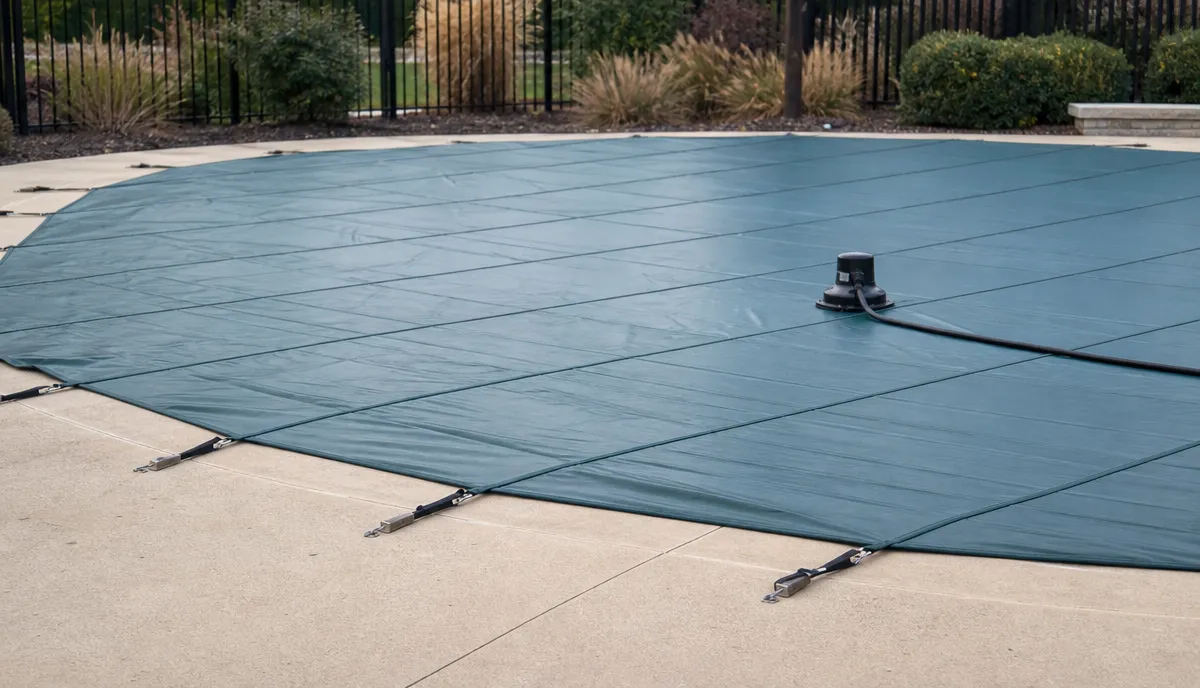
A solid safety cover on an in-ground pool
Waite Hill is in Lake County — the only city in our service area that is — and it is the furthest point we serve, about 21 miles from our base. Cover work is exactly the sort of job that travels, which is set out on Waite Hill pool service along with the honest position on what else does.
Everything we install is made to your pool by Merlin or GLI, measured on site. We do not sell or fit stock or standard sizes — and a stock cover's fit is the thing wind exploits first.
Straps, springs, grommets and anchors are all serviceable — see safety cover repair and replacement. Cover work is quote-required. Closings start from $495 plus chemicals; see pool closing service. The list of towns is on service areas.
Yes, and mainly through wind rather than anything else. A near-lake garden gets more air movement all winter, and wind loads a cover in the opposite direction from snow — it lifts. Snow pushes down and the water underneath helps carry it; a lifting load is taken entirely by the straps and the anchors, with nothing pushing back.
It is the problem, rather than a symptom of one. A slack cover bellies and flaps, and every flap is a small snatch load on every strap and anchor at once. That is fatigue — which is why wind damage turns up as several tired components rather than one broken one: stretched straps, weak springs, pulling grommets, loose anchors.
Usually not. What an exposed site needs is a correctly tensioned cover, fitted properly and re-checked after the first hard blow of the season. A cover left slack because it went on in a hurry is being destroyed by weather it should have shrugged off, and no amount of fabric weight fixes that.
Mesh has a genuine advantage here, because air passes through it — a solid cover presents a sealed surface for the wind to press on and lift. It is one factor among several, though: the choice also turns on debris, winter light and whether you want a cover pump to look after. Worth weighing rather than deciding on wind alone.
Call us rather than go out there. A cover that is already misbehaving is the least predictable version of itself, and a safety cover is a barrier designed to stop someone going into the pool — not a surface to work from, particularly in weather.
Yes. It is the furthest point in our service area, about 21 miles from our Twinsburg base, and cover work is precisely the kind of job that travels well — a measure and a fit are both whole-visit jobs. What is a scheduling conversation at that distance is weekly service, and we are straight about that on our Waite Hill page.

