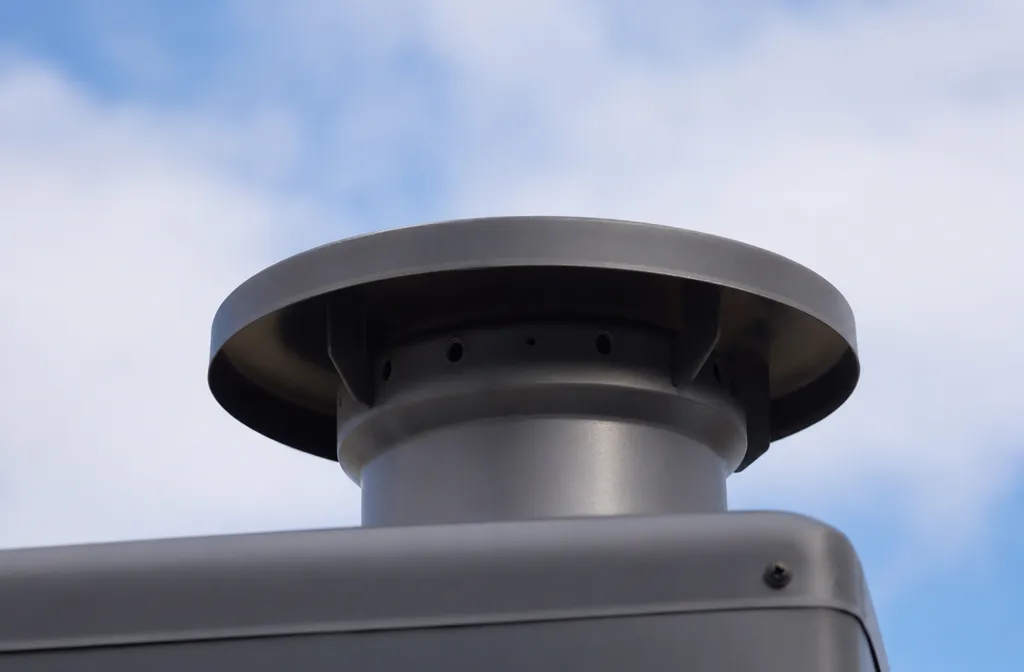

Gas and heat pump pool heater repair in Solon — including the two faults that get misdiagnosed most often: gas supply, and a heater that cannot prove to itself that it has a flame. $150 service call.
"It lights, and then it stops." That single sentence covers two completely different problems, and they get confused constantly.
One is a gas supply problem: the heater lights fine and then starves when it asks for full output.
The other is a sensing problem: the gas is fine and the flame is real, but the heater cannot prove to itself that the flame is there, so it shuts down on purpose.
Telling them apart is the job. Guessing means replacing an igniter on a supply problem, or chasing a gas fitter for a dirty sensor.
We check flow before either of these, always, for the reasons set out on our heater diagnostics in Twinsburg page — a heater that cannot get water refuses to fire and looks broken while being entirely healthy.
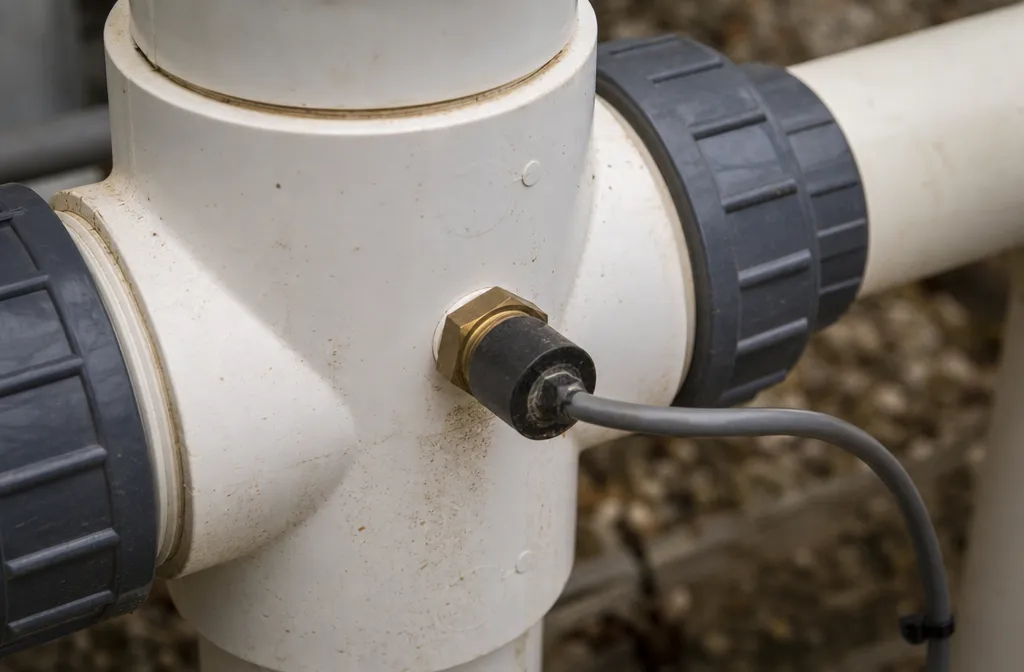
A pool heater flow switch
What is usually behind it:
And it is often the last one added. Both of those matter.
The meter, the line running out to the pad, a shutoff, the heater's gas valve, then the burner tray. A fault anywhere along it presents at the heater.
The heater lights, runs, and drops out when it goes to full output — or it behaves all summer and misbehaves on the first cold morning, when the house furnace is also drawing hard. That pattern points at supply rather than at the heater, because the heater only fails when something else is competing with it.
Supply pressure is something we read at the unit rather than infer from the symptom, because the fix is completely different depending on the answer.
If the answer is that your supply needs upsizing or re-routing, that is a licensed gas fitter's work and we will tell you so and stop. We will diagnose it, document what we found, and hand it over.
If you can smell gas, do not call us first. Leave the area and call your gas utility or the fire service. That is not modesty about our scope — it is the correct order of operations.
This is the fault people find hardest to believe, and it is one of the most common.
The heater does not look at the flame. It passes a small electrical current through it. A flame conducts, and it conducts in one direction more than the other — so the control board sends a signal into the flame and measures what comes back. If the signal returns as expected, the board concludes there is a flame and keeps the gas on. This is flame rectification, and it is why the sensor is a thin metal rod sitting in the fire rather than anything optical.
Three ways that goes wrong:
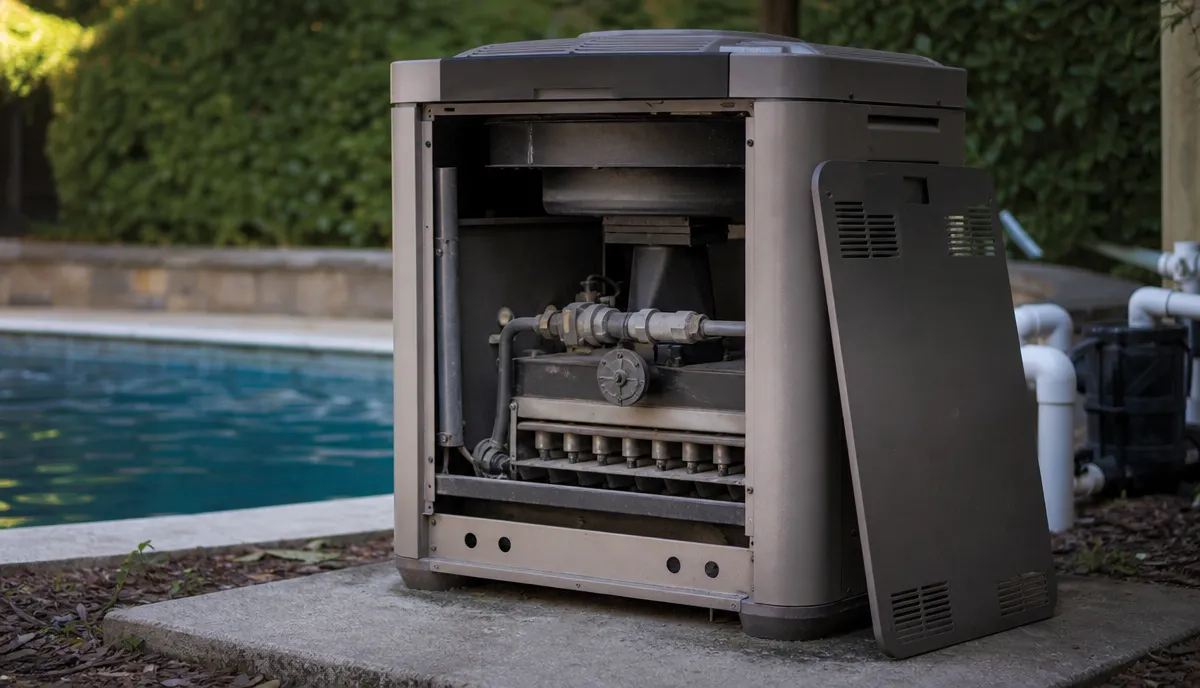
The signature symptom is the timing
The heater lights, runs for a few seconds, then shuts down and locks out — often retrying a set number of times before giving up. That few-second window is the board waiting for a signal it never gets. A gas supply problem, by contrast, usually lets the heater run longer before it falters.
On older units: a pilot that will not stay lit points at the thermocouple or the pilot orifice, and a pilot that will not light at all is often as simple as a blocked orifice.
A ceramic element that glows. They fail by cracking, and they are fragile enough that a careless hand during another repair is a real cause.
An electrode with a gap. Gaps drift, electrodes corrode, and the ceramic insulator cracks and leaks the spark to earth before it reaches the gap.
On a heat pump none of this applies — there is no flame. A heat pump that will not start is a power, control or air-side problem, and the air side matters more than people expect: a blocked coil or a stalled fan starves it of the outside air it takes its heat from. See pool heaters for how the two types compare.

A heater that works when you press the button and fails on a timer is not usually a heater fault. It is the pump and the heater not agreeing about when to run — the schedule calls for heat before the pump has established flow, or at a pump speed below what the flow-switch will accept.
That is a controller job rather than a heater repair, and it is a good outcome because nothing is broken. See pool automation.
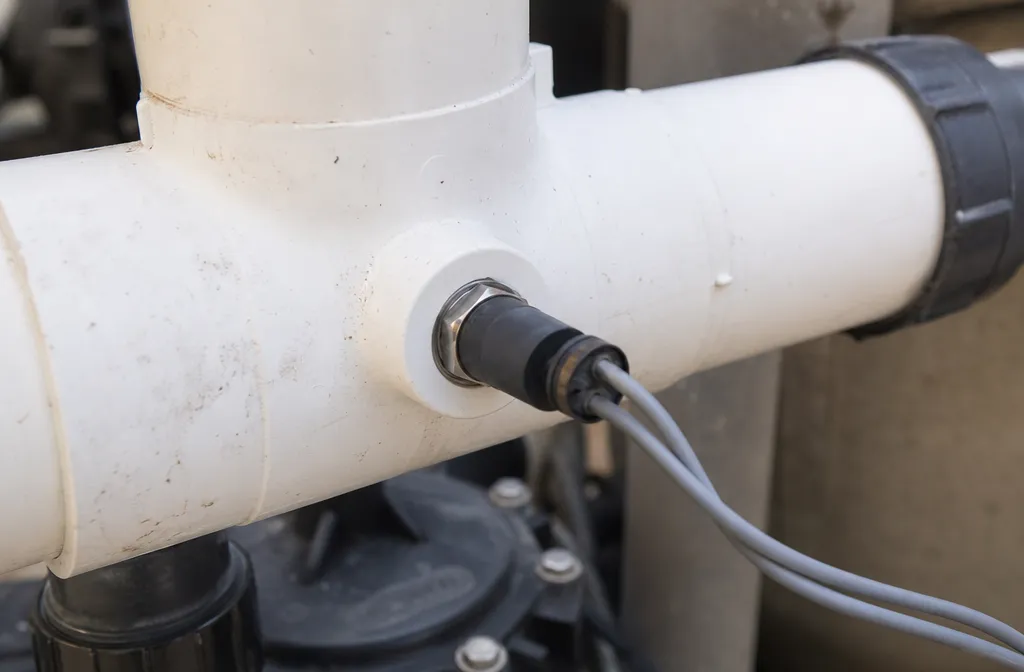
A flow switch fitted into the white PVC return plumbing
“Matt and his team are fantastic to work with. Easy to schedule, quality work is done right the first time. Highly recommend.”
Tell us how long it runs before it stops — that one detail narrows it a long way.
A $150 service call applies to a diagnostic and repair visit and covers up to the first hour on site. Parts and further labour are quoted before we do them. We accept credit card payment and we do not offer financing.
Products we install carry the full manufacturer's warranty — length and terms vary by manufacturer, generally one to three years, administered on that manufacturer's terms. We do not offer a separate workmanship guarantee.
Freeze damage is outside all of that. Water left in a heat exchanger over winter expands as it freezes and freeze-cracks it — that destroys the exchanger rather than injuring it, and it follows from how the pool was closed rather than from a defect in the part.
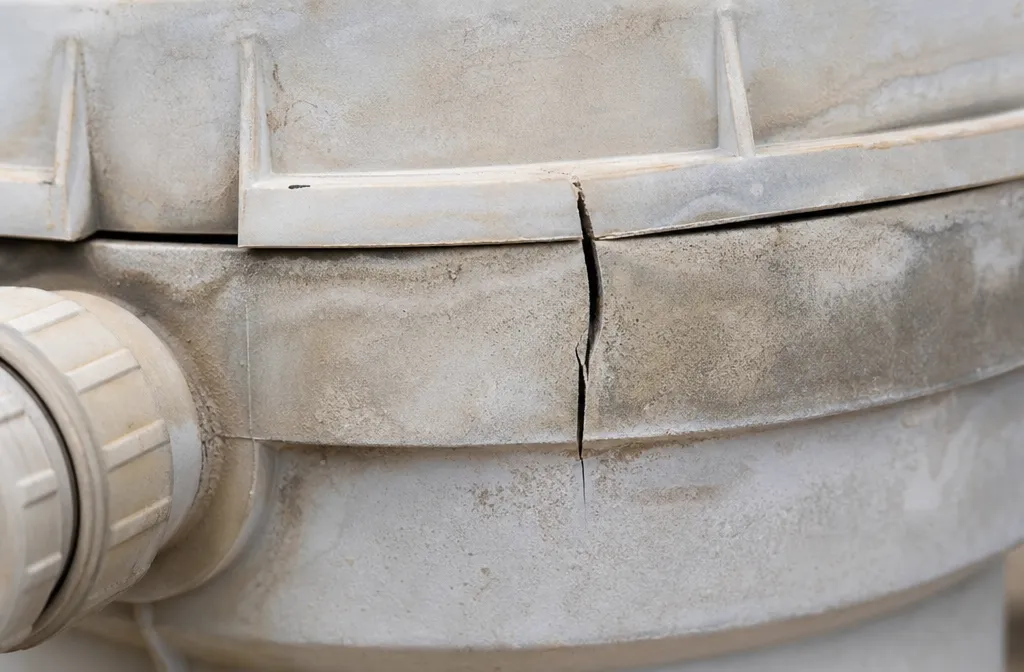
Freeze damage to a pool pump housing
Solon is in Cuyahoga County, about 5 miles from our base — one of the closest towns we serve, so a part we stock is a short trip rather than a second appointment.
At about 13 miles from Lake Erie your season runs a little later than an inland pool's, which in heater terms means the unit is more likely to be asked to work in late October — and late October is when a marginal gas supply or a tired flame sensor stops being marginal.
For the rest of what we do here see Solon pool service, pool equipment repair for the wider pad, and pool heater replacement if the answer turns out to be a new unit. The list of towns is on service areas.
We do not run or alter gas lines, as above. We do not do the electrical supply work either — a new circuit is a licensed electrician's job.
We do not build pools, we do not service above-ground pools, hot tubs or spas, and we do not offer leak detection.
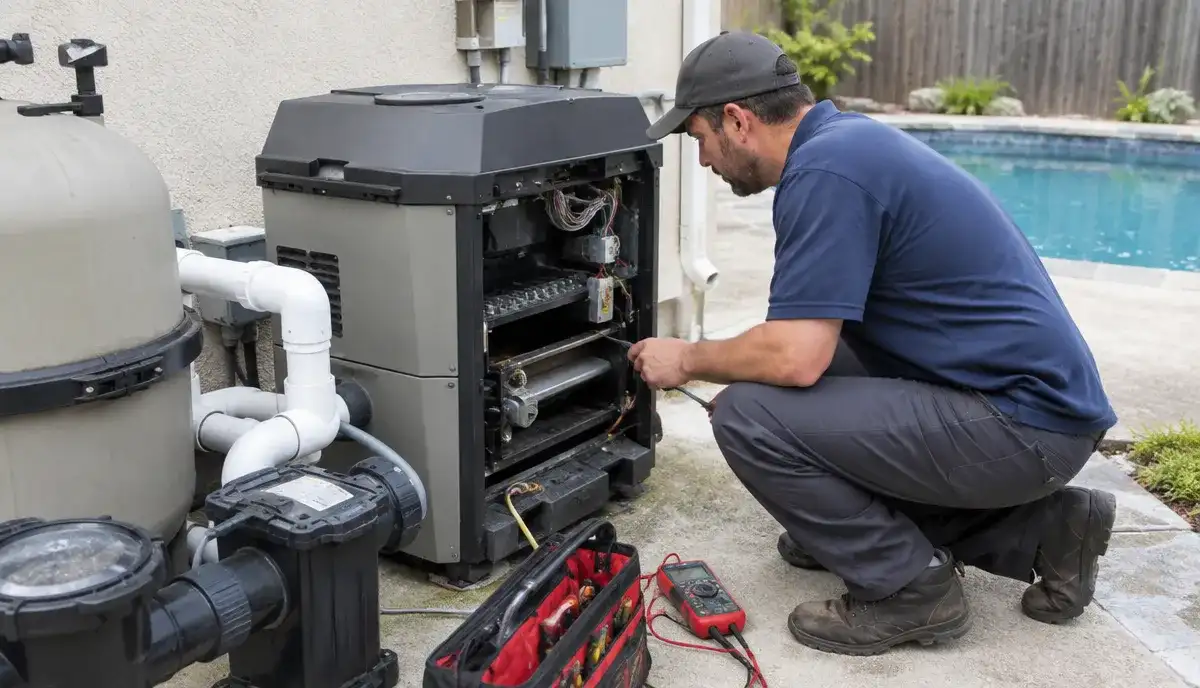
Diagnostic work at a pool heater
Almost always a flame-sensing problem rather than a gas problem. The heater proves it has a flame by passing a small current through it and measuring what returns — so a dirty sensor rod or a corroded ground path leaves the board unable to see a flame that is perfectly good, and it shuts the gas off on purpose. That few-second window is the board waiting for a signal that never arrives.
Yes, and that pattern points at gas supply. The heater only fails when it asks for everything, or when the house furnace is drawing hard at the same time — which means something is competing with it. That is a supply-side question, and it is measured at the unit rather than guessed from the symptom.
No, and we will say so before we start rather than after. Diagnosing it is ours; upsizing or re-routing a gas line is a licensed gas fitter's work. We will document what we found and hand it over. If you can smell gas, leave the area and call your gas utility or the fire service — not us.
Because rectification needs a return path, and if the ground path through the burner assembly has corroded, a brand-new sensor sees the same weak signal. A pad sitting in the weather corrodes. A repeat failure shortly after a sensor replacement is a strong hint that the sensor was the symptom rather than the cause.
That is usually not a heater fault at all. The schedule is calling for heat before the pump has established flow, or at a pump speed below the minimum the heater's flow-switch will accept. It is a controller adjustment rather than a repair, which means nothing is actually broken.
No — there is no flame, so none of the ignition or gas story applies. A heat pump that will not start is a power, control or air-side problem, and the air side is the one people forget: it takes its heat out of the outside air, so a blocked coil or a fan that is not turning starves it of the only thing it runs on.