
Replacing a pool safety cover in Macedonia — including the question everyone asks first, which is whether the anchors already in your deck can stay. Family-owned since 2012.
Almost nobody replaces a cover because it wore out evenly. They replace it because it stopped going on properly, and there are only a few reasons for that.
The cover has shrunk. Vinyl and mesh both lose a little dimension over years of tension, sunlight and cold. It is gradual, and then one autumn you are pulling harder than you should have to and the last two straps will not reach.
The straps have stretched. The opposite problem, and it looks the same from the deck. Stretched webbing means the tension cannot be set properly however far the anchors are wound down.
The fabric or the seams have gone. Thin patches, a run in a seam, abrasion where the cover has been rubbing on coping. At that point it is a replacement rather than an adjustment.
Or the pool changed. A re-poured deck section, replaced coping, a new handrail socket, a planting bed built up to the edge. The cover is still the shape it always was; the pool is not.
Which one you have decides what happens next, and the last of them is the one people do not think of.
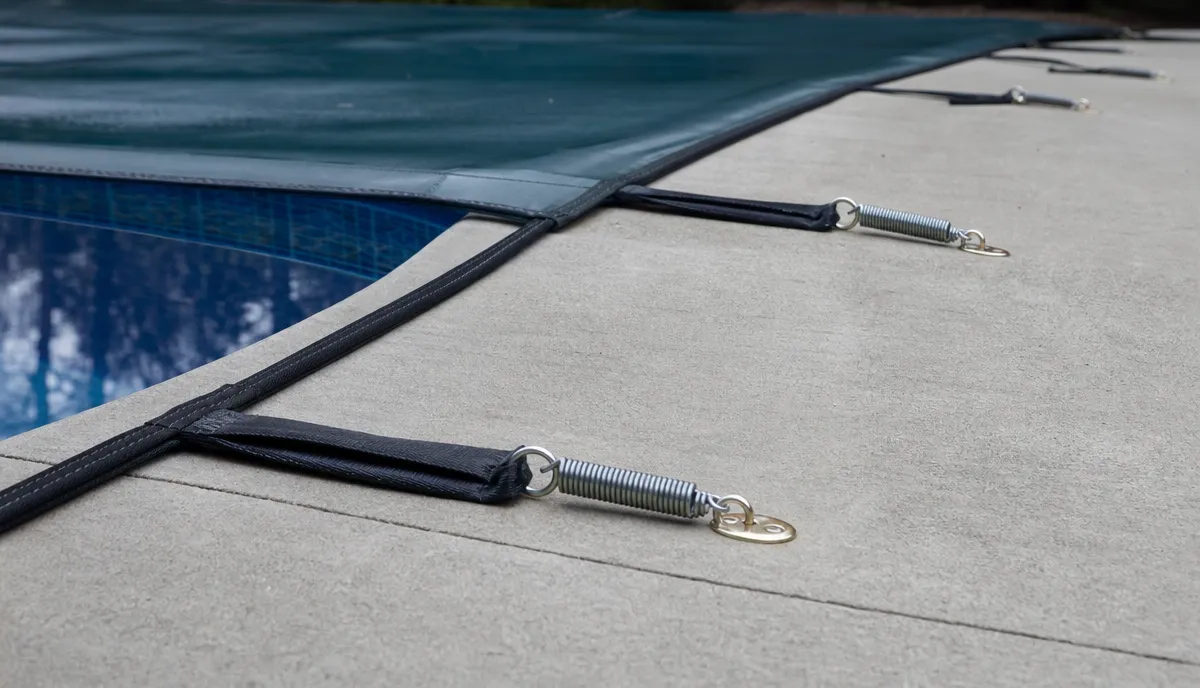
Spring-tensioned straps running from a cover to its anchors
What makes new anchors likely:
Because it makes a real difference to the job.
Often it is a mixture. Most of the line reused, a few replaced or added. That is a normal outcome rather than a compromise, and it is one of the reasons a replacement is quoted after a look rather than over the phone.
This is the single most common offer we turn down, and the reason is at the top of this page: the old cover has probably shrunk. Measuring from it builds the shrinkage into the new one, and you end up with a cover that is tight from the first day.
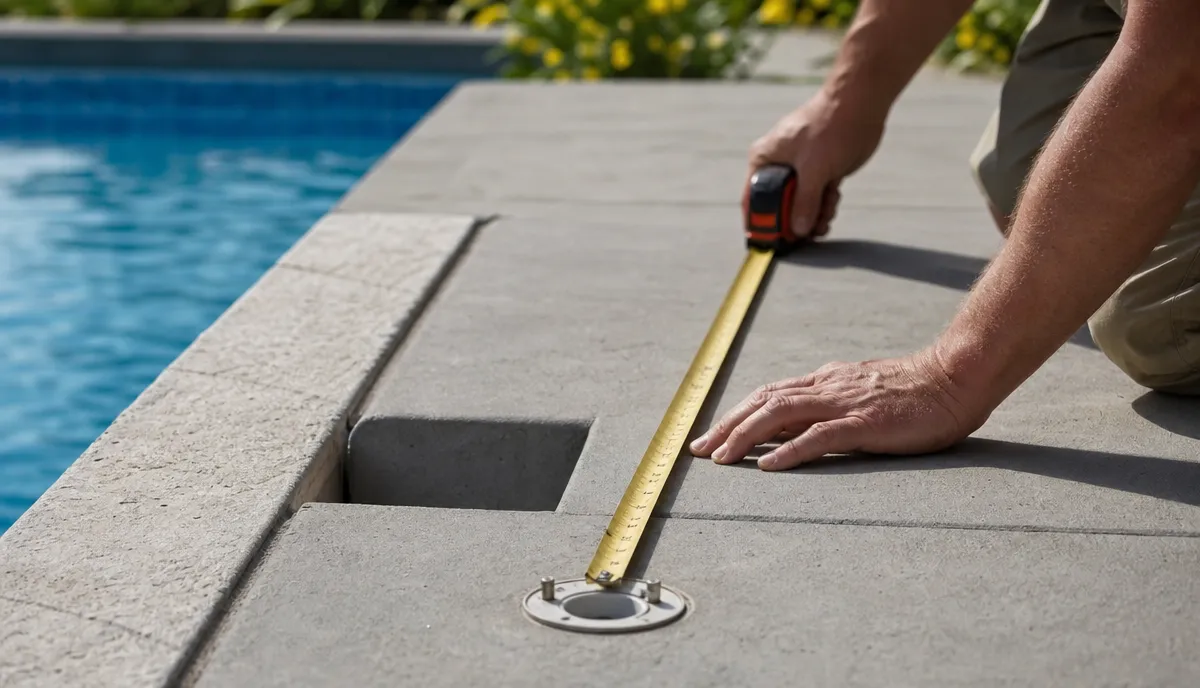
We measure the pool
Shape at multiple points, the deck material and its width, everything inside the anchor line, and where the straps can physically land — plus the existing anchor positions, which we record because reusing them where we can saves drilling. The full account of what a measure captures is on our covers in Twinsburg page.
Macedonia is in Summit County, about 3 miles from our base — the nearest town we serve.
For a replacement that matters more than usual, because a replacement is really two surveys: the pool, and the existing anchor line. At three miles neither is an expedition, so getting an accurate answer before anything is ordered is straightforward rather than something to be squeezed into one visit.
And it is worth doing in spring or summer, while the old cover is off and the anchors are visible and warm. See Macedonia pool service.
A cover that will not tension because a strap has stretched is a strap problem, not a cover problem — and a stretched strap is a repair.
Or when the cover itself has shrunk beyond adjustment. See safety cover repair and replacement, and we will tell you which of the two you are in rather than quoting the larger job by default.
“Matt and his team are fantastic to work with. Easy to schedule, quality work is done right the first time. Highly recommend.”
Let us look at it while it is off, not when it needs to go back on.
A safety cover installed to the manufacturer's instructions and fully fastened is a barrier. It is not a reason to stop watching. No cover replaces supervision of children and pets around water, and a cover that is only half on is a hazard rather than a barrier — which is exactly the risk with a cover that has stopped fitting properly.
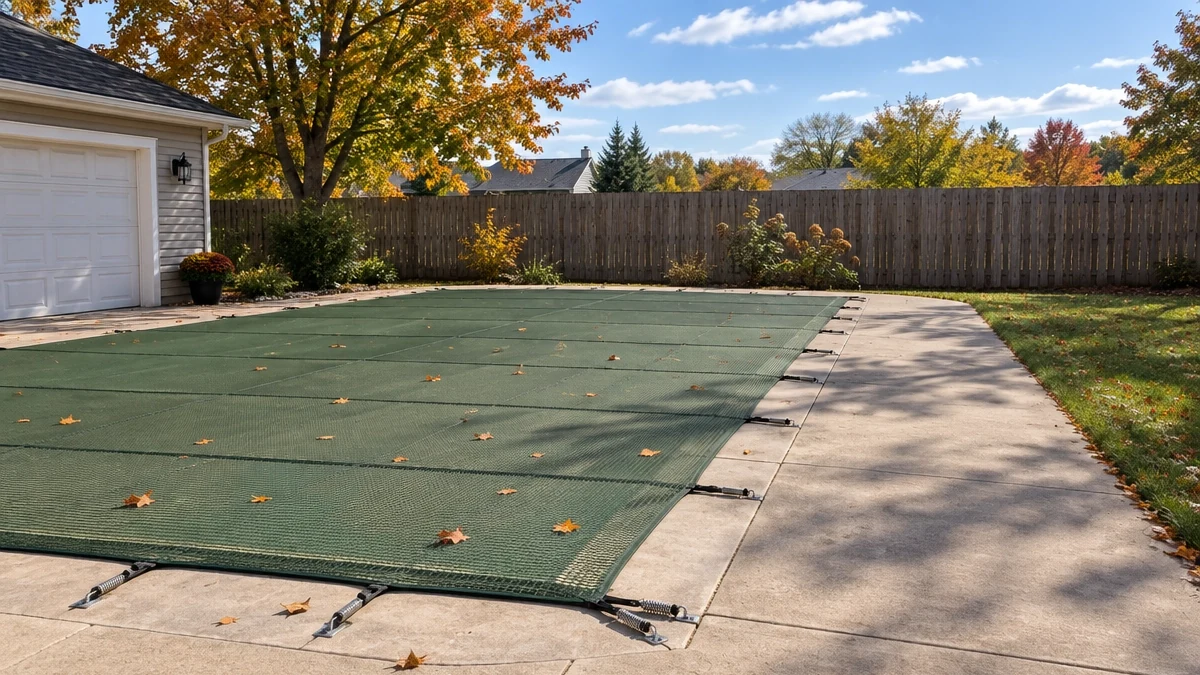
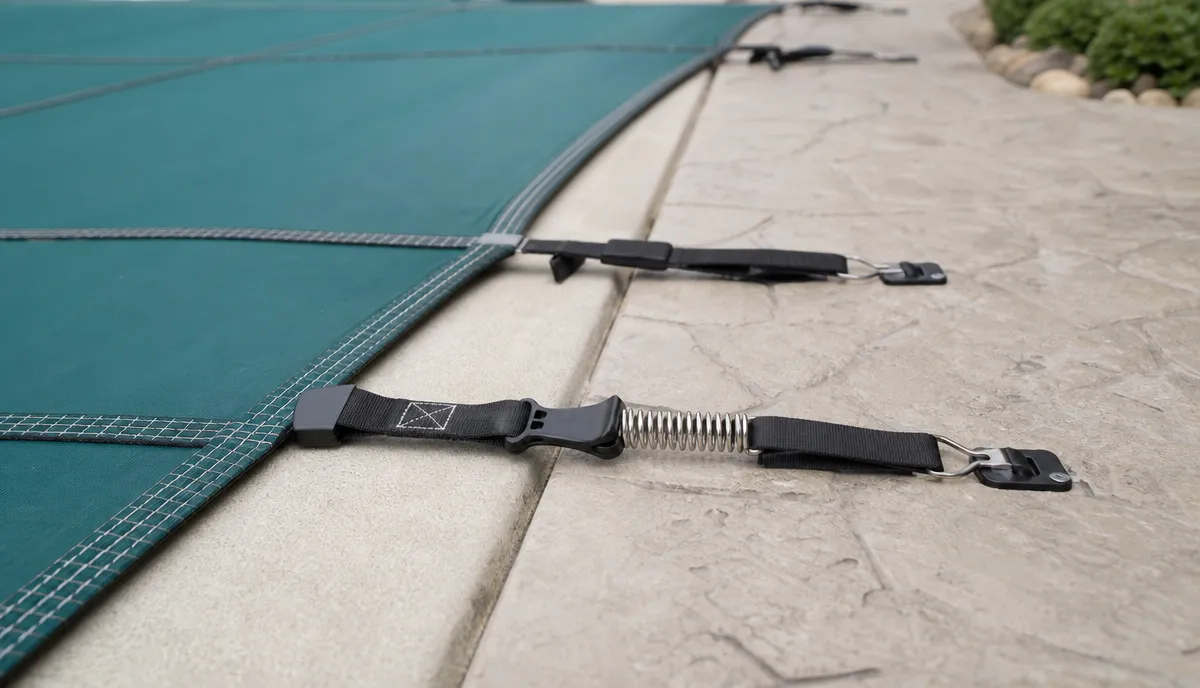
A safety cover anchored and tensioned around a pool perimeter
Everything we install is made to your pool by Merlin or GLI, measured on site. We do not sell or fit stock or standard sizes.
Cover work is quote-required, and on a replacement that is not a hedge — the anchor survey is part of the answer. For anchors and deck types see safety cover installation, and for the mesh-or-solid decision the pool safety covers hub. Closings start from $495 plus chemicals; see pool closing service. The list of towns is on service areas.
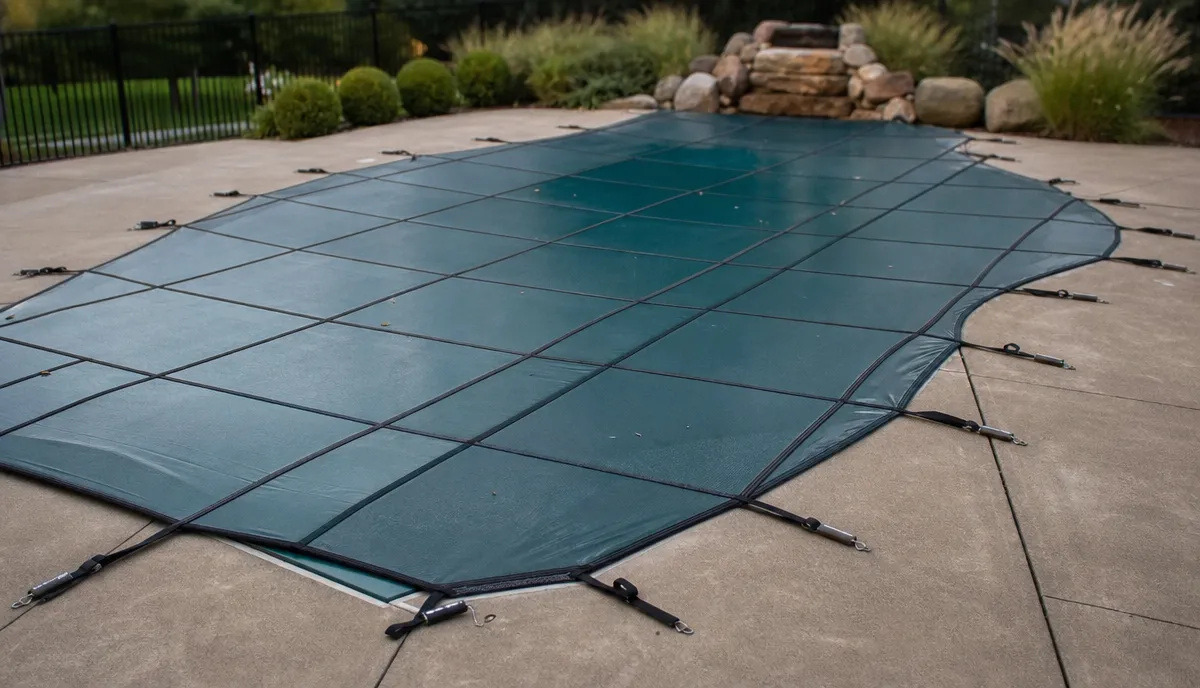
A mesh safety cover on an in-ground pool
Possibly, but more often the cover has shrunk. Vinyl and mesh both lose a little dimension over years of tension, sunlight and cold — gradually, and then one autumn the last two straps will not reach. The other common cause is the opposite: the straps have stretched, so the tension cannot be set however far you wind the anchors down.
Often, and it is worth establishing early. Reuse is likely where the existing pattern is sound and complete, every anchor still turns freely and sits flush, and neither the pool nor the deck has changed. New anchors are likely where they are seized or corroded through, where they have worked loose, where the deck has been altered, or where the original layout was never right. A mixture is a normal outcome.
No, and it is the most common thing we are offered. The old cover has probably shrunk — which is often why it is being replaced — so measuring from it builds the shrinkage into the new one. We measure the pool, and we record the existing anchor positions so we can reuse them where possible.
Straps, springs, grommets, D-rings, anchors and short seam separations are all serviceable. A cover that will not tension because a strap has stretched is a strap problem. Covers get replaced when the fabric or the seams have gone, or when the cover has shrunk beyond adjustment — and we will tell you which you have rather than quote the bigger job.
Spring or summer, while the old cover is off and the anchors are visible and warm. It also means the measure, the order and the fit are not competing with everyone else's autumn — and a cover is made to order, so the earlier the measure, the calmer the rest of it.
Because a replacement is really two surveys — the pool, and the existing anchor line — and at that distance neither is an expedition. Getting an accurate answer before anything is ordered is straightforward rather than something to be squeezed into a single visit.