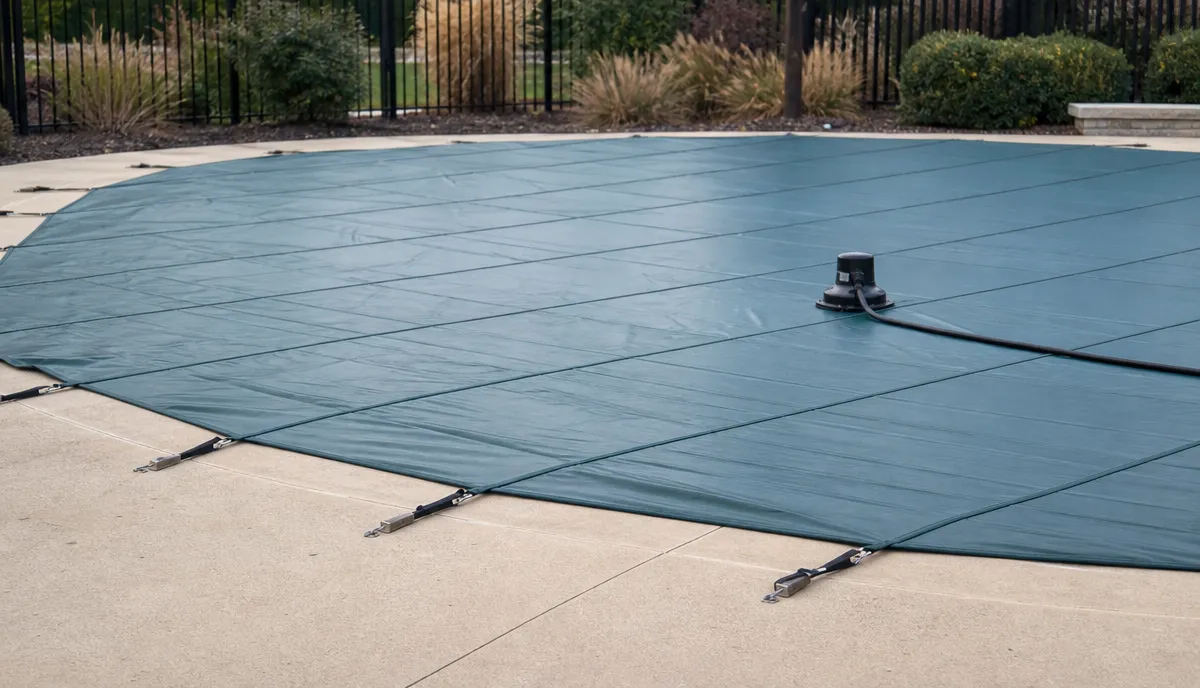

Custom in-ground pool safety covers for Hudson — measured on site, made by Merlin and GLI. Plus the part nobody explains: what a cover has to do with your heating bill. Family-owned since 2012.
Not through the walls. Off the surface. That is the fact that makes a cover interesting rather than merely tidy, and it is worth understanding before you spend anything on heating.
Evaporation is the dominant loss. When water evaporates it does not simply leave — it takes energy with it, because turning liquid water into vapour costs heat. That heat comes out of the pool. So every warm evening when the air is dry and there is a breeze across the water, your pool is being cooled by the water leaving it, and the heater is paying for it.
Radiation and convection matter too, and both also happen at the surface. Conduction into the ground, the thing most people assume is the problem, is the smallest part of it.
Which leads somewhere specific: a cover is not a heat-insulating trick. It is an evaporation stop. Put a barrier on the surface and the single largest loss route closes. That is why a cover does more for a heated pool than any adjustment to the heater will.
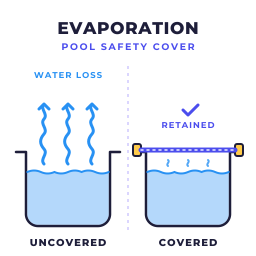
A diagram of where a pool loses heat and water — Hudson, Ohio
Hudson is in Summit County, about 23 miles from Lake Erie. That makes it one of the most inland towns we serve — only Stow and Bath Township are further from the water — and inland means no lake-effect moderation, a shorter natural season, and a heater doing more of the work.
The shorter your natural season, the more of the year your heater is buying — and the more of that purchase is escaping off the water surface every night. See pool heaters for the gas-versus-heat-pump question and how sizing is decided.
Here is where most pages about pool covers get vague, so we will be direct.
What we make and install — is a structural barrier. It is anchored into the deck, it is rated to hold weight, it keeps people and pets out, and it stays on from the close until the opening. It is not designed to be taken on and off in the evenings, and nobody is doing that: fitting one is a job with an installation rod, not a two-minute chore.
Is a different product with a different job: it floats on the water, it goes on and off easily, and it exists to stop evaporation while the pool is in use. It is not a safety device and it will not hold anything up.
Custom safety covers only, made by Merlin and GLI. If the in-season blanket is what you are after, a pool retailer is the right place to buy one, and we would rather say that than sell you the wrong product because it is the one we happen to make.
Where the safety cover does earn its heating keep. Is at the ends of the season. A cover on from mid-October means the pool is not evaporating away whatever residual warmth it has through the coldest weeks, and it means the water you open onto in spring is in better condition — which is a shorter, cheaper opening. See pool closing service.
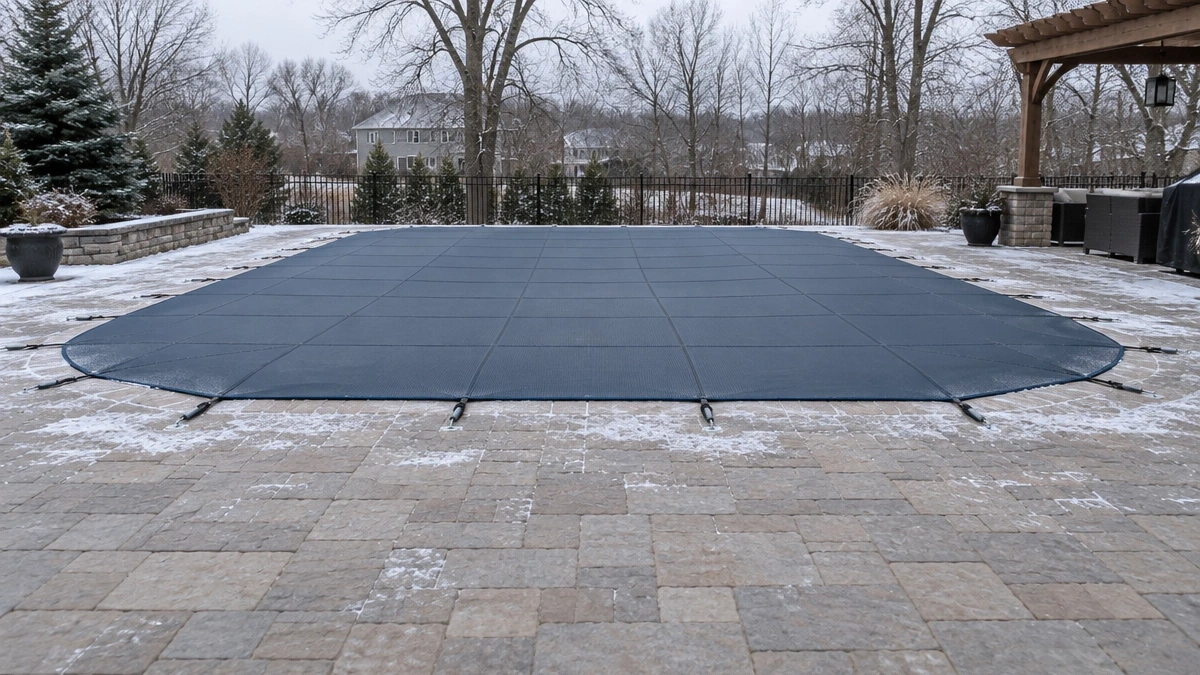
A safety cover installed to the manufacturer's instructions and fully fastened is a barrier. It is not a reason to stop watching
No cover replaces supervision of children and pets around water, and a cover that is only half on is a hazard rather than a barrier.
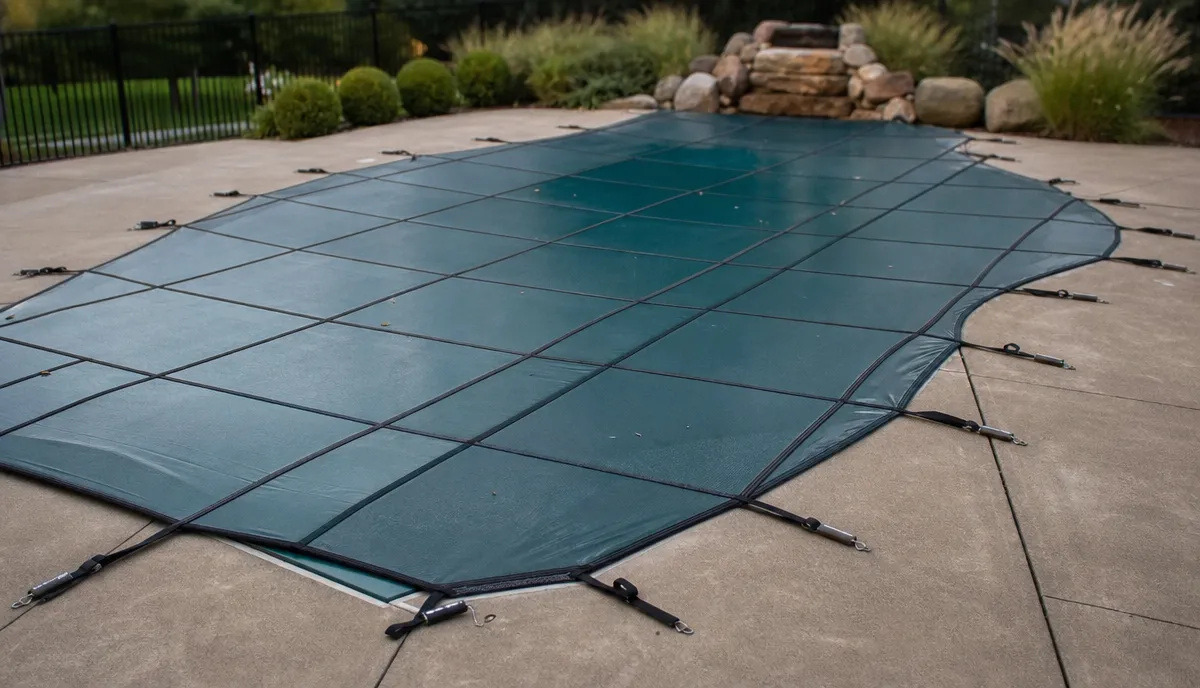
Measured on site, because a pool is rarely the shape its original drawings said it was. We do not sell or fit stock or standard sizes: a shelf rectangle stretched over a pool with steps and a raised wall leaves the straps landing wrong and the tension uneven.
Is set out on our covers in Twinsburg page rather than repeated here. See safety cover installation for anchors and deck types, and the pool safety covers hub for the mesh-or-solid fabric choice.
Size, shape, the deck and the obstructions move the number too much for a starting price to mean anything.
For the rest of what we do here see Hudson pool service and pool openings and closings — both start from $495 plus chemicals. The list of towns is on service areas.
“The crew is super knowledgeable and courteous.”
We are about five miles away — tell us about the pool.
At the ends of the season, yes, and the mechanism is worth knowing: most of a heated pool's heat loss is off the water surface, and the largest part of that is evaporation — water leaving takes energy with it. A cover closes that route. What a safety cover will not do is help you on a Tuesday in July, because it is not a cover you take on and off in the evenings.
For in-season evaporation control, that is the right product — and it is a different product from what we make. A floating thermal or solar cover goes on and off easily and stops evaporation while the pool is in use. It is not a safety device and it will not hold weight. We install custom safety covers only and we do not supply solar blankets; a pool retailer is the place for one.
Because your natural season is shorter. Hudson is about 23 miles from Lake Erie, so it gets none of the lake-effect moderation that keeps shoreline autumns milder — which means a heater here is buying more of your season, and more of that purchase is escaping off the surface every night.
That is the common assumption and it is the smallest part of it. Evaporation, radiation and convection all happen at the surface and together they dominate. Conduction into the surrounding ground is real but minor, which is why surface measures do far more than anything you can do to the shell.
It is not built for that. A safety cover is anchored into the deck and fitted with an installation rod — putting one on properly is a job rather than a chore, and a cover that is repeatedly half-fitted is a hazard rather than a barrier. If you want to stretch the season, that is a heater and a closing-date conversation, not a cover-on-and-off one.
No — custom only, made by Merlin or GLI to measurements taken at your pool. Even a rectangle has a deck, a slope, steps and obstructions that decide where the straps and anchors go, and a shelf cover is made without knowing any of them.