

Pool pump repair in Hudson — including the failure found at spring openings every year, which is not a fault in the pump at all. $150 service call. Family-owned since 2012.
Every spring, at openings, somebody's pump is cracked. Not worn out, not noisy, not leaking at the seal — split. A hairline running across the volute, or a chunk out of the basket housing, or a strainer lid flange broken clean off.
The pump did nothing wrong. Water was left inside it over the winter, and water expands when it freezes. There is nowhere for that expansion to go inside a closed plastic housing, so the housing goes instead.
Which means this is a failure caused by the close, five months before anyone sees it. We would rather write that down than let it be a mystery, because it is the one pool failure where the diagnosis is also an accusation — and if we closed your pool, it is our work being judged.
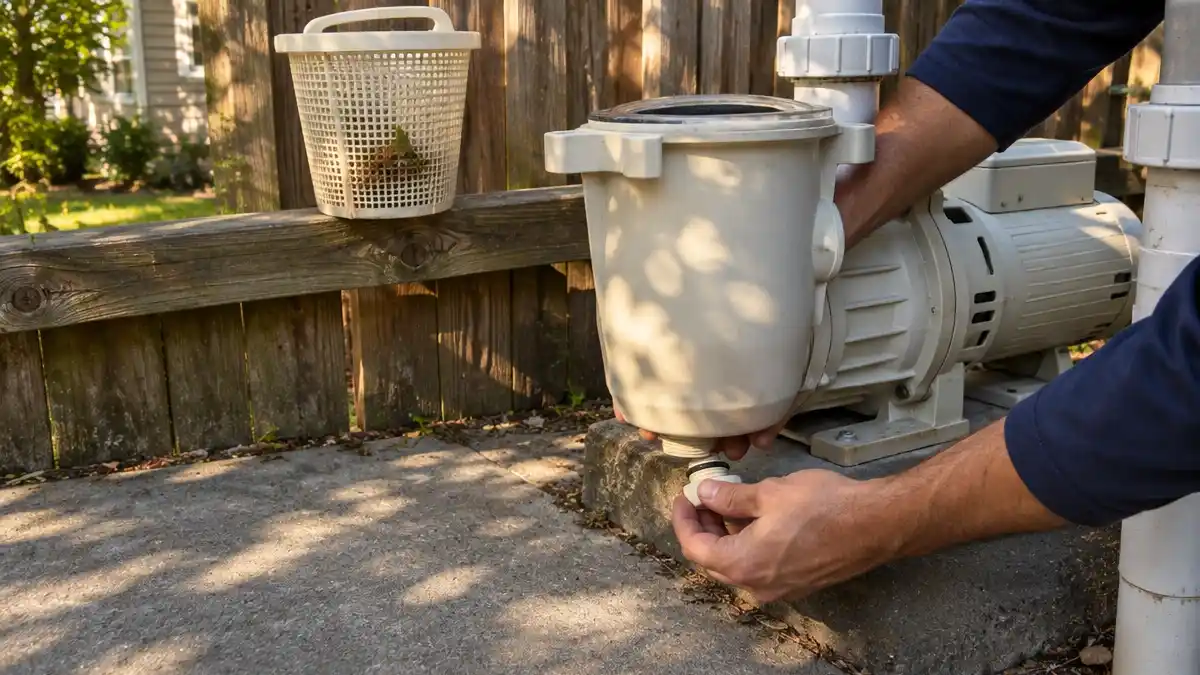
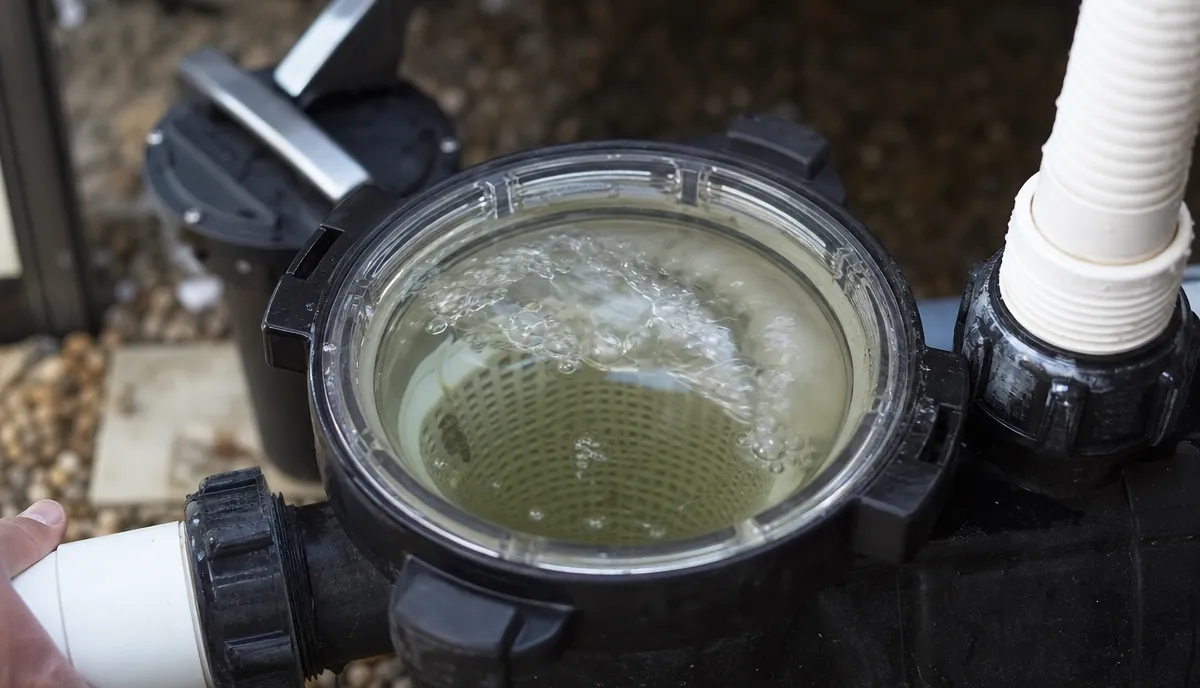
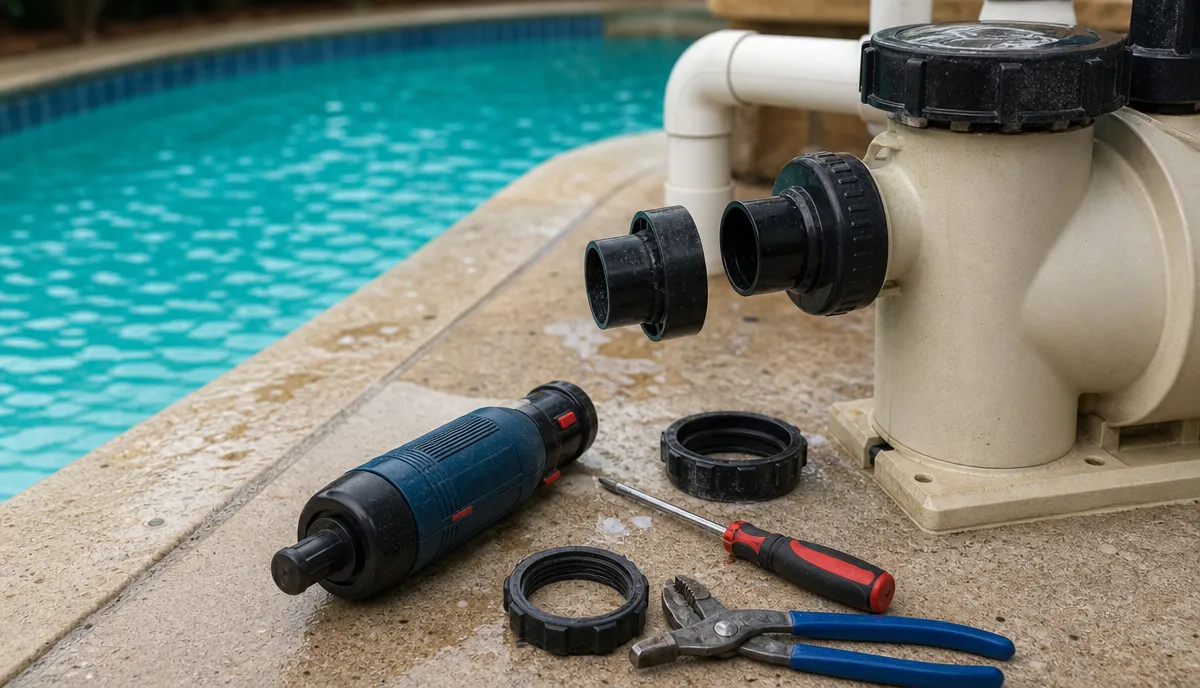
The wet end of a pool pump with the strainer pot lid removed
A pump's wet end is not a straight pipe. There is a strainer pot with a basket in it, a volute wrapped around the impeller, and drain ports at the bottom that only drain what gravity can reach.
As water freezes it grows, and it grows into whatever is weakest — a thin section of the volute wall, the flange around the lid, the threaded boss where a drain plug sits. Those are the places we look first, and they are the places that split.
Repeated freeze-crack and thaw cycles work a hairline wider through the winter. A pump that survived January can fail in March, which is why "it was fine at Christmas" is not evidence of anything.
The heat exchanger in a gas heater fails the same way and for the same reason. So does an underground return line, and that one you cannot see at all until the water goes somewhere it should not.
Three things, and the third is the one people skip.
1. The water level comes down below the skimmers and returns, so the lines above it are no longer full. 2. Every line gets blown out — air pushed through until it runs dry, then plugged so it stays that way. 3. The pump and filter get drained and opened. Drain plugs out, the basket out, the lid left off or loose. A pump left buttoned up with its plugs in is a sealed vessel with water in it, which is precisely the thing to avoid.
Where geometry means air alone will not clear a run, that run gets antifreeze. Some low spots simply will not empty by blowing, and pretending otherwise is how a line splits underground.
And equipment that should not spend a winter outdoors comes off — the salt cell, filter cartridges where appropriate, and anything with water trapped in a body that cannot be drained.
The full procedure is on pool closing service. Closings start from $495 plus chemicals, itemised.
Hudson is in Summit County, about 23 miles from Lake Erie. Only Stow and Bath Township are further from the water among the towns we serve, and being that far inland means two things that both point the same way:
The close is earlier. No lake-effect moderation, so the first hard frost arrives sooner than it does on the shoreline side.
The exposure is longer. An earlier close and a later spring means more weeks at or below freezing, and more freeze-and-thaw cycles working at anything that was left holding water.
So Hudson is where a shortcut in the close costs the most, and it is the reason we would rather explain the mechanism than simply sell a service.
Epoxy on a pressurised housing is a leak waiting for a warm afternoon, and a volute that has split has usually distorted around the crack as well.
The wet end and the motor are separate assemblies, so a cracked housing with a healthy motor can be a wet-end replacement rather than a whole pump — that depends on the model and on parts availability, and it is worth checking before anyone assumes the worst.
If you are buying a wet end or a pump anyway, a variable-speed unit runs slower for longer to move the same water and is much quieter. See variable-speed pool pumps.
Noise, prime, weak returns, a drip under the housing — see pump diagnosis in Twinsburg.

“The crew is super knowledgeable and courteous.”
Tell us what you have found and we will look at it.
Freeze damage is not covered, and we are not going to be vague about it. Warranty coverage on products we install is the manufacturer's — generally one to three years, on that manufacturer's terms — and it does not extend to freeze damage. We do not offer a separate workmanship guarantee.
What we will do is tell you what we find and why. If a pump we closed has split, we will look at where it split and what that says about the close, and we will say so.
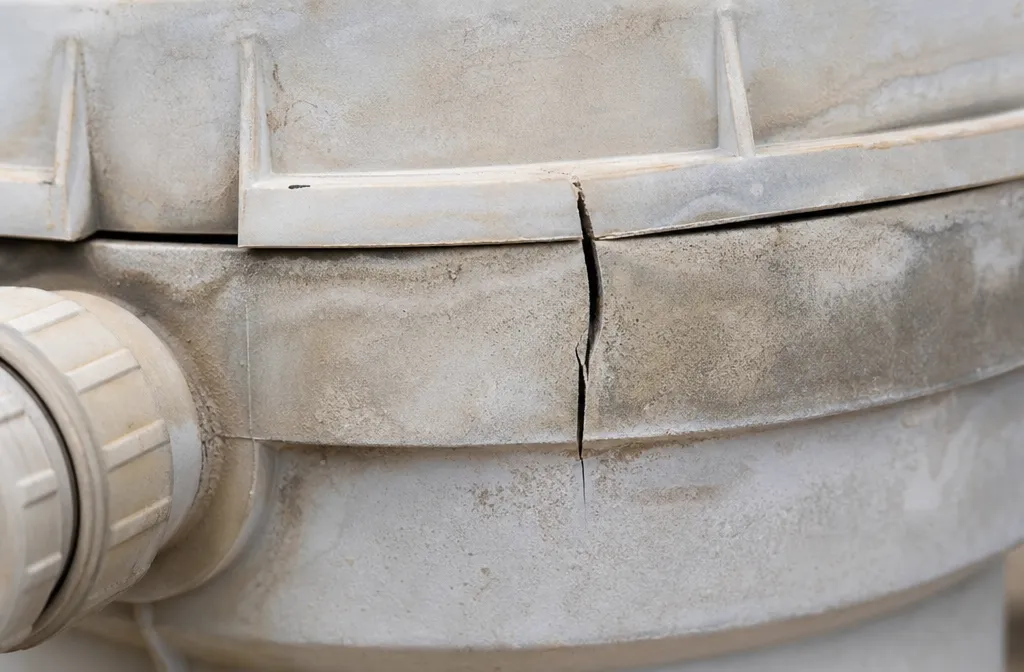
Freeze damage to a pool pump housing
A $150 service call applies to diagnostic and repair visits and covers up to the first hour on site. Openings and closings start from $495 plus chemicals — see pool opening service and pool openings and closings.
For the rest see Hudson pool service and pool equipment repair. The list of towns is on service areas.
A technician tracing a fault at a pool equipment pad
We do not do the electrical supply work — a new circuit is a licensed electrician's job. We do not build pools, we do not service above-ground pools, hot tubs or spas, and we do not offer leak detection.
A pool service sheet filled in by hand
Water left inside it over the winter. Water expands as it freezes, and inside a closed plastic housing there is nowhere for that expansion to go — so it goes into the thinnest sections: the volute wall, the lid flange, the threaded boss around a drain plug. The pump itself did nothing wrong.
Because it is rarely one hard night. Freezing and thawing repeatedly works a hairline crack wider through the winter, so a pump that survived January can fail in March. That is also why the damage often only shows itself when the system is pressurised again at the opening.
Not in a way worth paying for — epoxy on a pressurised housing fails on the first warm afternoon, and a split volute has usually distorted around the crack. What is often salvageable is the motor: the wet end and motor are separate assemblies, so a healthy motor can sometimes take a new wet end rather than a whole new pump.
No. Coverage on products we install is the manufacturer's, generally one to three years on their terms, and it does not extend to freeze damage — which follows from how the pool was closed rather than from a defect. We do not offer a separate workmanship guarantee either. We would rather say that clearly than leave it to be discovered.
Three things: the water level comes down below the skimmers and returns; every line is blown out with air and then plugged; and the pump and filter are drained and left open, with the plugs out and the basket removed. Where the geometry means air alone will not clear a run, that run gets antifreeze instead of optimism.
Distance from the lake. Hudson is about 23 miles inland, so the first hard frost arrives earlier than on the shoreline side and the spring comes later — which means more weeks below freezing and more freeze-and-thaw cycles working on anything left holding water. It is where a shortcut in the close costs the most.
