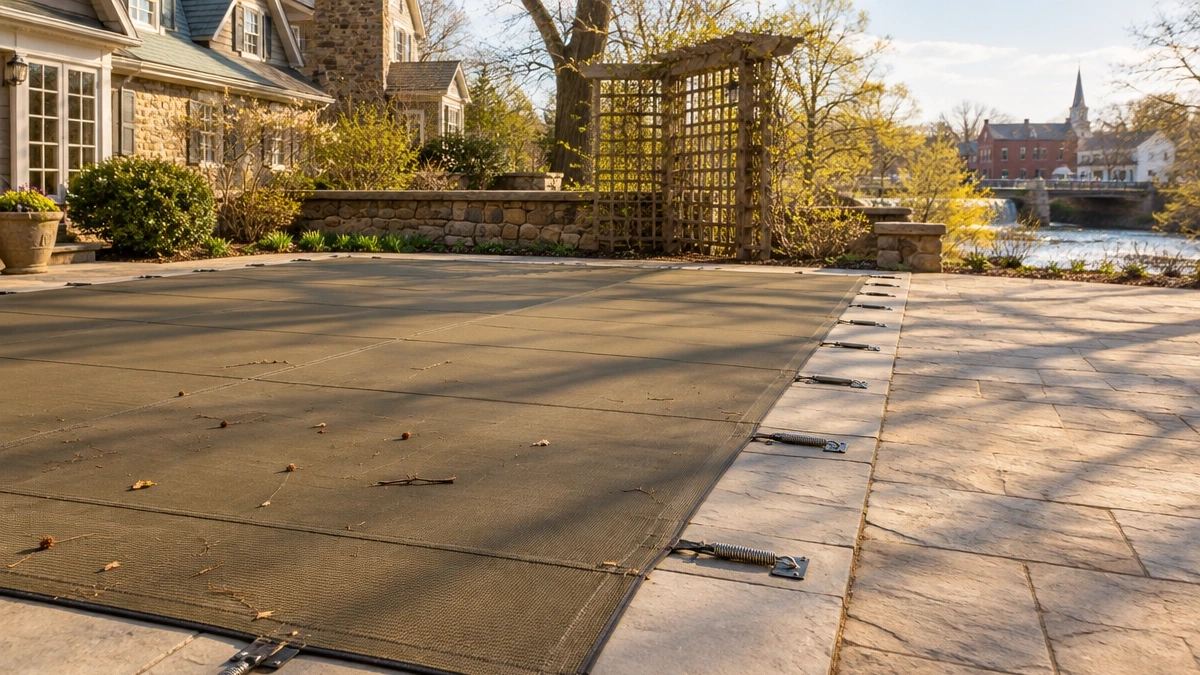

Custom in-ground pool safety covers for Chagrin Falls — measured on site, and set up to be manageable under a valley full of mature trees. Family-owned since 2012.
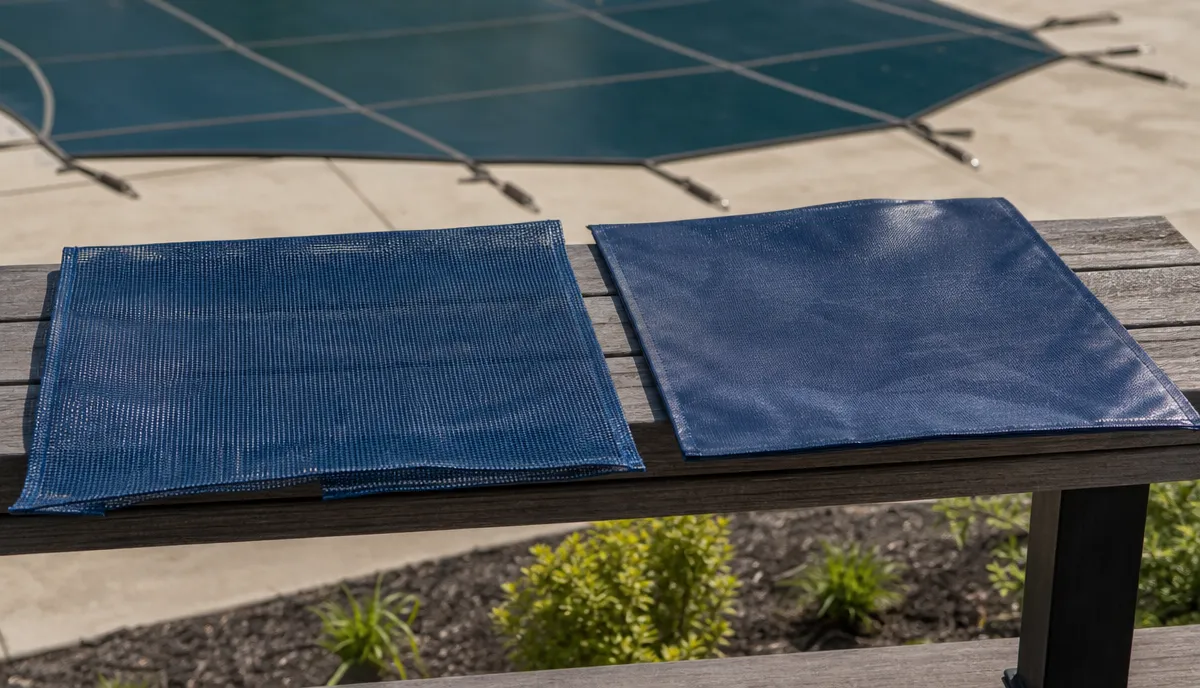
Which fabric to buy under a heavy canopy — mesh or solid — is set out on our Chagrin Falls pool service page, because it is a decision you make once and live with for years.
This page is about the years. What you actually do with the cover you have, from the first leaf to the spring opening, in a valley with mature trees over it.
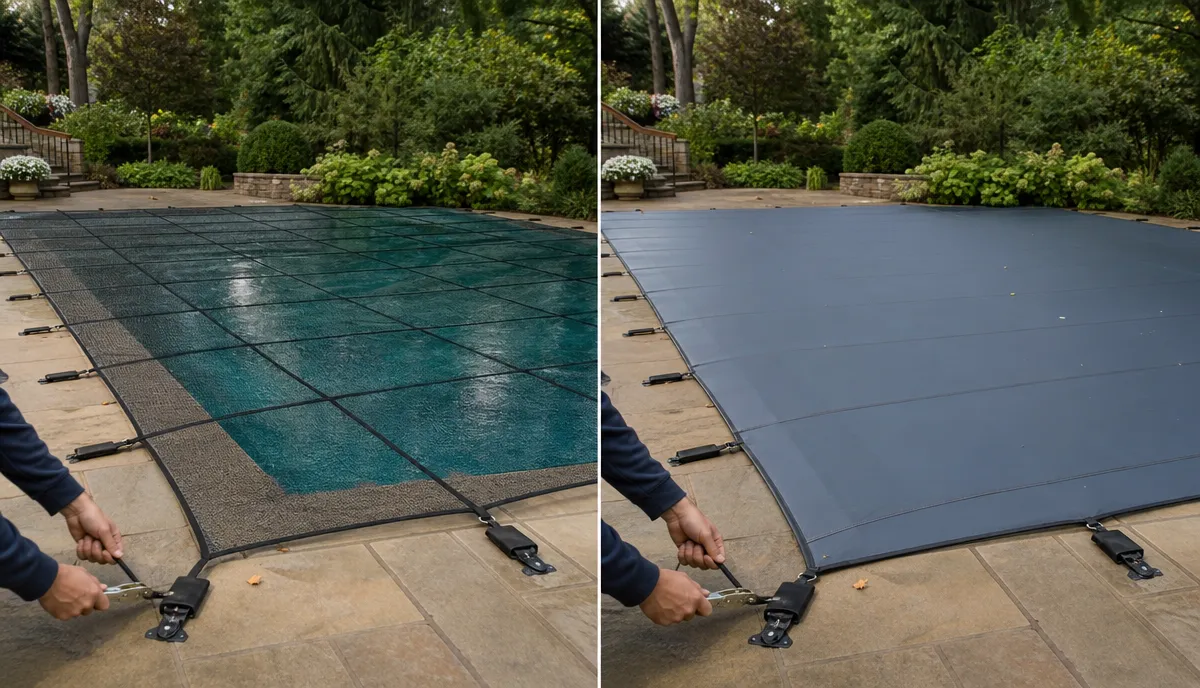
A mesh variable-speed solid cover
For the few weeks the trees are genuinely dropping. When the drop finishes, the net comes off and takes the bulk of the leaves with it in one movement.
It holds nothing up, it is not anchored, and it is not a barrier of any kind. It goes over a fitted safety cover, never instead of one.
On a solid cover, leaves that settle into standing water turn into a heavy sludge that is genuinely unpleasant to clear in March, and that weight sits on the fabric and the anchors all winter. On a mesh cover, wet leaves sitting on the surface leach tannins straight through into the pool. The net stops both, and it stops them at the point where the cost is a few weeks of attention rather than a spring's worth of work.
Timing is the only skill involved. On too early and you are managing the net through half of autumn; on too late and the leaves are already where you did not want them. Roughly: when the drop begins in earnest.
A solid cover does not pass water, so rain and snowmelt collect on top of it. A cover pump removes that water. It is a small submersible pump that sits on the cover and runs when there is water to move.
Why it matters more than it sounds: water is heavy. A layer of standing water across a whole pool is a serious load, and it is a load the cover and its anchors carry. Add wet leaves and a freeze and it becomes worse rather than better.
What goes wrong with cover pumps, in order of how often we see it:
A mesh cover has none of this, which is its main practical argument — rain and snowmelt drain through into the pool, so nothing stands on top and there is no pump to look after. The price is that the fine debris and the tannins go through too.
And a warning we would rather give than not: do not go onto the cover
Not to reposition a pump, not to sweep snow, not for anything. A safety cover is a barrier designed to stop a person going into the pool — it is not a floor, and a cover with water or snow on it is less predictable, not more. If something needs doing out on the cover, that is a call to us.
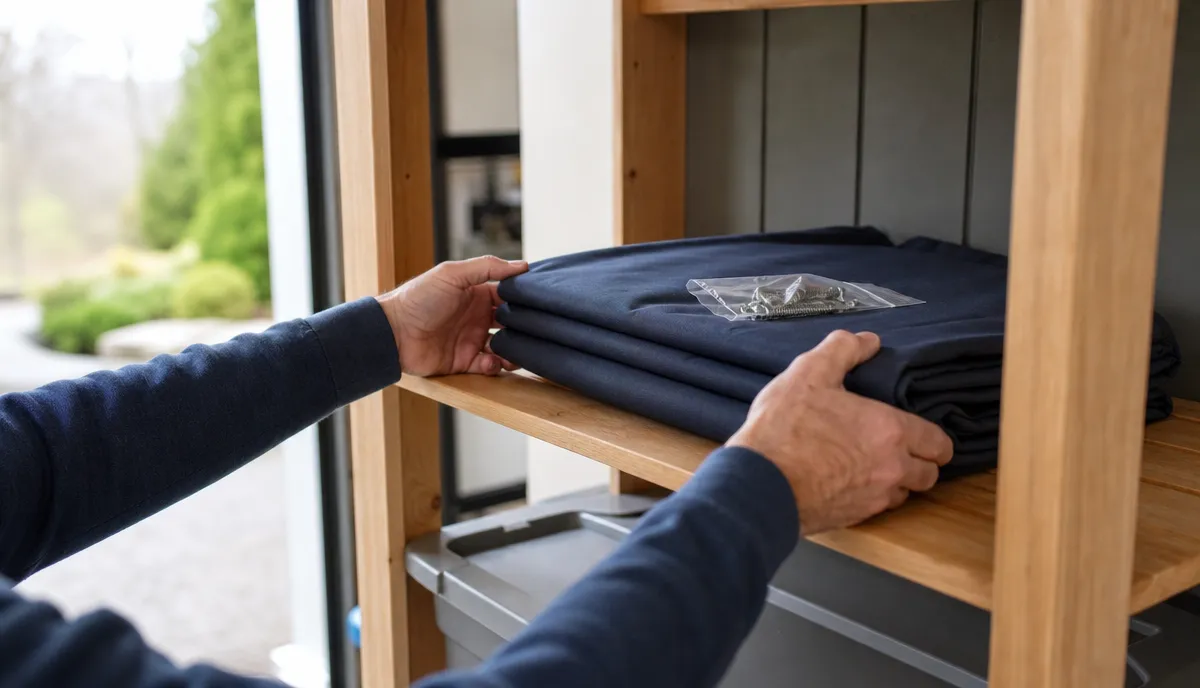
Off, cleaned, dried, and stored dry and loosely rather than crammed damp into a bag — a cover put away wet spends the summer growing mildew in a warm garage.
While it is spread out and visible: straps, springs, grommets, seams, and whether the anchors turn freely. See safety cover repair and replacement — a strap or a grommet caught in April is a repair, and the same fault found in October is a problem.
Openings and closings start from $495 plus chemicals — see pool opening service and pool closing service.
A safety cover installed to the manufacturer's instructions and fully fastened is a barrier. It is not a reason to stop watching. No cover replaces supervision of children and pets around water, and a cover that is only half on is a hazard rather than a barrier.
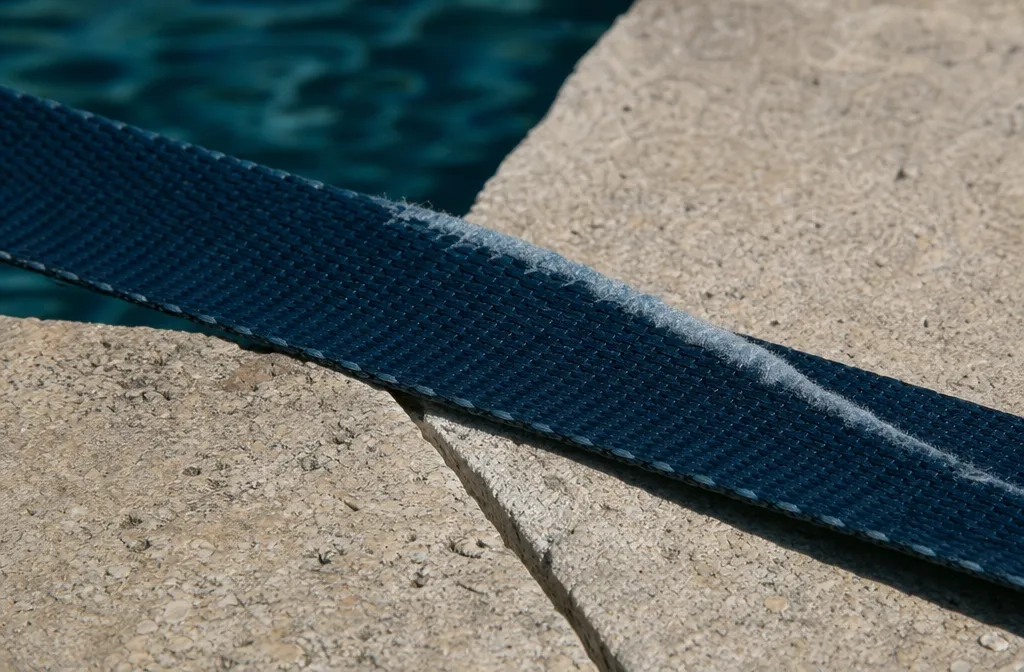
Wear on a pool cover strap where it crosses the coping
“After having different companies open and close our pools, and then having M & G Pools, I would never have anyone else! They are extremely professional, kind, efficient, and knowledgeable. They definitely go out of their way to help their customers.”
Tell us about the property.
Chagrin Falls is in Cuyahoga County, about 9 miles from our base, and cover work is what we travel furthest for.
Everything we install is made to your pool by Merlin or GLI, measured on site. We do not sell or fit stock or standard sizes — and on a sloped valley deck with a planting bed tight to the coping, a shelf rectangle is even less of a fit than usual.
What the measure records and how the fit works is on our covers in Twinsburg page. For anchors and deck types see safety cover installation, and for the fabric decision the pool safety covers hub.
Cover work is quote-required. The list of towns is on service areas.
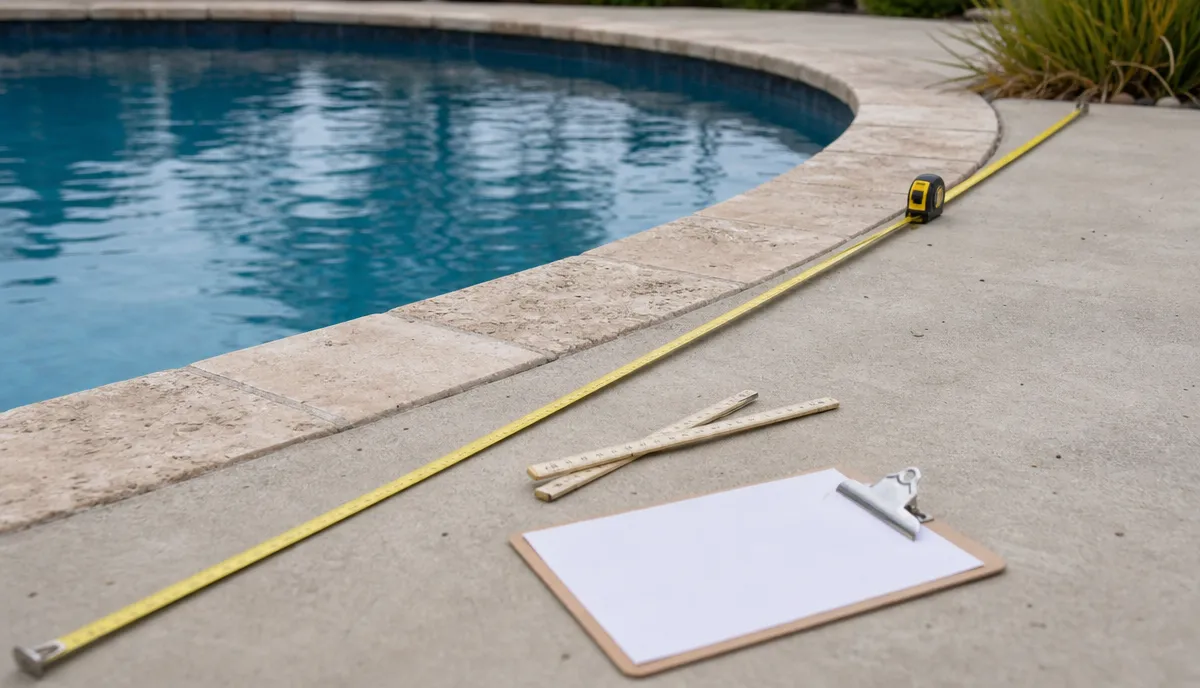
A site measure for a made-to-order pool cover
No, and this matters. A leaf net is a lightweight debris sheet — it is not anchored, it holds nothing up, and it is not a safety device of any kind. It goes over a fitted safety cover for the few weeks the trees are dropping, then comes off with the bulk of the leaves.
When the drop begins in earnest. On too early and you are managing it through half of autumn; on too late and the leaves are already in the water or bedded into the cover. It is the only real skill involved, and it is a judgement about your own trees rather than a date.
Only with a solid cover. Solid fabric does not pass water, so rain and snowmelt collect on top and a pump removes them — which matters because standing water across a whole pool is a serious load on the cover and its anchors. A mesh cover drains into the pool instead, so there is no pump to look after; the trade-off is that fine debris and leaf tannins go through with the water.
Under trees, almost always a blocked intake. Leaf debris packs against it and the pump moves nothing while sounding perfectly busy. It is also worth checking the pump is sitting where the water actually collects — that is not always the middle of the pool — and that it has not frozen into standing water.
No. A safety cover is a barrier designed to stop someone going into the pool; it is not a floor, and with water or snow on it, it behaves less predictably rather than more. If something needs doing out on the cover, call us rather than going out there.
Get it off, cleaned, dried and stored dry and loose. A cover put away damp and folded tight spends the summer growing mildew for no reason. It is also the one time in the year you can inspect it properly, while it is spread out — straps, springs, grommets, seams, and whether the anchors still turn freely.