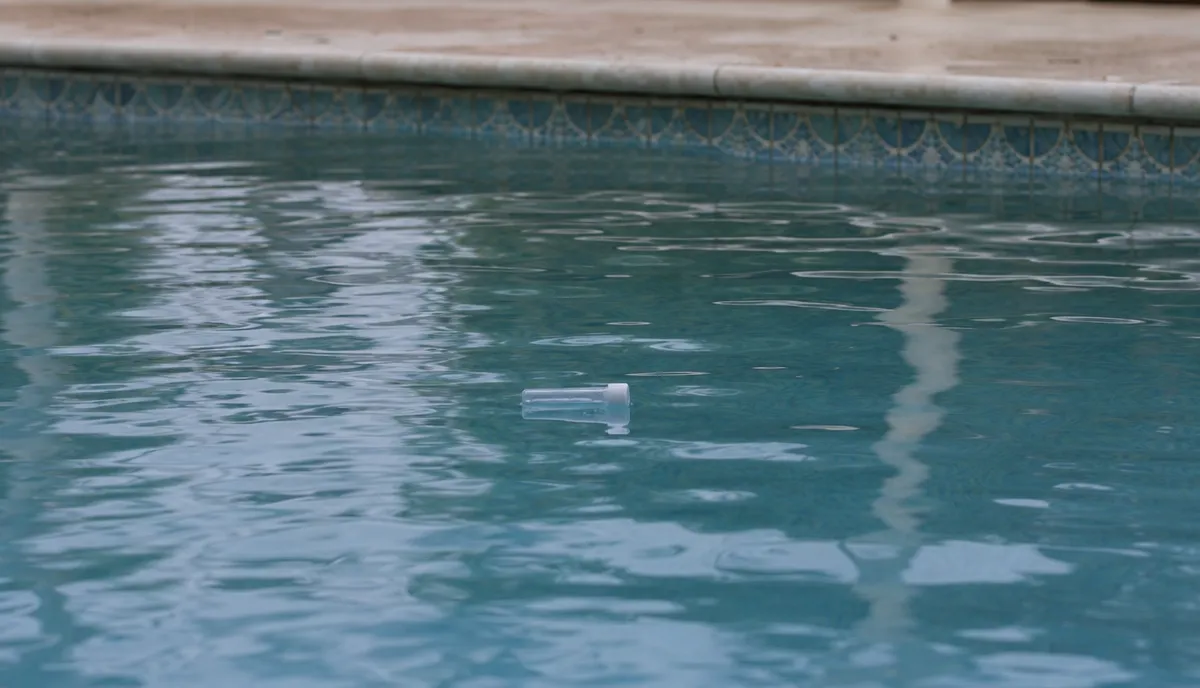

Every pool loses water. The question is whether yours is losing more than the weather explains — and there are three tests that answer it, all free, before anybody needs to be called.
One thing up front, because it decides who you should call: we do not offer leak detection. If the answer turns out to be a buried line, that is a specialist service and not one of ours, and you should hear that now rather than after a visit. What this post can do is help you find out which situation you are in.
Test 1: The Bucket Test — Is It Just Evaporation?
The one everybody should do first, because evaporation is the answer more often than anything else.
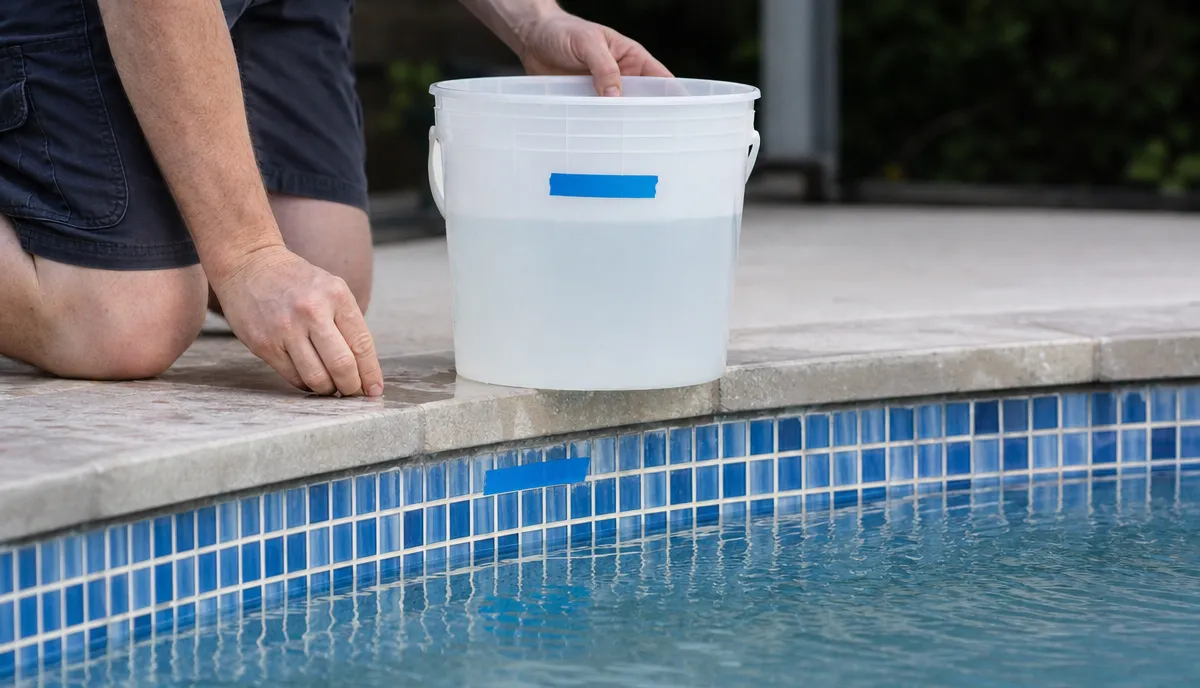
Put a bucket of pool water on a step, so the bucket water and the pool water are exposed to the same sun, the same wind and the same air. Mark the level inside the bucket and the level of the pool.
Come back and compare. If both have dropped by about the same amount, you are watching evaporation, not a leak. If the pool has dropped noticeably more than the bucket, something else is going on.
Why this works better than a number: evaporation varies enormously with air temperature, humidity, wind and sun. A published "normal" loss rate is a figure for somebody else's week. The bucket controls for all of it at once.
And evaporation is not small. Most of a pool's water loss — and most of a heated pool's heat loss — is off the surface. A breezy, dry stretch shifts a surprising amount. The mechanism is on evaporation and covers.
Test 2: The Pump-On, Pump-Off Test — Where Is It Going?
If the bucket test says it is not evaporation, this is the observation that narrows it, and it is the most valuable one on the page.
Compare the loss with the pump running against the loss with it off, over comparable stretches.
Losing water whether the pump runs or not points at the pool itself — the liner, a fitting, the skimmer throat, a light niche. Water is leaving through a hole that does not care about pressure.
Losing noticeably more while the pump runs points at the pressure side of the plumbing. Under operation those lines are pressurised, so a weakness there leaks harder when the system is on.
That single comparison decides who you should be calling, and it costs nothing but attention. The full diagnostic is on liner or plumbing.
Test 3: Look Where You Can Actually See
Three places worth checking with your own eyes.
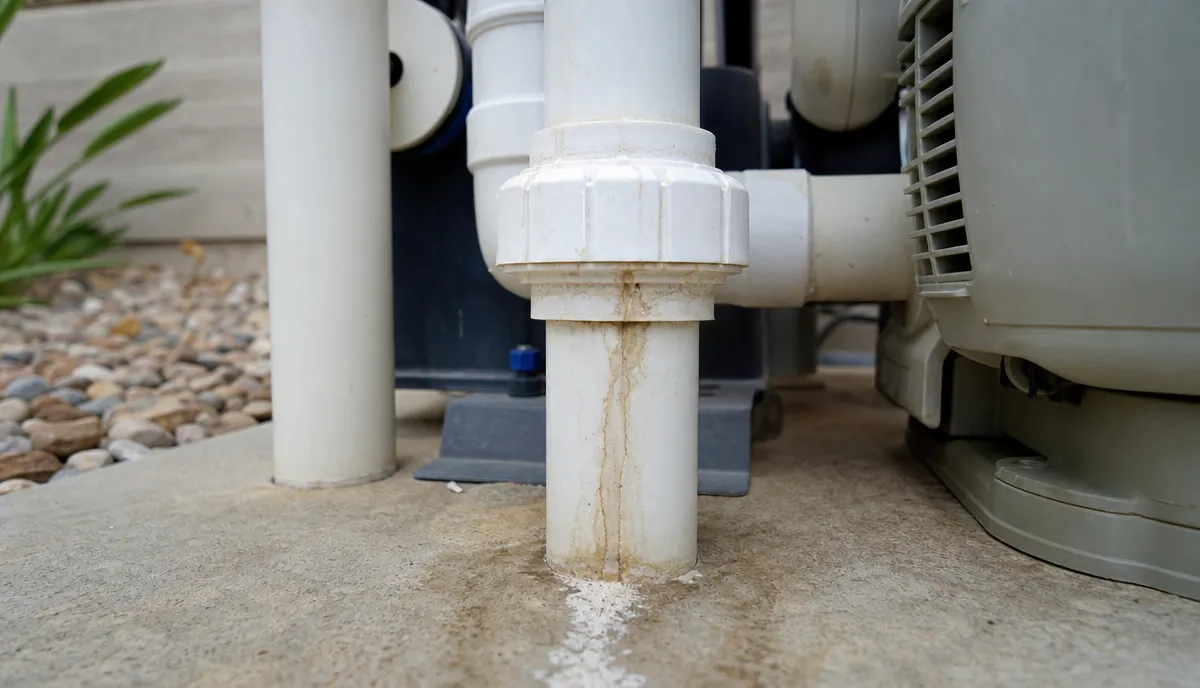
The equipment pad, when the pump is running. A weeping union, a dripping valve, a pump seal leaving a damp patch, a filter fitting. Pad leaks are common, visible, and usually cheap — and they get missed because people are looking at the pool.
The ground. A wet patch, soft ground or settling near the pad or along a return run points underground. We do not offer leak detection, so that is the case where you want a specialist rather than us — and the sooner you know, the less you spend finding out.
The waterline and the fittings. Wrinkles that were not there before, a liner pulling at its bead, a tear near a skimmer or a light. Those are visible and they are ours.
What Each Answer Means
Evaporation. Nothing is wrong. A cover reduces it substantially if the loss is genuinely bothering you — though a winter safety cover is not the in-season product for that, and we do not supply floating thermal blankets.
A liner tear or a fitting. Often a patch, and often done underwater so the pool stays full. Liner patching starts at $195. Whether it is a patch or a replacement is decided by the condition of the vinyl rather than the size of the damage — see pool liner repair and, for reading the liner's condition, the lifespan guide.
Something on the pad. A $150 service call covers up to the first hour of diagnosis and repair on site, which on a weeping union or a pump seal is frequently the whole job. See pool equipment repair.
A buried line. Not ours. We do not offer leak detection, and we would rather tell you that at the start than take the appointment and hand the problem on afterwards.
The Thing That Makes Water Loss Worse Than It Looks
Topping up constantly is not a neutral workaround.
Fresh water dilutes what you have balanced — so a pool that is being refilled every few days is a pool whose chemistry is being reset every few days, which shows up as sanitiser that never holds and readings that will not settle.
And on a salt pool it moves the salinity, because salt leaves with water going out and does not come back with the water going in.
So "it is only a bit of water" usually turns into a chemistry problem before it turns into a repair. A chemical and equipment check is from $72 per visit plus chemicals, and the written sheet is where a slow loss becomes visible as a pattern rather than a nuisance.
When To Stop Testing And Call
When the bucket test says it is not evaporation and you can see where it is going — that is us.
When the bucket test says it is not evaporation and you cannot see where it is going, and the ground is wet somewhere it should not be — that is a leak-detection specialist, and we will say so.
See also pool maintenance.