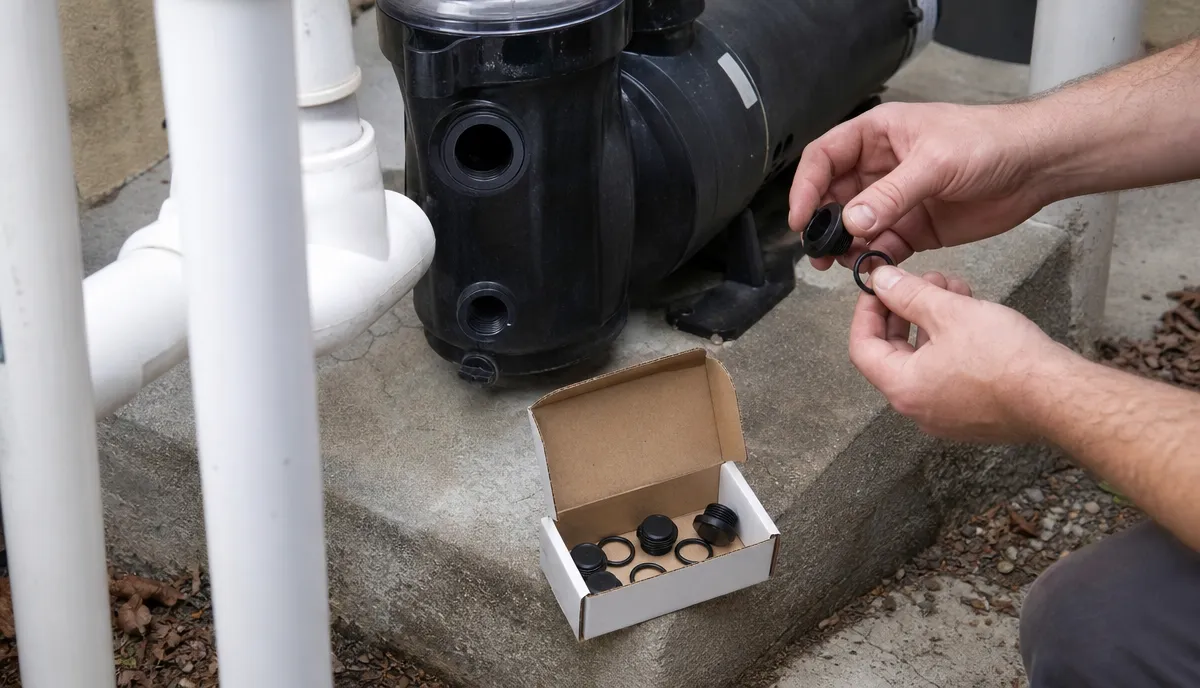

January is the right month to decide about a liner and the wrong month to fit one. Both halves of that matter, and the reason is the one thing that makes a liner different from every other job on a pool.
The Pool Has To Be Emptied, And That Is The Whole Problem
Most pool work happens with the water in. We patch liners underwater wherever we can, precisely so the pool stays full — and that is not convenience, it is risk management.
An empty vinyl-liner pool is a pool with several things going wrong at once. The liner is no longer being held against the walls by thousands of gallons of water. It can dry, shrink and stiffen in sun or wind. Groundwater outside the shell is no longer being balanced by water inside it. None of that is dramatic on a mild morning with a new liner going straight back in — and all of it gets worse the longer the pool sits empty.
Which produces three scheduling constraints that no other pool job has:
The pool cannot sit empty waiting for a delivery. The liner has to be on site and correct before the water goes out. That single fact is why a replacement is planned rather than booked.
The weather has to cooperate. Not just "not freezing" — the day itself matters, because an empty shell and a fresh liner in strong sun or high wind is a harder fit.
Groundwater matters. A high water table outside an empty pool is a real consideration, and it is site-specific rather than seasonal.
We are not going to tell you how to drain your own pool. It is genuinely the riskiest thing that happens to a vinyl pool, and the post that walks a homeowner through it would be doing them no favours.
So Why Decide In January?
Because the liner is made to order, and the queue is seasonal.
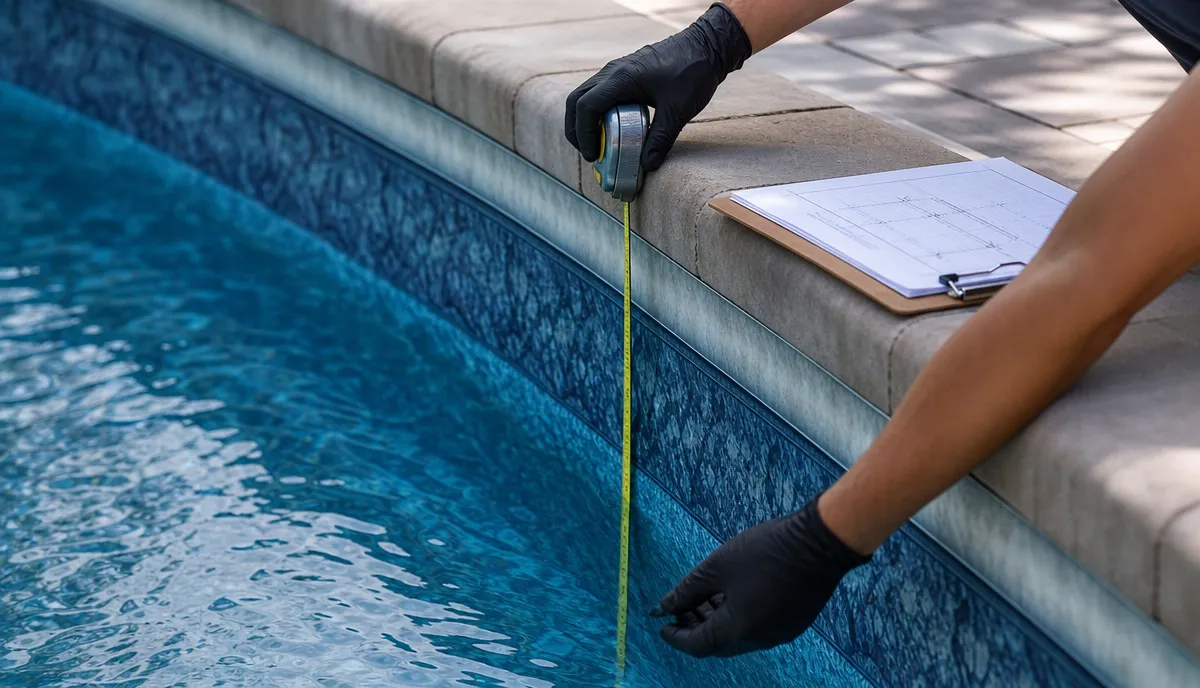
A liner is manufactured to your pool — measured on site, because a pool that has been in the ground for decades is rarely the shape its original drawings said. Ground movement, a re-poured deck section, coping replaced along one side. The measurement is the job; the ordering is admin.
We will not print a lead time, because it moves with the season and we would rather not publish a number we cannot stand behind. What we will say is that spring is when everyone wants their pool back, and a decision made in January sits in a very different queue from one made in May.
And the measure can happen before the season starts. It does not need the pool full and it does not need warm weather — so the sequence that works is: decide in winter, measure early, fit when the weather allows, and let the opening be an opening.
The Part Of The Quote That Cannot Be Firm
Worth knowing before you compare quotes, because a firmer number is not always a better one.
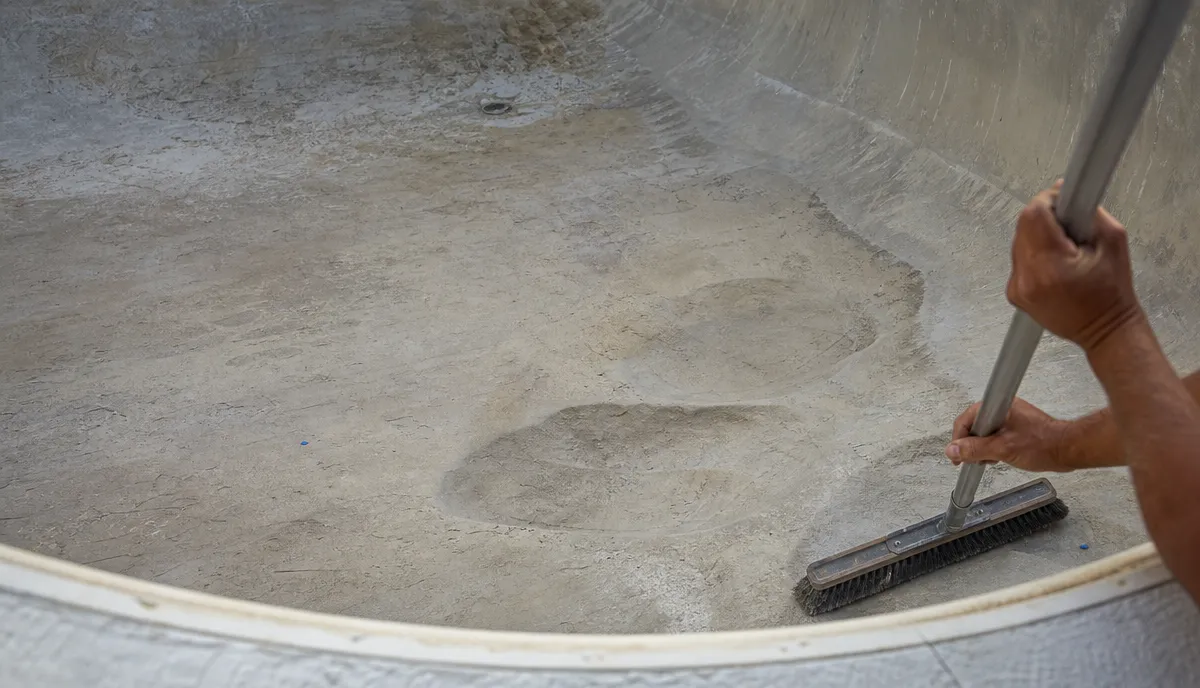
What is behind the liner is only visible once the old one is out. A liner change is the single occasion anyone sees the floor and the wall panels — and what is found there decides whether there is work to do before the new liner goes in.
Two things in particular:
The floor material. If it has washed or eroded, a new liner laid over it will telegraph every hollow within a season. Dealing with it while the pool is open is the only sensible time; closing it back up over a known problem is how the next liner fails early.
The wall panels and the steps. Same logic — visible once, and awkward to reach ever again.
So a liner replacement is quoted with an honest unknown in it, and we would rather say so than produce a firm figure that changes on the day. Liner replacement is quote-required; the size, the shape, the condition of what is behind the vinyl and the access to the garden move it too much for a published number to mean anything.
Before You Commit: Is It Actually The Liner?
Two checks that cost nothing, and both can be done now.
When does the water go? A liner tear loses water whether the pump is running or not; a pressure-side plumbing failure usually loses more while it runs. That difference is the first thing worth observing.
And where is the ground wet? A wet patch, soft ground or settling near the pad or the returns points at a buried line rather than the vinyl — and we do not offer leak detection, so that case is not one for us. Better you hear that now than after a visit. The full diagnostic is on liner or plumbing.
If it is the liner, the next question is patch or replace, and the condition of the vinyl decides it rather than the age or the size of the damage. Vinyl that is still flexible, properly seated and holding its colour with localised damage is a patch — usually underwater, from $195. Vinyl that has gone brittle, is pulling out of its track over a long run, or has shrunk beyond adjustment is a replacement. See pool liner repair and pool liner replacement.
How to read the condition yourself — six things, in order of visibility — is on the lifespan guide.
A January Checklist
1. Run the condition checklist on what you can remember from last season: new wrinkles, chalkiness at the waterline, brittleness in the corners, beading pulling out of its track.
2. Establish whether it is the liner or the plumbing, using when-the-water-goes rather than a guess.
3. Get it looked at. A $150 service call covers up to the first hour where the problem needs diagnosing first — including whether you are losing water through the liner, through the plumbing, or to evaporation.
4. If it is a replacement, get the measure booked early and accept that the final number has the floor-and-walls unknown in it.
5. Then let the opening be an opening — see pool opening service.
Buying a house with a pool this winter? A pool inspection covers the liner along with the pump, the pad and the plumbing, and a liner is one of the few pool costs you can genuinely see coming.
See pool liners for the full service.