
Two things to say before anything useful, because both change how you should read the rest.
We are a pool service company, not a code consultant. We do not interpret regulations for you, we do not represent you to a health district, and nothing on this page is compliance advice.
And the licence belongs to the operator, not to the contractor. If your association or your business operates the pool, your association or your business is the licensee. No service contract transfers that, ours included, and any company implying otherwise is selling you something it cannot deliver.
What we can do is tell you what we see boards get caught by, and one piece of it is a calendar problem that is entirely avoidable.
The Deadline That Lands Before The Season
Here is the thing worth knowing, and it is the reason this post exists.
For pools already licensed in Cuyahoga County, the Cuyahoga County Board of Health sends renewal applications out in the first week of April, and states that "the deadline to return the application without a late fee is April 30."
Look at that against a Northeast Ohio swimming season. Most pools around here are not open on April 30. Plenty are still under a cover. A board that treats the pool as a May or Memorial Day subject is looking at its renewal paperwork after the point at which returning it was free.
Which produces a specific and common sequence: the pool comes up on an agenda in late April or May, the opening gets booked, the equipment problems surface at the opening, and the paperwork is a scramble on top of all of it — in the busiest weeks of the year for every pool contractor in the region.
The fix is unglamorous. Work the season backwards from the paperwork, not forwards from the weather. Whatever your district's process is, the administrative year starts earlier than the swimming year does.
Which Pools This Applies To
We do not service hot tubs or spas, but the rule is broader: "a license is required for any pool or spa serving four families or more, which includes apartments, hotels, condominiums, homeowner associations, health clubs, as well as municipal facilities." That is the Cuyahoga County Board of Health's own published wording.
So a homeowners-association pool is named explicitly in that list. Boards sometimes assume that because the pool is behind a gate and used by residents, it is a private pool. That assumption is worth checking rather than carrying.
What we are not going to do is tell you whether your particular pool is licensable. That is a determination for the health district with jurisdiction, not for a service company, and the honest answer to "does this apply to us?" is a phone call to them rather than a paragraph from us.
We also are not going to describe any other county's process. Our service area crosses several health districts, and their handling differs. We have verified Cuyahoga's published position and cite it above; for the others, ask yours directly.
The Framework, In Two Lines
Again, we do not service hot tubs or spas — but the regulations do not draw their line where our scope draws it. Public swimming pools, public spas and special use pools in Ohio are regulated under Chapter 3749 of the Ohio Revised Code and Chapter 3701-31 of the Ohio Administrative Code.
The "licensor" is a local body — a city board of health or a general health district, or the director of health — and under the administrative rules the licensor inspects each pool before an initial licence is issued and annually thereafter.
That is the whole of what we will state about the regulations, deliberately. There is more detail in those chapters than we have verified to the primary source, and a pool company paraphrasing rules it has not read to the letter is exactly how a board ends up with confident bad information.
What A Board Should Have Regardless
None of this is regulatory advice. It is what makes a season run, and it happens to be what documentation looks like.
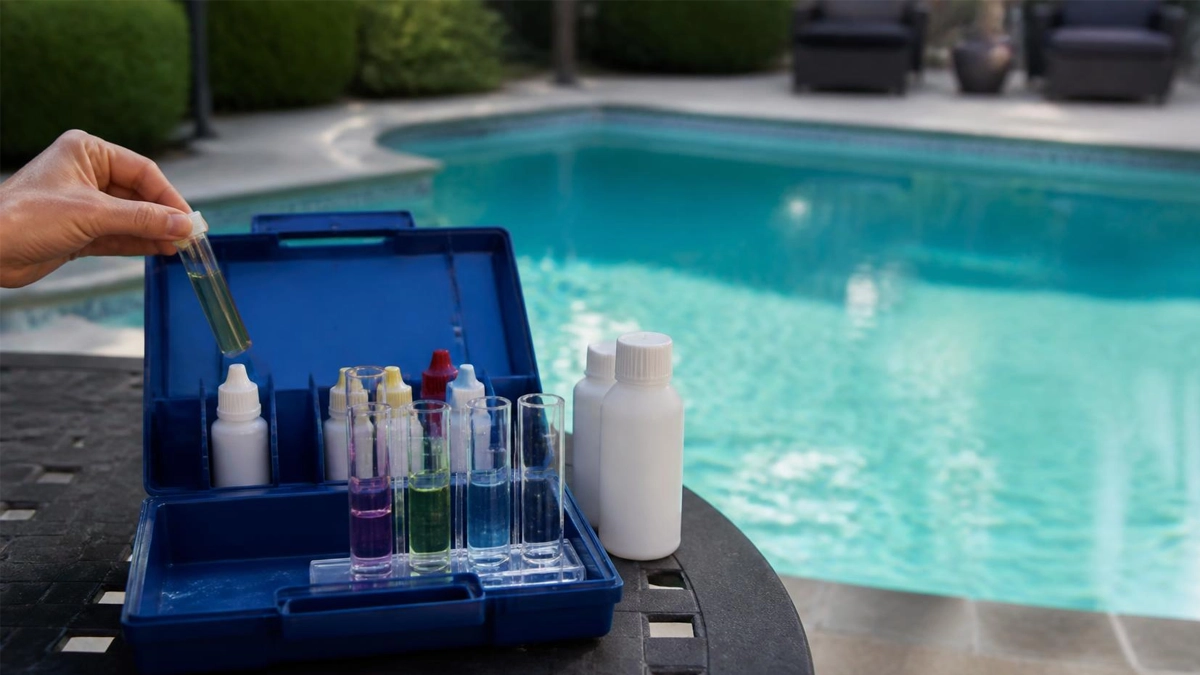
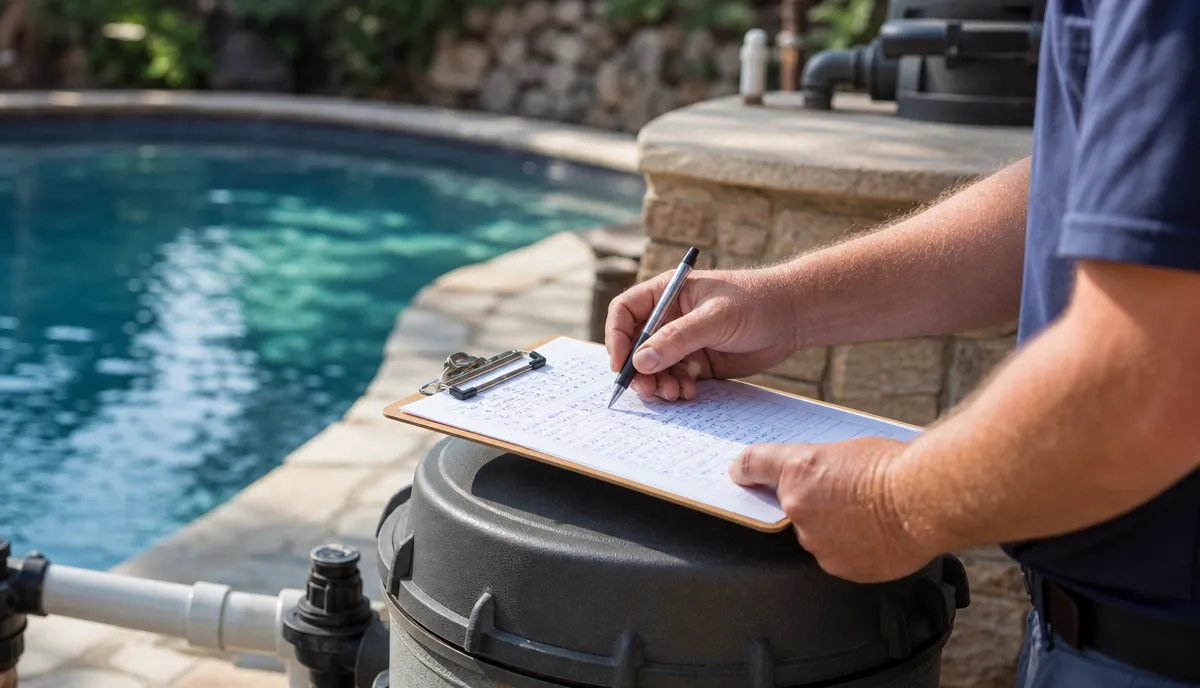
A written record of every visit. This is the part we can genuinely help with, and it is the same thing we do on residential pools: every visit leaves a sheet showing what was measured and what was done. For a board, that record does two jobs at once — it is the trend data that keeps the pool in order, and it is the answer when somebody asks what has been happening to the water.
A run of sheets rather than a folder of single readings. One reading is a snapshot; six are a direction. A filter pressure creeping up each week, a sanitiser demand that keeps climbing, a pump needing longer to prime — each is invisible in one visit and obvious across a season. That is how a part gets replaced instead of a motor, which for a board is a budget question as much as a maintenance one.
A condition assessment before the season, not during it. What the winter did to the equipment is cheaper to find dry than to find with the pool full and residents waiting. See pool inspections.
A named decision-maker for repairs. The single biggest source of delay on association pools is not parts and it is not scheduling — it is that a repair needs approval and the person who can approve it is on holiday. Decide in March who can say yes in July, and to what value.
A closing that is planned rather than squeezed. Autumn is as concentrated as spring. The timing argument is on the closing timing post.
What We Do, And What We Do Not
Being exact about scope, because commercial and association work is where scope creep starts.
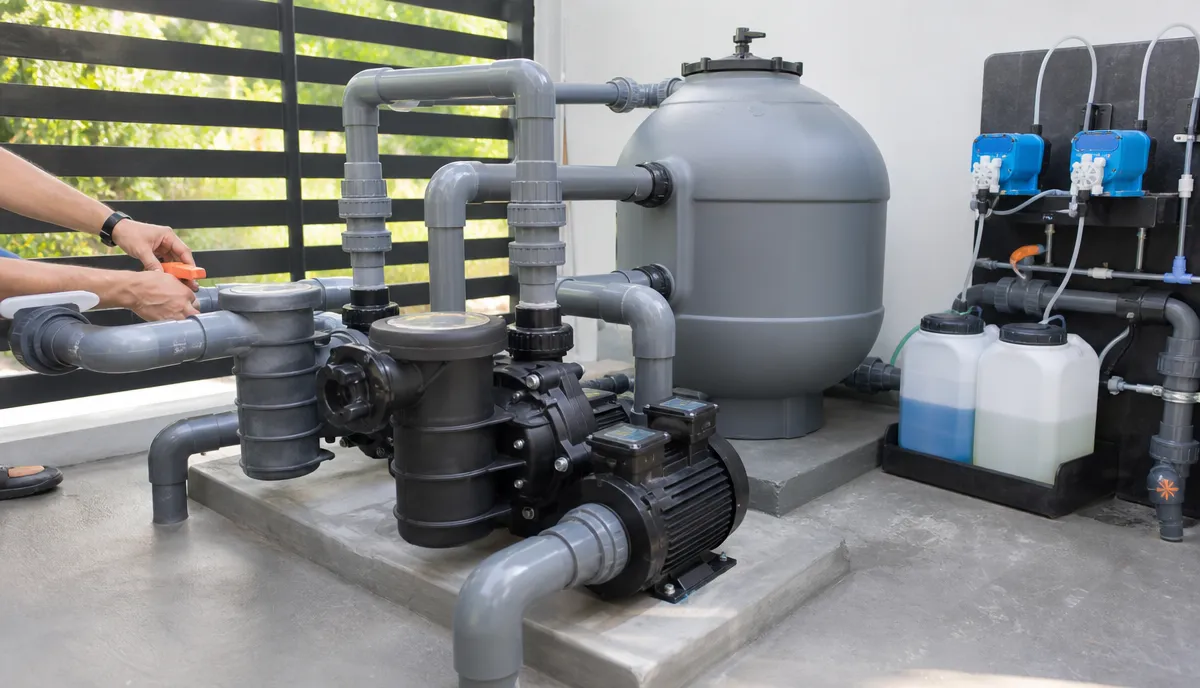
What we do: water chemistry from a measured panel, baskets, filtration, and the equipment on the pad — pumps, filters, heaters, salt cells, automation. Seasonal openings and closings. Repairs, quoted before they are done. See commercial pool maintenance.
We do not clean pools. No vacuuming, no brushing, no skimming — on association pools as on residential ones. For a shared pool that usually means a robotic cleaner and somebody on site handling surfaces and the deck, and it is worth settling who that is before the season rather than discovering the gap in June.
We do not offer leak detection. If the evidence points at a buried line, that is a specialist service and not one of ours, and we will say so at the start rather than after a visit.
We do not do gas line work or electrical supply work. Those are licensed trades. We establish what a unit needs, document what we found, and hand that part over.
We do not provide lifeguards, safety equipment, signage, or anything that belongs to the operation of a public facility. Those are the operator's, and they are the parts a health district is most likely to be looking at.
And we hold no operator or code credentials, and do not claim any. What we bring is equipment and water; the compliance side stays with you and your district.
Getting A Commercial Or Association Pool Quoted
Commercial and association work is quoted rather than priced from a list, because a twelve-unit condo pool with one pump and a filter is a different proposition from a clubhouse pool with a heater, a salt cell, automation and a heavy weekend load.
What makes a quote quick: the pool's dimensions, what is on the pad, who else touches the pool, and what your season is — open when, closed when, and who approves a repair.
For scale, the residential figures on this site are: a chemical and equipment check from $72 per visit plus chemicals, a $150 service call covering up to the first hour of diagnosis with parts and further labour quoted first, and pool openings from $495 plus chemicals. Association and commercial work is priced on its own terms rather than from those, but they give you the shape of how we charge. See pool equipment repair, pool opening service and weekly pool service.